Classic Songs to Be Discovered, Influenced, Music, My Stories, Unsung Heroes

Machine Head’s ‘Unatoned’ Is a 41-Minute Punch in the Soul – Brutally Honest Review (Track-by-Track)

Machine Head’s eleventh studio album, “Unatoned”, released on April 25, 2025, through Nuclear Blast and Imperium Recordings, marks a significant evolution in the band’s discography.

Clocking in at 41 minutes, it’s their shortest album to date.

Landscape of Thorns

A 31-second instrumental opener that is like walking into a post-apocalyptic cathedral made of rust and bad decisions. No lyrics, just vibe.

The vibe?

You’re screwed.

Atomic Revelations

You know that moment when you realize humanity might’ve peaked with sliced bread and everything since is just radioactive garbage?

Yeah, that’s this song.

“Atomic revelations / These cryptic devastations…”

In other words, the future’s here, and it’s wearing a hazmat suit. Think less “technological utopia” and more “Oops, all fallout.”

It’s a poetic bitch slap to our blind optimism. A warning, framing the future not as a bright evolution but as a terrifying construct built from our short-sighted and immoral decisions.

Unbound

This is the sonic equivalent of breaking out of a mental straitjacket while screaming into a hurricane.

Lead single for a reason, it’s the sound of someone clawing their way to freedom, with bloody nails and existential panic.

It’s not about being free. It’s about realizing you’ve been your own prison warden the whole damn time.

Outsider

A love letter to being done. Betrayal, bitterness, burn-it-to-the-ground energy.

All the lying, all the cheating
All you left me was defeated
There could never be forgiveness in the end

No redemption arc. Just someone standing over the wreckage of trust and lighting a cigarette off the flames.

It’s beautiful.

In the way that watching your ex trip over karma is beautiful.

Not Long for This World

Here’s your death anxiety, set to music. Haunting, lyrical, and bleakly gorgeous. The kind of track that makes you text your therapist and also maybe your mom.

Through the struggles life hurls
Behold the heavens unfurl
Not long for this world

You’re gonna die. Everyone you love will die. And this track whispers: “Yup. And?” It’s oddly comforting, like being hugged by a ghost.

These Scars Won’t Define Us

A motivational anthem for people who’ve seen some serious crap and didn’t get a cheesy Instagram quote tattoo about it.

Head to the grindstone, power forward through the endless dark
Focus, determination, on this world I’ll leave a mark
It took so long for any confidence to get in here
And now the question that I need to know, I cannot hear

It’s not saying “you’re special.” It’s saying “you survived, now do something with it.” Less “self-love,” more “self-discipline.”

Dustmaker

“Dustmaker” is a little musical intermission.

A breather.

Kind of. It’s the metal equivalent of a weird dream sequence in a war movie. You’re not dying yet, but your brain’s doing weird crap.

Sip some water. You’ll need it.

Bonescraper

It’s a head banger with themes of self-destruction and a side of guilt.

We scrape our bones to numb the pain

If you’ve ever tried to drink your problems away, punch your trauma into silence, or sleep with someone just to feel something, this one’s your anthem. Congrats, you’re the problem and the solution.

Addicted to Pain

This one goes out to everyone who keeps dancing with the same demons and calling it “growth.” Spoiler: it’s not.

We’ll never know what could’ve been
Cravings pulled you deep within
Thrown into the hit machine
Feed the beast, start the routine
You gave it all just to chase this flame
The dotted line, a puppet in the game now
Twisted and cheating
The fame we chase is bleating
Turned against brother for acclaim that is fleeting

The fame-chasing, dopamine-looping, clout-sucking treadmill of modern life, and how it turns people into hollowed-out achievement junkies.

No wonder you’re tired.

Bleeding Me Dry

This one’s a gut-punch, a slow-motion collapse of a relationship that started with dreams and ended with pill bottles and silence.

There’s no pain without living life
This liquor helps cope with the strife
We talked of you being my wife
Picket fences, some kids, and two bikes
But all that was a fantasy lost in our haze
Through all of the weed smoke and piles of cocaine
A pharmacy of Vicodin, Percs, refillers
You and I were worst friend’s best painkillers

Jesus.

That line alone deserves a Pulitzer in “Emotional Damage”.

It’s not a love song, it’s a eulogy for what could’ve been. And it hurts because it’s true.

They’re not lovers, not saviors, just each other’s favorite painkillers in a life too painful to face sober.

Shards of Shattered Dreams

More heartbreak. More poetic destruction. Think of it like picking glitter out of a crime scene.

It’s raining
Shards of shattered dreams
This love divine
Ruins everything
Left to pick up the pieces
Of my dejected heart
I’m breaking and I’m ripping at the seams
These shards of shattered dreams

When hope becomes a weapon. When dreams cut deeper than knives. This one will haunt you at 3 a.m., probably while scrolling through old texts you should’ve deleted.

Scorn

The final exhale.

Closing the album, “Scorn” is a haunting ballad that delves into themes of manipulation and societal decay, featuring piano-driven melodies that contrast its dark lyrical content.

The music says “reflection,” but the lyrics say “everything’s broken.”

The Wrap Up

It’s short, sharp, and swinging a sledgehammer. Less an album, more a therapy session set to blast beats. It’s a bleak, beautiful middle finger to false hope and a mosh pit for your emotional baggage. If you’re looking for easy answers, you’re in the wrong pit, buddy.

Joining Robb Flynn and Jared MacEachern is drummer Matt Alston and guitarist Reece Scruggs, injecting fresh energy into their sound, making “Unatoned” a noteworthy entry in their discography.

Final Score:
5 existential crises out of 5.

Now go scream into the void or your pillow, whichever’s closer.

\::/

Standard
A to Z of Making It, Copyright, Influenced, Music, Unsung Heroes

Derek Schulman

On October 15, 2020, Derek Schulman appeared on the Bob Lefsetz Podcast.

I first heard of Schulman as the guy responsible for signing Bon Jovi and Cinderella. But before becoming a label executive, he was a member of Gentle Giant (GG), a band that has a bigger fan base today than when they originally broke up.

When Lefsetz asked why GG had grown in popularity, Schulman explained: “We wrote music for ourselves, didn’t follow trends, and the music held up.” Interestingly, GG never considered themselves a progressive rock band. Rock, yes, but not prog. They simply pushed themselves musically.

I believe GG’s resurgence is largely due to the internet. Their music isn’t locked away in a vault, it’s widely accessible. If we were still in the pre-Napster era, their catalog might have remained buried, since labels wouldn’t see the financial incentive to print CDs. Labels have always believed they know what fans want, but they’ve often been wrong. Had they continued releasing hard rock in the ’90s, the genre could have still produced acts selling close to 500,000 units. Instead, they abandoned it.

It always comes back to the music. People return for the music, not for record sales, labels, executives, or streaming numbers.

From Musician to Executive

Before Gentle Giant, Schulman played in a band with a few hit singles, but by 1969, he was burned out from the pressure to keep churning out commercial hits. He wanted to form a band that was the opposite of pop, so GG was born.

But by 1980, after 14 years in bands, Schulman was done. GG had become a job, and he had lost enthusiasm for recording and touring. With nothing lined up, he spent a year feeling lost. Fortunately, he had savings, thanks to his role as GG’s quasi-manager in the mid-’70s.

A friend at PolyGram called with a job offer. Schulman moved from California to New York and joined the label as a Promotions/A&R rep, though his role was mostly promotions. He was hired because two of PolyGram’s heads of radio promotion were huge Gentle Giant fans.

At the time, PolyGram was a mess. The label had major acts like KISS and Def Leppard, but they drained a lot of resources. Schulman’s break came when artists and managers started bringing him albums. Uriah Heep was shopping a new record, and Schulman helped organize a deal to release it.

Then came Bon Jovi.

Bon Jovi’s Breakthrough

Schulman met Jon Bon Jovi and was impressed by his focus and drive. Jon wanted to be bigger than Elvis. He even introduced Schulman to his parents, who told him: “Take care of our son.”

At the time, no other labels were bidding on Bon Jovi. Schulman also had a strict policy, he refused to get into bidding wars.

The key move was bringing in Doc McGhee. Doc originally came to Schulman’s office pushing Pat Travers, but Schulman told him to check out Bon Jovi instead. Schulman saw in Doc the same relentless drive that Jon had.

Jon met Doc, they struck a deal, and just like with Schulman, Jon’s parents needed to approve.

McGhee put Bon Jovi on tour with Ratt and Scorpions. Their debut album was a success, but their second record, “7800° Fahrenheit”, was considered a sophomore slump. Schulman hated the album title, the recording process was a mess, and the overall vibe felt off. But the album did its job, it kept the band on the road while McGhee worked overtime to book shows.

Schulman, meanwhile, had started working with producers Bob Rock and Bruce Fairbairn, who had just finished albums with Loverboy and Honeymoon Suite. Jon and Doc knew they needed great producers to reach the next level.

Schulman suggested co-writing with others. Paul Stanley and Gene Simmons had already introduced Jon to Desmond Child. The rest is history.

The label knew they had something big as soon as “Slippery When Wet” was mastered. The original album cover was scrapped, and Jon designed the new one himself. “You Give Love a Bad Name” and “Livin’ on a Prayer” were immediate hits, and the album shot to No. 1. Schulman had a percentage point on the album, but when he left the label, his royalties ended.

Cinderella

Schulman was introduced to Cinderella by an agent, a lawyer, and Jon Bon Jovi, who knew Tom Keifer.

He went to see them play a club in Philadelphia. The band wasn’t great, Tom Keifer stood out, Jeff LaBar was solid on guitar, but the other two members weren’t up to par. Then Schulman listened to a 90-song demo of Keifer’s original material. He was blown away by Keifer’s songwriting.

Schulman told the lawyer: “Get Tom to replace the other two with better musicians, and I’ll give you a deal.”

Andy Johns was brought in to produce “Night Songs”. The album dropped shortly after “Slippery When Wet” exploded, and “Night Songs” shot into the Top 10. Suddenly, Schulman was on fire, he had two bands in the Top 10.

When Lefsetz asked why Cinderella never released another big album, Schulman pointed out that they did, “Long Cold Winter”, but he had briefly forgotten the title.

Tom Keifer eventually lost his voice, which Schulman confirmed was true. Schulman also helped shape Cinderella’s albums with his artist experience, though he didn’t contribute to Bon Jovi’s records in the same way. He even co-wrote songs with Tom but never took credit.

Dream Theater

Derek Oliver, an A&R representative at Atco Records and a passionate fan of progressive rock, was the key figure in discovering Dream Theater.

In the late 1980s, Dream Theater had self-released their debut album, “When Dream and Day Unite”, through Mechanic/MCA Records, but the album failed to gain much traction due to poor promotion and distribution.

Meanwhile, Oliver, who had interviewed and reviewed the band during the period as part of Kerrang was impressed by their technical proficiency and songwriting.

Recognizing their potential, he brought Dream Theater to the attention of Derek Schulman, the head of Atco Records at the time.

After meeting the band and seeing their dedication, Schulman agreed to sign them to Atco. Under his guidance, Dream Theater recorded their breakthrough album, Images and Words (1992), which featured the hit single “Pull Me Under.” The album’s success helped establish them as a leading force in progressive metal, proving that Schulman and Oliver’s instincts were right.

Running Labels

Schulman also played a key role in launching Bob Rock’s production career, giving him his first gig with Kingdom Come, another band that went on to dominate the charts.

In 1989, Schulman left PolyGram to run Atco Records. PolyGram wanted to keep him, offering him control of Vertigo and Mercury, but he wanted a change, even if it meant losing his Bon Jovi and Cinderella royalties.

Doug Morris was hesitant about Schulman at first and saw him as a potential replacement. But Schulman built an impressive roster, signing Pantera and The Rembrandts. He had actually planned to sign Pantera to PolyGram but knew he was leaving, so he told their attorney to wait until he moved to Atco.

At first, Atco thrived. Schulman put together a strong team, and the first three years were fantastic. But eventually, he started losing perspective. One day, he heard a No. 1 song on the radio and liked it. When he asked a work colleague who had signed the artist, they said: “You did.” That moment shook him.

Doug wanted him out, but Schulman quit. He even attempted a coup while on a trip to Russia.

Roadrunner Records and the Rise of Metal

Schulman took a break before getting a call from an old friend, Case Wessels, at Roadrunner Records. Initially consulting for a year, he eventually became president.

Roadrunner was independent, which Schulman loved—no board to answer to. He scrapped some of Wessels’ ideas and focused on breaking bands like Coal Chamber and Fear Factory, both signed by Monte Conner.

Then he saw Slipknot live and knew they would be massive.

He also signed Nickelback. Their first album (with Roadrunner) featuring “Leader of Men”, got some airplay, but when “Silver Side Up” dropped, Schulman immediately recognized its potential. The moment he heard “How You Remind Me”, he knew it would be huge.

Roadrunner was suddenly rolling in cash. Wessels wanted another “Silver Side Up”, but Schulman knew those albums don’t appear every six months, more like every 5 to 10 years.

Lefsetz asked why Nickelback gets so much hate. Schulman believes they’re a guilty pleasure, many people who claim to hate them secretly enjoy their music.

Finally, Schulman pointed out that while the industry panicked over piracy during Napster, hip-hop thrived by giving music away for free.

When streaming took over, hip-hop was already dominant—and it still is.

If you like your hard rock and metal history, then Derek Schulman is an unsung hero and this podcast is one to listen to.

Standard
A to Z of Making It, Influenced, Music, My Stories, Unsung Heroes

Four For Friday

A short one today.

IN THIS MOMENT

What happened to em?

“The Dream” and “A Star Crossed Wasteland” are great albums of melodic rock/Metal.

And then the transition started to the point where there is nothing recognizable or worth liking on their new album “Godmode”.

DOKKEN

A new album is out but if you can’t put any effort into the singing, why bother.

It’s the same monotone throughout, which is a shame because songs like “Lost In You”, “I Remember”, “Saving Grace”, “Fugitive” and “Gypsy” could have been great if the vocal delivery had emotion.

LYNCH MOB

George Lynch sure keeps busy and as a fan of the 80s, I like it.

And Mr Scary has still got a lot of things to say with his riffs. And Frontiers Records is keen to give him a platform to showcase his riffs.

So here we are with “Babylon”, the 8th Lynch Mob album. The difference between Lynch Mob and other artists from the 80s is the singers.

Gabriel Colon is a great vocalist with a great tone. He is the X Factor here. On the Metal cuts, it feels like Halford. On the rock cuts, its loose, sleazy and rawk.

And if Lynch could keep him around he has a lot of albums with him.

For the Metal check out “How You Fall”.

For the Rock check out “I’m Ready” and it’s nod to the great EVH.

ANY GIVEN SIN

The song “Dynamite” came up on a playlist and I pressed save instantly. It reminded me of Shinedown and it’s a great act to be associated with.

What do you guys think of em?

And that’s a wrap for this week.

Standard
Classic Songs to Be Discovered, Derivative Works, Influenced, Music, My Stories, Unsung Heroes

Tony Martin – Sweet Elyse

“Sweet Elyse” was released on the solo album, “Back Where I Belong” in 1992 on Polydor. Tony Martin decided to do a solo album when his Black Sabbath project was doing its “Dehumanizer/Dio” project.

Production was done by Nick Tauber, who is best know for his work with Thin Lizzy and Marillion.

The album is not on Spotify, which irks me. But YouTube has a lot of uploads from fans, who call Tony Martin the best Sabbath vocalist ever.

And “Back Where I Belong” is not available anywhere to buy these days, unless someone’s selling a second hand copy.

The reason why it’s not available are varied. When Martin rejoined Black Sabbath, Polydor deleted the album from their catalogue and took it off the shelves.

And somehow his manager at the time owns the entire rights to this album, which gets me thinking “how the hell did the manager pull that off” and “how is Copyright protecting the artist at this moment to give the artist an incentive to create”.

But I have seen interviews and posts where Martin mentions how he wants this album re-released and the label Battlegod Productions, which is the label for his solo album “Thorns”, is in negotiations for it.

The track burns from the start and it reminds me of songs like “Highway Star”, “Burn” and “Speed King” from Deep Purple.

And I like the familiarity.

The session line up for the song is also impressive.

Nigel Glockler from Saxon pounds those drums and Neil Murray from Whitesnake is the master of the groove.

Tony Martin also shows off his guitar prowess as he, Paul Wright and Carlo Fragnito play the rhythm guitars with Richard Cottle on the keys.

There are also demos floating around the internet of this album which has Tony Martin playing all the guitars.

For the solo, Adrian Dawson brings out his Blackmore influences. And it’s excellent.

Crank it.

Standard
A to Z of Making It, Classic Songs to Be Discovered, Derivative Works, Influenced, Music, My Stories, Unsung Heroes

Vandenberg – Sin

Adrian Vandenberg has come full circle.

When John Kalodner met with him in 1987, Kalodner had two propositions; one was to replace all the Dutch members of the Vandenberg band with American musicians and the other was for Vandenberg to join Whitesnake.

Morally Adrian Vandenberg couldn’t do that to his Vandenberg members and he also couldn’t pass up on a position to work with a vocalist like David Coverdale.

So he chose Whitesnake.

But when he tried to resurrect Vandenberg circa 2014/15, those Dutch 80s members didn’t have the same moral conviction as Adrian did and they took him to court so he couldn’t use his own surname anymore.

Six lawsuits later and a lot of money spent, Vandenberg was allowed to use his surname again.

But while all of the lawsuits were happening, Vandenberg’s Moonkings was created and they released three albums.

Then Vandenberg returned, dropping the excellent 2020 album with former Rainbow vocalist Ronnie Romero on vocals, Rudy Sarzo on bass, and Brian Tichy on drums.

And here we are in 2023, with another excellent album called “Sin”. This time around Adrian is joined by vocalist Mats Levén, drummer Koen Herfst and bassist Randy Van Der Elsen and the album is produced by Bob Marlette.

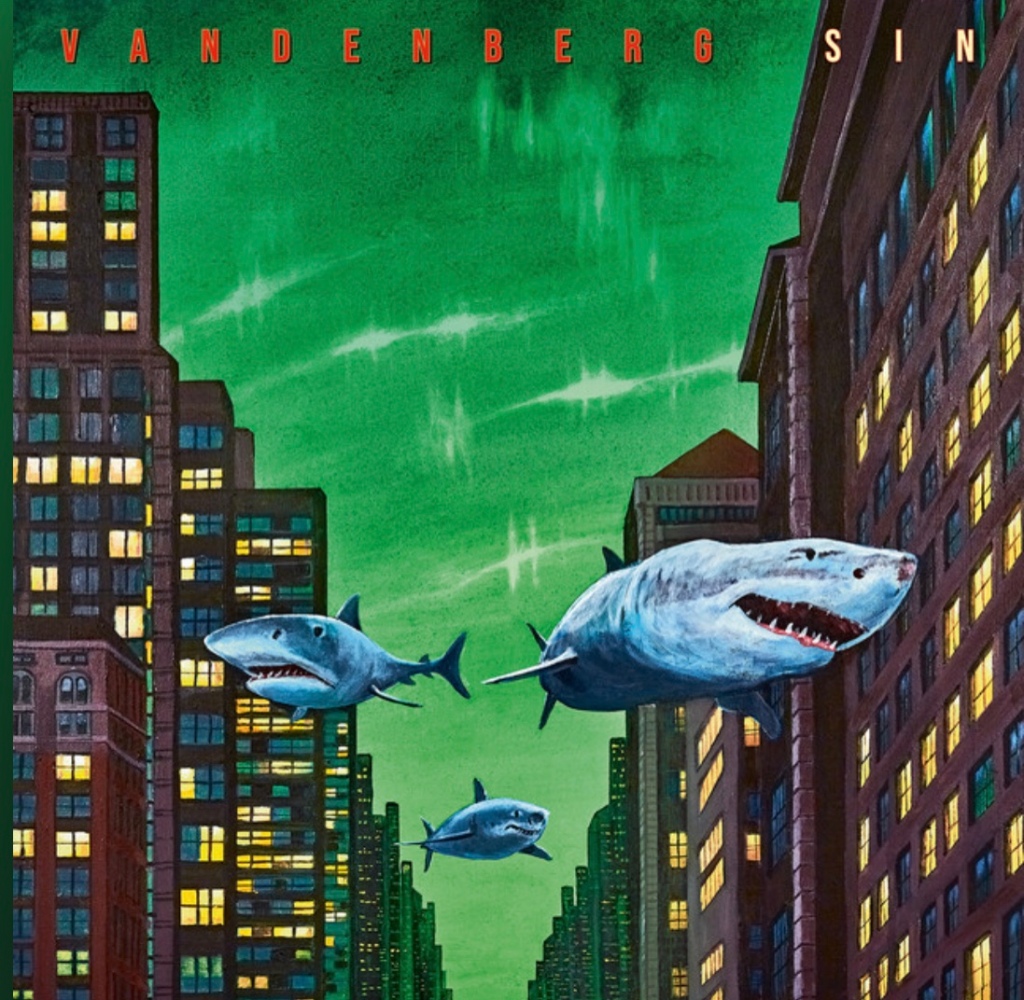
How cool is the cover art?

Once again, created by Adrian, he wanted to show an actual destination for the flying sharks who made their appearance on the “Heading For A Storm” album.

Instead of flying over a road in the desert, they are now flying into New York, the city of sin.

Thunder And Lightning

This is a person writing songs for the love of it. No pressure to write hits and no pressure to conform.

For those who grew up in an era of driving with the window down and cranking the music from the stereo, well this song is perfect for it.

Vocally, Mats Leven is channeling David Coverdale. Musically the song channels the spirit of Eddie Van Halen and the Euro blues rock of Michael and Rudolf Schenker.

Stick around for the guitar solo.

House On Fire

Heavy palm muted arpeggios start it all off with Leven singing in a low bass/baritone. Then it goes into a sleaze like riff.

This is a straight ahead rock and no one is doing it better in 2023 than Adrian Vandenberg.

Sin

This sounds so good. Vandenberg rewrote “Judgement Day” and I like it?

Then again “Judgement Day” is heavily based on “Kashmir”. And I still like it.

Alot of legacy artists keep saying “what is the point in writing new music as no one cares about it”. Tell that to Vandenberg.

Light It Up

Love the swagger on this.

Walking On Water

Ooh, that guitar intro and the vocal. Very 70s Free like.

And stick around for another masterful guitar solo.

Burning Skies

The album keeps going, sounding different from cut to cut. Like “Back In Black”. This one feels like a classic Scorpions cut.

Hit The Ground Running

It’s all about the vocal.

This one has Leven channeling Coverdale and the groove sits nicely on your lap.

Baby You’ve Changed

It’s intimate.

A ballad that rolls along like “Is This Love” and “The Deeper The Love”. But it’s not a copycat.

Out Of The Shadows

The arpeggio riff in the Intro reminds me of Coverdale/Page and their song, “Whisper A Prayer For The Dying” but the song is nothing like that.

It’s got this classic 70s Rainbow Dio era vibe and I like it.

It’s just 9 songs clocking in at 41 minutes. Like old school albums, pre CD.

Mats Leven is one hell of a vocalist. A journeyman like so many other vocalists from the late eighties and early nineties.

He came to my attention with the band Swedish Erotica in 1989.

He has then performed (just to name a few) with Treat, Yngwie Malmsteen, Candlemass, At Vance, Firewind, Trans Siberian Orchestra and Therion.

By doing so and picking up whatever work he could get, he found a way to survive the wastelands of the 90s and early 2000’s which were not very kind to hard rock vocalists. Jeff Scott Soto and Johnny Gioeli are two others that come to mind.

Finally, Adrian Vandenberg is 69. He still rocks as hard as he did when he was 29. He hasn’t mellowed out at all. He’s actually gotten heavier and he is free to write the music that he wants to write.

If you want to read my review of Vandenberg’s recorded output up to a certain point in time (it was up to 2014 and the first Vandenberg Moonkings album), you can read it here.

Standard
A to Z of Making It, Classic Songs to Be Discovered, Derivative Works, Influenced, Music, Unsung Heroes

Tony Martin – It Ain’t Worth Fighting For

Tony Martin never wanted to be a singer.

When he went to an audition with a band called “Legend”, he took his guitar.

But they said to him that they need a singer and wouldn’t let him play.

And then he gets the vocalist gig for Black Sabbath, who were going through an identity crisis between 1984 and 1987.

And as soon as he righted the Sabbath ship, he was out and Dio was back in for the “Dehumanizer” album.

And while that was happening on the Sabbath front, Tony Martin kept writing until he had enough material for a solo album.

“Back Where I Belong” was released in 1992 on Polydor.

“It Ain’t Worth Fighting For” is the opening track from the album.

The musicians are seasoned professionals.

Nigel Glockler from Saxon is on drums. Neil Murray from Whitesnake is on bass. Richard Cottle is a session pro, and he plays the keys and also performs the saxophone solo. Carlo Fragnito is on guitars.

A bit if trivia, Fragnito and his brother Anthony formed a band called Blacklace, with vocalist Maryann Scandiffio.

Hailing from Canada, their music is best described as NWOBHM. They released “Unlaced” in 1984 and “Get It While It’s Hot” in 1985. Like a lot of bands who didn’t see success right away, they struggled and eventually broke up.

Carlo then became a session pro.

As soon as you press play, the riff that smacks you in the face is reminiscent to “Headless Cross”.

But the track feels like a heavy blues rock track instead of a metal track.

If it ain’t worth fightin’ for
It ain’t worth having
And I just gotta have your love

The Chorus is Arena Rock. Make sure you pay attention to the melodic guitars underneath the vocal melody.

Bad Company comes to mind here and the feel from “Rock ‘N’ Roll Fantasy.”

Vocally, Martin comes across as a combination of Lou Gramm and Paul Rodgers.

And that Sax solo works perfectly. It outlines the Chorus vocal melody with some improv.

Press play.

Standard
A to Z of Making It, Classic Songs to Be Discovered, Derivative Works, Influenced, Music, My Stories, Unsung Heroes

The Record Vault and Australian Method Series: AC/DC – Fly On The Wall

Disaster. That’s how the American magazines described this album.

Released in 1985, the album never stood a chance.

It was fighting for our attention along with a lot of other things.

Like.

The trilogy of Mutt Lange albums were outselling everything else AC/DC put out during this period.

The Sunset Strip gave the charts and MTV a major shake up and sales followed.

The British had invaded the U.S again with Judas Priest, Iron Maiden, a solo Ozzy Osbourne and Def Leppard cementing themselves as arena acts.

The Germans also invaded via a hurricane called The Scorpions.

And finally an underground Speed Metal scene in San Francisco was slowly taking over the U.S.

But in Australia we remained true. Never wavering. And we made it triple platinum.

But let’s go back in time.

The success of “Back In Black” in 1980 showed the labels that their was an appetite for hard rock music. And the labels wanted more of the same.

So it’s no surprise that by 1985, most of the label rosters had a lot of “hard rockers” on the books. But these rockers wore everything that wasn’t denim and their hair kept hair dressers employed for decades.

Even acts from the 70’s started to participate in this new look so they could remain relevant. But AC/DC didn’t change. They stuck true to their denims and Angus still wore the schoolboy outfit.

And the critics found them irrelevant while they still sold out arenas.

Fly On The Wall

The music is infectious and the vocals indecipherable.

Sign me up.

Shake Your Foundations

It was the only song that got a pass back in the day.

How good is that intro and the Chorus is iconic?

Plus it got decent radio play in Australia.

First Blood

Musically, it’s typical of AC/DC.

Lyrically, Brian Johnson is indecipherable and hard to understand.

Danger

“Come Together” comes to mind when I hear this.

“Here come old flat top” is what my ears are expecting when the song begins.

It’s no surprise that the Young brothers are referencing Chuck Berry here as his fingerprints are all over the riffs the Young’s write.

Sink The Pink

The music clip comes to mind here.

Seeing the band playing in a pub/bar again and that pesky fly from the cover getting a hard on (via its nose going from limp to hard) when a women dressed in pink enters the pub.

But it’s the music that seals the deal and Brian Johnson sounds better in the video than the recording.

I like the musical reference to “For Those About To Rock” and The Who’s “Won’t Get Fooled Again”. So I was hooked.

Sink the pink, it’s all the fashion”

It has so meaning meanings.

The Urban Dictionary tells us, sink the pink means to “have sexual intercourse with a virgin, and to pop her cherry”.

But the Urban Dictionary didn’t exist in 1985 and my young impressionable brain saw it as a song about drugs.

And thanks to the Internet, I believe it is.

Welcanol was known during the eighties as the South African Heroin (Pink Heroin). It could be obtained via a Doctor prescription and it came as a pink tablet.

So before OxyContin there was Pink Heroin.

“Drink the drink it’s old fashioned”

I’ll take an old fashioned drink any day.

Playing With Girls

I love the music and the groove here.

But I hate the title and the fact that Johnson is mixed low and indecipherable.

Definitely a missed opportunity here.

Stand Up

I like this song. It’s defiant and it rocks.

If you just listen to the Chorus you would think it’s about standing up and facing the world, but when you read the lines in context with the verses, well, it has a different meaning.

Hell Or High Water

A 4/4 groove and we are off.

But it’s pointless as Johnson is buried in the mix and the song is ruined.

Back In Business

A deep cut. It reminds me of ZZ Top and I like it.

Send For The Man

Musically it rocks but the buried Johnson chainsaw like vocals ruin it.

It’s not a perfect album, then again most of the albums released in 1985 are far from perfect. In other words, the era of more filler than killer was well and truly in motion.

But I would say, it’s an underrated album from a band that enjoys doing their thing without over obsessing about it.

The U.S tour had controversy. It all took place underneath the censorship discussions concerning rock music. Religious groups tried to ban certain shows while city officials wanted to rate each show and give the shows a movie style rating, which would then exclude fans from going. Fire officials would also get in on the act and limit or stop any pyrotechnics.

But the band went on.

In the vinyl album sleeve of the “Fly On The Wall” re-release from 2020, Angus sums up the tour like this;

“This tour’s a little like a series of wrestling matches with the loonies. But what’s the fun of life without an occasional tussle”.

Enough said.

Get to it folks. Crank it and start tussling.

Standard
Classic Songs to Be Discovered, Music, My Stories, Unsung Heroes

2001 – Part 6.2: Seven Mary Three – The Economy Of Sound

Six years had passed since “American Standard” (1995) hit the streets and chalked up a Platinum award.

Seven Mary Three was written about as an “overnight sensation” by the media. An overnight sensation which had built their success mile by mile since 1992.

They finally got their major label deal and switched to Atlantic from Mammoth after “American Standard”. Actually I think the labels were joined at one time and they split apart with the band agreeing to sign with Atlantic.

“RockCrown” came out in 1997 and it failed commercially. The emphasis on folk rock alienated their hard rock audience who didn’t want to go on this journey with them.

But “American Standard” was still selling and “Cumbersome” was still on radio, so Atlantic put them back in the studio. Let’s reap whatever sales we could get was Atlantic’s motto.

A year and a month later, “Orange Ave.” comes out and it also fails commercially. Atlantic dropped em and Mammoth took em back.

In 1999, one of their main songwriters, guitarist Jason Pollock left, citing writers block. Thomas Juliano took his place, joining vocalist Jason Ross, bassist Casey Daniel and drummer Gigi Khalsa.

And here we are in 2001, with “The Economy Of Sound”.

Sleepwalking

It’s written by Ross and Juliano. It reached #39 on the Hot Mainstream Rock Tracks.

It’s a great post grunge/alternative rock track, reminding me as a cross between Neil Young, Pearl Jam, Rolling Stones, The Vines and Collective Soul.

Can’t stop this sleepwalking
Can’t stop my mind

A sense of being helpless or unable to exert control over our actions and thoughts.

And my spies realize that my hope’s euthanized by the paranoid ape in my heart

A feeling of disillusionment due to internal struggles or fears.

Wait

Written by Ross.

It reached #7 on the Hot Mainstream Rock Tracks and #21 on the Hot Modern Rock Tracks.

It reminds me of the song “Signs” which Tesla made popular again in the early 90s. On its Wikipedia page, the song is criticized as being a “Goo Goo Dolls” knockoff or a Bon Jovi homage.

Regardless, this song is littered with some of my favorite lyrical lines.

Machines and luxuries don’t last

Machines and luxuries are temporary and can’t provide lasting fulfillment.

I took my sleep for granted in the past,

Taking our sleep for granted in the past, only to realize the consequences later.

And I woke up half-dead in the hourglass.

It portrays the feeling of time slipping away and the importance of valuing things that truly matter.

Wait, you’re almost there it’s gone

A sense of missed opportunity. We are always focused on the goal and in achieving something, but by the time we realize it, the opportunity has already passed.

It could be about realizing the value of something too late or the fleeting nature of moments.

I never found a gift you get for free, You pay for them dearly

Nothing is obtained without a cost.

Even though things might appear to be free initially, there is usually a significant price to pay in terms of effort, sacrifice, or consequences.

Faster

Written by Ross.

It’s standard pop alternative rock, more like what Good Charlotte would do.

Before tearing it down. I’m alone by my design.

A deliberate choice to be alone while making changes or taking actions.

Summer Is Over

Written by Ross and Juliano, it’s got this chromatic descending line, reminiscent of Stone Temple Pilots “Plush” and certain songs from Collective Soul.

And by some six degrees of separation that Seven Mary Three listened to the “Slang” album from Def Leppard, we’ll I hear that as well.

So this song is a definite like for me.

Honey

Written by Ross.

“Song No 2” from Blur comes to mind.

Still I Find You

Written by Ross.

And still I find you waiting for me on the other side.

A hidden deep cut, with its Led Zeppelin and Beatles feel. They should have lived in this world for a little bit longer and written more songs like this.

And it’s a favorite.

Breakdown

Written by Ross and Daniel.

Its aggressive like a Blur song and its got an excellent Bridge section which is very Beatles “Helter Skelter” like.

Man In Control?

Written by Ross, it’s got this groove and feel that The Wallflowers became famous for with “One Headlight”.

Zeroes and Ones

Written by Ross and keyboardist Kevin McKendree.

It’s got this “Heroes” vibe and I like it.

First Time Believers

Written by Ross, it feels like an attempt to be Collective Soul.

Steal A Car

Written by Ross.

Velvet Revolver comes to mind here and I like it.

Tug

Written by Ross.

It’s an acoustic heartland like cross that wouldn’t the out of place on a Jovi or Collective Soul album.

And the album was another commercial disappointment.

After the release, their label Mammoth would also be swallowed up by Hollywood Records/Disney and the band was again without a label.

But they continued.

A few more albums, a couple of EPs and a live album would come out and then in 2012, the band broke up.

There was no announcement or updates on their Facebook page.

Just the end.

Standard
A to Z of Making It, Classic Songs to Be Discovered, Influenced, Music, My Stories, Unsung Heroes

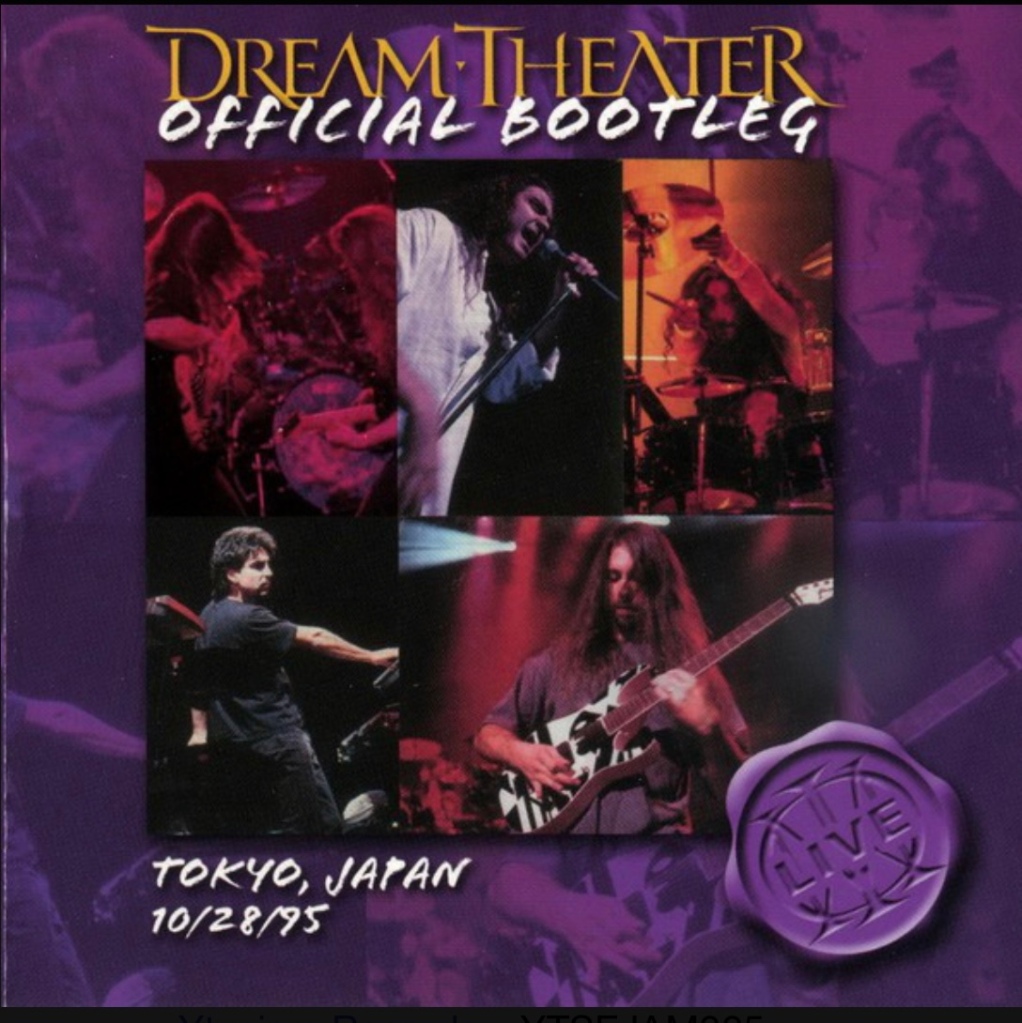
The Record Vault: Dream Theater – Tokyo, Japan 10/28/95

All at once in 2004, Dream Theater dropped three bootlegs under the sub headings of DEMO, COVER and LIVE.

The DEMO release was reviewed here, and it covered the “When Dream And Day Unite” period between 1987 and 1989.

The COVER release is their play through from start to finish of the “Master Of Puppets” album and will be reviewed next.

This review is on the LIVE release and as I’m writing this review it has not been re-released as part of the Inside Out re-releases/new releases.

So all we have at the moment is the Ytse Jam Records release.

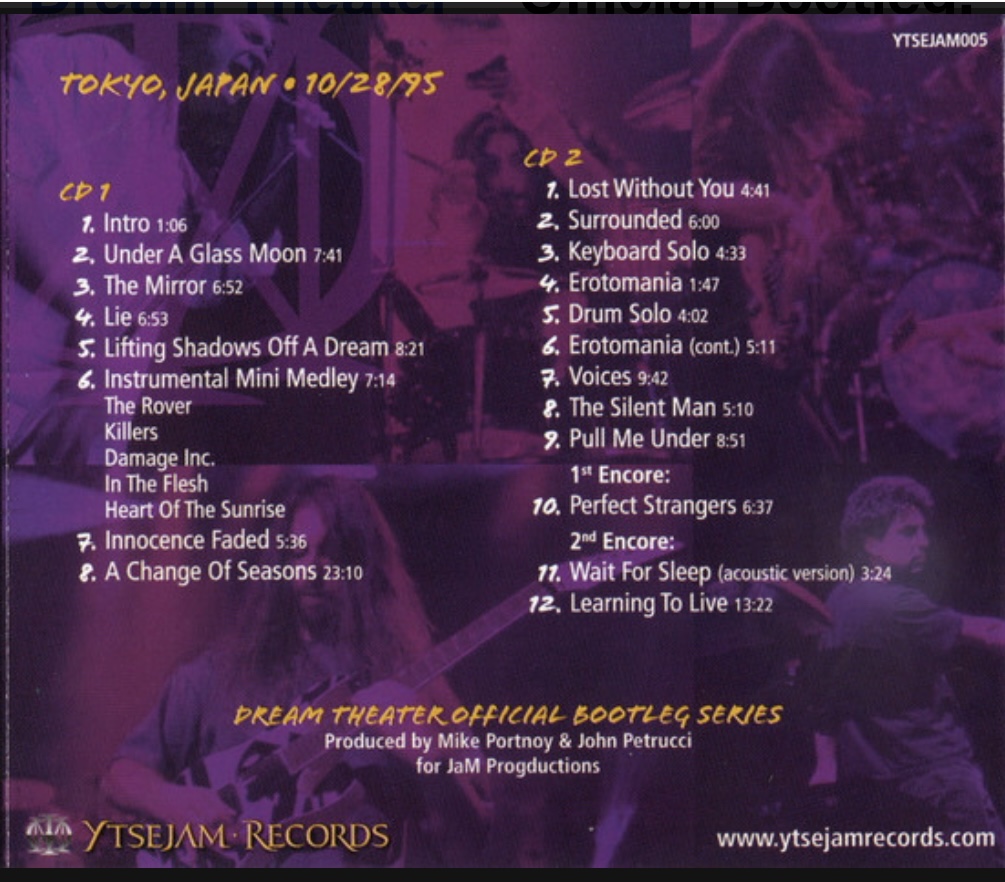
The full 2 hours and 20 minutes, recorded live on the run of shows used to promote the “A Change Of Seasons” EP.

This is from October 28th, 1995 at NHL Hall, Tokyo, Japan.

The band is John Petrucci on guitars, Mike Portnoy on drums, John Myung on bass, James LaBrie on vocals and Derek Sherinian on keys.

Intro

There is a tape intro that goes for about 1 minute. It’s got a clock ticking and the sad piano lines from “Space Dye Vest” are played.

Then there is a voice over, some backwards sound effects and the octave notes from “Under A Glass Moon” kick in.

Under A Glass Moon

I like the surrealist title.

The verse riff on this song with the keys playing Chords over it. Perfection.

Stick around for the solo as it’s one of Petrucci’s best.

The Mirror

It’s a heavy song with Petrucci deploying the 7-string. Its intricate arrangements and dynamic shifts are interesting.

Lie

It goes together with “The Mirror” as some musical sections appear in both songs. This was a single from the “Awake” album, however it didn’t have the same success as “Pull Me Under” from the album previously.

The mix of heavy riffs and melodic moments, highlights their versatility.

Petrucci as usual delivers a few killer solo sections.

Lifting Shadows Off A Dream

It starts off like a slow jazz blues fusion jam before it goes into the well recognized bass intro.

It feels like a cross between U2, ballad like Marillion and 80s synth Rush.

Instrumental Medley

You get to hear “The Rover” from Led Zeppelin, “Killers” from Iron Maiden, “Damage Inc.” from Metallica, “In The Flesh” from Pink Floyd and “Heart Of The Sunrise” from Yes.

Press play to hear the way they fuse all these different songs into one cohesive track.

Innocence Faded

It’s in a major key. While it rocks it does have pop sensibilities.

But it’s the outro that you should listen to.

Because if you worship at the altar of guitar gods then the outro is for you. Even James LaBrie screams “John Petrucci” when it starts.

If you can’t find this track, then any other official live version or even the studio cut will suffice.

A Change Of Seasons

You get the full 23 minutes.

The way this piece is written is that each part can be played separately in the set list amongst other songs or it can be played as one song, like it is here.

And like all multi-part epics, it serves as the grand centerpiece of the show, displaying their songwriting prowess and technical skills in a live setting.

Lost Without You

“Lost Without You” was officially released in 2005 on John Petrucci’s solo album “Suspended Animation”.

But here it is, live in 1995.

Its an intimate and introspective moment within the setlist, very blues/jazz fusion like and I’m all in.

Petrucci nails it and the emotion drips from the strings.

Surrounded

The “Images And Words” album is all killer.

And this song is largely out of the conversation, however the band does a stellar job playing tracks from the back catalogue in the live setting.

After the piano intro and verses, the song picks up. Listen to how Petrucci decorates.

Derek Sherinian Keyboard Solo

I’m not a huge fan of solos in concert like this, but this one actually rocked and kept me interested.

It was a mixture of ragtime, blues, classical and cinematic/video game like music.

Erotomania

Mike Portnoy takes over the middle of the song with a drum solo.

But at least they go back into the song and to one of my favorite instrumental sections.

Voices

This is another song that seems like it’s out of the conversation when it comes to Dream Theater songs.

But it’s a classic

The Chorus is arena rock.

And that solo is what guitar heroes are made of.

The Silent Man

It’s a great acoustic song.

And they bring the 70s Classic Rock vibes (which is known as Country Rock these days) to it live.

Pull Me Under

Closing the main set with their most recognizable hit, leaves the audience energized.

The 1st Encore begins with a cover.

Perfect Strangers (Deep Purple cover):

The Deep Purple cover sounds like it came from the minds of Dream Theater.

You can hear the fun in the music and they definitely jam it out.

The 2nd Encore begins with the last two tracks of the “Images And Words” album. And for a 1995 set list it’s perfect.

Wait For Sleep (Acoustic version)

An acoustic version of “Wait For Sleep” is excellent.

Learning To Live

The grand finale. The whole song is a masterpiece.

And then that outro section. Wow.

In summary, its raw as a bootleg should be.

The setlist is diverse and it showcases their instrumental virtuosity and ability to navigate complex musical compositions.

There are mistakes and pitch issues but hey, if I wanted the studio recordings I would play them.

The inclusion of covers and acoustic moments also adds depth to the overall concert experience.

Crank it.

Standard
Classic Songs to Be Discovered, Influenced, Music, My Stories, Unsung Heroes

Touch Of Madness

They got some traction with the single “Don’t Tell Me You Love Me” from the “Dawn Patrol” album in 1982. The future looked bright.

Then their record label “Boardwalk” went under.

But they had a believer in former Boardwalk vice-president Bruce Bird, who organised a deal with Irving Azoff to sign the group to MCA. Night Ranger would be the first signing to Bird’s new imprint under MCA, Camel Records Inc.

“Midnight Madness” came out in 1983. Check out the ages of the guys in the band.

Jack Blades is 29, Brad Gillis is 26, Jeff Watson is 27, Kelly Keagy is 31 and Alan Fitzgerald is 34. These are seasoned pros, who have paid their dues in other bands since the start of the Seventies.

And in 1983, fame came to them in the form of music television.

MTV would turn regional club acts into arena acts instantly on the back of a song, and “Sister Christian” along with “(You Can Still) Rock In America” became the songs that launched Night Ranger across North America.

While the album has alot of good songs my favorite is the first song on Side 2.

“Touch of Madness” is written by Jack Blades.

The eerie music box gets your attention immediately.

Then a heavily palm muted arpeggio single note riff kicks in before, all hell breaks loose with the blues slide rock riff from the 19 second mark.

The playing is excellent.

At the 42 second mark, the verse groove comes in. It’s groove Rock and Kelly Keagy thunders on the kit.

Blades delivers a stellar vocal,

The lyrics suggest a feeling of being drawn to someone who has a captivating and mysterious quality.

She say
“I get high when I want to
Don’t ya think you need it too”
I need a touch, I need a touch of madness

All of the religious leaders in the 80’s got it right, that the youth of the world had been seduced by the devil’s music. We liked to get high when we wanted to and Mister Juana was a favourite.

The “touch of madness” is the irresistible allure of someone’s unpredictable and exciting nature.

I need a touch, a touch of madness

The lead break is Randy Rhoads-esque. Building on a simple motif and embellishing it with fast scalar runs.

I like how you get another verse, pre and chorus after the solo section. It’s the reason why it clocks in at 5 plus minutes.

Crank it.

Standard