Fates Warning – The Spectre Within
I picked up their first three albums really cheap in the early 90’s via a second hand record shop. The youthful exuberance approach to song writing is clear, with extravagant structures and riff-a-ramas in each song. Better albums and songs would come later however those songs would not be possible if they didn’t get these early albums and the styles out of the way. Put simply, this is Fates Warning, sounding heavier, faster and more complex.
The band is also different to the band that I would come to like. John Arch is on vocals, Victor Arduini and Jim Matheos are on guitars, Jim Arch is on keyboards, Steve Zimmerman on bass and Joe DiBiase on drums.
“Orphan Gypsy”, musically is an underrated progressive metal cut. If it appeared on a Megadeth or Metallica or Slayer album, it would be seen as a classic. Lyrically, the melodies are hit and miss, but the music is a thrash-a-thon. “Without A Trace” has an intro riff which could have come from Malmsteen’s “I’ll See The Light Tonight” before it morphs into a galloping riff like Iron Maiden.
But its “The Apparition” which fuses their Maiden influences (especially “Rime Of The Ancient Mariner”) with their other influences which really gets my attention. Even the vocal delivery, could be said to inspire Midnight from Crimson Glory.
Musically, the piece d resistance is “Epitaph”. It sounds like its inspired by “Heaven And Hell” from Sabbath. And at 12 minutes long, it has different movements and moods and it’s a great way to close the album. This song is a giant leap for progressive metal.
Vocally, John Arch, is a tenor, a cross between Geoff Tate and Dickinson, with a bit of Robert Plant, Rob Halford falsetto and King Diamond chucked in for good measure. But his choice of melodies are a bit of a let down on some of the songs.
Loverboy – Loving Every Minute of It
If you listened to rock music, there is no way that you would have not heard of Loverboy and their songs. This is their first album to not feature Bruce Fairbairn in the producers chair, and Tom Allom was hired.
The album is not on Spotify Australia which irks me, but hey, YouTube has it.
Mutt Lange is on hand to write the big hit, “Lovin’ Every Minute Of It”. This dude couldn’t do nothing wrong for a long time.
Jonathan Cain from Journey is on hand to co-write the soft rock influenced “This Could Be The Night” with Paul Dean, Mike Reno and Bill Wray.
Bryan Adams and Jim Vallance are on hand to write “Dangerous”, a melodic rock classic.
The riff in “Friday Night” is to my liking. This one is written by Bill Wray, Paul Dean, Davitt Sigerson and Patrick Mahassen.
And the lyric, “Friday Night, I just got paid, no sleep till Monday”. Truth right there, folks.
The good songs keep coming, with the hard rocking “Too Much Too Soon” and the ballad like “Destination Heartbreak” (with its heartbreak emotive guitar solo). But it’s the Lange penned title cut that moved units.
Heart – Heart
This album was massive in the U.S with 5 plus million in sales and a who’s who of songwriters behind it. Not sure if that was the intention of the Wilson sisters or the label, but the addition of songs from outside writers enhanced the band.
“If Looks Could Kill” is a perfect opener. There is a “Live In Memphis” release on Spotify which is recorded in 1985 for a radio broadcast, and this opens it. Its raw rock and roll without all the studio polish and perfect. It’s written by Jack Conrad and Bob Garrett. And Conrad played bass in The Doors after the death of Jim Morrison and became a songwriter later on.
“What About Love” is a cut written by Sheron Alton, Brian Allen and Jim Vallance. I like the verses more than the Chorus. “Never” and “All Eyes” are written by Holly Knight and Gene Bloch, along with Nancy Wilson, Ann Wilson and Sue Ennis. “These Dreams” is written by Elton John’s song writing partner Bernie Taupin and Martin Page. It was a hit, but it’s not on my radar.
“The Wolf” (the side 1 closer) and “Shell Shock” (the side 2 closer) are written by the band with Sue Ennis. Both songs are aggressive and loud and I like em, but they wouldn’t push the album past the 5 million mark in sales.
DLR – Crazy From The Heat
Roth got a lot of money to go solo, but the real solo album would come with “Eat Em And Smile”, then again, that album also had a lot of cover songs on it as well, so the real solo album, free of covers was “Skyscraper”.
For “Crazy From The Heat”, I own it on cassette and LP, but I never play it.
Warrior – Fighting For The Earth
The title makes me laugh now, but in the 80’s it was badass. Even the band name referenced my favourite movie, “Warriors”. They had the whole dystopian metal look happening, and that intro riff, used in a million songs, but so effective in this song.
And vocalist Paramore McCarty is one hell of a vocalist. If you haven’t heard Warrior, then you would have heard his singing with Steve Stevens Atomic Playboys. In 2017, he resurfaced with the band “Radiation Romeos” and released an album on Frontiers. If the name sounds familiar, well it appeared in the lyrics of the song “Atomic Playboys”. Musically, it sounds very similar to the song.
And when you want to talk about connections, Robin Crosby from Ratt kick started his career by getting him to sing in his pre-Ratt bands and getting him noticed.
And Joe Floyd is an excellent guitarist/songwriter. If you’ve seen a Bruce Dickinson or Rob Halford album, well he is listed in the production credits as either a mixer or engineer.
Immortal enemy, has come to challenge man / Secret science out of control
Who knew the immortal enemy is a virus. We cannot eradicate it, so we need to learn with it.
We are fighting for the earth
But no one is listening. As long as money rules the game, the Earth suffers.
Blood and corruption, hideous crimes / Lying leaders, controlling our minds
It feels like the rich and powerful don’t have to answer to anyone. Rules don’t apply to them. Then you have the news outlets who no one seems to fact check, also spreading lies like our elected leaders.
“Defenders of Creation” starts off with a riff that reminds me of “It’s Not Love” by Dokken. What came first, we will never know.
Leatherwolf – Endangered Species
In Europe it was released as “Leatherwolf” and in America it was released as “Endangered Species”. To confuse matters even more another self-titled album was released in 1987, which is different to this one.
But it was “Streetready” released in 89 that really got me interested in the band and I couldn’t find any of their early stuff at that point in time. But many years later, the internet made sure I did.
And this album is not on Spotify Australia but it’s on YouTube.
Musically, it’s metal the way I know it from a band trying to find where they fit into things. The tracks I like are “Endangered Species”, “Season Of The Witch” and “Leatherwolf”. But better songs would come after.
Mr Mister – Welcome To The Real World
Like Loverboy, but lighter in rock and roll. Like Marillion, but more poppy. Like Toto and their Africa period. Like U2 but not big on the social conscience lyrics.
That’s basically how I described em.
And there was no denying “On Broken Wings”. It was everywhere and I liked it. 134 million streams on Spotify demonstrates how big it is. And maybe because it reminded me of U2, I gravitated to it.
“Kyrie” is another song which still does the rounds at 33 million plus streams. This one reminds me of “Africa” from Toto and Marillion and I like it.
The labels tried their best to break up the band by offering vocalist Richard Page the vocalist gig in Toto to replace Bobby Kimball and then to replace Peter Cetera in Chicago.
But Page refused both offers.
In the end, this album (their second) was its biggest.
Once album number three “ Go On” stalled in sales a few years later, the writing was on the wall. Guitarist Steve Farris left in 88 and the remaining members went to work on album number 4 with session guitarists. This was ready for release in 1990 but the label refused to release it and that was that.
John Fogerty – Centrefield
I had no idea at the time the troubles he had with the labels and his old CCR songs but there was no denying that John Fogerty is a star. And the songs, “Vanz Kant Danz” and “Mr Greed” sum it up nicely about his struggles.
That opening lick in “The Old Man Down The Road” gets the foot tapping. Its instant and memorable. “Rock and Roll Girls” transports you back to those 60’s movies, hanging out on the boardwalk. “Mr Greed” is a blues rock slap down of his former label boss and the title track is a 12 bar blues romp.
And that’s a wrap for 1985 part 6, and I’m off to 1977 for part 6.


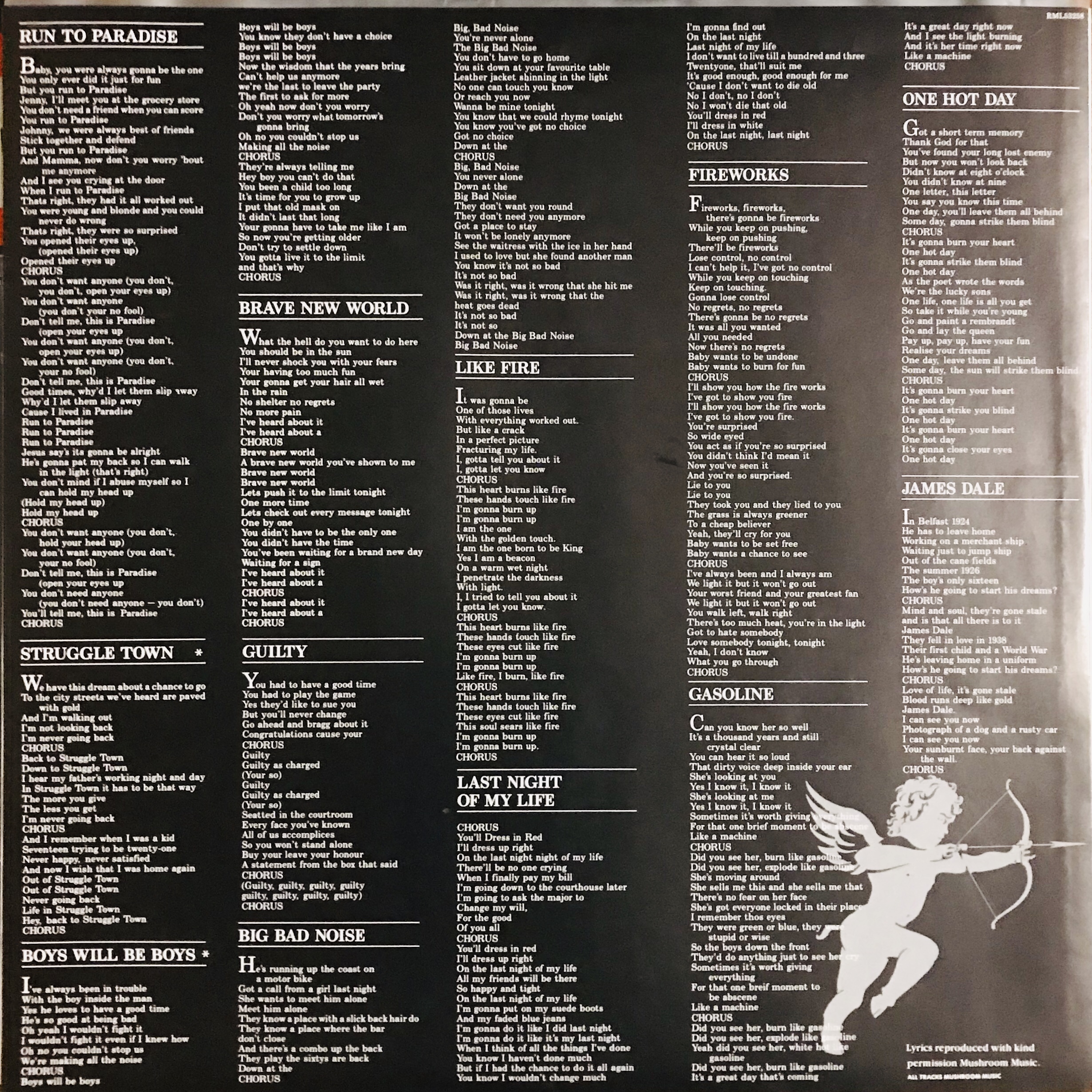 Then the album dropped in February 1988 and by then the band had a lot of momentum. The Jovi September 87 shows went into the “Run To Paradise” single release in the December summer and now the album.
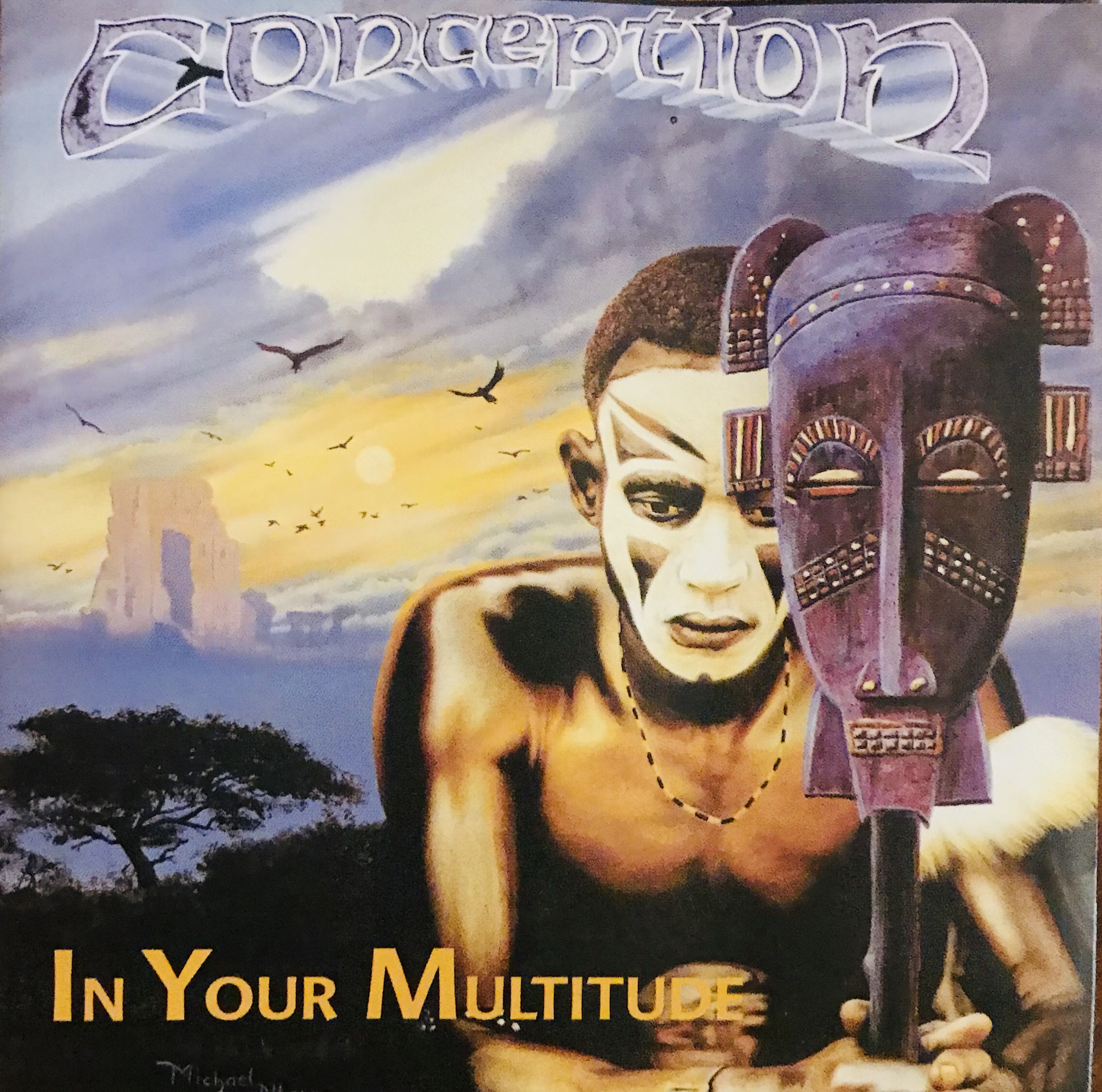


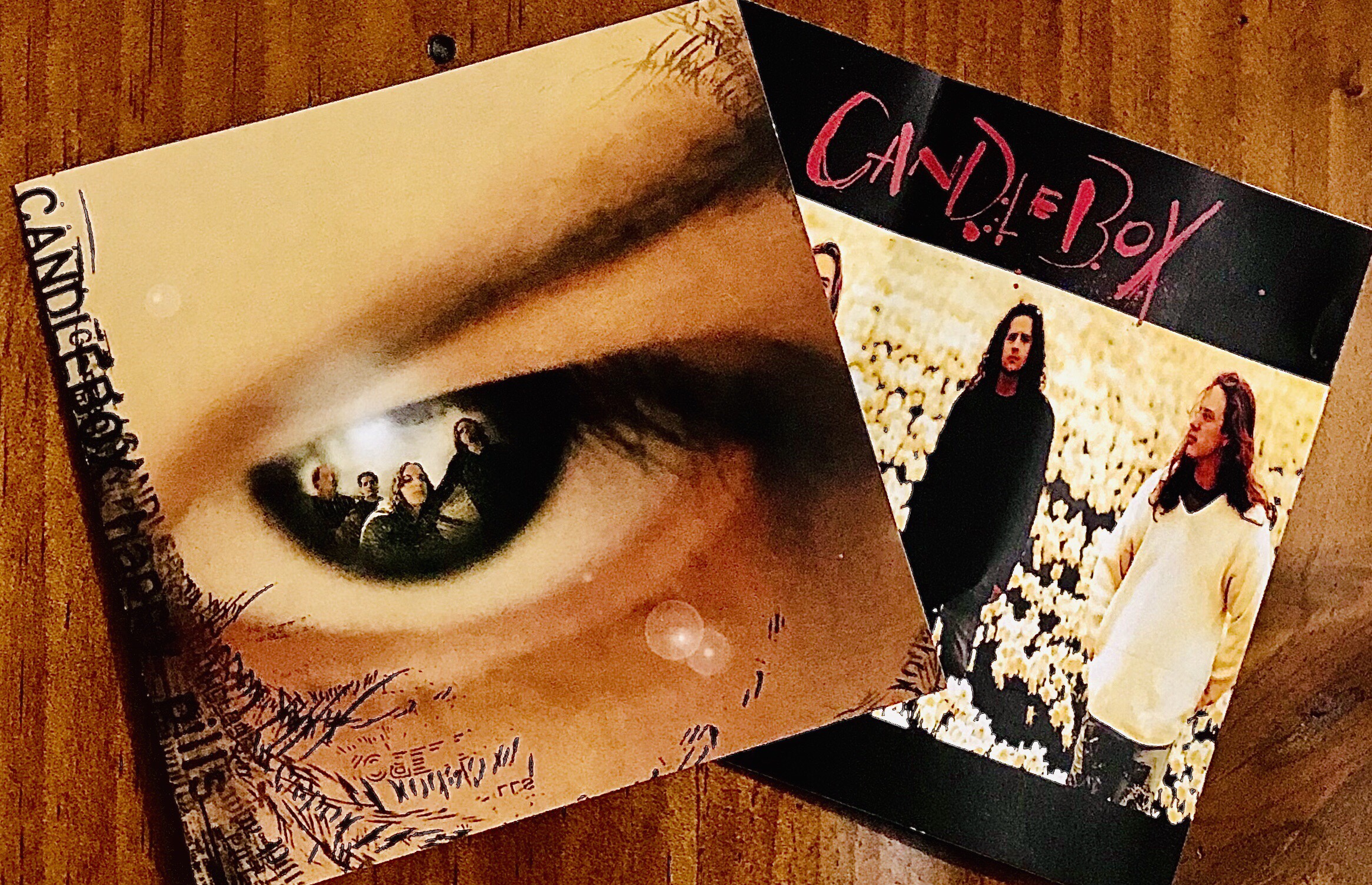
 I was late to the party on these guys.
  This is their third album.
