A to Z of Making It, Copyright, Music, My Stories, Stupidity

Change Happens

Change happens. It isn’t easy but the earliest you understand it and accept it, the quicker you’ll be able to move on and make a living in the post-change world. 

There is still too much focus from artists on things they cant control, instead of focusing on things they can control, like creating art, connecting with people, using data from streaming listens to organise tours and merchandise deals in those areas that have super fans.

Super fans according to Spotify are people who have streamed the music of the artist for 45 days in a row. Spotify then targets these fans with updates and pre-sales and turns this data over to the artist for free.

If you have noticed, when you go to your favourite artists account and you see the number of listeners on their account, well, a percentage of those listeners fall into the super fan bucket.

But it takes work to do all these extra things, and there are people feeding your ear with how unfair it is that Spotify is taking the Copyright Royalty Board to court because the Board increased the royalty base fee that these services need to pay.

In my view, the board should not have this power at all, because it is not the fault of the streaming service for the low payouts to the artists.

The record label and the artist did sign an agreement once upon a time which explains in great detail how these payments will be divided, once the monies the label spent on the artists have been recouped.

In the process, the songwriters also signed deals with labels and publishers once upon a time, and in most cases, they also pocketed millions in advance payments in lieu of future earnings, and now suddenly, the fault lays with the streaming services.

Has anyone seen Spotify’s financials to check how much of an expense Royalties are to their business?

They are not avoiding paying.

Music like any other form of economic business needs to operate in the economic world. That means the price and value of art will fluctuate based on market demand. If it has a government institution setting a royalty fee, then the whole business model is in trouble, because the government is over inflating the real value of the art, by setting prices which are out of touch with market demand.

But the oldsters in charge of the RIAA and the labels and their politician friends are all colluding, so the Government props up and shields a business that refuses to operate in the real economic world.

Let me tell you a story about Leo Feist and Harry Von Tilzer. If you don’t know who they are, it’s okay, and if you do, great. Remember how once upon a time there was a booming sheet music business. Well these two guys were influential in this business.

And they gainfully employed musicians to demonstrate playing the sheet music songs to people, as a way to sell amateur musicians on the idea to purchase the sheets of music. Music stores then started to employ these kind of musicians as well, and suddenly you had a new industry of musicians earning a weekly wage, playing other peoples songs to people.

But like all great things, change is around the corner. They had a feeling that these new technologies called the phonograph and radio would change the game and they also knew that songs would go from local cities to state wide to country wide faster than ever before and to more people than ever before.

In due time, the musicians employed by the sheet music corporations didn’t have a job and the music business model these two men built and profited from began to fall apart.

But benefits also came about from the new technologies as more artists and bands suddenly becoming popular.

Change happens.

And the way you used to make money is not the same anymore. It’s the same for every business. Apple makes its money very differently in 2019 to how it did in 1985.

You might not have the global dominance of artists from the MTV era, but more and more smaller artists are building a career, with a small cult audience which sustains them.

As artists, be open minded, embrace change and look for creative ways to monetize instead of being angry. And in the end, enjoy the highs and lows the process brings with it.
Standard
A to Z of Making It, Classic Songs to Be Discovered, Derivative Works, Influenced, Music, My Stories, Unsung Heroes

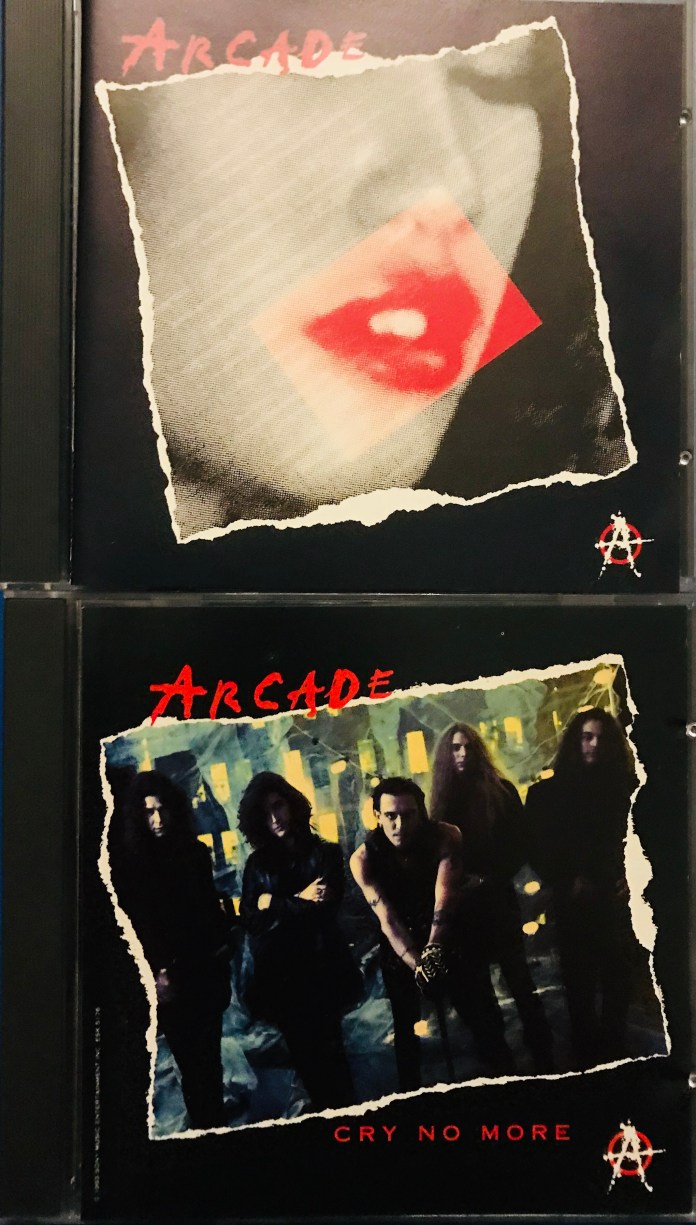
The Record Vault – Arcade

EMI really wanted this album to work.

Stephen Pearcy’s previous band RATT splintered. Some say it was due to dwindling sales (500K units in the US is not a small amount for their “Detonator” album, but then again the labels reckon it was, especially after moving 3 million units for their previous albums) and others say it was due to Grunge.

Regardless, Pearcy didn’t wait around and he hooked up with Fred Coury from Cinderella on drums, Johnny Angel played guitar originally and wrote songs for the debut, but was dropped and in came Frankie Wilsex and Donny Syracuse, while Michael Andrews is on bass.

EMI even paired up Pearcy to write with Jim Vallance of Bryan Adams and Aerosmith fame, and they also got producer Dave Prater, who at this point in time had some serious chart success with Firehouse and Dream Theater.

But it didn’t work, and nobody really knows why. Good music is good music and it should find an audience. But it didn’t. Well it didn’t like how the label wanted it to.

So what happened to all of those rock and metal fans from 1984 to 1990?

Why didn’t they lap up this album?

Well, the base wasn’t as big as people thought. The bulk of the fans shifted between rock and pop and metal, so when it came to 1993, it was no surprise that some fans had shifted their allegiance to other styles. Maybe they just thought that Stephen Pearcy was done and dusted or he’s a one hit wonder or because fans became hip now, into more mellow music, like how Mark Wahlberg cut his hair in Rock Star, it wasn’t cool to like rock music anymore. I knew a few people like that, and if they existed in my circle, I am sure they existed in other circles as well.

I purchased the CD but I can’t remember from where. But I do remember the “Cry No More” single which I purchased via a second hand store, complete with ONE song. Yep, you read that right, one SONG on a CD which can hold 70 minutes of music.

And the album is not on Spotify, which is a shame. A real shame.

Calm Before The Storm

It has a wicked open string riff as good as any metal like riff at the time. It’s credited to Vallance, Angel, Pearcy and Coury.

But I dream of rising light
A sign it’s time to be reborn

And a Pearcy was reborn but ignored.

Cry No More

It’s written by Johnny Angel, Fred Coury and Stephen Pearcy.

And man, when a guitarist spends time being the main songwriter and then doesn’t get to play on the album or plays on the album and is fired before the tour, I see that as a low act by said band mates and management.

When I was young my daddy always taught me
To speak the truth and never tell lies
Now that I’m old and no one ever told me
The life you live, the truth you can disguise

We are living it everyday, trying to make out what is real and fake.

Down and out, I need a friend
Who’ll be there until the end

You don’t know who will be there at the end. And it scares people.

Messed Up World

A sign of the times we live in.

Greedy little fingers
Dirty little lies
Diggin’ themselves in deeper
Wearing their disguise
Crooked preachers sell religion
Underhanded politicians

Artists have written about corruption from when I can remember and it’s still happening without any end in sight.

And I ask myself why?

Maybe Geoff Tate was right all along, the holy dollar rules everybody’s lives and everyone has got to make a million, it doesn’t matter who dies.

I don’t wanna believe what they tell me
I ain’t gonna buy what they sell me
I ain’t gonna take what they’re givin’
It’s a messed up world that we’re livin’ in

Damn right and it is only going to get worse, because if you have school children who can’t vote, striking from school for climate change, imagine the changes coming when they can vote. The current powers that be will fight tooth and nail to keep the world messed up.

World peace and religion
Well you know that’s what they teach
But their arms hold up their halos
They never practice what they preach

Wearing masks is the name of the game. It’s all messed up, but that’s how we survive.

Standard
A to Z of Making It, Copyright, Music, My Stories, Stupidity

More File Sharing Equals More Music…

One of the main points of organisations or people who support stronger copyright laws and enforcement is the lies that stronger copyright laws act as an incentive for people to be creative or to make art. About 10 years ago, these lies appeared everywhere. What the public didn’t know, was that these organisations had a seat in the Government Policy room, to negotiate a range of bills in secret.

SOPA (Stop Online Piracy Act) and PIPA (Protect IP Act) got introduced in 2011 in the US Senate for discussion. In January, 2012, people held protests in the streets and online about these bills which would put too much control of the internet into the hands of corporations and governments. Eventually, these bills didn’t pass. TPP was written in secret with the corporations, and it got passed without discussion, only for Trump to squash it and come out with another act, even better for the Corporations.

One thing throughout it all that hasn’t dropped off, is the creative output of people. There is so much more content being produced and created right now than ever before. And the consumers have choice, and a lot of it.

Multiple studies have shown that even though there was a massive increase in infringement once upon a time, at the same time there was also a large increase in creative output as well.

And of course, people will associate output versus money made. Like the way Gene Simmons did when he said “Rock is dead”. Some people create art purely for money. Others create art because they want to create or have a need to create. Money will come, merely as a by-product of creating art.

When the record labels acted as gatekeepers, they could put money behind artists and develop them. It used to happen and some labels did it better than others. But that boom in the 80’s, is not because the labels developed artists, it’s because those artists developed themselves outside the sphere of the record labels.

No one can say that a record label developed Twisted Sister, Motley Crue or even Quiet Riot. Even Metallica did their first album independently and had a cult live following before Elektra came in to sign them for “Ride The Lightning”.

For artists that had break out success in 1986, like Bon Jovi and Europe, I would say, yes, they got developed by the label and got the green light for a make or break third album.

Economist Joel Waldfogelm, did some research a while back.

He wanted to see if the rise in sharing had any drop off on the new music being produced. And the research said, no, as new music was being created continuously. However, the record labels claimed otherwise, a claim not based on evidence.

in my opinion, the study also debunked what Gene Simmons said, about “rock being dead”. Gene’s comments circled around how file sharing and streaming meant that no new acts are being developed and able to grow and release quality albums. In fact, the study finds no support for that claim.

The study looked at the best of lists on popular websites for each decade from the 80’s and found on average, about half of the best-of albums since Napster are from artists whose recording debut occurred since Napster.

The study even went further to check how many albums in the 80’s are from artists from the 70’s and how many are from artists who had their debut in the 80’s. And guess, what, the numbers match the post Napster numbers.

How can that be if no artist is being developed?

Basically, there is no evidence that new artists are no longer being developed or are not creating high quality, successful music. Then again, the great artists didn’t need an A&R rep to develop them. They had their own drive and their own motivations.

But the labels have great PR writers and they sure know how to spin a story, along with the publishers and the movie studios. But their theories are not backed by independent research evidence.

The big difference between pre and post Napster is that most of the new musicians are coming from independent DIY artists, rather than the majors. And the labels don’t like this. And they are taking money away from the legacy artists when it comes to recorded music but the legacy artists still make coin on the live circuit.

Standard
A to Z of Making It, Copyright, Music, My Stories, Stupidity

The Artists Live Forever

The artists have the power. They are the ones who write and record the songs and provide something of value.

So why are the rights holders of the artist’s works (otherwise known as the Copyright Holders, aka, the Labels and Publishers) organizing deals with ISP’s, the Courts, the techies and the Government. These bodies would not have any power if the artists never sold away their power in the first place.

If anyone should be organising deals it should be the ARTISTS/PERFORMERS with the USERS/CONSUMERS first and then with all of the other organizations who make money from their music.

But a lot of artists go about it without a plan.

Or it’s a plan with drama, telling the fan or borderline fan, how hard they worked on the newest album, the cost to them emotionally and financially and all the blood, sweat and tears that went into their newest work. It’s like they want to guilt the consumer into paying for their product.

Or some do it effortlessly, without drama. Both systems work, as it depends on the consumer, how they react or the surplus of funds they have left to spend on entertainment.

And it’s a choice, artists need to make.

And because of money, you start to get artist’s giving their fans what they believe the fans want, so that they don’t lose them. But they seem to forget that the fans came into their lives when they wrote songs when they had no fans. Those songs written meant something personal. Songs written with money as the motive or with the aim of critical mass public acceptance don’t end up getting there. “We’re Not Gonna Take It” was written when Dee Snider was still struggling to make it.

Hit songs/albums are not made by label marketing or an artist telling the world it is their best work. They are made by cultures of people that connect with the song and then share their love of that music with others.

I remember “Pornograffiti” from Extreme got no press in Australia and it sold. The follow up “III Sides To Every Story” had a scorched earth marketing policy and while I dig the album, it did nothing in the land of Oz.

Geffen promoted Sonic Youth, Nirvana, Guns N Roses, Roxy Blue and Galactic Cowboys heavily in 1991/92. It was a simple scorched earth marketing policy. Spend money and see what sticks.

But who cares who ran Geffen or worked in AOR. Will people remember Whitesnake or John Kalodner or Dave Geffen?

We know that Metallica released the Black album. Would people care on what label it was on?

We sing along together at a Bon Jovi concert. Do we care or know that it was Polygram who released “Slippery When Wet”?

So while record label people come and go, artists remain, as their music lives forever. But the label heads want to be ones that live forever and all because artists give away their rights and power to them.

And artists need to be creating. These stupid perpetual Copyright laws made artists lazy especially artists who made some dough, during the era when the record labels controlled the distribution.

If you don’t believe me, how many albums of new music did Jimmy Page do after Led Zeppelin disbanded?

From memory, two albums with The Firm, one solo album, a Coverdale Page album and one Page Plant album as the other album was Led Zep songs reworked in acoustics. A total of 5 albums in almost forty years.

The artists are in charge. They need to know that. They can post their tunes to streaming services and make coin, provided they care about making connections with fans.

And it’s exciting.

Standard
A to Z of Making It, Music, My Stories

Going It Alone

The lesson is simple.

Selling your artistic freedom and independence as a “success” strategy can bring you lucrative rewards. But it’s not always the best move for your career, as you are also selling off important assets to the record label.

The record label doesn’t want to know your fans or connect with them. They want you to do it, so that the label can make money of that relationship and then pay you a percentage of it. And they do that by controlling your copyrights.

Sometime ago, you signed a contract that gave the label the power to own your rights. In the process they paid you a fee. If those songs went huge, guess who was making some coin. Yep, the label was, because they paid you that fee before and they need to recoup that fee along with some other creative accounting tricks.

But artists are finally fighting back.

In the U.S, there is a clause that allows artists to reclaim their copyrights as long as they serve the labels with a termination notice. Well, the artists are serving their notices and the labels are ignoring them. So off to court they go, as the labels are making money on Copyrights they don’t really own anymore.

And the labels fear this loss of power, because holding the copyrights of artists is what gives them a seat at the negotiating table with the techies and politicians.

The artists have the power to make the record labels redundant, or purely to be used as a distribution arm if needed. But with streaming you don’t need the labels at all as the streaming service is the distribution.

So in all of this chaos, who will rise and who will fall?

Time will tell, but if you compare music to technology, you will see only a select few rise to the top. Smartphones and tablets is all Apple and Samsung. Amazon has online shopping cornered. Google is the king of search. Spotify has won the streaming war. Facebook rules social media. Netflix rules television.

The music market/business is filled with acts trying to make it. It is going to take a huge effort to stand out amongst the rest. And the ones who do, understand that music is a lifers game.

Do you go it alone or follow the paths set in stone 100 years ago?

Standard
A to Z of Making It, Music, My Stories

It Takes Time

How do you develop a fan base that will support you?

Do you protest for the old days of record labels acting as gatekeepers, looking to sign the next big thing and when they do, the labels will employ a scorched earth marketing policy to move a million units, give you a platinum record and in the process you think you become a star albeit with a large debt to the label. And you still don’t know who your fan base is.

Do you complain about streaming and comparing the payments of streams to sales? Streaming tells you if you have fans who are listening, in which cities and what songs are being listened to. And if you know how to use this data, you can place options to buy physical items like T-shirt’s, lyric sheets, music books, LPs and other items to those fans who are high streamers.

And if you have the means to do it, you can organize shows in those cities. At its simplicity, music is a connection between the artist and the audience. The record labels fear this, hence they use their power to get legislation passed to protect their business models and their marketing teams make it out that the label is there working for the artist.

But if an artist connects with their audience, they can keep and grow the relationship themselves without the need for a label.

However, artists fear going it alone as the buck stops with them.

But artists are capable. It’s uncomfortable, and there’s no safety net, but you are showing you have the capacity to lead and people like to follow in the footsteps of leaders. And all leaders have people who hate them. Don’t worry about the haters, move on and understand you can’t be liked by everyone.

But if you go it alone, without help, you may feel overwhelmed and give up. Remember, music is a lifers game. If you are not in it for life, you will not be able to build a fan base.

But if your dream is global stardom, then maybe you need the support of a label. But global stardom today is not the same as it was in a monoculture. We used to know who was massive but today, artists are massive in their niche and people who are not part of the niche wouldn’t know any different.

Artists don’t even need the press. They can control their own narrative via their social media accounts. It makes sense to me. Why rely on others to control your story when you can do it all yourself?

And remember music is a connection between artists and their audience. And artists need to do it because their heart is in it. Don’t worry about money. Build a fan base first and the rest will take care of itself.

It takes time to get recognition in this modern world. Bon Scott knew the truth, it’s a long way to the top if you wanna rock n’ roll. And he is someone who had been doing the rounds for years with pub bands before he even got the AC/DC gig and he did it again with AC/DC as they built their audience, town by town.

And sometimes you might be a bit too different and it takes time for the audience to catch up with you. Hell, you can became famous by covering a song.

Quiet Riot made bank with “Cum On Feel The Noize” as it pushed a mediocre album to number 1 on the Charts and platinum plus in sales. Joe Cocker took an okay Beatles song and made it his, with a little help of some friends. Jimi Hendrix made a Dylan song a staple of his live show. Motley Crue told everyone to smoke in the boys room, while the Van Halen version of “You Really Got Me” became the official version.

Unique pricing options or fan funded packages would surprise your audience and work only once. Don’t expect the same interest the second time around.

Protest The Hero did Indiegogo for the “Volition” album, then a few years later they did a 6 month subscription model with Bandcamp for a song a month project called “Pacific Myth”. Radiohead named their own price. Other artists used Pledge for presale offers but Pledge doesn’t always pay and in same cases never pays. Which shows again how people who contribute nothing to culture, RIP off artists who do. Especially the artists who have the guts to go it alone.

It’s not easy to build a fan base and it’s uncomfortable. Even more so if you are a band as not all members have the same patience and staying power. In addition, not all members are in it for the right reasons. As a solo artist, you will have a higher chance to build a base, because it’s you making the connections.

But it takes time, sometimes a lot of time.

Standard
A to Z of Making It, Copyright, Music, My Stories

It’s An Artist World, So Why Are You Giving Your Rights Away

When you have a non-major label song enter the much loved “major record label” chart, you get a sense that something is happening in the wind.

Especially when its a kids song, released in 2016, written by a South Korean company who does children music, with 50 plus million Spotify streams and over 2 billion YouTube views.

The song is stupid and not my cup of tea, but this post isn’t about the song, it’s about how a non major label song can breakthrough in the internet era. These anomalies that happen few and between will end up being the norm. If the artists allow it to happen.

Because at the moment, we still have our favorite bands drip feeding a pre-release single every 4 weeks of their upcoming album and unless it’s ubiquitous, the music is instantly forgotten. Can anyone say “Bullet For My Valentine” had a new album out last year?

We also have these “newbie” acts struggling for years to get their songs noticed and then they build a loyal audience, get an offer from a label or a publisher, sign away their copyrights and they forget why they broke through in the first place. Which was their music to fan connection.

In other words, if you are not being heard, you can’t solve your marketing problem tomorrow.

Some acts could not have made it without a label, but the label is not keeping these acts going anymore, the fans are.

But the recording industry is the same as it ever was by focusing on radio and charts while the internet allows acts to put out new music every day if they desire.

Every artist riding high on the “much loved” charts started by giving their music away for free. No one waited for a label rep to say yes, or for a label to give them money. They just started, they wrote, they played, they recorded, they released and they repeated. And they failed, and they tried again.

And if you have a deal, you need to know that the labels work to a calendar about what to release and when to release it. It’s never your choice.

Record Labels want to sell, while an artist is looking to have a career and fans are looking for access. And remember if there is no artist and fan connection/access, the labels will have nothing to sell and the artists will have no career. It’s an artist world right now, so why are you giving away your rights.

Standard
A to Z of Making It, Music, My Stories

Profit Comes Later

In simple business sense, when you bring a new album or song to the free market, the market will decide what it’s worth.

The labels did set the price point once upon a time and people paid. Then came greed and the people started to revolt against paying for a full price CD with a few good songs. There is no greater demonstration of this revolt than Napster.

Napster showed the recording business how much people love music and how they like to trade music. And this bothered the recording business and the acts because to share music meant the labels didn’t get paid.

But it’s different these days. That power has shifted to the consumers and to the acts. Consumers know decide what price they would like to pay for recorded music via the different distribution methods and price points and the acts set the price points for tickets to the show.

Just because you spent months creating your masterpiece, along with your blood, sweat and tears, (as most artists like to say) it doesn’t mean you are entitled to be paid. The truth is you are not special. And even if you had some success before, it doesn’t mean your new music will have the same success.

If you don’t want to be treated like dirt, then you need to have a think about the path you are on, because the current path of “write an album and release album” is not working.

Then again if their is no artist and fan connection, then nothing will work.

Fans will always pay extra for something because it’s limited or rare or one its kind.

It was the reason why Pledge and Indiegogo and other fan funded websites took off. The artists offered something limited and unique.

But the record labels came in with their artists and made it basically the same rubbish that every marketplace has. Instead of buying a used drum snare skin from a certain gig on a certain date, you now have 100 used snare skins to buy from which could have come from the recording session or normal rehearsals.

Instead of buying the proper hand written lyrics, you get the chance to buy 250 copies of the lyrics written out by hand after the fact. It’s bullshit and the fans have seen its bullshit.

By the way, Pledge is not even paying the artists. When you run a business like a Ponzo scheme, expect the house of cards to fall down.

As an artist, do you want to create value or profit?

For a fan, that TDK cassette which had a copy of Crue’s “Shout At The Devil” on Side 1 and a copy of Maiden’s “The Number Of Beast” on Side 2 and was handed down for free is more valuable than something they paid for.

Create value first. Profit will come after.

Standard
A to Z of Making It, Copyright, Music, My Stories

Take A Walk On The Stream Side

You can buy an album and never listen to it, however if you do listen to the purchased album, the artist has no idea how many times you played it.

Streams means you listened, and it tells the artist which song/s you listened to, even if it was in the background. It tells the artists from which area you are from. It arms the artist with tools to plan their tours.

And it’s rare that you will stream the whole album. You probably will only stream the songs which are your “hits” or if the album crosses over, maybe the actual hits.

And in the same way you cherry-picked your favourites and made that awesome mix tape, or CD once upon a time, you do the same in the digital era with a playlist.

And if artists want fans to buy albums, where do they expect the majority to play them?

Most computers don’t even come with a CD drive and most new cars also don’t have a CD drive either. As for those super expensive stereo systems from the 80’s, are now marketed to audiophiles.

And for iTunes files, its an overpriced offering compared to what is available. I stream and still buy some albums on CD throughout the year. It’s because I can’t stop buying. But the new generation is all about on demand and streaming. It’s a different market and artists need to adjust.

And if artists are waiting on just sales to get traction, they are operating in the old world. Without big streaming numbers, acts get no traction in the mainstream, but acts can have a career on the outer edges, satisfying their core, niche market.

Every artist should be getting their fans to stream. But we still get the voices against streaming services and how these services pay poorly. If that’s the case, you need to renegotiate your terms with the corporations which hold your Copyright.

But streaming shows your fans. If anybody is streaming your music a lot, they’re a fan, and they’ll pay to see you live and they will buy VIP tickets and merchandise and any special edition of an album you put out. Don’t you want to know that information?

And the chart that matters is one of listens. But artists still want sales and that number 1 Billboard spot (for bragging rights) and they package their album with tickets. Metallica did it with “Hardwired” and Jovi did it with their last two albums.

But seriously, is selling an album with tickets reflective of the albums success?

Of course not, it’s typical record label creative accounting. It might matter to the artist, but fans don’t give a shit. And remember, for an artist to have a career, it’s a relationship between fan and artist.

Standard
A to Z of Making It, Music, My Stories

Sales in 84 vs Sales in 90

In 1984, over 360 million units of recorded music got sold in the US.

In 1986, about 280 million units of recorded music got sold in the US. A huge reduction from 2 years ago.

By 1988, about 300 million units of recorded music gold sold in the US. Still a reduction from 1984, but an increase from 1986.

By 1990, about 320 million units of recorded music got sold in the US, with the majority of sales made up from CD purchases.

Between 1984 and 1990 there was a reduction of 11% in overall sales of recorded music however a big increase in dollars as CDs started to replace vinyl and had a better return for the labels which they kept in their balance sheets as a return on investment.

So if a band moved a million units of vinyl in 1984, and provided they still stuck together, you would expect their album in 1990 would sell about 890,000 units based on the trends.

And that same band who moved a million units in 1984 had a high chance of selling 834,000 units for their next album in 1986 because the reduction was even greater between these two years.

In relation to hard rock and metal, some bands had bigger reductions in sales than the 11%, some bands didn’t make it to 1990 and some bands bucked the trend and had an increase in sales.

Quiet Riot, Twisted Sister and Ratt are three bands that come to mind which followed this kind of trajectory. High selling albums circa 1983/84 to low selling albums or to just ceasing to be even together by 1990.

“Out Of The Cellar” by Ratt sold 2 million units in 1984 and “Detonator” their most solid album, only sold 500K by December 1990.

Van Halen’s “1984” album sold 4 million by October of the same year. “For Unlawful Carnal Knowledge” sold 2 million in 1991 when it came out.

“Eliminator” from ZZ Top came out in 1983 and by the end of the year it had sold a million units and by the end of 1984, it had sold 4 million units which means it moved 3 million units for that year. “Recycler” only moved a million units in 1990 when it came out.

Meanwhile, Bon Jovi went from a band who couldn’t move 500,000 units of their debut album in 1984 to selling 3 million units in 1986 with “Slippery When Wet”.

So when you think about the 22.2% reduction in sales from 1984 to 1986, Bon Jovi went against the trend here. With a reduced music buying public, they grabbed a larger share of it, more so than the other bands. And that large share, still provides Jovi with his victory lap.

And Jon Bon Jovi’s “Blaze Of Glory” album moved 2 million units in 1990.

And when fans of Quiet Riot heard “Condition Critical” and “QRIII”, it was a no brainer to jump ship and move to a better sounding and catchy band like Bon Jovi and Europe.

Actually Europe in 1986 didn’t sell much in the US, however by the end of 1987, they moved 2 million units in the US of “The Final Countdown” album.

However their “Prisoners In Paradise” album, didn’t even get to 500K units in 1992.

Motley Crue didn’t buck the trend either as their peak was “Shout At The Devil”. “Theatre Of Pain” and “Girls, Girls, Girls” became album’s to get the band back on the road because bands on occasions have low selling albums but tours that do great business at the box office. It wasn’t until “Dr Feelgood” hit the streets that Motley Crue went against the statistics and sold a lot more than others.

Iron Maiden is a band who didn’t sell multi millions of an album, but they cashed in on the live business and merchandise. Kiss as well.

In the end the base of hard core music consumers in the 80s who purchased music has stayed on average year after year. The only difference is we kept on shifting our allegiances.

The cost of purchasing music increased with CD’s and there was a period when CDs started to takeover people sort of stopped purchasing because of the price.

However when the 70s and 80s generation had grown up and started to repurchase their vinyl collections in the 90’s you get to that magical summit that the record labels always allude to when they talk about pre Napster. Between the years 1999 and 2002, CD units stayed above 900 million units.

And through it all, the record labels and the artists had no idea who their fans were. All they knew was a sale happened. If that sale led to the person listening to the album thousands of times or just once was not known.

So even though an artist might have sold 30,000 units in a city, it didn’t correlate to 30,000 fans. Hard rock bands in the late 80s had to cancel shows or play to half full arenas in cities where their record based on sales stats, sold well. But streaming stats tell the artist who is listening and from which city they are listening. A connection is made immediately.

P.S. Sale stats by RIAA Gold and Platinum database.

P.S.S. The total units sold came from the graph in this Spin article titled “Did Vinyl Really Die In The 90s”.

P.S.S.S. I started this post a while back and kept on returning to it, doing a little bit more than previously and sometimes I struggled with it.

But it all came together recently when a fellow blogger called Deke over at Thunder Bay listed his Top 10 posts of 2018 and he linked to a blog post over at 1001 Albums in 10 years.

And it all made sense how you can use a little bit of math to get your point across. So thanks to the WordPress Bloggers for posting and sharing their minds.

Standard