Influenced, Music, My Stories, Unsung Heroes

Ace Frehley: The Solos in the Shadows

I got into Kiss in the ’80s, but the poster on my wall was from the Destroyer era, four painted faces staring down from a cosmic skyline. Courtesy of my older brothers.

The songs I blasted, “Lick It Up,” “I Love It Loud,” “Tears Are Falling,” “Crazy Nights,” “Heaven’s On Fire,” “War Machine,” “I Still Love You,” “Creatures of the Night,” and my two obsessions, “Exciter” and “I’ve Had Enough”, didn’t feature Ace Frehley. But in my head, he was there. The Spaceman. Because that’s who I saw every morning when I woke up.

Now he’s gone.

Seventy-four years old. A fall. A brain bleed.

Just like that, the Spaceman fell back to Earth.

It’s an ending that feels both absurd and poetic. A man who claimed to be from another planet, who made his Les Paul sound like a supernova, taken down by gravity, the most human force of all.

Kiss fans and casual listeners know the iconic solos, “Love Gun”, “Black Diamond”, “Deuce” and “Parasite”.

Those solos burn. They’re anthemic, unmistakable, tattooed across rock history.

But this week, I pressed play on “Calling Dr. Love” and “Makin’ Love” from “Rock and Roll Over”.

And there it was. That tone. That feel.

You can’t copy it. You can’t dial it in.

That slightly behind-the-beat phrasing, that lazy drag, that human imperfection that somehow makes the whole band sound tighter.

“Calling Dr. Love”

The solo doesn’t rush in. It waits.
That tiny pause before he hits the first note, it’s everything. The inhale before the punchline.

When it lands, it doesn’t boast; it speaks.

Ace builds the solo like a conversation with the riff, a bend that teases, a double stop that grins, a tone that growls like an idling Harley. There’s humor in it. Swagger. Humanity.

That’s the secret: Ace could make the guitar sound alive.

“Makin’ Love”

Buried near the end of the album, it’s almost an afterthought in the catalog. But play it now, loud, and you’ll hear Ace at full confidence.

The riff is heavy, chugging, primal.
Then the solo rips in, a sharp exhale of defiance. But again, it’s not speed. It’s phrasing. Every line feels deliberate, like he’s carving the air.

He slides between melody and menace, blues phrasing inside a rock cage. The bends ache. The sustain hums. There’s sex in it, sure, but also frustration, humor, and that same smirk he wore behind the makeup.

It’s one of those solos you don’t analyze, you feel. And when it’s over, you hit repeat, not to learn it, but to understand it.

We talk about “tone chasing” like it’s a gear problem, pickups, tubes, pedals, wood. Ace proved it’s a personality problem.

Your tone is your truth.

Your personality. Your attitude. You can’t fake it.

Go back now. Start with “Calling Dr. Love”. Listen like it’s the first time.
Then put on “Makin’ Love”.

Listen closer.

Find the moments where he wasn’t trying to prove anything. That’s where the soul is. That’s where the magic hides.

Ace Frehley didn’t invent rock guitar. He humanized it.

He made it fun again. Dangerous again. Imperfect again. He made every fourteen-year-old kid believe they could plug in and matter.

That’s the legacy. Not the makeup. Not the pyrotechnics.

It’s that moment when your fingers hit the strings and you realize: you don’t need to sound perfect, you just need to sound like yourself.

Ace did.

Every single time.

And now, somewhere out there, the Spaceman keeps playing, still behind the beat, still in tune with the universe.

P.S.
While this piece has a Kiss edge, Ace’s solo career deserves its own orbit.

Start with “Rip It Out” from his 1978 solo album, the definition of controlled chaos.

Then jump to “Into the Night” from Frehley’s Comet (1987). Written by Russ Ballard, yes, but Ace owns it, that melodic, bluesy solo lifts the whole track skyward.

Different decade, same truth: Ace’s guitar didn’t imitate emotion. It was emotion.

Standard
A to Z of Making It, Classic Songs to Be Discovered, Derivative Works, Influenced, Music

The Case For “Unmasked”

Gene Simmons hated it.

Paul Stanley called it wimpy.

Ace Frehley didn’t get the memo that the album was meant to be a pop rock album.

Peter Criss, well he just didn’t participate.

And I was confused why Paul Stanley didn’t use Desmond Child again, since their hit from “Dynasty” was co-written with him.

Instead Vini Poncia, who produced the album, co-wrote most of the tracks.

In case you are confused, I’m writing about “Unmasked” released in 1980.

It didn’t meet commercial expectations in the North American market however it did very good business in Northern Europe.

And in Australia, it sold more than 110,000 copies on the first day of its release and 3,000 more were stolen from a truck on the way to stores. Well, this is according to the Sydney Morning Herald.

You see “Kissmania” or “Kissteria” in Australia was about 4 years behind their U.S. peak.

It didn’t sound like past Kiss, but this record definitely gave the power pop / melodic rock scene a good kick in the ass. You had bands like The Raspberries and Small Faces, but suddenly you could mention Kiss in the same sentence.

Its influence on the Scandinavian market is large and it’s no surprise that a lot of melodic pop and rock artists and songwriters have come from these markets.

Is That You?

The opening track and it’s not even written by a Kiss member.

But it is the parent to “Lick It Up”.

Listen to the verse riffs in both. The feel and groove is the same. The layered backing vocals are also great, something which Def Leppard mastered with Mutt Lange.

And Stanley always challenged himself vocally, the falsettos on the pre-chorus are braver than the ball tearers on “I Was Made Lovin You”.

On a side note, as a solo artist, McMahon’s 15 minutes of fame came with “Cry Little Sister” from “The Lost Boys” movie, 7 years later.

Shandi

Australia was also going through a “disco ABBA mania craze”, so it’s no surprise that a crossover disco/rock pop ballad went huge here.

And if ABBA wasnt doing music like this anymore, fans would always look to others to fill the void.

If you want to hear what inspired it, press play on the song “Tomorrow” from Joe Walsh. Paul basically lifted the first 60 seconds from it. And Joe Walsh is far from wimpy.

Talk To Me

Ace steps up with a rocker, which did good business as a single in Switzerland, Germany, Netherlands and Australia.

It has an intro riff that sounds like it was influenced by Rick Springfield’s “Jessie’s Girl”.

The major key riffage in the Chorus reminds me of “Do Ya” from ELO.

Naked City

My favorite song on the album and one of Gene Simmons best, giving melodic rock music some grit.

It’s written by a committee involving Simmons, Poncia, Bob Kulick and Peppy Castro.

Ace even contributed a solo, while Anton Fig and Bob Kulick did the drums and guitars.

But it all started with Bob Kulick who had the guitar riff and he demoed the song with Peppy Castro.

But the final recorded version didn’t make Bob happy and he has said that “Kiss ruined “Naked City”.

Ruined or not, it’s my favorite. And if the demo is available anywhere, please share it.

What Makes The World Go Round

I always like it when artists take influences from different styles of music.

In this case, Paul is taking inspiration from soul act, The Spinners and fusing hard rock, pop, soul and R&B into a unique style that still sounds like a rock song.

How good is the Chorus?

Tomorrow

My second favorite.

The power pop of 2000’s acts like Wheatus, Good Charlotte and the like is right here.

It might sound light on the rock, but inside the song you’ll hear a feel and vibe from “Coming Home”.

It’s also influenced by “Tonight” from The Raspberries along with Rick Springfield.

And even the most hardened rocker cannot resist singing along to the Chorus.

Two Sides Of The Coin

More ELO meets Free from the Spaceman.

I forgot to mention on “Talk To Me” that Ace employs an Open G tuning, a tuning popular with slide players because with one finger they can play a chord instead of fretting the chord. He also employs this Open G tuning here.

Keith Richards was a well known user of this tuning, however many believed that Keith used this tuning because of how wasted he was. It’s easier to play with one finger than four. And that same view point was held for Ace, however if you look at interviews during this period you cannot see or hear Ace sounding wasted.

The lyrics are dumb but then again Kiss weren’t scholars when it came to lyrics, so that’s what makes their music fun.

She’s So European

Press play for the intro. That’s all you need to listen to here.

Then again Gene Simmons does a good job on the lyrics and melodies as well, about a girl with a glass of pink champagne and well you can read the rest.

Easy As It Seems

Another favorite.

Paul is the star of the song. His bass riff is sinister, yet groovy and his sense of melody elevates the track.

I’m also a fan of The Pretenders and it looks like Paul was influenced by them as their song “Mystery Achievement” came out in January, 1980 and Kiss released their album in May 1980.

Check em out, they are both great songs.

Torpedo Girl

Press play for that rhythm and blues swing drum groove and stick around to hear Ace summon Joe Walsh for the verse riff and The Beach Boys for the Chorus.

You’re All That I Want

It has that feel of early Kiss musically. And somehow it gets no love.

The Wrap Up

They didn’t tour the North American market, but they did hit Europe, Australia and New Zealand. It kept em in business.

On Australian TV they also got a lot of press and interviews.

They appeared on the Australian “60 Minutes”. The segment is on YouTube if you want to see it. Bill Aucion was also interviewed, telling the interviewer how Kiss was turning over $120 million a year, and how he was looking to get the band into movies and comic books.

We sort of know how that turned out with “The Elder”.

A few things to note for 1980.

AC/DC dropped “Back In Black”, a slab of hard and bluesy rock that proved you can be commercially successful during this period playing that style of music.

The NWOBHM was also gaining momentum. This was even harder sounding and more abrasive than AC/DC and it also had an audience that was growing.

Most of the acts who had success in the 70s were either broken up, or on their last legs with the original members and looking to bring in new members.

So I understand the “wimpy” and “not sound like Kiss” comments, but this album has aged well because so many of the songs are so well written.

For a band that was just not functioning anymore they still found a way to deliver a great album.

Standard
Classic Songs to Be Discovered, Influenced, Music, My Stories

Kiss Rocks Vegas

Kiss was in the news recently about cancelling their next Vegas Residency run of shows because of a mutiny within their own camp over COVID-19 protocols.

As I was reading the story, I was on Amazon Prime, so I searched for Kiss and “Kiss Rocks Vegas” came up.

Perfect as I do remember it going to Number 1 on the DVD charts in Australia when it came out in 2016.

And before I started to watch the show, I did some reading.

Tommy Thayer.

Thayer cops crap from hardcore Kiss elitists, but if it wasn’t for Thayer, this release wouldn’t have happened. He was involved in getting it filmed, the sound recorded and produced. Apart from that, he also does a lot more behind the scenes for the band around Kiss conventions, YouTube docos and social media.

He’s not an original member but goddamn he’s an important one.

The show was recorded from November 5-23, 2014 during the band’s residency at the Hard Rock Hotel and Casino in Las Vegas, Nevada, during their 40th anniversary tour.

It was then released in cinemas worldwide on May 25, 2016, and later released on pay-per-view on June 14, 2016.

Detroit Rock City

It’s their best opener. I don’t think any other Kiss song can replace it.

That middle guitar harmony section is some of the best music committed to tape from Kiss, so take a bow Paul Stanley, your guitar prowess goes unnoticed to many.

The song is listed as being written by Paul Stanley and Bob Ezrin.

As a fan of the songwriting process, it’s never been clear to me what Ezrin contributed.

Was it musically or did he contribute ideas on the arrangement?

“Creatures of the Night”

Written by Stanley and Adam Mitchell.

The power of the riff is lost with all the exploding pyro.

“Psycho Circus”

Written by Stanley and Curtis Cuomo.

The pyro again detracts from the musical performance.

“Parasite”

An Ace Frehley written song, performed vocally by Gene Simmons.

The main riff is always a standout (Dimebag from Pantera mentioned it as one of his favorites) even though Gene is a little loose vocally.

“War Machine”

Depending on my mood, I like this one more than “God Of Thunder” as a signature song for Gene Simmons.

And Simmons got some help in the song writing department from Bryan Adams and Jim Vallance. There’s also a certain Stone Temple Pilots song that sounds eerily similar.

If you don’t believe me, press play on “Sex Type Thing”.

Live, Simmons nails this one.

“Tears Are Falling”

A Paul Stanley track and a favourite for me.

It was actually a surprise to see it in the set list. Bruce Kulick also doesn’t get the cred he should for keeping the band in “with the shred crowd” during the 80s.

“Deuce”

Does anyone know what a “deuce” is when Gene Simmons sings, your man is worth a “deuce”?

Tennis 40/40 is what comes to mind.

“Lick It Up”

Did Stanley and Vinnie Vincent know that they were creating a classic here?

I like how they go into a bit of “Won’t Get Fooled Again”.

“I Love It Loud”

It’s so repetitive but great for a live sing along. Simmons and Vincent delivered the goods here.

“Hell or Hallelujah”

Paul Stanley rises to the occasion again with this “Monster” of a track. Actually the two best songs from Kiss in the 2000’s are from Stanley in “Modern Day Delilah” and “Hell Or Hallelujah”.

If you’re not banging your head to the riff, check for a pulse.

“God of Thunder”

Lyrics like “wasteland”, “Aphrodite”, “Olympus”, “raised by demons” and a “modern day man of steel” are all forgotten when the Chorus kicks in and we are all screaming, “God Of Thunder and Rock And Roll”.

“Do You Love Me?”

It’s very “Sweet” like.

Do Ya like it?

“Love Gun”

Another stone cold classic from Stanley.

“Black Diamond”

Eric Singer shows his vocal chops after a small intro from Stanley.

“Shout It Out Loud”

The encore starts.

“Rock and Roll All Nite”

And the show ends.

Kiss’s bread and butter is the live show. It always was and always will be, and they have it all.

Fire, pyro, blood, flying through the arena, walkways above the crowd and everything else they could think off.

Check it out.

Standard
Classic Songs to Be Discovered, Influenced, Music, My Stories

1976 – Part 3.2: Kiss – Rock N Roll Over

“Rock N Roll Over”

Another album in the same year, something which was common during this period all the way up to 1985. Then bands started to take two years between albums and then three years. The bigger bands took even longer.

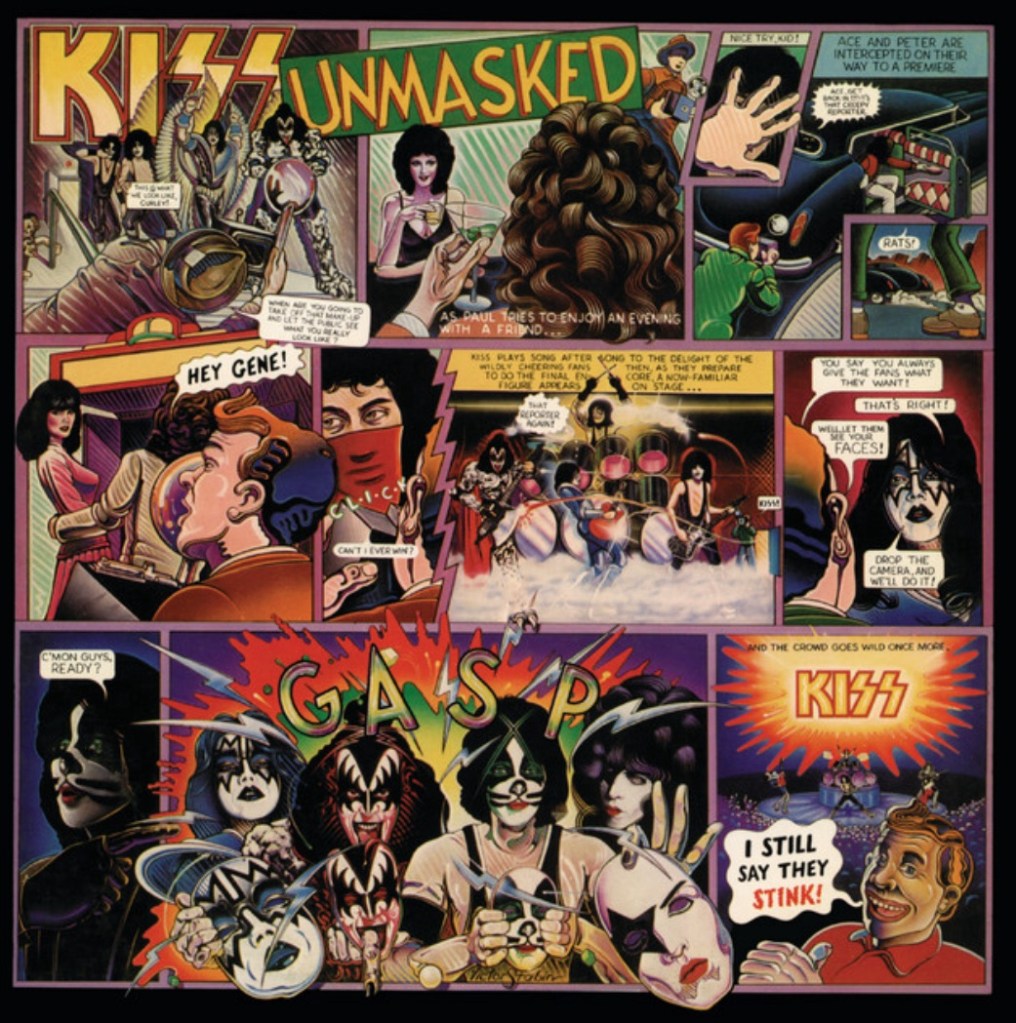
I purchased “Love Gun” after “Destroyer” because of the covers and then “Rock N Roll Over”.

Which also has a great cover.

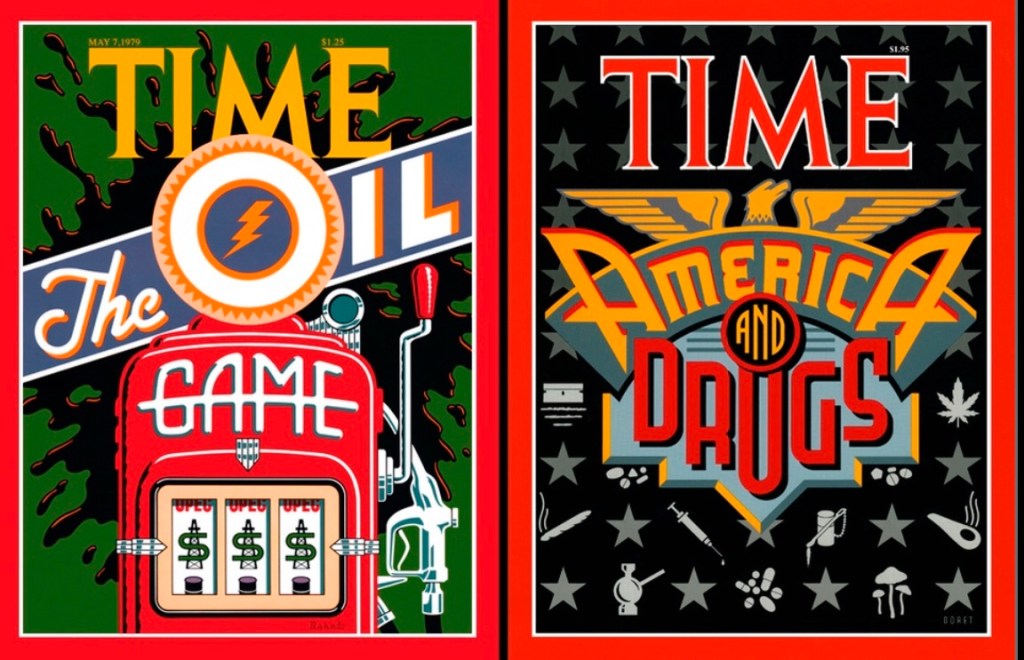
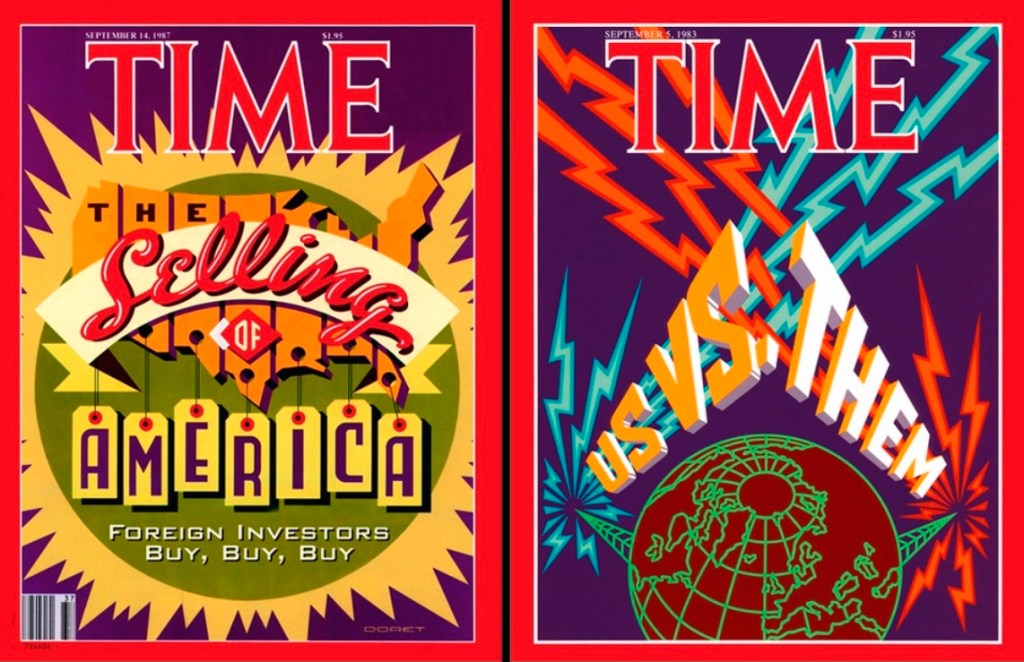
Michael Doret is another artist who should be as big as a rock star. Apart from Kiss, he has done various editorials and logos for companies and sporting teams. If you follow the NBA, you will know the Knicks logo. That’s Doret.

Check out these Time covers as well just to show a small sample of his work.

Brilliant.

I don’t feel this album is mentioned a lot like other Kiss albums. Maybe because it was sandwiched between “Destroyer” and “Love Gun” for studio albums and “Alive” and “Alive II” for live albums. All of this Kiss product in a 24 month period meant that some albums get missed. It still did the same business as “Destroyer” in sales but it’s not in the conversation as often as it should be.

But the album does have quality. Eddie Kramer is producing and his mix is wonderful with every instrument and vocal having its own space.

“I Want You” was so ahead of its time. It’s like the embryo of melodic Metal. Don’t let the acoustic arpeggios fool you, because when the distorted guitars kick in, its metal and its melodic.

“Calling Dr Love” is good but it gets way too repetitive towards the end. Something which Gene does a lot of in his songs.

“Hard Luck Woman” is excellent and Rod Stewart would have killed the vocal if the song ended up making its way to him. But Pete Criss sounds great as well. I reckon he would have downed a packet of ciggies before the take, to get his voice like that.

And while artists of hard rock dabbled with country at the time, it either sounded too countrish or it had too much rock with a bit of country, but, Stanley delivered a song ahead of its time, fusing, country with rock and a crossover pop sensibility.

“Mr Speed” and “Makin’ Love” are good album cuts.

Press play to hear the riffs especially the speed rock of “Makin’ Love”, which a lot of the NWOBHM bands would be using to create tunes with. I wasn’t sure if all the riffs came from Paul Stanley on these cuts or from Sean Delaney, but when I checked Delaney’s solo album on Wikipedia, his credited as a vocals and keyboards on his own solo album, so Stanley again delivers the goods in the riff department on these two songs.

Ace Frehley is missing in the song writing department for this album, (you just need to read a few bios to understand why, plus the quick turnaround between albums didn’t really give him much free time to write songs and whatever free time he had, was put to other use), but his leads are there to inspire a generation of guitarists.

Finally, Paul Stanley.

He plays all the riffs on the album and it’s important to mention what an accomplished guitarist he is.

In the 80’s, and if you watched most Kiss video clips, the guitar spent more time hanging behind his back then in his hands, so people might think differently about his guitar abilities, but make no mistake, the dude can play and play well.

Crank it and enjoy.

Standard
Classic Songs to Be Discovered, Derivative Works, Influenced, Music, My Stories, Unsung Heroes

1976 – Part 3.1: Kiss – Destroyer

I grew up on 80’s Kiss. Albums like “Lick It Up”, “Crazy Nights”, “Hot In The Shade” and “Creatures Of The Night” got a lot of rotation on my turntable, along with “Unmasked”.

Kiss transitioned to a Hair Metal or Pop Metal sound (by the way label reps came up with these stupid terms) because they needed to. It happened in sync with the rise of MTV and how music television got behind promoting acts of similar sounds.

And the Quiet Riot effect was real at the time.

Every artist thought it but no one said it. If Quiet Riot could get a Number 1 album, they could do it as well. So Kiss tried like many others.

So my journey into 70s Kiss started with “Double Platinum” and “Smashes, Thrashes and Hits”. All up five of the”Destroyer” tracks are spread across those albums

When I started to get more cash at my disposal, “Destroyer” was the first album I had on my list because even during the 80s when each new album came out, the reviews kept saying, “a “Destroyer” album this is not”.

Also when they started to record “Revenge” the guys mentioned it has a “Destroyer” feel to it. It was “Destroyer” all around.

In addition, my older brothers had an A4 Postcard of the “Destroyer” album cover pasted into their stamp collection book which I looked at forever and a day, honing my drawing skills trying to replicate it.

The artist Ken Kelly is a rockstar himself. Kiss, Manowar and Rainbow used his talents and even Coheed And Cambria recently used his talents for their “No World For Tomorrow” album.

And after all that exposure to “Destroyer” album, I still hadn’t heard the full album. In my head I imagined perfection.

So when I got the CD I was ready for perfection.

I pressed play, listened to it and came away with the viewpoint that there is no need to hear the other tracks that didn’t appear on the Compilation albums.

The five best songs on the album are “Detroit Rock City”, “God Of Thunder”, “Shout It Out Loud”, “Do You Love Me?” and “Beth”.

“Flaming Youth” I like, it just felt unfinished.

It wouldn’t be an Ezrin produced album unless half the album was accessible and he made sure of that.

One crucial takeaway from listening to the album and reading the credits is that even in the 70s, Paul Stanley was Kiss.

His songwriting contributions to this album are exceptional. He even penned the anthem for Gene Simmons and his “God Of Thunder” anthem.

I know this isn’t a review like I normally do, however if you want to read some killer reviews, then check out the following blogs I follow:

2Loud2OldMusic

MikeLadano

Standard
Classic Songs to Be Discovered, Influenced, Music, My Stories

1996 – Part 3.3: Kiss – Unplugged

I wasn’t sure I needed a Kiss “Unplugged” album but after pressing play, I became a fan of it instantly. The songs they selected worked so well in an acoustic setting.

For a band that was trying to find a way to fit into the mixed up 90’s, the “Unplugged” setting was perfect for them.

Apart from Stanley, Simmons, Kulick and Singer, they are also joined by Ace Frehley and Peter Criss for a handful of songs. In Australia it went to Number 4 on the charts. Argentina and the U.S certified the album Gold.

Comin’ Home

I wasn’t a fan of the distorted version that appeared on the album “Hotter Than Hell”, but goddamn I really like this acoustic version. By far the best song on the album and my go to version for this song.

Plaster Caster

I think this is the weakest one.

Goin Blind

Acoustically, it sounds like a progressive rock song from ELP, something which seems to be lost with the studio cut.

Do You Love Me?

A good song works in any format.

Domino

This song works so good in acoustic format, as it brings out its sleazy swampy Delta blues influence.

And how good is Bruce Kulick.

Sure Know Something

One of my favourite Kiss songs. Hated by American fans and loved by the Australian disco rockers.

A World Without Heroes

A perfect song for the “Unplugged” format. Paul Stanley is an excellent rhythm guitarist and Bruce Kulick shines here with the leads.

Rock Bottom

I didn’t think this would translate well, but it did.

See You Tonight

It’s like the Beatles walked into the building.

I Still Love You

This song is a masterpiece in hard rock balladry. The acoustic arpeggio riff which makes up the Intro and Verse is haunting and it sets the tone of the song.

Stanley delivers a killer vocal but the unsung hero is still Bruce Kulick. And check out Eric Singer, as he pounds those drums like the track is electric.

Every Time I Look At You

I’m not a fan of the studio cut, but it really works here and I like the way the guitar lead break sounds. And Stanley is a crooner, he loves doing vocals like this.

2,000 Man

Some members of the family are back, in Ace Frehley and Peter Criss. And I’ve always seen this Rolling Stones track as a punk rock song.

Beth

The big hit. I prefer it as an acoustic guitar led cut, instead of a piano led cut and this version rocks, even though the song is a ballad.

Nothin’ To Lose

It sounds like a Motown cut in this format.

Rock ‘N’ Roll All Nite

It’s a campfire song and a perfect closer, sing-a-long to end the night.

The “REVENGE” band sounds great and this show along with the “Kiss III” release serves as a great testament to their abilities.

But the magazines I purchased at the time, hated it and didn’t write kindly about it. But good rock and roll was never meant to be the critics’ darling.

Here are some reviews that I agree with.

And if you want to check out the views of 2Loud2OldMusic, who gave it an easy 5.0 out of 5.0, then click here.

Or from Mr Mike Ladano who also gave it 5/5 stars, click here.

Standard
Classic Songs to Be Discovered, Derivative Works, Influenced, Music, My Stories

Rise To It

31 years old.

Man time goes by.

“Hot In The Shade” now has a full time job, a drinking problem and is paying taxes to keep the economy going. Plus it’s got a woody problem.

Read on.

I purchased it from a store called Brashs. It specialised in sound systems and then it started to bring in musical product.

It had a decent metal and rock section but I felt that everything was way overpriced and hardly any discounts.

Then again, the price was pre-determined by the labels but who knew that kind of stuff back then. But it was the only store that had “Hot In The Shade”. So I purchased it for $20.

$20 back in 1989 is worth about $42 today with inflation added on. Which is about the price of Vinyl these days on average.

Anyway, I’ve been on a Bob Halligan Jr kick lately and he co-wrote two tracks here. “Rise To It” and “Read My Body”.

And this era of Kiss has its critics but it’s Bruce Kulick’s finest moments. His guitar work on “Crazy Nights” and “Hot In The Shade” is very underrated.

And Kulick really rose to it here and delivered a great solo.

“Rise To It” opens up with some slide guitar and a Mississippi Delta blues feel. But once the distorted guitars kick in, it’s melodic rock all the way.

But.

Listen to the riff in the Chorus.

It’s ZZ Top like. Think “Sharp Dressed Man”.

Lyrically, it’s typical Kiss, talking about hard ons or wood. Like when Paul sings “When you’re lying next to me, baby, I can guarantee, I’m gonna rise to it” he’s not talking about waking up in the morning.

And that got me thinking about ZZ Top and there song, “Woke Up With Wood”.

The lyrics, “when I woke up this morning, I was feeling mighty good, my baby understood had to do what she should, laying near a pile of wood”.

“God damn good times” is what I say. I’ve been in those morning wood situations a lot of times.

Suddenly I’m listening to “Sport’n A Woody” from Dangerous Toys. “Sport’n a woody, when you’re titties fly” and how they wish the lady was sedated so they penetrate her.

Then Ace Frehley comes to mind and how his baby is on her knees and she’s begging please for a ride on his rocket.

Ahhh, rock and roll music.

It never took it self seriously and it allowed us all to have a laugh and a good time.

I’m gonna raise my glass to Rock And Roll.

Oh wait, that’s another Kiss song. For a different time.

Standard
A to Z of Making It, Classic Songs to Be Discovered, Derivative Works, Influenced, Music, My Stories, Unsung Heroes

1985 – Part 4

Kiss – Asylum

My son asked me yesterday, “what decade of Kiss do I like for new music released?”

I grew up on the 80’s Kiss, with the exception of the “Dynasty” and “Unmasked” albums. So my go to albums from Kiss are the 80’s albums, along with “Revenge”.

My first proper “Alive” experience was “Alive III”, then “IV” and then I went back to listen to “I” and “II”. But I like “III” better.

In the last 20 years, Kiss haven’t really set the world alight with new music (“Hell Or Hallelujah” will beg to differ and it’s up there as one of the best tracks for me), nor have they really dug into the vaults. Then again, Gene Simmons did raid his vault and from the reviews I read over at 2Loud2OldMusic, Simmons did a pretty good job at it.

Now in Australia, Kiss was larger than life. They always had an interview on TV or a music video clip on TV or a song played on radio. And they had their loyal following, plus any fly by nighters who would fall in and out of fandom with the band.

This album has Paul Stanley pulling quadruple duty on song writing, guitar playing, production duties (which even though Gene is listed as co-producer, Stanley did 90% of it) and bass playing. And I gravitated to the Stanley tracks, because they were just better.

This album also sticks out because it’s part of the era of bad jackets. Like very bad glam like jackets. If you’ve seen posters or press photos of bands during this era, you would know what I mean.

And it needs to be said, that Bruce Kulick is a guitar hero. He doesn’t get the “shred cred” he derserves, maybe because he played with Kiss. But his solos, from “Animalize” to “Revenge” are nothing short of guitar hero shred.

“King Of The Mountain” is written by Stanley, Kulick and Desmond Child and it gets the album off to a good start.

“Tears Are Falling” is a Stanley cut and although generic, it proved very popular for Kiss on MTV. “Who Wants To Be Lonely” is another cut that sticks around, this one being a co-write with Stanley, Child and Jean Beauvoir who would become well-known with the song, “Feel The Heat” from the Cobra soundtrack.

And let’s not talk about “Uh! All Night” even though some brain dead label rep thought it was a good idea to also release it as a single.

White Lion – Fight To Survive

I didn’t hear this until the 2000’s post Napster era was happening.

It wasn’t available at all in Australia and I didn’t know anyone who had a copy of it.

And it’s a forgotten album but it shouldn’t be, because it showcases Vito Bratta. While Bratta didn’t get back into the music business once White Lion broke up, his recorded output and musical legacy is down to the four White Lion albums and the backroom label dealings and stabbings which would affect Bratta.

They got signed to Elektra in 1984 and they record the album. Elektra refuses to release the album and terminates the bands contract. So now they have an album recorded, which they can’t access as its owned by Elektra and they have no deal.

Then a Japanese label releases it in Japan, and another label in the US release it under license to Elektra and the band tours on it, but the label in the U.S goes bankrupt. And the band is going through changes in the bass and drum department.

They did get singed to Atlantic in 1987, but that’s another story for another year.

Stand Outs with Great Bratta Moments

“Fight To Survive” is brilliant musically. Lyrically it’s about street life and fighting to be alive each day.

Great tapping intro that breaks down into the bass groove for the verse, with the volume swells and then it picks up for the big chorus and I love the delay in the solo section.

“All The Fallen Men” is influenced by “Rocking in the Free World” in the verses. Then again this came before Neil Young, and it’s a pretty generic chord progression, so..

“El Salvador” is the best song on this first album. The flamenco intro moving into the distortion riff is brilliant. You can hear Al DiMeola’s “Mediterranean Sundance”. And once the song kicks it’s all Thin Lizzy. Phil Lynott would be proud.

Clichéd Songs with Great Bratta Moments

“Broken Heart” has typical 80’s lyrics from Mike Tramp. Bratta shreds in the solo section with finger tapping and tap bends.

“All Burn In Hell” reminded me of Twisted Sister’s “Burn in Hell”. Musically it is typical of the 80’s. But the syncopated interlude before the solo. Brilliant.

There is a modern alternative rock metal vibe. And the solo section to me is a song within a song. A great Bratta moment.

Bad Songs with Great Bratta Moments

“Where Do We Run” – reminds of a 100th rate AC/DC song in the verse. Tramps lyrics and melodies are lame. It’s a shame because it has a killer solo, very much in the vein of Randy Rhoads – “Flying High Again” and George Lynch – “Tooth and Nail”.

“In The City” – up until the interlude and solo section, where Bratta wails, the song sounds like a Y&T rip off lyrically.

Firehouse also did a song, where the vocal melody was similar.

Does anyone remember “The Dream”?

Actually does anyone remember Firehouse the band?

Filler Songs

“Cherokee” – The lyrics are tacky, “Cherokee, riding free”. Maybe because I heard it after Europe’s “Cherokee”, which I also didn’t like.

“Kid of a 1000 Faces” – the less said about this song the better.

“The Road To Valhalla” – with that title I was expecting something epic.

AC/DC – Fly On The Wall

I love the cover art. I drawed it in Art Class. I wish I still have my art journals. The teacher hated it, as he was anti-rock/metal.

Malcolm tried really hard to remove AC/DC from the overproduced and super focused Lange albums. And although their worldwide sales especially in the U.S market didn’t set the world on fire post Lange, in the land of Oz, they couldn’t do no wrong.

We lapped up the 7 inch singles, their songs got played on radio and the music video clips for “Shake Your Foundations” and “Sink The Pink” got played relentlessly.

See me leaning, on the bar
I got my head in a whiskey jar

It’s the Australian way of life to be leaning on the bar, intoxicated. I wouldn’t have it any other way. And maybe it’s a big reason why the music videos resonated with Australian fans. They are both filmed in a bar/pub and people are playing pool while drinking. It’s the Australian way of life.

ZZ Top – Afterburner

How do you follow up “Eliminator”?

By continuing on with using synths, sequenced beats and midi samples with their blues boogie riffs.

A new take on an old sound.

I called it “New Wave Blues” (NWB). And I meant it as a compliment.

How good is the cover?

It was enough to hook me in.

And while “Sleeping Bag” kept in that NWB department, “Stages” is a melodic rock gem that I didn’t see coming.

“Rough Boy” has some of Billy Gibbons most melodic and emotive lead breaks. Check out the intro lead break and the outro lead break. He brought long guitar solos to the mainstream.

“Can’t Stop Rockin’” is “Got Me Under Pressure” a 12 bar blues boogie with sequenced drum beats. “Planet Of Women” rocks out of the gate, and man, this song has Gibbons putting in some serious playing in the riffage department.

The album is a product of its time and era, and I wouldn’t have it any other way.

Gary Moore – Run For Cover

It was the mid 90’s when I heard this album. And it’s one of his best albums.

“Empty Rooms” and that lead break is one of his best lead breaks, better than “Parisienne Walkways” and “Still Got The Blues”. “Military Man” has Phil Lynott singing, while “Out In The Fields” is a duet between Lynott and Moore.

The mighty Glen Hughes sings on “Reach For The Sky”, “Nothing To Lose” and “All Messed Up”, while Moore sings on “Run For Cover”, “Empty Rooms”, “Once In A Lifetime” and “Listen To Your Heartbeat”.

And Moore also has Lynott, Hughes and Bob Daisley playing bass on the album. Four different producers in Andy Johns, Peter Collins, Beau Hill and Mike Stone. In other words it’s an expensive album, but it did nothing sales wise in the U.S, while in Europe, it did a lot better.

But the piece d’resistance is “Empty Rooms”. The lead break from Moore was talked about a lot in guitar circles. And it’s a re-recording. He released it on “Victims Of The Future”. A longer version of 6 plus minutes. This one is more concise at 4 minutes.

And the way “Run For Cover” starts off, you know that Moore means business,. There isn’t a bad song on this album. The cuts that Hughes does vocals on are favourites and I need to do a playlist of songs Hughes has done over his career, like how I did with Ronnie James Dio, covering Rainbow, Sabbath and his solo career. The only album missing on that list is the “Heaven And Hell” band album from the two thousands because it’s not on Spotify Australia.

Phil Collins – No Jacket Required

His voice is one of the best.

It’s like Soul Rock and I like Collins when his also bluesy with a touch of rock.

The “hit songs” on this album are not my favourites. The brass instruments are just too much for me on those. But with any Collins release, there is always something to sink your ears into.

“Long Long Way To Go” is a favourite. It’s the mood and the repeating guitar/synth lick.

Then there is “I Don’t Wanna Know” which is a melodic rock masterpiece, with a great outro guitar solo.

“Don’t Lose My Number” reminds me of Marillion for some reason. It has a feel that Marillion would explore later on when they changed vocalists.

“Doesn’t Anybody Stay Together Anymore” has this driving beat to kick it off before it subdues in the verses, but the drums still roll on.

And there’s so much more music to get through for 1985, but that will be for other posts.

So into the time machine we go and I’ll see ya at 1977 for Part 4.

Standard
Classic Songs to Be Discovered, Derivative Works, Influenced, Music, My Stories, Unsung Heroes

1977 – Part 2

Here we are in 1977, for another set of albums that I had heard well into the 90’s. But, I did hear the single cuts that got played on radio or on music video programs.

UFO – Lights Out

Produced by Ron Nevison.

“Too Hot To Handle” is probably why Bad Company started to wane a little bit commercially, as UFO was doing Bad Company better than Bad Company was. Plus UFO had Michael Schenker on guitars, who at the time was the talk of the town, and revered as a “Guitar God”.

If you need any evidence, check out “Try Me”, which has one of Schenker’s best solos ever committed to tape. You need to stick with it, as it comes in the last 90 seconds of the song.

“Lights Out” inspired another classic track which I like in “More Than A Man” from Stryper. Both are F#m grooves and they both have a similar feel. Credit Pete Way for that F#m bass groove which inspired a generation.

“Gettin’ Ready” is pure Bad Company and a very underrated track. “Alone Again” has this “Paint It Black” vibe merged with The Beatles merged with ELO, and it’s cool how UFO covered it.

“Electric Phase” came from well of Joe Walsh and Mountain. That intro riff and the slide guitar in the verses from Schenker are brilliant.

“Love To Love” is one of Steve Harris’s favourite tracks. Europe also covered it for an acoustic album. Michael Schenker even used the guitar riff as the main riff for “Desert Song” which I used to called “Dessert Song” once upon a time.

And “Lights Out” is one of my favourite albums from the UFO era.

Kiss – Love Gun

Produced by Eddie Kramer.

How good is the cover from Ken Kelly?

Kelly’s artwork also graced a few other albums I am in possession of, like, the “Destroyer” album from Kiss, “Rising” from Rainbow, every Manowar album between 1997 and 2007 (which comes to 5 albums in 20 years) and in 2014, it came full circle for Kelly as he did the “Space Invader” artwork for Ace Frehley.

And how good is the riff to kick off “I Stole Your Love”?

And it as a derivative version “Burn” from Deep Purple. I guess you can’t keep a good riff down.

“I remember the day that we met, I needed someone, you needed someone too”.

How good is that lyric about life and our need to connect?

“Christine Sixteen” shows how far society has changed. In 1977, it was okay to sing lyrics like these and in 2020 it’s an arrestable offence. Hell, what would Elvis Presley be classed as today, with his shenanigans with Priscila.

“Shock Me” reminds me of “All Right Now” from Free. “Tomorrow And Tonight” has this “BACK In the USSR” feel as it stomps its way through a twelve bar blues rock full of backing singers and honky tonk piano.

“Love Gun” kicks off side 2 and what a song. And if you’ve read “Face The Music” from Paul Stanley, he goes into detail how music is a sum of our influences, as he mentions a few of em for “Love Gun”.

The small solo at the end of “Hooligan” from 2:39 with Peter Criss singing “Ain’t nobody going to pull me down”. It’s perfect.

The main riff in “Almost Human” is a favourite and if you YouTube “Plaster Casters”, apart from the Kiss song, there is a documentary about a certain “plasterer” called Cynthia.

And for a Kiss fan, 1977 held another release in “Alive II”. From reading some of the interviews, it probably had more involvement and effort than the studio album that came before it. There are songs from a Japan show, a LA show and a NJ show, plus sound check songs and studio songs with various overdubs, involving other musicians plus added crowd noise and what.

In the words of “Austin Powers”, groovy baby. And the first “Alive” release I got into was “Alive III” and then “Alive IV” and they are my favourites.

Cheap Trick – Cheap Trick
Cheap Trick – In Color

They got a deal in 1976 with Epic Records and by the start of 1977, they dropped their self-titled debut and towards the end of the year, the follow up, “In Color”. At the time, both albums were classed as dud’s, but many, many, many years later (as Commandant Lassard from Police Academy would say), “In Color” is in the list of the 500 Greatest Albums Of All Time from Rolling Stone.

So Jack Douglas produced the debut and Tom Werman produced the second. The productions differ on both albums. The debut is raw hard rock, while the second is more polished courtesy of Tom Werman’s layered production. And while the second album didn’t really do much in the U.S, in the place of the rising sun, it made the band superstars. They took their British influences, Americanised em and off they went.

The debut is a cross between punk rock, a bit of new wave which was still in its infancy around the world and rock and roll with blues, sixties pop and hard rock influences. In the 80’s, “Hanoi Rocks” reminded me of early Cheap Trick.

From the debut album, “ELO Kiddies” has a cool Chorus riff. “Taxman, Mr Thief” has an excellent guitar riff, a top vocal performance by Robin Zander and lyrical themes of working hard only for the taxman to get ya. Plus a pretty obvious lyrical influence from The Beatles song called “Taxman”.

“You worked hard and slaved and slaved for years, break your back sweat a lot, well, it’s just not fair”

“Oh, Candy” is a preview of the melodicism to come in the future. “He’s A Whore” is influential. The Ramones borrowed a riff from it, and the blueprint of Foo Fighters can be found in these early Cheap Trick albums. “The Ballad Of TV Violence” shows its nod to “Come Together” from The Beatles which is a nod to another song from Chuck Berry.

On the second album, “Hello There” is over as soon as it began, with an awesome melodic ending which should have gone longer. “Big Eyes” has this interlude riff which becomes the backing riff for the solo section, which I dig. “Downed” has this chorus that inspired some of the songs on “Generation Swine” from Motley Crue.

“I Want You To Want Me” has that “Radar Love” style drum pattern, and an undeniable melodic line, which merges the best of The Beatles into a hard rock ditty.

“You’re All Talk” came from the Mississippi Delta and the Texas Ranges, with its combination of blues and ZZ Top blues boogie. And if you listen closely to the verse riff, you will hear some ideas and concepts that would have inspired a young EVH to end up writing the classic “Hot For Teacher” verse riff.

Bad Company – Burning Sky

Album number 4, which dropped in 1977.

The title track, “Burnin’ Sky” has this pounding beat and that “Wishing Well” vibe from Free in the Chorus. In addition, it’s got a funky bass riff in the Verses, a Mick Ralphs flanged/phased solo and Paul Rodgers wailing away. This track sums up Bad Company to me, with each band members have a place in the song.

“Leaving You” and “Like Water” have good moments, while “Everything I Need” has so many similarities to “Since You’ve Been Gone”, “Louie Louie” and “I Need A Lover”.

See you back in 2000, for part three.

Standard
Classic Songs to Be Discovered, Derivative Works, Influenced, Music, My Stories, Unsung Heroes

1978 – IV – Kiss-A-Ganza

The last post for 1978 will kick off with a Kiss-a- ganza. Not one, not two, but 5 Kiss albums, plus lunch boxes, and what not.

Here is the Spotify playlist.

And the previous posts can be found at 1, 2 or 3.

Paul Stanley
Gene Simmons
Peter Criss
Ace Frehley

You take the best songs from each of these solo albums and it’s a pretty solid Kiss album. My list as follows and I’m sure others will have a different opinion.

Side A

  1. Rip It Out – Ace Frehley
  1. You Matter To Me – Peter Criss
  1. Tonight, You Belong To Me – Paul Stanley
  1. Ozone – Ace Frehley
  1. It’s Alright – Paul Stanley
  1. Love In Chains – Paul Stanley

Side B

  1. New York Groove – Ace Frehley
  1. Snow Blind – Ace Frehley
  1. Wouldn’t You Like To Know Me – Paul Stanley
  1. Take Me Away (Together As One) – Paul Stanley
  1. Mr Make Believe – Gene Simmons
  1. Goodbye – Paul Stanley

It’s top heavy with Space Ace and Star Paul because they had their creative juices flowing at this point in time, while Demon Gene and Cat Peter just didn’t have it.

And Ace struck big with his album because its basically a balls to the wall punk album before punk became such a big thing. “Rip It Out” has a punk vibe, with a drum solo and a rock guitar solo chucked in for good measure. 

For some reason, the R&B/Rod Stewart feel of “You Matter To Me” just works straight after “Rip It Out”.

And “Tonight, You Belong To Me” comes in at number 3, a masterpiece in melodic rockisms. If you ask me, it’s a three punch knockout.

At track 4 is a dirty and sleazy Ace track, with “Ozone” a groovy masterpiece in hard rock song writing which put some of the Led Zep work to shame at this point in time.  Even the lead break was very different to the standard blues licks Ace is renowned for.

Track 5 is “It’s Alright” from the Star Child, a nice little rocker, which flows straight after “Ozone” and the first side of my imaginary album, closes with another Star Child cut, in “Love In Chains”, a very mature song musically, especially when you listen to the guitar work and the lead breaks. 

Side B of the best album that never was, kicks off with “New York Groove”, a perfect sing along and clap along. And the Led Zep influenced “Snow Blind” had to be up next, because there’s no use being back in NY if you are not snow blind and lost in space. And how cool is that “Love Gun” style lick he brings in to the lead break.

Paul Stanley’s feel good and very commercial sounding, “Wouldn’t You Like To Know Me” is perfect at track 3 on Side B and Paul continues his momentum with “Take Me Away (Together As One)” which reminds me of a cross between “House Of The Rising Sun” and “While My Guitar Gently Weeps”.

Demon Gene is Kirk Hammett on this album. His riffs were just not good enough. But “Mr Make Believe” ended up good enough to be included with its take on “Mr Blue Sky” and The Beatles catalogue. And the album that never was, closes with “Goodbye” from Paul Stanley. And how good is the last minute of “Goodbye”.

And of course, with all things Kiss, a best off collection came out called “Double Platinum”. If you didn’t have any of their records, you could have purchased this one, and still have a decent collection of songs. Provided you still had any funds left, after purchasing all four of the solo albums.

Cheap Trick – Heaven Tonight

“Surrender” is one of my favourite tracks because of that god damn addictive Chorus. 

“High Roller” hooks me in with its AC/DC vibe.

“Heaven Tonight” has a pretty addictive intro. It reminds me of “Kings And Queens” from Aerosmith.

Bob Seger – Stranger In Town

One of the best voices ever.

“Hollywood Nights” kicks it off and if you have never been to Hollywood, then you would have felt like you had after listening to this song and a story of a romantic Hollywood meeting, which led to marriage and then a violent broken marriage and how nothing that came after captured that Hollywood Night.

“Still The Same” is another one of those acoustic rolling rockers while “Old Time Rock and Roll’ is basically saying that today’s music ain’t got the same soul as the music that came before and you need that old time rock and roll to reminisce about those days of old.

And the song got multiple reboots in the 80’s via movies and TV shows like “Risky Business” and “Alf”.

“Feel Like A Number” has a riff which sounds like something else (like Filter’s “Take A Picture”) and lyrics which sum up life.

I take my card and I stand in line

Who hates waiting in line to take money out of their bank account. Like sheep, we need to wait to take what is ours.

To make a buck I work overtime

We have been conditioned from birth to believe that hard work will get you through life. We even take up jobs with higher salaries, which means we work more unpaid hours than ever before.

Dear sir letters keep comin’ in the mail

When you are behind in any debt, the letters never stop, until you are out on the streets or back at home, if that place still exists.

To IRS I’m another file

The tax man loves the poor and the middle class, as that’s the only way they can get money, because the rich corporations don’t pay any.

The Rolling Stones – Some Girls

It’s the singles which captured my interest like “Beasts Of Burden” and “Miss You”.

Dragon – O Zambesi

Dragon is one of those acts which captured a sound and style perfect for Australians. And while people might associate the band as Australian, they are in fact from New Zealand.

It was during this album cycle tour, that Dragon attempted to break through into the American market, which ended disastrous at a show in Dallas, Texas. Marc Hunter caused a riot, when he said that all Texans are faggots, which resulted in the band getting pelted with beer bottles, chairs, tables and other members of the audience holding guns out, yelling “I’m gonna kill ya”.

And Motley Crue have nothing on these bad boys. Check out the mayhem.

As soon as the band relocated to Sydney in 1975, their drummer died of a heroin overdose. Two members were involved in a serious car crash in 1977, where keyboardist Paul Hewson (their main songwriter in the 70’s) had his neck in a brace as well as having a broken arm and guitarist Robert Taylor needed plastic surgery. Paul Hewson eventually died of a drug overdose in 1985 and vocalist Marc Hunter died of smoking-related throat cancer in 1998.

“Still In Love With You” and “Are You Old Enough” still get constant radio play in Australia.

Grease (Soundtrack)

How can you not escape this movie?

It was everywhere for over a decade.

Frankie Valli kicks it off with the song “Grease”, the Travolta and Newton-John duet, “You’re The One That I Want” rocks out of the gates. “Rock N’ Roll Is Here To Stay” from the Sha Na Na’s tells us that rock and roll will never die.

Graham Bonnet – No Bad Habits

“I’ll Be Your Baby Tonight” has a riff which had George Michael very interested and eventually he used it for “Faith”. Of course, that riff is not in the original Bob Dylan version but made up by the guys in the band for their reinterpretation.

And that’s my wrap of 1978. 1977 here I come.

Standard