When he went to an audition with a band called “Legend”, he took his guitar.
But they said to him that they need a singer and wouldn’t let him play.
And then he gets the vocalist gig for Black Sabbath, who were going through an identity crisis between 1984 and 1987.
And as soon as he righted the Sabbath ship, he was out and Dio was back in for the “Dehumanizer” album.
And while that was happening on the Sabbath front, Tony Martin kept writing until he had enough material for a solo album.
“Back Where I Belong” was released in 1992 on Polydor.
“It Ain’t Worth Fighting For” is the opening track from the album.
The musicians are seasoned professionals.
Nigel Glockler from Saxon is on drums. Neil Murray from Whitesnake is on bass. Richard Cottle is a session pro, and he plays the keys and also performs the saxophone solo. Carlo Fragnito is on guitars.
A bit if trivia, Fragnito and his brother Anthony formed a band called Blacklace, with vocalist Maryann Scandiffio.
Hailing from Canada, their music is best described as NWOBHM. They released “Unlaced” in 1984 and “Get It While It’s Hot” in 1985. Like a lot of bands who didn’t see success right away, they struggled and eventually broke up.
Carlo then became a session pro.
As soon as you press play, the riff that smacks you in the face is reminiscent to “Headless Cross”.
But the track feels like a heavy blues rock track instead of a metal track.
If it ain’t worth fightin’ for It ain’t worth having And I just gotta have your love
The Chorus is Arena Rock. Make sure you pay attention to the melodic guitars underneath the vocal melody.
Bad Company comes to mind here and the feel from “Rock ‘N’ Roll Fantasy.”
Vocally, Martin comes across as a combination of Lou Gramm and Paul Rodgers.
And that Sax solo works perfectly. It outlines the Chorus vocal melody with some improv.
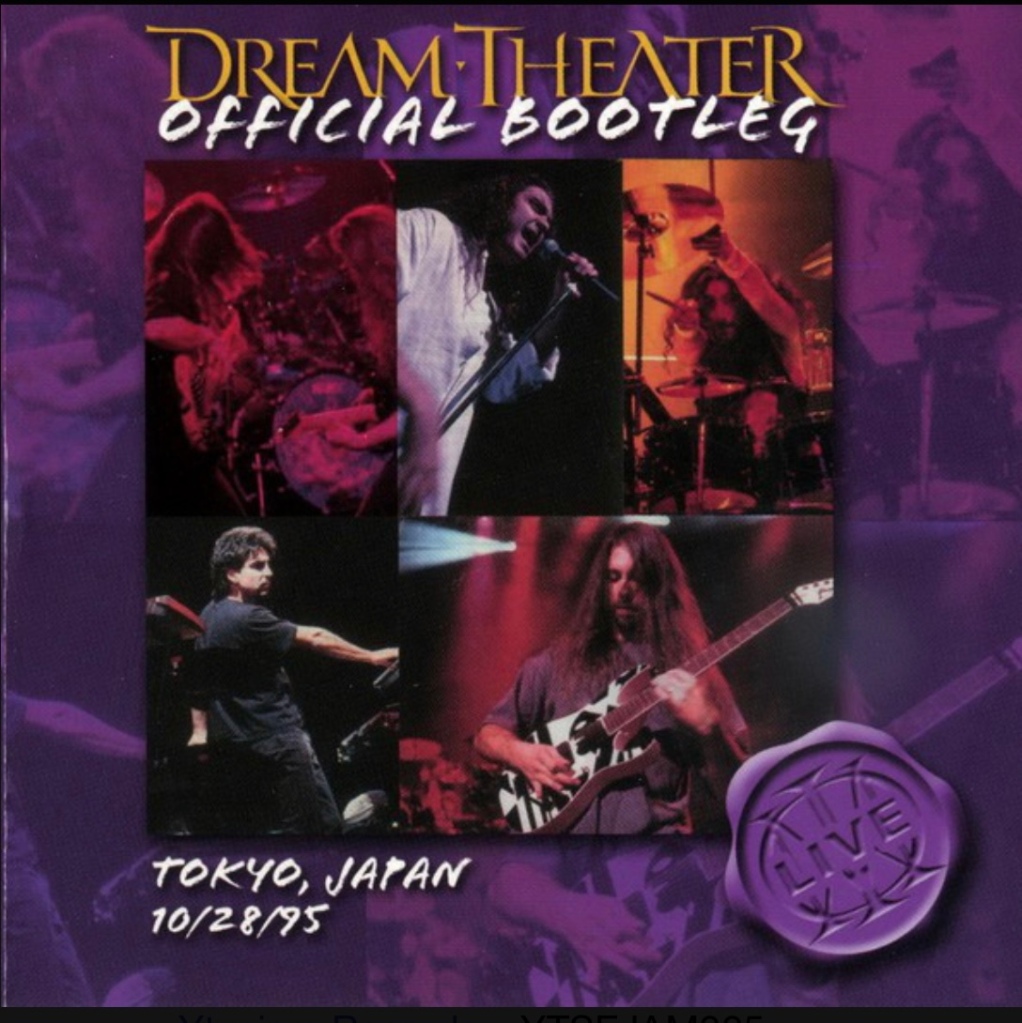
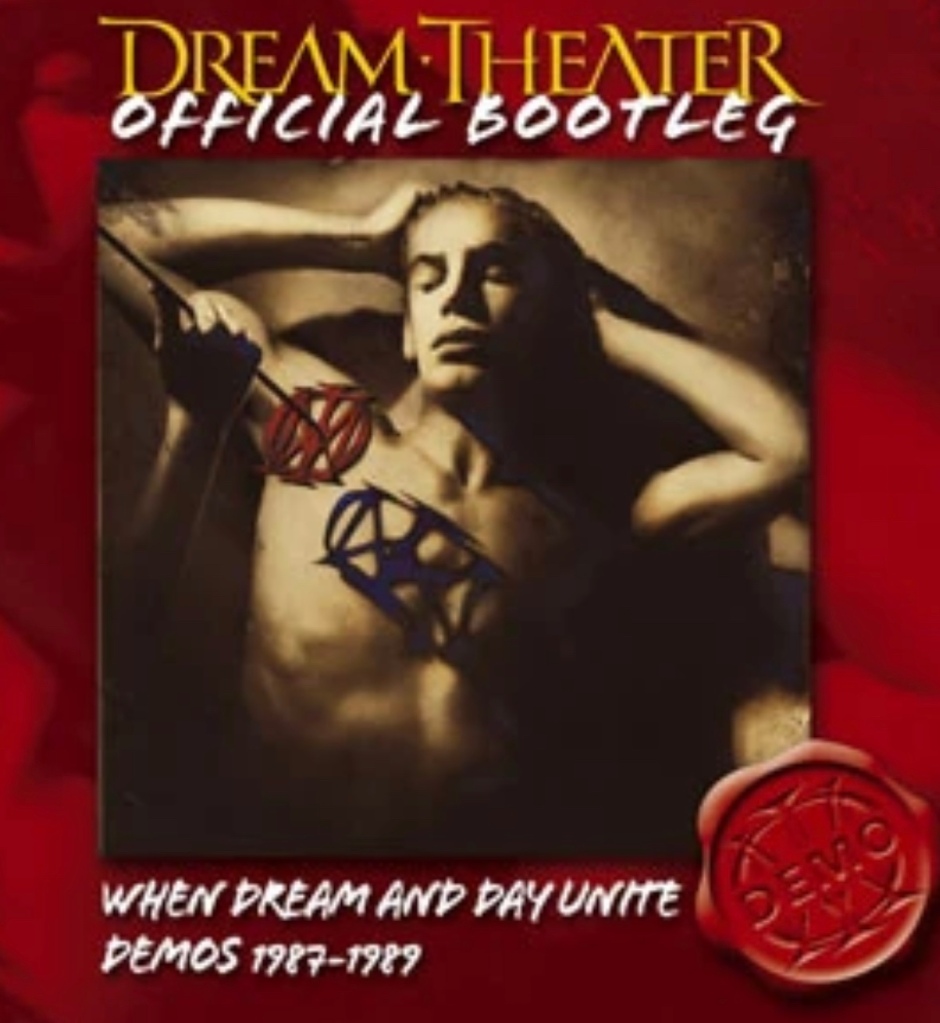
All at once in 2004, Dream Theater dropped three bootlegs under the sub headings of DEMO, COVER and LIVE.
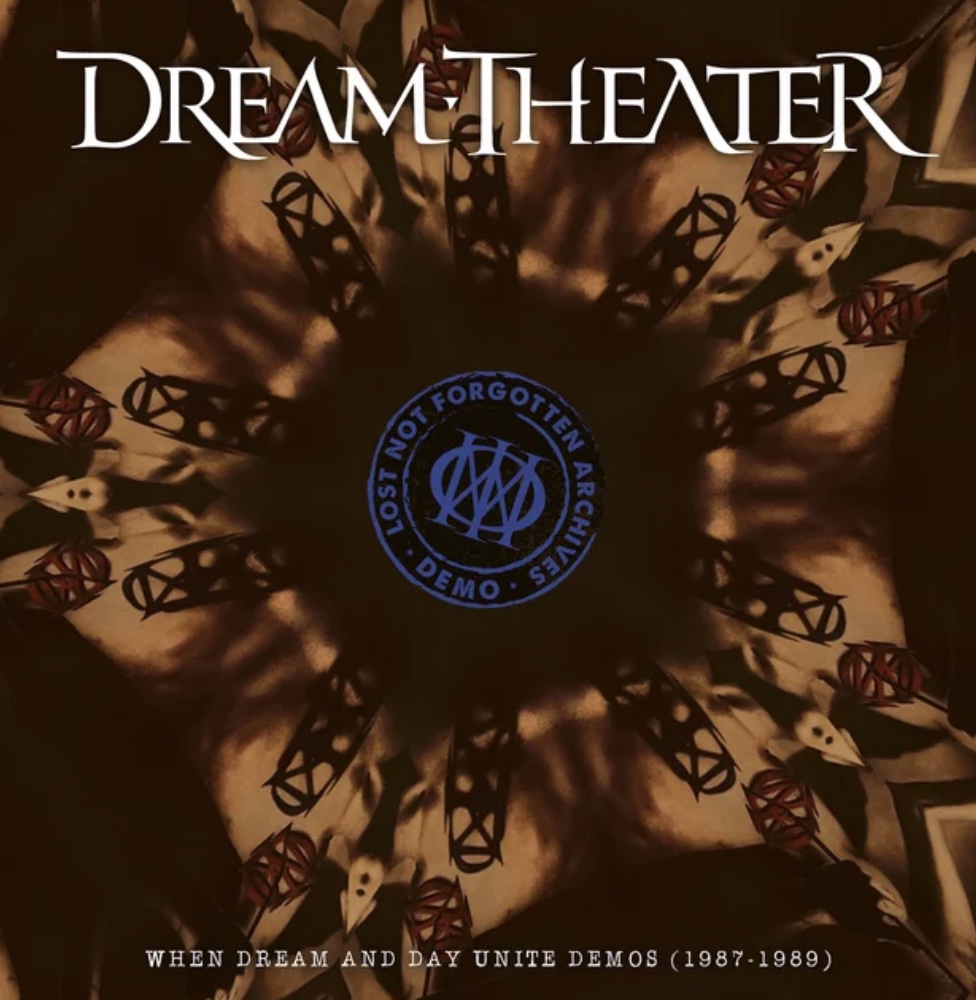
The DEMO release was reviewed here, and it covered the “When Dream And Day Unite” period between 1987 and 1989.
The COVER release is their play through from start to finish of the “Master Of Puppets” album and will be reviewed next.
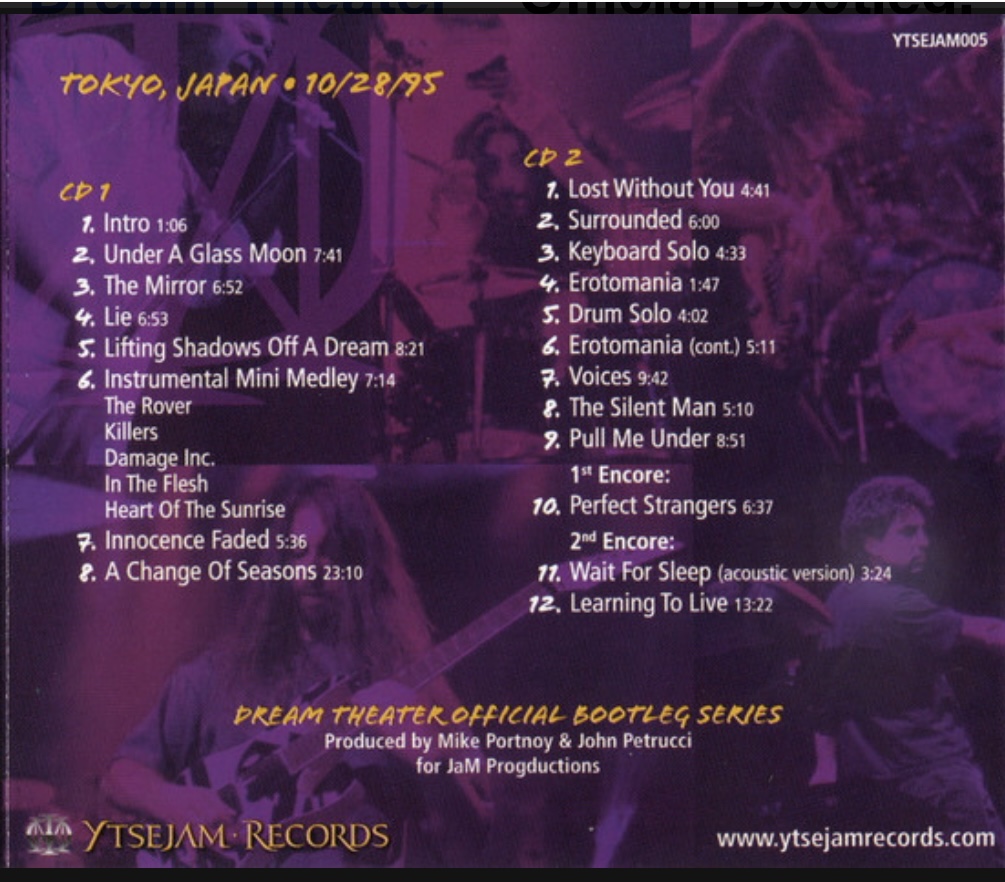
This review is on the LIVE release and as I’m writing this review it has not been re-released as part of the Inside Out re-releases/new releases.
So all we have at the moment is the Ytse Jam Records release.
The full 2 hours and 20 minutes, recorded live on the run of shows used to promote the “A Change Of Seasons” EP.
This is from October 28th, 1995 at NHL Hall, Tokyo, Japan.
The band is John Petrucci on guitars, Mike Portnoy on drums, John Myung on bass, James LaBrie on vocals and Derek Sherinian on keys.
Intro
There is a tape intro that goes for about 1 minute. It’s got a clock ticking and the sad piano lines from “Space Dye Vest” are played.
Then there is a voice over, some backwards sound effects and the octave notes from “Under A Glass Moon” kick in.
Under A Glass Moon
I like the surrealist title.
The verse riff on this song with the keys playing Chords over it. Perfection.
Stick around for the solo as it’s one of Petrucci’s best.
The Mirror
It’s a heavy song with Petrucci deploying the 7-string. Its intricate arrangements and dynamic shifts are interesting.
Lie
It goes together with “The Mirror” as some musical sections appear in both songs. This was a single from the “Awake” album, however it didn’t have the same success as “Pull Me Under” from the album previously.
The mix of heavy riffs and melodic moments, highlights their versatility.
Petrucci as usual delivers a few killer solo sections.
Lifting Shadows Off A Dream
It starts off like a slow jazz blues fusion jam before it goes into the well recognized bass intro.
It feels like a cross between U2, ballad like Marillion and 80s synth Rush.
Instrumental Medley
You get to hear “The Rover” from Led Zeppelin, “Killers” from Iron Maiden, “Damage Inc.” from Metallica, “In The Flesh” from Pink Floyd and “Heart Of The Sunrise” from Yes.
Press play to hear the way they fuse all these different songs into one cohesive track.
Innocence Faded
It’s in a major key. While it rocks it does have pop sensibilities.
But it’s the outro that you should listen to.
Because if you worship at the altar of guitar gods then the outro is for you. Even James LaBrie screams “John Petrucci” when it starts.
If you can’t find this track, then any other official live version or even the studio cut will suffice.
A Change Of Seasons
You get the full 23 minutes.
The way this piece is written is that each part can be played separately in the set list amongst other songs or it can be played as one song, like it is here.
And like all multi-part epics, it serves as the grand centerpiece of the show, displaying their songwriting prowess and technical skills in a live setting.
Lost Without You
“Lost Without You” was officially released in 2005 on John Petrucci’s solo album “Suspended Animation”.
But here it is, live in 1995.
Its an intimate and introspective moment within the setlist, very blues/jazz fusion like and I’m all in.
Petrucci nails it and the emotion drips from the strings.
Surrounded
The “Images And Words” album is all killer.
And this song is largely out of the conversation, however the band does a stellar job playing tracks from the back catalogue in the live setting.
After the piano intro and verses, the song picks up. Listen to how Petrucci decorates.
Derek Sherinian Keyboard Solo
I’m not a huge fan of solos in concert like this, but this one actually rocked and kept me interested.
It was a mixture of ragtime, blues, classical and cinematic/video game like music.
Erotomania
Mike Portnoy takes over the middle of the song with a drum solo.
But at least they go back into the song and to one of my favorite instrumental sections.
Voices
This is another song that seems like it’s out of the conversation when it comes to Dream Theater songs.
But it’s a classic
The Chorus is arena rock.
And that solo is what guitar heroes are made of.
The Silent Man
It’s a great acoustic song.
And they bring the 70s Classic Rock vibes (which is known as Country Rock these days) to it live.
Pull Me Under
Closing the main set with their most recognizable hit, leaves the audience energized.
The 1st Encore begins with a cover.
Perfect Strangers (Deep Purple cover):
The Deep Purple cover sounds like it came from the minds of Dream Theater.
You can hear the fun in the music and they definitely jam it out.
The 2nd Encore begins with the last two tracks of the “Images And Words” album. And for a 1995 set list it’s perfect.
Wait For Sleep (Acoustic version)
An acoustic version of “Wait For Sleep” is excellent.
Learning To Live
The grand finale. The whole song is a masterpiece.
And then that outro section. Wow.
In summary, its raw as a bootleg should be.
The setlist is diverse and it showcases their instrumental virtuosity and ability to navigate complex musical compositions.
There are mistakes and pitch issues but hey, if I wanted the studio recordings I would play them.
The inclusion of covers and acoustic moments also adds depth to the overall concert experience.
They got some traction with the single “Don’t Tell Me You Love Me” from the “Dawn Patrol” album in 1982. The future looked bright.
Then their record label “Boardwalk” went under.
But they had a believer in former Boardwalk vice-president Bruce Bird, who organised a deal with Irving Azoff to sign the group to MCA. Night Ranger would be the first signing to Bird’s new imprint under MCA, Camel Records Inc.
“Midnight Madness” came out in 1983. Check out the ages of the guys in the band.
Jack Blades is 29, Brad Gillis is 26, Jeff Watson is 27, Kelly Keagy is 31 and Alan Fitzgerald is 34. These are seasoned pros, who have paid their dues in other bands since the start of the Seventies.
And in 1983, fame came to them in the form of music television.
MTV would turn regional club acts into arena acts instantly on the back of a song, and “Sister Christian” along with “(You Can Still) Rock In America” became the songs that launched Night Ranger across North America.
While the album has alot of good songs my favorite is the first song on Side 2.
“Touch of Madness” is written by Jack Blades.
The eerie music box gets your attention immediately.
Then a heavily palm muted arpeggio single note riff kicks in before, all hell breaks loose with the blues slide rock riff from the 19 second mark.
The playing is excellent.
At the 42 second mark, the verse groove comes in. It’s groove Rock and Kelly Keagy thunders on the kit.
Blades delivers a stellar vocal,
The lyrics suggest a feeling of being drawn to someone who has a captivating and mysterious quality.
She say “I get high when I want to Don’t ya think you need it too” I need a touch, I need a touch of madness
All of the religious leaders in the 80’s got it right, that the youth of the world had been seduced by the devil’s music. We liked to get high when we wanted to and Mister Juana was a favourite.
The “touch of madness” is the irresistible allure of someone’s unpredictable and exciting nature.
I need a touch, a touch of madness
The lead break is Randy Rhoads-esque. Building on a simple motif and embellishing it with fast scalar runs.
I like how you get another verse, pre and chorus after the solo section. It’s the reason why it clocks in at 5 plus minutes.
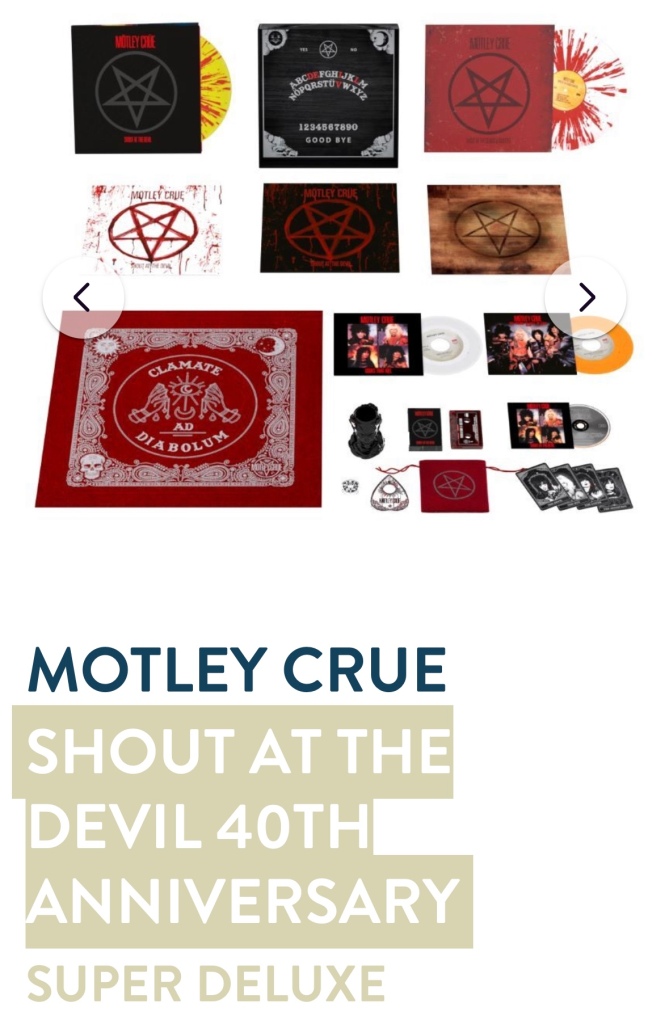
All the music here has been released before circa 2003 when the band remastered their albums on their own Motley Records label.
But let me highlight how many issues of the album they have done recently.
In 2022, they released a Limited Edition, Reissue, Black/Clear Split Vinyl edition.The music on this edition was just the normal album.
In 2018, they released a Limited Edition, Reissue, Remastered, Clear With Red Swirl Vinyl Edition. The music on this edition was just the normal album.
In 2016, they released a Limited Edition, Reissue, Remastered, Red With Black Swirl, 180g Vinyl edition. The music on this edition was just the normal album.
In 2011, they released a Limited Edition, Reissue, Remastered, Mini Vinyl Replica edition. The music on this edition was just the normal album.
Again in 2011, they also released a Reissue, 180g, Gatefold edition. And again, the music on this edition was just the normal album.
Between 2003 and 2023, they also released various CD versions of the album with wording like, HDCD, Club Edition, Limited Edition, Enhanced, Reissue, Remastered and SHM-CD (for Japanese Releases). Apart from the 2003 edition, it’s been the same album re-released.
But, it’s selling for $370AUD. It looks like a nice collectors piece and if you don’t have this album, you’ll be thinking “why not”, but at that price I would have expected something to be included that hasn’t been released as yet.
Take a cue from Mr Coverdale, who puts the effort in with his evolution compositions, different jams/rehearsals of the songs and live recordings.
STEVE JOBS
At 12 years old Jobs called Bill Hewlett (the co-founder of Hewlett-Packard) to ask for spare computer parts.
Jobs got the parts and a summer job working the assembly line at Hewlett-Packard.
Steve Jobs, believes asking is the single thing that “separates the people that do things from the people that just dream about them.”
METALLICA
Brian Slagel is putting together the Metal Massacre compilation album.
Slagel met Lars Ulrich a year ago at a Michael Schenker concert. Lars calls him up and asks him, “if he puts together a band can he be on the record?”
BON JOVI
It’s 1982 and Jon Bon Jovi has just finished writing and recording “Runaway”.
He shopped it around and couldn’t get a record deal. He couldn’t get a band together to play live because original bands didn’t make enough money.
Luck would have it that a brand-new radio station would open in New York. It was so new it didn’t have a receptionist so nobody was there to stop Jon from walking straight to the DJ and asking him to play “Runaway”.
The song quickly gained traction and Hobart entered Bon Jovi into a contest the radio station was running for the best unsigned band.
Jon won, he got his Mercury deal and by the summer of 1983, the song had become a huge hit.
It’s amazing what could happen from asking.
SONG ON REPEAT
“Crime Of The Century” by Revolution Saints.
That Chorus hook is undeniable. It’s from the new album “Eagle Flight” which has Joel Hoekstra and Jeff Pilson joining Deen Castronovo.
Check it out.
BONUS SONG I’M LISTENING TO
“Burn For Me” by The Night Flight Orchestra. It’s the Bowie “Modern Love” feel which hooks me in and then that feel gets put in the TNFO blender and what comes out is an infectious AOR Rock song.
It was released in 2004 on Ytse Jam Records, the official bootleg label of the band created by Mike Portnoy and John Petrucci, but Portnoy was the main driver.
Yep, the thing that bands are doing right now, Dream Theater has been doing it since 2003. Marillion, one of Portnoy’s favorite bands have been doing it even earlier via their fan club.
This was also released as part of their Inside Out record deal via the “Lost Not Forgotten Archives” on 12 May, 2023.
The CD contains pre-production demos as well as instrumental versions of the songs and songs that did not make it on to the album, or were recorded around the same time. Also included are six tracks the band recorded as a Christmas gift for their friends.
The band started this recording process as Majesty. By the end of it they would be Dream Theater.
They started it with Chris Collins as the vocalist. Then a whole year would pass before Charlie Dominici would join Mike Portnoy, John Petrucci, Johnny Myung and Kevin Moore. This is the band that recorded the debut album.
Afterlife – Instrumental Demo
It’s my favorite track from the debut album and it was the first new track they wrote upon returning home from Berklee in the Summer of 1986.
It’s straight ahead speed technical Metal and the instrumental demo highlights it.
And Johnny Myung is one hell of a bassist.
The harmony solo between the keys and guitar is still here, however the solo before is different to the recorded version.
The song was performed live with vocalist Chris Collins however it had different lyrics and melodies.
The Killing Hand – Instrumental Demo
It’s weird how my two favorite songs on the debut are the first two songs written.
You can say this song is the start of the Dream Theater epics.
That section after the solo still hooks me.
The Ones Who Help to Set the Sun – Instrumental Demo
The working title of this song was “Death Of Spock”.
It’s the most progressive of the tracks so far and the Arabic Metal feel is very prominent in the demo.
The Rush influence is also prominent when you hear the song instrumentally.
Ytse Jam – Instrumental Demo
Well the song was written to be an instrumental so instrumental demo doesn’t make sense.
Regardless, it’s a fan favorite and that Intro gets peoples attention immediately.
Cry for Freedom – Instrumental Demo
I needed to rehear it to remember it. A leftover from their Berklee jams.
Standard riffing that seems lost without a vocal melody.
But I do like the Sunset Strip riff from about 2.40 and then the change in feel at 3.00. The drums play a simple groove, the synth takes the lead and it sounds like “Stranger Things” took it for their intro. Or maybe the band was heavily influenced by the “Signals” album from Rush.
It’s also been preformed live with Chris Collins.
Resurrection of Ernie – Instrumental Demo
It’s like a John Carpenter soundtrack piece and I like it.
The music here has never been used or rewritten for another song, so it’s a true rarity.
Drum Solo – Instrumental Demo
I hate drum solos in concert and I hate them on albums. If they add some music to it and have the drums doing intricate things then I’m all in.
Portnoy created it for a contest that Modern Drummer magazine was running. The prize, “Neal Peart’s Tama Drum Set”.
Portnoy submitted it under the title “Peartnoy’s Complaint”.
He didn’t win.
A Fortune in Lies – Instrumental Demo
It is the opening track on the album. I still get hooked on the verse riff and how the keys decorate it.
And in the demo here, there’s no Chorus
Only A Matter of Time – Instrumental Demo
It’s missing the excellent synth lead which defines it.
A Fortune in Lies – Early Charlie Demo
Charlie Dominici is a great vocalist.
But at 36 years of age when he joined the band, he was always on borrowed time with the Dream Theater guys.
Mike Portnoy said it was like having Billy Joel singing in Queensrÿche. In this case it was more Steve Perry singing in Dream Theater.
A good singer in the wrong band, they would amicably part ways after this album.
Afterlife – Early Charlie Demo
My favorite track with a killer chorus. But you had to wait for it.
The Ones Who Help to Set the Sun – Early Charlie Demo
You hear a lot of Marillion in the demo and I like it.
These “Early Charlie” Demos are the ones that got the band signed. A friend of Portnoy’s had an ex-band mate who left Combat Records to start Mechanic Records and on June 23 of 1988, Majesty signed their deal.
Once signed, Terry Date was selected as Producer, who at the time had a reputation for making albums sound great on a low budget.
Portnoy’s 4 track came out and away they went with the Pre-Production demos.
A Fortune in Lies
Afterlife
Ytse Jam
Only A Matter of Time
The Ones Who Help to Set the Sun
The Killing Hand
Light Fuse and Get Away
All of the pre-production demos are more polished than the instrumental demos.
The solos are still a work in progress however most of the elements are there.
“Light Fuse And Get Away” was newly written during this phase.
“Status Seeker” was written just before they entered the studio and never demoed.
The entire album was recorded and mixed in 3 weeks.
Shortly before the release, the guys were informed of another unsigned band who held the registered trademark for the name Majesty. So they had to change their name.
And Dream Theater was born.
The album dropped on March 6, 1989 to little promotion and fanfare. The label reneged on their promise to fund a video and provide touring support.
It was dead on arrival as the guys retreated back to their basement rehearsal studio and their day jobs at delis, Chinese food places and music stores.
To Live Forever – Xmas Demo
The song was written after the guys watched “Rattle and Hum” from U2.
It’s stuff like this which I like from Dream Theater. They would take all kind of influences and still make it sound like Dream Theater.
On here, you can really here the pop vocals in Dominici.
Mission Impossible – Xmas Demo
A little jam with Portnoy losing his shit at the end of the song at Petrucci who was wailing away.
Golden Slumbers/Carry that Weight/The End – Xmas Demo
A Beatles medley.
O Holy Night – Xmas Demo
It’s not a Xmas demo with a Xmas song.
A Vision ’89 – Xmas Demo
I like Dominici’s vocals as well. Then again I’m a fan of this song, so I enjoy all versions of it.
This one is very Queensryche like.
And there you have it.
If you want to hear Dream Theater as a technical speed Metal band with various influences of other styles then this is the album.
The actors have joined the writers in taking industrial action, because they want streaming giants to agree to a fairer split of profits and better working conditions.
And a recent Black Mirror episode has made em all worried about digital replicas, so they want further protection in this area.
Mark Ruffalo went on to say that while actors and screenwriters have “made great content”, the business brains behind them had “created an empire of billionaires”, who are “laughing like fat cats” and “believe we are no longer of value”.
You see, actors are paid residuals. Residuals are a form of royalty paid to actors when movies and TV shows air on television after their initial run.
Residuals came into practice in the 60s and were updated to include Cable TV. But it doesn’t work for streaming because streaming shows aren’t scheduled.
Hwang Dong-hyuk, the creator of “Squid Game,” forfeited all residuals when he cut a deal with Netflix.
It earned Netflix nearly US$1 billion, but Hwang got none of that bounty.
You see, Hwang would get a large upfront fee to create “Squid Game”. It would be large enough to tempt him to forfeit all residuals. Netflix and Hwang both gambled and Netflix won.
And while some actors are paid well because they had the “old gatekeeper power” to get residuals higher, the rest struggle, while the streaming services and studios along with their CEO’s earn billions and multi-millions.
WHAT MAKES IT
Because no one knows what will make it big. Here is a snippet from a newsletter that Billy Oppenheimer writes;
Zemeckis replied with “It’s a minefield, Tom. You never know what’s good…It’s a minefield! It’s a goddam minefield! We may be sowing the seeds of our own destruction.”
There is no safety net or guarantee that things will become popular.
After Bon Jovi finished recording “Slippery When Wet”, producer Bruce Fairbairn was hoping it would get a Gold Certification, which is 500,000 sales in the U.S. Currently the album is at 13,364,000 units sold.
David Coverdale just recovered from surgery after a bad sinus infection. He had fired everyone. He was over $3 million in debt to Geffen. The music to the songs which would make up the 1987 album were recorded. All he had to do was sing.
And he hoped there was a place for Whitesnake in the market dominated by Bon Jovi, Motley Crue, Scorpions and Europe. It’s at 8 million and counting in U.S sales.
“Welcome to the Jungle” from Guns N’ Roses performed poorly in both the United States and the United Kingdom when first released in September 1987.
As the band’s popularity grew steadily in 1988, on the back of “Sweet Child O Mine” and their ferocious live performances, it became a sleeper hit in the US and reached the top 10 of the Billboard charts. It was then re-released in the UK, charting within the top 40 there.
In June 2005, it was certified Gold in the U.S.
By 2017, it surpassed 3 million in sales however it’s never been re-certified.
Nirvana’s second album “Nevermind” was released in September 1991 with low expectations, hoping to sell 500,000 copies.
The album entered the Billboard 200 at number 144.
It entered the top 40 in November.
When December rolled around, the album was selling 300,000 copies a week.
By January 1992, it replaced Michael Jackson’s “Dangerous” at number 1 on the Billboard charts.
The album has gone on to sell over 30 million copies worldwide.
When Def Leppard released “Hysteria” in 1987, they were expecting the same sales as “Pyromania”. In addition, due to the lengthy recording process, in order to break even they had to sell a minimum of 5 million albums.
After 8 months, the album had sold 3 million in the U.S and the band was preparing to wrap up their tour, take a short break and go back into the studio.
Then “Pour Some Sugar On Me” and “Love Bites” hit the airwaves. The popularity of the singles led to renewed interest in the album and the band was back on the road.
The “Hysteria” tour ended on 27th October 1988. By then the album had moved 7 million units in the U.S. It was basically moving a million units a month in the U.S from June.
By May 1990, the album was at 10 million units in the U.S. and it’s still selling today.
DO THE WORK YOU LOVE
It’s a strong mindset to work on a project and knowing that no one will possibly care about it once it’s released.
But the ones that do it, do it because it’s a need to create and they live to create. If it’s successful, the money and fame is a byproduct of their need to create.
THE JOURNEY
When Bruce Springsteen dropped “Born to Run” in 1975 he was 11 years into his journey. During those years he was in and out of numerous bands and his first two albums as a solo artist bombed.
When “Appetite For Destruction” came out in 1987, Guns N Roses were an 7 year over night success. And the album was a slow burner. It took over a year to get traction and once it did, it was outselling everyone.
During these periods, “talented” and “schooled” musicians were in their thousands. But the biggest artists didn’t come from Julliard or Berklee.
If your are not committed to the journey talent doesn’t matter.
Will people talk about Michael Schenker in 20 years time?
We all knew who Michael Schenker was from his time in UFO and Scorpions, but none of us could name his MSG tunes correctly.
He wasn’t on MTV and back in the 80s, there was no Spotify, no YouTube, no BitTorrent and no internet where we could go and look up his MSG output.
Radio in Australia never played MSG.
Basically if you didn’t own his albums or know someone who did, it’s like he didn’t exist.
But he was all over the guitar magazines. It’s how I came across him.
The first MSG album came out in 1980 and it stiffs in the major U.S market. Japan however loved Schenker where his popularity remained high on the back of his Scorpions and UFO contributions.
The second MSG album came out in 1981 and it did nothing as well. Something had to change. Original singer Gary Barden was fired in 1982 and Graham Bonnet fresh from his stint in Rainbow was hired. Album number 3 came out the same year (along with the “Live at The Budokan” album) and again, it did nothing. Bonnet was fired and Barden was back in for the tour.
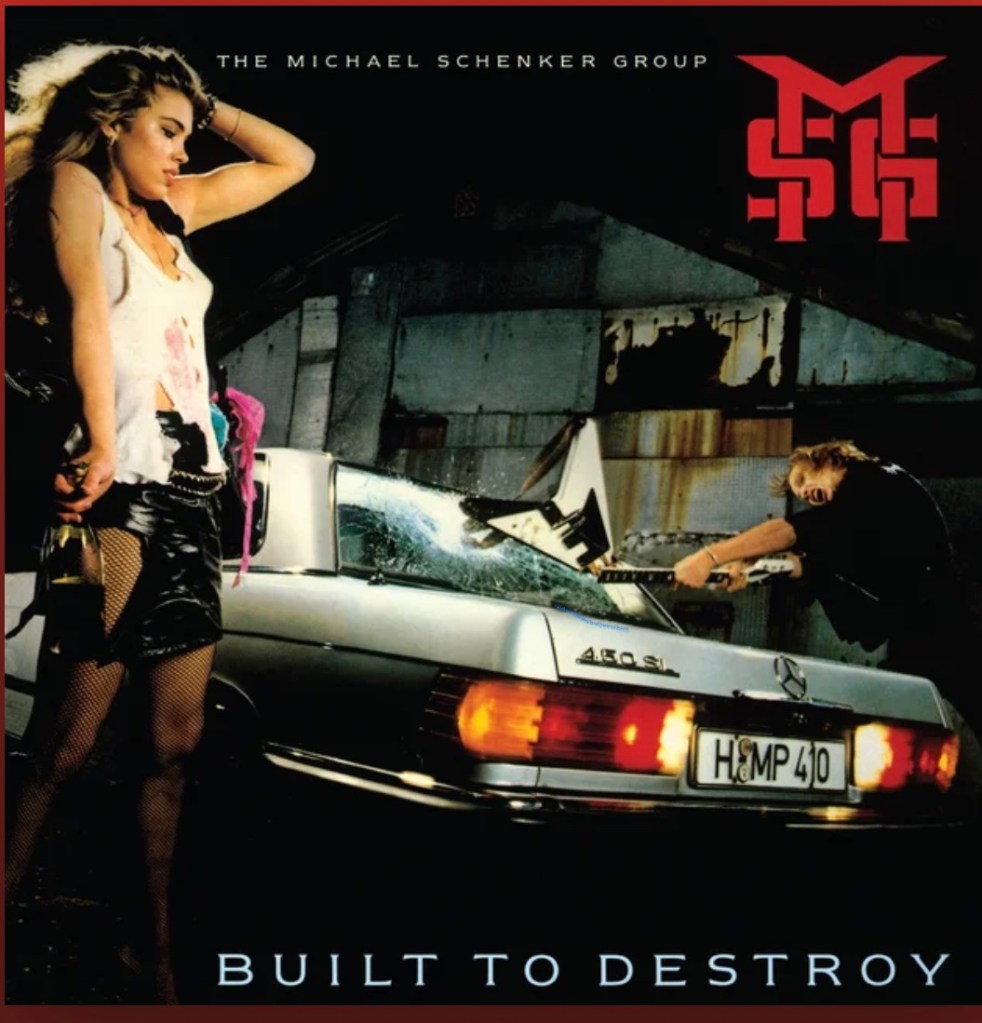
And here we are at album number 4 released in 1983.
Commercially, it stiffed again in the major North American market. It’s forgotten from the conversation.
But it’s a favorite.
I could have picked alot of different songs from “Built To Destroy” as it’s that good. But this time around I wanted to write about “The Dogs Of War”.
It’s written by Gary Barden and Michael Schenker.
Drums and bass start it all off. A simple groove yet so catchy with Schenker decorating the Intro with feedback, chords and leads.
It builds until the verses kick in.
Nothing worth taking, all was forsaken
A sense of loss as there was nothing of value left to hold onto or protect.
Hit on the blind side, caught in the spotlights
Exposed and vulnerable, as if suddenly thrust into the spotlight without any preparation, leaving you exposed and defenseless.
Warning came late, no chance of alluding
It conveys a sense of helplessness and a lack of options.
Shadows were long as they forged through the night
I like the way this is delivered vocally. It’s almost classical and yet it feels new wave.
The line tells me it’s about perseverance and determination amidst challenging circumstances.
Looking for signs of the day, Deep in their minds as they walked out of sight
A sense of introspection and anticipation as we search for signs of hope or a brighter future. A mindset of seeking out positive change or opportunities in the midst of uncertainty or darkness.
The line “deep in their minds as they walked out of sight” suggests that despite being physically present, our minds are occupied with thoughts, hopes, and aspirations.
Mission completed all were defeated Branded with fire, now filled with desire
“Mission completed all were defeated” suggests that a goal or objective was successfully achieved, but it came at a cost. The mention of being “branded with fire” tells me that the experience was intense and left a lasting mark. However, instead of being discouraged or weakened, there is a newfound sense of determination and passion, as they are now “filled with desire” for more.
Message came through on the wings of a prayer Feelings were high for a time
The line “Message came through on the wings of a prayer” suggests that guidance or inspiration arrived unexpectedly, perhaps in a moment of spiritual connection or hope.
“Feelings were high for a time” indicates a period of excitement and enthusiasm following the completion of the mission. Emotions are intense and elevated during this phase, reflecting the sense of accomplishment and fulfillment.
Slap on the backs for the ones who had dared To run with the wolves of our time
These lines honor those who have dared to defy conventional norms and expectations, applauding their willingness to take risks and venture into uncharted territories.
They embody the spirit of running alongside the metaphorical “wolves” of their time, showcasing their courage and tenacity in the face of adversity.
Michael Schenker embodies this spirit. At 15 he left Germany to join UFO in the U.K. Imagine that, in 2023.
The dogs of war, will bite the hand for a price, and then hear them roar
The destructive nature of conflict and the willingness of certain individuals or entities to engage in acts of aggression or violence for personal gain. The phrase “dogs of war” symbolizes those who are eager to participate in warfare or engage in hostile actions. They are portrayed as fierce and relentless, driven by their own motives and desires.
The line “will bite the hand for a price” suggests that these individuals are willing to turn against their own benefactors or allies if offered a sufficient incentive.
It implies that loyalty can be easily swayed by material or monetary rewards, and they will not hesitate to betray those who once supported them.
Their mission completed, the innocents bleeding
Overall, this phrase captures the bittersweet nature of achieving a goal or objective while acknowledging the devastating impact on the innocent individuals caught in the crossfire.
To buy someone’s freedom’ who pays?
The question challenges the notion of freedom as something that can be easily obtained through financial means. It prompts us to consider whether true freedom can be bought and whether the act of purchasing it merely shifts the power dynamics or perpetuates a system of inequality.
A lot of the lyrics in the 80s got blasted and they still get blasted by music writers as being immature.
That is the case for some songs and some acts still make a living on writing simple immature lyrics with simple rhymes, laced with sexual innuendos.
Then you get other lyricists who write with some depth and double meanings. Gary Barden is one such lyricist. He’s also pushed out the “tease/please/knees” kind of lyrics as it was a symptom of the era he was in but overall his output is a lot more mature.
And Michael Schenker. He’s a lifer and what a rollercoaster lifestyle he’s had. He didn’t top the charts as a solo artist but his impact is as large as his UFO and Scorpions career.
When Twisted Sister disbanded in 87, Dee wasn’t in the news a lot, except for a few little paragraphs here and there in a magazine about his upcoming “Desperado” project.
Then that project got killed by record label bosses at Neglektra.
And the biggest voice in my life was missing during the “golden commercial years” of metal and rock music.
Then Widowmaker got up and running, however Grunge came and after a two albums, the band was done.
A solo album called “Never Let The Bastards Wear You Down” revived hope that more would come. But it didn’t eventuate.
However Dee is a lifer when it comes to music. He battled tooth and nail to make it, so there was no way he was going to lay dormant for long.
And like it was written in some holy book, Dee came back, more diverse than ever. He became a movie maker, a radio show host, a solo artist, an author and when TS reformed, he led them up front all the way to the last show.
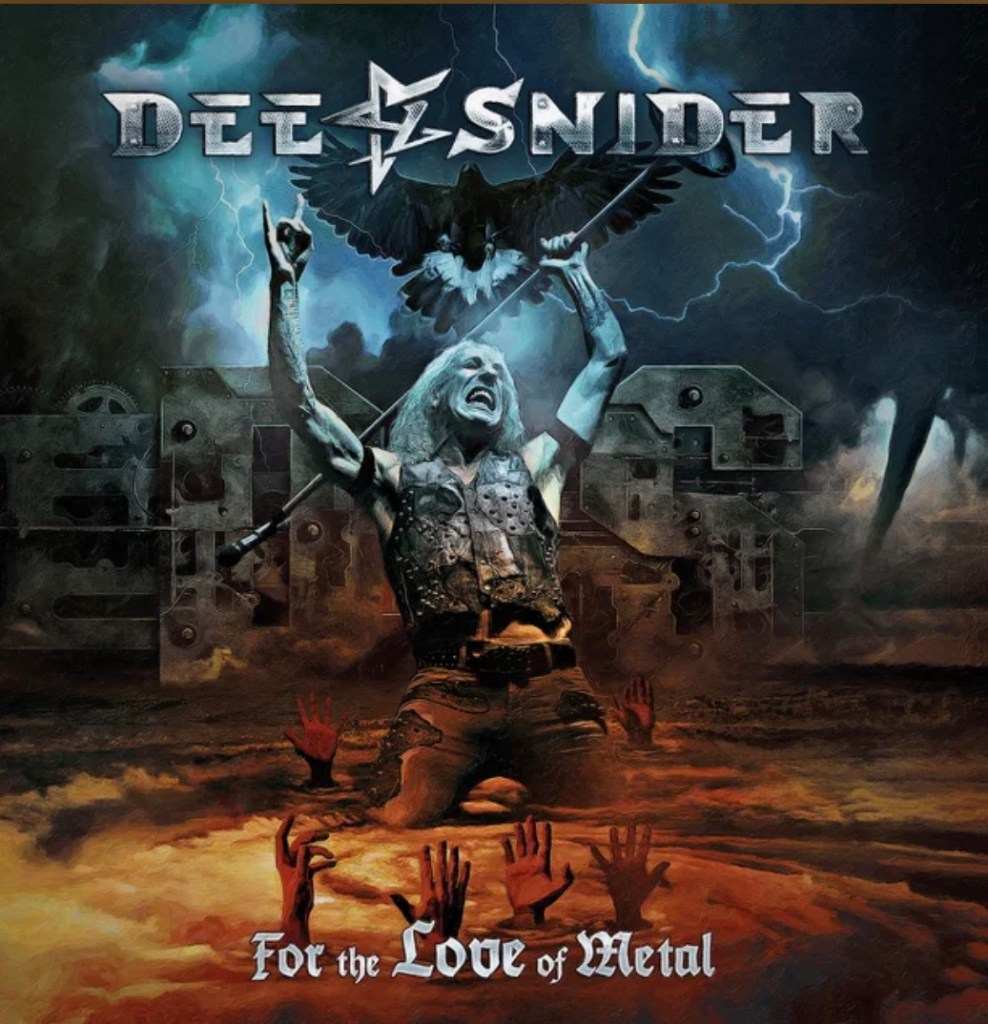
“For The Love Of Metal” came out in 2018 and it is basically metal music the way I know it.
His solo music doesn’t have the same public acceptance as the Twisted music, but it doesn’t mean it’s not important or influential. As I’ve said before, a million sales of an album doesn’t mean you have 1 million fans. You just have a million people who purchased the album.
The question any artist should be asking is, how many people actually listened to the album from start to finish?
In a one to one commercial sale, it will never be known how many people listened to the album at least once and how many people listened to the album over a hundred or a thousand times.
“Mask” is a great song.
Depending on how you experience the album, it’s either hidden deep in the album at track 8 or it’s at the start of the B side of the vinyl.
That intro riff hooks me in right away. It’s thrash power Metal like.
With torn and bleeding smiles we move on And mouth all different kinds of broken promises Why should our days be spent in denial While counting our faults and ripping our hearts out
These lines express the struggle of carrying on with a facade of happiness despite inner turmoil.
The smiles we wear is depicted as torn and bleeding, indicating the pain and suffering we endure internally.
We continue to make promises we cannot keep, adding to the brokenness within. The questioning of why one should spend their days in denial is a desire for honesty and authenticity, rather than pretending everything is fine.
The act of counting faults and ripping hearts out shows a self-destructive pattern of dwelling on personal flaws and causing emotional harm.
These lines highlight the complexity of navigating through life’s challenges while grappling with inner turmoil and the longing for genuine connection and self-acceptance.
The face you see is not our own It hides our tears and shades our eyes The heart you touched has since grown cold We wear the mask that grins and lies
We live in a world of suppression.
The idea of each one of us presenting a false image to the world, concealing our true emotions and vulnerabilities behind a mask is real.
The face that others perceive is not a genuine reflection of our inner feelings. Instead, it serves as a shield to protect ourselves from judgment, pain, or further emotional exposure.
The heart that was once open and receptive has now become distant and detached.
The mask we wear may project a smiling and seemingly content facade, but it conceals the truth and hides the pain beneath the surface.
Behind our doors the time cannot be whisked away Crashing and burning, leaving hints of darkness Deep within their withered faces, lines are sunken in We say we’re fine behind the mask We say we’re fine, why do you ask
The passage of time and the struggles that accompany it. Behind closed doors, the weight of time cannot be escaped or avoided.
The phrase “crashing and burning” conveys a sense of chaos and turmoil that leaves traces of darkness in its wake. The imagery of withered faces with sunken lines reflects the toll that time and life’s challenges have taken on us.
Despite the weariness and pain hidden within, we still maintain the facade of being fine. We wear a mask of contentment and happiness, even when asked about our well-being.
The repetition of “we say we’re fine” emphasizes the disconnect between our true emotions and the image we project to the outside world. Its easier to maintain appearances and avoid delving into the depths of our inner struggles.
The subject matter is serious and the music is thunderous.
A little Frontiers Records project known as “Revolution Saints” is now four albums deep. The self-titled debut came out in 2015. Songs like “Back On My Trail”, “Locked Out Of Paradise” and “Way To The Sun” with Neal Schon led the way. I was also a fan of the excellent Eclipse cover, “How To Mend A Broken Heart”.
The sophomore album “Light In The Dark” hit the streets in 2017 with the excellent “Freedom” as the standout track.
Third album, “Rise” came out in 2020 and with the song “When The Heartache Has Gone”, they broke the million streams on Spotify. The trilogy of albums also saw the end of the first iteration of the band with the departure of Doug Aldrich and Jack Blades.
And then “Eagle Flight” landed in 2023.
Once I heard it, I had to write about it.
Joining Castronovo is Joel Hoekstra and Jeff Pilson. Two excellent musicians and songwriters with resumes to match.
But the main songwriter is Alessandro Del Vecchio again, the Max Martin, Jim Vallance and Desmond Child of Italy. according to my math, Del Vecchio’s song writing credits for Frontiers album releases would be a thousand plus. If it wasn’t for Del Vecchio, Revolution Saints wouldn’t exist.
With each song I will highlight the songwriters, to showcase the casting net that Frontiers President Serafino Perugino casts to get quality songs for his projects.
Eagle Flight
Written by Alessandro Del Vecchio, Francesco Savino and Rossella Moscatello. Savino and Moscatello are from the metal band False Memories, another Frontiers act, who released an album, “The Last Night Of Fall” in 2021.
This song is pure melodic rock with Castronovo’s tobacco stained Steve Perry like vocals.
Del Vecchio plays on this as well, delivering a stellar performance on the keys/piano.
Under the sky we will fly like eagles
Eagles are known for their strength, grace and ability to fly at great heights. Eagles are used to symbols of freedom, courage and vision. The phrase conveys a sense of freedom, power and soaring above our limitations. You can overcome obstacles, rise about your circumstances and experience a sense of exhilaration and triumph.
Our dreams are mirrored from our thoughts, grounded by a thousand hopes
Our dreams are a reflection of our thoughts and aspirations. Our minds project our desires and wishes into the world, creating a mental image or a “mirror” of what we hope to achieve. Each hope serves as a foundation, providing us with the strength and resilience to persevere through challenges and obstacles.
Talking Like Strangers
Written by Alessandro Del Vecchio and Joel Hoekstra and it’s a Hoekstra riff that kicks it off.
It’s got that major key vibe, and man that Intro solo from Hoekstra had me playing air guitar. Musically it sounds like a Firehouse song and I like it, as I think the first two Firehouse albums are excellent.
But the Chorus has that Euro Pop vibe. Almost ABBA like. And man, Castronovo hits some highs here.
Need Each Other
Written by Alessandro Del Vecchio and Italian pop songwriter Francesco Boccia.
The Chorus.
Press play on it it.
And then stick around for the guitar solo from Hoekstra.
Kids Will Be Kids
Written by Alessandro Del Vecchio and Kristian Fyhr.
Fyhr is the vocalist in several Frontiers acts like Seventh Crystal and House Of Lords.
An almost funky like groove starts it off, but once the intro guitar lead kicks in, its melodic rock heaven.
Castronovo is again nailing the vocal melody.
We were too young to know, that grown ups never lie, kids will be kids no matter what
It expresses the idea that when we were children, we were naive and unaware of the fact that adults sometimes deceive or lie.
As children, we tended to trust adults completely and believed that they always spoke the truth. However, as we grow older, we come to realize that adults are fallible and capable of dishonesty.
And regardless of what children may experience or learn about the world, they will still behave like children. Children have their own unique perspectives, innocence, and tendencies to be playful, curious, and impulsive.
The nature of childhood remains constant despite any revelations or disillusionment that may occur as children become more aware of the complexities of the adult world.
“It still has the pop sensibility of Journey but with Joel and Jeff in the band I feel it is a bit heavier.
I grew up with heavy metal and I love playing songs with that kind of power.
Johnny Gioeli, the singer from Hardline, who Neal and I had been with in the early 1990s, produced my vocals for me. I have always admired Johnny’s vocals. He coached me on Zoom.”
I’ll Cry For You Tonight
Written by Alessandro Del Vecchio and Francesco Boccia.
It’s like a ballad, but it’s still got enough weight to rock. Blues rock that is.
Crime Of The Century
One of my favourite tracks on the album and it’s written by Anders Wikstrom who is/was the guitarist and songwriter in the Swedish hard rock band Treat for the band’s first three records. Since the late 80’s he has amassed a portfolio of close to 300 credits on Discogs.
That Chorus hook remains with me long after the song is finished. Castronovo is channeling his love of Paul Stanley.
Gotta break thru the walls Just to find that my heart is still beating
The idea of perseverance and resilience in the face of challenges or difficult situations.
Are you determined to overcome obstacles in order to discover that you are still alive and capable of experiencing life?
Set Yourself Free
Written by Alessandro Del Vecchio and it feels like it came from Night Ranger aka “Why Does Love Have To Change?”
Just press play and enjoy.
Sacred
Written by Alessandro Del Vecchio, Kristian Fyhr, Nikos Sofis and Saal Richmond. Sofis is a Greek songwriter/lyricist and Richmond is created the band IN-SIDE. If you like acts like Alan Parsons Project, Toto, Work Of Art and Europe then you will like IN-SIDE.
Jeff Pilson’s bass rumbles here perfectly locked in with Castronovo’s drums. It’s almost galloping.
Another favorite, just behind “Crime Of The Century”.
Once More
Written by Alessandro Del Vecchio and Francesco Boccia.
Castronovo is the highlight here, especially in the Chorus.
And Hoekstra nails the solo section.
Save It All
Written by Alessandro Del Vecchio, Kristian Fyhr and Stefano Mainini who also wrote songs for Sunstorm’s “Brother In Arms” album before this.
Hoekstra puts his stamp on this song. The guitars are phenomenal.
In most of the interviews I’ve read, Castronovo has said he doesn’t write lyrics and if it wasn’t for Del Vecchio, this project wouldn’t exist.
As a fan of Dokken and the song writing of Jeff Pilson, I would have loved to see some Pilson co-writes. Then again, the writers used here, have done a stellar job.
Iron Maiden, is one of the greatest heavy metal bands of all time.
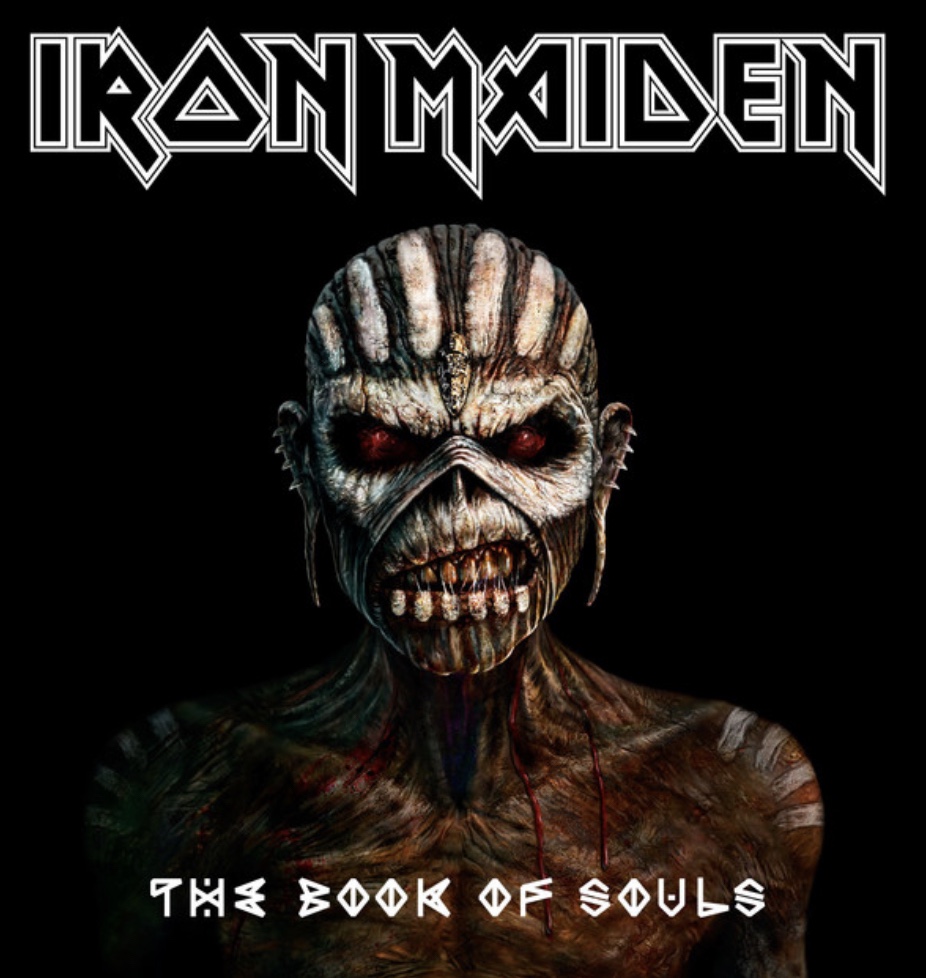
In September 2015, they released, “The Book of Souls”. The press release had something like this, “the album features eleven epic tracks, including the 18-minute-long “Empire of the Clouds.”
“The Book of Souls” takes its inspiration from several sources, including the Mayan civilization and the ancient Aztec mythology. Talking about the inspiration behind the album, Iron Maiden’s bassist, Steve Harris, said, “We all love exploring the myths and legends of different cultures around the world, and I think fans will really enjoy seeing how we’ve taken these ideas and turned them into something new and exciting.”
The album is also known for its successful chart performance, reaching number one in several countries worldwide.
The album’s tracks are not typical radio-friendly tracks; instead, they are epic journeys that take the listeners on a ride.
If Eternity Should Fail
Written by Bruce Dickinson. The song is played in drop D tuning and it originally had been written for one of Dickinson’s solo albums.
As Dickinson explains in a Kerrang interview;
The demo was done and the band just copied what Roy [Z, along time Bruce collaborator] and I did in his bedroom. In fact, the little keyboard bit in the beginning is me in Roy’s bedroom.
In a Rolling Stone interview, Dickinson described the song being about a machine designed by the evil Dr. Necropolis that steals the souls of men.
After the effects laden Intro, it really kicks into gear at the 1.32 mark.
Dickinson is at his best here, with each word and syllable clearly pronounced.
What the hell does “reefing a sail” mean?
I had to look it up.
Waiting in line at the ending of time if eternity should fail
It is open to interpretation.
The idea of a final judgment or reckoning, where all souls must wait in line to be judged, even if eternity itself were to come to an end.
Or it could be the idea of waiting for something that may never come, even in the face of eternal time. This interpretation could speak to the human experience of waiting for something unattainable or out of reach, despite the seemingly infinite amount of time available.
At the 5 minute mark it kicks into overdrive, classic Maiden. At 5.45 we get the harmonies.
I could have done without the demonic voice at the end.
Speed Of Light
Written by Adrian Smith and Bruce Dickinson.
Nothing super original about this musically as it is a track with alot of Deep Purple swagger mashed up with “From Here To Eternity” from the “Fear Of The Dark” album.
Shadows in the stars, we will not return, humanity won’t save us, at the speed of light.
It’s not just words to fit the music. There is a lot to unpack here.
“Shadows in the stars” could be interpreted as a metaphor for the human condition of feeling small and insignificant in the face of the vastness of the cosmos.
“We will not return” suggests a finality, perhaps implying that humanity is on a one-way journey towards some unknown destiny or fate.
“Humanity won’t save us” suggests a lack of hope or faith in the ability of human society to solve the problems facing us. This could be interpreted as a commentary on the current state of the world, where many pressing issues such as climate change, political instability, and inequality remain unresolved.
And the phrase “at the speed of light” suggests a sense of urgency and the idea that time is running out. This could be interpreted as a warning that we need to act quickly and decisively if we want to avoid a catastrophic future.
It conveys a sense of resignation and a lack of hope for the future. It suggests that we may be on a collision course with some form of disaster, and that there may be little we can do to avoid it.
The Great Unknown
Written by Adrian Smith and Steve Harris.
The Intro.
It reminds me of “Aerials” from System Of A Down. And I like it.
But it doesn’t lift off after the Intro and Dickinson is hard to decipher vocally.
But make sure you stick around for the harmony solo which kicks in at 4.11, before the main solo.
Overall if the great John Kalodner was sequencing the album, this song would be left off or it would be heavily edited to a 4 minute song.
The Red And The Black
Written by Steve Harris.
This song confuses me. It’s sort of a classic but it’s not. But depending on mood it is. Hear me out.
After the bass doodling, the whole Intro is classic Maiden.
We hear the vocal melody played on the guitar before the first verse kicks in. And it’s excellent. But the singing that comes next is way too busy and indecipherable. Even Harris has said in various interviews that Dickinson freaked out at singing this because there are so many words.
Lyrically it’s based on a 1830 French book called “Le Rouge et le Noir”.
The story is about a man trying to rise up the social ladder via working hard and then abandoning his ambitions as he spirals down with mental illness.
See myself in the hall of mirrors A different shape every step I take A different mind every step of the line But in the end they are all mine
The idea of self-reflection and the complexity of one’s identity.
The “hall of mirrors” is a metaphor for the mind or the self, as we look inward and see different versions of ourselves reflected back.
Our perception of ourselves is constantly changing.
At 2.26, they start the woh-oh part.
At 2.58, the song moves into another section. The lead guitar plays the vocal melody and it works this time around.
And they move back to the woh-oh part.
Chance your luck a four leafed one
Success is uncertain and one must take a chance or a risk in order to achieve it. The “four-leafed one” emphasizes the idea that success or good luck is rare, like finding a four-leaf clover in a field of three-leaf clovers.
When the chorus kicks in it’s in major key territory.
At 6.34, a harmony section kicks in and then an excellent lead. I think it’s from Janick Gers. And there still another 6 minutes to go.
Another excellent lead kicks in at 8.38.
And the piece d resistance is the lead break that starts at 9.40. You need to stick around for that. It continues to the 11.53 mark.
It’s only fitting that it ends with the woh-oh part.
When The River Runs Deep
Written by Adrian Smith and Steve Harris.
How good is the riff that kicks in at the 35 second mark?
But the vocal melodies don’t do it justice.
The Book Of Souls
Written by Janick Gers and Steve Harris.
A baroque like intro from Janick Gers gets things started.
At the 58 second mark it goes into an Arabic feel, more “Powerslave” Ancient Egypt like than Aztec/Inca.
Prophecy of sky gods
The foretelling made by deities associated with the sky. In many cultures, the sky is seen as a domain of the gods, and so predictions made by them would be considered especially significant.
The sun and moon Passing of old ways will come true soon
A prophecy of change and transformation. The sun and moon are often seen as powerful symbols of change and cycles of renewal.
But the song could have done with some editing.
Death Or Glory
Written by Adrian Smith and Bruce Dickinson who bring pack the power of the first three Maiden albums.
Lyrically it continues Dickinson’s love affair with aerial combat, which he covered in “Aces High” and “Tailgunner”.
Musically, the whole solo section is definitely worth pressing play for.
Shadows Of The Valley
Written by Janick Gers and Steve Harris.
An intro reminiscent of “Wasted Years” and “Paschendale”. And I’m hooked.
And musically the song is great. Melodically it is great. Lyrically it’s not so great.
Tears Of A Clown
I love the groove on this, written by Adrian Smith and Steve Harris, the song is praised by Dickinson as his favourite track and it is based on comedian Robin Williams’ depression and suicide in 2014.
Tomorrow comes, tomorrow goes But the cloud remains the same Wonder why he’s feeling down Tears of a clown
A façade of happiness, even though the person is struggling with inner turmoil or sadness. Hiding their true emotions, just as a clown hides their true face behind a mask or makeup.
The Man Of Sorrows
Written by Dave Murray and Steve Harris. An arpeggiated Intro with a lead. Perfect.
Then the vocal melodies come in and Dickinson is crystal clear.
And when the Chorus kicks in, it brings back memories of “Wasting Love” from the “Fear Of The Dark” album.
Looking through a mist of truth That we believe an elusive cloud
We perceive reality as hazy or unclear, and we struggle to discern what is true and what is not. Truth may be difficult to perceive clearly, perhaps because of personal biases or limited information. We see truth as something that is difficult to grasp or pin down.
The things we find are hard to say now That we live through day to day
Do you struggle to articulate your thoughts and experiences. You may feel overwhelmed by the complexity of the world around you, or you may be grappling with difficult emotions or circumstances.
Find it hard to force the reasons Why we find it hard to die
A feeling of hopelessness, reflecting on the mystery of human mortality and the meaning of life.
As we look to see the man of sorrows Passing knowledge to those who don’t know
Is the “man of sorrows” a reference to Jesus Christ, who is often depicted as a figure of suffering and compassion in Christian theology?
The line suggests that this figure is offering guidance or insight to those who are open to receiving it.
As we watch all our friends passing over As they pass through the edges of time
The passage of time and the inevitability of death.
Steve Harris had to deal with a loss of a family member and a close friend during the writing and recording of this album.
The passing of friends and loved ones, has led Harris to contemplate the meaning of life and mortality.
From the Thin Lizzy like harmonies to the lead breaks the whole solo section is excellent.
Empire Of The Clouds
It’s long. 18 minutes in length but this song will be seen as a masterpiece if it isn’t seen that way already.
Written by Bruce Dickinson.
The track tells the story of the “British R101” airship, which crashed in northern France on 5 October 1930 during its maiden voyage.
Over the course of various interviews during the album’s release, we found out that the song was written entirely by Bruce Dickinson, who initially intended it to be about “World War I fighter aeroplanes.”
Dickinson abandoned the idea after using the same theme for the song “Death or Glory,” also from The Book of Souls.
At the time of recording, Dickinson was reading “a big, sort of encyclopedic crash report” of the R101, entitled “To Ride the Storm”.
It took Dickinson about a month to compose the song during the recording sessions.
The track features Dickinson’s debut on piano and the rest of the band had to play along to this piano track while following instructions from Dickinson and producer Kevin Shirley.
And how good is that piano riff and melody. It sounds like it’s out of sync with the metronome but that’s what makes it sound even better.
And when Dickinson starts singing with the catch cry “to ride the storm”, you stop and pay attention.
To ride the storm, to an empire of the clouds To ride the storm, they climbed aboard their silver ghost To ride the storm, to a kingdom that will come To ride the storm, and damn the rest, oblivion
At 6.35, the guitars play the Intro piano melody and at 7.00 the song changes tact. The Instrumental section starts with all playing SOS Morse Code.
Then the best part of the song. A melodic lead in a Major Key kicks in at about 7.10 and I’m stopped in my tracks.
These harmonies continue to 10.04, when the first of the individual leads kicks in.
At 10.35, the song changes feel and tempo. And the riff.
Wow. It gets the foot tapping and the head banging.
At 11.00 it goes back to one of those harmony riffs.
And like Chekov’s Gun, they bring back that riff from 10.35 with a vocal melody at 12.31.
Anton Chekhov is a Russian playwright and he famously said that “if a gun is introduced in the first act of a play, it should be fired by the third.”
This riff is like the gun.
And at 13.00 it changes tact again, more operatic and cinematic. And progressive.
But at 13.40, that riff is fired again.
The empire of the clouds, just ashes in our past
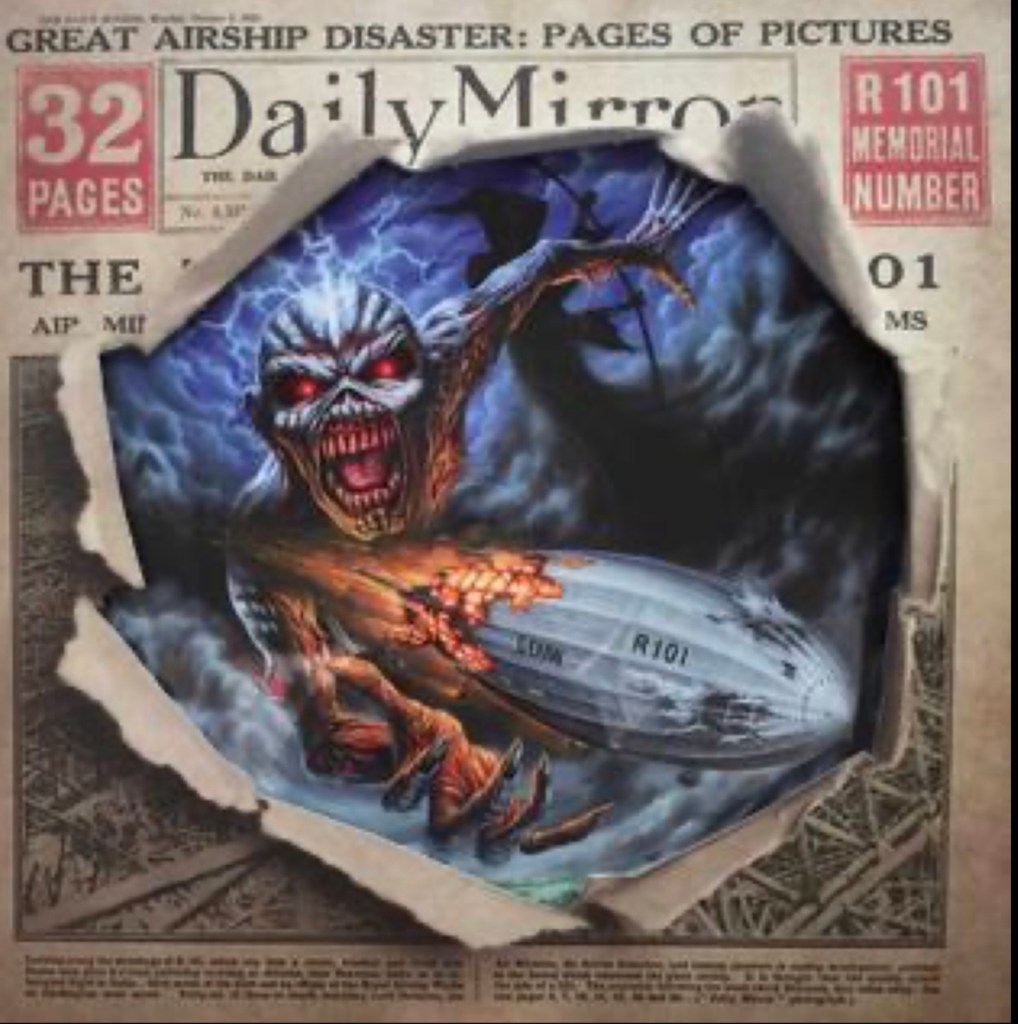
On 11 March 2016, the band announced that the song would be released as a 12″ picture disc single for Record Store Day limited to 5,500 copies, using the front cover of the Daily Mirror from 6 October 1930 as the cover artwork. The single’s B-side features an interview with Dickinson and McBrain, entitled “Maiden Voyage”, in which they recount the song’s creation.
In conclusion, “The Book of Souls” is an album that showcases Iron Maiden’s musical brilliance, passion, and maturity.
The songs are not to formula as they don’t have the weight of MTV or label pressures to do that. What you get is an album that allows the musicians to follow their creative muses.
I wouldn’t walk out of a concert if any of these songs came up in the setlist and for that, this album has aged well.





 destroyerofharmony