It’s always unpopular to have an opinion on an album that isn’t favorable.
Liquid Tension Experiment – III
John Petrucci delivered a great solo album in 2020, but when LTE reformed with Petrucci, Portnoy, Ruddess and Levin, the “III” album didn’t have the same impact as the first two LTE albums which I saw as ground breaking instrumental albums.
The first two albums were released in the late 90s and they came out at a time when most instrumental artists brought in an industrial sound to their albums because that sound is what was popular however LTE didn’t conform to what was popular.
Songs like “Acid Rain”, “Paradigm Shift” and my favourite “Universal Mind” which Petrucci borrowed from for “Happy Song” are instrumental masterpieces.
And the deeper you dig into the first two albums you’ll hear other awesome tracks like “Kindred Spirits”, “Freedom Of Speech” and “When The Water Breaks”.
But if you do want to press play on a track from this album, then “Blink Of An Eye” is the one. It’s got this groove that it’s intoxicating and it sets the foundation.
Trivium – In The Court of The Dragon
I’m a big fan of Trivium and in April 2020 just when lockdowns started around the world, they dropped the excellent “What The Dead Men Say”.
And they couldn’t tour behind it. Matt Heafy did a side project and the band got together and wrote another album.
Which didn’t have the same impact as “What The Dead Men Say”.
Dream Theater – A View From The Top Of The World
I will buy it as a Dream Theater fan so I can have it in my collection but it didn’t connect with me.
But like previous releases there are some nice instrumental sections.
I’m also not a fan of riffs created on the super heavy gauge of an 8 string guitar. It’s too low and muddled for my ears.
Black Veil Brides – The Phantom Tomorrow
It’s their third rock opera.
I really want to like it, but I couldn’t wait for each song to finish.
Bullet For My Valentine – Bullet For My Valentine
We fall in and out with our favorite artists.
At the moment I’m out with BFMV who I think are suffering an identity crisis.
George Lynch – Seamless
I purchased it as I have all of his recordings and while it was okay, I was expecting something else.
Sometimes albums don’t capture me in their entirety but there is something there that keeps me going back.
Tremonti – Marching In Time
The debut album, “All I Was” from 2012 caught me by surprise because of its slant towards Classic Heavy Metal and Speed Metal.
“Dust” and “Cauterize” from 2016 and 2015 are my favorite albums, especially the song “Dust”, it’s a masterpiece.
“A Dying Machine” from 2019 brought a concept story to the mix and now we have “Marching In Time”. In between Mark Tremonti also did Alter Bridge, so no one can question his work ethic.
I listened to this a lot the week it came out and while each song has a section or a riff which floors me, I only press “like” on four songs, “A World Away”, “Now And Forever”, “Under The Sun” and “Marching In Time”.
It doesn’t mean the other songs are crap.
Far from it. I just need to find the connection.
KK’s Priest – Sermons Of The Sinner
I heard it once and I was impressed.
KK Downing is still a beast on the guitar and we all know that Tim Ripper Owens has an awesome set of pipes on him and is technically better than a lot of the vocalists doing the rounds including his idols.
Before all the JP fans tear me apart, this isn’t meant to be a slight on Halford at all, it’s just progression that people surpass their idols in technicality. Halford is still the “Metal God”.
I remember a Bruce Dickinson interview in which he said, he was floored when he heard Ian Gillian signing “Child In Time” and he started practicing like crazy in his bedroom to mimic what Gillian did on the recording, without knowing that Gillian’s vocals were dubbed in and recut a lot of times and heavily delayed. But Bruce was doing it all naturally. Progression.
For a bit of backstory, K. K. Downing got the idea of forming KK’s Priest after doing a one-off show billed as MegaPriest in 2019 with David Ellefson (my, my, how far has he fallen since his sex scandal) on Bass. As a band, KK’s Priest is somewhere between a solo project of Downing and a reunion with his former Judas Priest bandmates Tim “Ripper” Owens and Les Binks. However, Binks left the band just before the making of “Sermons of the Sinner” because of health issues.
So joining K.K Downing and Tim “Ripper” Owens is A.J. Mills on Guitars, Tony Newton on Bass and Sean Elg on Drums.
And I was a fan without even hearing a track.
My favourite track from JP is “The Sentinel” and when I saw that the last track is called “Return Of The Sentinel” I was sold. Even though the songs sound nothing alike, the nod to a classic sealed the deal.
Blacktop Mojo – Blacktop Mojo
They won a competition to open up for Bon Jovi who at the time were picking local acts from each city to open for them. Thats how they came to my attention.
And they do a mean cover of “Dream On” from Aerosmith and a drunken YouTube cover of “In The Air Tonight” from Phil Collins.
From Texas, so they have this blues southern rock vibe happening but there’s also a Soundgarden and Alice In Chains vibe as well.
Actually Black Stone Cherry comes to mind here as well.
This is album number 4 and it’s slowly growing on me.
All of this were close to being in the Top 10 list.
Architects – For Those That Wish To Exist
I’ve heard the name but never really listened.
And they started to come into my life circa 2018 with the “Holy Hell” album, which I liked some songs on, but when “For Those That Wish To Exist” came out in 2021, I was liking a lot more songs.
I was even half way through a review, before I got side tracked with other posts and never went back to finish.
It’s album number 9 which goes to show that artists will never know which album makes a person a fan. They just need to be in the game, a lifer, producing music.
If charts still matter these days, then this album did great business around the world, hitting the number 1 position in Australia and the UK, while achieving Top 10 positions in Austria, Germany, Scotland, Sweden, Switzerland and the Billboard Hard Rock Charts.
While the band was known as a metalcore act when they started out, this album is not. It’s a stadium rock album with elements of all different kinds of metal thrown in and orchestral electronics.
Lord – Undercovers
An Aussie Metal band.
How can you knock back a covers album that has metal re-imaginings of songs like “To the Moon and Back” from Savage Garden, “Message In A Bottle” from The Police, “Playing to Win” from Little River Band/John Farnham. “(I Just) Died in Your Arms” from Cutting Crew, “The Sun Always Shines on TV” from A-ha, “On a Night Like This” from Kylie Minogue, “Break the Ice” from John Farnham, “Send Me an Angel” from Real Life and “Touch the Fire” from Icehouse.
And to top it off there are sizzling metal and rock covers of “Hard to Love” from Harem Scarem, “Reckless” from Judas Priest, “Wild Child” from W.A.S.P and “Runaway” from Bon Jovi.
Plus faithful renditions of “Judas be my Guide” from Iron Maiden, “Of Sins and Shadows” from Symphony X, “Shattered” by Pantera, “Someone’s Crying” and “I Want Out” from Helloween, “Creeping Death” by Metallica, “Silent Jealousy” from X Japan and “The Whisper” from Queensryche.
Otherwise known as “Nothing Is Real And This Is A Simulation” and it’s one of their best albums in the last 10 years, a concept album that deals with interstellar travel, mistrust in leadership, loss and looking back at the past.
It’s more accessible then some of their previous works, with bigger Chorus’s.
Plus there is some great artwork from Boris Vallejo.
Iron Maiden – Senjetsu
It’s great to have Iron Maiden in our lives. The album is a bit bloated but then again, Maiden from the 2000’s onwards have done things their own way and catered to their own creative muses. Which I respect and still purchase.
The End Machine is listed as a supergroup consisting of guitar player George Lynch, bass player Jeff Pilson, drummer Mick Brown and singer Robert Mason.
Frontiers basically wanted a Dokken sounding album and with 75% of the band being from Dokken plus a singer who worked with Lynch in Lynch Mob, the possibilities of a Dokken sounding album were high.
The self-titled debut came out in 2019 and in 2021, “Phase 2” came out. The difference here was that Mick Brown vacated his drumming gig due to his retirement and his younger brother, Steve Brown took the spot.
I also had a review partially written on this however other posts took my interest and I never went back to it.
But it did have comments like, “’this song reminds me of <insert Dokken song here>.
For example, “Dark Divide” is “The Hunter”. “Blood And Money” reminds me of “Tooth And Nail”. “Crack The Sky” has this “Stop Fighting Love” meets “It’s Not Love” vibe.
And to tell you the truth, I wouldn’t have it any other way, because while Dokken is on hiatus for new music, The End Machine definitely fills the void and Mason’s pipes are in fine form, while Mr Don is struggling a bit.
So if you like classic Dokken, then do yourself a favour and press play on this.
The debut album “The Hymn Of A Broken Man” came out in 2011.
Have I mentioned that Adam Dutkiewicz is a great riff meister?
All different musical roads lead to here. A combination of country, blues, metal and rock.
For those looking about positive messages, this isn’t the album for you. It’s melancholy lyrics and metal like riffage is music to make you crash your car. You can feel the sadness, a pain at the world, society and the various demons within the mind.
It’s gloom and doom, but inspirational as well.
The album title is indicative of the theme. And having gone through loss recently this album is becoming my companion, riding shotgun with me.
So I press repeat.
Free Spirits Rising
An Australian artist who releases a song every 6 weeks or something like that and plays all the instruments.
Its raw sounding hard rock but the music is melodic and catchy even though the vocals can be hit and miss.
James Durbin’s covers of Judas Priest on American Idol got me interested. The YouTube videos got some traction here in Australia.
His debut album released in 2011, “Memories Of A Beautiful Disaster” rocked hard and I was a fan. “Celebrate” in 2014, lost me as it went way to poppy.
Then he hooked up (surprisingly) with Quiet Riot and he made me a fan again with the very underrated and forgotten “Road Rage” album released in 2018. “Space Cowboys” came out a year later but shit was going down in the Quiet Riot camp, as Durbin left the band before the album was released and drummer Frankie Banali was fighting for his life but we didn’t know it at that point in time.
And here we are with Durbin.
Durbin possesses a great vocal range and his prowess on the guitar is evident on this album. As a songwriter, all songs are written by Durbin.
If this is his first entry into the realms of Metal, then I will eagerly await his next.
It has this bass intro that reminds me of the song “Comedown” from Bush and the drum beat makes me think of “When The Levee Breaks” from Led Zeppelin. If you want an introduction into the band, then this is the song to start with.
“Are we living? Or merely killing time?
BOOM.
Then the distorted guitars crash, mimicking the bass riff.
The story of the Bon Jovi “Greatest Hits” album goes back to 2007. At that time, Jon was very interested in developing the country rock sound that he experimented with on the unexpected hit single, “Who Says You Can’t Go Home,” which was featured on the 2005 album, “Have A Nice Day”.
The label, Universal Music wasn’t interested in allowing Jon to follow his muse, and instead wanted a “Greatest Hits” package from the band.
In the end, Universal couldn’t stop Jon from going ahead with the album; however the label believed that they would lose a lot of money on it.
So the label made Jon promise that once the country rock album bombs, Jon will deliver a “Greatest Hits” album.
But the“Lost Highway” album and world tour was successful.
After the “Lost Highway” tour, Jon and Richie got together and started writing five songs for the promised “Greatest Hits” package that was to come next.
Then the global financial crisis happened, and according to Richie Sambora, he and Jon just continued writing more than the required amount of songs needed for the “Greatest Hits” package.
Another argument was put forward to the label to release a new album, which in turn would postpone the “Greatest Hits” release again.
From the songs written, most of them would end up on “The Circle” album, with five songs left over for the “Greatest Hits” package.
The “Greatest Hits” was finally released in October 2010, while the band was still touring on “The Circle” album and it gave the band further momentum to hit the road again in 2011.
And I wrote 7000 plus words about the “Greatest Hits” package and the story behind it.
It is a well-known fact that Led Zeppelin has borrowed (or stolen depending on how people view this) bits and pieces from other artists however Zeppelin’s influence and reach is vast and if there was no Led Zeppelin, a lot of bands that we love and like today would have not have existed in the form that we know them.
One such band is Whitesnake.
For a lot of people, their first hearing of Whitesnake was in 1987 and a song called “Still of the Night”.
The song is written by lead singer David Coverdale and guitarist John Sykes.
The Led Zeppelin influence is unmistakable. The vocal delivery over the F#5 power chord in the intro reminds me of Robert Plant from “Black Dog” and “Jailhouse Rock” from Elvis Presley.
When the riff kicks in straight after, the ears are treated to a combination riff based on “Black Dog” and “Immigrant Song”.
Even though it is derivative, it is hard to burn out on the song because it doesn’t sound like anything else.
It’s hard to believe that “Black Waltz” was Avatar’s fourth release. Another band from Sweden and the famous Gothenburg melodic death metal scene.
I was interested to check this band out after the guys from Five Finger Death Punch mentioned in an interview that Avatar’s new album is doing the rounds while they are on tour and that it is influencing them in the riff department.
Avatar has just so many elements in their music.
Industrial rhythms (like Rammstein) – check Old Time Rock N Roll boogie – check Swedish melodic death metal scene (like In Flames) – check Hyperactive metal (like System of A Down) – check Modern Metal elements (like Disturbed) – check Technical Metal elements (like Meshuggah, Sikth) – check Melodic, arena sized choruses – check And that is what I got from listening to Black Waltz. A bizarre, melodic, psychotic freakshow.
My first post on Jet was “Shaka Rock”, their third album. Then it was the debut “Get Born”.
And I wrap up their output with their much anticipated second album, “Shine On” released on 30 September 2006, in Australia and on 2–3 October 2006, internationally.
When you Google the album name and review, the Pitchfork review is the first one that Google brings back.
Pitchfork gave the album an 0.0 review and the page had an embedded YouTube video of a monkey peeing in its own mouth. I’m presuming to state it’s a “piss poor” album.
But Aussie’s don’t care about expectations and artists development. We care about fun and Jet just made another fun album rooted in good old fashioned Blues Rock.
Holiday
There’s no way that people can’t like this song.
It has all the trademarks of what Jet is. A hooky riff, dumb lyrics and a fun attitude. There is this small riff between the main riff that reminds me of QOTSA.
Makes no difference what they say We’re goin’ on holiday
It sounds too good to be true these days. Going on a holiday.
Put Your Money Where Your Mouth Is
If there’s one thing us Aussies like, is a good punt. We’ll bet on anything. But this song isn’t about betting.
It continues the catchy riffs and themes from “Are You Gonna Be My Girl”.
She goes down Like a setting sun
It leaves little to the imagination.
You can be the sinner and I’ll be the sin
Best lyric in the song.
Bring It On Back
The Beatles (as a byproduct Oasis as well) and Bad Company come to mind here.
For all that you said Would you take it all back?
Even if it’s taken back, it’s been said and words sting deeper than actions.
That’s All Lies
It’s more Punk Rolling Stones like, in a 12 bar blues sense.
Kings Horses
It’s a country folk rock cut.
In the morning i swear i will tell you the truth How you receive it, well, that’s up to you
Everyone has their own version of the truth.
Shine On
A tribute to the Cesters’ father, who passed away from cancer while they toured on the “Get Born” album.
Oasis and “Stop Crying Your Heart Out” comes to mind here.
Everything will be okay We will meet again one day
It’s impossible but people believe it’s possible.
Come On, Come On
It’s very ELO meets Rolling Stones.
If they ask you to stand, well they just want you to kneel
So if you stand based on someone else’s command, then you will kneel when they tell you to kneel.
Stand Up
It’s a basic blues rock song in a Rolling Stones “Sympathy For The Devil” and “Revolution” from The Beatles vibe with the message from the 80s, like “Stand Up And Shout” and “We’re Not Gonna Take It”.
Stand up, you got to live while you can Stand up, burn up before you fade out Stand up, don’t you follow the crowd Stand up, you got to live in the now
Rip It Up
Might as well call it “Wipeout” as it has that 60s Beach feel.
Rip it up, rip it up if your ever gonna make it!
Skin And Bones
It starts off with that “Shooting Star” and “Werewolf In London” riff.
Shiny Magazine
It’s that whole Beatles/Oasis feel.
Eleanor
Strummed acoustics and a campfire “Rubber Soul” feel.
All You Have To Do
And the album ends.
They recorded a shit load of songs for this album and there are so many versions of the album with a lot of bonus tracks and demos.
It didn’t sell anywhere near the debut but that doesn’t mean it’s a crap album.
In 2012 Chris Daughtry had a decision to make after “Break The Spell”.
Should he stay with the same sound?
Should he change the sound completely?
Should he stay with the same sound but experiment with a few songs by bringing in different sounds?
“Baptized” came out in in November 2013 on RCA Records and it was an electro synth pop sounding album, a significant departure from the hard rock sound on their first three albums.
Like the previous albums, RCA farmed Chris Daughtry out to work with different writers. But while the writers previously had some rock pedigree, the writers on “Baptized” album specialized in other styles.
There is a song called “Long Live Rock N Roll” and it doesn’t even rock, as it’s more in the vein of “I Wish I Was A Punk Rocker”, an acoustic folk song which tells a story of growing up with a certain type of music.
Then came a “Greatest Hits” album in 2016 with two new songs called “Torches” and “Go Down.
“Torches” is actually a good bridge between the old sound and the “Baptized” sound,
The song “Go Down” has your typical catchy Daughtry vocal melody but it’s instrument sounds are routed in synth pop and electronica. Think of the band “Garbage”.
“Cage To Rattle” came out in 2018. 10 songs that total 38 minutes. RCA again was spending a lot of money for Chris Daughtry to write with so many outside writers in the quest to find hits.
But the record executives failed to understand is that Daughtry’s audience is predominantly made up of rockers. And there is a saying, when you’re chasing hits it don’t mean the hits would come.
Then Daughtry and RCA parted ways.
And Daughtry was back, louder and meaner.
“Dearly Beloved” is a return to form which shows the world that Daughtry still knows how to rock!!
In October, Machine “Fucking” Head made 30 years! It’s a long time in the business. Music is a lifers game.
In the early 90s, Robb Flynn decided to quit the band he was in, to start Machine “Fucking” Head, so he could call the shots and not have to answer to anyone.
Throughout the years he’s had different versions of the band with “The Blackening” line up being the most favored and then the “Burn My Eyes” line up.
Over the last three years, Robb’s motto is simple. If he has a song, or two, he’s going to get it recorded and released.
In 2019, “Do Or Die” was released.
In February 2020, “Circle The Drain” came out.
In June 2020, the “Civil Unrest” single, featuring the tracks “Bulletproof” and the Jesse Leach collaboration “Stop The Bleeding” came out.
In November 2020, the stand alone “My Hands Are Empty” was released.
And on 11 June 2021, the 3-Song digital single, “Arrows In Words From The Sky” dropped.
In total 8 songs have been released. They could represent an album that came out today, but we all got to spend time with these songs when they came out and make em special at that particular point in time.
Centuries of pain, under a paper sword Arrows in words from the sky
I am a Russell Allen fan. I knew of Allen long before I heard of Joel Hoekstra. Allen has a voice which can suit power symphonic bands, metal bands, melodic rock bands, hard rock bands, nu-metal bands and blues rock bands.
And I’m also a Jeff Watson fan, so I wasn’t too thrilled with any Night Ranger version without Watson. Then again Watson hasn’t done much being away from the band and I still want to hear new Night Ranger music.
So I still listened to Night Ranger and Hoekstra impressed but I felt he was restrained within that band as Blades and Keagy are the alphas.
And with Whitesnake, Coverdale has two great guitarists to write tunes with but they need to comply with what Coverdale desires.
Which means that Hoekstra 13 is the true Joel Hoekstra.
“Running Games” is album number 2 for his Frontiers label contract.
The band for the album is a supergroup are Russell Allen on vocals, Tony Franklin on bass, Vinny Appice on drums and Derek Sherinian on keyboards with Jeff Scott Soto doing backing vocals. Yep, you read that right, the great JSS is doing backing vocals.
Overall Hoekstra’s songwriting is top level and the performances from the guys are excellent.
I suppose it’s that time to start providing some EOY lists.
I’ll start with what I see as my favourite ten albums, EP’s or Singles released for the year. And then there will be another posts on my Spotify listening habits for the year.
So here it goes.
Here is Part 1, which features my go to artists with 2021 releases and it’s not an numerical order.
Two of my favourite Kiss albums are “Dynasty” and “Unmasked” because they brought in other styles of music into the Kiss rock sound and somehow Kiss still made it sound like hard rock.
So I wasn’t surprised to hear that “Dynasty” and “Unmasked” are also the favourite albums for the guys in TNFO and how they see the song “Easy As It Seems” as the blueprint for a TNFO song.
And how can you knock back a song called “How Long” which has been described as “90s Deep Purple on cocaine”.
So if you grew up in the 80’s listening to hard rock and melodic rock, then you need to listen to this.
Tom Englund is the mainstay, the founder, the main writer, the vocalist and also one of the guitarists.
Opener and first pre-release single, “Forever Outsider” showcases the power of the band at its metal best, while the second pre-release single “Eternal Nocturnal” showcases the power of the band at its hard rock best with sing-along Choruses and Henrik Danhage stealing the spotlight with his unbelievable, shredalicious and memorable solo spotlight.
“In Absence Of Sun” is heartfelt, melancholic, mournful and emotive while “You From You” has this Michael Schenker ballad like vibe in the intro.
A simple dare from Jamey Jasta, brought forth “For The Love Of Metal” and it caught a lot of people by surprise.
“Leave A Scar” carries forth the metal torch.
With tracks like “I Gotta Rock (Again)” the intro riff from Bellmore is excellent and the drum groove smashes you awake.
Be a lifer til I’m done
But “Silent Battles” is my favorite track on the album.
The guitar riff to kick off the song reminds me of all the good things I like about the 80’s. I’m hearing George Lynch, EVH, a bit of Vito Bratta and Nuno Bettencourt.
Don’t leave your mark, leave a scar
There aren’t a lot of artists in their mid-60’s producing quality music like this. Dee Snider is doing it and he’s making it look very easy.
The Bellmore brothers are underrated talents as songwriters and instrumetalists, on the guitar and drums.
It made perfect business sense to have one of the premier bands of the early 70’s come back in the 80s MTV era.
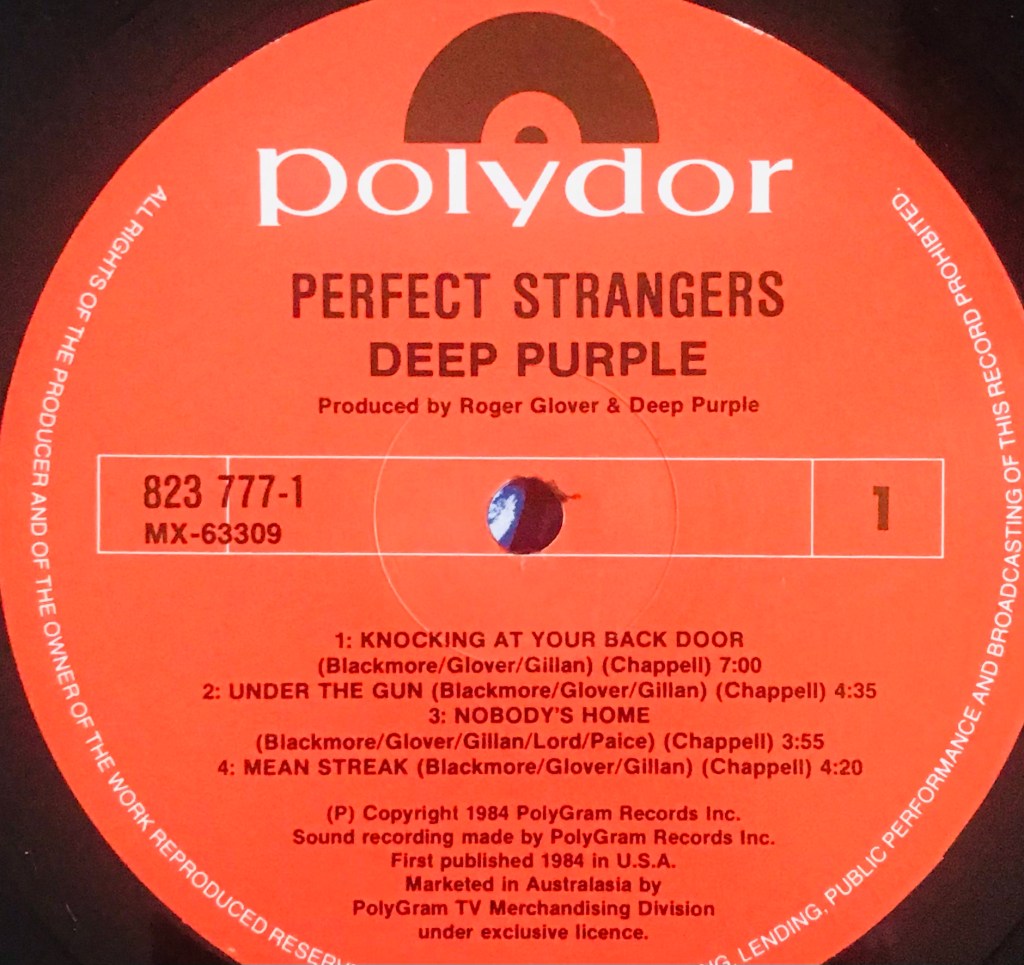
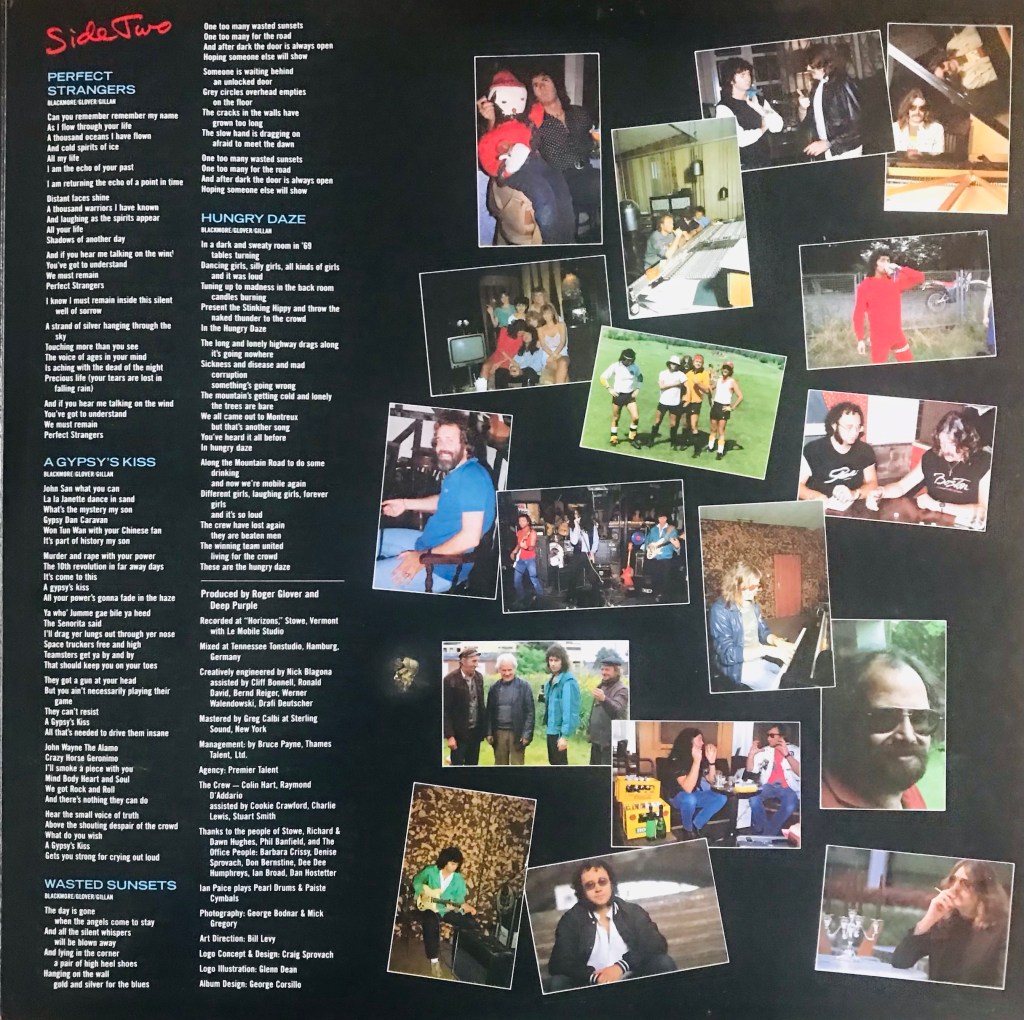
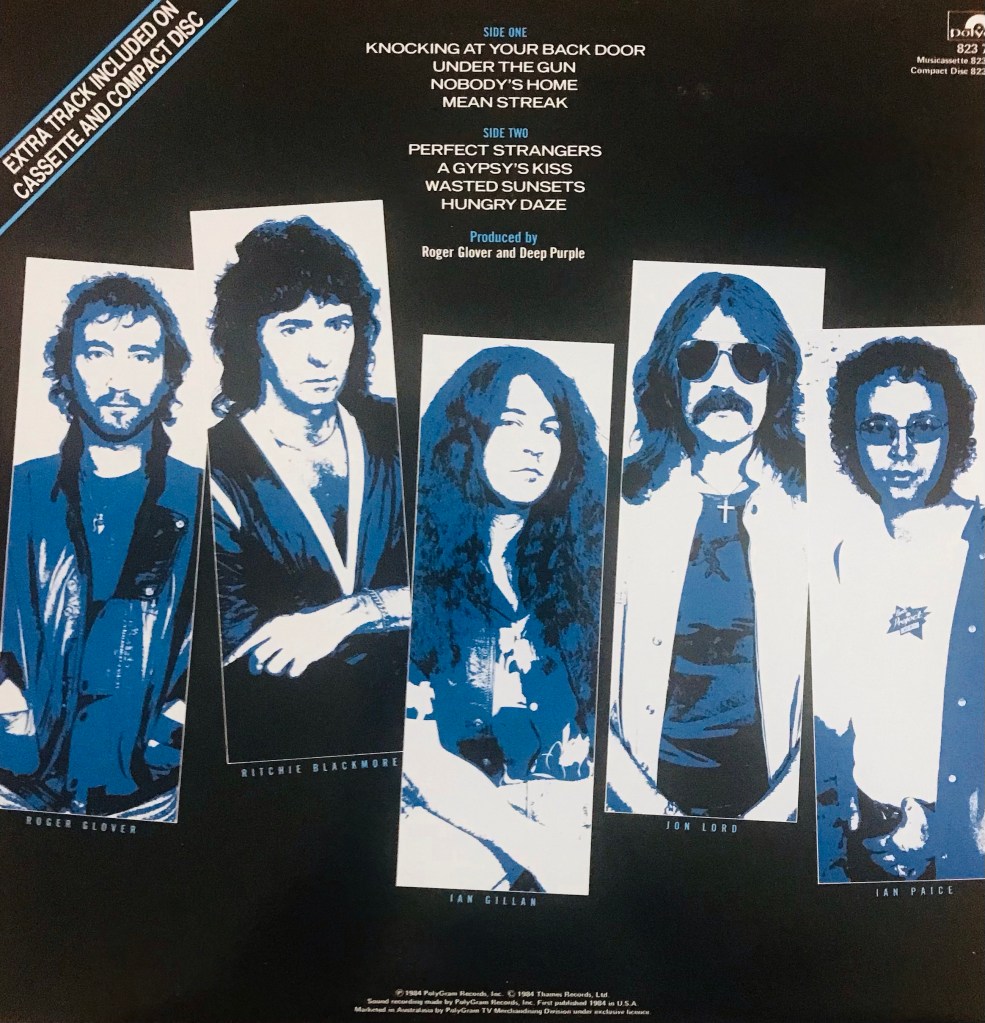
“Perfect Strangers” is album number 11, released in 29 October 1984 and it became the most successful album from the ‘Mark II’ line-up.
Like nomads, they all arrived from different directions. Ritchie Blackmore and Roger Glover arrived from Rainbow, Ian Gillan from Black Sabbath and his solo band, Jon Lord from Whitesnake and Ian Paice from Whitesnake and Gary Moore’s backing band.
But problems existed from the outset. Business problems.
Gillan and Glover wanted the credits to be of the collective. Blackmore didn’t. As the main writer, he didn’t want to share any song writing credits with people who didn’t write anything. After years in the business, Blackmore knew how valuable the publishing is.
It wasn’t until Blackmore left the group in 1993 that the issue was finally resolved within Deep Purple.
I missed this in 1984 because I was into the whole Motley Crue, Twisted Sister, Iron Maiden, Quiet Riot and Judas Priest phenomenon. These guys were just old dudes. Just look at the “mo” on Jon Lord. It’s classic 70’s.
All songs are written by Ritchie Blackmore, Ian Gillan and Roger Glover except where noted.
Knocking at Your Back Door
By now Blackmore had the experience of Rainbow and the commercial success that came with that, so when this song exploded out of the gate you get the best of Blackmore’s influences from Deep Purple and Rainbow.
If you don’t believe me, listen to the Verses, which is very similar to other Deep Purple verses like the one on “Smoke On The Water” and then the Chorus riff which has that Rainbow melodic rock feel, circa Graham Bonnet and Joe Lynn Turner.
And Ian Gillan has a smile on his face as he feels it coming while he’s knocking at someone’s back door, while probably cool for Motley Crue or Ratt, this is Deep Purple we are talking about.
But stick around for the outro solo.
Under the Gun
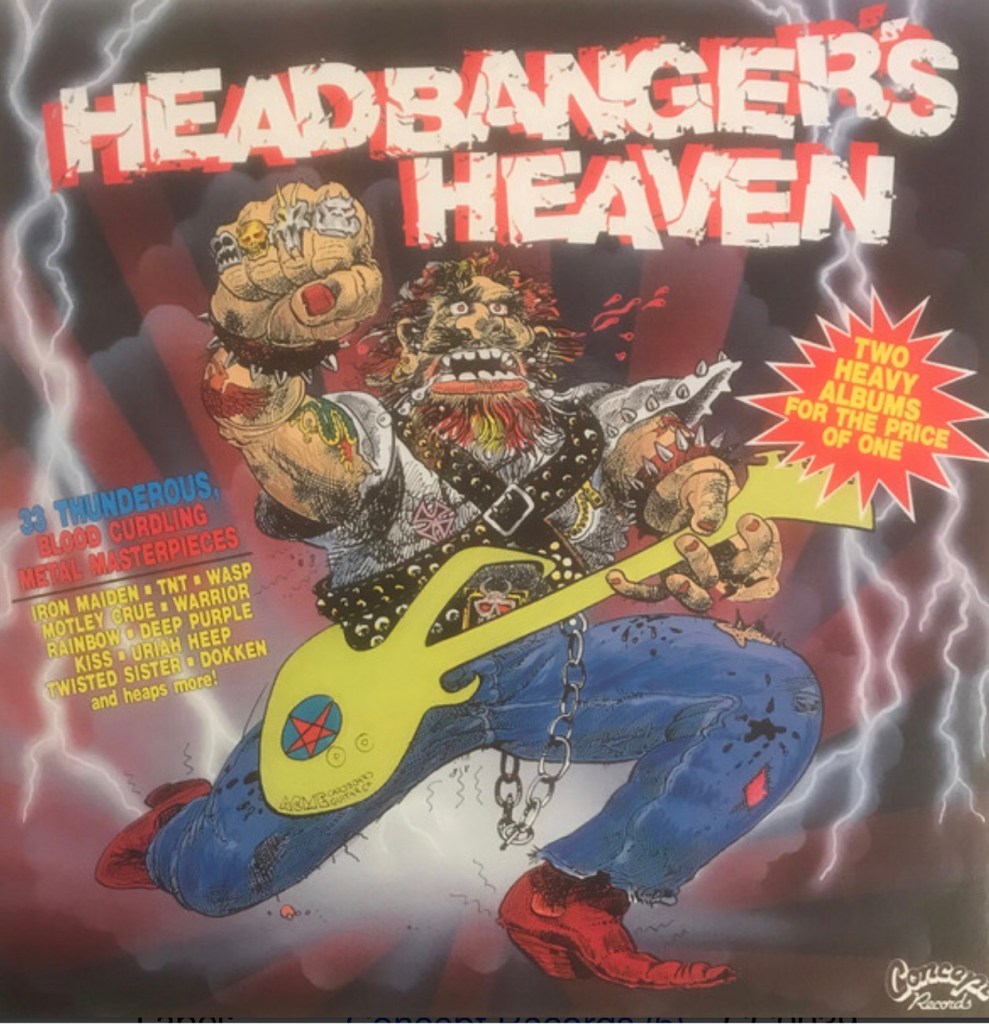
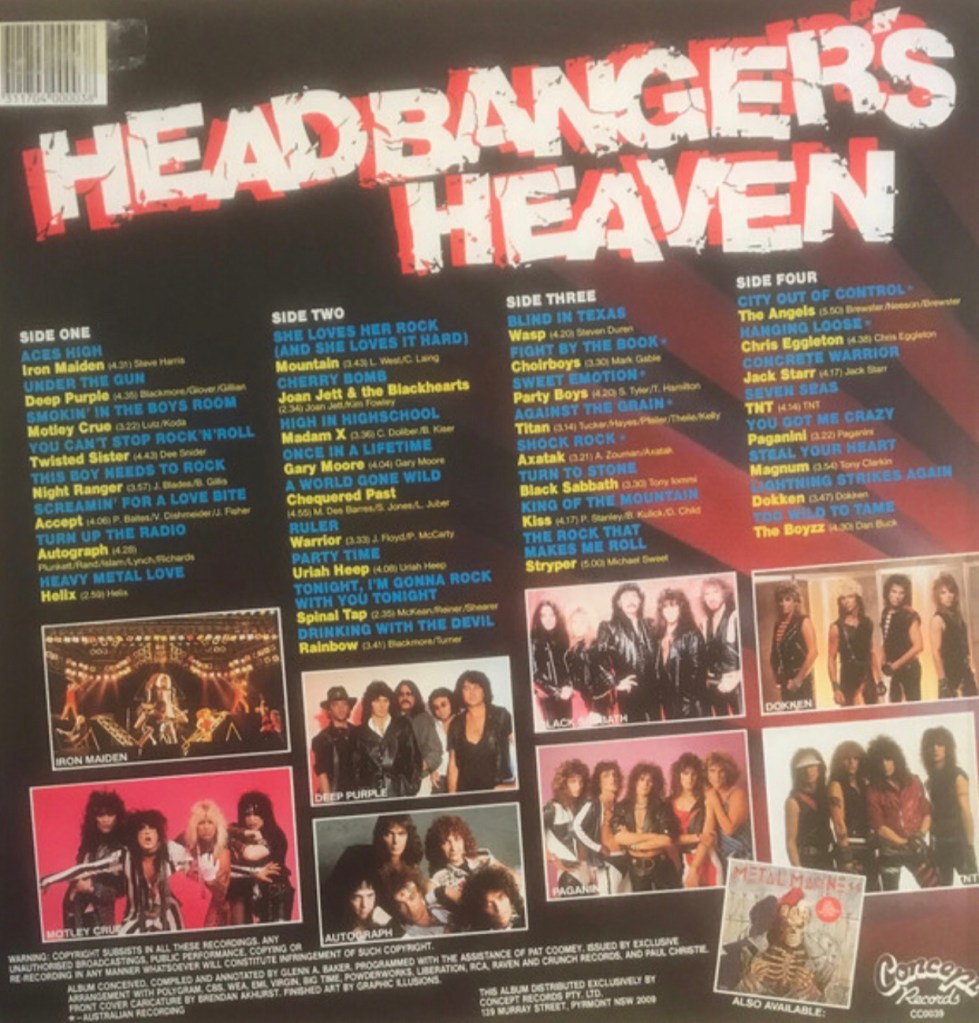
It was the first track I heard via a double compilation LP called “Headbangers Heaven”.
The intro riff grabs my attention right away, making me think of Rainbow and I like the way it all works with the Jon Lord’s keys.
But Ian Gillan is in form here, as it’s not an easy riff to sing over which then gets me thinking of his Gillan project.
Nobody’s Home
It’s a blues rock number and the only song listed as written by all Deep Purple members.
It’s like the band never left and continued to make albums after “Who Do We Think We Are?”
And if it sounds familiar, it should. “Lay Down, Stay Down” comes to mind.
Mean Streak
But press play to hear the Chorus Riff as Blackmore shows he can compete with the LA bands and do it better by taking “Schools Out” from Alice Cooper and making it sound a bit modern.
In the verses I am reminded of “Black Night” and in the solo break, the riff behind it like “Roadhouse Blues” from The Doors.
And I like it.
Perfect Strangers
The side 2 opener.
It’s a classic and one of their best songs.
How good is the “Kashmir” style groove when it kicks in at the 2.30 minute mark?
Whatever Jimmy Page could do, Blackmore could do as well, at a time when Page was not as prolific as he used to be.
A Gypsy’s Kiss
It could have come from “Rising” but “Highway Star” also comes to mind. Gillan’s bluesy delivery suits.
Check out the unison keyboard and guitar riff/melodies. It brings back memories of the work that Lord and Blackmore did on “Burn”.
And Ian Paice behind the kit. He is relentless.
Wasted Sunsets
Remember in the 70’s when these kind of slow blues rock ballads sounded progressive and epic and then in the 80’s they morphed into clichéd power ballads.
While this song isn’t a 70s classic, Blackmore is in his element here with his emotive soloing.
Hungry Daze
That exotic Eastern European melody hooks me. It could have come from the Balkans, maybe Hungary or even Russia.
Not Responsible
I don’t have this on the album, but how good is that intro. It reminds of “A Light In The Black”. It’s an extra track on the cassette and CD release. And Spotify has it.
Son of Alerik
At 10 minutes, this Blackmore penned instrumental is for the diehards.
The song appeared on the 1999 CD issue as a bonus track and it also appeared in an edited form on the 7″ B-side of the “Perfect Strangers” single, or in full on the 12″ “Perfect Strangers” single and the European version of the compilation “Knocking at Your Back Door: The Best of Deep Purple in the 80’s”.
The thing is, if a band reforms these days, or in the last 30 years, it would have been quite a media show, but their comeback in 1984, didn’t cause a ripple in the news outlets who had jumped on board the LA Sunset Strip Train or the San Francisco NWOBHM Thrash Scene.
But their comeback was met with success in the European markets which loved em back in the 70’s. The U.K, Switzerland, West Germany, Norway, Sweden, France, Austria, Finland and Holland jumped back on board the Deep Purple train.
Japan never left em. Australia and New Zealand also provided em with a certification.
And The Boss was the only artist on the touring circuit that out grossed out em.
I sort of lost track of Steve Vai in the mid 90’s along with all the other instrumental guitarists I was into.
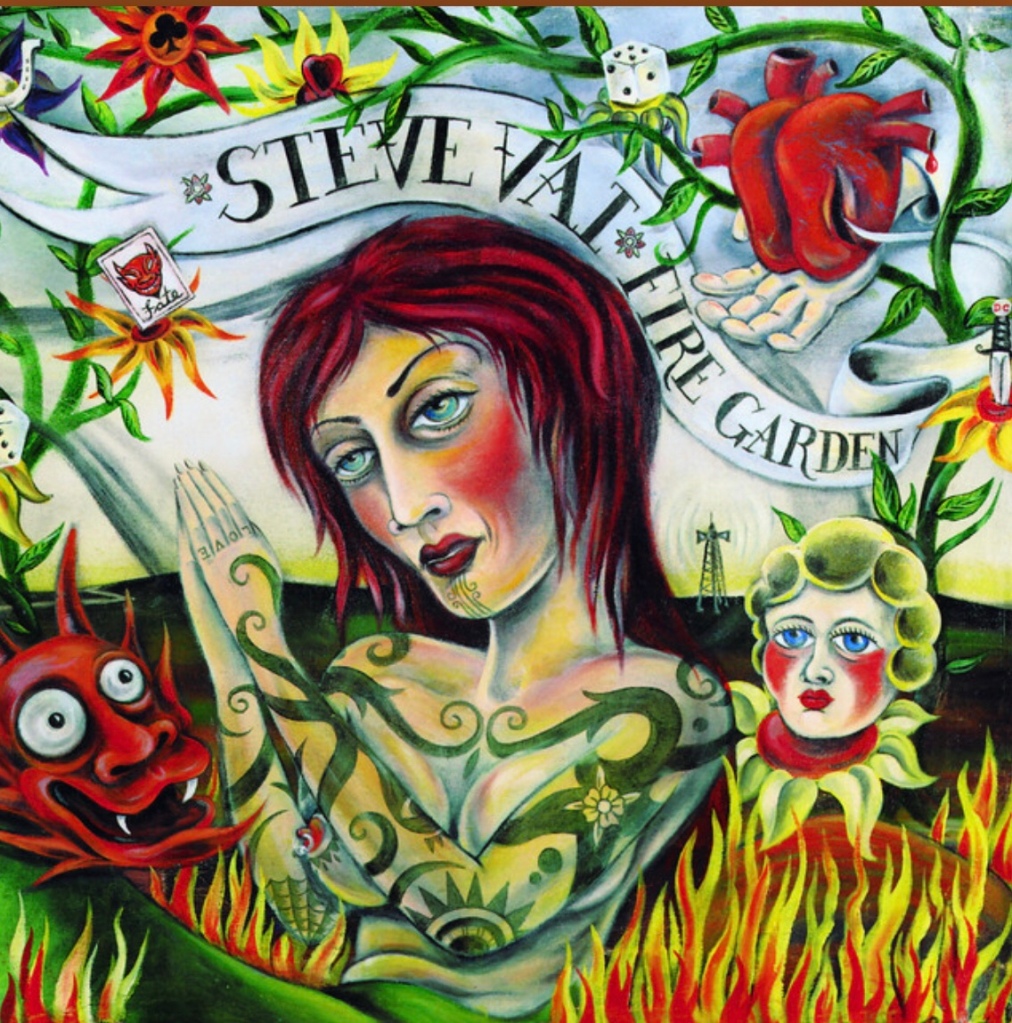
“Fire Garden” is his fourth studio album, released on September 17, 1996 through Epic Records.
As described by Vai in the liner notes, Fire Garden is a concept album divided into two “phases”.
“Phase 1” comprises tracks 1–9 and is entirely instrumental while “Phase 2”, features Vai on vocals on every song except the instrumental “Warm Regards”.
There’s a Fire in the House
The start of Phase 1.
This feels like it could have come from a Whitesnake album. David Coverdale would have had a nice time coming up with lyrics to the riffs here as it’s got that heavy rock feel from the “Slip Of The Tongue” album which although Steve Vai didn’t co-write, he recorded all the guitars for.
The Crying Machine
I like the funky rock on this and Vai’s lead for what I call the “verses” is excellent.
Then it moves into a Blues and Funk Rock fusion solo section.
Dyin’ Day
This song is listed as a co-write with Ozzy Osbourne as it was written during the writing sessions for Osbourne’s 1995 album “Ozzmosis”.
Another song from those sessions, “My Little Man”, made its way onto the “Ozzmosis” record and is credited on that album as being co-written by Vai.
I don’t know what Osbourne could have written on an instrumental song, however I am pretty sure contractually Vai had to add him as a co-writer.
How good is the acoustic guitar riff to start it off?
Whookam
Useless track of backward vocals.
Blowfish
Great track, with a groovey riff which wouldn’t be out of place on a Joe Satriani album.
The Mysterious Murder of Christian Tiera’s Lover
A minute of Steve Vai doodling and it’s somehow a track. More like a solo section spot light.
Hand on Heart
It’s a romantic power ballad instrumental. Press play on it.
Bangkok
Written by Benny Andersson, Björn Ulvaeus and Tim Rice. Yep it’s those Abba dudes. The sound of flies starts it all off and the flies get louder and louder and louder and then the music comes in, more soundtrack like with a classical exotic feel.
It’s a great track which segues into the best track on the album.
Fire Garden Suite
It clocks in at 9.56 and it has four parts in “Bull Whip”, “Pusa Road”, “Angel Food” and “Taurus Bulba”.
It reminds me of the progressive rock fusion of Al DiMeola and Dream Theater. It’s some of his best music.
Definitely press play on this.
This song also has Mike Mangini playing drums on it.
And Phase 1 ends here.
Deepness
Phase 2 begins here.
A 47 second song that features some vocals from Devin Townsend, actually more yeahs and ahhs then vocals.
Little Alligator
Vai’s take on the Blues is very Mixolydian and Lydian like instead of Pentatonic.
All About Eve
Vocally, Vai sounds very Alternative Rock like. But musically, it feels like I am listening to a Dream Theater album.
Aching Hunger
It sounds like a Prince song, like “When Doves Cry”.
Brother
Emotional song, with Vai’s attempt on Southern Country Rock sounding modern and great.
Damn You
I like the riff that starts it, and before bands like Stone Temple Pilots blew us away, I guess Steve Vai was already doing it.
When I Was a Little Boy
It’s a skip for me.
Genocide
It’s a weird title for a song which sounds like a stadium rock song.
Warm Regards
A relaxed ballad instrumental jam to end the album.
And the personnel for the album is extensive. Steve Vai plays a lot of instruments plus he produced it and engineered it and wrote it. He had five drummers come in. The bulk of the drums are done by Deen Castronovo, with Mike Mangini playing a couple of tracks and Chris Frazier, Greg Bissonette and Robin DiMaggio providing drums on a track each. Steve Vai plays most of the bass, but that funky bass on “The Crying Machine” is played by John Avila and Stuart Hamm appears on “Dyin’ Day”.
Phase 1 is exceptional.
Phase 2 is Vai trying to do things a bit different and add vocals to his solo career which didn’t connect.
In the end, the album is a fusion of so many different styles that it almost can be labelled a prog rock record.