A to Z of Making It, Influenced, Music, Unsung Heroes

We Sacrificed Our Lives for Rock and Roll (Jake E. Lee Edition)

Jake E. Lee should’ve been a household name.

He wrote the riffs that kept Ozzy Osbourne relevant in the mid-’80s, carved lightning out of mahogany, and made the guitar sing like a wounded animal trying to escape the zoo. Then he was gone.

Fired.

Forgotten.

No explanation. No headlines. Just silence.

And yet, he never stopped playing.
Because the lifers never do.

We came from that generation that thought music could save us. We weren’t trying to become content creators, we were trying to become gods. The Beatles had turned black-and-white lives into Technicolor, and by the time Sabbath, Zeppelin and Van Halen hit, we wanted to plug in and join the revolution.

Our parents told us to get degrees. We bought Marshalls instead.
They told us to settle down. We chose distortion.

Back then, the sound wasn’t an accessory, it was oxygen. Every riff was a rebellion, every rehearsal a prayer. We learned how to solder cables before we learned how to pay bills. We thought tone could change the world.

Jake understood that.

He was too good for compromise, too strange for the machine. When he left the limelight, everyone thought he’d vanished, but he’d just retreated to the desert, still playing, still writing, still chasing the ghost of the perfect note.

After Ozzy, Jake E. Lee should have ruled the world. He formed Badlands, and for a moment, it felt like redemption.

It wasn’t corporate. It wasn’t polished. It was alive, beautiful, human.

Ray Gillen could sing like the gods were tearing open the sky. Jake’s tone was molten iron, all feel, no filter. They had the songs, the chemistry, the hunger.

And then it imploded. Not because of drugs, or label politics, or creative differences, although they did have disagreements which carried over into the live show, but because real life crashed the party.

Those albums will never be reissued on CD. The reasons are complicated, contested, and not mine to litigate, but the silence around them is deliberate.

Atlantic Records buried the catalog. The albums vanished from stores, from streaming, from history. A digital scar where greatness once lived.

And that’s the ruinous truth about rock and roll: it’s not built to last. It’s built to burn.

For every band that becomes immortal, a hundred vanish not because they weren’t good enough, but because they flew too close to something human, desire, tragedy, ego, love, disease.

We talk about “legacy” like it’s something we can engineer. But the universe doesn’t care how good your solo is. There are no guarantees. No justice. No moral equilibrium that balances out the riffs.

Sometimes the guy who gave his life to the craft ends up selling insurance. Sometimes the band that could’ve changed everything gets wiped from the archives because life doesn’t want to play fair.

But maybe that’s the point.

Maybe rock and roll was never about permanence, maybe it was about risk. The willingness to live without a safety net. The courage to make something beautiful in a world that erases beauty every day.

Jake E. Lee is still out there, still playing, still alive, still searching for a sound no one can algorithmically predict. Badlands may be gone, but that’s what makes them holy. You can’t stream them, you can only remember them, or, if you were lucky enough, you can feel the ghost of their frequencies vibrating somewhere under your ribs. Like YouTube. Which has basically the history of music on its side.

So yeah, the world forgot. The label buried the tapes. But the lifers remember. Because some of us didn’t just listen to the music. We were the music.

We didn’t lose the dream.
We lived it, scars, silence, and all.

Meanwhile, the world changed.
MTV collapsed. Algorithms replaced A&R men. Guitar solos went out of fashion. The kids traded fretboards for touchscreens. And the rest of us, the ones who built our lives around the volume knob, we watched the dream shrink until it fit in a playlist.

But here’s the thing: the fire never dies.

A few solo albums here and there and Jake came back decades later with Red Dragon Cartel, not to reclaim a throne, but to prove the riff still mattered. It wasn’t nostalgia; it was a declaration of faith. Every note said, I’m still here. I never stopped believing in the noise.

And that’s us too, the forgotten believers. We rent apartments instead of owning homes. We have tinnitus instead of retirement plans. We can’t remember passwords, but we can tell you the exact pickup configuration Randy Rhoads used on “Crazy Train.”

We’re not failures. We’re pilgrims who never found the promised land but kept walking anyway.

When Jake bends a note, it’s not just music, it’s defiance. It’s the sound of every dreamer who refused to clock in, every musician who still hauls a 4×12 cab into a bar for gas money and applause from thirty people who actually listen.

We sacrificed our lives for rock and roll. And if you have to ask why, you’ll never understand.

Because the show, that fleeting, electric communion between the amp and the crowd, that was the home we were looking for all along.
And when the lights go down and the first chord hits, everything that never worked out suddenly makes sense.

We didn’t miss out on life. We lived it louder.

The tragedy of Badlands isn’t ancient history, it’s prophecy. Every artist today lives on the same knife’s edge. One bad headline, one algorithmic shadow-ban, one rumor whispered into the right inbox, and you’re erased. Your catalog disappears, your legacy gets rewritten by people who never even heard your work. We don’t burn on stage anymore; we burn in silence, beneath the scroll.

But here’s what separates the lifers from the tourists: the lifers keep playing.

They know the system’s rigged. They know the world rewards the shallow and forgets the sincere. And they do it anyway.

Because somewhere inside the noise, the heartbreak, the lost royalties, there’s still that kid who picked up a guitar and thought sound could save the world.

That’s who Jake E. Lee still is. That’s who we are. We keep writing riffs in an era that doesn’t believe in permanence, because the truth was never meant to be preserved, only felt.

In a digital wasteland of content and convenience, the act of creation itself is rebellion.

And rebellion, like rock and roll, doesn’t die, it just goes underground and waits for the faithful to find it again.

Standard
Influenced, Music, My Stories, Unsung Heroes

Ace Frehley: The Solos in the Shadows

I got into Kiss in the ’80s, but the poster on my wall was from the Destroyer era, four painted faces staring down from a cosmic skyline. Courtesy of my older brothers.

The songs I blasted, “Lick It Up,” “I Love It Loud,” “Tears Are Falling,” “Crazy Nights,” “Heaven’s On Fire,” “War Machine,” “I Still Love You,” “Creatures of the Night,” and my two obsessions, “Exciter” and “I’ve Had Enough”, didn’t feature Ace Frehley. But in my head, he was there. The Spaceman. Because that’s who I saw every morning when I woke up.

Now he’s gone.

Seventy-four years old. A fall. A brain bleed.

Just like that, the Spaceman fell back to Earth.

It’s an ending that feels both absurd and poetic. A man who claimed to be from another planet, who made his Les Paul sound like a supernova, taken down by gravity, the most human force of all.

Kiss fans and casual listeners know the iconic solos, “Love Gun”, “Black Diamond”, “Deuce” and “Parasite”.

Those solos burn. They’re anthemic, unmistakable, tattooed across rock history.

But this week, I pressed play on “Calling Dr. Love” and “Makin’ Love” from “Rock and Roll Over”.

And there it was. That tone. That feel.

You can’t copy it. You can’t dial it in.

That slightly behind-the-beat phrasing, that lazy drag, that human imperfection that somehow makes the whole band sound tighter.

“Calling Dr. Love”

The solo doesn’t rush in. It waits.
That tiny pause before he hits the first note, it’s everything. The inhale before the punchline.

When it lands, it doesn’t boast; it speaks.

Ace builds the solo like a conversation with the riff, a bend that teases, a double stop that grins, a tone that growls like an idling Harley. There’s humor in it. Swagger. Humanity.

That’s the secret: Ace could make the guitar sound alive.

“Makin’ Love”

Buried near the end of the album, it’s almost an afterthought in the catalog. But play it now, loud, and you’ll hear Ace at full confidence.

The riff is heavy, chugging, primal.
Then the solo rips in, a sharp exhale of defiance. But again, it’s not speed. It’s phrasing. Every line feels deliberate, like he’s carving the air.

He slides between melody and menace, blues phrasing inside a rock cage. The bends ache. The sustain hums. There’s sex in it, sure, but also frustration, humor, and that same smirk he wore behind the makeup.

It’s one of those solos you don’t analyze, you feel. And when it’s over, you hit repeat, not to learn it, but to understand it.

We talk about “tone chasing” like it’s a gear problem, pickups, tubes, pedals, wood. Ace proved it’s a personality problem.

Your tone is your truth.

Your personality. Your attitude. You can’t fake it.

Go back now. Start with “Calling Dr. Love”. Listen like it’s the first time.
Then put on “Makin’ Love”.

Listen closer.

Find the moments where he wasn’t trying to prove anything. That’s where the soul is. That’s where the magic hides.

Ace Frehley didn’t invent rock guitar. He humanized it.

He made it fun again. Dangerous again. Imperfect again. He made every fourteen-year-old kid believe they could plug in and matter.

That’s the legacy. Not the makeup. Not the pyrotechnics.

It’s that moment when your fingers hit the strings and you realize: you don’t need to sound perfect, you just need to sound like yourself.

Ace did.

Every single time.

And now, somewhere out there, the Spaceman keeps playing, still behind the beat, still in tune with the universe.

P.S.
While this piece has a Kiss edge, Ace’s solo career deserves its own orbit.

Start with “Rip It Out” from his 1978 solo album, the definition of controlled chaos.

Then jump to “Into the Night” from Frehley’s Comet (1987). Written by Russ Ballard, yes, but Ace owns it, that melodic, bluesy solo lifts the whole track skyward.

Different decade, same truth: Ace’s guitar didn’t imitate emotion. It was emotion.

Standard
A to Z of Making It, Classic Songs to Be Discovered, Influenced, Music, My Stories, Unsung Heroes

X Out – Extreme

When “Six” came out from Extreme in 2023, I did what we all do. I pressed play, skimmed the album, hit “like” on the tracks that grabbed me. Instant dopamine. Songs that felt like me, right now.

“X Out” didn’t make the cut.

Didn’t hate it, just didn’t hit.

Fast forward almost two years. The video drops. I click. And suddenly I’m sitting there, head nodding, totally into it. The same song I shrugged off is now on repeat.

So what happened?

This is the funny thing about music: sometimes it doesn’t connect the first time. Or the tenth. And then one day, in some random moment, it hits you like a freight train.

Maybe it’s mood. Maybe it’s life. Maybe it’s just time.

Or maybe, in this case, it’s the video.

Because visuals change everything. You see the band sweating it out, the editing, the vibe, the narrative. The song suddenly has a face, a story. And once that meaning slides into place, the music feels different. What was just sound is now an experience.

There’s probably a fancy psychological term for this. I googled my description and got a few terms which mean nothing to me like; “Mere exposure effect.” “Priming.” “Contextual reappraisal.” Whatever. To me, it’s just proof that taste is alive. It shifts. It evolves.

The truth is: I wasn’t ready for the song before. And now I am.

And that’s why I love when this happens. Because it keeps music from being disposable. Because it means an album isn’t done after the first spin.

Sometimes the tracks I skip become the ones that I like later.

So yeah, two years later, I’m in on “X Out.” All because of a video.

Check it out.

Makes me wonder: how many other songs did I dismiss too early? 

How many are just sitting there, waiting for me to finally catch up?

Standard
A to Z of Making It, Copyright, Music, Unsung Heroes

Diane Warren — The Relentless Hook Machine

I finally got around to that old Bob Lefsetz podcast with Diane Warren. December 13, 2017. Been sitting in my “listen later” pile for years. That’s how it goes, too much to do, too many songs, too many distractions.

But Warren… she’s different.

If you grew up in the ’80s, you already know her, even if you don’t think you know her. Flip through your record collection, there’s probably a Warren song hiding in there. For me, it was everywhere.

Mannequin. “Nothing’s Gonna Stop Us Now” by Starship. Warren.

Kiss “Turn On the Night.” Warren. Their “biggest” song, “You Make Me Rock Hard” had a Warren co-write.

Heart “Who Will You Run To,” “I Didn’t Want To Need You.” Warren.

Cheap Trick’s “Ghost Town.” Bon Jovi’s “Wild Is the Wind.” Alice Cooper’s “Bed of Nails.” Cher’s “If I Could Turn Back Time.” Michael Bolton, Taylor Dayne, Cyndi Lauper, Bad English. Hell, even Ratt. One of my favourite Ratt songs, “Givin Yourself Away” was co-written by Warren.

I thought I knew her range until I stumbled on “Lonely Beat of My Heart” on Steve Lukather’s “Lukather” album. Warren.

Then Vixen. Jimmy Barnes. Richie Sambora. And just when you think she’s all power ballads and mainstream rock, she shows up on Disturbed’s “Evolution” with a bonus track called “Uninvited Guest.”

And that’s just from my shelves, albums I physically own, mostly spanning ’85–’92. A fraction of the real story.

Her publishing company is called “Real Songs”. She wanted “Warren Peace”, but the name was already taken. Of course she owns the building, upgrades the studios, controls her environment. That’s what obsession looks like, build the nest so you can never be kicked out.

The obsession started early. Kicked out of school. Two weeks in juvie. A father who saw the fire, bought her a guitar, then a Martin, then built her a shed to write in. No Plan B. Just the work.

She broke in at 23 writing for Laura Branigan. “Rhythm of the Night” came soon after. But her first publishing deal was a nightmare, a five-year trap she bailed on early. Got sued. Couldn’t work for 12 months while the lawyers circled. She ended it herself by calling her ex-boss directly, settling without letting the attorneys siphon off the payout. That move, walking away from a bad deal, was the prelude to her starting “Real Songs”.

Even now, she hustles. She’ll pick up the phone and pitch a song cold. “No pressure, just listen.” Doesn’t care if they say no. Because if they say yes, she’s got another track in the bloodstream.

Her process is simple: show up, work. A song a week. She finishes the ones she loves, abandons the ones she doesn’t. Loves writing solo. Most of the time it’s love songs, ironic, since she’s never been in love.

Her biggest movie tie-in? “I Don’t Want to Miss a Thing” for “Armageddon”, thanks to a friend connected to Aerosmith. That’s how the real deals happen, through relationships, not résumés.

On streaming, she thinks it’s killed songwriter incomes. I don’t fully buy it, Ryan Tedder sold part of his catalog for $200 million, and he’s a post-Napster success story. But Warren’s point is valid: it’s harder now for a new songwriter to make bank without wearing the artist hat too.

Forty-plus years, still relevant, still writing, still obsessed.

That’s the thing about Diane Warren, she’s not the artist, not the star on the stage. But she’s the ghost in the machine. The pen behind the chorus you’ve been humming for decades. The one who refuses to stop.

Standard
Classic Songs to Be Discovered, Influenced, Music, My Stories, Unsung Heroes

Twilight Cruiser

The self-titled debut from Kingdom Come took the charts by storm in 1988. “In Your Face” broke up the band a year later. A new all German version of Kingdom Come put out the underrated “Hands Of Time” in 1991, the last album on their Polydor contract. It did nothing and they lost their U.S deal, but with a proviso that no other U.S label could sign them unless Polydor allowed them to.

And Lenny Wolf refused to stop.

“Bad Image” came in 1993, and then “Twilight Cruiser” dropped in 1995.

Both albums are forgotten. But they shouldn’t be. While grunge and industrial metal took over the airwaves, melodic blues based rock was still alive and well.

Lyrically, “Twilight Cruiser” deals with isolation and loneliness. A metaphor for someone who wanders through life aimlessly, searching for meaning and purpose.

“I can hear the silence in the dark”

This isn’t just synesthesia. It’s not poetry for its own sake. This is sensing the void. Not hearing nothingness, but hearing silence as presence, not absence. Like when you’re up at 2AM, and the world’s asleep, but your mind’s loud. This line doesn’t describe loneliness. It names it, in that way only people who have lived through it understand.

The kind of quiet you only recognize after the show’s over, after the crowd is gone, and you’re left with yourself and your ringing ears. That moment where you realize nobody is coming to save you, and that’s liberating as hell.

“Closing in the distance to my heart”

What was once out there, distant, abstract, is getting personal. The silence, the unknown, the ‘thing’ we fear or yearn for… it’s now at your chest, tapping your sternum. The detachment is gone. It’s getting intimate.

This could be grief. It could be love. It could be the epiphany that comes only after you’ve burned all the other options to the ground.

“Now and then a quick glance at the stars / Coming of a deep trance, peace at large”

Here’s the shift. A quick look up, a glance at something eternal, pulls you from your hypnotic state. You’re no longer in autopilot. You wake. You feel. It’s the spiritual equivalent of ripping your VR headset off and realizing you’re in a galaxy.

This is what rock and roll used to do before algorithms turned it into background noise. It used to wake you up.

The peace doesn’t come from control, it comes from surrender. You stop needing answers and start loving the questions.

“Like a soothing shelter over me / I have come to love her mystery”

Now she arrives. But she’s not a person. Not quite. She’s the Night, the Muse, the Unknown.

You used to fear the dark. Now it’s your cloak.

What once confused you now holds you, not because it explains itself, but because it lets you dissolve into it.

You’re no longer demanding clarity. You’re falling in love with chaos.

“Making me surrender, letting go / Guiding me so tender, very slow”

You’re not driving anymore. The wheel’s gone. Control is a myth, and thank God.

You’re being guided, not pushed. Led, not dragged.

There’s a tenderness to this surrender. It’s not violent. It’s almost erotic.

Like the way a great solo builds slowly, not to impress, but to invite.

It’s permission to be human.

The problem is thinking you have to fix everything. The answer is learning how to bleed without flinching.

“When the night is falling / I hear voices calling”

This is your moment of becoming. The night doesn’t just fall like a curtain, it opens a portal.

The voices? They’re not ghosts. They’re not demons. They’re memories, regrets, desires.

They’re everything you silenced in daylight.

At night, the suppressed becomes symphony. Lying in bed with nothing but a song and a past you can’t outrun.

“Like an aimless shooter / I’m a twilight cruiser”

The aimless shooter isn’t violent. He’s drifting. Firing into the void not to hit something, but to make noise, to feel real.

The twilight cruiser is someone who lives in the in-between. Not day. Not night. Not good. Not evil. Just existing in the grey zone, free from roles, from right answers.

This is the archetype of the modern antihero, the midnight philosopher, the vagabond spirit searching not for destinations, but for feeling.

It’s the cowboy without a saddle.

The punk without a cause.

The part of you that wasn’t made for daylight.

This song is a meditation disguised as melody. It’s about drifting into mystery, letting go of the need to dominate your inner world, and falling in love with uncertainty. It’s not a love song, it’s a survival song, whispered from the edge of isolation, written for people who are done pretending everything makes sense.

Standard
A to Z of Making It, Music, My Stories, Unsung Heroes

David Roach’s Last Stand: The Voice Behind Junkyard’s Raw, Relentless Rock

Behind the riffs and raw grit, the human story of a frontman who never pretended to be anything but real.

If you were there in the late ‘80s and early ‘90s, you knew Junkyard. “Blooze.” “Hollywood.” “All the Time in the World.”

They weren’t polished like Guns N’ Roses, they looked like they’d just changed your oil and stolen your beer. I loved them then. Still do.

You could say wrong place, wrong time hurt Junkyard. They had the raw goods, a sleazy, swaggering street take on AC/DC’s DNA, twisted with punk grit, but the market was already splintering. Their debut hit in 1989, produced by Tom Werman, engineered by Duane Baron, tight as a fist and twice as loud.

Chris Gates came up with the name “Junkyard.” “Crack” was considered, until the drug hit the evening news.

These guys didn’t just appear, they’d been grinding since the early ‘80s. Gates and Brian Baker came from hardcore punk, Minor Threat, The Big Boys. Todd Muscat and Patrick Muzingo had been pounding stages with Decry since ’83.

They formed Junkyard in 1987, Virgin Records sniffed first, but at a gig with Jane’s Addiction and Green River, Geffen swooped in. The A&R guy knew their punk past. Deal sealed.

They didn’t fit the Motley Crüe/Poison mold. They weren’t aiming for Bon Jovi/Journey polish. They belonged to the third camp, alongside Raging Slab, Dangerous Toys, Circus of Power, where punk, classic rock, and Southern boogie collided. The debut was a cocktail of Bad Company swagger, AC/DC crunch, Aerosmith groove, ZZ Top dirt, Southern rock twang, and just enough Guns N’ Roses grit to catch Geffen’s eye (though they were signed before “Appetite for Destruction” blew up).

“Blooze” kicked the door in. “Simple Man” gave us “throwing pennies into the wishing well”, so simple, so perfect. “Shot in the Dark”, not Ozzy’s, was pure sleaze. “Hollywood” had a riff Gates swore came from a “Cheech & Chong”movie. MTV picked up the Jean Pellerin–directed video. “Life Sentence” roared like Motorhead. “Texas” nodded to ZZ Top’s “La Grange”. “Hands Off” had gospel swagger and filthy humor.

Then came “Sixes, Sevens & Nines”. Darker, heavier. By ’92, Geffen dropped them. The wave shifted. Nirvana landed. Labels chased the next Seattle messiah. Muzingo told Sleaze Roxx:

“We knew we weren’t gonna be millionaires doing this. We all got real jobs. No drama, no BS.”

Reality check: even with a major label deal, most bands end up back at day jobs. They had a third album, “103,000 People Can’t Be Wrong”, but Geffen’s ultimatum (use their producer or walk) killed it. The industry had moved on.

Still, Junkyard didn’t disappear. “Demos” in 2008. New songs in 2015. “High Water” in 2017 with Tim Mosher, followed by tours that proved they were leaner and meaner. 2019’s “Old Habits Die Hard”. Two more tracks in 2021. Then… silence.

Until 2025, when the silence broke for the worst reason. David Roach, voice, snarl, and face of Junkyard, had cancer. His wife, Jennifer Michaels, had saved him once, pulled him out of the gutter, gave him love, stability, purpose. She’d been the one to convince him to get that swollen lymph node checked. It was squamous cell carcinoma of the head, neck, and throat. By June 2025, it had spread to his lungs and liver. She quit her job to care for him until he passed away in his sleep.

On August 2, 2025, Junkyard posted:

It is with great sadness that we announce the passing of David Roach.

After a courageous battle with cancer, David passed away peacefully last night at home, in the loving arms of his wife.

He was a gifted artist, performer, songwriter, and singer—but above all, a devoted father, husband, and brother.

Dangerous Toys’ Jason McMaster told it best. He remembered David as the cool punk kid from high school, the guy who could hang with anyone. In ’89, their bands released albums the same week. Their videos debuted back-to-back on MTV. They toured together. Men cried when it ended. In 2022, David moved in next door to Jason. A year later, he met Jennifer. And then cancer came.

The thing about David Roach, he made rock ‘n’ roll feel like it belonged to the rest of us. Not the pretty people. The real ones. And that’s what hurts. You can’t fake authenticity. You can’t fake cool. And you sure as hell can’t fake the hole it leaves.

Standard
A to Z of Making It, Influenced, Music, Unsung Heroes

Jason Flom: The Relentless A&R Rebel Who Shaped the Soundtrack of a Generation

From The Lefsetz podcast.

Jason Flom didn’t just stumble into the music business. he was basically dared into it. His dad, legendary lawyer Joe Flom (yeah, that Joe Flom, the one Malcolm Gladwell wrote a whole damn chapter about in “Outliers”), once told him he had a deal: become a rock star or go to school. Jason was ready to pick the guitar. His mom was ready to murder someone. Guess who won?

So, instead of ending up in a dive bar strumming power chords for PBR money, Flom got shoved into Atlantic Records thanks to some family favors. Sounds easy, right? It wasn’t. Because once you’re in the building, you still have to prove you’re not a poser.

Flom watched the A&R guys and thought, “I can suck less than these dudes with 30% effort.”

So he put in actual effort. Found “Zebra”, a band that nobody at Atlantic gave a crap about, but the people loved. Flom ignored the gatekeepers and went straight to the public. And guess what? The public was right. “Zebra” exploded, Flom got promoted, and boom, the kid was in the game.

Flom tells a story about the making of the album.

Doug Morris had cold feet to fund the “Zebra” album. For it to go ahead, Flom got Jack Douglas to agree to produce. However, Douglas was a mess at the time and was not the same Douglas who did the “Aerosmith” records. They had the Record Plant booked and the band was staying there as well, with Douglas booking studio time on Tuesday and arriving Thursday, meanwhile the bills from the Record Plant to Atlantic are piling up.

The budget for the album was a $130K with Douglas getting $55K of that. Morris was not happy as the record was over budget and no tracks had been delivered. The record was then at $230K spent and it was finally at mixing. Douglas then started to hear whale noises in the album tracks. No one else could hear the noises except Douglas. The manager of the Record Plant came into the studio and fired Douglas from the record as Atlantic Records had given him the news how they had pulled the financing for the album. Douglas goes “give me 10 more minutes to finish the album”. The manager goes “you have 10 minutes”. Douglas then barricaded the door so no one could come in and the record got finished. The record came out and it exploded out of the gate.

Then came “Twisted Sister”. They looked ridiculous. Nobody wanted them. Industry snobs laughed. Flom didn’t. He saw 3,000 kids packed into a venue on a Wednesday night screaming every lyric. He brought it to the bosses, and Doug Morris basically told him if he mentioned “Twisted Sister” one more time, he’d be booted. So Flom did what any stubborn SOB would do, he went around him, got them signed anyway, and helped launch one of the most iconic metal acts of the ’80s.

But success doesn’t mean immunity. Flom eventually got caught in the cocaine-fueled dumpster fire that was the ’80s music scene and ended up in rehab. And yet, even in the fog of recovery, the dude came back swinging, signing “Savatage”, “Ratt”, “White Lion”, “Skid Row” and more.

Fast forward: Flom starts Lava Records in 1995. He fakes it ’til he makes it, literally asking around how to run a label while running the label. He signs “Matchbox Twenty” after seeing them bomb a live show but spotting something special in Rob Thomas. He bets on “Kid Rock” when everyone else thought the guy was a joke. No one at MTV wanted to touch him… until they did — and then “Kid Rock” blew the roof off the damn VMAs with “Aerosmith” and “Run-DMC”.

He picked up “Katy Perry” when Columbia was about to drop her. Signed “Lorde” from a SoundCloud link when she had 200 plays and a Facebook page. Oh, and about “Thirty Seconds to Mars”? Everyone told him it was a Jared Leto vanity project. But when he saw Leto turn down a Clint Eastwood film to stay on tour, Flom thought, “That’s more rock and roll than anything I’ve seen in years.”

Every time someone said no, Flom found a way to make it a hell yes. He wasn’t trying to be the tastemaker, he let the fans decide what was great and then fought like hell to bring that to the masses.

Along the way, he helped launch “Hootie & The Blowfish”, “Jewel”, “Simple Plan”, “The Corrs”, “The Blue Man Group”, “Black Veil Brides”, “Greta Van Fleet”, the list reads like a damn Spotify nostalgia playlist.

In short: Jason Flom didn’t just sign bands, he bet on outcasts, longshots, weirdos, and artists with heart. And yeah, he fumbled, got knocked down, got high (a lot), got sober, and kept swinging. The guy helped shape the soundtrack of millions of people’s lives not by chasing trends but by giving a fuck about what actually mattered passion, authenticity, and good fucking music.

Not bad for a dude who was almost a failed wannabe rock star, right?

His mum, who had no degree or background in education, started a school called “The Gateway School”so her son could go to school. He now has a Ph.D. in Psychometrics, the Psychology of Statistics. The Gateway School is now known as the best school for children with difficulties. Try to do what you want to do and try to make the world a better place.

Twisted Sister story.

Randy from Zebra said to Flom that Twisted Sister is the greatest live band ever. So Flom goes to watch them. Twisted Sister is headlining, and Zebra is opening for them. Flom found this odd as Zebra had a record deal and Twisted Sister didn’t. 3000 kids on a Wednesday night for $6 a head.

He was sold as Doug told him that his opinion is secondary compared to the public’s opinion. He walked into Doug’s office the next day and told him he found the next big act. Morris wasn’t interested because TS was considered a joke in the music business. Flom went back to Morris’s office and every time he did, he was told to get out of the office. The debut album “Under The Blade” on Secret was still selling and they were one of the best attended live acts.

At a A&R meeting designed to get the label back in the Top 10 charts as they had a lean year, Morris even mentioned to Flom that if he mentions the name Twisted Sister again, he will never work for Atlantic again. Shortly after that, Flom saw Phil Carson, who was the head of the English division of Atlantic Records and gave him a wealth of material he had amassed on the band, plus a tape of their Secret album. Carson at that point had been in the game for a while, signing acts like AC/DC and Yes amongst other acts. Carson watched TS perform live and signed them.

As for the folder that Flom gave him, it went straight in the bin as Carson had no idea who this young punk was. But synchronicity and coincidence were in play here as TS was opening for an act that Carson went to watch. Morris could have vetoed the whole project, but he still released “You Can’t Stop Rock N Roll” as a favor to Carson, however there was no marketing budget, however Flom was doing a bit of marketing on the side for the band. The record was selling on fumes as Flom puts it.

Morris then called Flom later to tell him he was right and that Atlantic would make a big thing out of this band. Morris had the vision to use Tom Werman to get Marty Callner to direct the videos. I think Dee had a different version here, however it doesn’t really matter in the end, because the album “Stay Hungry” and the clips, “We’re Not Gonna Take It” and “I Wanna Rock” are iconic.

Flom couldn’t understand why they didn’t want to use Werman again for the next record “Come Out And Play” and not long after that it broke up. Dee goes into it in detail in his book and Mark The Animal Mendoza has mentioned his hatred of Werman in various interviews.

Flom at this stage was a victim of the excess of the times and entered rehab. But before he entered rehab, he signed Savatage.

Flom was also involved in getting Ratt to sign to Atlantic Records in 1983 with “Out Of The Cellar” being the first release on Atlantic for them and also White Lion in 1987 for the “Pride” album however they are not mentioned during the podcast.

Once he got out of rehab, he had some projects that didn’t do much and then he signed Skid Row.

An agent brought him Stone Temple Pilots and he signed them. Other acts included Hootie And The Blowfish and Jewel. He told a story of watching Jewel play at a coffee shop with 5 people watching and the coffee machine making cappuccinos and then a few months later, he was back there with 300 people watching and everyone being mesmerized by her.

In 1995, it all evolved into Lava Records, his own label after he turned down an opportunity to resurrect Atco Records. Flom reckons he was set up to fail. He was asking for advice, faking it until he made it.

He had people out there that were brining him good bands. A rep brought him a band called Tabatha’s Secret and he was given four songs. Flom wasn’t convinced. The rep said to listen to 3am again, and again Flom wasn’t convinced. So he want to watch em, and they were terrible, not even in tune and no one was even paying attention to em, but he felt there was something special about Rob Thomas so he signed them. Hollywood Records offered to triple the offer from Lava, however Thomas stayed to Flom. And the debut Matchbox Twenty album went crazy.

Flom and Thomas debated if the first single should be “Real World” or “Long Day”. They settled on “Long Day” and on the strength of that single, the album moved 100K units. Then a radio station in a different city started to play “Push” and the album started to sell like crazy in that city. Flom went back to the band and said this is your next single and the band said no, they wanted “Real World”, but Flom remembered the words of Doug Morris, “what we think is good is nothing compared to what the public thinks”.

And another rep brought him Kid Rock. Kid Rock had three albums before this and all three failed. He was seen as damaged goods. Flom watched him live and they had a meet. Kid Rock said he will deliver two songs to him. Upon hearing the songs, Flom called Kid Rock and said to him, what do you want, Kid Rock said I want $300K sign on and so many percentage points on royalties. Flom said done.

The soundtrack of a lot of people’s lives was possible because of Jasom Flom.

Standard
Classic Songs to Be Discovered, Influenced, Music, My Stories, Unsung Heroes

Machine Head’s ‘Unatoned’ Is a 41-Minute Punch in the Soul – Brutally Honest Review (Track-by-Track)

Machine Head’s eleventh studio album, “Unatoned”, released on April 25, 2025, through Nuclear Blast and Imperium Recordings, marks a significant evolution in the band’s discography.

Clocking in at 41 minutes, it’s their shortest album to date.

Landscape of Thorns

A 31-second instrumental opener that is like walking into a post-apocalyptic cathedral made of rust and bad decisions. No lyrics, just vibe.

The vibe?

You’re screwed.

Atomic Revelations

You know that moment when you realize humanity might’ve peaked with sliced bread and everything since is just radioactive garbage?

Yeah, that’s this song.

“Atomic revelations / These cryptic devastations…”

In other words, the future’s here, and it’s wearing a hazmat suit. Think less “technological utopia” and more “Oops, all fallout.”

It’s a poetic bitch slap to our blind optimism. A warning, framing the future not as a bright evolution but as a terrifying construct built from our short-sighted and immoral decisions.

Unbound

This is the sonic equivalent of breaking out of a mental straitjacket while screaming into a hurricane.

Lead single for a reason, it’s the sound of someone clawing their way to freedom, with bloody nails and existential panic.

It’s not about being free. It’s about realizing you’ve been your own prison warden the whole damn time.

Outsider

A love letter to being done. Betrayal, bitterness, burn-it-to-the-ground energy.

All the lying, all the cheating
All you left me was defeated
There could never be forgiveness in the end

No redemption arc. Just someone standing over the wreckage of trust and lighting a cigarette off the flames.

It’s beautiful.

In the way that watching your ex trip over karma is beautiful.

Not Long for This World

Here’s your death anxiety, set to music. Haunting, lyrical, and bleakly gorgeous. The kind of track that makes you text your therapist and also maybe your mom.

Through the struggles life hurls
Behold the heavens unfurl
Not long for this world

You’re gonna die. Everyone you love will die. And this track whispers: “Yup. And?” It’s oddly comforting, like being hugged by a ghost.

These Scars Won’t Define Us

A motivational anthem for people who’ve seen some serious crap and didn’t get a cheesy Instagram quote tattoo about it.

Head to the grindstone, power forward through the endless dark
Focus, determination, on this world I’ll leave a mark
It took so long for any confidence to get in here
And now the question that I need to know, I cannot hear

It’s not saying “you’re special.” It’s saying “you survived, now do something with it.” Less “self-love,” more “self-discipline.”

Dustmaker

“Dustmaker” is a little musical intermission.

A breather.

Kind of. It’s the metal equivalent of a weird dream sequence in a war movie. You’re not dying yet, but your brain’s doing weird crap.

Sip some water. You’ll need it.

Bonescraper

It’s a head banger with themes of self-destruction and a side of guilt.

We scrape our bones to numb the pain

If you’ve ever tried to drink your problems away, punch your trauma into silence, or sleep with someone just to feel something, this one’s your anthem. Congrats, you’re the problem and the solution.

Addicted to Pain

This one goes out to everyone who keeps dancing with the same demons and calling it “growth.” Spoiler: it’s not.

We’ll never know what could’ve been
Cravings pulled you deep within
Thrown into the hit machine
Feed the beast, start the routine
You gave it all just to chase this flame
The dotted line, a puppet in the game now
Twisted and cheating
The fame we chase is bleating
Turned against brother for acclaim that is fleeting

The fame-chasing, dopamine-looping, clout-sucking treadmill of modern life, and how it turns people into hollowed-out achievement junkies.

No wonder you’re tired.

Bleeding Me Dry

This one’s a gut-punch, a slow-motion collapse of a relationship that started with dreams and ended with pill bottles and silence.

There’s no pain without living life
This liquor helps cope with the strife
We talked of you being my wife
Picket fences, some kids, and two bikes
But all that was a fantasy lost in our haze
Through all of the weed smoke and piles of cocaine
A pharmacy of Vicodin, Percs, refillers
You and I were worst friend’s best painkillers

Jesus.

That line alone deserves a Pulitzer in “Emotional Damage”.

It’s not a love song, it’s a eulogy for what could’ve been. And it hurts because it’s true.

They’re not lovers, not saviors, just each other’s favorite painkillers in a life too painful to face sober.

Shards of Shattered Dreams

More heartbreak. More poetic destruction. Think of it like picking glitter out of a crime scene.

It’s raining
Shards of shattered dreams
This love divine
Ruins everything
Left to pick up the pieces
Of my dejected heart
I’m breaking and I’m ripping at the seams
These shards of shattered dreams

When hope becomes a weapon. When dreams cut deeper than knives. This one will haunt you at 3 a.m., probably while scrolling through old texts you should’ve deleted.

Scorn

The final exhale.

Closing the album, “Scorn” is a haunting ballad that delves into themes of manipulation and societal decay, featuring piano-driven melodies that contrast its dark lyrical content.

The music says “reflection,” but the lyrics say “everything’s broken.”

The Wrap Up

It’s short, sharp, and swinging a sledgehammer. Less an album, more a therapy session set to blast beats. It’s a bleak, beautiful middle finger to false hope and a mosh pit for your emotional baggage. If you’re looking for easy answers, you’re in the wrong pit, buddy.

Joining Robb Flynn and Jared MacEachern is drummer Matt Alston and guitarist Reece Scruggs, injecting fresh energy into their sound, making “Unatoned” a noteworthy entry in their discography.

Final Score:
5 existential crises out of 5.

Now go scream into the void or your pillow, whichever’s closer.

\::/

Standard
A to Z of Making It, Copyright, Influenced, Music, Unsung Heroes

Derek Schulman

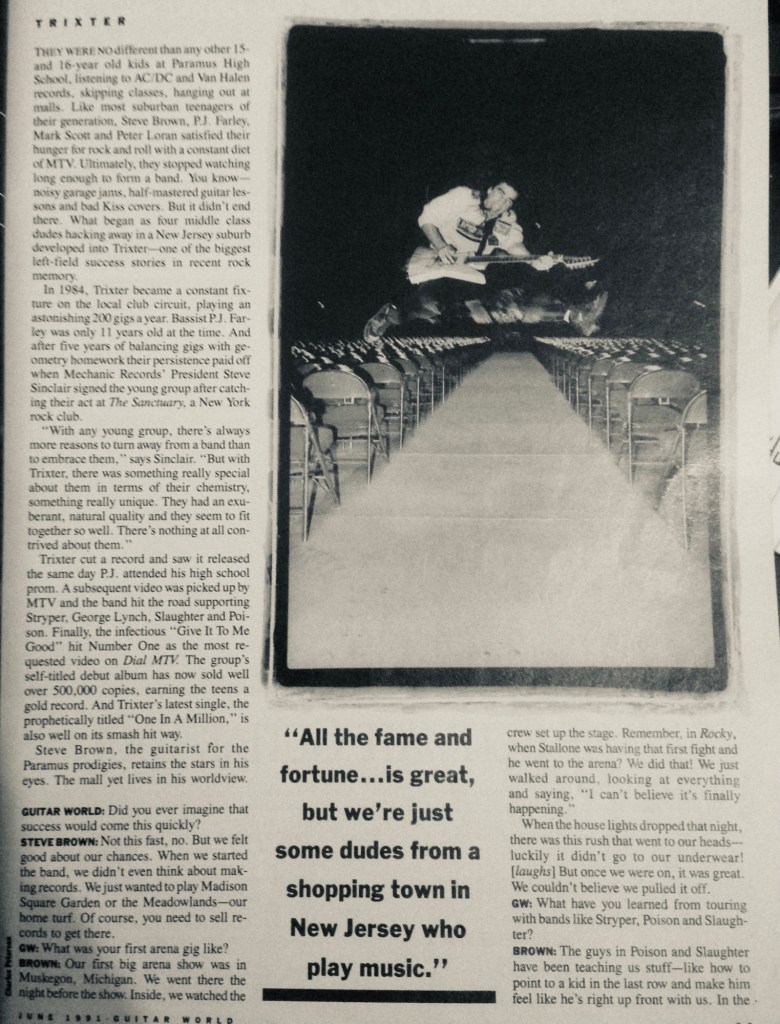
On October 15, 2020, Derek Schulman appeared on the Bob Lefsetz Podcast.

I first heard of Schulman as the guy responsible for signing Bon Jovi and Cinderella. But before becoming a label executive, he was a member of Gentle Giant (GG), a band that has a bigger fan base today than when they originally broke up.

When Lefsetz asked why GG had grown in popularity, Schulman explained: “We wrote music for ourselves, didn’t follow trends, and the music held up.” Interestingly, GG never considered themselves a progressive rock band. Rock, yes, but not prog. They simply pushed themselves musically.

I believe GG’s resurgence is largely due to the internet. Their music isn’t locked away in a vault, it’s widely accessible. If we were still in the pre-Napster era, their catalog might have remained buried, since labels wouldn’t see the financial incentive to print CDs. Labels have always believed they know what fans want, but they’ve often been wrong. Had they continued releasing hard rock in the ’90s, the genre could have still produced acts selling close to 500,000 units. Instead, they abandoned it.

It always comes back to the music. People return for the music, not for record sales, labels, executives, or streaming numbers.

From Musician to Executive

Before Gentle Giant, Schulman played in a band with a few hit singles, but by 1969, he was burned out from the pressure to keep churning out commercial hits. He wanted to form a band that was the opposite of pop, so GG was born.

But by 1980, after 14 years in bands, Schulman was done. GG had become a job, and he had lost enthusiasm for recording and touring. With nothing lined up, he spent a year feeling lost. Fortunately, he had savings, thanks to his role as GG’s quasi-manager in the mid-’70s.

A friend at PolyGram called with a job offer. Schulman moved from California to New York and joined the label as a Promotions/A&R rep, though his role was mostly promotions. He was hired because two of PolyGram’s heads of radio promotion were huge Gentle Giant fans.

At the time, PolyGram was a mess. The label had major acts like KISS and Def Leppard, but they drained a lot of resources. Schulman’s break came when artists and managers started bringing him albums. Uriah Heep was shopping a new record, and Schulman helped organize a deal to release it.

Then came Bon Jovi.

Bon Jovi’s Breakthrough

Schulman met Jon Bon Jovi and was impressed by his focus and drive. Jon wanted to be bigger than Elvis. He even introduced Schulman to his parents, who told him: “Take care of our son.”

At the time, no other labels were bidding on Bon Jovi. Schulman also had a strict policy, he refused to get into bidding wars.

The key move was bringing in Doc McGhee. Doc originally came to Schulman’s office pushing Pat Travers, but Schulman told him to check out Bon Jovi instead. Schulman saw in Doc the same relentless drive that Jon had.

Jon met Doc, they struck a deal, and just like with Schulman, Jon’s parents needed to approve.

McGhee put Bon Jovi on tour with Ratt and Scorpions. Their debut album was a success, but their second record, “7800° Fahrenheit”, was considered a sophomore slump. Schulman hated the album title, the recording process was a mess, and the overall vibe felt off. But the album did its job, it kept the band on the road while McGhee worked overtime to book shows.

Schulman, meanwhile, had started working with producers Bob Rock and Bruce Fairbairn, who had just finished albums with Loverboy and Honeymoon Suite. Jon and Doc knew they needed great producers to reach the next level.

Schulman suggested co-writing with others. Paul Stanley and Gene Simmons had already introduced Jon to Desmond Child. The rest is history.

The label knew they had something big as soon as “Slippery When Wet” was mastered. The original album cover was scrapped, and Jon designed the new one himself. “You Give Love a Bad Name” and “Livin’ on a Prayer” were immediate hits, and the album shot to No. 1. Schulman had a percentage point on the album, but when he left the label, his royalties ended.

Cinderella

Schulman was introduced to Cinderella by an agent, a lawyer, and Jon Bon Jovi, who knew Tom Keifer.

He went to see them play a club in Philadelphia. The band wasn’t great, Tom Keifer stood out, Jeff LaBar was solid on guitar, but the other two members weren’t up to par. Then Schulman listened to a 90-song demo of Keifer’s original material. He was blown away by Keifer’s songwriting.

Schulman told the lawyer: “Get Tom to replace the other two with better musicians, and I’ll give you a deal.”

Andy Johns was brought in to produce “Night Songs”. The album dropped shortly after “Slippery When Wet” exploded, and “Night Songs” shot into the Top 10. Suddenly, Schulman was on fire, he had two bands in the Top 10.

When Lefsetz asked why Cinderella never released another big album, Schulman pointed out that they did, “Long Cold Winter”, but he had briefly forgotten the title.

Tom Keifer eventually lost his voice, which Schulman confirmed was true. Schulman also helped shape Cinderella’s albums with his artist experience, though he didn’t contribute to Bon Jovi’s records in the same way. He even co-wrote songs with Tom but never took credit.

Dream Theater

Derek Oliver, an A&R representative at Atco Records and a passionate fan of progressive rock, was the key figure in discovering Dream Theater.

In the late 1980s, Dream Theater had self-released their debut album, “When Dream and Day Unite”, through Mechanic/MCA Records, but the album failed to gain much traction due to poor promotion and distribution.

Meanwhile, Oliver, who had interviewed and reviewed the band during the period as part of Kerrang was impressed by their technical proficiency and songwriting.

Recognizing their potential, he brought Dream Theater to the attention of Derek Schulman, the head of Atco Records at the time.

After meeting the band and seeing their dedication, Schulman agreed to sign them to Atco. Under his guidance, Dream Theater recorded their breakthrough album, Images and Words (1992), which featured the hit single “Pull Me Under.” The album’s success helped establish them as a leading force in progressive metal, proving that Schulman and Oliver’s instincts were right.

Running Labels

Schulman also played a key role in launching Bob Rock’s production career, giving him his first gig with Kingdom Come, another band that went on to dominate the charts.

In 1989, Schulman left PolyGram to run Atco Records. PolyGram wanted to keep him, offering him control of Vertigo and Mercury, but he wanted a change, even if it meant losing his Bon Jovi and Cinderella royalties.

Doug Morris was hesitant about Schulman at first and saw him as a potential replacement. But Schulman built an impressive roster, signing Pantera and The Rembrandts. He had actually planned to sign Pantera to PolyGram but knew he was leaving, so he told their attorney to wait until he moved to Atco.

At first, Atco thrived. Schulman put together a strong team, and the first three years were fantastic. But eventually, he started losing perspective. One day, he heard a No. 1 song on the radio and liked it. When he asked a work colleague who had signed the artist, they said: “You did.” That moment shook him.

Doug wanted him out, but Schulman quit. He even attempted a coup while on a trip to Russia.

Roadrunner Records and the Rise of Metal

Schulman took a break before getting a call from an old friend, Case Wessels, at Roadrunner Records. Initially consulting for a year, he eventually became president.

Roadrunner was independent, which Schulman loved—no board to answer to. He scrapped some of Wessels’ ideas and focused on breaking bands like Coal Chamber and Fear Factory, both signed by Monte Conner.

Then he saw Slipknot live and knew they would be massive.

He also signed Nickelback. Their first album (with Roadrunner) featuring “Leader of Men”, got some airplay, but when “Silver Side Up” dropped, Schulman immediately recognized its potential. The moment he heard “How You Remind Me”, he knew it would be huge.

Roadrunner was suddenly rolling in cash. Wessels wanted another “Silver Side Up”, but Schulman knew those albums don’t appear every six months, more like every 5 to 10 years.

Lefsetz asked why Nickelback gets so much hate. Schulman believes they’re a guilty pleasure, many people who claim to hate them secretly enjoy their music.

Finally, Schulman pointed out that while the industry panicked over piracy during Napster, hip-hop thrived by giving music away for free.

When streaming took over, hip-hop was already dominant—and it still is.

If you like your hard rock and metal history, then Derek Schulman is an unsung hero and this podcast is one to listen to.

Standard
A to Z of Making It, Influenced, Music, My Stories, Unsung Heroes

Four For Friday

A short one today.

IN THIS MOMENT

What happened to em?

“The Dream” and “A Star Crossed Wasteland” are great albums of melodic rock/Metal.

And then the transition started to the point where there is nothing recognizable or worth liking on their new album “Godmode”.

DOKKEN

A new album is out but if you can’t put any effort into the singing, why bother.

It’s the same monotone throughout, which is a shame because songs like “Lost In You”, “I Remember”, “Saving Grace”, “Fugitive” and “Gypsy” could have been great if the vocal delivery had emotion.

LYNCH MOB

George Lynch sure keeps busy and as a fan of the 80s, I like it.

And Mr Scary has still got a lot of things to say with his riffs. And Frontiers Records is keen to give him a platform to showcase his riffs.

So here we are with “Babylon”, the 8th Lynch Mob album. The difference between Lynch Mob and other artists from the 80s is the singers.

Gabriel Colon is a great vocalist with a great tone. He is the X Factor here. On the Metal cuts, it feels like Halford. On the rock cuts, its loose, sleazy and rawk.

And if Lynch could keep him around he has a lot of albums with him.

For the Metal check out “How You Fall”.

For the Rock check out “I’m Ready” and it’s nod to the great EVH.

ANY GIVEN SIN

The song “Dynamite” came up on a playlist and I pressed save instantly. It reminded me of Shinedown and it’s a great act to be associated with.

What do you guys think of em?

And that’s a wrap for this week.

Standard