Music, My Stories, Piracy, Stupidity, Treating Fans Like Shit

When Governments Screw With Music (And Everything Else)

Raise the price of cigarettes and people don’t quit smoking. They buy their smokes from the guy in the back alley with a duffel bag full of Marlboros. That’s the reality in Australia right now. The tax man thought he was going to nudge people into clean lungs and longer lives. Instead, he just created a booming black market.

And it’s not new. America tried it with booze. Prohibition was supposed to turn sinners into saints, but it made millionaires out of gangsters. The War on Drugs? Same story. You criminalize a behavior, you don’t kill demand, you hand it over to the underground.

Music lived this too.

Remember blank CD levies? The government thought, “Well, everybody’s copying music, so let’s tax the media.” You couldn’t even buy a spindle of discs for backing up photos without paying a piracy tax. Did that stop Napster? No. It just made fans hate the industry more. It turned the record labels into the bad guys and turned piracy into a cultural rite of passage. You weren’t just burning a CD, you were sticking it to The Man.

And those anti-piracy lawsuits? Suing twelve-year-olds for downloading Metallica? It didn’t scare people straight. It normalized piracy. It made Kazaa, LimeWire, and torrents explode because everyone suddenly knew where to find free music. If the government and the industry hadn’t been so hell-bent on control, maybe Spotify would’ve shown up ten years earlier.

Same deal with tickets. Governments ban scalping to “protect fans.” What happens? Scalpers just go underground. Paperless tickets, ID-only entry, sounded good on paper. In practice? Fans locked out of shows they paid for. Friends couldn’t swap tickets. And the black market didn’t disappear, it just got meaner, riskier, full of counterfeits. Meanwhile, Ticketmaster legalized scalping with “dynamic pricing.” The very thing the government said was illegal in the parking lot became policy inside the system.

That’s the lesson nobody in power ever learns: you can’t legislate away desire. You can distort prices, you can ban behavior, you can tax the hell out of things people want, but all you do is create shadow economies. You don’t stop smoking, drinking, downloading, or reselling. You just push it somewhere else.

The record industry thought it could dictate how people listen. Governments thought they could dictate how people live. And every time they try, the unintended consequences swamp the original plan.

Because people are wired to find a way. If the front door’s locked, they’ll kick open the side window. If you make the official channel impossible, they’ll build their own.

That’s the throughline, from cigarettes to booze to black market tickets. Governments and corporations think they’re playing chess. But the public is playing guerrilla warfare. And guerrillas always find a way.

Standard
Music, My Stories, Treating Fans Like Shit

When the Party Turns into a Legacy: Bon Jovi, “We Got It Going On,” and the Forever Dilemma

Bon Jovi are back in the headlines again.

The “Forever” Tour.

The big announcement.

And, as always, the internet did what it does best, split down the middle.

Half the fans were ecstatic: “They’re back! Jon’s finally bringing the band around again.”

The other half were grimacing at the live clips, whispering the kind of thing you never want to say about your heroes: maybe the forever part should’ve ended a while ago.

That’s the heartbreak of watching icons age in public. We want the fire without the fallibility, the 1986 Bon Jovi frozen in amber, talkbox wailing, hair on fire, fists in the air, not the version that’s grown reflective, too polished, and painfully human.

But for me, this whole “Forever”discussion takes me back to 2007.

To “Lost Highway”.

I was a diehard then. Still am, I guess. The kind of fan who buys the record before hearing a note, because “Slippery When Wet”, “New Jersey”, and “Keep the Faith” were practically scripture. So when the band leaned into country-rock, I wanted to believe in it. But you could feel the calculation. You could feel the intention.

“Who Says You Can’t Go Home” worked because it wasn’t supposed to. It was an accident, a crossover that caught fire because it felt genuine. Then Jon, the businessman, doubled down. And when you chase authenticity, you lose it.

But buried under the Nashville polish was one song that didn’t care about charts or categories.

“We Got It Going On.”

“Is there anybody out there looking for a party? Yeah!!
Shake your money maker, baby, smoke it if you got it.”

That opening riff hits like swamp water and motor oil, sleazy, sexual, bluesy. Sambora’s talkbox returns like a ghost, resurrected not for nostalgia but for sheer noise. You can almost see the lights dim, the crowd swell, the camera pan across faces that just want to feel something again.

This song wasn’t written for critics. It was written for the night, for bodies pressed together, beer in the air, the scream that shakes the workweek loose.

“We Got It Goin’ On
We’ll be banging and singing just like the Rolling Stones.”

That line nails it. The nod to the Stones, the eternal road dogs, still out there rattling bones decades later.

And the truth is, I’ve left concerts sore, half-deaf, heart syncing with the subwoofers. That’s what great live music does: it inhabits you. You don’t walk out the same.

It’s all there, the “Ah ha ha” chant, the “ticket to kick it” call to arms, the invitation to ditch your suburban restraint.

“Everybody’s getting down, we’re getting down to business
Insane, freak train, you don’t wanna miss this.”

That’s Primal Scream energy. Nikki Sixx said it best:

“Primal scream and shout, let that mother out.”

That’s what “We Got It Going On” captures, not country, not crossover, but catharsis.

And it kills me that it never became a setlist regular. It tore through “Live at Madison Square Garden” and proved it belonged beside their classics.

But now, watching the new “Forever” performances, I can’t help but think about that title.

Because say what you want about the voice, the image, the years, when that talkbox hits and the crowd still roars, for a few minutes at least, they really do got it going on.

Bon Jovi’s strength was that mix of optimism and blue-collar defiance that said, we’re gonna shake up your soul, we’re gonna rattle your bones.

The challenge now isn’t pitch or range, it’s rediscovering the part of themselves that still wants to party like it’s dangerous again.

With presales kicking off October 27–28 and general sales slated for October 31, fans were ready.

Hungry. Hopeful.

But within hours, that excitement curdled into outrage.

Across X (Twitter) and fan forums, the stories were brutal: hours-long virtual queues, endless errors, “these tickets are no longer available” messages that mocked you after two hours of waiting.

One fan said they spent their entire last day of vacation fighting Ticketmaster’s glitch-riddled system.

Another logged in early for presale, only to find seats instantly gone, calling it “a joke” where real fans lose to bots every time.

Queues hit 160,000 people for UK shows like Wembley.

Some fans swore the platform was holding tickets back to manufacture demand. Others pointed to instant resales, the same seats appearing online minutes later, inflated beyond belief.

And they weren’t exaggerating. Prices hit $900 for single seats.
VIP “Legendary” packages, front row, tote bag, lanyard, mocked for charging hundreds extra for souvenirs no one asked for.

One fan summed it up perfectly:

“It’s not the Forever Tour because of Bon Jovi’s career — it’s because we’ll be paying it off forever.”

That’s the reality of fandom in 2025. We want connection, not corporate friction.

We crave the “Livin’ on a Prayer” moment, but we get login errors and resale markups instead.

Some fans did score tickets, celebrating in disbelief, hoping maybe, just maybe, Richie Sambora will reappear and make it all feel whole again.

But the dominant emotion across social media isn’t excitement. It’s exhaustion.

This is the paradox of legacy. When the dream outlives the danger, the machine takes over.

Bon Jovi were always about inclusion. Blue jeans, big choruses, stadium-wide singalongs. They weren’t supposed to be exclusive.

But the modern ticketing system turned “forever” into a commodity, a limited edition for those who can afford it.

And maybe that’s the real tragedy of this era: we can still sing along, but we can’t always get in the door.

Bon Jovi built a career on songs that made ordinary people feel invincible.

Now, the fight is to make those people feel included again.

Because the legacy doesn’t live in the hits, or the sales, or the streaming stats.

It lives in the noise, the sweat, the singalong, the place where “We Got It Going On” still means something.

Standard
Music, My Stories, Treating Fans Like Shit

The Death of the Cheap Seat

Concerts used to be the great equalizer. Didn’t matter if you were broke, working doubles at the gas station, or borrowing money from your parents—you could scrape together twenty bucks, buy a nosebleed, and still be in the room when the lights went down. You weren’t just watching music. You were part of something bigger.

That was the dream. The cheap seat meant access. The cheap seat meant community. The cheap seat meant everyone could enter the temple.

Now the temple’s got velvet ropes and algorithms at the door.

Michael Rapino gets onstage at yet another industry conference and calls concerts “underpriced.” Underpriced. The man who pocketed $100 million last year for running Live Nation, the company that turned fandom into a line item on a quarterly report, thinks you and I should be grateful for the privilege of paying triple digits to see our favorite bands.

His defense? 

Averages. 

The “average ticket” is $72, he says. Which is like a billionaire telling you the average American’s rich because Jeff Bezos lives here. Fans don’t experience averages. 

Fans experience chaos: 

Ticketmaster’s queues that crash, surge pricing that turns your phone into a slot machine, bots that eat the inventory before you even get a chance.

And none of that matters to Rapino. His job isn’t to make concerts magical. His job is to keep shareholders fat and happy. Lock down venues, ticketing, promotion, control the whole “flywheel.” No competition, no innovation, just fees on top of fees.

And here’s the thing: Rapino makes obscene money off culture but creates none of it himself. He doesn’t write the songs. He doesn’t play the shows. He doesn’t stand in the pit or wait in line. He’s just a toll collector at the gate. Steve Miller said it flat-out in his Rock Hall of Fame speech, how the suits profit off musicians while contributing nothing to the art. Rapino’s empire is built on that exact imbalance. 

Concerts are underpriced? 

No. 

They just haven’t squeezed you enough yet.

Metallica’s 2025 Australian tour? 

Gone. 

Sold out before you could blink. Standard tickets running all the way up to $750, plus the insult of a “handling fee” slapped on like salt in the wound.

And that’s before the upsells, the premium reserves, the GA “enhanced experiences.” Those packages where you pay through the nose to feel like you’re not just a customer, but a valued customer.

Metallica still sells out because they’re one of the last universal rock metal bands. They are your dad’s band, your band, your kid’s band. The music has never been more available, stream every album in seconds, watch pro-shot live clips on YouTube for free. But the live experience, the reason you picked up a guitar or threw yourself into a pit, that’s become luxury-priced.

And yet, the shows still sell out. Which tells you everything. The desire hasn’t gone away. Fans will always pay. Until they can’t.

Dream Theater hits forty years, and their anniversary tour is already a test of devotion.

Melbourne? $159 just to get in.

Brisbane? $229. 

Adelaide fans reporting $189 GA, with some reminiscing about the days you could walk in for $124.

Still cheaper compared to Metallica but… 

Buying a ticket isn’t just an act of fandom anymore, it’s calculus. How much is too much? How many fees can you stomach? How many rows back until it’s not worth it? The music is meticulous, demanding, progressive. But the ticket-buying process is chaos, economics, market forces. It’s not prog, it’s Wall Street.

And the faithful still pay. Because that’s what it means to be a fan in 2026. You complain, you sigh, and then you show up anyway.

The Harsh Reality for Smaller Acts

But zoom out from Taylor Swift’s glittery Eras tour, the stadium gods, the more established bands and it’s brutal. The middle class of music is collapsing.

Smaller acts are grinding themselves into dust, endless tours through the same cities, like a clingy ex who doesn’t get the hint. Fans are tapped out, financially, emotionally. They’ve seen the show three times already. They’re not coming back just because you showed up again.

Add in the post-Covid hangover, ticket prices inflated, costs through the roof, and you’ve got an unsustainable mess. Vans turned into semis, sprinter vans into buses, overhead that kills. Meanwhile, fans are staring down their bank apps thinking: Do I really need to drop another forty bucks after paying a grand for Metallica last month?

This is where we are. Live music, once democratic, feels more like an airport lounge, corporate, exclusive, transactional.

And the problem isn’t just economics. It’s emotional connection. Fans don’t want perfect production anymore, they want authenticity.

The gatekeepers used to be labels. Now it’s fans. Viral one day, forgotten the next. The old formulas don’t work. The new ones aren’t obvious. The only constant? Connection. That’s it. That’s the whole game.

We’re in uncharted waters. The cheap seat is dead. The middle class of live music is bleeding out. The stadium shows are still printing money, but for how long?

The dream of concerts was always accessibility. Now it’s exclusivity. That’s the tragedy. Because the music hasn’t changed. The fans haven’t changed. Only the gatekeepers have.

And Rapino? He’ll keep cashing nine-figure checks off art he never made, off culture he never built. That was Steve Miller’s whole point when he stood at the Hall of Fame podium and called out the leeches: the suits don’t create, they extract.

The question is how long fans will let them.

The article.

Standard
Copyright, Music, Stupidity, Treating Fans Like Shit

Who Owns the Past? Preservation Is Theft Now

Because here’s the truth nobody wants to admit:

Every settlement is about money.
Not truth. Not justice. Not art.

Money.

The record companies don’t care about your dusty old 78s. They don’t care about preservation. They don’t care about whether some kid in Berlin discovers Billie Holiday for the first time and has their life changed. They care about the ledger. About squeezing every last nickel out of a format that no longer even exists in the real world, except as cultural artifact.

And the Internet Archive?

They care too. About survival. About keeping the lights on and the lawsuits at bay. You think they wouldn’t have fought this in court if they had endless money to burn? They folded because lawyers bill by the hour and the music industry has deeper pockets than any nonprofit ever will.

This isn’t about “illegal record stores.” No one is streaming Ella Fitzgerald off the Archive instead of Spotify. This is about control. About the labels saying, “We own history. We decide how you access it. We decide what survives.”

Meanwhile, the music is dying. It’s literally locked in grooves that disintegrate a little more every time a needle touches them. But no, preservation is theft now. Access is piracy. Knowledge itself is contraband.

The labels call it “copyright.” But let’s stop dressing it up: it’s rent-seeking. It’s gatekeeping. It’s an industry clinging to relevance by making sure no one else can touch the vault.

And the Archive? They’ll move on, quietly. Keep scanning books until publishers come for them again. Because that’s the gig. You build something for humanity, and eventually someone shows up with a cease-and-desist and a calculator.

So yeah. Every private settlement is about money.

But every one of these cases?

They’re really about memory. Who controls it. Who owns it. Who gets to say what endures.

And that’s the part that should terrify you.

Here is the article.

Standard
A to Z of Making It, Copyright, Music, My Stories, Treating Fans Like Shit

Four For Friday

TAX THE HELL OUT OF YOU

Motley Crue and Def Leppard came and they left, but not without complaints.

Tommy Lee walked into a 7-Eleven and purchased 4 packets of Marlboro Gold 25s in Melbourne.

The price. $251.96 AUD.

Yep welcome to Australia, Mr Lee, the place that loves to tax the hell out of you on everything and on top of that, has the highest tobacco taxes in the world as well. Basically 77% of the retail price is taxes.

If Tommy Lee purchased four packets in the US, it would have cost him $32USD which translates to $48AUD.

And no I didn’t go watch em. I’ve seen Motley Crue too many times and while I haven’t seen Def Leppard play, the price for the tickets was way too high and it was outdoors which I hate.

REISSUES

Remember when Metallica wanted to release the “Metal Up Your Arse” cassette tape as part of the “Kill Em All” reissue or maybe it was for a special Record Store Day release.

Anyway that got shot down by Dave Mustaine because he wouldn’t accept giving song writing credits to Lars Ulrich on songs he didn’t or was involved in writing.

Fast forward a few years and Linkin Park looks like they are in trouble with a former bassist.

As the Billboard article states;

Linkin Park is facing a lawsuit that claims it has refused to credit or pay royalties to an ex-bassist who played with the band in the late 1990s — a legal battle triggered by an anniversary re-release of the band’s smash hit 2000 debut album.

RE-RECORDINGS

The labels are up to their usual tricks again. They seem to forget that they are irrelevant without the artists.

Their whole business model is making money from music. So when they knew in the 60s that songs would become copyright free they lobbied hard and got laws in place to ensure their business model survives for a long time.

But Taylor Swift really messed with this by redoing her albums under her own control. This made the original recordings held by the labels basically worth a lot less.

And now they want to stop that.

I think if an artist wants to re-record a song or an album they created they should be free to do whatever they want.

And it was standard practice for artists to have re-recording rights either two years after their contract expires, or five to seven years after the original recording is released.

MONEY IN MUSIC

Warner Music Group Corp released its full year earnings.

And the take away is, they have earned over $6 billion in yearly revenue for the first time.

How much of that has filtered down to the creators?

Standard
Copyright, Music, My Stories, Treating Fans Like Shit

Four For Friday

A bit about this and a bit about that.

MOVIES/TV SHOWS

I watched “Oppenheimer”. I don’t recommend it.

Which is tough to say as I’m a fan of Christopher Nolan.

I’m surprised that Nolan thought it should be made into a movie, then again, creative people are inspired by things that others don’t see as inspiring. In this case it was a the 2005 biography “American Prometheus” by Kai Bird and Martin J. Sherwinx

The story focuses on Oppenheimer’s studies, his direction of the Manhattan Project during World War II, and his eventual fall from grace due to his 1954 security hearing.

Since the last hour was like a “Law and Order” episode, maybe a limited TV series would have been better. But a TV series doesn’t have the gross takings that a cinematic release has.

It’s approaching the $800 million mark from a $100 million budget. It will be seen as a success, but its not re-watchable.

I also finally got around to watching “Avatar: The Way Of Water” on Disney+.

I didn’t think a sequel was necessary however James Cameron has a habit of surprising people and he sure did it with this movie. It’s long run time didn’t feel that long and the story flowed.

By the end of it, I made a commitment to watch the third one in the Cinemas. And it hooked my kids as well.

“Painkiller” on Netflix is a must watch. OxyContin destroyed many families and the series does a good job of telling the story.

SHOWS MADE AND THEN CANCELLED OR REMOVED TO SAVE ON TAX

In May, Disney+ said it would cut US$1.5bn of content from its streaming platform, so the company’s value is reduced which means they pay a lot less tax.

This involves axing current programs which are or were popular like “Willow” and not releasing other big budget series’s like “Nautilus”.

Paramount+ also did the same removing “The Pink Ladies” and Jordan Peele’s “Twilight Zone”. Warner Bros also removed “Westworld” along with others.

Time will tell how subscribers will respond to the streamers removing shows when they need to save a bit of cash.

CEASE AND DESIST

There is a high chance that a fan of the artist will have a different political view to that of the artist.

And the artists are okay with this when they are taking the money from these fans because at that point in time they don’t know the political view of the fan.

Suddenly, a politician plays the music of an artist at a rally, there are fans of the artist in that rally and the artist then sends a cease and desist letter to the politician to stop.

How much say or veto rights can an artist really have in how their music is used?

NOTHING ELSE MATTERS

James Hetfield wasn’t sure he wanted to go there and explore themes of vulnerability. Bob Rock insisted that he explore this path of being vulnerable and urged Hetfield to take vocal lessons.

Well that song just surpassed a billion streams on Spotify.

Standard
A to Z of Making It, Copyright, Music, My Stories, Stupidity, Treating Fans Like Shit

Four For Friday

It’s all about the money in music and the lawsuits which come about because of it.

THE GREAT 78 PROJECT

The “Great 78 Project” from the Internet Archive is digitizing 78-rpm records from the early 1900s until the 1950s.

78rpm records are some of the earliest musical recordings, and were produced from 1898 through the 1950s when they were replaced by 33 1/3rpm and 45rpm vinyl records.

The Archives asked people to donate their albums so that the cultural past survives for future generations to study and enjoy.

At the moment the collection is at 400,000 plus recordings. The majority of these 78s are forgotten and the 78rpm versions are not on streaming services.

Sounds great right. Preserve some cultural history from donated records and provide access to people to enjoy.

But the labels don’t get paid when this happens and suddenly don’t like it.

Universal, Sony and other labels (as part of the RIAA) are suing for copyright infringement.

The labels’ have used colorful phrases to describe the “78 Project”, as an “illegal record store”.

From the 400K plus songs, the labels named close to 3K sound-recording copyrights that the Archive allegedly infringed.

And they want $412 million for it because as far as the labels are concerned the music is available on streaming services.

The Great78 project, is not a substitute for music streaming services like Spotify or Apple Music.

When you listen to it, you hear that the music was digitized from the 78rpm record.

You get the crackle and the hiss of the record. It is a totally different version from the clean remastered versions you hear on music streaming services.

It’s ridiculous that it’s even an issue.

SIRIUS XM

SoundExchange, is responsible for collecting and distributing digital music royalties.

Sirius XM is responsible for playing music and paying digital royalties.

SoundExchange claims that Sirius XM is performing some creative accounting by inflating the revenue from its webcasts so it pays less in music royalties to the tune of $150 million.

Isn’t it funny how the labels and publishers go straight to litigation when someone else like Sirius XM does the exact same thing that they did to artists for 80 plus years.

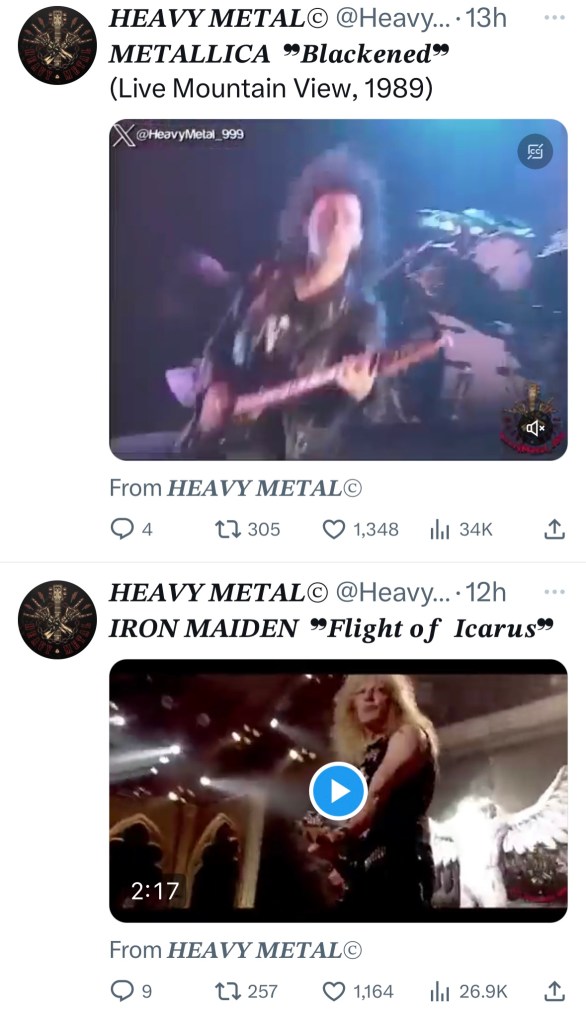
Twitter/X

Twitter/X users put up snippets of live concerts, music videos, interviews and basically themselves jamming to their favorite music or playing the vinyl or CD of their favorite music.

Posts like these.

Two minute snippets of live performances that someone recorded which isn’t the user.

Or something like this.

Footage from a concert that the user attended and shared on the platform.

The users on other social media sites do the same thing.

But the RIAA, the labels lobbyist and litigation arm don’t like it.

They have accused X Corp of breeding mass copyright infringement because the company fails to respond to takedown notices and lacks a proper termination policy.

For this crime, the labels want $250 million from X Corp.

Elon Musk wants the case dismissed and his legal team have asked the courts to consider it as the labels have no hard proof of any wrong doing.

$3 MILLION PER HOUR

It’s the combined amount of how much the labels made in the first six months of 2023.

And they made that money because they have schemed, paid or legislated their way into owning the rights of a lot of music.

The music created by artists in bedrooms, parents basements, hotels, tour buses and at soundchecks, the labels now own.

And they will own these rights for the life of the artist plus 70 years after their death. In some jurisdictions, it’s 90 years after their death.

Final Note

The artists who create culture and value are never in the conversation. Even if the labels (and the RIAA) get all the monies paid to them, they will not share any of it with the artists.

And it is the artists who gave them this power to litigate, by signing away their rights in shitty contracts so they could have a recording career. And maybe a chance to make it big.

Standard
A to Z of Making It, Copyright, Music, My Stories, Treating Fans Like Shit

Four For Friday

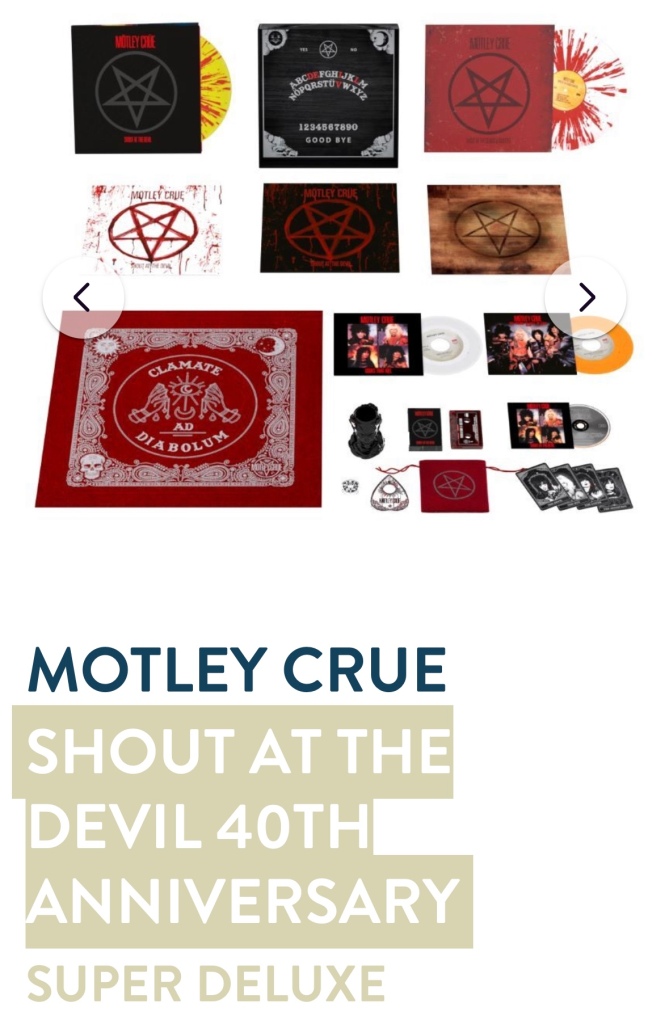
MOTLEY CRUE

How many times can they release the same album?

All the music here has been released before circa 2003 when the band remastered their albums on their own Motley Records label.

But let me highlight how many issues of the album they have done recently.

In 2022, they released a Limited Edition, Reissue, Black/Clear Split Vinyl edition. The music on this edition was just the normal album.

In 2018, they released a Limited Edition, Reissue, Remastered, Clear With Red Swirl Vinyl Edition. The music on this edition was just the normal album.

In 2016, they released a Limited Edition, Reissue, Remastered, Red With Black Swirl, 180g Vinyl edition. The music on this edition was just the normal album.

In 2011, they released a Limited Edition, Reissue, Remastered, Mini Vinyl Replica edition. The music on this edition was just the normal album.

Again in 2011, they also released a Reissue, 180g, Gatefold edition. And again, the music on this edition was just the normal album.

Between 2003 and 2023, they also released various CD versions of the album with wording like, HDCD, Club Edition, Limited Edition, Enhanced, Reissue, Remastered and SHM-CD (for Japanese Releases). Apart from the 2003 edition, it’s been the same album re-released.

But, it’s selling for $370AUD. It looks like a nice collectors piece and if you don’t have this album, you’ll be thinking “why not”, but at that price I would have expected something to be included that hasn’t been released as yet.

Take a cue from Mr Coverdale, who puts the effort in with his evolution compositions, different jams/rehearsals of the songs and live recordings.

STEVE JOBS

At 12 years old Jobs called Bill Hewlett (the co-founder of Hewlett-Packard) to ask for spare computer parts.

Jobs got the parts and a summer job working the assembly line at Hewlett-Packard.

Steve Jobs, believes asking is the single thing that “separates the people that do things from the people that just dream about them.”

METALLICA

Brian Slagel is putting together the Metal Massacre compilation album.

Slagel met Lars Ulrich a year ago at a Michael Schenker concert. Lars calls him up and asks him, “if he puts together a band can he be on the record?”

BON JOVI

It’s 1982 and Jon Bon Jovi has just finished writing and recording “Runaway”.

He shopped it around and couldn’t get a record deal. He couldn’t get a band together to play live because original bands didn’t make enough money.

Luck would have it that a brand-new radio station would open in New York. It was so new it didn’t have a receptionist so nobody was there to stop Jon from walking straight to the DJ and asking him to play “Runaway”.

The song quickly gained traction and Hobart entered Bon Jovi into a contest the radio station was running for the best unsigned band.

Jon won, he got his Mercury deal and by the summer of 1983, the song had become a huge hit.

It’s amazing what could happen from asking.

SONG ON REPEAT

“Crime Of The Century” by Revolution Saints.

That Chorus hook is undeniable. It’s from the new album “Eagle Flight” which has Joel Hoekstra and Jeff Pilson joining Deen Castronovo.

Check it out.

BONUS SONG I’M LISTENING TO

“Burn For Me” by The Night Flight Orchestra. It’s the Bowie “Modern Love” feel which hooks me in and then that feel gets put in the TNFO blender and what comes out is an infectious AOR Rock song.

And that Chorus hook. Wow.

Standard
A to Z of Making It, Music, My Stories, Treating Fans Like Shit

It’s Always Thrown Back To The Artist

If the artist doesn’t get paid from recorded music, well it’s their fault for signing a crap deal or for signing away their rights a long time ago for a big payday. Or they are not big enough to be paid.

And when the tickets to concerts are too expensive it is their fault as well.

Seen all the craziness around Bruce Springsteen and the prices charged for his concerts in the U.S.

For an artist on who has made his living from the heartland, the prices of $4K for a ticket due to Ticketmaster’s “dynamic pricing” algorithm (based on a simple design of high demand vs low supply = price increase on the fly), has left him and his team in damage control.

Even the biggest fanzine dedicated to the boss called “Backstreets” has ceased to exist after 43 years over this. But “The Boss” defended these prices last year. The way Springsteen sees it, someone else (like a scalper or secondary ticket re-seller) was going to sell the tickets at the higher prices, so why can’t it be him and his team that gets the difference between the normal price and the price the fan is willing to pay.

Is there anything wrong with this?

It was going to happen eventually.

Artists have been ripped off for decades so when they have been around the business for a long time, you would expect the artists to do the same as the agencies that ripped them off. Businesses pay taxes when they start out while the established ones pay no taxes. And when those small businesses get big enough and have billions coming through, suddenly they also pay no taxes.

But with the rising costs to put shows on, a lot of smaller to medium artists are cancelling tours because they don’t want to overcharge their fans but they need to overcharge, in order to make some coin. And for the ones who do decide to overcharge, well their fans are not buying the tickets and suddenly the tour or the show is cancelled due to low ticket sales.

The artists and their team (which includes, accountant, lawyer, management and most probably the label if they are on a 360 contract) control it all. The final decision on ticket prices comes back to this team. When Taylor Swift blamed Ticketmaster for her prices, she was trying to save face because she got busted ripping off her fans.

Springsteen had the view that since other agencies have been ripping his fans off for a long time and that’s okay, why isn’t it okay when he The Boss does it.

Ticketing companies then find other ways to get the money from the fans, via booking fees, parking fees and super expensive food and alcohol at the venue. The merchandise companies then find ways to rip off the fans by selling $5 dollar tops at $50, because they have negotiated a set fee with the artist to be the merch supplier to begin with and then they need to split the profits with the artist.

And the artist is central here, however they are just a cog in a massive machine, which likes making money of them.

The labels cannot make money if the artist doesn’t create a song that resonates with people.

Lawyers, accountants and managers cannot make money if the artist is a nobody. They make money if the artist is a somebody.

Promotors, ticketing agencies and merchandise agencies make money from the artists. Streaming services, CD and vinyl making plants and record shops make money because of the artist.

Publishing/licensing companies make money from the artists along with radio stations.

That useless entity known as the Rock And Roll Hall Of Fame makes money from the artists.

And most of the people who make money from the artists are flying on their own private jets while most artists need to tour in busses and vans.

And all the artist wants to do is write and play music and if they have an audience to enjoy playing to them. As a by-product of creating music and having an audience, they would expect to be paid fairly.

Standard
A to Z of Making It, Classic Songs to Be Discovered, Copyright, Derivative Works, Influenced, Music, My Stories, Piracy, Treating Fans Like Shit

The Week (Last Few Months Actually) In Destroyer Of Harmony History – September 21 to October 31


4 Years Ago

FLYING

Patience. I’ve never confirmed it or looked it up, but i was told once it’s a French word meaning “to suffer”.

And the memories of being patient, flying 14 hours from Sydney to Doha and putting up with screaming little kids. Thankfully they were not mine.

And since the flights are so long, I caught up on movies like “War for The Planet Of The Apes”, “The Quiet Place” and “I, Tonya”. Then we wait 5 hours, board another plane from Doha to Berlin, I watched “American Animals” and “Hotel Artemis” and checked out the audio section. And pressed play on “Walk The Earth” from Europe, along with “Firepower” and “Turbo Lover” from Judas Priest.

During this period, the site became a Travel Blog, as I was doing regular updates of my European adventures in Berlin, More Berlin, Estonia, St Petersburg, More St Petersburg, The Norwegian Breakaway, Macedonia, More Macedonia and The Roma People.

After this holiday I was planning to take in more of the Balkans and the parts of Italy and Austria that surround the Adriatic Sea. This was all planned for 2020. We all know how that panned out.

THREE IDENTICAL STRANGERS

It’s messed-up when humans experiment on other humans and mess with their lives.

Like when people of influence placed triplets from a single mother into three different families across different states. And in the name of science, they lied to the adopted families when they turned up to observe how the kids were progressing.

If you haven’t seen this documentary, watch it.

UPBRINGINGS

I grew up in a steel city and the plan was the same for everyone. Finish high school, get an apprenticeship at the local steel mill, become a tradesman and work until retirement with a nice little nest egg and a government funded pension.

Maybe that worked out okay once upon a time, but as Dylan said, “the times started changing”. The steel mill that used to employ 25,000 back in the mid-70s now employs less than 700. My Dad worked his whole life there, I haven’t worked not one day there. Then again. I was a misfit falling in and out of jobs.

STEVE VAI and OZZMOSIS

In 1994, Ozzy started jamming with Steve Vai. After writing for a certain period, Bob Daisley was called in. Once rehearsals started, it was pretty obvious that Vai’s style didn’t fit Ozzy’s style. But the Ozzy Camp didn’t fire Vai. They told him that the label was shelving the album.

With Vai gone, Daisley and Castronovo got a phone call a few days after to reconvene with Zakk Wylde on guitar. Daisley then got replaced by Geezer Butler.

Steve Vai’s involvement on the “Ozzmosis” album became limited to co-writing just one song “My Little Man”.

And while the song is credited to Ozzy and Vai, I always had my doubts if Ozzy wrote the lyrics.

So, if Ozzy didn’t write them, who did?

Well, the lyrics came from the great Lemmy Kilmister.

Yep, Lemmy wrote the lyrics about his son Paul. But Ozzy told everyone he wrote the lyrics about his son Jack.

All of the debates about intellectual property and how it’s valuable and how copyright protects the writer. It’s bullshit. The real writer is not even credited.

Copyright is a mess and the Copyright’s for Ozzy’s songs are even messier. Much like how Jake E. Lee and Bob Daisley got shafted for the “Bark At The Moon” album.

DYNAZTY

Dynazty came onto my radar in 2016. Actually I heard of em a few years before but avoided them because of the band name, thinking they would sound like Kiss, and why did they spell it with a ‘Z’.

They exist completely off the mainstream radar screen, doing their thing and building their catalogue of songs. And eventually, people will notice. But it takes time. I’m a fan and I don’t even know who the members are in the band.

How is that possible?

It’s so far removed from the label gatekeeper 80’s/90’s model. But in the new streaming era streams are more important than sales and people are listening. Music is a lifers game. You’re either in it for life or it’s just a passing hobby.

And Dynazty are in it for life.

LIVE AFTER DEATH

It’s the best live album out there and it was my first exposure to Iron Maiden. It’s also a pretty good reason why I didn’t feel the need to buy the first four albums until later on.

At the time I didn’t know it, but the tempo of the songs are just a bit quicker on the live album compared to the recorded versions and I’ve grown to know the songs at those tempos. If you don’t believe me, compare the two “Hallowed Be Thy Name” versions.

And I heard Bruce Dickinson sing the DiAnno era songs first, and because of this I can’t get into the DiAnno versions. But i do like them.

This album is also the reason why I purchased a ticket for each of the two Sydney shows on the “Somewhere Back In Time” tour of 2008.

Maiden did find gold again with the “Rock In Rio” release. Especially the DVD. And on this release, Bruce brought to life songs from the Blaze fronted era.

I also purchased the DVD for “Flight 666” which I rank as Maiden’s third best live album and a great memento for the two nights I watched em perform the same set.

COHEED AND CAMBRIA

“Vaxis – Act I: The Unheavenly Creatures” was the new album in 2018. Another concept album.

My first concept experience was “Operation Mindcrime” from Queensryche, then “The Crimson Idol” from WASP and then “Streets: A Rock Opera” from Savatage. But Coheed take “concept” to another level, with more or less each album except one being part of a concept story called “The Amory Wars”.

Here is my quick summary. There are far more detailed versions out there.

A scientist called Sirius Amory discovers an energy source called “The Keywork” is made up of souls who haven’t transcended. This happens on “The Afterman” album.

Many years later, a person called Wilhelm Ryan starts using the energy of the Keywork to murder and rule. Coheed and Cambria are humanoid robots created to destroy Ryan. Along with a person called Inferno, who also is a robot, they attack Ryan’s fortress and manage to destroy it. Ryan survives, however Coheed and Cambria think he’s dead. Thinking it’s over, their memory is wiped. This happens on “The Year Of The Black Rainbow”.

In “The Second Stage Turbine Blade” Coheed and Cambria get killed and their last surviving son, Claudio, is left to take up the charge. I’m still not sure how humanoid robots have children. But the recent Bladerunner movie also has this story arc.

Claudio finds out that he’s like the chosen one in “In Keeping Secrets Of Silent Earth”.

In “Good Apollo, I’m Burning Star IV, Vol. I: From Fear Through the Eyes of Madness” there is a character called “The Writer” that starts to mess up the story because he’s going through a relationship break up. It reminds me of the Matrix characters “The Keymaker” merged with “The Architect”.

In “No World For Tomorrow”, Claudio destroys the Keywork and releases the trapped souls. And the new album “Vaxis – Act I: The Unheavenly Creatures” takes place after this event.

OLI HERBET

“Overcome” made All That Remains (ATR) accessible to me, and I’ve been a fan since.

The first track “Before the Damned” started blasting out of my headphones. Musically it’s excellent. While the death metal vocals happen in the verses, the Chorus is Arena Rock.

At 2.04 we get this head banging metal breakdown and the solo begins at 2.09 over that same head banging breakdown riff. The solo is chromatic and diminished, in the same way Randy Rhoads shreds on “Diary of a Madman”. This concludes at 2.19. It sounds dissonant and atonal.

And the main man behind the guitar is Oli Herbert. A great guitar player, founding member of All That Remains and songwriter who passed away at 44.

Rest In Peace.

I’M READY

It’s a track that Oli Herbert (RIP) co-wrote for Dee Snider’s solo album “For The Love Of Metal”. The other writers are Charlie Bellmore, Nicholas Bellmore and Jamey Jasta.

Crank it.

LEARNING MUSIC IN REVERSE

When I hear a song I like, I seek out more songs from the same artist. And I repeat the cycle with different artists. It’s how I got into music. It happened to me in the 80s.

When I heard Motley Crue, Quiet Riot, Van Halen, Twisted Sister, Iron Maiden, Ozzy, Kiss and Judas Priest, I didn’t think for a second that these bands would have had influences.

I never understood the debates over Kingdom Come in the 80’s until well into the 90’s when I started seeking out bands from the 70s and started to pay real attention to Led Zeppelin. Then I had that “ah ha” moment and I understood why Kingdom Come were labelled copycats.

I remember when I first heard Aerosmith and Whitesnake. It was in 1987 and I had no idea these bands had a long history dating back to the Seventies.

The beauty of music. I listen, I get moved by the listening and I start to explore.

THE ONE YOU LOVED IS GONE

What a solo from Slash! Actually, two solos. But it’s the middle one that hooks me. And yeah, it might sound like an Alter Bridge song, but that solo is 100% pure grade Slash.

UTOPIA RECORDS

It had the motto “The Home Of Heavy Metal”.

I’d never seen pictured vinyl before, well Utopia had them. I’d never seen 12-inch singles of metal bands before, well Utopia had them as well. And those yellow and black plastic bags with the logo and branding proved to be a badge of honor. It’s like we got patched into the club the same way bike gangs’ patch in their members.

The first location was in Martin Place from 1978 to 1980 and the second location in Martin Place was from 1980 to 1990. It was this second location that I first visited. From 1990 to 1995, they moved to Clarence Street, Sydney, not too far from the original shop. I waited in line for a Sepultura meet and greet because my cousin Mega was a fan of the band. He took in his battered snare skin for signing. Even Igor the Sepultura drummer, was impressed at the brutality of the snare skin.

Hours would be spent here, and some big decisions would be made as to what to buy between my cousin and me Then as soon as we got back to my cousins house, I would dub the records he purchased, and he would dub the records I purchased.

From 1995 to 2001, they moved to George Street, Sydney next to Hungry Jacks and then from 2001 to 2006 they moved across the road under the cinemas. The bigger Utopia got, the uniqueness culture it created for metal heads got lost.

The last time I walked into Utopia was at an address on Broadway in Sydney. They occupied this store between 2006 to 2010. But during this time, they did things differently by having live bands in store and battle of the band’s contests. They kept it going. They kept the name in the conversation. From 2010, they have been at their Kent Street address, and I haven’t been. But I have purchased items online. And I will return one day, because that’s what us Metal fans do.

PIRACY

Debates and arguments never cease when it comes to Piracy.

I became a fan of a lot of bands because of pirated material. Bands like Trivium, Coheed and Cambria, Shinedown, In Flames, Evergrey, Killswitch Engage, The Night Flight Orchestra and Corroded just to name a few. And I had no qualms paying ticket prices if these bands came to town.

High profile bands from the Eighties also had a renaissance in the 2000’s because of pirated material. Motley Crue, Metallica, Guns N Roses, Iron Maiden, Twisted Sister, Megadeth, Judas Priest, Europe and Whitesnake come to mind immediately. Provided they still wanted to work together. Bands like Skid Row, Ratt, Warrant and Dokken unfortunately missed out because key members hated each other.

It’s a pretty simple business model. Have your music available worldwide for free and people will access it.

All of those bands mentioned above have played cities they’ve never played before and to crowds larger than before. They played these cities without selling any real recorded product in those cities. I can tell you that in Eastern Europe, I did not come across a legitimate music shop. The few shops I did come across (and I use that term loosely) sell rips of albums.

8 Years Ago

ADRIAN VANDENBERG COMPENDIUM

Adrian Vandenberg came to my attention from his tenure in Whitesnake (when he and Vivan Campbell) replaced John Sykes. However, Vandenberg was David Coverdale’s first choice for the lead guitar slot, however Vandenberg turned the gig down to focus on his own band and John Sykes was given the gig instead.

Click on the link in the tile to read my compendium of Adrian Vandenberg classic songs and riffs which covers his projects from 1983 to 2014.

Since then, he has released three Vandenberg’s MoonKings albums with the self-titled debut (2014), “MK II” (2017) and “Rugged and Unplugged” (2018). And then after he was allowed to use his name again as a band name, he released the excellent ‘2020″.

JOHN SYKES COMPENDIUM

Since I was on a Whitesnake journey, click on the link in the tile to read my John Sykes compendium which covers his career from “Tygers Of Pan Tang” all the way to his solo career in the 90’s. But while Adrian Vandenberg re-entered the recorded music market in 2014, John Sykes has been absent since 2001, with only a few YouTube videos appearing in the last 5 years.

HENDRIX AND THE MADNESS OF COPYRIGHT

The music of Jimi Hendirx should be in the Public Domain. When Hendrix wrote the songs, Copyright Law at the time was for a total of 56 years (which involved a 28-year term initially and provided the artist renewed the registration, they would get another 28 years). But laws passed in the 70’s retroactively placed these recordings under new laws which meant, 75 years after death. Basically, it will not enter the public domain for another 20 plus years.

Remember when a Jimi Hendrix Biopic called “Jimi: All Is By My Side” came out and it didn’t have any original music from Hendrix. Well, the Jimi Hendrix Estate denied all attempts to license the music unless they had control over the story line of the movie. The producers felt that this would not gel well with their vision so what the public got was a movie where the actor who plays Hendrix is performing cover songs of other bands.

HYMNS FOR THE BROKEN

Evergrey is one of my favourite bands and you can read my biased review on “Hymns For The Broken”.

VOLBEAT AND RIAA CERTIFICATIONS

Volbeat in 2014 just kept getting RIAA Certifications.

It showed the music business that “Recognition Comes Much Later” for Heavy Metal bands. Volbeat entered the mainstream American market ten years after they formed. It also showed the Heavy Metal community that “Streaming Is Not The Enemy” as Volbeat’s streaming numbers are in the multi-millions for certain songs.

YNGWIE MALMSTEEN

Yngwie Malmsteen released four good albums in “Rising Force” (1984), “Marching Out” (1985), “Trilogy” (1986), “Odyssey” (1988) and two average albums in “Eclipse” (1990) and the big budget “Fire & Ice” (1992).

And here he was in 2014, shooting his mouth off with statements like “no new guitar players” and “no new good music”.

PAUL STANLEY

And Malmsteen was joined by Paul Stanley.

GUITAR HEROES

So I did a post on the new guitar heroes in response to Malmsteen’s comments.

AUSTRALIAN MUSIC AND THE RISE OF THE INDIES

Australian Music is ALWAYS a rich vibrant scene. And it is a scene that is underpinned by independent artists. Financially it is a miserable livelihood however the emotional experience is rewarding. And there is no escaping that Australian Independent artists are some of the hardest working artists around and also the lowest paid members of the Australian workforce. The sad thing is that the elite levels of Government have no idea about the independent artists. Any Government funding goes to the large Industry bodies who don’t really disperse the monies to the artists doing the rounds on the streets.

Independently minded musicians and label owners are the ones that are pushing boundaries in music because they want control over what’s being released, when it’s released, and how it’s released. And they are not afraid to use the major labels when it suits them, but ultimately they’re calling the shots.

For a musician it is an exciting time to be a part of the music scene. Especially if you are an indie.

JUNE 1993

It’s June 1993 and I am flicking through the new issue of Hot Metal Magazine, which at the time was Australia’s premier metal and rock magazine. On the cover there was the John Bush fronted Anthrax.

“The Sound Of White Noise” got 5 skulls in the magazine review, which equates to ‘KILLER’. A few months after its release the album was certified GOLD.

Then you have the bloodbath from the Eighties scene.

Jani Lane (RIP) and Warrant had split and both acts had their contracts reduced to demo deals. Imagine that. You had three albums that had moved 500,000 plus units each, and they ended up on the scrap-heap. Kik Tracee also split with vocalist Stephen Shareaux (bet he wished he tried harder for that Motley Crue vocalist spot) and both of them had been reduced to a demo deal.

Meanwhile Rowan Robertson from “The Lock Up The Wolves” Dio era inked a deal with Atlantic Records for his new band that had Oni Logan from Lynch Mob on vocals. We all know that this didn’t end up going anywhere.

While, Roberston’s former employer, Dio (RIP) was working with WWIII guitarist Tracy G after his “Dehumanizer” venture with Black Sabbath went sour. These sessions would go on to create the “Strange Highways” album while Jake E.Lee was working with WWIII singer (and I use that term loosely) Mandy Lion.

Reports coming through at that time spoke about the new Bruce Dickinson solo album being an “updated, toughened up Santana vibe with a heavy leaning towards Peter Gabriel type atmospherics and experimentation.” That album would become “Balls To Picasso” and apart from the song “Tears Of The Dragon” which sounds like an Iron Maiden song the rest of the album was a listen best avoided.

On the drug front we had David Lee Roth getting busted in New York after purchasing a $10 bag of weed. Seriously, for someone like his stature surely he could have done it more discreetly or gotten that $10 bag delivered to the studio. However, Roth is Roth and he decided that he should go out into the town and look for a dealer. On the other drug front, there was news that started coming out about Tim Kelly (RIP) from Slaughter who was alleged to have been involved in a major drug smuggling ring that was busted after a five-year investigation by the F.B.I.

Then we had the Motley Crue vs Vince Neil shenanigans.

The Vince Neil “Exposed” album got a good review in the magazine. I suppose it was inevitable that the solo album from Vince Neil would sound a lot like Motley Crue, even though NIkki Sixx insisted that Vince Neil had nothing to do with the creation of the songs in Motley Crue or the Motley sound. I think Nikki Sixx missed the memo that the actual voice plays a big part in the sound. Credit music business vet Phil Soussan for delivering a stellar performance in the song writing department that helped kick-start Vince’s solo career.

SEPTEMBER 1991

So I am flicking through an old issue of Guitar World that goes back to September 1991 and there is a D’Addario ad with the title “Young Guns II”. Read the post to find out what happened to these “Young Guns.”

METAL EVOLUTION – GLAM METAL EPISODE

I watched the Metal Evolution Glam Rock, Thrash and Grunge documentaries a few nights ago. When you play “The Trooper” as your intro riff to the series, how can you not like it.

If it wasn’t for “Sonic Temple” from The Cult and “Dr Feelgood” from Motley Crue there would be no such thing as the “Black” sound and the millions of metal bands that the Metallica album spawned.

Franke Banali the drummer from Quiet Riot cracked me up with his assessment of Edward Van Halen “the name sounds like a painter”.

It’s good to see Spencer Proffer get recognition for his idea of trying to find a band to record “Cum On Feel The Noize” from Slade. It was a game changer for Quiet Riot even though they resisted it.

Then you have the big heavy metal day on the 1983 U.S festival. It was a game changer for the LA scene and for metal in general.

John Kalonder was hilarious. When he spoke, I couldn’t stop laughing. He sounded like that baddy voice over dub in the movie “Kung Pow”.

And it was a time of excess. If Tawny Kitaen is to be believed, then the 1987 Whitesnake album cost over $2 million dollars to record and produce.

Dunn’s reporting of the “Guns N Roses Effect” on glam rock spot on. Glam Rock died because it got over saturated with inferior bands, along with Gunners showing up the movement with their nod to Seventies classic rock. When Grunge came along with its nod to 70’s bands and punk rock, it offered an alternative to the clichéd glam rock styles and lyrics.

“Bang you Head.”

And that’s a wrap for stories posted back in October, 4 Years and 8 Years ago. Next up are stories posted in November during the same period.

Standard