Classic Songs to Be Discovered, Copyright, Influenced, Music, My Stories

Who Really Wrote Wind of Change?

Rock history is built on myths. Some of them we know are true, Keith Richards falling out of a palm tree, Ozzy biting the bat, Axl showing up three hours late. Some of them are stitched together later, when journalists and fans try to impose meaning on chaos. And then there’s “Wind of Change”.

On paper, it’s simple: Klaus Meine, the Scorpions’ frontman, comes back from Moscow in ’89 with the smell of revolution in his lungs, fiddles around with a keyboard, and whistles the melody that would soundtrack the fall of an empire. No co-writer, no Svengali, just a German kid who grew up in a divided country, watching the wall finally crack. That’s the official story.

But then Patrick Radden Keefe drops his podcast “Wind of Change” in 2020, floating the idea that maybe, just maybe, this wasn’t a German ballad of hope at all, but a CIA psy-op slipped into the bloodstream of Soviet youth. A cultural Trojan horse disguised as a rock anthem.

The idea is ludicrous on one level, Klaus laughs when it’s put to him. But here’s the thing about conspiracy theories: they’re fun. And sometimes they stick not because they’re true, but because they feel like they could be.

Think about it.

The Cold War wasn’t just nukes and spies in trench coats. It was MTV, Levi’s jeans, smuggled cassette tapes. You couldn’t outgun the Soviet Union, but you could out-dream them. You could sell them freedom in four minutes and forty-two seconds, wrapped in a whistle and a chorus about brothers in Gorky Park.

So what if a CIA lyricist did have a hand? A guy in Langley, chain-smoking in his cubicle, listening to Bon Jovi, scribbling lines about the Moskva River because he knew soft power beats steel tanks? The romantic in us kind of wants it to be true. It makes the song bigger than the Scorpions. It makes it history, not just music.

But here’s the rub: songs don’t last because of conspiracies. They last because they resonate. You can orchestrate propaganda, but you can’t fake goosebumps. Whether Klaus wrote every word or some nameless spook polished the lines, it doesn’t matter. What matters is that when the Soviet Union cracked open, there was a soundtrack. And it wasn’t Beethoven or state-approved anthems, it was a German hard rock band singing about change.

And isn’t that the real subversion? That the most enduring act of the Cold War wasn’t an assassination, or a coup, or a summit, it was a whistle that every Russian kid could hum?

You want to know who wrote “Wind of Change”?

We all did. The fans circling the Scorpions’ cars in Leningrad. The soldiers in Moscow turning from guard duty to join the chorus. The kids who bootlegged the cassette until the tape wore thin. Whether or not Langley had a hand in it, the truth is simpler, scarier, and more beautiful: a song toppled an empire because people believed it could.

The Guardian Article

Standard
Influenced, Music, My Stories, Unsung Heroes

Ace Frehley: The Solos in the Shadows

I got into Kiss in the ’80s, but the poster on my wall was from the Destroyer era, four painted faces staring down from a cosmic skyline. Courtesy of my older brothers.

The songs I blasted, “Lick It Up,” “I Love It Loud,” “Tears Are Falling,” “Crazy Nights,” “Heaven’s On Fire,” “War Machine,” “I Still Love You,” “Creatures of the Night,” and my two obsessions, “Exciter” and “I’ve Had Enough”, didn’t feature Ace Frehley. But in my head, he was there. The Spaceman. Because that’s who I saw every morning when I woke up.

Now he’s gone.

Seventy-four years old. A fall. A brain bleed.

Just like that, the Spaceman fell back to Earth.

It’s an ending that feels both absurd and poetic. A man who claimed to be from another planet, who made his Les Paul sound like a supernova, taken down by gravity, the most human force of all.

Kiss fans and casual listeners know the iconic solos, “Love Gun”, “Black Diamond”, “Deuce” and “Parasite”.

Those solos burn. They’re anthemic, unmistakable, tattooed across rock history.

But this week, I pressed play on “Calling Dr. Love” and “Makin’ Love” from “Rock and Roll Over”.

And there it was. That tone. That feel.

You can’t copy it. You can’t dial it in.

That slightly behind-the-beat phrasing, that lazy drag, that human imperfection that somehow makes the whole band sound tighter.

“Calling Dr. Love”

The solo doesn’t rush in. It waits.
That tiny pause before he hits the first note, it’s everything. The inhale before the punchline.

When it lands, it doesn’t boast; it speaks.

Ace builds the solo like a conversation with the riff, a bend that teases, a double stop that grins, a tone that growls like an idling Harley. There’s humor in it. Swagger. Humanity.

That’s the secret: Ace could make the guitar sound alive.

“Makin’ Love”

Buried near the end of the album, it’s almost an afterthought in the catalog. But play it now, loud, and you’ll hear Ace at full confidence.

The riff is heavy, chugging, primal.
Then the solo rips in, a sharp exhale of defiance. But again, it’s not speed. It’s phrasing. Every line feels deliberate, like he’s carving the air.

He slides between melody and menace, blues phrasing inside a rock cage. The bends ache. The sustain hums. There’s sex in it, sure, but also frustration, humor, and that same smirk he wore behind the makeup.

It’s one of those solos you don’t analyze, you feel. And when it’s over, you hit repeat, not to learn it, but to understand it.

We talk about “tone chasing” like it’s a gear problem, pickups, tubes, pedals, wood. Ace proved it’s a personality problem.

Your tone is your truth.

Your personality. Your attitude. You can’t fake it.

Go back now. Start with “Calling Dr. Love”. Listen like it’s the first time.
Then put on “Makin’ Love”.

Listen closer.

Find the moments where he wasn’t trying to prove anything. That’s where the soul is. That’s where the magic hides.

Ace Frehley didn’t invent rock guitar. He humanized it.

He made it fun again. Dangerous again. Imperfect again. He made every fourteen-year-old kid believe they could plug in and matter.

That’s the legacy. Not the makeup. Not the pyrotechnics.

It’s that moment when your fingers hit the strings and you realize: you don’t need to sound perfect, you just need to sound like yourself.

Ace did.

Every single time.

And now, somewhere out there, the Spaceman keeps playing, still behind the beat, still in tune with the universe.

P.S.
While this piece has a Kiss edge, Ace’s solo career deserves its own orbit.

Start with “Rip It Out” from his 1978 solo album, the definition of controlled chaos.

Then jump to “Into the Night” from Frehley’s Comet (1987). Written by Russ Ballard, yes, but Ace owns it, that melodic, bluesy solo lifts the whole track skyward.

Different decade, same truth: Ace’s guitar didn’t imitate emotion. It was emotion.

Standard
A to Z of Making It, Copyright, Influenced, Music, My Stories

Nothing’s Original, and That’s the Point

Every riff you’ve ever thrown horns to is a hand-me-down. Every chorus you’ve ever screamed at the top of your lungs is somebody else’s ghost wearing new leather. That’s the dirty little truth of rock and metal: it’s all borrowed, stolen, ripped apart, and reborn louder than before.

Music isn’t original. It’s immortal.

Take Crosby, Stills, Nash & Young’s “Carry On.” Gorgeous harmonies, that golden California glow, but underneath?

It’s Davey Graham’s “Anji.” No shame in it.

Zeppelin? They cannibalized Muddy Waters, Howlin’ Wolf, and Willie Dixon so hard they got dragged into court and still became gods.

Metallica built half of “Kill ’Em All” on riffs they lifted straight from Diamond Head. Nirvana took The Pixies’ soft-loud blueprint and weaponized it into a grunge anthem.

The “Burn” riff in G minor wasn’t just a Deep Purple opener, it was an embryo. Ritchie Blackmore lit it, Coverdale and Hughes sang it into history, and Glenn Hughes carried it forward like DNA in his bloodstream.

You can hear its shadow in Hughes/Thrall’s “I Got Your Number” (1982), sharpened in Gary Moore’s “Run for Cover” (1985), and reborn in John Norum’s “Face the Truth” (1992). Same pulse, shifted into F♯ minor, but undeniably the same bloodline.

Coverdale didn’t leave it buried either. With John Sykes, he bastardized the Burn riff into “Children of the Night” on Whitesnake’s 1987 juggernaut.

Sykes doubled down a year later, repurposing the same DNA into “Black Hearted Woman” with Blue Murder. Different bands, different contexts, but still the same riff in a new disguise.

What we’re looking at here isn’t plagiarism, it’s a dynasty. A single riff spawning offspring across decades, mutating as it jumped from band to band. Hughes carried it soulful and elastic. Coverdale and Sykes weaponized it for arenas. Each branch different, but every branch unmistakably part of the same tree.

This is how it works. It’s always how it’s worked.

We’ve been spoon-fed the myth of originality, the idea that every classic song is lightning in a bottle. But peel back the layers and you see the skeleton:

Deep Purple’s “Smoke on the Water”? Just a blues riff flattened and played like a war march.

KISS made a career Frankensteining Chuck Berry’s DNA into glam rock fireworks.

Motörhead was Little Richard played through a chainsaw, Lemmy spitting gasoline on the mic.

Mötley Crüe swiped Sweet’s glam strut and Aerosmith’s sleaze, turned it into Sunset Strip debauchery.

Whitesnake borrowed Zeppelin’s swagger wholesale and polished it for MTV.

Kingdom Come? They didn’t even pretend, just straight-up cloned Zeppelin and dared you to complain.

And it goes deeper.

Black Sabbath slowed down the blues until it sounded like an earthquake.

AC/DC took Chuck Berry riffs, plugged them into a Marshall stack, and built an empire.

Guns N’ Roses was Aerosmith if they grew up on heroin and nihilism. Every “new” sound is an echo chamber of something older.

The bands that matter don’t deny it, they double down. They take, they mutate, they make it their own:

Motörhead never apologized for playing Little Richard at 200 bpm.

Nirvana admitted the Pixies blueprint but twisted it into generational rage.

Metallica wore their Diamond Head influence on their denim vests and built a movement around it.

Even Deep Purple’s Jon Lord said it out loud: they were just a classical keyboardist and a blues guitarist smashing their worlds together.

That’s the alchemy. You take with intent. You stitch together parts until the monster lurches to life and crushes cities.

The irony?

The more derivative, the more universal. That’s why your brain locks into a riff before you even realize it’s been done before. A familiar structure, dressed up and set on fire, is irresistible.

KISS concerts didn’t sell out because they were original, they sold out because they gave you rock ’n’ roll you already knew in a stadium-sized package. Motörhead didn’t endure because Lemmy invented something brand new, they endured because he made rock’s ugliest roots sound like the apocalypse.

Music survives by being contagious. Like a virus, it spreads, mutates, infects. Sabbath to Metallica to Pantera to Slipknot, it’s all one family tree, just different branches twisting toward the sun.

So let go of originality. It’s a marketing gimmick. What matters is whether the riff hits your gut, whether the chorus feels like a mob chant, whether it makes you want to smash a beer bottle and howl at the night sky.

Because nothing’s original.

And nothing’s ever hit harder.

Standard
Classic Songs to Be Discovered, Copyright, Derivative Works, Influenced, Music, My Stories

The Riff That Spawned a Dynasty

Some riffs are one-and-done. Others breed. The “Burn” riff, G minor, 1974, Deep Purple Mk III, isn’t just a classic. It’s a genetic code that’s been mutating for half a century, producing bastard children across bands, decades, and egos.

At the center?

Glenn Hughes and David Coverdale. The co-vocalists on “Burn.” One carried it like DNA in his blood (Hughes), the other twisted it into new forms with fresh partners (Coverdale).

The Glenn Hughes Line

Hughes/Thrall – “I Got Your Number” (1982): the first clear mutation, transposed into F♯m, slicker but still the gallop of “Burn.”

Gary Moore – “Run for Cover” (1985): Hughes on vocals again, Moore’s firepower channeling the same pulse.

John Norum – “Face the Truth” (1992): Hughes back at it, the riff sharpened into a darker ’90s hard rock blade.

Glenn doesn’t just sing. He drags the riff’s DNA forward, project after project, like a courier smuggling contraband across borders.

The David Coverdale / John Sykes Line

Coverdale didn’t let it die either. Teaming with John Sykes during Whitesnake’s MTV conquest, they bastardized the “Burn” riff into:

“Children of the Night” (1987, Gm): sleeker and turbocharged for the arenas of the late ’80s. Still “Burn”, just wearing more eyeliner.

Sykes wasn’t done. When he launched Blue Murder, he cloned his own mutation:

“Black Hearted Woman” (1989, Gm): “Burn” reborn again, heavier, moodier, drenched in Sykes’ Les Paul tone.

Coverdale and Hughes may have split paths, but both carried that same fire. One kept it soulful, elastic, shifting keys and contexts. The other turned it into arena thunder and hard rock melodrama.

But the story doesn’t stop there.

“Burn” didn’t come out of thin air. Nothing does. Ritchie Blackmore was reaching backward, too, straight into Gershwin.

Go spin “Fascinating Rhythm.” The horn stabs, the syncopation, the way it jerks forward like it’s about to combust. That’s the skeleton. Purple just plugged it into an amp and let it roar. Suddenly the city’s ablaze, the town’s on fire.

And it wasn’t just Hughes and Coverdale carrying the torch.

The infection spread further. Paul Stanley, yeah, the Starchild, was listening.

You can hear it in “I Stole Your Love.” Same pulse, same fire, dressed up in sequins and pyrotechnics.

Don’t take my word for it. Don’t argue. Hit play. The riff tells you everything.

The Family Tree

– “Fascinating Rhythm” (1924, George Gershwin) – the Jazz Standard

– “Burn” (1974, Deep Purple, Gm) – the hard rock origin.

– “I Stole Your Love” (1977, Kiss, C#m) – the first descendant

– “I Got Your Number” (1982, Hughes/Thrall, F♯m) – the second descendant.

– “Run for Cover” (1985, Gary Moore, F♯m, feat. Hughes) – the third generation.

– “Face the Truth” (1992, John Norum, F♯m, feat. Hughes) – the echo in the ’90s.

– “Children of the Night” (1987, Whitesnake, Gm, Coverdale/Sykes) – Coverdale’s bastard child.

– “Black Hearted Woman” (1989, Blue Murder, Gm, Sykes) – Sykes cloning himself.

It’s a family tree of riffs, sprouting new branches every time one of its carriers stepped into a studio.

Because this isn’t plagiarism, it’s proof of how riffs behave like living organisms. They survive by mutating, jumping bands, crossing decades. Glenn Hughes and David Coverdale, often painted as rivals in Purple, ended up as co-parents of a riff dynasty.

And every time that riff comes back, whether in Stanley’s face paint, Hughes’ soulful howl, Sykes’ molten Les Paul tone, or Coverdale’s snake-charmer swagger, you feel it. G minor or F♯ minor, it doesn’t matter. It’s still “Burn”.

The riff refuses to die. It just keeps coming back, louder, slicker, dirtier.

Standard
A to Z of Making It, Classic Songs to Be Discovered, Influenced, Music, My Stories, Unsung Heroes

X Out – Extreme

When “Six” came out from Extreme in 2023, I did what we all do. I pressed play, skimmed the album, hit “like” on the tracks that grabbed me. Instant dopamine. Songs that felt like me, right now.

“X Out” didn’t make the cut.

Didn’t hate it, just didn’t hit.

Fast forward almost two years. The video drops. I click. And suddenly I’m sitting there, head nodding, totally into it. The same song I shrugged off is now on repeat.

So what happened?

This is the funny thing about music: sometimes it doesn’t connect the first time. Or the tenth. And then one day, in some random moment, it hits you like a freight train.

Maybe it’s mood. Maybe it’s life. Maybe it’s just time.

Or maybe, in this case, it’s the video.

Because visuals change everything. You see the band sweating it out, the editing, the vibe, the narrative. The song suddenly has a face, a story. And once that meaning slides into place, the music feels different. What was just sound is now an experience.

There’s probably a fancy psychological term for this. I googled my description and got a few terms which mean nothing to me like; “Mere exposure effect.” “Priming.” “Contextual reappraisal.” Whatever. To me, it’s just proof that taste is alive. It shifts. It evolves.

The truth is: I wasn’t ready for the song before. And now I am.

And that’s why I love when this happens. Because it keeps music from being disposable. Because it means an album isn’t done after the first spin.

Sometimes the tracks I skip become the ones that I like later.

So yeah, two years later, I’m in on “X Out.” All because of a video.

Check it out.

Makes me wonder: how many other songs did I dismiss too early? 

How many are just sitting there, waiting for me to finally catch up?

Standard
Classic Songs to Be Discovered, Influenced, Music, My Stories

How Has It Aged: Iron Maiden – Dance Of Death

I don’t think there’s a bigger gap in all of metal between what your eyes see and what your ears hear than Iron Maiden’s “Dance of Death”

That cover?

The kind of thing you’d expect from a high schooler messing around with a pirated copy of 3D Studio Max in 1998. Or AI before AI was a thing.

Even Bruce admitted it was embarrassing. The artist literally pulled his name from the credits. Ouch.

But the music?

It rips. Maiden have always straddled old-school NWOBHM swagger and proggy sprawl, and here it actually clicks.

“Wildest Dreams

“I’m gonna organize some changes in my life / I’m gonna exorcise the demons of my past”

This is the fantasy we all cling to, reinvention. The Monday morning promise that this week will be different. Except most people don’t make it past Tuesday.

Maiden’s framing it like a road trip, car, open road, freedom. But the truth is, it’s not about cars or roads, it’s about finally deciding you’re sick of your own excuses.

“Rainmaker”

How good is that intro?

“And the cracks in our lives like the cracks upon the ground / They are sealed and are now washed away”

Life is drought and flood. You hold on through the dry years, praying for rain that never comes. Then suddenly it pours, and for a second you think you’re redeemed.

But the cracks never really go away. They just fill up long enough for you to forget they’re there.

“No More Lies”

The bass intro. Typical Steve Harris. It builds momentum and the guitars decorate nicely.

“A hurried time no disgrace / Instead of racing to conclusion / And wishing all my life away”

This is the punch in the face. How much of your life have you already burned, fast-forwarding to some imagined future?

Graduation. Job. Promotion. Retirement.

Always waiting for the next thing instead of living the one thing. Harris is telling you flat out: stop trading your minutes for illusions.

“Montségur”

The song is forgotten at 3.92 million streams on Spotify. But it’s one of the best songs on the album.

“As we kill them all so God will know his own / The innocents died for the Pope on his throne”

This isn’t just history. This is the template. Power always finds a holy excuse. Wrap the violence in God, justice, freedom, it doesn’t matter. People still burn.

The castle becomes a metaphor for every system that crushes dissent under the flag of righteousness.

“Dance of Death”

Compared to other Maiden classics, 42.92 million streams is low.

With this, Maiden tried to recreate the vibe of “Fear Of The Dark”.

And when the solo sections kick in, a person would think they did.

“As I danced with the dead / My free spirit was laughing and howling down at me”

The most terrifying truth: sometimes we want the very thing that destroys us. There’s a seduction in surrender, in letting go of control and joining the dance.

The “dead” aren’t zombies, they’re every crowd you’ve ever followed against your better judgment. The fire looks dangerous, but it feels warm.

“Gates of Tomorrow”

The major key vibe shows their “Who” influences.

“There isn’t a god to save you if you don’t save yourself”

That’s it. The rawest line on the record. Forget prayers, forget systems, forget waiting. If you’re drowning, you don’t need an angel, you need to swim.

“New Frontier”

“Out beyond the new frontier / Playing god without mercy, without fear”

Science, AI, genetic engineering, Maiden saw the abyss before it had a name.

The question isn’t can we do it, it’s what happens when we do?

And the scariest part isn’t Frankenstein’s monster. It’s us realizing we’re no different than the monster.

“Paschendale”

Adrian Smith strikes again, crafting the music to one of my favourite songs on the album. And at 12.68 million streams on Spotify, it’s also forgotten.

“Blood is falling like the rain / Its crimson cloak unveils again”

This isn’t poetry. It’s eyewitness testimony. Every generation pretends their war is noble, unique. But the rain always turns red, the ground always swallows the boys, and the politicians always stay dry.

The most human line on the whole record: “Surely a war no-one can win.”

And yet we keep signing up.

“Face in the Sand”

“So I watch and I wait / And I pray for an answer / An end to the strife and the world’s misery / But the end never came”

This is apocalypse fatigue.

Everyone waiting for the end, everyone secretly hoping it will finally level the scales. But the world doesn’t collapse in fire. It just drags on.

More headlines, more waiting, more lies. The sand keeps shifting, and we’re still staring into it for signs.

“Age of Innocence”

“The working man pays everything for their mistakes / And with his life too if there was to be a war”

That’s the deal and always has been: the people in suits gamble, the people in uniforms pay.

The “age of innocence” isn’t about childhood. It’s about the brief moments in history when you forget the world is rigged against you.

And those moments don’t last.

“Journeyman”

“I know what I want / And I say what I want / And no one can take it away”

The whole album builds to this declaration. After death dances, wars, false prophets, and systemic lies, what’s left?

You.

Your voice.

Your will.

Maiden strip it all back at the end: acoustic guitars, no armor. The journeyman isn’t a hero. He’s just a man who refuses to shut up and disappear.

And Bruce?

The man sounds like he found a time machine back to 1982. He sings like he’s got something to prove, like he’s still fighting to be the frontman of the biggest metal band in the world.

The album’s sound takes a hit from the era’s ‘loudness wars’ mix.

So yeah, the cover’s a dumpster fire.

But the album?

It’s Iron Maiden still swinging for the fences in 2003, and connecting more often than not.

It’s their last album with an ’80s-style vibe before shifting into their pseudo-prog NWOBHM/rock phase.

Overall, “Dance of Death” maintains Iron Maiden’s signature sound while experimenting with different themes and musical styles.

The album’s mix of shorter, more straightforward tracks and longer, more intricate compositions contributes to its diverse appeal.

And for that, the album has aged well.

Standard
Classic Songs to Be Discovered, Influenced, Music, My Stories

Down To Earth

In honor of Ozzy, this is a rewrite/re-review of a post written a few years ago.

October 16, 2001. The towers are down. The country is shook. And Ozzy Osbourne drops “Down to Earth”, an album caught in the crossfire between his myth and his mortality.

This isn’t Ozzy the bat-biting madman. This is Ozzy the tired father, the aging icon, the guy who’s slowly realizing that the monster people made him into is more cartoon than chaos now. It’s a rock album, sure, but under all the distortion is something we didn’t expect: a man falling apart, loudly.

Zakk Wylde’s back, but barely. He’s a hired gun here, not the warlord we saw on “No More Tears”. He plays, but doesn’t write a damn note. And that’s a first.

Instead, you’ve got a Frankenstein writing crew: Joe Holmes, Rob Trujillo, Mike Bordin, Mick Jones (yep, from Foreigner), Geoff Nichols, Marti Frederiksen, Tim Palmer, even Danny Saber. At one point, Offspring,Weezer and Dave Grohl tried to contribute songs. Dave Fucking Grohl. Zakk’s response in a Guitar World interview from November 2001? Legendary:

“Foo Fighters is a fucking candy-ass girl band… Let him get up there and play Mr. Crowley.”

Not exactly a warm collab.

The chaos behind the scenes? You can hear it. This album wasn’t created, it was stitched together like a body in a morgue. And somehow, it lives.

Tim Palmer, best known for producing U2 and Tears for Fears, was a bizarre choice for Ozzy. But he co-wrote most of the songs, played a bunch of instruments, and literally took the guitar out of Zakk’s hands to show him how to play it “better.”

Zakk was not amused. He wanted Les Pauls and Marshalls. Palmer wanted Telecasters and tone. They clashed like metal and pop always do.

And you feel that in the sound: polished, but bruised. Heavy, but with an identity crisis. It’s an album at war with itself, because its creators were at war with each other.

Gets Me Through

Ozzy rips the mask off: “I’m not the Antichrist or the Iron Man.” He thanks his fans while telling them they don’t really know him. The riff is heavy, the message heavier: Don’t believe the myth. Believe the mess.

Facing Hell

Religious hypocrisy served with a chugging riff and eerie ambience. If this was released today, it’d be written off as edgy. In 2001, it was relevant as hell.

Dreamer

This is Ozzy’s “Imagine.” A plea for peace from a man who once snorted ants. And it works. Earnest, beautiful, a little cheesy, but it lands.

No Easy Way Out

Ozzy admits he’s cracked. “Superman is dead.” Depression isn’t a lyric trend here, it’s a lived-in reality.

That I Never Had

Chasing fulfillment and coming up empty. He’s rich, famous, adored, and utterly hollow.

You Know… (Part 1)

A short Beatles-esque lament about broken relationships and time lost. This isn’t the monster’s voice anymore, it’s the man behind the curtain saying, “I fucked up.”

Junkie

The glamorization of addiction gets burned to the ground here. “That beautiful flower is eating your mind.” This isn’t heroin-chic. This is heroin as soul-eater. The prettiest things destroy you slowest.

Running Out of Time

Faith, hope, reason, all gone. “I haven’t even got a soul to sell.” This isn’t a cry for help, it’s a resignation letter written in blood and barbiturates.

Black Illusion

The manipulators wear makeup and smiles, and so does Ozzy. That’s the twist. The song starts as a warning. It ends as a confession. We’re all part of the illusion.

Alive

Maybe the most underrated cut here. It’s broken, desperate, hopeful, like someone who’s still breathing not because they want to, but because they’re too scared to stop.

“What keeps me alive is dreams.”

That line alone is enough to earn this song its place.

Can You Hear Them?

Ozzy’s final moment on the album is pure existential fatigue. “So sick and tired of living, and so afraid to die.” It’s not melodrama. It’s just truth. Raw, cold, unfiltered truth.

It’s not a classic. It’s not “Blizzard” or “Diary” or even “No More Tears”. But it’s important.

This is the album where the mask slips. Where the 70s horror movie Ozzy becomes the 2000s reality TV Ozzy. Where fame stops being a fantasy and starts being a funeral.

Post-9/11, the world was suddenly a darker, more cynical place. And “Down to Earth”, accidentally or not, caught that shift in tone perfectly.

“Down to Earth” is a crash landing. A confession booth in the middle of a circus. It’s Ozzy finally admitting: “I’m not who you think I am. I never was.”

And that? That’s the most rock & roll thing he’s done in decades.

Standard
Classic Songs to Be Discovered, Influenced, Music, My Stories, Unsung Heroes

Twilight Cruiser

The self-titled debut from Kingdom Come took the charts by storm in 1988. “In Your Face” broke up the band a year later. A new all German version of Kingdom Come put out the underrated “Hands Of Time” in 1991, the last album on their Polydor contract. It did nothing and they lost their U.S deal, but with a proviso that no other U.S label could sign them unless Polydor allowed them to.

And Lenny Wolf refused to stop.

“Bad Image” came in 1993, and then “Twilight Cruiser” dropped in 1995.

Both albums are forgotten. But they shouldn’t be. While grunge and industrial metal took over the airwaves, melodic blues based rock was still alive and well.

Lyrically, “Twilight Cruiser” deals with isolation and loneliness. A metaphor for someone who wanders through life aimlessly, searching for meaning and purpose.

“I can hear the silence in the dark”

This isn’t just synesthesia. It’s not poetry for its own sake. This is sensing the void. Not hearing nothingness, but hearing silence as presence, not absence. Like when you’re up at 2AM, and the world’s asleep, but your mind’s loud. This line doesn’t describe loneliness. It names it, in that way only people who have lived through it understand.

The kind of quiet you only recognize after the show’s over, after the crowd is gone, and you’re left with yourself and your ringing ears. That moment where you realize nobody is coming to save you, and that’s liberating as hell.

“Closing in the distance to my heart”

What was once out there, distant, abstract, is getting personal. The silence, the unknown, the ‘thing’ we fear or yearn for… it’s now at your chest, tapping your sternum. The detachment is gone. It’s getting intimate.

This could be grief. It could be love. It could be the epiphany that comes only after you’ve burned all the other options to the ground.

“Now and then a quick glance at the stars / Coming of a deep trance, peace at large”

Here’s the shift. A quick look up, a glance at something eternal, pulls you from your hypnotic state. You’re no longer in autopilot. You wake. You feel. It’s the spiritual equivalent of ripping your VR headset off and realizing you’re in a galaxy.

This is what rock and roll used to do before algorithms turned it into background noise. It used to wake you up.

The peace doesn’t come from control, it comes from surrender. You stop needing answers and start loving the questions.

“Like a soothing shelter over me / I have come to love her mystery”

Now she arrives. But she’s not a person. Not quite. She’s the Night, the Muse, the Unknown.

You used to fear the dark. Now it’s your cloak.

What once confused you now holds you, not because it explains itself, but because it lets you dissolve into it.

You’re no longer demanding clarity. You’re falling in love with chaos.

“Making me surrender, letting go / Guiding me so tender, very slow”

You’re not driving anymore. The wheel’s gone. Control is a myth, and thank God.

You’re being guided, not pushed. Led, not dragged.

There’s a tenderness to this surrender. It’s not violent. It’s almost erotic.

Like the way a great solo builds slowly, not to impress, but to invite.

It’s permission to be human.

The problem is thinking you have to fix everything. The answer is learning how to bleed without flinching.

“When the night is falling / I hear voices calling”

This is your moment of becoming. The night doesn’t just fall like a curtain, it opens a portal.

The voices? They’re not ghosts. They’re not demons. They’re memories, regrets, desires.

They’re everything you silenced in daylight.

At night, the suppressed becomes symphony. Lying in bed with nothing but a song and a past you can’t outrun.

“Like an aimless shooter / I’m a twilight cruiser”

The aimless shooter isn’t violent. He’s drifting. Firing into the void not to hit something, but to make noise, to feel real.

The twilight cruiser is someone who lives in the in-between. Not day. Not night. Not good. Not evil. Just existing in the grey zone, free from roles, from right answers.

This is the archetype of the modern antihero, the midnight philosopher, the vagabond spirit searching not for destinations, but for feeling.

It’s the cowboy without a saddle.

The punk without a cause.

The part of you that wasn’t made for daylight.

This song is a meditation disguised as melody. It’s about drifting into mystery, letting go of the need to dominate your inner world, and falling in love with uncertainty. It’s not a love song, it’s a survival song, whispered from the edge of isolation, written for people who are done pretending everything makes sense.

Standard
Classic Songs to Be Discovered, Copyright, Influenced, Music, My Stories

Ozzy

I was late to the Ozzy party but once I joined, I could never leave.

Secret Loser

It started with this.

I was watching “The Wraith”, that glorious mess of a film where Charlie Sheen gets murdered by a car gang and comes back from the dead to destroy them in high-speed races. Total 80s nonsense. Beautiful.

And then this song kicks in, “Secret Loser”.

I’m floored. Jake E. Lee’s riff grabs you by the throat. Randy Castillo’s drumming? Thunderous. Bob Daisley holds the bottom end like a goddamn surgeon while writing the lyrics and acting as the unofficial musical director. Criminally underrated, all of them.

Shot In The Dark

Suddenly I started to notice Ozzy everywhere. “Hit Parader”. “Faces”. “Kerrang”. Any ragged, smudgy magazine I could get my hands on.

Then the “Shot In The Dark” music video drops on TV. I’m hooked. Again. Shoutout to Phil Soussan, he wrote a total earworm that became a copyright mess later. Classic rock n’ roll story.

I was a fan and yet, I hadn’t spent a cent on an Ozzy album.

That was about to change.

Crazy Train

I catch a music video of “Crazy Train” off the “Tribute” album. Blew my adolescent brain apart.

I didn’t know what modes were, or how going from F# minor to A major could tap-dance on your dopamine receptors, but it did. And Randy’s solo? Like someone threw lightning into a blender and made it melodic.

So I did what every kid did in the ’80s did. I went out searching for the music. The “Tribute” album at the time was sold out in my local store so I bought “Bark At The Moon” on cassette… and played it to death.

From the first riff to the last breath of “Waiting For Darkness”, I was in.

Funny part?

I didn’t even know who Randy Rhoads was until 1987, when “Tribute” came out.

That album changed everything.
My favorite live album. Knocked “Live After Death” off its throne.

I didn’t just listen to “Tribute”. I studied it. The tab book became my gospel. The holy book of guitar nerds everywhere.

“Children of the Grave” on that album? Absolute fire. Randy’s solo turns the whole Sabbath vibe into a soaring, melodic battle cry.

Miracle Man

The pigs. The bullseye guitar. The demented brilliance of it all.

“Miracle Man” was bizarre and perfect. A middle finger to the televangelist freakshow of the time and also to our sense of reality.

This was a perfect theme for Ozzy. He appeared in the movie “Trick or Treat”. He’s on TV telling kids heavy metal is the work of the devil. It’s meta. It’s ridiculous. It’s perfect. And then the devil of the movie reaches into the TV screen, grabs Ozzy by the throat and chokes him to death.

Mr. Tinkertrain

Yeah, the lyrics are creepy. Like, really creepy.

But let’s not ignore the groove. It slaps.

Castillo on drums, Geezer Butler on bass, Zakk Wylde doing his loud-quiet-loud Jekyll-and-Hyde thing on guitar, it’s sinister and intoxicating.

Over the Mountain / Diary of a Madman

If these were on “Tribute”, that album would’ve broken the damn rating scale.

“Over the Mountain” is Sabbath DNA through and through. But “Diary”?

That’s the masterpiece.

It’s what this band could’ve become a blend of metal, classical, and time-signature wizardry. Prog meets doom. Beauty meets chaos.

Also, fun fact: Machine Head has used “Diary of a Madman” as their intro tape for 20+ years. Respect.

Old L.A. Tonight

Melancholy done right.
It’s nostalgia in a bottle, like yearning for a time you never really had but somehow still miss.

And Zakk’s solo? It sings.

Gets Me Through

Zakk didn’t write it. Doesn’t matter.

He owned it.

The riff is heavy. The vibe is real.
And Ozzy’s message is clear: you, the fans, are the reason he’s still standing.

Black Rain & Scream

Yeah, I bought ’em. Didn’t click.
Felt like the magic dimmed.

Ordinary Man & Patient Number 9

Then the Andrew Watt records dropped. Different but familiar. A reboot that didn’t suck.

“Straight To Hell” = vintage Sabbath.

“Goodbye” = Ozzy solo meets Beatles vibes.

But Patient Number 9?

That’s the one. Loaded with guitar gods. Packed with emotion. If this album doesn’t hit you in the soul, go check if you’ve still got one.

You can’t talk about Ozzy without talking about Sharon.

They’re a weird, dysfunctional symbiotic storm. But it works. Without Sharon, Ozzy’s solo career doesn’t exist. And without Ozzy, Sharon’s not a media empire.

They’re chaos and control. Yin and “holy-shit-get-the-fire-extinguisher” yang.

The Authorship Drama

It’s the elephant in the room that no one will remember once we’re all dead.

Jake E. Lee and Bob Daisley?

Did the work, got none of the credit.

Phil Soussan’s “Shot in the Dark” co-writers?

Silenced in the shuffle.

Lemmy wrote lyrics for a lot of songs on “No More Tears” and “Ozzmosis” and only got credits for a few. Paid well, sure, but still.

That’s rock history: full of brilliance, bullshit, and blown-up contracts.

Ozzy is more than a musician, he’s an institution.

Broken, brilliant, bizarre. And totally f*cking unforgettable.

And somehow, whether he was singing about war pigs, barking at moons, or being patient number nine, he always gave us something real underneath the madness.

And that’s why we kept coming back.

Standard
A to Z of Making It, Influenced, Music, Unsung Heroes

Jason Flom: The Relentless A&R Rebel Who Shaped the Soundtrack of a Generation

From The Lefsetz podcast.

Jason Flom didn’t just stumble into the music business. he was basically dared into it. His dad, legendary lawyer Joe Flom (yeah, that Joe Flom, the one Malcolm Gladwell wrote a whole damn chapter about in “Outliers”), once told him he had a deal: become a rock star or go to school. Jason was ready to pick the guitar. His mom was ready to murder someone. Guess who won?

So, instead of ending up in a dive bar strumming power chords for PBR money, Flom got shoved into Atlantic Records thanks to some family favors. Sounds easy, right? It wasn’t. Because once you’re in the building, you still have to prove you’re not a poser.

Flom watched the A&R guys and thought, “I can suck less than these dudes with 30% effort.”

So he put in actual effort. Found “Zebra”, a band that nobody at Atlantic gave a crap about, but the people loved. Flom ignored the gatekeepers and went straight to the public. And guess what? The public was right. “Zebra” exploded, Flom got promoted, and boom, the kid was in the game.

Flom tells a story about the making of the album.

Doug Morris had cold feet to fund the “Zebra” album. For it to go ahead, Flom got Jack Douglas to agree to produce. However, Douglas was a mess at the time and was not the same Douglas who did the “Aerosmith” records. They had the Record Plant booked and the band was staying there as well, with Douglas booking studio time on Tuesday and arriving Thursday, meanwhile the bills from the Record Plant to Atlantic are piling up.

The budget for the album was a $130K with Douglas getting $55K of that. Morris was not happy as the record was over budget and no tracks had been delivered. The record was then at $230K spent and it was finally at mixing. Douglas then started to hear whale noises in the album tracks. No one else could hear the noises except Douglas. The manager of the Record Plant came into the studio and fired Douglas from the record as Atlantic Records had given him the news how they had pulled the financing for the album. Douglas goes “give me 10 more minutes to finish the album”. The manager goes “you have 10 minutes”. Douglas then barricaded the door so no one could come in and the record got finished. The record came out and it exploded out of the gate.

Then came “Twisted Sister”. They looked ridiculous. Nobody wanted them. Industry snobs laughed. Flom didn’t. He saw 3,000 kids packed into a venue on a Wednesday night screaming every lyric. He brought it to the bosses, and Doug Morris basically told him if he mentioned “Twisted Sister” one more time, he’d be booted. So Flom did what any stubborn SOB would do, he went around him, got them signed anyway, and helped launch one of the most iconic metal acts of the ’80s.

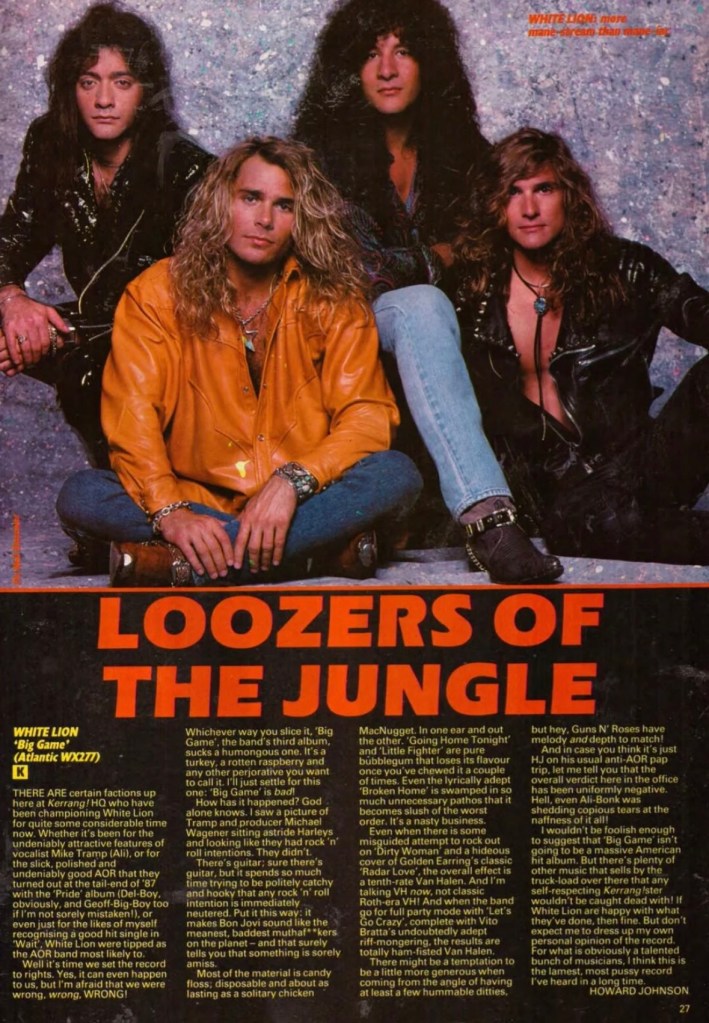
But success doesn’t mean immunity. Flom eventually got caught in the cocaine-fueled dumpster fire that was the ’80s music scene and ended up in rehab. And yet, even in the fog of recovery, the dude came back swinging, signing “Savatage”, “Ratt”, “White Lion”, “Skid Row” and more.

Fast forward: Flom starts Lava Records in 1995. He fakes it ’til he makes it, literally asking around how to run a label while running the label. He signs “Matchbox Twenty” after seeing them bomb a live show but spotting something special in Rob Thomas. He bets on “Kid Rock” when everyone else thought the guy was a joke. No one at MTV wanted to touch him… until they did — and then “Kid Rock” blew the roof off the damn VMAs with “Aerosmith” and “Run-DMC”.

He picked up “Katy Perry” when Columbia was about to drop her. Signed “Lorde” from a SoundCloud link when she had 200 plays and a Facebook page. Oh, and about “Thirty Seconds to Mars”? Everyone told him it was a Jared Leto vanity project. But when he saw Leto turn down a Clint Eastwood film to stay on tour, Flom thought, “That’s more rock and roll than anything I’ve seen in years.”

Every time someone said no, Flom found a way to make it a hell yes. He wasn’t trying to be the tastemaker, he let the fans decide what was great and then fought like hell to bring that to the masses.

Along the way, he helped launch “Hootie & The Blowfish”, “Jewel”, “Simple Plan”, “The Corrs”, “The Blue Man Group”, “Black Veil Brides”, “Greta Van Fleet”, the list reads like a damn Spotify nostalgia playlist.

In short: Jason Flom didn’t just sign bands, he bet on outcasts, longshots, weirdos, and artists with heart. And yeah, he fumbled, got knocked down, got high (a lot), got sober, and kept swinging. The guy helped shape the soundtrack of millions of people’s lives not by chasing trends but by giving a fuck about what actually mattered passion, authenticity, and good fucking music.

Not bad for a dude who was almost a failed wannabe rock star, right?

His mum, who had no degree or background in education, started a school called “The Gateway School”so her son could go to school. He now has a Ph.D. in Psychometrics, the Psychology of Statistics. The Gateway School is now known as the best school for children with difficulties. Try to do what you want to do and try to make the world a better place.

Twisted Sister story.

Randy from Zebra said to Flom that Twisted Sister is the greatest live band ever. So Flom goes to watch them. Twisted Sister is headlining, and Zebra is opening for them. Flom found this odd as Zebra had a record deal and Twisted Sister didn’t. 3000 kids on a Wednesday night for $6 a head.

He was sold as Doug told him that his opinion is secondary compared to the public’s opinion. He walked into Doug’s office the next day and told him he found the next big act. Morris wasn’t interested because TS was considered a joke in the music business. Flom went back to Morris’s office and every time he did, he was told to get out of the office. The debut album “Under The Blade” on Secret was still selling and they were one of the best attended live acts.

At a A&R meeting designed to get the label back in the Top 10 charts as they had a lean year, Morris even mentioned to Flom that if he mentions the name Twisted Sister again, he will never work for Atlantic again. Shortly after that, Flom saw Phil Carson, who was the head of the English division of Atlantic Records and gave him a wealth of material he had amassed on the band, plus a tape of their Secret album. Carson at that point had been in the game for a while, signing acts like AC/DC and Yes amongst other acts. Carson watched TS perform live and signed them.

As for the folder that Flom gave him, it went straight in the bin as Carson had no idea who this young punk was. But synchronicity and coincidence were in play here as TS was opening for an act that Carson went to watch. Morris could have vetoed the whole project, but he still released “You Can’t Stop Rock N Roll” as a favor to Carson, however there was no marketing budget, however Flom was doing a bit of marketing on the side for the band. The record was selling on fumes as Flom puts it.

Morris then called Flom later to tell him he was right and that Atlantic would make a big thing out of this band. Morris had the vision to use Tom Werman to get Marty Callner to direct the videos. I think Dee had a different version here, however it doesn’t really matter in the end, because the album “Stay Hungry” and the clips, “We’re Not Gonna Take It” and “I Wanna Rock” are iconic.

Flom couldn’t understand why they didn’t want to use Werman again for the next record “Come Out And Play” and not long after that it broke up. Dee goes into it in detail in his book and Mark The Animal Mendoza has mentioned his hatred of Werman in various interviews.

Flom at this stage was a victim of the excess of the times and entered rehab. But before he entered rehab, he signed Savatage.

Flom was also involved in getting Ratt to sign to Atlantic Records in 1983 with “Out Of The Cellar” being the first release on Atlantic for them and also White Lion in 1987 for the “Pride” album however they are not mentioned during the podcast.

Once he got out of rehab, he had some projects that didn’t do much and then he signed Skid Row.

An agent brought him Stone Temple Pilots and he signed them. Other acts included Hootie And The Blowfish and Jewel. He told a story of watching Jewel play at a coffee shop with 5 people watching and the coffee machine making cappuccinos and then a few months later, he was back there with 300 people watching and everyone being mesmerized by her.

In 1995, it all evolved into Lava Records, his own label after he turned down an opportunity to resurrect Atco Records. Flom reckons he was set up to fail. He was asking for advice, faking it until he made it.

He had people out there that were brining him good bands. A rep brought him a band called Tabatha’s Secret and he was given four songs. Flom wasn’t convinced. The rep said to listen to 3am again, and again Flom wasn’t convinced. So he want to watch em, and they were terrible, not even in tune and no one was even paying attention to em, but he felt there was something special about Rob Thomas so he signed them. Hollywood Records offered to triple the offer from Lava, however Thomas stayed to Flom. And the debut Matchbox Twenty album went crazy.

Flom and Thomas debated if the first single should be “Real World” or “Long Day”. They settled on “Long Day” and on the strength of that single, the album moved 100K units. Then a radio station in a different city started to play “Push” and the album started to sell like crazy in that city. Flom went back to the band and said this is your next single and the band said no, they wanted “Real World”, but Flom remembered the words of Doug Morris, “what we think is good is nothing compared to what the public thinks”.

And another rep brought him Kid Rock. Kid Rock had three albums before this and all three failed. He was seen as damaged goods. Flom watched him live and they had a meet. Kid Rock said he will deliver two songs to him. Upon hearing the songs, Flom called Kid Rock and said to him, what do you want, Kid Rock said I want $300K sign on and so many percentage points on royalties. Flom said done.

The soundtrack of a lot of people’s lives was possible because of Jasom Flom.

Standard