Copyright, Music, My Stories

Streaming

“Gone are the days of Top 40, it’s now the Top 43,000,”

Daniel Ek

Those 43,000 artists account for the top 10% of the streams on the service. Last year it was a Top 30,000. As the user base grows on streaming services so does the fragmentation. And if artists are thinking that they will dominate in the same way that artists dominated in the MTV monoculture, then they need a mind reset.

“The real thing is that there are more relationships being formed to more artists”

Discovery is happening. You can start off listening to Metallica and end up becoming a fan of a Swedish Rock band in the months ahead. For a consumer, streaming services are enablers, as long as the music of the artist you want to hear is on there.

But there are a limited set of artists as Ek puts it, that are negative.

“Obviously, some artists that used to do well in the past may not do well in this future landscape, where you can’t record music once every three to four years and think that’s going to be enough…

The artists today that are making it realise that it’s about creating a continuous engagement with their fans. It is about putting the work in, about the storytelling around the album, and about keeping a continuous dialogue with your fans.”

I know the album cycle works for a lot of people, because its quantifiable. Release an album and go on tour. Vandenberg released their best album and they can’t tour on it because of COVID-19.

So what’s next for the band to keep the engagement going?

Acoustic releases, some covers of their old stuff or from other bands or another new track in between.

Keep the engagement going. Because that 40,000 artists who make up the top 10% of streamers, will become 50,000 in the next year and then 60,000 and then 70,000.

“I feel, really, that the ones that aren’t doing well in streaming are predominantly people who want to release music the way it used to be released”

That’s fine to do so if you’re happy with that old school release cycle and there is a percentage of your fan base which is also okay with it. But with so much choice, fan devotion to a single artist is not as strong as it was in the past. And even in the past, when the record labels controlled everything pre-Napster, people had hundreds of records and from different artists.

Then again, Taylor Swift’s ‘Folklore’ had 98 million streams in a day. A Spotify streaming record.

The good old day of sales are non-existent and with Copyright terms lasting forever, the person or corporation who holds the rights, will get paid forever for people listening.

This is just on Spotify. The other streaming providers will also have similar numbers and will be paying the rights holders similar amounts for their Top 40,000 artists who make up 10% of the most streamed tracks.

And music is a lottery. No one knows what will stick and break through. Simple economic theory entails that no one is entitled to make a living in music, the same way that every person who sets out to be a professional sports player, doesn’t get there. There are limits to what succeeds and what doesn’t. But at least in music, there is no barrier and everyone can play.

So start playing.

Standard
Copyright, Music, My Stories, Stupidity

Snider and Palmer

It was Al Pitrelli, his Widowmaker guitarist that pointed out to him (in the early 90s) that every time he heard “We’re Not Gonna Take It” back in the 80’s, it reminded him of the Christmas song “O Come All Ye Faithful”.

Then of course, Twisted Sister did a Christmas album In the two thousands and they re-did the “We’re Not Gonna Take It” music with the words of “O Come All Ye Faithful”.

So fast forward a decade and bit later from that Christmas album and you have one of the most hated business people in Australia, deciding that his “Australia’s Not Gonna Cop It” is based on the Christmas Carol.

Umm no.

It’s based on “We’re Not Gonna Take It”.

But like other business people in the world, he lies. Clive Palmer just continues to lie. Nothing is his fault, he can’t admit any wrong doing nor does he know how to apologise. But to lie and not pay his workers, god damn it, Palmer is good at it. Very good at it.

And I hate Copyright lawsuits, but I’m all in with the Snider camp on this one, because Palmer’s camp asked to use the song from Twisted Sister but they didn’t want to pay the license fee for it. So it all comes down to Palmer not paying for something, again. Sort of like how he didn’t pay his workers.

It’s a showdown in August.

Standard
A to Z of Making It, Copyright, Music, My Stories

Friday Rambles

Another Dokken track was released today from the album is known as “The Lost Tapes” which is more or less modern day re-recordings of these songs, instead of the original tracks re-mixed and mastered.

So far it’s a zero from two strike rate.

And of course, Don Dokken’s ex band mate, is also Re-Imagining his early works, in this case, George Lynch is redoing “Wicked Sensation”. Its him and Oni Logan, with the help of Robbie Crane on bass and Brian Tichy on drums.

“The term ‘re-record’ makes me cringe, this is not that. We re-invented the wheel on this record. It’s really a different animal than the original! Fans won’t be disappointed!”
George Lynch

Interesting to hear what reinvention he’s talking about. I remember a Lynch Mob album called “Revolution” in which Lynch reinvented some Dokken songs with different grooves. It’s not something which I have played a lot since I purchased it.

Since I have every single thing Lynch has released on my shelf, I would probably buy this, but I will wait to hear it on Spotify.

You see, when a different artist does a song from another artist, it’s known as a cover, but for some reason, when the same artist re-does their earlier stuff, it was always seen as a forgery.

The only time a forgery was done to an excellent standard was with the 1987 self-titled Whitesnake album. John Kalodner cracked that whip and David Coverdale along with Sykes on “Crying In The Rain” and Sykes/Vandenberg on “Here I Go Again” or Dan Tuff on the radio friendly version delivered in gold. Because two years later, the Steve Vai version of “Fool For Your Loving” didn’t cut it.

Then again, every artist from the 80’s who has a deal with Frontiers is encouraged to re-record their successful 80’s music for the label.

Even Def Leppard did it them selves while they had that ongoing dispute with their label over what they should pay the band to have their music on digital services.

And in relation to payments and digital services, Don Henley wants the U.S Government to pass laws so that anyone who plays his music, pays money for the use of his songs.

Regardless.

He mentioned how his label, Universal has over 60 people patrolling the internet to take down unauthorised uses of his songs. On occasions these automated takedowns, take down legitimate uses as well.

And I’m thinking, their wages are paid by the monies the label receives from exploiting record music. Shouldn’t those monies be paid to the artists who create the music.

Then there is the other side of the debate, people who actually use music from artists to promote the artists music on YouTube.

What is fair use, and when should their popular YouTube video earnings be handed over to the label?

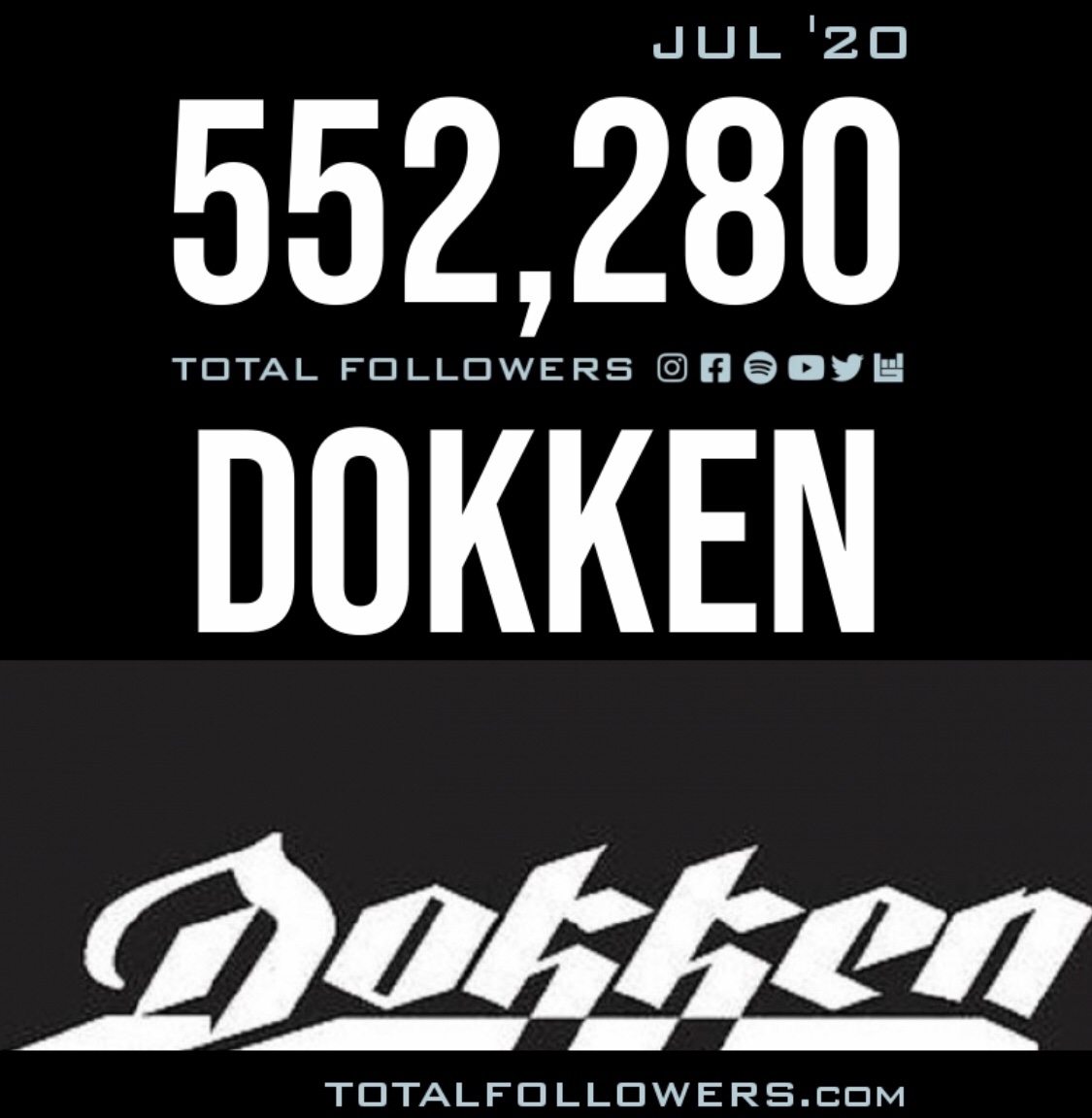
A site I follow, made mention of another site called totalfollowers.com, which I checked out. Since I was writing about Dokken, Lynch Mob And Def Leppard, I thought I should check out their reach.

I typed in Lynch Mob and there are 240,313 followers.

I typed in Dokken and there are 552,280 followers.

I typed in Def Leppard and there are 11,571,109 followers.

I guess that’s the difference between having diamond certifications to platinum certifications to no certification.

Standard
A to Z of Making It, Copyright, Music, My Stories, Unsung Heroes

Volbeat

I’ve been following a site called “Stream N Destroy” for a while now and I dig these emails, full of numbers about stream counts, YouTube views and sales for artists in the metal and rock genre. I subscribe to the free tier and of course there is a paid tier which goes even more in depth.

So in the current email, which can be found here, there is a mention of VOLBEAT and how their 2013 album “Outlaw Gentlemen & Shady Ladies“ is certified Gold.

And that’s important to note, because he music from artists used to take a while to break through. Black Sabbath didn’t set the world on fire with sales of their 70’s albums.

  • “Black Sabbath” released in 1970 was certified Gold a year later in 1971, and then Platinum in 1986.
  • “Paranoid” released in 1971 was certified Gold that same year and then Platinum in 1986 and by 1995 it was 4x Platinum.
  • “Master Of Reality” released in 1971 was certified Gold that same year and by 2001 it was 2x Platinum.
  • “Volume IV” released in 1972 was certified Gold that same year and then in 1986 it was certified Platinum.
  • “Sabbath Bloody Sabbath” released in 1973 was certified Gold in 1974 and Platinum in 1986.
  • “Sabotage” released in 1975 was certified Gold in 1997.
  • “Technical Ecstasy” released in 1976 was certified Gold in 1997.
  • “Never Say Die” released in 1978 was certified Gold in 1997.

“Ride The Lightning” from Metallica took two years to get a Gold certification while “Kill Em All” took six years to get a Gold certification.

For Volbeat, this is a 7 year case.

And it doesn’t look like they will disappear anytime soon. Their 2012 album, “Beyond Hell, Above Heaven” was certified Gold in 2016, 4 years since its release. Their streaming numbers are high, although Queen takes the trophy this week, with 15.9 million streams of “Bohemian Rhapsody”. Not bad for a track released in 1975.

Their current album, is still selling, it’s up to 45,500 sales in the U.S. It’s anaemic compared to the past, but then again, how many of the past artists that had big sales in the 80’s are still around and selling these kind of numbers today. Hell, the 80s artists couldn’t even get these numbers in the 90’s.

Their song “Leviathan” is also in the Billboard charts.

People are still interested in the band.

It’s a longer road than before, but it’s a road still worth taking. You just need to be patient and you will need to have another line of income to pay the bills. For a lot of artists, this was the road, but that will change.

The labels don’t like it because they got used to making a quick buck, especially when MTV turned culture into a monoculture, the labels wanted every release to be an instant pay day.

And when it wasn’t, heads rolled.

Artists would get dropped and A&R department heads would also disappear. Because the labels didn’t want to waste time on artist development. And today, that is even more prevalent.

In relation to the weekly streams, while Queen is on top of the world, “Thunderstruck” from AC/DC is sitting at 11.8 million streams for the week.

And what I took out of it all, is that the big streaming songs (apart from some Five Finger Death Punch, Avenged Sevenfold and Disturbed) are all pre 2006, with “Stairway To Heaven” the oldest track at 1971.

Music lives on for a long time, hence the reason why the labels wanted Copyright terms to last 70 years after the creators death. And that same rule that they wanted is also getting em undone in court cases from the heirs of the artists.

Keep creating because you’ll never know when it’s time for your creation to take over the world.

Standard
Copyright, Derivative Works, Influenced, Music, My Stories, Stupidity

Little Wing and Catch A Rainbow

Progress Is Derivative.

I always say it. Especially when it comes to music. It’s always a new take on an old sound with some small changes to the progression.

I knew when I heard “Catch A Rainbow” from Rainbow that I had heard the song before. And I was thinking of Skid Row when I heard it, because their take on a Jimi Hendrix song was fresh in my mind at the time.

The origins of “Little Wing” go back even further to a 1966 recording of “(My Girl) She’s a Fox”, an R&B song which features Hendrix playing a Curtis Mayfield-influenced guitar accompaniment.

It’s all derivative and cyclical. Hendrix toured with Mayfield and learnt from him and then used some of the techniques that Mayfield used, like the rhythmic fills on the chords to orchestrate songs like “Little Wing” and “The Wind Cries Mary”.

To call Blackmore a copyist is wrong.

To call Dio a copyist is wrong.

To call Hendrix a copyist is also wrong.

And to see em all as super original and free from influences is also wrong.

To see Mayfield as super original is also wrong.

Everyone learns from someone or from some song. It’s why we start off playing covers. We are all influenced.

However people would like you to believe that they are original and free from influences when they bring up suits to the courts.

Did Tom Petty deserve a lyrical credit to a Sam Smith song?

Did Iron Maiden need to settle with a person who didn’t create anything and just managed an artist?

Standard
Copyright, Music, My Stories, Stupidity

Copyright Fund

“I don’t really know what it means to choose a hit. I just like writing songs”
Ed Sheeran

And he keeps getting sued for it, because the greedy heirs and greedy lawyers are always looking at sneaky ways to get their slice of the hit machine pie.

“People prefer paintings that they’ve seen before. Audiences like art that gives them the jolt of meaning that often comes from an inkling of recognition.”
From the book, “Hit Makers” by Derek Thomspon

Everything that we listen to or watch or read has come before. Its similar with small changes here and there.

That’s how it works.

It’s unsettling how the heirs, along with their lawyers, spin the story that the works of the dead creators is super original and free from influence.

Which is a load of BS.

Because;

“In 2012, Spanish researchers released a study that looked at 464,411 popular recordings around the world between 1955 and 2010 and found the difference between new hits and old hits wasn’t more complicated chord structures. Instead, it was new instrumentation bringing a fresh sound to “common harmonic progressions.”
From the book, “Hit Makers” by Derek Thomspon

A new take on an old sound.

Copyright needs to expire on death.

Once the creator is dead, the copyright ends. Copyright wasn’t created to benefit the heirs of the creator or a manager or a corporation or anyone else except the creator so they could create even more while holding an interim monopoly.

That’s it, problem solved.

Standard
Copyright, Derivative Works, Music, My Stories, Stupidity, Treating Fans Like Shit

Hallowed Copyright

Remember that whole “Hallowed Be Thy Name” and “The Nomad” suit filed by retired band manager Barry McKay against Iron Maiden and Steve Harris.

Remember how McKay stated it is all about intellectual property rights and how these IP rights need to be protected from blatant copying while the other side stated that music is all about inspiration and influences and that McKay never actually wrote anything and is a serial litigant.

Well, these IP rights that McKay was championing for protection, all revolve around a fee to be paid. If you haven’t read the stories, you can read em at Loudwire or Blabbermouth.

Remember when any rights to intellectual property ceased when the creator died (provided they still had a right at the time of death). Well, the corporations who held the copyrights to a lot of these works pushed really hard to get laws changed in the 70’s to last the life of the artist plus another 70 years, so what we have now is people who really contribute nothing to culture, locking up culture for a generation and getting paid in the process.

But there was a side in the Government who actually cared about culture, the public domain and were against Government granted monopolies, so they put in a clause that allowed the actual creators to get their rights back after 35 years. But, the labels and the publishing companies who control the rights don’t want to let go of the works as it diminishes their power.

Remember John Waite, from The Babys, Bad English and his work as a solo artist. Well, he wanted his songs back, Universal Music Group said “No”, your works are created under a “works for hire agreement”, John Waite said, “no chance in hell are the songs created under a works for hire agreement” and off to court they went.

So how did it all come to this?

You need to remember that any aspiring artist, had/have/has no bargaining power when for negotiating and signing contracts. If they wanted to get their music out there (pre internet), they more or less had to give away their copyright in their works as part of the contract to get their music out there and monetised.

Then, when an artistic work turns out to be a “hit,” the majority of the royalties goes to the organisation who holds the rights to the works rather than to the artist who created them.

But this “ownership of copyright” by the organisation was meant to be limited. And if the artists wished, they could reclaim their rights. Some artists used the threat of “termination rights” as a tool to negotiate higher royalty rates and advance payments.

But as artists grew popular and they realised they could make some money, they created loan out companies, which is basically a business entity used by the entertainment and sports industries in the US, in which the creator is the ’employee’ whose services are loaned out by the corporate body. The corporation is used as a means to reduce their personal liability, protect their assets and exploit taxation advantages.

And the courts have determined that any rights granted to the labels from the loan out company cannot be terminated, only the rights granted by the actual creator themselves.

For example, John Waite created a loan out company called Heavy Waite Inc. So if he signed a contract to give his copyrights to a label via the loan out company, these rights cannot be terminated. Only the rights that John Waite himself gave up.

It’s pretty fucking stupid if you ask me, but nothing surprises me when lawyers get involved and try to get these termination suits booted on technicalities.

And check out this article for some insight on copyrights from the one and only Desmond Child. Here is the snippet in case you don’t click on the link;

Have you retained your copyrights?

Well, tragically, I fell into some lean times in the late ’90s. I had moved to Miami – we’d fled LA after the [1992] earthquake and we were picking up the pieces.

At that time I got an offer for my catalogue, and I sold my song writing and publishing share to Polygram [now Universal Music Group] – and it was a mistake. I retained my song writing performance rights, and that’s how I know how big a mistake it was, and how much I sold myself short. They made their money back x 20.

I was pressured by people around me to sell. Especially my father, who had grown up in the depression. When I told him the amount, he said, ‘Grab the money, you’ll write other songs, grab the money.’

Also, my lawyers told me, ‘Don’t worry, you get your songs back after 35 years,’ but that’s not true. You don’t get them back for the whole world, you get them back for the US only. And you don’t get your songs back for the versions that made them hits, you only get them back for the new versions – versions made after you sold.

When I found out those two things, it was like two buckets of ice water being poured over me.

The people doing the deal for me were so keen to get their percentages that they didn’t explain these things to me. Had I known, I wouldn’t have signed the deal and I would have been in a much better financial position.

And that my friends is how far Copyright has evolved, where people who create nothing of value get paid and everyone is trying their best to lead the artists astray so they can get paid.

It has nothing to do with intellectual property rights or an incentive to create.

Standard
Copyright, Music, My Stories, Piracy, Stupidity

Silliness

I pay for Prime Video, but I had to download Bosch S6 from other sources to watch it, as it’s not available in Australia at the moment, even though it was released in the U.S on April 17, 2020.

What the.

I paid for a PS4 game disc (the NBA one) and then the kids had to spend three hours downloading something from the PS4 web store before they could even play it. It sure takes the joy out of it. There is no way that you can just buy a game and play it straight away.

The game makers are using a legally purchased disc as a piracy protection measure. No wonder people download games illegally on jailbroken consoles as well. Look at the work they do to get around these measures.

Remember DRM (Digital Rights Management) platform Denuvo. They got a lot of game makers to sign on and pay huge amounts for its unbreakable anti-piracy software.

The game makers put this DRM on their games and then they released the games. The unbreakable DRM was cracked on the day the games were released. But some game makers got even more creative by putting on another layer of DRM to some of their games, which basically made the legally purchased game unplayable for the consumer.

What a great way to treat a law abiding customer?

But piracy is still an issue.

Yeah right. More like dumb organisations are an issue.

The major labels tried this exercise back in 2003 to 2005. They even went further. Those legally purchased discs had malware on them and if you put the disc into your computer it would install malware on your hard drive, which led to a class action lawsuit against Sony and the other labels.

I was catching up on some movies I purchased a while back. So I put on a legally purchased DVD or Blu-ray (in this case it was the movie “Children Of Men”) and I am confronted by those stealing movie ads. Remember those.

They would say, you wouldn’t steal a car so don’t steal movies because piracy is a crime. So the movie studios are creatively trying to link the downloading of copies to actually stealing a physical product.

And I can’t skip it. I need to watch it.

So this is the punishment that people get for doing the right thing?

No wonder people go and download illegally as the ads are removed and as soon as you press play, you get to watch. No advertisements and no copyright rules on a black screen.

Standard
Copyright, Music, My Stories

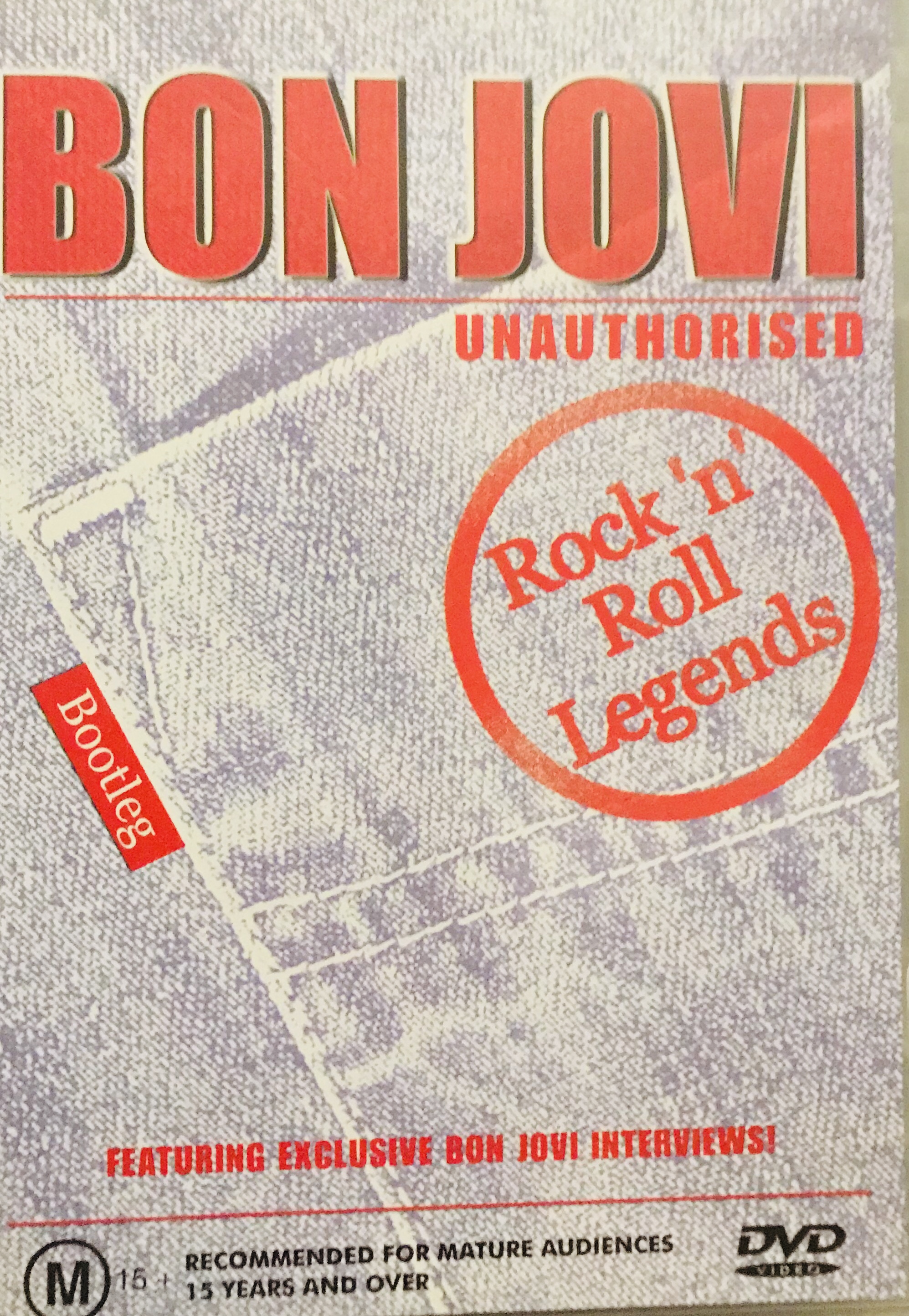
The Record Vault – Bon Jovi Unauthorised – Rock ‘N’ Roll Legends

This is what happens when someone thinks they can make a quick buck, by putting together various interviews of the band from various sources, having no music whatsoever because of licensing payments and if they do have music they keep it to less than 2 seconds as they can argue “fair use” on that one.
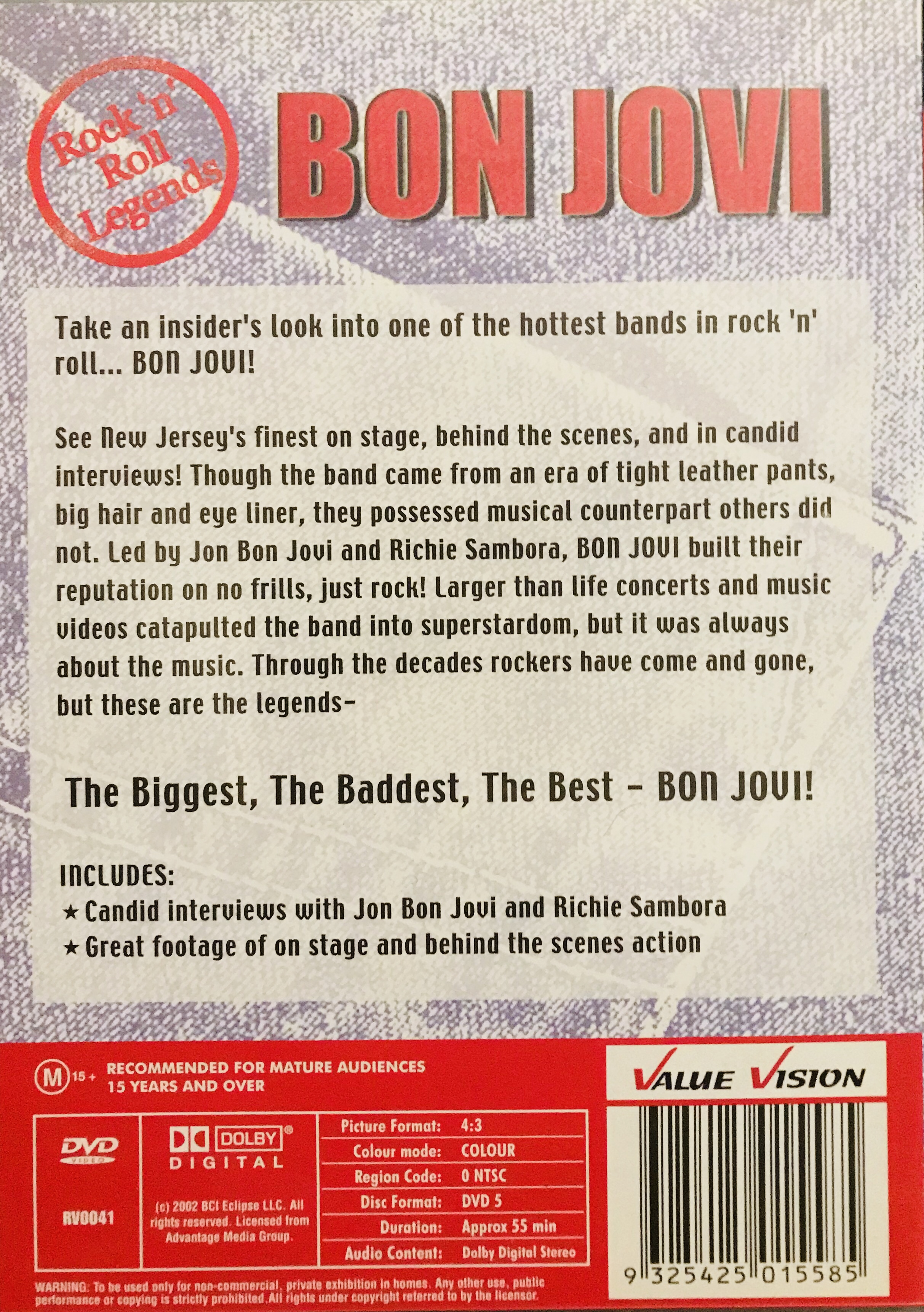
“Fair Use” is one of those cool Copyright rules which I actually like, because it allows people to use Copyrighted material for a very short period (like no more than 5 seconds) for their documentary or news story to prove their point.

But the Publishers and Labels who hold the copyrights for the content, keep telling the world that the creators hate it (even though it’s really the corporations who hate it), because their corporation view is, if it’s used, even for a second, someone should pay for it.

Actually, Don Henley also supports the Corporations view as he wants to censor the internet because of Tik-Tok.

Standard
Copyright, Derivative Works, Influenced, Music, My Stories, Stupidity

Blues For Copyright

Here is a great post about the blues and how the genre was appropriated by others and on many occasions the original creator is not even credited.

The 60s blues explosion from the UK happened because the artists took the blues standards from the 30s and made em their own (either by building on an existing work or by just saying that they wrote the song without any credit to the creator).

Remember that histories are written by the winners.

I watched a documentary on “The Australian Sound” and there is no mention of the black blues musicians who influenced the white musicians. It just goes back to the white blues musicians from the 60s and it moves forward from there.

Music is all about influence and experience. What you hear, what you read, see, smell, taste and live, all end up in the song.

Similar sounding songs is big business for lawyers. When you have an artist covering another artists songs and claiming that songs as their own, well, that’s morally wrong and also big business for lawyers.

It’s all because Copyright lasts 70 years after the death of the creator. Remember that Copyright was designed to give the creator a brief monopoly on their works so they could make money and as a by product, an incentive to create more works.

These terms originally were 14 years to 28 years. And if the creator passed while they still had a copyright it expired on death and it all went to the public domain for it to be built on and reused.

So what incentive is there if the creator is dead.

Standard