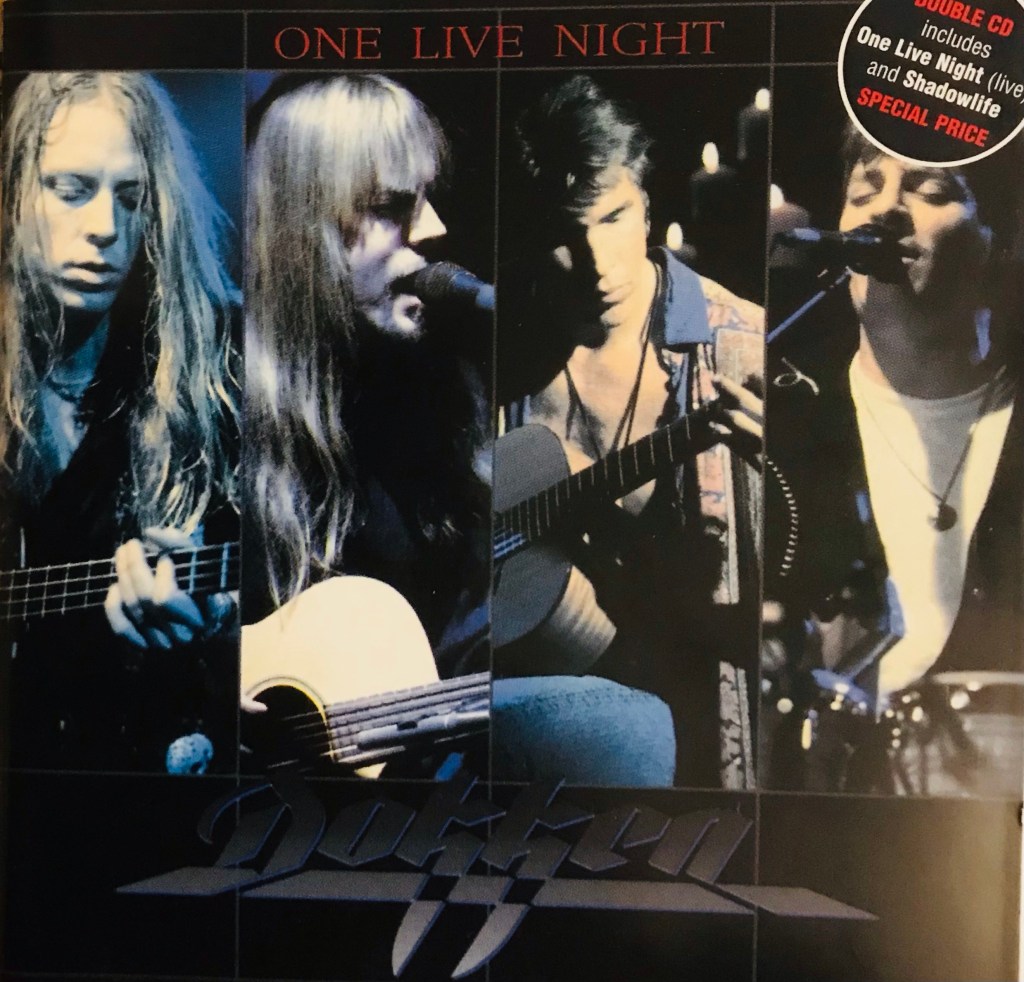
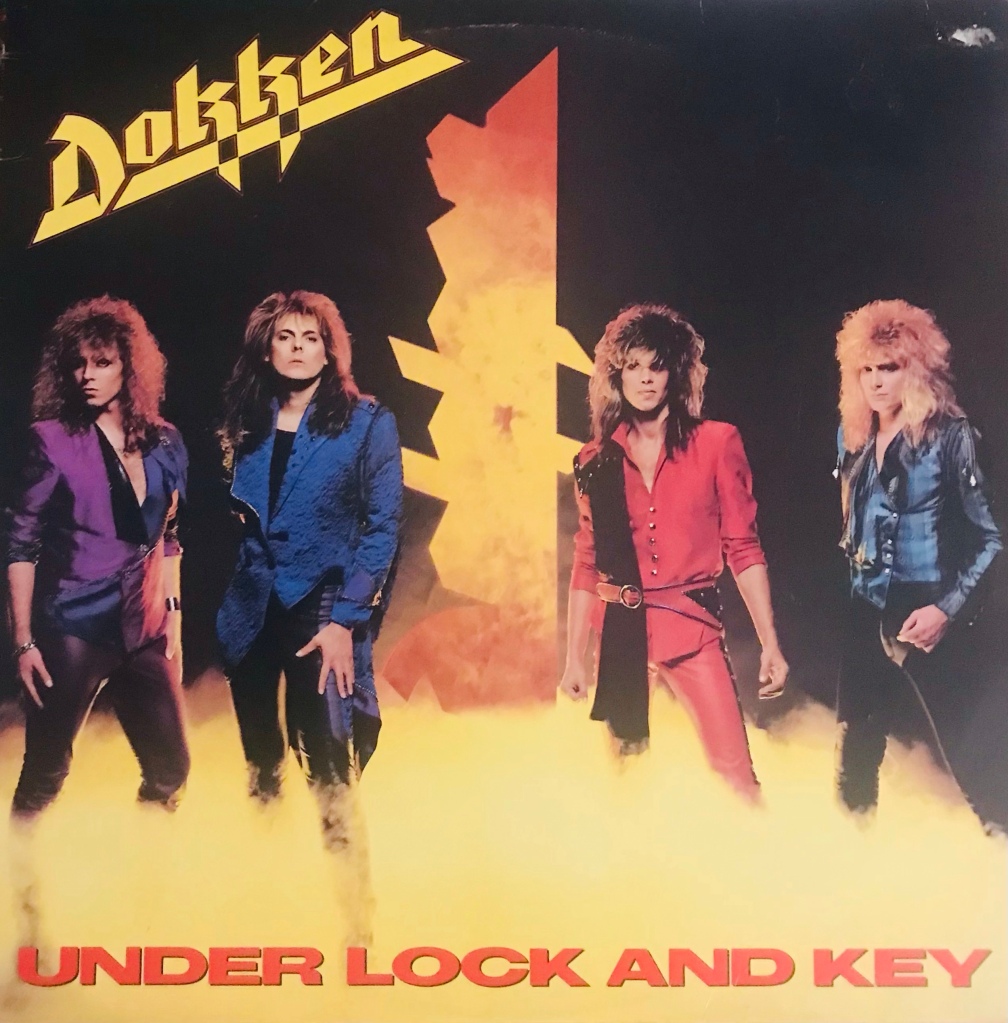
What do you do when you want to do an “unplugged” album but MTV doesn’t care for you?
In Dokken’s case, it’s simple.
Do a few unplugged shows, record em and release it. Now this CD was originally released for the Japanese market. It was successful there and it got an international release in 1995.
My CD version is a double and it was released in 1999 in Australia with the album “Shadowlife” attached to it.
But this review will be solely for the “One Live Night” album. “Shadowlife” is up next.
In the CD booklet, you open it up and see the cover to the Shadowlife album and lyrics to the live Album. It’s bizarre to say the least and I already had the “Shadowlife” album purchased separately.
Now it’s not all unplugged as Lynch does plug in for his solos.
Into the Fire
No one in the audience had any idea that the opening song was “Into The Fire” based on the opening strummed chords.
But when the arpeggios started, it was recognizable and the audience was on board.
I wasn’t sold on the plugged in lead break. I wanted Lynch to recreate a lead suitable for an unplugged setting.
“Who would have thought?”, said Don Dokken at the end of the song.
Yes, who would have thought.
Unchain The Night
Great song all round.
The Intro is excellent and I like the sinister acoustic verse riff.
But…
The electric leads over the verse riff detract instead of enhancing.
How powerful does the Chorus sound in this setting?
And the outro.
They are strumming Em to D to C and back to D and the vocal melody is hooky. The electric guitar comes in for the outro lead and it works. It’s restrained, but I still would have preferred an acoustic lead.
The Maze
Don introduces this song as one that Mr John Kalodner selected. For those that don’t know, Kalodner knew how to spot a hit.
But the 90s era was a different beast to the 80s era and a hit was harder to find especially when every promotion avenue ignored bands like Dokken.
Nothing Left To Say
Like the album version and Lynch delivers an acoustic lead like the album.
Perfect.
From The Beginning
The ELP cover works well here.
Tooth And Nail
They’ve rearranged it into a blues rock tune, almost Bad Company like with Wild Mick Brown on vocals who sounds like Jon Oliva from Savatage.
And it works.
But… why the lyric lead. An acoustic lead would have served this rendition well.
Just Got Lucky
You get to hear how poppy the Chorus vocal melody is in this setting.
I Will Remember
An instrumental from Lynch’s solo album “Sacred Groove”. It’s like a ballad with a lot of melodies and some super fast shred. A nice intermission.
Alone Again
How do you get the wall of electric sounds to sound so serene and haunting without losing the essence of the song?
They got it right on this one.
I like how the piano is the dominant instrument this time around. When you go unplugged, you need to be creative.
In My Dreams
This song works in any setting. The melodies are that anthemic it doesn’t matter if there distortion or acoustics.
Nowhere Man
I would have preferred a few Dokken cuts but everyone was trying to see if they could have a hit like Tesla and “Signs”.
It’s Not Love
It’s got that blues rock 70s vibe in the Intro. And the crowd has no idea the song title.
Then someone (I think its Mick Brown) yells 1, 2, 3 and 4 and the riff starts.
A perfect closer.
And no songs from “Back For The Attack” are on it. I guess they have their reasons.
This is the sound of Dokken fighting tooth and nail to stay alive in a hostile market place.
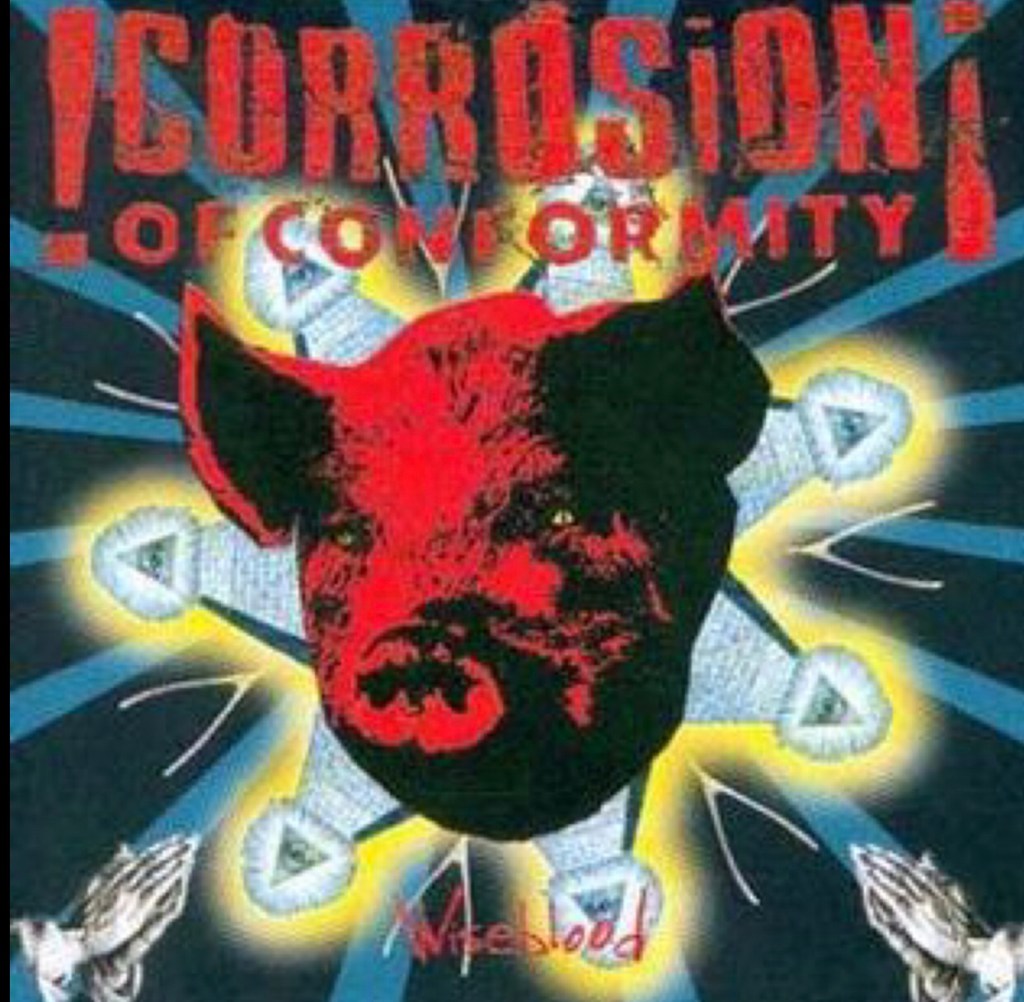
“Wiseblood” came out in 1996. The band for the album was Pepper Keenan on lead vocals/rhythm guitar, Woody Weatherman on lead guitar, Mike Dean on bass guitar and Reed Mullin on drums.
It kicks off with the excellent titled “King Of The Rotten”.
The riffs are down-tuned, groovy and bluesy. The vocals on this one are very James Hetfield influenced with a Layne Staley/Jerry Cantrell style Chorus.
“Long Whip / Big America” reminds of ZZ Top “La Grange” era. It’s got that spirit.
Saw the news today, some D.C. suit trying to break away, said he lost another million just another old man trying to pass the buck with a dirty hand good thing he knows his bible
Man, does anything change when it comes to politics, corruption and money. The same shit happening in 1996 happened before and after.
And when it all goes to hell, they turn to God. How many criminals have said “I’m sorry your honor for stealing millions, but I have found God and I’m a good Christian now.”
“Wiseblood” and “Goodbye Windows” bring the Southern Rock vibe. It also sounds like Zakk Wylde was listening because I feel that Black Label Society took this sound.
I’ve seen them devils pound our bible You saints and sinners are both my rival
Can a person live a life without the influence of religion and pressure from society to conform?
How good is that harmony solo section in “Goodbye Windows” from the 3.46 minute mark, with the vocals over it?
Past regrets and future fears Turns a boy to a man sooner than planned All the same, the boy remains Even though he’s free, he can’t fly with these heavy chains
There is a lot of self-assessment happening on this album.
What does it mean to be free in democracy?
Its basic meaning is “not under the control or in the power of another; able to act or be done as one wishes”.
Do you live a life that meets the criteria in the definition?
And the bluesy Sabbath like tunes continue, along with the excellent song titles, like “Born Again For The Last Time”, “Drowning In A Daydream” and “The Snake Has No Head”.
When the bones that you own have long been dusted You realize who you’re not supposed to be
The above lyric is from “Born Again For The Last Time”. Its only when we get older, we realise how much time we wasted being someone else.
But the body fills with greed and we spill when in need And all the slaves are on probation growing fat in a comfortable nation
The above lyric of from “The Snake Has No Head”. They are referencing the same snake that’s on the cover of the Metallica self-titled “Black” album.
“The Door” and “Man Or Ash” are cuts that would not be out of place on a Metallica “Load” or “Reload” album. And if the vocalist sounds familiar on “Man Or Ash”, it should, it’s none other than James Hetfield.
Then there is the excellent titled “Redemption City”.
Simple words remind me Cluttered room haunts me
It’s never easy being alone, with your thoughts and your vices.
“Fuel” is a thrash-a-thon and I had to keep telling my friends at the time that it’s not a cover of the other “Fuel” that appeared on “Reload” even though this one came out before.
And after “Wiseblood”, the band got dropped from Columbia Records because it didn’t meet the commercial expectations. And it was strange to read that, because the band was still at a creative high.
Lucky for them, Sanctuary Records picked em up otherwise they couldn’t participate in the recording business unless they went the “self-release” route, which no artist did in 1996.
By now, Dio’s glorious 80’s highs ceased to be. He was already struggling during the “Dream Evil” and “Lock Up The Wolves” eras. Even though fans like those albums, they didn’t translate commercially and the label was not happy.
His return to Black Sabbath was inevitable and with “Dehumanizer”, they released a critically acclaimed album, which the hard core Dio and Sabbath audience liked, but the same old issues of playing second fiddle to Ozzy reared its head again and Dio left, as he didn’t want to be an opening act to Ozzy.
“Strange Highways” came out in 1993 and it was well received by the hard core fans, but there wasn’t a mainstream market for 90’s Dio, let alone a 90’s Dio trying to sound relevant.
My mate, “Nick The Stick” (6ft 4 of just bones) worshipped at the altar of Dio and he burnt me a copy of this. I didn’t listen to it right away, because I had lost interest in Dio at this point in time.
Apart from Ronnie James Dio on vocals, the band is Tracy Grijalva (a.k.a. Tracy G) on guitars, Jeff Pilson on bass, Vinny Appice on drums and Scott Warren on keys.
Most reviews I have read cited this album as carrying grunge like influences, however, it is more groove metal (think Pantera) and progressive metal than a hard rock artist attempting to add Grunge influences to their sound.
And most artists who had successful careers in the 80’s didn’t really know what metal sounded like in the 90’s.
In the 80’s everything with a distorted guitar was classed as metal. Then by the mid 80’s, different genres started to come out. By the 90’s, bands advertised as metal didn’t even sing in clean tone anymore. Suddenly Black Sabbath sounded like a pop band compared to the metal bands of the 90’s, but in the 70’s Sabbath was seen as an “extreme” metal act.
On “Angry Machines”, there isn’t a perfect song or a great song or a good song. There are good bits in the songs.
“Institutional Man”
Written by Appice, Dio and Tracy G. Dio sounds uninspired and tired. But the biggest problem is the lack of good riffs.
In saying that, the verse riff would sink “Sad But True” for heaviness and in between the verses, there is this chromatic riff which came from the fingers of Iommi and the song “Buried Alive”.
“Don’t Tell the Kids”
Written by Appice, Dio and Tracy G, it’s speed metal, done in a 90’s Pantera way.
“Black”
Written by Dio, Tracy G, Appice and Jeff Pilson. On my initial first listen, I was ready to press stop. I didn’t like it. It was to atonal.
Hearing it again today, I like it for what it is. A way to keep Dio relevant. It’s got this E7#9 sounding shape in the intro riff which makes it sound almost progressive in its song writing.
Tracy G. shines in the lead department here.
“Hunter of the Heart”
Written by Appice, Dio and Tracy G, this song has potential.
The bass grooves to start it off are worthy, very Sabbath sludge like. When the band crashes in, it’s head banging time. The verse riff’s remind me of songs from the “Dream Evil” album.
“Stay Out of My Mind”
It again showcases Pilson’s strength as a songwriter (he is solely credited), bringing in psychedelic rock and heavy metal influences into this.
And in the middle, it’s almost theatre “Andrew Lloyd Weber” like.
Check out the outro, it’s like “She’s So Heavy” from The Beatles getting a 90’s makeover.
It could have used some editing, but… it is what it is.
“Big Sister”
It starts off with a vocal line that says, “Who controls your mind?”
Written by Dio, Tracy G., Appice and Pilson, this is when Big Brother turns into Big Sister, and you are given a number and another name, while others watch what you do.
If you like Tool, then you will like the Tool like riffs between 3.20 and 3.40.
“Double Monday”
Written by Appice, Dio and Tracy G.
Check out the awesome acoustic guitar mid-section. It’s only 30 seconds long, but totally worth the listening experience.
“Golden Rules”
It starts off eerie like, as “Twinkle Twinkle Little Star” is played on a music box. The song is written by Appice, Dio and Tracy G.
It then has a chugging riff and drum groove which kicks in and I like it.
“Dying in America”
Written by Dio, Tracy G., Appice and Pilson. They delivered a nice piece of groove metal.
“This Is Your Life”
Its written by Dio and Tracy G and it’s more Beatles like. The track remained ignored, only to be noticed after Dio’s death.
If you haven’t heard this album, there is no reason to go out and invest time into it. It’s not classic Dio. People claim he sold out, but he didn’t sell out chasing trends, he just didn’t know what metal was meant to sound like, so he went in and tried to create something different.
P.S.
For an album that did terrible commercially, it put Dio on the road from November 1996 to November 1997. There was a U.S leg, a European leg, another U.S leg, a Canadian leg, a Japanese leg and finally a South American leg.
The venue sizes ranged from 400 people to 3000 people and Dio had quite a few sellouts.
“The thing I will never understand about the management and that tour and the band was that in their insane thinking, the management called a meeting before the tour started and informed the band that Don was gonna be breaking the band up and trying to just hire us as musicians on the band.
Or else, if that didn’t work, we didn’t agree to that, he was just gonna leave, keep the name and kick us out. Before the tour started — literally days before it started.”
The band was unraveling. I was happy to be out there on that stadium tour, but I was totally depressed. I was just miserable. To see your guitar player on stage in front of 100,000 people walk behind his amplifier in the middle of the solo and snort coke, I mean, fuck, man. It drove me crazy. So, that just broke us up. That’s the way it goes. Shit happens.
And drugs or no drugs, this album known as the “Beast From The East” captures a band at the peak of their creativity and mastery of their instruments in 1988.
Unchain The Night
It was a weird choice to open with, especially when the album they were promoting, opened with “Kiss Of Death”.
But.
It was perfect.
After the taped (I think) Intro plays, the band kicks in and all hell is breaking loose. And my speakers are rumbling, because the guitar tone from Lynch is excellent.
Don is sounding good. And I’ve heard the vocals got juiced up later on by Michael Wagener, but hey it still sounds live and I’m all in.
And I still go nuts for the Chorus after the solo. Then there is another solo from Lynch and the Chorus comes back in again.
Tooth And Nail
They play it even faster and I didn’t think it was possible to chuck in fills during the verses at that speed, but Lynch delivers while Pilson and Brown keep it grounded and rocking.
Dream Warriors
The clean tone in the verses. Check it out.
Kiss Of Death
It’s faster than the studio and I like it.
And the solo break. I can listen to it all day long and play air guitar to it.
When Heaven Comes Down
I didn’t expect this to resonate as good as it did.
How heavy does that Intro/Chorus riff sound?
And I still go nuts over the mood they set, with the guitar riff and drum build up just before the solo.
Into The Fire
The clean tone sections sound wicked because Lynch puts bends and legato into his arpeggios.
And I like how the outro is loaded with guitar leads.
Mr Scary
Pilson and Brown need a special mention here for holding down the fort. Great playing. And of course, Lynch excels, coked up or not.
Heaven Sent
I love the bluesy swagger of this one.
The way it starts off with the crowd participation and just high hats, then the clean tone riff and then the beat.
It sounds great on the album and great live especially the improvised lead break. It’s fast and furious and scary.
It’s Not Love
They jam it, they get the crowd to sing along with em and I’m singing along with em as well.
Alone Again
I like how the little Intro flows, it throws a curve ball. Your thinking, is it “Alone Again” or not.
And then it begins.
By the end of it, everyone is singing “alone again without you”.
Just Got Lucky
It sounds full of energy.
Breaking The Chains
I’ve always liked the main riff and there’s no way you can’t enjoy it live.
In My Dreams
It’s powerful live. A great closer.
And I like how they jam out the ending.
Walk Away
The final studio cut.
A fitting title to signal the end of the 80s Dokken era. As the outro played, I didn’t want it to fade out.
By the end of it, the “Beast From The East” (the album, not the recent European snow storm) cemented itself as one of my top 5 live releases behind “Live After Death” and “Tribute”.
And of course, I got in on vinyl first. Then on CD. And then again on CD as part of a box set.
Album number three, released in 1985. “In My Dreams” had MTV circulation, and it pushed the album to a Platinum certification in the U.S.
Neil Kernon and Michael Wagener are on hand to produce, engineer and mix. Don Dokken had a certain fondness to work with Wagener on his vocals. He met Wagener when he did a club tour of Germany in 1979.
Don then got a deal with Carrere Records in 1981 with the songs that Lynch and Dokken wrote and he did the Don Dokken “Breaking The Chains” album.
Fun fact, it was Gaby Hauke Hoffmann aka Deaffy who did the lyrics for those Accept records who got Don the record deal. There was another bass player who didn’t work out and Peter Baltes from Accept took over.
George Lynch and Mick Brown came over to Germany and did their bits and the album was re-released. It did good business in Germany and Cliff Burnstein from Q Prime picked the album up on import and liked it.
Burnstein then signed Don to a management deal. After a small tour in Germany with Juan Croucier on bass, they came back to the U.S. Lynch left the band and Croucier joined Ratt. It was just Don and Mick.
Don signed a deal with Elektra and Warren DeMartini was in the band for a short period before Lynch decided to come back in.
“Tooth And Nail” came out and the guys went back to their day jobs. But the album blew up. It started selling, “Alone Again” was in the charts and the label decided to put the band into the studio again.
According to Don, he wrote 80% of the songs for “Under Lock And Key” but got dipped on the credits as the band wanted the credits to state “all songs written by Dokken”. Lynch and Pilson also wrote a lot of music and A&R exec, Tom Zutaut had the most dangerous job in the world. To pick the songs to go on the record.
It was a time of excess. The album cost $150K to make and they then spent $250K on video clips.
Unchain The Night
The guitar intro immediately had my attention.
And Don was lost in the middle, running around in circles and unable to touch someone who had a knife in their heart.
Confused. Me too. Even the title confused me as I couldn’t understand how someone could chain something that isn’t an object.
But I didn’t care.
The music was excellent and the Lynch lead.
Wow. Its fast and shredalicious, but it’s got feel and emotion and melody.
And the outro, when the intro riff comes in, the power chords crash down around you and Lynch gets a chance to wail again. He’s playing for the song, its restrained and beautiful. Then the singing is back in and I don’t want to song to end. And they didn’t fade it out. They ended it like how they would end it live.
So I picked the needle up and replayed the song.
The Hunter
Lynch brought in the music and he wanted it to be his instrumental on the album. Don thought otherwise and he took the jam session home with him and wrote the lyrics. The instrumental then became “The Hunter”.
Don wrote a memorable hook for the Chorus and how good is the guitar lead from Lynch?
In My Dreams
According to Don, he wrote most of the riffs and lyrics for this song. With the opening vocal hook, this song was going to crossover into the mainstream. MTV loved it, played it and it pushed the album.
And for all its commercialism, you cannot take away the power of the metal lead break.
Slippin’ Away
After the first three songs, this was a letdown. The shining light here is Lynch’s “Journey – Neal Schon” like solo break.
Lightning Strikes Again
But they made up for the small slip previously.
This is my favourite song on the album and along with “Kiss Of Death” some of the most heaviest riffs committed to tape.
From the interviews I have read, this song is a collaboration.
The intro riff is part of the “One Riff To Rule Em All”. Just think “Power And The Glory” from Saxon and “2 Minutes To Midnight” from Iron Maiden.
And if you think the riff sounds similar to another Dokken song, it does. Check out “Unchain The Night”.
And also check out Lynch’s call and response lead break.
It’s Not Love
Don refers to this song as “their” song.
It’s got the Lynch like power chord to devils tritone kind of riff. The intro riff always gets me thinking of the “Warriors” movie.
And those street gang like vocals in the Chorus.
Jaded Heart
How good are the verses?
The acoustic riff, the vocal melody, everything.
Don’t Lie To Me
As soon as I heard this song, I thought of “Rock You Like A Hurricane”.
Will The Sun Rise
It’s like “The Hunter”. More mellow and subdued, about liberty, fighting to be free and how one mistake, could make it all go to hell.
Til The Livin End
It retains the metal edge of “Tooth And Nail” and “Turn On The Action”. If anything it’s a speed metal track. And I like how it finishes, like a live track. There’s no fade out.
P.S. Pilson likes this album, but in a recent interview he said that “Tooth And Nail” is his favourite.
P.S.S I also like this album a lot that I have it purchased it on three occasions.
Elektra wanted to drop em. Lynch and Dokken wanted to drop each other. Croucier dropped them for Ratt. Werman dropped the producing gig because of the baggage that came with it. Lynch dropped in and out of the band a lot of times. Eventually Pilson dropped into the band to replace Croucier on the recommendation of Shrapnel Records boss Mike Varney. Michael Wagner dropped in to record the vocals, while Roy Thomas Baker dropped in to do the rest.
For a band threatened to be dropped, the production team was top notch in Werman, Roy Thomas Baker and Michael Wagner. And then you have the record deal that Don Dokken got by using the songs Lynch and Brown had written. Imagine being in a band where Don Dokken would get the money and then he would need to pay Lynch, Brown and Pilson.
But they had Q Prime Management in their corner. In Cliff Burnstein and Peter Mensch, Dokken had an influential team who could build them up into global superstars, organise the tours, the record deals, the funding, the video clips and what not.
The “Breaking the Chains” clip was all over MTV but no one was buying the album of the same name.
The band was doing an arena tour with Blue Oyster Cult and the label still wanted to drop them.
“Tooth and Nail” was Dokken’s last shot. Released in 1984. The band recorded it and Mick Brown and George Lynch went back to driving trucks while Don Dokken went back to buying, fixing and selling cars.
Then the album blew up.
Put aside the band politics and the legendary Lynch/Dokken wars. Just pay attention to the songs, especially the backs to the wall attitude that you can hear emanating from the speakers.
“Without Warning” kicks it off the one/two punch, with its ominius minor key build, before it breaks into the frantic “Tooth N Nail”.
The song is written by Mick Brown, George Lynch and Jeff Pilson and it is a definitive piece of hard rock and heavy metal. To me , the song is up there in the same throne room as the work that Randy Rhoads did with Ozzy.
Desperate living, driving me mad Writings on the wall Crushed all our hopes and the dreams we once had Just to watch them fall
What a lyric.
Dokken’s last chance. The hopes of a musical career are hanging in the balance.
Dokken delivered a speed metal anthem to open up their do or die album.
And with the rise of the “Guitar Hero”, George Lynch really announced his presence, when he delivered a Randy Rhoads inspired lead break that is reminiscent to “Flying High Again”.
Also isn’t it funny how in 1984, the same theme resonated. It was always that “us versus them” attitude. The “We’re Not Gonna Take It” message of Twisted Sister. In this case, “Tooth and Nail” is a protest song against the record label that wanted to drop them.
Seriously, what kind of life is it, when someone has so much power to make or break a career. But that is exactly what the recording business came to be. A business with gatekeepers who could crush dreams or make dreams. Like “Chainsaw Charlie” in “The Crimson Idol”. Or like “Mr Recordman” from Ugly Kid Joe.
MTV took the artists from the magazines and brought them into our lounge rooms. And it was free. Yeah I know there was radio, but if people wanted information on artists, they had to buy magazines or their albums. Suddenly, their TV set was doing it all for them. The reason why blank VHS cassettes sold like crazy was music and movies. People dubbed/taped their favourite clips from TV or from VHS to VHS.
“”Just Got Lucky” written by Lynch and Pilson came next and it was the single that announced the arrival of the album but it didn’t get as lucky as the label wanted it to on the charts. George Lynch’s playing is excellent.
“Heartless Heart” written by Brown, Lynch and Pilson deals with a heartless baby who lied.
And finally, lead singer Don Dokken gets a song writing credit for the side 1 closer “Don’t Close Your Eyes” co-written with Lynch and Pilson. Lyrically it could have been used for the first “Nightmare On Elm Street” movie.
“When Heaven Comes Down” is another Mick Brown, George Lynch and Jeff Pilson composition. This time they veer into heavy metal territory.
Ashes to ashes, sorrow and shame Look at the future again Angels in heaven walking the streets Searching for someone to blame
Again, when you don’t have the pressure to write to a formula and when you throw everything against the wind, you end up with something great. In this case the subject matter is darker. It is not the usual sex, drugs and rock’n’roll.
“Into the Fire” is a Don Dokken, George Lynch and Jeff Pilson composition and this is more in line with the LA Glam sound hence the reason why it became a single.
“Bullets to Spare” is written by the band and seriously it’s terrible lyrically, linking bullets to spare to a certain substance that comes out of a male.
“Alone Again” is a Don Dokken and Jeff Pilson composition and for a power ballad it is wicked.
How good is that solo section?
It is a song within a song lead break.
“Turn On the Action” is another speed metal song by the Mick Brown, George Lynch and Jeff Pilson composition.
I’m looking over my shoulder I’m running reckless through the night Forever young not getting older Satisfaction guaranteed tonight
Who didn’t do something naughty or slightly illegal in their youth and when we made our great escape, we laughed but constantly looked over our shoulder in case someone was chasing us.
“Tooth And Nail” was released at the right time of the hard rock movement and within 12 months it was certified GOLD for sales in the U.S. It paved the way for Dokken to become a household name.
On “Tooth And Nail”, Pilson is a co-writer on all of the 10 tracks and he is the true unsung hero of this album, the glue between George Lynch and Don Dokken. And if you listen to the album, you will hear speed metal (“Tooth And Nail” and “Turn On The Action”, heavy metal (“Don’t Close Your Eyes”, “When Heaven Comes Down” and “Bullets To Spare”), hard rock (“Just Got Lucky” and “Heartless Heart”), ballads (“Alone Again”) and mixtures of all those styles in (“Into The Fire”).
And while Lynch got a lot of press and front covers in the guitar mags, and Don Dokken got a lot of press and covers in Hit Parader, Metal Edge, Faces and what not, the real hero is Jeff Pilson.
“Back in the Streets” is a bootleg released in 1989 by a German label who had apparently stolen the demos from Don Dokken back in the day.
Well that demo must have been found because these recordings also ended up on “The Lost Tapes”.
While the songs are written by Don and George Lynch, only Don plays on this album along with drummer Gary Holland at far left, and guitarist Greg Leon second from the left, both former members of the band “Suite 19”. At far right is bassist Gary Link.
But the band members mentioned on the back gives the buyer an impression that George Lynch, Mick Brown and Juan Croucier are actually playing on it.
But there not.
In the bottom writings there is a line which states; “Reminder to Don Dokken for not returning Thomas’ vintage 100 W 4 x 12 Marshall Cab”.
Maybe this is why the EP bootleg was released, as a F.U to Don Dokken?
Even though the band, Dokken had broken up at this point, people were still interested in their music and like me, purchased this as soon as it hit the streets.
“And the minute you get a record deal, all the fun is stripped away. You start analyzing music in a different way. You don’t listen to it for the enjoyment of listening to it, you don’t play it for the enjoyment of playing it”.
“They (the record label reps) will call you up and say, “hey did you hear this new record, maybe you should write a song like it.”
That’s the way “The Dehumanizing Process” documentary starts off.
I was in a band between 1999 and 2005. The singer/guitarist of that band was into the whole Groove metal scene and he burned me the “The Impossibility Of Reason” album which is covered here in the documentary.
And it’s the only thing I own from Chimaira.
The DVD package has the excellent 90 minute documentary, a live concert, the band’s music videos (up to 2004) and a nine track CD, called “This Present Darkness” which is the bands 1999 independent album.
The band went on to sign with Roadrunner Records and released the “Pass out of Existence” album in 2001. It sold okay and they got another chance from Roadrunner Records to do another album.
All the band members were really unhappy with their last album “Pass Out Of Existence” as it was a Nu-Metal album they were pressured to make.
“The Impossibility of Reason” came out in 2003 and you get to see the ending of one journey and the start of a new one in the 90 minutes documentary. Even if you don’t like the band the documentary is worth watching and it’s detailed.
By sticking to their guns and telling the label to get stuffed, Chimaira delivered a career defining album.
The live show is from the tour, filmed in Holland. Watch it, just for the “Wall Of Death”.
The band would do one more Roadrunner album in 2005. Then they got dropped. Signing to different labels, they kept releasing albums up to 2013. And the line up was always evolving with vocalist Mark Hunter the only original member left at the time.
But in 2017, the original band members returned for a few reunion shows and at the moment they are looking at doing a few more.
In between, vocalist Mark Hunter became a journalist for various metal mags and his social media accounts are very active with his views on the music industry and other opinions.
Apart from the great listening experience it also changed the way I played and wrote songs. After this album, I was okay with jamming on a groove instead of soloing.
This album joined albums like “Tribute”, “Powerslave”, “Somewhere In Time”, “Appetite For Destruction”, “Slave To The Grind”, “The Great Radio Controversy”, “And Justice For All”, “Metallica Black Album”, “5150”, “Hysteria”, “Wicked Sensation”, “No More Tears” and “Images And Words” as my “Bible” albums. These “Bible” albums are albums that I devoured, learning the riffs and the licks.
Tool is Maynard James Keenan on vocals, Adam Jones on guitar, Justin Chancellor on bass and Danny Carey on drums. Production is handled by David Bottrill.
The album debuted at No. 1 on the Billboard 200 chart. It went to No. 1 in Australia. In the U.S its certified as 3x Platinum and in Australia it’s also certified as Platinum. People were listening and unable to turn it off. Even on streaming services, the song “Schism” has only been on Spotify just under two years and it’s at 49.3 million streams, And it’s a 8 minute song.
The album is a product of the members being at the peak of their creativity and a four year label dispute.
At the time the band was critical of file sharing, so as part of the marketing for the album, they announced a different album title and a bogus 12 song track list, with stupid titles like “Encephatalis” and “Coeliacus”. Of course, the unregulated Wild West of file sharing sites, were flooded with bogus files bearing the titles’ names. It wasn’t until a month later that the band revealed the real album name and that the name “Systema Encéphale” and the track list had been a bunch of bullshit.
CD’s can pack 79 minutes of music and Tool gave em a few seconds back. Because at 78 minutes and 51 seconds long, it’s got every groove and landscape packed in across the 13 tracks. And to think that they kept editing the album at the mastering stage to get it under 79 minutes.
The Grudge
The whine of a machine starting up and it all comes crashing in, the toms are syncopated with the guitar riff and the bass is unique, taking the lead here to outline a different melody.
Once the vocals kick in with “Wear the grudge like a crown of negativity / Calculate what we will or will not tolerate”, they syncopate with the guitar riff. Maynard is telling ya, don’t let your grudges hold you back.
At 1.22, the song changes. It takes you into uncharted territory. The previous landscape is gone, in the rear-view mirror. And we are into the verse.
Clutch it like a cornerstone Otherwise, it all comes down Terrified of being wrong Ultimatum prison cell
You can’t imagine your life without the grudge you might have against the person who wronged you, the scarlet letterman. And what if your grudge isn’t justified and you have been wrong the whole time. You don’t want to be in that position, so you keep holding onto the grudge.
The song changes again after the bridge, with the vocal melody of “Choose to let this go”. The riff is heavy, Sabbath like heavy.
Give away the stone Let the waters kiss and transmutate These leaden grudges into gold
Let the burden go, it’s okay. Don’t let your hate and prejudices define you anymore.
The song then percolates and builds from 6.25 as the intro riff returns. Then there is silence and just the bass. And then an explosion of music from the 7 minute mark as Maynard belts out a scream that he carries for 24 seconds.
Studio trickery. Maybe.
The last 30 seconds is how you end a song. Listen to it. You will not be disappointed.
The Patient
A creeping guitar riff starts the song off. At the Sydney concert I watched, Maynard did say the song is about the vampires that you come across in your life, who try to get you down.
But I’m still right here Giving blood, keeping faith And I’m still right here
Wait it out Gonna wait it out Be patient (wait it out)
The vampires could be anything. The education system, society, the corporations, the government, a friend, a lover, a family member. Be patient. Everyone comes undone eventually.
Schism
8 power chords are played on the bass, then silence for a few seconds, before the iconic bass riff starts the song. Justin Chancellor announces himself as a bass hero.
I know the pieces fit cause I watched them tumble down No fault, none to blame, it doesn’t mean I don’t desire To point the finger, blame the other, watch the temple topple over To bring the pieces back together, rediscover communication
Once upon a time, all religions were the right one, than, they fell apart. The pieces are now corrupt, moulded shadows of the once great temple. This song says if the pieces don’t communicate with each other than we are doomed.
Parabol/Parabola
They are two tracks on the album. But they exist as one as the last note of “Parabol” flows into “Parabola”
The three minutes of “Parabol” feels like I’m in the vast plains of the Middle East, looking at the night sky.
The Pre Chorus and Chorus of “Parabola” echo Maynard’s work with A Perfect Circle.
This body holding me, reminding me that I am not alone in This body makes me feel eternal All this pain is an illusion
Live in the now people. It’s easier said than done. I know people who can’t let go of the past. It consumes them to the stage of insanity. They feel wronged. But all this pain a person feels focusing on the past is an illusion. It’s not real, it manifests in the brain. The pain that you think you are experiencing will pass.
At 2.04 it changes from being a standard hard rock song into a typical Tool song.
At 3.58 the bass takes over for a brief moment before the band kicks in, setting up the finale, the last 2 minutes.
At 4.40, a Black Sabbath fuzzed out riff kicks in. it plays while the drums play like a ceremonial fill.
Ticks And Leeches
A drum pattern kicks off the song. The bass kicks in, with a riff that is played along with the bass drum. It’s weird and off putting. Then the guitars kick in with some repeating single notes, the bass gets busier and so do the drums. By the 50 second mark, the double kick is frantic.
And then it changes for the verses.
Maynard’s melody is bordering on the periphery like a chainsaw.
Hope this is what you wanted Hope this is what you had in mind Cause this is what you’re getting I hope you’re choking I hope you choke on this
How good is that that Pre Chorus and Chorus riff, when Maynard is singing the melody of “hope this is what you wanted” and “I hope your choking”.
At 3.24 it changes into a clean tone guitar riff that keeps repeating forever. It percolates up to the 5.58 minute mark, before it explodes for the final 2 minutes.
Got nothing left to give to you
Every person with a dream or a goal has ticks and leeches waiting to suck em dry. Even good old Mother Nature will have nothing left to give us except floods, droughts and fire, for the humans are parasites here, sucking the wealth of resources dry for profit.
Then the massive ending from 7.20. The double kick drums are relentless, that Pre Chorus/Chorus riff kicks in and Maynard starts with his “is this what you wanted” melody.
Lateralus
The epic title track at 9 minutes and 22 seconds long.
The clean guitar riff is basic and it keeps repeating. Then the bass comes in and the drums, an explosion of poly rhythms and exploration.
How good is the main riff from 1.15? It’s a metal tour de force.
At 4.50, it’s just the bass, playing a triplet of notes with a brief pause.
And the intro guitar kicks in again.
And it keeps building.
Then at 7.17, the best part of the song kicks in. The drums play a simple beat, while the guitar is staccato like and the bass is doing something different, highlighting the vocal melody with a choice selection of notes.
It needs to be heard to be understood.
Reaching out to embrace the random. Reaching out to embrace whatever may come.
A song in which the “spirit” lives outside the norms but the person is still human and divine at the same time. They touch on these kind of themes with “Forty Six & 2” from the “Aenima” album.
Listen to it and read the lyrics. It’s like a complex novel coming to life.
Disposition/Reflection/Triad/Faaip De Oiad
The final tracks are part of a large suite but separate tracks on the album.
“Disposition” is like a tribal drum groove with a clean tone guitar riff. It only goes for about 3 minutes and 20 seconds.
It carries into “Reflection” which is the centrepiece at 11 minutes. It has a drum groove that evokes the Middle East, another iconic bass line, synths and an exotic guitar and vocal line.
So crucify the ego, before it’s far too late To leave behind this place so negative and blind and cynical And you will come to find that we are all one mind Capable of all that’s imagined and all conceivable Just let the light touch you And let the words spill through And let them pass right through Bringing out our hope and reason
It’s an incredible Tool song.
How good is the line “capable of all that’s imagined and conceivable”?
It’s the same mantra put forward by the self-development industry. You know the one, the 10,000 hours, showing grit, emotional intelligence, a growth mindset, resilience and creating a culture in which people feel safe to express their thoughts and everything will turn out okay.
From 8.28 it really kicks into a groove. Watching it live, is a memorable experience.
“Triad”
A 6 minute conclusion as the vast plains of the Middle East are back.
“Faaip de Oiad” is Enochian for “The Voice of God”. Now if you’re wondering what Enochian is, I also had to look it up when I came across it years ago. It’s basically an occult language that two spiritualists from England came up with, who claim angels divined this language to them.
As for the song, it’s just abstract noise and nothing worth talking about.
I was introduced to Tool in 1998. My best man burnt me the “Aenima” CD. I immediately got it. It was exactly what I was looking for. I didn’t want the album to end.
This album has sustained 20 years. It’s not something you play a track from and then forget about, it’s something you go deeper into. It’s a journey.
They covered so much ground with this album and “Aenima”, that they next two albums that came after in “10,000 Days” and “Fear Inoculum” got stigmatised as sounding like “Aenima” and “Lateralus”.
And progressive rock/metal is meant to be dead. But Tool doesn’t fit into that category. It’s a little bit of metal, a little bit of rock, a little bit of progressive in its time changes and song structures and in its lyrics, they push different boundaries and messages. And Tool doesn’t care what the labels want or what the charts like. They push their own envelope, catering to their own needs first and taking their listeners with them.
Most of Tool’s songs since the “Aenima” album, are over seven minutes long. Their most recent album “Fear Inoculum” has every song over ten minutes. From a streaming point of view, this is a bad idea, as one Tool song from start to finish equates to three to four pop songs. And in an hour, you will hear a 15 minute Tool song 4 times whereas a 3 minute pop song will be heard 20 times.
So when you see a Tool song in the multi-millions, just think of the time invested listening to these songs.
If you hate Tool, then keep ignoring em. If you are into hip-hop only, ignore em. If you like your 3 to 4 minute pop fix, ignore em. But if you are a rocker and you liked how bands used to experiment with a song or two on an album, then you need to check out Tool.
And like Tool, I couldn’t edit this post any shorter. It is what it is, because it is.
I always have time for a little bit of Bob Seger. “Old Time Rock N Roll” was the song that got his name into my consciousness. “Turn The Page” was another, but I heard the Metallica version first. Actually, that whole “Garage Inc.” album from Metallica, got me excited to check out bands that I wasn’t sure I should check out.
So “Night Moves” is album number 9. For a person who lived on the road, the cover is perfect, with his image and the spotlight in the background.
At the age of 30, Seger did good live business in middle America, but couldn’t break through nationally.
Then he dropped the “Night Moves” album, a road trip of nostalgia and a soundtrack for many growing up in the 70’s. I didn’t hear this album until the 90’s. Such a long time after its release but if I heard this in the 80’s I wouldn’t have liked it, as I was head over heels in love with hard rock and heavy metal.
“Rock and Roll Never Forgets”
It’s a 12 bar blues romp.
The catchcry of “come back baby, rock and roll never forgets” is truth. As fans of the music and its lifestyle, we can dabble our tastes in other styles but we always come back to our rock and roll roots like we never left.
“Oh the bands still playing it loud and lean / Listen to the guitar player making it scream”
“Night Moves”
When I was doing some reading on Bob Seger, a lot of reviews when the album came out, kept mentioning how his songs sound like other songs that came before. And I’m thinking, perfect, that’s just the way I like it.
“I used her, she used me / But neither one cared / We were gettin’ our share / Workin’ on our night moves”
The strummed acoustic guitar kicks it off, but it’s Seger’s phrasing and vocal delivery, almost “American Pie” like.
The narrative of the secret getaways of teenage lovers takes its cues from Van Morrison and his “Brown Eyed Girl” and the movie “American Graffiti”. Bruce Springsteen’s “Jungleland” from “Born To Run” can also be heard, a coincidence or a fact that both artists have the same influences.
“The Fire Down Below”
It feels like a song from The Eagles “Hotel California” album which came a few years after. Reading comments on the YouTube video of the song, led me to a 60’s R&B singer called Johnny Taylor, and his songs “Who’s Makin’ Love” and “Take Care of Your Homework”. And one comment even mentioned that the Silver Bullet Band is tight in the “Brown Sugar” style of the Rolling Stones.
All I can say is, take what has come before and make it better.
“Sunburst”
“Sunburst” has inspirations from the Beatles “Dear Prudence” and Rod Stewart’s “Handbags And Gladrags”.
Stick around for the change at the 2.10 minute mark when it gets a bit metal like.
“Gaze on the sunburst / His weapon at his side / He flashes it with pride / Before his legions”
What’s this. Lyrics about the wood finish on a guitar. Before the term “Guitar Hero” even existed.
“Sunspot Baby”
Another 12 bar blues romp, that he would really nail with “Old Time Rock’N’Roll”.
“She packed up her bags and she took off down the road / Left me here stranded with the bills she owed / She gave me a false address / Took off with my American Express”
Story telling at its best about a lover who did a number on him as she charged up a fortune on his credit card.
“Mainstreet”
It could be about any town in any part of the world, as we all have the same main streets and a story or two of someone who tried to make it out.
The guitar melodies and leads on this one are excellent.
“And sometimes even now, when I’m feeling lonely and beat / I drift back in time and I find my feet / Down on Mainstreet”
That’s right, you can never escape your hometown. You know every corner, every crack on the road, every curb and every smell. It’s in your DNA.
“Come to Poppa”
It smoulders along with its “Cocaine” groove.
“If you need a pacifier / Call me anytime”
This is more crude than any lyric that the PMRC found offensive in a decades time for their “Filthy 15” list.
“Suck on that”, I say.
“Ship of Fools”
The Eagles influence is present again with “Lyin’ Eyes” and “Take It Easy” combining to become “Ship Of Fools”.
“Mary Lou”
It’s a cover and it sounds like Seals and Crofts “Your Mama Don’t Dance” or “Jailhouse Rock” or “Smokin In The Boys Room”.
You know the riff I’m talking about.
In the U.S, six million copies were shipped, for a 6× Platinum certification. And “Night Moves” is the anchor to Seger’s most successful period which includes “Stranger In Town” in 1978 and “Against the Wind” in 1980.
How many artists can say that their ninth album broke em him to the masses?