
June 1991.
Hair spray was a performance enhancing drug, MTV still played music, and four kids from Paramus, New Jersey had just hacked the suburban‑teen lottery.
Trixter weren’t supposed to “make it.” They were mall rats from a shopping town, grinding 200 shows a year, aiming no higher than the Meadowlands and maybe, if the gods were drunk, Madison Square Garden. Then the planets lined up: a grimy New York club called The Sanctuary, a label guy in the room, a contract on the table a week later, and suddenly they’re on MTV every hour pretending this is all just happening to them.
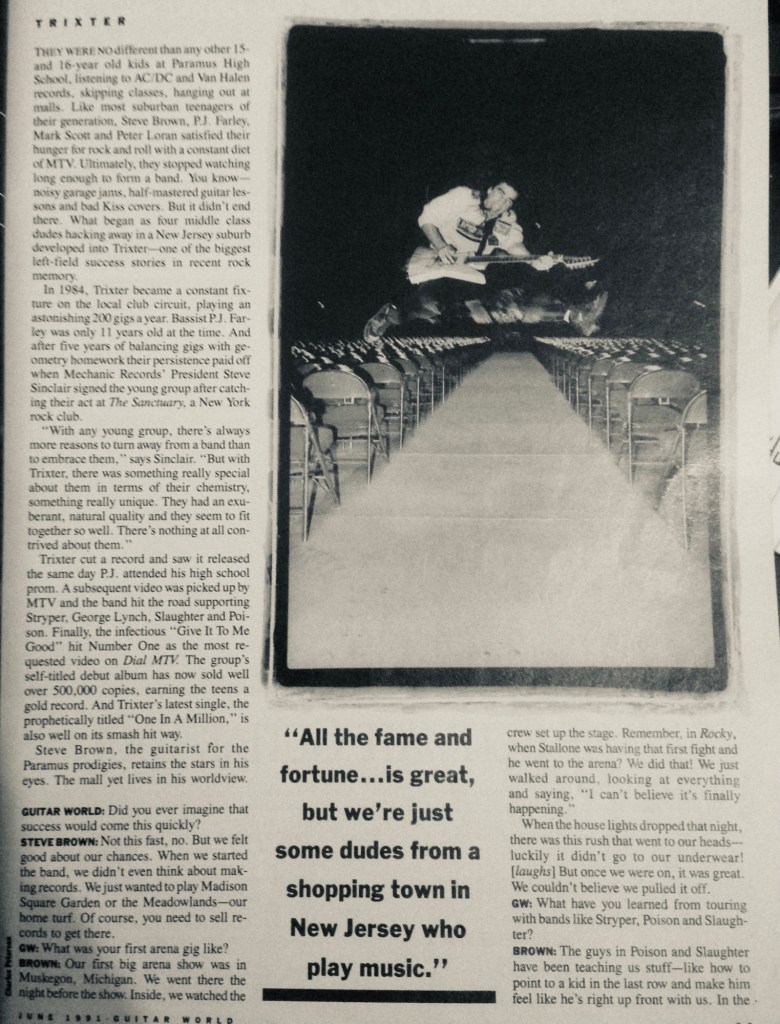
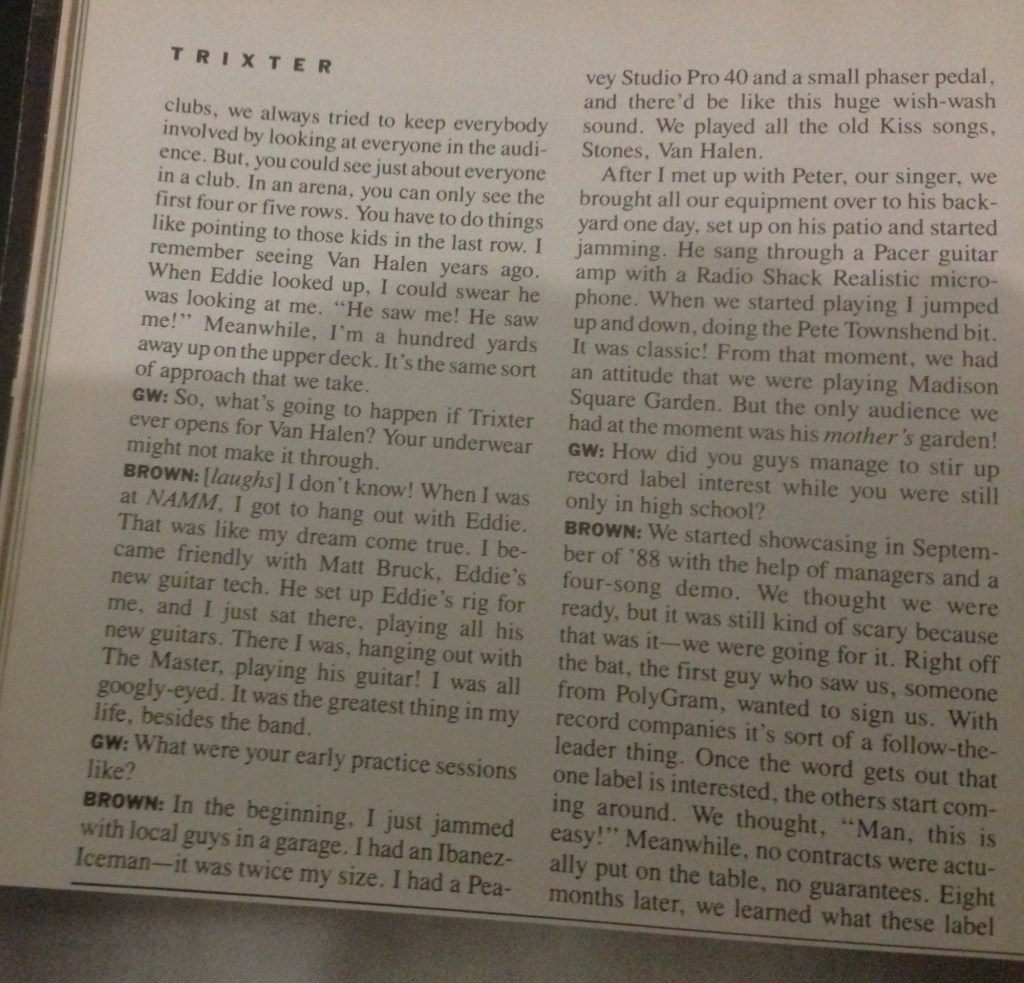
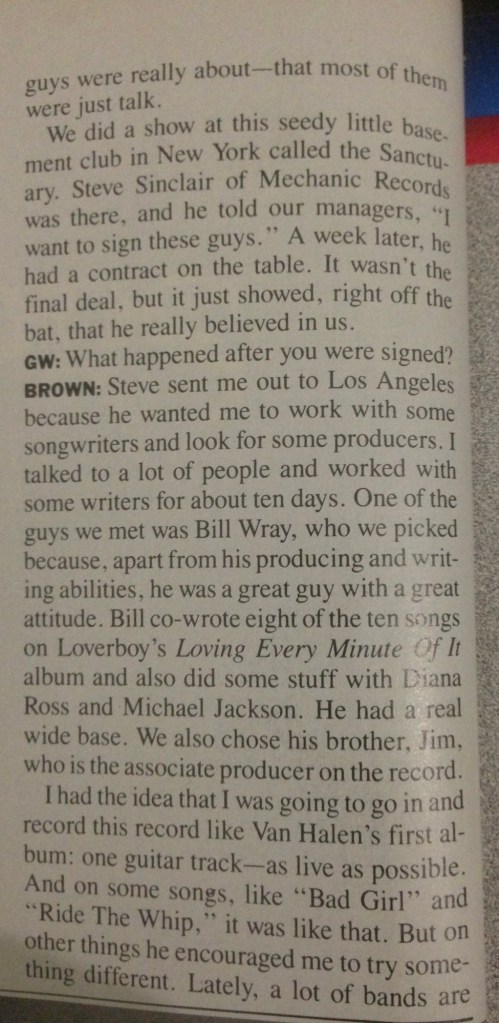
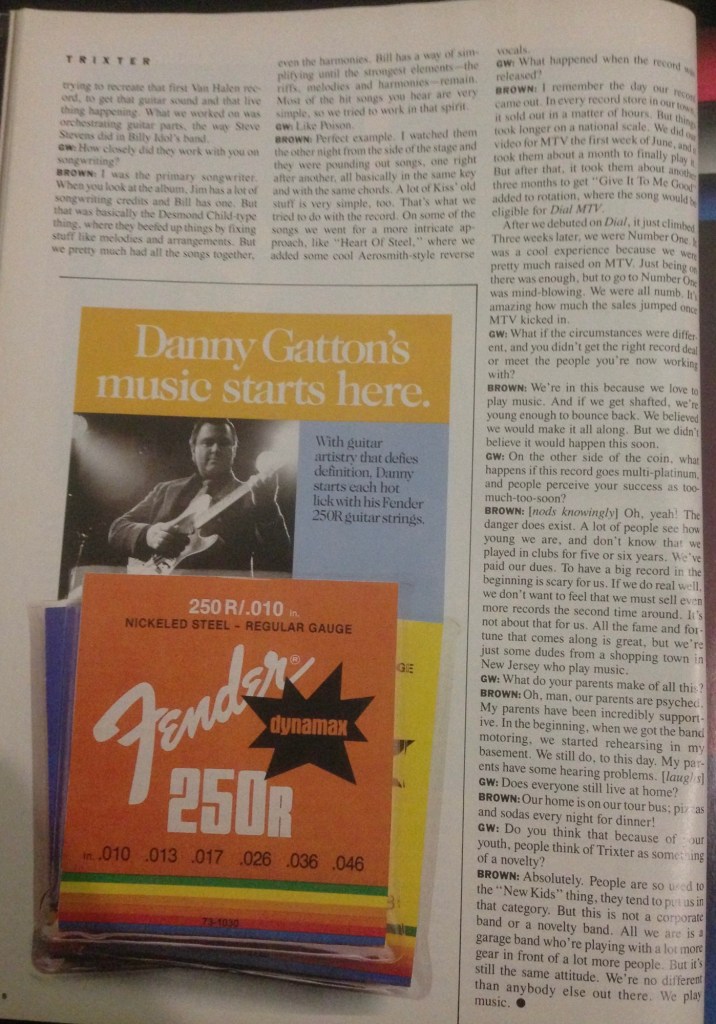
That’s the moment frozen in this Guitar World interview: the exact second where the rollercoaster is still climbing and nobody hears the chain starting to rattle.
On the surface, it reads like standard early-’90s rock-mag candy.
Origin myth.
Garage rehearsals.
High-school sleep deprivation.
Parents pretending they’re annoyed but secretly proud.
Then the montage: endless club gigs, the one basement venue that matters, the industry guy who changes everything. Numbers follow, sales, tour slots, rotation, framed as disbelief.
And the quote. The wall-poster quote.
“All the fame and fortune… is great, but we’re just some dudes from a shopping town in New Jersey who play music.”
That line isn’t accidental. It’s the formula.
The band must be aspirational and accessible at the same time. Superheroes who still feel like kids from homeroom. Big enough to worship. Small enough to imagine becoming.
That’s the business model.
So is the GW interview a PR piece?
Of course it is. This is Guitar World, 1991. The structure is pure promo:
Build the myth (kids + garages + malls + mishaps).
Flex the numbers (MTV, tour slots, sales).
Humanize the product (parents, girlfriends, pizza on the bus).
End with some variation of, “We’re just grateful to be here, man.”
But buried under the sugar, Steve Brown keeps slipping you protein.
He admits they designed themselves as a teen band after reading about Def Leppard. He talks about carefully arranging guitar parts, thinking in terms of Desmond Child‑style songcraft instead of just riff‑vomiting. He’s obsessed with Van Halen’s first record and wants to capture that “as live as possible” energy on a big‑budget debut. He knows MTV rotation is a once‑in‑a‑lifetime weather pattern and they’re trying to build as many houses as possible before the storm passes.
That’s not just PR. That’s a 20‑year‑old already thinking like a lifer.
The tragic part is that no one knows the meteor is already in the air. Grunge is loading in at the other end of the decade while he’s still talking about opening for Poison. Everyone in the piece sounds certain they’ve cracked the code forever, when in reality they’ve rented a very small window in a very specific era.
It’s not deep journalism, but it accidentally becomes deep nostalgia: a time capsule of what it feels like to be young, ascending, and completely wrong about how long the ascent lasts.
So what happened when the lights finally came up?
The short version: the wave crested, then physics did what physics always does.
Trixter rode that first record hard. Tours, videos, magazine covers, the full package. Then the wheel turned. The second album didn’t hit the same, the climate shifted, radio and MTV moved on. The band dissolved in the mid‑’90s, another casualty of a genre that went from omnipresent to punchline in about as much time as it takes hair spray to dry.
Steve Brown didn’t vanish into the suburbs to sell insurance and tell bar stories about “that one time on tour.” He kept going. Other bands. Side projects. Session work. Cover gigs. Tribute projects. Reunion tours. New Trixter records. The guy turned being “that dude from Trixter” into a 30‑plus‑year career by refusing to treat the early ’90s as the peak.
This is what nobody tells kids in bands: the story doesn’t end when your video falls out of rotation. It keeps going, just on smaller stages with fewer free drinks and way more self‑awareness. It stops being about winning the rock‑star lottery and starts being about whether you actually like the work enough to do it without confetti cannons.
Steve clearly does.
So why did I bother digging through a yellowing Guitar World piece in 2026?
Because it’s the perfect diagram of how the machine used to work and, honestly, still does, just with different haircuts and platforms.
You can see:
The fantasy: four normal kids “accidentally” becoming rock stars.
The marketing: humble‑brag quotes, carefully curated struggle, the illusion that this is reproducible.
The truth leaking out the sides: obsessive grind, calculated image choices, a main songwriter already thinking like a producer.
It’s easy to mock bands like Trixter from the safe distance of hindsight. The clothes, the lyrics, the Aqua Net. But when you strip away the clichés, what’s left is familiar: talented kids trying to turn obsession into a life, trapped inside a trend they don’t control.
The interview captures the moment right before they discover a hard rule the industry never prints in glossy pull‑quotes:
You are not your chart position.
You are not your MTV slot.
You are what you keep doing after the world stops caring.
In 1991, Trixter thought the party would last forever.
In 2026, Steve Brown is still playing guitar for a living.
Turns out that’s the better ending anyway.
 destroyerofharmony
Great tale. I always enjoy reading your thoughts and breakdowns. I’ve also applied your concept of a lifer to my own career and life, and that reframing has helped and brought me peace and a way forward too. Cheers!
Glad you are enjoying my ramblings. Very much appreciated, I guess we are all lifers in some way.
Brown has had a great career. I bought the first two Trixters and preferred the second album “Hear”.
“But buried under the sugar, Steve Brown keeps slipping you protein”
Brilliant Pete! Do more of these….fantastic stuff.
I do like “Hear” as well. I felt like I was maybe the only Aussie to have heard it. As always thanks for reading Deke.
That was a fun read. Trixter’s timing sucked, but Brown has done well for himself. Still going strong.
Agreed .its hard to just turn the lights off. And I really enjoyed their comeback albums on Frontiers as well. Just wish they did em more frequently.
That would’ve been nice to have more. I like Steve’s work with Ted Poley as Tokyo Motor Fist. They only did two album.
I liked the first TMF album but the second one didn’t really connect.
Steve Brown is indeed a lifer. Couple of years ago I went to see Zebra co-headline a show w/ Y&T in Long Island, NY. The opener was Danger Danger. I was never really a big DD fan but damn they kicked ass that night. After the show I saw their guitarist walking around and realized that it was Steve Brown of Trixter days & I had a wild flashback to seeing Trixter in their pre-getting signed days around the NY/NJ area. He was known in hard rock circles back then for how good he was on guitar & his Eddie VH’ish vibe. And here he was decades later playing with DD & we laughed a bit about the Rn’R rollercoaster etc…
Btw side note, there’s a recent band, the Defiants who have a couple of the Danger Danger boys in the band w/ their 2nd singer, Paul Laine. Song on their 2nd album Zorusho, “It Goes Fast”, damn, what a good f’ing song…When I was going thru my F*ck cancer battles that was a big song on my F*ck cancer playlist & I played it on almost every one of my local radio shows that I did here hoping to spread the song’s awareness. The Defiants & Tokyo Motor Fist kinda have a similar vibe.
Take care all, have a rockin’ weekend…
Bubba
Thanks for stopping by and commenting. I’m a fan of Paul Laine so The Defiants is a band I am familiar with and yes, life does go fast as the song says.