A to Z of Making It, Classic Songs to Be Discovered, Derivative Works, Influenced, Music, My Stories, Unsung Heroes

The Record Vault and Australian Method Series: AC/DC – Fly On The Wall

Disaster. That’s how the American magazines described this album.

Released in 1985, the album never stood a chance.

It was fighting for our attention along with a lot of other things.

Like.

The trilogy of Mutt Lange albums were outselling everything else AC/DC put out during this period.

The Sunset Strip gave the charts and MTV a major shake up and sales followed.

The British had invaded the U.S again with Judas Priest, Iron Maiden, a solo Ozzy Osbourne and Def Leppard cementing themselves as arena acts.

The Germans also invaded via a hurricane called The Scorpions.

And finally an underground Speed Metal scene in San Francisco was slowly taking over the U.S.

But in Australia we remained true. Never wavering. And we made it triple platinum.

But let’s go back in time.

The success of “Back In Black” in 1980 showed the labels that their was an appetite for hard rock music. And the labels wanted more of the same.

So it’s no surprise that by 1985, most of the label rosters had a lot of “hard rockers” on the books. But these rockers wore everything that wasn’t denim and their hair kept hair dressers employed for decades.

Even acts from the 70’s started to participate in this new look so they could remain relevant. But AC/DC didn’t change. They stuck true to their denims and Angus still wore the schoolboy outfit.

And the critics found them irrelevant while they still sold out arenas.

Fly On The Wall

The music is infectious and the vocals indecipherable.

Sign me up.

Shake Your Foundations

It was the only song that got a pass back in the day.

How good is that intro and the Chorus is iconic?

Plus it got decent radio play in Australia.

First Blood

Musically, it’s typical of AC/DC.

Lyrically, Brian Johnson is indecipherable and hard to understand.

Danger

“Come Together” comes to mind when I hear this.

“Here come old flat top” is what my ears are expecting when the song begins.

It’s no surprise that the Young brothers are referencing Chuck Berry here as his fingerprints are all over the riffs the Young’s write.

Sink The Pink

The music clip comes to mind here.

Seeing the band playing in a pub/bar again and that pesky fly from the cover getting a hard on (via its nose going from limp to hard) when a women dressed in pink enters the pub.

But it’s the music that seals the deal and Brian Johnson sounds better in the video than the recording.

I like the musical reference to “For Those About To Rock” and The Who’s “Won’t Get Fooled Again”. So I was hooked.

Sink the pink, it’s all the fashion”

It has so meaning meanings.

The Urban Dictionary tells us, sink the pink means to “have sexual intercourse with a virgin, and to pop her cherry”.

But the Urban Dictionary didn’t exist in 1985 and my young impressionable brain saw it as a song about drugs.

And thanks to the Internet, I believe it is.

Welcanol was known during the eighties as the South African Heroin (Pink Heroin). It could be obtained via a Doctor prescription and it came as a pink tablet.

So before OxyContin there was Pink Heroin.

“Drink the drink it’s old fashioned”

I’ll take an old fashioned drink any day.

Playing With Girls

I love the music and the groove here.

But I hate the title and the fact that Johnson is mixed low and indecipherable.

Definitely a missed opportunity here.

Stand Up

I like this song. It’s defiant and it rocks.

If you just listen to the Chorus you would think it’s about standing up and facing the world, but when you read the lines in context with the verses, well, it has a different meaning.

Hell Or High Water

A 4/4 groove and we are off.

But it’s pointless as Johnson is buried in the mix and the song is ruined.

Back In Business

A deep cut. It reminds me of ZZ Top and I like it.

Send For The Man

Musically it rocks but the buried Johnson chainsaw like vocals ruin it.

It’s not a perfect album, then again most of the albums released in 1985 are far from perfect. In other words, the era of more filler than killer was well and truly in motion.

But I would say, it’s an underrated album from a band that enjoys doing their thing without over obsessing about it.

The U.S tour had controversy. It all took place underneath the censorship discussions concerning rock music. Religious groups tried to ban certain shows while city officials wanted to rate each show and give the shows a movie style rating, which would then exclude fans from going. Fire officials would also get in on the act and limit or stop any pyrotechnics.

But the band went on.

In the vinyl album sleeve of the “Fly On The Wall” re-release from 2020, Angus sums up the tour like this;

“This tour’s a little like a series of wrestling matches with the loonies. But what’s the fun of life without an occasional tussle”.

Enough said.

Get to it folks. Crank it and start tussling.
Standard
A to Z of Making It, Classic Songs to Be Discovered, Influenced, Music, My Stories, Unsung Heroes

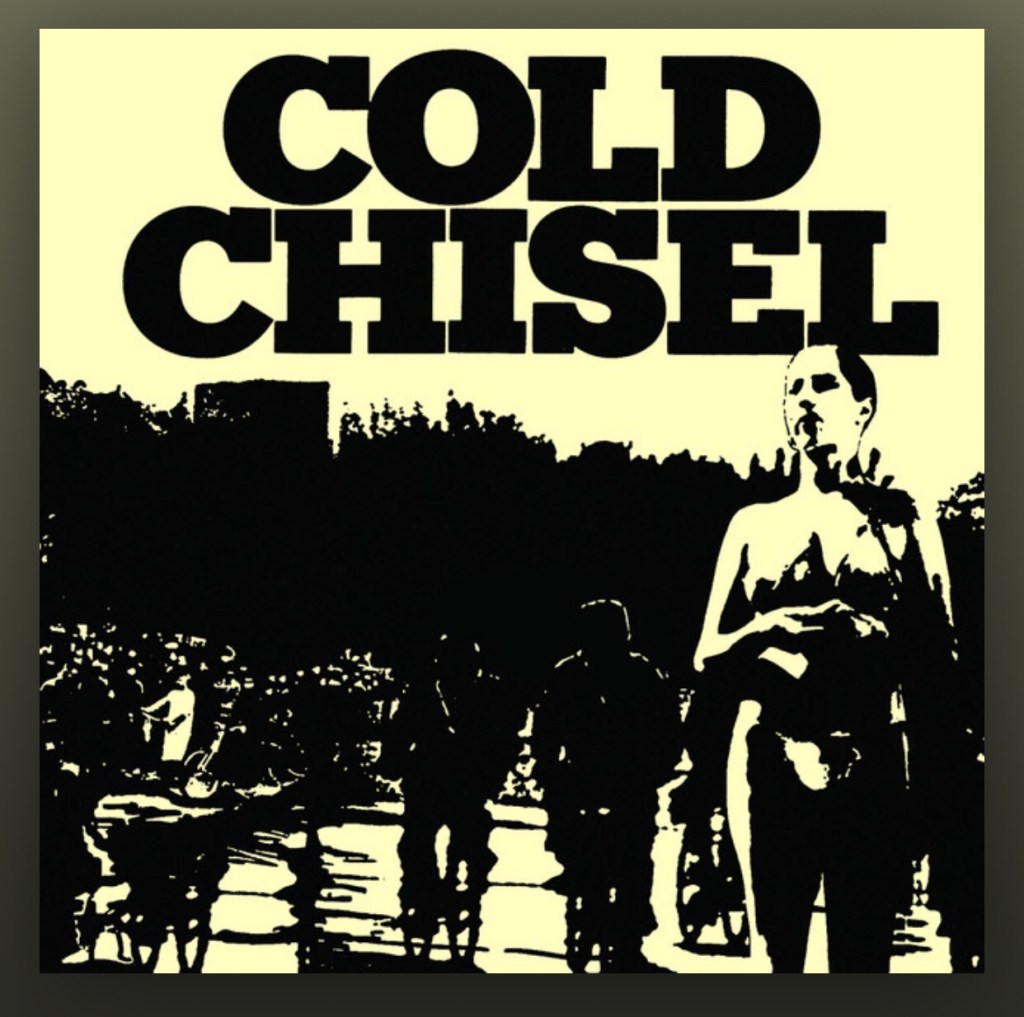
Australian Method Series: Cold Chisel – Cold Chisel

1976 saw AC/DC’s first internationally-released album, “High Voltage”. The demand for Oz Rock was already on the up.

Enter Cold Chisel.

After years of hitting every place and pub in Australia and drinking those places dry with their road crew, or getting banned due to fighting, Cold Chisel finally got a record deal and released their first album on WEA/Elektra in 1978.

But.

If you ever caught the band live, the self-titled debut sounded nothing like the band did on stage.

They also had a producer that kept telling em that live is live and the studio is the studio. They cannot intersect. Well tell that to Bob Rock who made it his mission to capture how good a band sounded live, in the studio.

Before the album was even released “Khe San” was already a crowd favourite however it was a lot faster live than the studio version. But there is something special about the slowed down studio version as well.

Juliet

It’s a rocker, more STYX like with a little bit of “Evie” from Stevie Wright and “Mississippi Queen” from Mountain.

Khe Sanh

“Khe Sanh” was released as a 45 rpm single in May 1978. It captures, the despair and the anger of an Australian Vietnam war veteran. There were no parades for these guys. They came back home, hated. And the promises made by the Government to look after them never came to be.

It was banned from commercial radio as the lyrics had references of sex and drugs. Lines like these were scandalous. “And their legs were often open/But their minds were always closed”.

But a great song is never born from marketing. It’s from word of mouth.

And the Battle of Khe Sanh was fought mainly by US Marines but this didn’t matter.

The piano riff is rocking and the best part of the song is when Jimmy Barnes sings, “the last plane out of Sydney is almost gone”.

And maybe all of us were a bit damaged as well so the song resonated with a lot of people who had addictions and couldn’t make meaningful contact with woman, and the need for casual sex with East Asian women.

Home And Broken Hearted

The verse riff reminds me of AC/DC, who were influenced by Chuck Berry.

One Long Day

The bass rumbles while the piano plays a jazzy riff that reminds me of “Long Way To The Top”. And it takes a left turn when it changes to lounge rock.

Northbound

Blues rock at its best

Rosaline

It could be a STYX or Bee Gees cut. It’s almost progressive the way Don Walker plays the piano.

Daskarzine

Its fast and aggressive.

Almost Rose Tattoo like and when “they speak her name in cheap hotels/From Turkey to Marseille” we get an understanding as to who Daskarzine is.

Just How Many Times

Its lounge jazz blues rock, slow and relaxed. The lyrical message is more important than the rest. Barnesy is a crooner on this, an R&B style of crooner.

They never got the big break in North America that they wanted, but it’s pretty hard to sell your act when your lyrics paint a picture of Australia.

And we loved em for it.

Standard
Music

Angus Young – Guitar World – March 1986 – Part 1

ANGUS YOUNG – RAW ENERGY IS ALL YOU NEED
Guitar World March 1986
By Joe Lalaina

(All parts in Italics and Quotes are from the March 1986 issue of Guitar World)

The little guy with the big SG is unconcerned with current guitar hero fashions.  His stock in trade has always been the hard rock shuffle to a boogie beat.  Before you drop the needle on any new AC/DC album, you know what to expect. Rarely has a band maintained such a consistent sound as AC/DC, they’ve been pretty much making the same album for the past ten years. Fly On The Wall, the group’s eleventh release, is no exception.

“I’ve heard people say all our music sounds the same,” says soft-spoken lead guitarist Angus Young, “but it’s usually just the people who don’t like us who say it.”

Not true. It’s just that ever since the band’s High Voltage debut back in 76, AC/DC has been playing the same relentlessly raw and straightforward style on every succeeding album. And that’s the way their fans like it.

I like AC/DC.  They are a talisman to consistency.  Each album is the same, however that doesn’t mean that each album was successful.  You need great songs, and that is what AC/DC delivered on High Voltage, Highway To Hell, Let There Be Rock, Back In Black and on The Razors Edge.  Credit both Mutt Lange for Back In Black and Bruce Fairbairn for The Razors Edge.  Actually, The Razors Edge album is the most crucial album AC/DC ever did.  After a steady decline in fortunes and sales since Back In Black, they kicked off the 1990’s with a bang.  It made them relevant again.  The Razors Edge album sustained them throughout the 90’s and into the now.

“We never go overboard and above people’s heads,” says Angus, who took some rare time out from his recent American tour to discuss musical and other matters.

“We strive to retain that energy, that spirit we’ve always had. We feel the more simple and original something is, the better it is. It doesn’t take much for anyone to pick up anything I play, it’s quite simple. I go for a good song. And if you hear a good song, you don’t dissect it, you just listen and every bit seems right.”

For any guitarist that is starting off, AC/DC wrote the book on beginners guitar.  In the process, they also created songs that are timeless and a soundtrack to a whole generation of people in the seventies, eighties and nineties.  I am just teaching my kids to play guitar and the first song i showed them was Long Way To The Top from AC/DC.

Although this stripped-to-the-bone approach has made AC/DC internationally successful, thirty million albums sold worldwide ain’t bad!, Angus is more concerned with having a  good time than with album sales.

“We don’t go around the world counting ticket and record sales,” he says, “nor do we glue our ears to the radio to hear what’s trendy at the moment; we’re not that type of band. We do run our own careers, but we leave the marketing stuff to the record company. We make music for what we know it as, and we definitely have our own style.”

AC/DC defined a style and in the process spawned a million imitators.  What a lot of people don’t understand, especially the international fans, is that Australia rock bands where all playing the same style.  Rose Tattoo, The Angels, Daddy Cool, Stevie Wright all had that pub rock vibe.  AC/DC just stood out a bit more.  Credit Bon Scott and Angus Young.  Brian Johnson walked into the house built by Bon and Angus.

Is there anything Angus considers special about his playing style?

“In some ways, yeah.” he says. “I know what guitar sound I want right away. And if I put my mind to it, I can come up with a few tricks. I mean, I just don’t hit the strings that my
fingers are nearest to. But the most important thing, to me, is I don’t like to bore people. Whenever I play a solo in a song, I make sure that the audience gets off on it as much as I do.”

Angus exerts more energy in the course of one song than most guitarists do in an entire show.

“I’m always very nervy when I play.” he says. I usually settle down after the first few songs, but it’s hard for me to stand still. I suddenly realize where I am, onstage in front of thousands of people; so the energy from the crowd makes me go wild.  I’m always very careful, though. If you bump an arm or twist an ankle, there s no time for healing on the road. You can t tell the crowd. Hey, people, I can t run around tonight I have a twisted ankle.”

I have mentioned before about bands writing great songs and how that is very different to bands that write great songs that go down great live.  AC/DC is another band, that has that foresight.  The songs are all meant for the arena.  To be honest, i don’t really remember a recorded song fading out, i am sure some do, however it is testament to the band that they write a start and an end.

Malcolm Young, AC/DC s rhythm guitarist and Angus older brother, would rather just stand in one spot and bang out the beat with thuddingly repetitive chord structures.  

“Malcolm makes the band sound so full”, says Angus, “and it’s hard to get a big ego if you play in a band with your brother, it keeps your head on the earth. Malcolm is like me, he just wants the two of us to connect. Although he lets me take all the lead breaks, Malcolm’s still a better guitarist than Eddie Van Halen.  Van Halen certainly knows his scales, but I don’t enjoy listening to very technical guitarists who cram all the notes they know into one song.  I mean, Van Halen can do what he does very well, but he’s really just doing finger exercises. If a guitarist wants to practice all the notes he can play, he should do it at home. There’s definitely a place for that type of playing, but it’s not in front of me.”

Big call by Angus.  Dishing on King Eddie.  Back then, I was like WTF?  How dare he?  Eddie was king back in 1986.  He was untouchable.

I didn’t even like AC/DC back in 1986 and I am Australian.  I was so into the U.S. Glam/Hard rock scene, I failed to see the talent that was AC/DC.  I am glad I made up for it in the nineties, when Grunge allowed me to drop out of the mainstream and go searching for classic rock bands.

These days, no one speaks their mind.  They all want to be loved.  No one wants to be hated.  Guess what people, we can see right through it.  We can tell the fakes from the real dealers.  (Nice lyric line by the way, I will keep it)

Angus would much rather listen to old time players like Chuck Berry or B B King. 

“Those guys have great feel, ” says Angus. “They hit the notes in the right spot and they know when not to play. Chuck Berry was never a caring person. He didn’t care whether he was playing his tune, out of tune or someone else’s tune. Whenever he plays guitar, he has a big grin from ear to ear. Everyone always used to rave about Clapton when I was growing up, saying he was a guitar genius and stuff like that. Well even on a bad night Chuck Berry is a lot better than Clapton will ever be.  Clapton just sticks licks together that he has taken from other people – like B B King and the other old blues players—and puts them together in some mish-mashed fashion. The only great album he ever made was the Blues Breaker album he did with John Mayal and maybe a couple of good songs he did with Cream. The guy more or less built his reputation on that. I never saw what the big fuss was about Clapton to begin with.”

That is what made Angus a legend, he always spoke his mind.  The world we have today is all about yes people and making sure that we don’t offend.  We all want to be loved, hence the reason why one person has 5000 Facebook friends.  Yeah Right.  5000 Friends.  What a load of B.S?  No one speaks their mind these days.  The kids grow up these days, being told by mum and dad what a great game they had in football, and how great they are at reading and how great they are at this, when all they did was touch the ball once and play with the grass most of the time.

It’s easy to get lost in those comments against Clapton and Van Halen.  If you do, you miss the point Angus is trying to make.  He has no time for technical players, but he has time for Chuck Berry.  In relation to Eric Clapton, he didn’t really understand what all the fuss was about, he believed that others where better, like Jeff Beck.

“There are guys out there who can play real good without boring people.  Jeff Beck is one of them.  He’s more of a technical guy, but when he wants to rock and roll he sure knows how to do it with guts.  I really like the early albums he did with Rod Stewart.”

There is that name again Jeff Beck.  When I was reading this magazine, Jeff Beck’s name came up a few times.  I had to check him out.  This is 1986.  No internet to Google Jeff Beck.  No YouTube or Spotify to sample him.  I had to walk down to the local record shop and look for it.  Good times.  I am glad I lived them and I am glad they are not coming back.

Standard