Classic Songs to Be Discovered, Influenced, Music, My Stories

1976 – Part 3.5: Doobie Brothers – Takin It To The Streets

It’s a great album title but people hated the cover, thinking it was lazy.

“Takin’ It to the Streets” came out in 1976 and it’s the first to feature Michael McDonald on lead vocals. If you own the “1984” album by Van Halen, you will see Michael McDonald listed as a co-writer to “I’ll Wait”.

Tom Johnston was the leader and main songwriter in The Doobie Brothers. But in 1974 while touring, he fell ill and he had to reduce his involvement with the band. This got the label nervous as they didn’t want the band to continue without Johnston and the other members considered calling it quits.

But newbie guitarist Jeff Baxter suggested calling up a friend and fellow Steely Dan graduate Michael McDonald to finish the tour. McDonald thought that once the tour was over, he would be on his way, but was then asked to come into the studio to work on their next album.

Producer Ted Templeman (another familiar name for Van Halen fans) started going over the songs the band had available, but he knew they needed more and McDonald was asked to contribute his own songs. Which were very different sounding to what the Doobies played and if the band recorded em, would take the band in a different direction.

And that is what happened. So let’s see how the bridge between the Johnston and McDonald era sounded.

The musicians for the album are Tom Johnston who was still around to contribute and he played electric guitar, lead and backing vocals on the track “Turn It Loose” and vocals on “Wheels of Fortune”.

Patrick Simmons played electric guitars and lead vocals on a few songs,

Jeff “Skunk” Baxter is on electric guitars.

Michael McDonald played all the piano and synths as well as lead and backing vocals.

Tiran Porter on bass, backing vocals and lead vocal on “For Someone Special”. Drums were provided by John Hartman and Keith Knudsen.

The album had a The Memphis Horns section and various other musicians playing congas and violas and what not. Even Templeman chimed in with some percussion.

Speaking of the Production team Donn Landee (another familiar name for Van Halen fans) was there as Engineer.

Wheels of Fortune

The clean tone riff to start the song rocks and grooves. Almost funk rock like. Dare I say it, Steely Dan like.

Written by Patrick Simmons, Jeff Baxter and John Hartman, it’s still the old Doobies sound.

Vocals are provided by Tom Johnston.

Changin’ wheels of fortune
Drivin’ us on and on
Winnin’, sometimes losin’
As soon as it’s here it’s gone

Living from payday to payday is the only way for a lot of people.

Takin’ It to the Streets

The Michael McDonald era begins. The title tracks is solely written by McDonald. Its piano driven, and it funks and sort of rocks.

I also like the bass playing from Tiran Porter. Check it out.

And the solo is driven by The Memphis Horn Section. Yep horns and not guitar.

I ain’t blind and I don’t like what I think I see
Takin’ it to the streets

People have taken to the streets to protest a lot these last 15 years, but it’s still the same rubbish.

8th Avenue Shuffle

Guitarist Patrick Simmons wrote this one. It’s a blues soul funk tune, with some wonderful bass playing. Hell, it could appear on an Eagles album and not be out of place.

Losin’ End

Another track written by McDonald. It does nothing for me.

Next.

Rio

A track written by guitarists Simmons and Baxter, with vocals provided by Simmons and McDonald.

A Charlie Watts style drum beat starts the song, and when the Latin percussion comes in, I felt like I was listening to an Al Di Meola cut.

This track is the definition of “Yacht Rock”.

For Someone Special

Written by bass player Tiran Porter and the vocals are delivered by Porter himself.

The 70’s acts all had capable musicians who could play and sing.

The bass plays the main riff here, while the guitars and keys decorate. It’s trippy and I feel like he’s venting his feelings about Tom Johnston.

To reach down inside
And push that nightmare away
Now I’m glad that it’s over, it’s over
Now I can play

It’s always difficult for a band when a person who is like a band leader steps away. And the label does it’s best to make the other members feel worthless.

It Keeps You Runnin’

Another cut written by McDonald by himself, the lone wolf.

Not a favourite.

Turn It Loose

Johnston definitely gave the band a rocking edge. So even though he was done with the band, he did deliver this excellent cut.

People all around me
Everywhere I go
I thought I had a grip on things
Now I just don’t know

I’m not a big enough fan to know everything about The Doobie Brothers, but Johnston was seen as the driving force of the band and one of the main writers by the press and the label.

So when he disappeared, no one knew what was going to happen.

Carry Me Away

Written by Simmons, Baxter and McDonald. It’s just too much like a 70’s TV intro theme song.

In the end the album has more of a jazz, urban, soulful, funk than rock tunes and a new era started.

Michael McDonald and The Doobies.

Standard
Classic Songs to Be Discovered, Influenced, Music, My Stories

1976 – Part 3.4: Led Zeppelin – Presence

I was never a Led Zeppelin fan growing up. I didn’t even know that “Get In On” referenced “Kashmir” until I purchased the “Remasters” album in the early 90s.

And after that purchase I also heard many other songs from 80’s bands in Zeppelin’s music.

And what a weird cover for a rock band, with a family staring at an unfamiliar object around the dinner table.

So if i based my purchases on how the cover looked, this album wouldn’t even make the list.

Achilles Last Stand

One of my favourite cuts.

It’s long and repetitive, but there’s something about the bass groove, Page’s inventive playing to tweak the riffs each time and Bonham’s thundering drum sound that doesn’t make it boring.

Led Zeppelin hated being associated as one of the forefathers of Heavy Metal, but this cut begs to differ. Hell, I would even associate it with Progressive Metal. And at 10 plus minutes it definitely qualifies.

For Your Life

The Blues Funk grooves are back. It’s not a celebrated cut, but goddamn press play to hear the syncopated grooves of the bass, guitar and drums.

There is this middle blues fusion section which feels like a “roll the tape” moment.

The solo is Page abandonment, he’s phrasing is off, his atonal in some sections, exotic in others and aggressive and somehow it all works.

At 6 plus minutes it could have gone through the John Kalodner editing filter, but no one was going to tell Led Zeppelin how to do anything. They told you instead.

Royal Orleans

It’s like a jazz blues fusion cut. It doesn’t really go anywhere, and serves more as a short filler.

Nobody’s Fault But Mine

One of my favourite cuts and I had no idea that it was a cover song from Blind Willie Johnson who released it in 1927.

Because the song credits in the album are shown as Page and Plant.

The Bluesy Intro is that good that Jimmy Page sped it up and used it for “Shake My Tree” with David Coverdale.

And my ears tell me that the Bluesy Intro came from a John Renbourn acoustic cover of the song in the mid 60s.

So it’s a cover of a cover.

The vocal melody is from the original and the musical interpretation borrows heavily from the John Renbourn adaption.

But I still like it and Zeppelin brought the song to the masses.

Candy Store Rock

It’s a blues shuffle which doesn’t really go anywhere and the “oh baby” and “yeahs” are just too much.

Hots On For Nowhere

It reminds me of Van Halen during the Roth era and I believe David Lee Roth would model his vocal style.

Listen to the verses if you don’t believe me.

Tea For One

As soon as I saw the title I made up my mind that I hated the song, because I’m a sucker for a good title. And this ain’t a good title.

But man.

What a riff to start it off.

It then goes into a slow blues solo, like “Since I’ve Been Lovin You” and then Plant chimes in.

And the album wasn’t well received and it’s still the lowest selling Led Zep album but I think that more had to do more with the previous albums still selling like crazy.

They also didn’t tour on this album due to Robert Plant recuperating from serious injuries he had sustained earlier that year in a car accident.

While the second half is weak, there is a lot of good material here to dismiss the album.

Crank it.

Standard
Classic Songs to Be Discovered, Derivative Works, Music

1976 – Part 3.3: Deep Purple – Made In Europe

“Made In Europe” came out in 1976 and it features the line-up of Richie Blackmore, David Coverdale, Jon Lord, Ian Paice and Glenn Hughes.

The shows were recorded in 1975 before Blackmore left, however the album was released in 1976 long after Blackmore left and the version of Deep Purple after that had also broken up.

I am very picky when it comes to live albums. I think the problem is that I grew up with two many live albums that weren’t actually live or had some parts live and other parts recut in a studio.

So when I heard an official live album the first time with no studio overdubs I though I was listening to a bootleg. It was bad and I felt like I got ripped. Some of the bootlegs I had sounded better. It took me a while to understand that a revising could never capture the power of a live performance properly and within time I started to enjoy the live albums with no studio overdubs.

Burn

The opening riff is more iconic to me than “Smoke On The Water”. The drumming from Ian Paice is thundering.

But press play to hear the bass playing of Hughes during the solos. It’s monstrous and he carries the rhythm section on his shoulders.

Mistreated

Because of its bluesy nature, it’s a great song to extend when you play it live. And the main riff is written by none other than David Coverdale himself.

But my go to version of this song is the cut that Whitesnake did. Reb Beach goes to town during the solo section.

Lady Double Dealer

It’s a 12 bar blues, bit its fast, like NWOBHM fast.

Check out the bass playing from Hughes on this.

You Fool No One

It has about 2 minutes of doodling, something which was common back then but not these days. These days, its song after song after song, with zero jamming.

After the doodling, there is a riff which is played, fast and almost thrash metal like. It’s something that Blackmore would do with Rainbow.

But the problem I have with this song is that they’ve take an almost 5 minute song and turned it into a 16 plus minutes song.

Maybe just a bit too indulgent.

However the artists ruled back then and no one would have dared to tell Blackmore to solo less.

Stormbringer

Another killer Blackmore riff. The tempo of the live version is a bit faster than the studio version and its perfect for the song.

You can hear the embryo of the NWOBHM right here.

The falsetto highs of Hughes are excellent and his bass playing dominates again.

This version of Deep Purple only lasted for two studio albums, but they are two albums I hold in high regard and rate as favorites.

And you can’t pass up a live album with Coverdale on vocals.

“Here’s a song for ya”.

Standard
Classic Songs to Be Discovered, Influenced, Music, My Stories

1976 – Part 3.2: Kiss – Rock N Roll Over

“Rock N Roll Over”

Another album in the same year, something which was common during this period all the way up to 1985. Then bands started to take two years between albums and then three years. The bigger bands took even longer.

I purchased “Love Gun” after “Destroyer” because of the covers and then “Rock N Roll Over”.

Which also has a great cover.

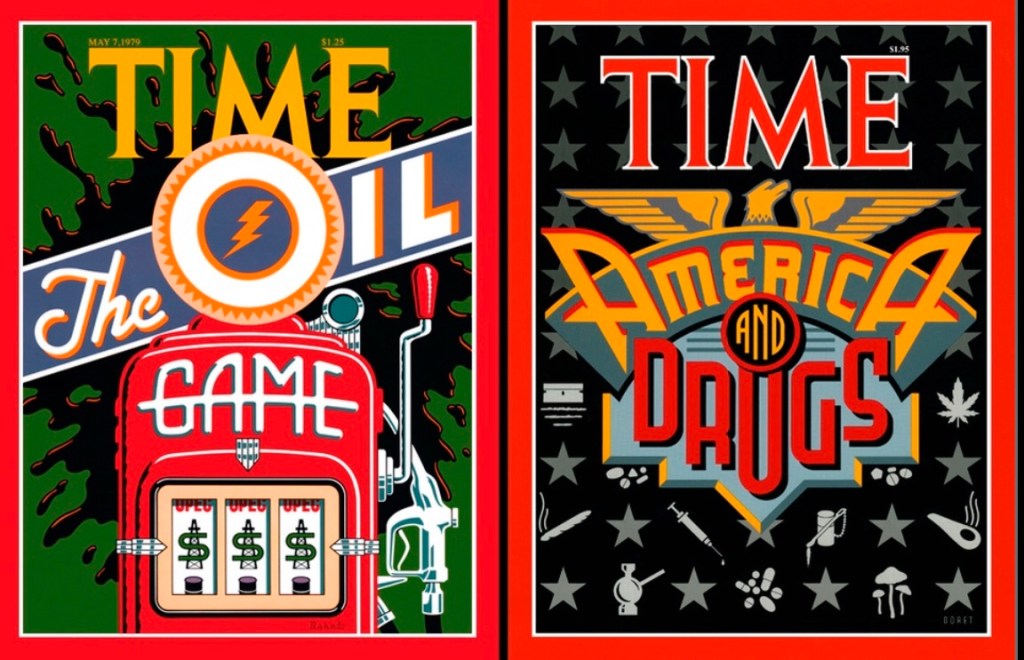
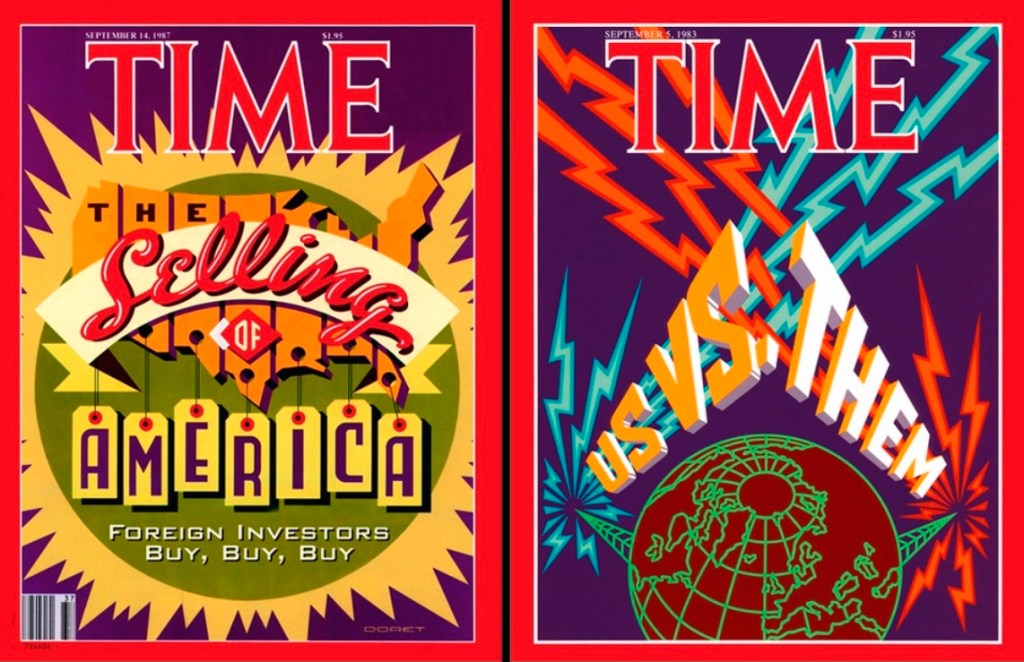
Michael Doret is another artist who should be as big as a rock star. Apart from Kiss, he has done various editorials and logos for companies and sporting teams. If you follow the NBA, you will know the Knicks logo. That’s Doret.

Check out these Time covers as well just to show a small sample of his work.

Brilliant.

I don’t feel this album is mentioned a lot like other Kiss albums. Maybe because it was sandwiched between “Destroyer” and “Love Gun” for studio albums and “Alive” and “Alive II” for live albums. All of this Kiss product in a 24 month period meant that some albums get missed. It still did the same business as “Destroyer” in sales but it’s not in the conversation as often as it should be.

But the album does have quality. Eddie Kramer is producing and his mix is wonderful with every instrument and vocal having its own space.

“I Want You” was so ahead of its time. It’s like the embryo of melodic Metal. Don’t let the acoustic arpeggios fool you, because when the distorted guitars kick in, its metal and its melodic.

“Calling Dr Love” is good but it gets way too repetitive towards the end. Something which Gene does a lot of in his songs.

“Hard Luck Woman” is excellent and Rod Stewart would have killed the vocal if the song ended up making its way to him. But Pete Criss sounds great as well. I reckon he would have downed a packet of ciggies before the take, to get his voice like that.

And while artists of hard rock dabbled with country at the time, it either sounded too countrish or it had too much rock with a bit of country, but, Stanley delivered a song ahead of its time, fusing, country with rock and a crossover pop sensibility.

“Mr Speed” and “Makin’ Love” are good album cuts.

Press play to hear the riffs especially the speed rock of “Makin’ Love”, which a lot of the NWOBHM bands would be using to create tunes with. I wasn’t sure if all the riffs came from Paul Stanley on these cuts or from Sean Delaney, but when I checked Delaney’s solo album on Wikipedia, his credited as a vocals and keyboards on his own solo album, so Stanley again delivers the goods in the riff department on these two songs.

Ace Frehley is missing in the song writing department for this album, (you just need to read a few bios to understand why, plus the quick turnaround between albums didn’t really give him much free time to write songs and whatever free time he had, was put to other use), but his leads are there to inspire a generation of guitarists.

Finally, Paul Stanley.

He plays all the riffs on the album and it’s important to mention what an accomplished guitarist he is.

In the 80’s, and if you watched most Kiss video clips, the guitar spent more time hanging behind his back then in his hands, so people might think differently about his guitar abilities, but make no mistake, the dude can play and play well.

Crank it and enjoy.

Standard
Classic Songs to Be Discovered, Derivative Works, Influenced, Music, My Stories, Unsung Heroes

1976 – Part 3.1: Kiss – Destroyer

I grew up on 80’s Kiss. Albums like “Lick It Up”, “Crazy Nights”, “Hot In The Shade” and “Creatures Of The Night” got a lot of rotation on my turntable, along with “Unmasked”.

Kiss transitioned to a Hair Metal or Pop Metal sound (by the way label reps came up with these stupid terms) because they needed to. It happened in sync with the rise of MTV and how music television got behind promoting acts of similar sounds.

And the Quiet Riot effect was real at the time.

Every artist thought it but no one said it. If Quiet Riot could get a Number 1 album, they could do it as well. So Kiss tried like many others.

So my journey into 70s Kiss started with “Double Platinum” and “Smashes, Thrashes and Hits”. All up five of the”Destroyer” tracks are spread across those albums

When I started to get more cash at my disposal, “Destroyer” was the first album I had on my list because even during the 80s when each new album came out, the reviews kept saying, “a “Destroyer” album this is not”.

Also when they started to record “Revenge” the guys mentioned it has a “Destroyer” feel to it. It was “Destroyer” all around.

In addition, my older brothers had an A4 Postcard of the “Destroyer” album cover pasted into their stamp collection book which I looked at forever and a day, honing my drawing skills trying to replicate it.

The artist Ken Kelly is a rockstar himself. Kiss, Manowar and Rainbow used his talents and even Coheed And Cambria recently used his talents for their “No World For Tomorrow” album.

And after all that exposure to “Destroyer” album, I still hadn’t heard the full album. In my head I imagined perfection.

So when I got the CD I was ready for perfection.

I pressed play, listened to it and came away with the viewpoint that there is no need to hear the other tracks that didn’t appear on the Compilation albums.

The five best songs on the album are “Detroit Rock City”, “God Of Thunder”, “Shout It Out Loud”, “Do You Love Me?” and “Beth”.

“Flaming Youth” I like, it just felt unfinished.

It wouldn’t be an Ezrin produced album unless half the album was accessible and he made sure of that.

One crucial takeaway from listening to the album and reading the credits is that even in the 70s, Paul Stanley was Kiss.

His songwriting contributions to this album are exceptional. He even penned the anthem for Gene Simmons and his “God Of Thunder” anthem.

I know this isn’t a review like I normally do, however if you want to read some killer reviews, then check out the following blogs I follow:

2Loud2OldMusic

MikeLadano

Standard
Classic Songs to Be Discovered, Music, My Stories, Unsung Heroes

The Record Vault: Al Di Meola – Land Of The Midnight Sun

“Land of the Midnight Sun” is the debut album by jazz fusion guitarist Al Di Meola, released in 1976. 6 songs that clock in at about 38 minutes.

Released on Columbia Records.

Di Meola was 21 when this album was released and his technical skills are very high.

Check out the front cover.

It looks like a Science teacher I had at school and you know when artists would say “you should buy an album based on the cover”, well I never would have purchased this one.

I got into Di Meola because he was getting a lot of “word of mouth” promotion from the 80’s players in the Guitar magazines. Players like Paul Gilbert, John Petrucci, Marty Friedman and Kirk Hammet all cited him as an influence to them, so it was just a matter of time and funds before I checked him out and goddamn what a revelation it was.

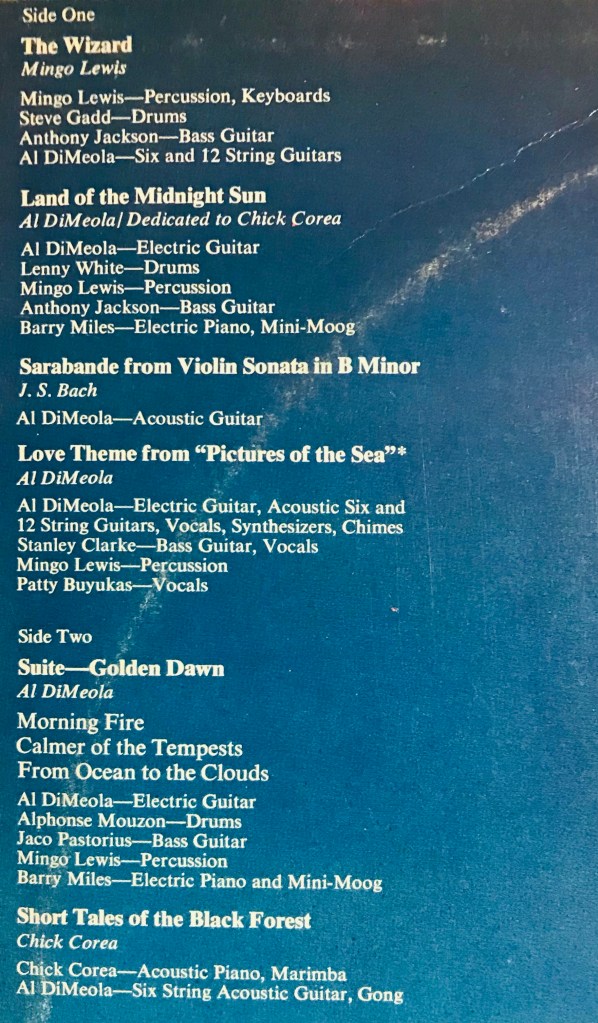
“The Wizard”

Its written by Mingo Lewis and I had no idea who he was until I looked at the credits and saw that he’s the percussionist. A percussionist extraordinaire in my opinion as he wrote some amazing guitar riffs here.

The musicians for this song are Al Di Meola on guitars, Anthony Jackson on bass, Steve Gadd on drums and Mingo Lewis on percussion.

I don’t know where to start with this or how to describe it, as there is a lot of great guitar playing.

The intro from 0.00 to 0.13 is enough to get me to pick up the guitar. Then it goes into a typical 70’s groove from 0.14 to 0.24 which is great and easy to play.

And then the riff comes in which I call the “piece d’resistance” riff from 0.25 to 0.55.

There is a brief heavy palm muted from 0.56 to 1.00 which reminds me of things that Maiden would do in their early years. Its only 4 seconds long here but can be easily fleshed out into something longer.

The song then goes back to the “piece d’resistance” guitar playing.

And all of these unbelievable guitar sections are within the first minute.

At 1.20 there is a variation of the “piece d’resistance” riff.

Then check out the mood and licks from 1.50 to 2.34. If that section doesn’t make you feel something, check for a pulse please.

At 5.05, the outro guitar solo starts. And just as Di Meola was starting to get warmed up with the outro solo, a decision was made to fade it out.

I’m the end, this song is a progressive rock tour de force.

“Land of the Midnight Sun”

Written by Al Di Meola, it clocks in at 9:10.

The musicians for this song are Al Di Meola on guitars, Barry Miles on keyboards, Anthony Jackson on bass guitar, Lenny White on drums and Mingo Lewis on percussion.

While the opening track came across as a progressive rock high octane cut, this one is more in the jazz rock domain with some progressive overtones.

There is this lounge rock mood which comes in between 2.02 to 3.56 and Di Meola plays some fast palm muted lines in between his normal sounding leads.

“Sarabande from Violin Sonata in B Minor”

A short 1.20 piece from Johann Sebastian Bach transposed to acoustic guitar to show off Di Meola’s prowess on an acoustic guitar.

“Love Theme from Pictures of the Sea”

Another short cut at 2:25 in length. The musicians here are Al Di Meola on guitars, Stanley Clarke on bass and vocals, Patty Buyukas on vocals and Mingo Lewis on percussion.

The clean tone arpeggios create a shimmering effect and the percussion from Mingo Lewis takes you to some island paradise.

“Suite Golden Dawn: Morning Fire/Calmer of the Tempests/From Ocean to the Clouds”

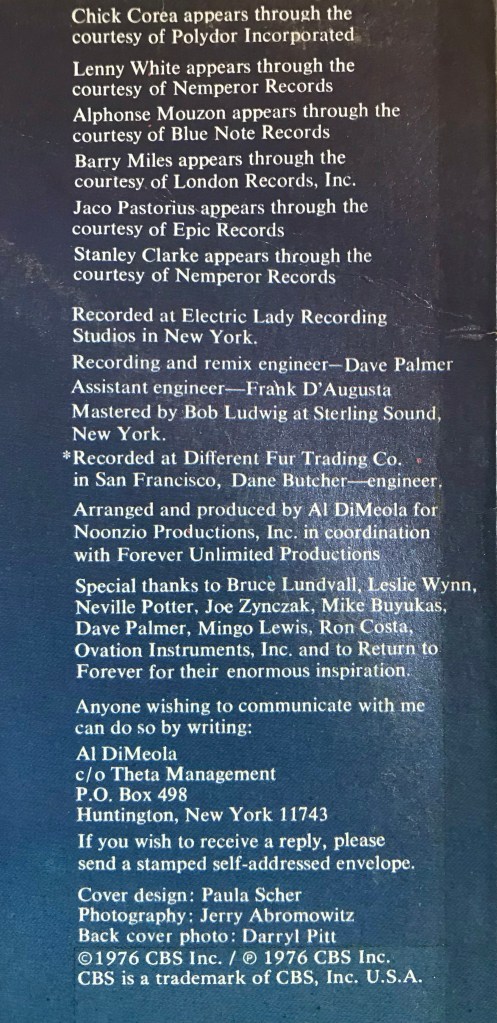
At 9.49 it fits nicely into the albums progressive rock feel. The musicians for this song are Al Di Meola on guitars, Barry Miles on keys, Jaco Pastorius on bass guitar, Alphonse Mouzon on drums and Mingo Lewis on percussion.

And like the “The Wizard” there are so many sections in this which has some killer playing along with Di Meola’s fast palm muted lines.

I like the blues soul riffs from 2.32 to 2.55 which then transition into a distorted riff and they then go back and forth.

Also check out the bass playing from Pastorius during these sections. Essential listening if you’re a bassist especially from 3.40 to 4.50 while Di Meola phrases his leads around the bass lines.

“Short Tales of the Black Forest”

A song written by Chick Corea which has Corea on piano and marimba and Al Di Meola on guitars.

You know when go to a lounge and see a piano player with a guitar player jamming. Well this is it, but the playing is exceptional from both and Di Meola knows how to use that acoustic guitar, especially those fast palm muted lines as he moves the songs feel into jazz, Latin, rock and back again.

John Petrucci and Jordan Rudess did a similar thing with their An Evening With.

If there is a cut to listen to, press play on “The Wizard”.

Standard
Classic Songs to Be Discovered, Derivative Works, Influenced, Music, My Stories, Unsung Heroes

1976 Part 2.6: Ted Nugent – Free For All

It’s album number two for the “Motor City Madman” released in October 1976. Wikipedia mentions that it’s his first album to go Platinum, but it doesn’t mention that the year was 1992, 16 years after its release.

A “free for all” is a chaotic situation, lacking rules or structure. Like an uncontrolled fight that involves many people or a concert circle pit, or a press conference that deteriorates into a smash and bash or a barrage of questions without any control as to who is asking.

But this album is cohesive and structured, nothing like a free for all.

It’s well known that Ted Nugent liked his solo career to be all about him. But he did need others to make that happen, like Derek St. Holmes, who was hired as a vocalist and rhythm guitarist for the debut album. But as the lead singer, you could say that some attention was directed towards him.

Fast forward a year later, St. Holmes left the band, due to growing personal and creative conflicts with Nugent however he did play and sing on a few tracks before his departure. Left without a vocalist, Nugent turned to himself and to an unknown singer called Meatloaf, who was a year away from his “Bat Out Of Hell” international success.

And like all things in business, money talks and St. Holmes was back in the band at the request of Epic Records for the tour and “Cat Scratch Fever”.

The musical side of the recording has Ted Nugent on guitars plus vocals on the title track, along with Rob Grange on bass and Cliff Davies on drums. Derek St Holmes played rhythm guitar on the tracks he provided vocals on and Meatloaf did the rest.

Tom Werman is also producing.

St. Holmes hated the Werman production as he believed it was too watered down, but Werman knew exactly what was needed to get as many songs onto the radio.

The view from Werman was simple. If the songs were played on radio, it meant that the band would have a chance to tour. By touring and having songs on radio, the album would then sell.

This type of thinking would come to fruition for Werman by the late 70’s and most of the 80’s. His streak of Gold and Platinum albums is an envious one, and most of the artists who succeeded with Werman or had their biggest selling album with Werman, would go on to blast Werman many years after.

“Free-for-All”

I was reading that the intro riff is based upon the track “Sufficiently Breathless” from Captain Beyond, but when I first heard it, it reminded me of “Stormbringer” from Deep Purple and “Stranglehold”.

Vocals are provided by Nugent.

Lyrical, the Nuge is in top form with lyrics like “the stakes are high and so am I” and “When in doubt I whip it out”.

It’s a free-for-all alright.

“Dog Eat Dog”

It feels like Accept took this song and used it as the basis for the “Balls To The Wall” album and song.

Vocals are provided by Derek St. Holmes. The pentatonic leads from Nugent are excellent and towards the end, he does an open string lick, which reminds me of the things that Angus Young would do on “Dirty Deeds Done Dirt Cheap”.

Lyrically, it’s pretty descriptive. We are told of a riot, “Sabotage on a downtown street / Police cars overturned” and a suicide, “Kamikaze from the hundredth floor / Swan dive to the street”. “Wild Side” from Motley Crue comes to mind here.

“Writing on the Wall”

7 minutes long.

My kind of cut, that just jams along and takes you on a journey. The main riff reminds me of “Stranglehold” and “Free For All” but it’s the vocal delivery and melodies from Meatloaf which makes this song sound epic.

The Chorus section sounded like “Gates Of Babylon” exotic before “Gates” was even recorded.

I like the lead break section in this. The bass grooves on the main riff, the drums lay down the foundation and Madman Nugent decorates it with pentatonic lines, bends, slides and a ringing chord.

At some stages it moves into the melodic minor domain before moving back into the bluesy pentatonic lines.

“Blazing’ down the highway / I’d rather have it my way”

I don’t think the kids these days have the same view of the highway as we had back then. It was a rite of passage to get your licence, get a car and drive. It opened up new places.

What’s a rite of passage these days?

Get the latest tech, have the most followers, play the crypto game or the stock market.

“Turn It Up”

It feels like a Led Zeppelin cut in the “Rock N Roll” vein. But at 1.22, it changes into these sleazy groove for a Nugent solo before it picks back up into the 12 bar blues.

Vocals are provided by St. Holmes.

And in the last 30 seconds, Nugent becomes Jimmy Page with fast Pentatonic lines.

“Street Rats”

It kicks off Side 2.

The intro riff would sound familiar to Van Halen fans, as I’m pretty sure a young EVH was listening to this. Hell, the Sunset Strip sound is this riff.

Vocals are provided by Meatloaf.

“Post war anti-social” is a lyric that resonates for some reason. Maybe it’s due to the in-depth study I did on the Vietnam War back in High School and how the soldiers returned as villains and not to any Victory Parade, with PTSD and drug issues and problems with the government.

“Together”

The song is written by Rob Grange and Cliff Davies. Vocals are provided by Meatloaf. It’s like a power rock ballad, and one of the best tracks on the album.

Grange and Davies create a great foundation, for Nugent to solo over and Meatloaf to create a great vocal on.

“Light My Way”

It’s written by Derek St. Holmes and Rob Grange and vocals are provided by St. Holmes. Its more in the vein of the blues rock tracks that St. Holmes is involved in.

“Hammerdown”

It’s a heavy metal cut that would rival most NWOBHM bands and make sure you check out the vocals by Meatloaf.

I’m not sure if Steve Harris was listening, but the riff in the Verses and Chorus is very similar to “Running Free”.

Even the vocal melodies from Meatloaf could be said inspired some of the NWOBHM vocalists.

White line
Double time
Come around with a hammerdown

Was the Nuge a user/taker or just using artistic licence. It’s pretty clear what he’s writing about here.

“I Love You So I Told You a Lie”

Written by Cliff Davies, and what a great title.

Vocals are provided by Meatloaf for a 12 bar blues in the verses.

A family life and a loving’ wife
Just ain’t my kinda scene

But when you’re all alone, you would long for this scene as a we are creatures of the tribe.

Underrated stars on the album are Rob Grange on bass and Cliff Davies on drums. While Grange was Entwistle like, Davies was very technical.

Ted Nugent is also more of a melodic player than a technical shredder and I like it.

And although he has views on things are different to mine, those views rarely distract me from good music.

Crank it.

Standard
A to Z of Making It, Classic Songs to Be Discovered, Influenced, Music, My Stories, Unsung Heroes

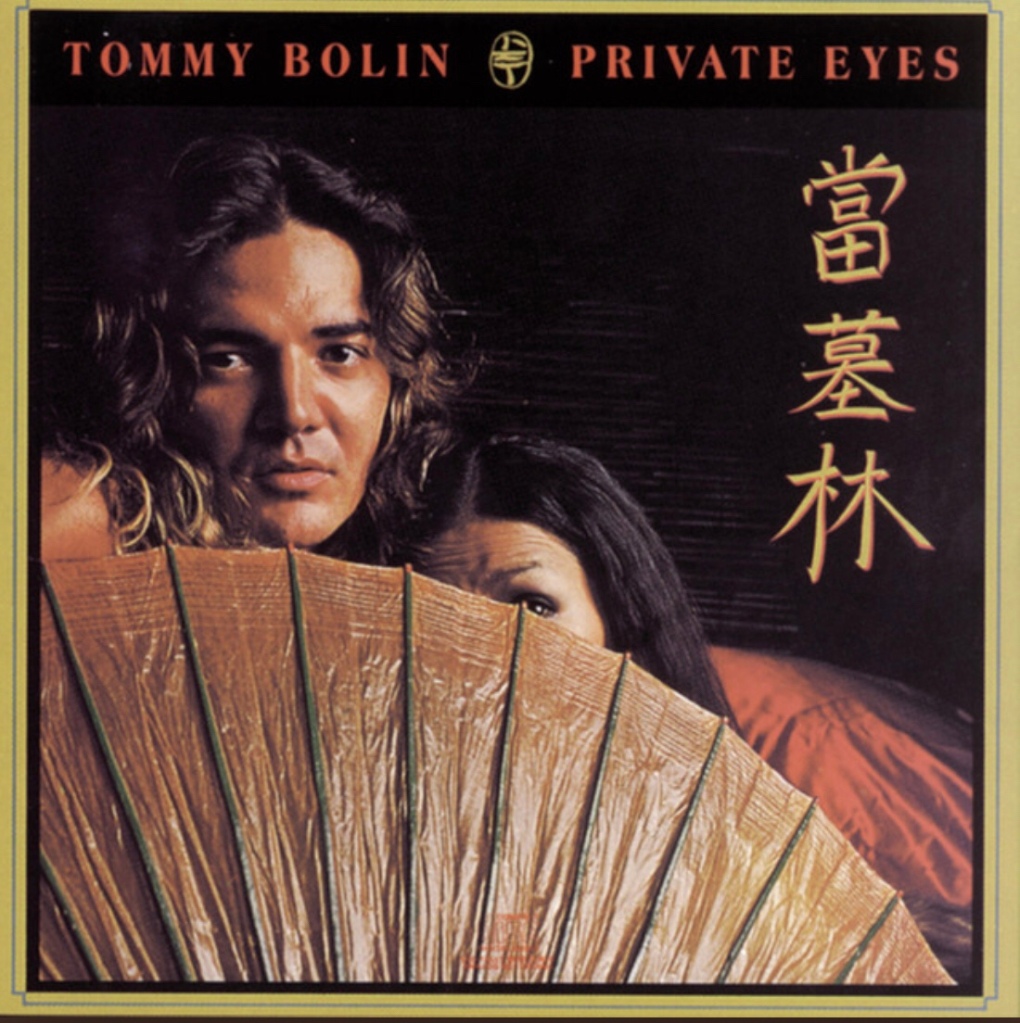
1976 Part 2.5: Tommy Bolin – Private Eyes

I had no idea about Tommy Bolin until Motley Crue covered the song “Teaser” and released it on their “Raw Tracks II” EP which came out in 1990 for the Japanese market and suddenly I was scrolling the used record racks for Tommy Bolin albums or albums that had him playing.

Actually, the Motley Crue version of “Teaser” was officially released on a 1989, compilation album called “Stairway To Heaven/Highway To Hell” which featured the bands who performed at the Moscow Music Peace Festival. And of course the song re-appeared on their “Decade Of Decadence” collection in 1992.

Shock horror to everyone these days who grew up with Wikipedia, I was surprised to read that he was in Deep Purple, but only for a brief moment and that he was in Deep Purple with David Coverdale who was another artist’s back catalogue I was digging deep into during the same period.

The Tommy Bolin “Teaser” album came out in 1975, and while successful he couldn’t really tour behind it due to his Deep Purple commitments, so he kept on writing and over an 8 day period, “Private Eyes” was recorded and released in 1976. This would be his last studio album before he died of a drug overdose on December 4, 1976 at 25 years of age.

It’s worth pointing out that from 1969 to 1976, Bolin was involved in 10 studio albums, with the bands Zephyr, James Gang (he replaced the guitarist who replaced Joe Walsh), Billy Cobham, Alphonse Mouzon, Moxy, Deep Purple (he replaced Ritchie Blackmore) and as a solo artist.

To put into context, Metallica have released 10 studio albums in 38 years. Avenged Sevenfold have released 7 albums in 20 years. The different work ethics of the artists and the labels across different decades is evident.

As a 15 year old, he hitchhiked from his hometown to Denver and met up with a singer called Jeff Cook to form American Standard. Cook would also act as a co-writer for Bolin’s solo output. He then joined Zephyr and after a few albums, he grabbed drummer Bobby Berge to form “Energy” with Jeff Cook on vocals.

But the fusion of styles in the music of “Energy” didn’t resonate with people and the labels. But Bolin did enough to get the attention of Billy Cobham who asked him to play on his record. And then the high profile gigs and studio work started. And by the time he was in Deep Purple he was heavily into drugs and alcohol.

“Bustin’ Out For Rosey”

Its funk rock groove is great to jam to.

The outro jam with the fuzzed out guitar licks and brass section is great listening.

“Sweet Burgundy”

I don’t know who influenced who, but “Wonderful Tonight” from Eric Clapton sounds very similar to this in the intro.

The slide guitar is sublime.

And in the outro, they just jam out the main melody, something that Bruce Springsteen would do to great effect with “Born In The U.S.A” when they keep playing the vocal melody in the outro.

“Post Toastee”

A nine minute song.

So many songs came out between the years of 1968 and 1978 that had similar riffs to either “Cocaine” or “Sunshine Of Your Love”. This is another for the first two minutes and 20 seconds.

Then a bass groove comes in and it’s all funky and soulful. As the bass and drums jam, Bolin starts his lead break. Listen to his phrasing, how he lets certain notes ring and others he deadens.

It’s this fusion of so many different styles which makes Bolin unique.

At the 4.30 mark, the “Cocaine” riff is back in.

Then Bolin shreds away again for the rest of the song.

“Shake The Devil”

It’s a blues jazz fusion cut, like how Joe Walsh played in James Gang.

But at 2.34, the embryo of bands like Iron Maiden is there. Check out the change of pace, the riff and the lead breaks.

“Gypsy Soul”

It’s like a campfire “Love Boat” acoustic cut.

And what I like about this is that Bolin stays within the acoustic guitar and delivers a stellar flamenco lead outro break.

“Someday We’ll Bring Our Love Home”

Carmine Appice filled on drums on this one, as Bobby Berge was unavailable that day. It could have appeared on a Steely Dan album. Its bluesy and full of soul.

“Hello Again”

The strummed chords outline a similar progression like “Free Bird” as the song percolates in that acoustic domain with violins and violas.

“You Told Me That You Loved Me”

A bluesy jazz fusion cut full of sleaze and soul with an ascending walking bass riff.

I like the change at the 3 minute mark, and then the brass instruments come in and the leads starts and its solos to the end.

If you like a lot of guitar playing, this album has it. Crank it.

P.S. Reggie McBride on bass and Bobby Berge on drums are excellent and unsung heroes on this album.

Standard
Classic Songs to Be Discovered, Influenced, Music, My Stories, Unsung Heroes

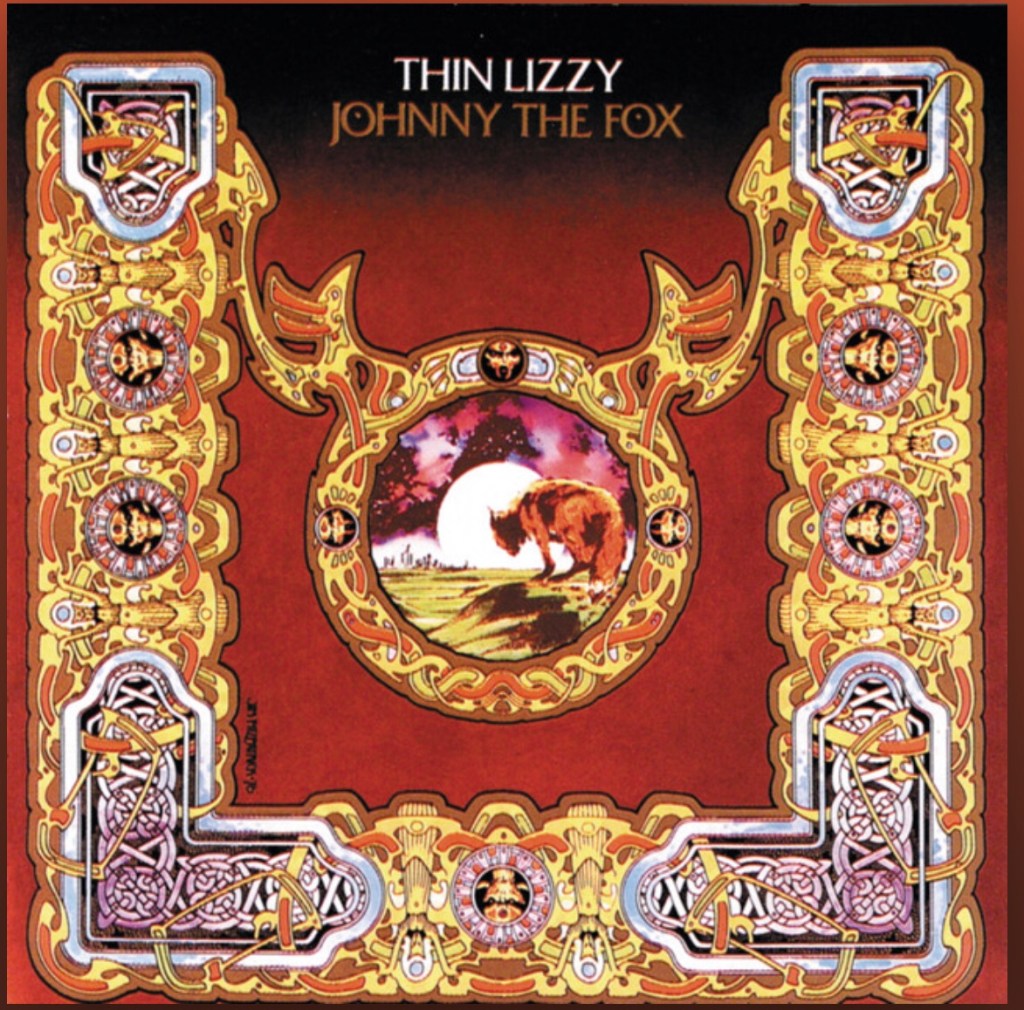
1976 – Part 2.3: Thin Lizzy – Johnny The Fox

All of my Thin Lizzy listening experiences happened well into the 90’s, when the second hand vinyl market was cheap and rocking, with most of it priced less than $5.

And I was snapping it up.

“Johnny the Fox” came out in 1976 and the last Thin Lizzy album to have guitarist Brian Robertson featured as a full member of the band. Clashes over songs and personalities led to Robertson being sacked, reinstated, and later sacked again.

It was an album of convenience as “Jailbreak” came out at the start of the year and due to Phil Lynott’s illness with hepatitis, they couldn’t really tour behind it, so “Johnny The Fox” was created.

Thin Lizzy was Phil Lynott on bass guitar and vocals, Scott Gorham on lead and rhythm guitar, Brian Robertson on lead and rhythm guitar and Brian Downey on drums.

Johnny

The intro is just so simple and groovy, how can you not like it. I swear it gave birth to the New Wave bands that came out in the 80’s.

And the iconic phrasing and voice of Phil Lynott is unique, it makes you pay attention to the story he’s trying to tell.

The lead breaks are excellent.

And the drumming is so underrated. Its powerful and make sure you check out the fills.

Rocky

“He’s got all the tricks to pull the chicks”, is Lynott at his best.

The harmony solos are nice and delicate before the angry and sleazy pentatonic licks start to wail away.

Borderline

It’s like a bluesy country rock song. Check out the bass lines on this.

Don’t Believe A Word

I was hooked from the opening riff which Robertson re-interpreted after Lynott presented the song in a slow 12 bar blues format.

The faster upbeat, was based on a Downey shuffle. If you want to hear Lynott’s original bluesy version, it’s on Gary Moore’s “Back On The Streets”, released in 1978.

The actual lead break with the wah wah sounds like it’s getting strangled out of the guitar.

Robertson wasn’t happy when the song was only credited to Lynott.

Fool’s Gold

The major key vibe is something that Thin Lizzy used a lot and man, they made it rock hard.

Johnny The Fox Meets Jimmy The Weed

Seriously what a great title for a funk blues rock tune. Phil Lynott was a fan of “The O’Jays” and their song “For the Love of Money.

Old Flame

It’s like a love rock song with a lot of harmony guitars.

Massacre

The best track on the album.

This could appear on an Iron Maiden album and not be out of place. It’s basically a metal cut.

The whole band is on fire. The drums are fast, jazz like, while the guitars and bass syncopate, to play some fast palm muted pentatonic grooves.

Sweet Marie

After the madness of “Massacre”, “Sweet Marie” is like “Love Boat” music, as you’re lying on a beach drinking Pina Colada’s. Vocally, John Sykes borrowed heaps from this song. In some sections, I believed I was listening to Sykes.

Boogie Woogie Dance

It’s got a musical feel similar to “Massacre” but with a stupid title. Then again, it goes with “Johnny The Fox Meets Jimmy The Weed”.

But it wasn’t strong enough to be on the album.

It didn’t get any certifications in the North American markets. But what it did do was put the band on the road. And as long as they could stay healthy, they would make coin.

But they didn’t.

Robertson was fired during the tour, replaced by Gary Moore and back in the studio they went.

Finally, drummer Brian Downey is the unsung hero on this album, delivering so many different rhythms and feels.

P.S. For their second album in the year it’s still solid and some stellar cuts like “Massacre” and “Johnny”.

Standard
Classic Songs to Be Discovered, Derivative Works, Influenced, Music, My Stories, Unsung Heroes

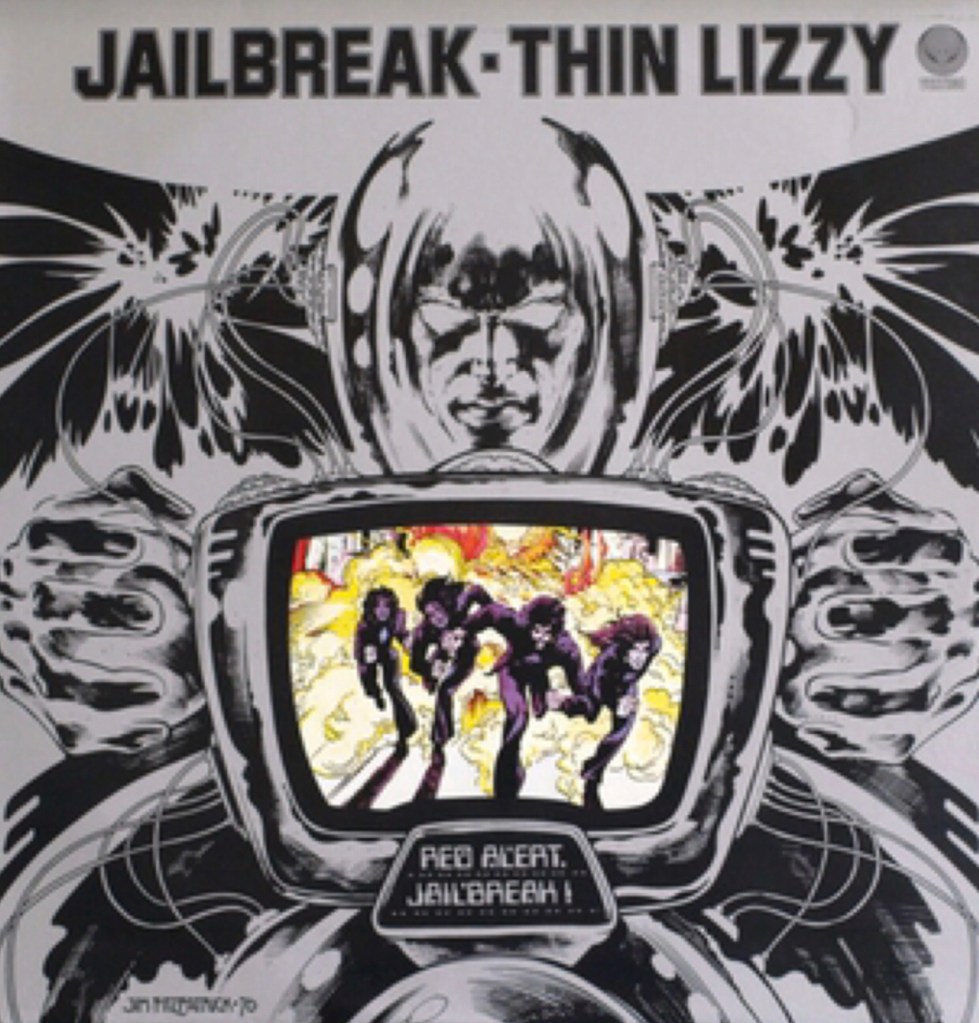
1976 – Part 2.2: Thin Lizzy – Jailbreak

I was reading Guitar Legends and there was a feature on each decade from the 60s to the first 2000’s decade.

So in the 70s decades they covered some important and influential albums.

“Paranoid” by Black Sabbath, “IV” and “Physical Graffiti “ from Led Zeppelin, “Machine Head” by Deep Purple, “A Night At The Opera” by Queen, “Destroyer” by Kiss, Boston’s self-titled debut and “Never Mind The Bollocks” by The Sex Pistols are mentioned.

Thin Lizzy didn’t even get a mention. Written out of history. If there is a band that brought harmony guitars to the masses, it’s Thin Lizzy.

But they didn’t have a guitar hero in the band and a front man who wasn’t a pretty boy.

The band is Phil Lynott on vocals and bass, Scott Gorham and Brian Robertson on guitars and Brian Downey on drums.

“Jailbreak” is the only Thin Lizzy album which has a certification in the U.S, a Gold one for 500,000 copies sold. But they never really toured behind the album as Lynott was fighting hepatitis.

It was also their last chance as “Nightlife” and “Fighting” didn’t meet the commercial expectations their label had.

And while Robertson felt the production was too restricted which led to less improvisation, it was exactly the tight ship that was needed to push them into the arenas.

Press play and have fun.

Jailbreak

How good is the main riff?

When the sirens start, listen to the riffs under it, it’s like the rumble/fight riffs in stage play soundtracks. Alice Cooper did something similar with “Gutter Cats vs The Jets”.

It’s a 41.5 million streams on Spotify.

Angel From The Coast

Downey on the drums is a star. Listen to how he swings, not a beat out of place.

Great lyrics about the boys playin poker and the joker being their favorite card and the middle section reminds of Hendrix and the Lizzy boys are swinging with the best of em.

Running Back

It’s a blues melodic rock cut inspired by Van Morrison and the first single from the album.

And it’s the little things, like the keyboard, saxophone, and overdubbed guitar lines from Scott Gorham that all add up.

Romeo And The Lonely Girl

What a great guitar solo in a song dedicated to those right girls that come at the wrong times.

And the solo keeps going when Lynott starts singing again.

Warriors

Lynott’s way of defining heavy drug takers was by describing them as warriors.

The Intro riff shuffles along.

Great soloing from Brain Robertson with a lot of wah wah.

But the piece d’resistance starts from the drum improv section at 2.53 and continues to the end. It’s progressive rock and a wow moment.

The Boys Are Back In Town

The big hit single, at 247.2 million streams, which still gets played on radio and licensed to movies, TV shows and advertisements in 2021 generating millions in royalties.

But no certification in the U.S market, however you would be hard pressed to find a person who doesn’t know the song.

So do you really need a sale or a plaque on the wall to show off your success or the success of a song?

And it did something massive for songwriters, making twin guitar harmonies an actual thing in popular songs.

Fight Or Fall

It’s got this Rod Stewart “Maggie May” feel, a strummed soul blues number.

Cowboy Song

The slow acoustic intro doesn’t foretell the rocker to come. 14.7 million streams on Spotify.

Emerald

The embryo and foundations of what Iron Maiden would be is in this song.

The Irish influences are here as well, something that Gary Moore would use a lot of on the “Wild Frontier” album.

It’s one of my favorite Lizzy albums of the Robertson and Gorham era on guitars. Lynott is unique but it’s Downey who owns this album. His drumming is superb and very underrated.

Standard