Music, My Stories

The Live Show

For some, it’s a place people go to have a good time.

For some, it’s a place people go to say that they went, take a selfie and post it online, especially for the bigger bands.

For some, it’s a place people go to hear the studio songs replicated exactly as the studio recordings.

For me, I go to the live show to hear the songs with a touch of something different, like an extended solo or longer intro or crowd sing along and what not.

If I want the music perfect, I will listen to the studio recordings.

And I think it’s a forgotten art form, how to make a song last a little bit longer especially if the energy is there.

Kiss tries to replicate the recording in a live setting.

Motley Crue from the shows I’ve seen, just try to play the album songs, while Bon Jovi likes having an extended outro solo here and there in some of the songs, plus a medley of different songs.

Bruce Springsteen jams out his songs and Black Crowes just jam the whole night. The Black Crowes is still one of the best concerts I’ve seen. Dee Snider has the mid song banter down pat.

Bands like Maiden and Metallica really don’t have room to jam as their songs are written in such a way that fans know what part is next and they anticipate it and are ready to chant along with it. So they make it special via the stage show.

And as we evolve, the reasons why we go to the live show will change again. And the price of tickets will play a big part in it.

Standard
A to Z of Making It, Music, My Stories

Creating

The first song you write and release will probably be ignored.

The tenth one maybe not.

The twentieth will probably do something commercially.

The thirtieth, will probably be ignored.

What is clear is that each song, creates more demand for other songs. Each song released gives you the power to release better songs. And better songs create more demand for other songs.

So in order to survive creating, you need to do something creative.

Simply begin.

And then don’t stop.

Standard
Derivative Works, Influenced, Music, My Stories

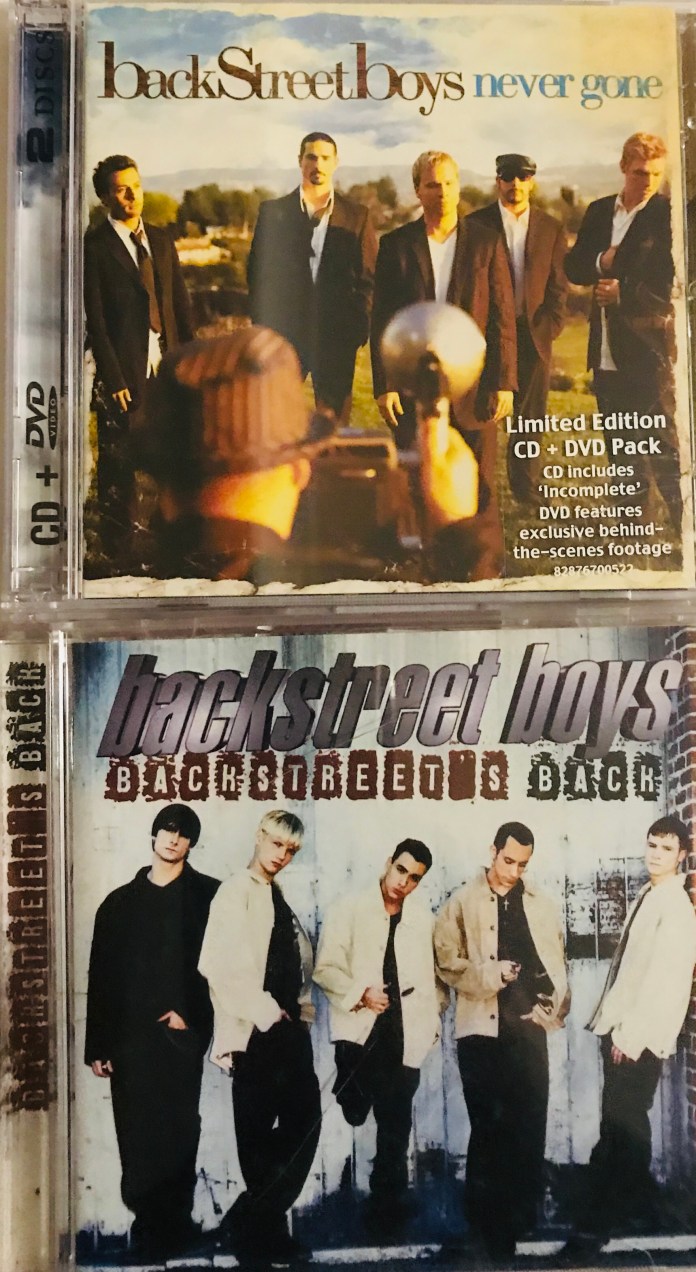
The Record Vault – Backstreet Boys

Yeah, I know, it’s not hard rock or metal, but hear me out on this okay.I picked up these albums because my wife liked the band. I heard the albums and when you take away all the pop sounds, the different singers, the songs are basically hard rock songs that would have appeared on hard rock albums if hard rock was still in the mainstream. Also, some of the writers used on the songs have worked with hard rock bands.

Max Martin is all over “Backstreets Back” and Mutt Lange also has a song writing and production credit for his song on the album.

On “Never Gone”, Max Martin is there again, John Shanks (who did the Van Halen comeback album, plus Bon Jovi albums) produces a track, plus artists from other bands like Five For Fighting are writing songs for the band.

Max Martin wrote songs with Bon Jovi (“It’s My Life” and “Complicated”), with Def Leppard (“Unbelievable”), with Apocalyptica (“Worlds Collide”, with Daughtry (“Feels Like Tonight” and with Bryan Adams (“Before The Night Is Over” and “Cloud Number Nine”). Plus he wrote songs for Taylor Swift, Britney Spears, Pink, Maroon 5, etc. He’s like the Desmond Child from 1998.

And of course, Max Martin’s real name is Karl Martin Sandberg, from Sweden and before he took over the charts writing songs for other artists, he was a singer in a hard rock metal funk band called “It’s Alive”.

Standard
A to Z of Making It, Music, My Stories

Marketing

Growing your brand and spreading the word of your art is a marketing problem.

So if that perfect album you spent months writing and months recording is nowhere to be seen, it’s because it’s not marketed properly.

And I am thinking of all of those hard rock and metal albums released between 1992 and 2005, which got released and didn’t really set the charts alight. It’s not because the music was crap, it’s because the labels didn’t care enough to put the money behind the artist to market them. But really was it the fault of the labels. It’s what the artist tells us.

Bands I support have spoken out about the label and the labels lack of enthusiasm at marketing their album. But the label did have the enthusiasm at one stage to put money into the demoing and recording of the album.

So is Geffen responsible or David Coverdale responsible for Blue Murder’s self-titled debut being killed or is the band responsible for not telling a story that connects with people or agreeing to that pirate look?

Is Elektra responsible for Motley Crue’s self-titled 1994 album doing poor numbers after they spent over 2 million dollars on the recording and marketing, or is the band responsible for not telling a story which connects with people?

Is EMI responsible for Queensryche’s “Hear In The Now Frontier” not doing better commercially?

Is Atlantic responsible for White Lion’s “Mane Attraction” disappearing from the charts?

Because marketing isn’t about putting a poster or an ad in a record store or internet site, it’s about telling a story that connects with people. As humans we make choices and the choice to invest in art is made together with other choices. Telling us that this is your best work, or that you put in your blood, sweat and tears is not really a story that connects. It’s a stupid PR spiel that doesn’t resonate at all.

And marketing isn’t about going all nuclear with ads and posters on every website and every print magazine either. It doesn’t equal advertising. Marketing is to spread ideas, serve the fans and satisfy their needs. And you do it by being authentic, respectful and truthful.

Artists need to tell us the story.

They need to own it.

They need to be truthful.

So if you have a marketing problem, you can’t solve it by simply repeating what you did yesterday.

Standard
Classic Songs to Be Discovered, Derivative Works, Influenced, Music, My Stories

The Record Vault – Boston

Boston was one of those bands who are loved by many and you can’t say anything bad about them. However to me, I really enjoyed a few songs on each album and others not so much.

Boston – Boston

If you want to know the power the artist had, you need to know the story of Boston’s self-titled debut.

Produced by Tom Scholz, the band had received numerous rejection letters from major record labels in the early 1970s, and by 1975, a demo tape had fallen into the hands of CBS-owned Epic Records, who signed them.

Epic wanted the band to record in Los Angeles with a record producer, but Scholz was unwilling and wanted to record the album in his basement studio, so he hired another person to run interference with the label. Scholz tricked the label into thinking the band was recording on the West Coast, when in reality, the bulk of the album was being tracked solely by Scholz at his home.

Basically there was no compromise from Scholz on his vision.

And that vision came out in 1976 to platinum sales. Then again platinum is very misleading for back in those days, a platinum album was given on the backs of how many records got shipped not sold. Regardless it’s stood the test of time.

“More Than A Feeling” is a great song to play on the guitar. Even Kurt Cobain took the main riff and called it “Smells Like Teen Spirit”. But my favourite song is “Piece of Mind” because of the harmony lead breaks in the intro, during the solo and the outro.

Boston – Don’t Look Back

The follow up, released in 1978 on Epic Records and the beginning of the band’s legal fight with Epic.

As mentioned previously, Tom Scholz didn’t compromise on his vision. But this time around he claimed that Epic executives pushed him and the band into releasing the album before they felt it was ready.

How good is that melodic lead break during the Chorus of “Don’t Look Back”?

“A Man I’ll Never Be” has a similar lead break like “Don’t Look Back” just before the Chorus and “Party” sounds like they just turned up, plugged in, had a party and jammed.

Their next album, “Third Stage”, was not released for another eight years, by which time the band and record label had parted ways and were fighting a courtroom battle that Boston ultimately won.

Third Stage

It finally came out in 1986.

Like all of their previous albums, there are always a few songs which just grab me and make me press repeat.

“Amanda” has a vocal melody which hooks me and that harmony solo which mimics the vocal melody seals the deal.

“Were Ready” has got so many bits and pieces of 80’s song writing in a concise 4 plus minute song. There is no way you cant like.

Clean tone arpeggios. Check.

Harmony Solo check.

Pedal point riff. Check.

Big backing vocals. Check.

And yeah, I know that Boston did these things before, but in “We’re Ready” they got it all MTV ready. Even Vito Bratta must have been impressed because I swear he took some of the riff and called it “Little Fighter” for the intro.

“The Launch” makes me feel like I have won Gold at the Olympics.  And then it morphs into “Cool The Engines” which is a throwback to their 70’s albums. 

“Cantcha Say You Believe In Me/ Still in Love” has a pretty big arena rock chorus as it moves between a ballad and a rocker. But then it moves into the “Still In Love” section, with clean tone arpeggios and little lead licks. For a pop rock album, its pretty progressive in the songwriting department. And then “Still In Love” builds into a lead section which copies the “Cantcha Say You Believe In Me” chorus melody.

 Brilliant.

“Hollyann” is full of harmony leads and what not.

And after that, I’m not sure what happened with Boston. The only thing I do know is that it was years before the next release.

Standard
A to Z of Making It, Music, My Stories, Piracy, Stupidity, Treating Fans Like Shit

The Power Of The Record Labels

It’s 1992.

Hard rock bands are becoming too generic and soulless, especially the newer breed from 1989 and onwards. The fans are looking for something new, but they still have their taste buds all over the hard rock/metal distorted cream.

Meanwhile, the labels are signing Seattle bands, left, right and centre, while they start dropping hard rock bands left, right and centre. Not only could the labels make an artist famous, they could also make an artist destitute. And back then, without the money and power of the label behind an artist, an artist would go unnoticed.

The power the record labels had to kill careers or to destroy styles of music.

So the artist would sign a deal and get a small royalty payment from the label. Today the artists would still sign a deal because they see the label as their ticket to riches, but instead the artists are now complaining of the low royalty payment of streaming services, but it is still the label keeping the lion share.

In other words, you give to get.

You give your rights to the label in order to get a chance at fame and riches. And there’s no use yelling at streaming services. They are not record labels, they are technology companies, using music to influence culture and grow their brand. Once their brand is big enough, they will do away with music.

Because seriously, which company wants to pay billions in licensing and be constantly in the courts?  

HBO paid billions in licensing, until it got to a stage where it was unfeasible and they had to start creating their own content. Netflix at first had only licensed content. And like HBO they saw that it was unfeasible, so they started investing in creating their own, and slowly doing away with the licensing.

Now, more than any time in modern recording history, an artist can do it themselves. They can record cheaply, distribute and get paid. So artists should build their own leverage and then they can decide what is next.

But we have lived in a world where the labels have controlled the narrative for way too long and MTV made everyone think that if they learnt how to play an instrument they will be rich and famous. The majority still hold this view and the minority that don’t, are the ones making it.

People talk up Record Day sales like they matter, when only the label is winning, while digital distribution can offer an artist new audiences in places where brick-and-mortar stores would be impossible or unsustainable, like foreign countries or rural areas. The end result is growth across the board. Nowadays it’s about reaching as many people as possible and eventually the money will flow in if you do it right. That should have been the role of the labels but instead it’s up to the techies.

Standard
Classic Songs to Be Discovered, Derivative Works, Influenced, Music, My Stories, Unsung Heroes

1978 – Part 1

Quiet Riot – II

I couldn’t believe my luck when I found this in a second hand record shop in the early 90’s for $10.

It’s part of Randy Rhoads origin story.

And what a strange cover, with the guys in the band, dressed up in glam outfits in a locker room with American Football jocks.

What the !!

“Slick Black Cadillac” kicks it off, a song which QR would redo with Carlos Cavazo and release it on “Metal Health”. But you need to hear the RR version.

The piece d’resistance is the solo sections of “Trouble” and “Face To Face” which reminds me of bits and pieces from “Mr Crowley”, “Over The Mountain” and “Flying High Again”.

And my other favourite is “We’ve Got The Magic”.

Listen to the little melodic leads RR plays in the Chorus.

And who said that RR couldn’t be bluesy. Check out the lead break in this song.

Boston – Don’t Look Back

How good is that melodic lead break during the Chorus of “Don’t Look Back”?

“A Man I’ll Never Be” has a similar lead break like “Don’t Look Back” just before the Chorus.

“Party” sounds like they just turned up, plugged in, had a party and jammed.

And that’s it for me. Boston has always been a two to three song band per album.

Van Halen – Van Halen

So many good songs for a debut.

It’s the same old saying, you have a lifetime to write your first album and a few months for the second.

But Van Halen in their early days were very prolific writers, so even though the first album is full of good moments, a lot of other songs from these days appeared on albums afterwards, all the way up to the reunion with Roth in the two thousands.

“Running With The Devil” kicks it all off with the iconic riff and in the Chorus, Michael Anthony’s backing vocals take centre stage. “Eruption” is now set in stone as one of “the instrumentals” on the Ten Commandments and The Kinks introduced “You Really Got Me” as a Van Halen cover after Van Halen rockified it.

Then the Am to F to G palm muted arpeggiated intro begins for “Aint Talking Bout Love” and another iconic riff is born.

“I’m The One” is the embryo of songs like “House Of Pain” and “Get Up”. “Jamie’s Cryin” was a hit twice, once with Van Halen and once with Tone Loc who sampled the riff and beat for “Wild Thing”.

“Atomic Punk” has that slashing like intro that inspired Slash for the “Mr Brownstone” intro. “Feel Your Love Tonight” could have come from an ELO record and Michael Anthony’s backing vocals are so precise and powerful. “Little Dreamer” has got this rumbling like riff that is cool to play. “Ice Cream Man” didn’t satisfy, but “On Fire” is full of good riffs to enjoy.

Bruce Springsteen – Darkness On The Edge Of Town

I always have time for Bruce Springsteen and this album rates as one of his best.

I love the way “Badlands” starts off. The riff is so rock and roll and pop rock all in one. Bands like “ELO” and “Styx” built careers on riffs like these. Then that bluesy sleazy rhythm kicks off “Adam Raised A Cain”.  “Something In The Night” was written in 78, but the intro riff would become a number 1 chart topper in 84, when it became “I’m On Fire”.

The intro piano riff of “Racing In The Street” must have influenced Jonathan Cain as he would write many songs that went to platinum levels of success with a similar vibe and feel. “Promised Land” is about Springsteen’s beliefs in the life he is living, in the country he is born in.

And “Streets Of Fire” is still relevant today as it was back in the Seventies. “Prove It All Night” or “Because The Night”, as there is no difference between them really, especially in the music around the Chorus.

Rainbow – Long Live Rock N Roll

The drum roll snare, the words “All Right” and off we go, into the mystic lands of Rock and Roll, screaming deep into the night, “Long Live Rock And Roll”.

And Richie Blackmore is all over this album, with guitar riffs gifted to him from the “Lady Of The Lake”. If you don’t believe me, check out the verse riff and then that vocal melody in the Pre-Chorus/Chorus from Ronnie James Dio.

And we caught the “L.A Connection” to the “Gates Of Babylon” just to “Kill The King”, hiding out in “The Shed” because our “Rainbow Eyes” are “Sensitive To Light”.

Queen – Jazz

Some of the best riffs from Brian May are on this album.

The guitar riff in “Fat Bottomed Girls” makes the world go around. “If You Can’t Beat Them” has this pop like riff which reminds me of other acts, but Brian May makes it his own.

Listen to “Dead On Time”, it’s basically got a speed rock riff. “Dreamer’s Ball” kicks off with a harmony solo, before it morphs into an acoustic 12 bar blues. Listen to “Leaving Home Ain’t Easy”, with its acoustic riffs which sound full of power.

The drum beat in “More Of That Jazz” is perfect and once Brian May starts with the syncopated riff, it was time to pick up the guitar and learn it. And the Chorus at first sounds metal before it morphs into something like cabaret.

Dire Straits – Dire Straits

Mark Knofler’s guitar tone is brilliant. “Down To The Waterline” is a perfect example of it as he decorates the track with licks and riffs.

By the time I had heard this album, I had already overdosed on “Sultans Of Swings”. It’s one of those tracks like “The Final Countdown”, “Were Not Gonna Take It” and “Livin On A Prayer”. They have been played so many times, so while they are great tracks, you tend to ignore them. Still the finger picked lead break from Knofler is brilliant.

The Cars – The Cars

As I was writing The Car’s section, news hit Twitter that Ric Ocask was found dead in Manhattan at 75 years of age. I was very late getting into “The Cars” but I am glad I did. And what a debut album.

“Good Times Roll” kicks it off with its iconic riff, lyrics and synth lines. Let the good times roll in deed. And they continue with “My Best Friend’s Girl” and “Just What I Needed”.

So many songs in the 70’s about their best friends partners. Eric Clapton wrote Layla because he was in love with George Harrison’s wife, which he eventually married. Rick Springfield topped the charts with “Jessie’s Girl” and so did The Cars. And neither song took away from the other. These days, everyone will be suing each other for copying their feels.

“Moving In Stereo” has a metal like riff in the vein of Judas Priest. No one will believe me, but they need to check it out. And the synth lead is perfect.

Well that’s it for the first post. More to come in Part 2.

Standard
A to Z of Making It, Music, My Stories

Releasing Frequently

There is a lot of discussions happening in the media about artists needing to release new music constantly and how they need to tour more frequently to make up for smaller royalties as sales of recorded music are replaced by access fees to recorded music.

Eddie Trunk on his Twitter account said;

“I think in many ways we are starting to see effects of every artist touring nonstop to offset decline in royalties. But only so much people can do. Mega acts will always draw and command big $. For many others very hit/miss. Only so much fans can see/pay.”

And then I read an article on The Guardian website about how there is a need for artists to release new music constantly.

And the first thing that came to mind was Ronnie James Dio.

1972 to 1979, Ronnie James Dio via Elf and Rainbow released 7 albums.

1980 to 1987, Ronnie James Dio via Black Sabbath and his Dio band released another 8 albums.

In total from 1972 to 1987, over a 15 year period, Ronnie James Dio built his brand and name into a worldwide rock star by releasing 15 albums. And he did it by playing live, by writing new music, recording studio albums and recording live shows (which would eventually be released as live albums).

There is a comment in The Guardian article about how The Beatles released 13 albums over a 7 year period between 1963 and 1970. The Rolling Stones released 10 albums between 1964 and 1970. And as most of the comments stated, there is nothing wrong with releasing music on a frequent basis as long as the quality is there.

So why is it a problem these days to release music frequently or touring more frequently?

Fans have choice and a lot of it. They can pick and choose. In most cases, they choose a higher profile act, not because the act is fantastic in its current state, but because they were fantastic once upon a time and the dad or mum want to take their kids to experience the same electricity. Or the act is such a big ticket that people go just so they could take a photo and show their Facebook and Instagram crowd they went.

But ticket prices are a problem especially if acts scalp their own tickets.

And albums don’t have a long shelf life anymore, like how they did in the MTV era because there are no geo restrictions anymore.

In the past, for an US act starting off, the album would be released just in the U.S.

A video clip starts doing the rounds on MTV and suddenly, the album is selling. 3 months later, it is released across different European and UK countries. 3 months after that it has its Japanese release and then Australian release. An artist, bankrolled by the label is doing promotional for the album 9 months after it has been released and then the tour has already started and then they are on the road for a little bit longer. Once that ends, they go back in the studio for the follow up.

But today, an album is released worldwide, on the same day. Gone is the 9 months of promotions to make the album hang around. Instead it is replaced with 3 months of promotion before the album is released for at least 4 weeks of sales and a charting position to validate the albums worth, which is meaningless anyway. The true test of an albums worth is if people are still listening to it 12 months from now and 24 months from now.

And they say that history can show us where we are going. Well, the 50’s and 60’s model of releasing singles on a frequent basis to see which one connects is the model on show today. The focus on week one sales, is irrelevant if there isn’t a continuous stream of new content.

Standard
Classic Songs to Be Discovered, Derivative Works, Influenced, Music, My Stories, Unsung Heroes

The Record Vault – Badlands

I haven’t heard these albums in ages and they are not on Spotify.

I saw a video on YouTube about how Eddie Trunk thinks the reason for their absence is due to what Ray Gillen did.

In relation to what Ray Gillen did, there are a lot of forums which state that Ray Gillen was in a relationship with the daughter of one of the CEO’s at Atlantic Records and she contracted AIDS from him because he kept it secret and the father of the daughter vowed to bury anything Ray Gillen did, in any way he could.

Here is a post from the past I did on the self titled debut.

“High Wire” and “ Dreams In The Dark” are a knockout 1 and 2 punch. That bluesy intro from Jake E Lee, is pure guitar heaven. And that metal like riff in “Dreams In The Dark” before the solo and during the solo makes me want to play air guitar.

When you have been fired from a gig, your next gig is so important that you prove to yourself, what a mistake they made. And Jake, proved it.

So what came first, “Jades Song” or “Silent Lucidity” from Queensryche, as the intros of both songs are pretty similar?

“Winter’s Call” is one of the best Led Zep cuts from the 80’s which wasn’t written by Led Zep. It was that good, Lenny Wolf cried, because he wasn’t the one who thought to write it.

“Dancing On The Edge” has got this “Friday On My Mind” vibe in the intro, but once the band comes in, it becomes its own monster.

“Streets Cry Freedom” has the catchcry of “until the day I die, these streets cry freedom” and teenagers are at the forefront of these cries, demonstrating against gun violence, calling for gun control and demonstrating in the name of climate change. And the people in power, laugh, disregard, call the youth names and basically ignore their voices. But history has shown, the voices of many win in the end.

And you don’t see adults demonstrating, who are too comfortable in their lives, their devices, their jobs and houses to care. Even when the GFC hit, it was still relatively quiet on the demonstration front, even though people lost their jobs, their money and their houses. Some people even took their lives and a lot of people lost their relationships.

“Hard Driver” brings back memories of Deep Purple, ala “Speed King” and “Highway Star” while “Rumblin Train” sounds like an old rattler as Jake E Lee foot stomps his way all over the song. “Seasons” is one of those songs that sounds like other songs, but it also has enough of its own uniqueness to stand on its own.

And I can’t find my LP. It is one of many which have been lost in the various house moves.

Nor can I find my “Voodoo Highway” LP.

But I did find the CD.

And there is no big name producer this time around as Jake E Lee took control at the boards and depending on which story you believe, sealed the end of the band.

Regardless, there is no denying the power of “The Last Time” from its clean tone swampy arpeggio intro which morphs into a distorted open string riff as good as any of his riffs. And if you are not hooked by now, the lead break which brings back memories of “Bark At The Moon” would seal the deal.

Lyrically the song is about a broken heart (nothing really earth shattering) however the vocal performance by Ray Gillen is also top-notch.

“Show Me The Way” brings back memories of the Creedance Clearwater songs I used to learn. And “Shine On” seals the triple combo knockout. Listen to the lead break.

And just as I was getting up from the floor, “Whiskey Dust” floored me again. The way the intro builds into the riff, it’s got this 70’s vibe merged with a lot of Van Halen’isms. And the song is basically a 12 bar blues, but it sounds more complex.

Again the lead break hooks me in, with its slide guitar licks, open string riffs and bluesy pentatonic lines. And there is a small section after the lead break when it’s just drums and bass. Then the vocals come in, and Jake starts to play some bluesy licks and slides to decorate the verses, as it slowly builds into the Chorus. This is people in their prime, on form and ready to take on the world.  

“Joe’s Blues” is typical blues fare, even Van Halen did a song with a very similar ascending blues riff called “Ice Cream Man”.

“Soul Stealer” is a rewrite of “High Wire” which is good enough to stand on its own. “3 Day Funk” feels like a 3 day hangover. Crank it and chill.

And what came first, the intro riff in “Are You Gonna Go My Way” or the intro riff in “Silver Horses”?

Of course, Atlantic wanted hits and the album didn’t deliver in that department.

To me it sounded like Badlands was building the beast, so that the band could have a career. But they splintered on stage during the “Voodoo Highway” tour, and of course Ray Gillen passed away. However I believe, the band would have survived the change in the mainstream recording business because of their focus on the blues and the blend between blues, rock and metal.

And an album called “Dusk” was released towards the end of 90’s, marketed as rehearsal demos from a possible third album, however I never really bit into it, because I didn’t feel that the quality control was high.

Standard
Music, My Stories

Critical Review

People get too touchy if someone posts or mentions how they don’t like an artists work. It doesn’t mean they don’t like the artist, it just means that the new album/song/book/movie is not to their liking.

They miss the point that if someone cares enough to dislike an album, they still put in time to listen to it, debate it and to put their view point out there.

I’m not a fan of Dream Theater’s last four albums and I don’t really play em, but that hasn’t stopped me from collecting the super deluxe editions and adding them to my collection. I’m still a fan.

But in our connected world, as soon as someone has an opinion on a band’s latest work which might be critical, well they better arm up and get ready for an internet fight.

In the end, one critical review is just one persons reaction.

Standard