
There is a saying that by the time an artist reaches album number 3 or 4, they are at the peak of their powers. It’s not because of some mystical power or magical power or magical powder; it’s basically a combination of having enough life experiences to create better art.
And if you look at the history of music, there is a consistent trend about the 3rd or 4th album being the album which makes it happen. Some artists deliver again a few albums after and some artists deliver again as solo artists or via a new band they formed.
If you study history, you will know that beyond every fall of an empire, there is a rise and beyond every rise, there is a fall. And the cycle just keeps repeating. An artist’s career is no different.
But the third Bush album “The Science Of Things”, released in 1999, doesn’t get the attention it deserves. The glory or the rise, went to “Sixteen Stone” and “Razorblade Suitcase”. But the third album is also worthy, however it falls into the side of “the fall”. It doesn’t have hits, it has songs. And albums were designed to be a statement of songs, not cherry picked songs, released as singles.
The whole recording industry blamed Steve Jobs for allowing people to cherry pick songs and just buy them. Well, the label bosses had been doing it for decades in order to make people believe they needed an album. Which is why for me, it was always special to buy an album, when I had no idea what was on the album. But I wouldn’t invest that time today.
“Warm Machine” and “The Chemicals Between Us” satisfies the fans of the debut album. “Spacetravel” is a bit more progressive, an artist writing to fulfil their creative urge, rather than writing for a song to be a hit. Even “40 Miles From The Sun”, it’s the a song The Doors didn’t write.
“Prizefighter” is a favourite, with the jangling guitar strumming over a fuzzed out guitar, and nicely decorated with another shimmering guitar playing natural harmonics. “Disease Of The Dancing Cats” is a terrible title, but that’s what also makes it unique, plus its “Zero” like riff from Smashing Pumpkins. “Letting The Cable Sleeps” also has this melancholy like vibe, it starts off with two major chords and ends with a minor chord, giving the song a yin and yang of happy and sad.
Gavin Rossdale sings in his normal baritone voice. There is no need to copy or mimic another singer whereas on the first two albums, people compared his voice on some songs to Kurt Cobain. And you definitely won’t hear Rob Halford wails on a Bush record, then again Halford went more industrial and guttural during this period with “Fight”.
And an album doesn’t need to be number one on the charts to be a good album, nor does it need to have diamond like sales. But it always happens, when everything is judged against the commercial appeal of an album.
For U2, everything is judged against “Achtung Baby”, for Pearl Jam its “Ten”, for Metallica it’s the self-titled Black album, for AC/DC its “Back In Black”, for Bon Jovi its “Slippery When Wet”, for Europe its “The Final Countdown” however, I believe Europe has surpassed “The Final Countdown” on many occasions musically, but not commercially. For Van Halen, its 1984, but their Sammy Hagar albums sold less, but gave them an even larger audience because of the mainstream sound of the songs.
For Aerosmith, well they had a few mega sellers, like “Pump” and “Get A Grip” in the 80’s as sales of recorded music in the 70’s is really hard to see as accurate, as it’s based on shipping rates and other creative payola ideas.
But there are bands who more or less remain consistent in relation to their output and sales but still play to packed houses, like Iron Maiden, Black Sabbath and Ozzy solo era, Deep Purple, Motley Crue, Rush and Judas Priest. Well Judas Priest did have a big album with “Screaming For Vengeance” and everything else that came before and after supported their legacy.
The problem is when an artist has commercial acceptance of their music, they chase it a little bit more and want it again and again. But it rarely works that way, and some artists, bite the bullet and sell their creative juices to outside writers.
Bush, up until this point, kept everything in house and you can hear that they didn’t really chase the Billboard Hot 100 chart parade with this album. Maybe to their detriment financially, but respect is earned when you play the game your own way.
 I came across a film clip for the song “Forever”. It got me interested enough, so I found the album online, downloaded it via a cyber-locker, enjoyed it enough, that I purchased it from Amazon’s US store.
 From memory, the “Jimi Hendrix Story” was a double CD of Hendrix cuts that my mate MoeFartin (nickname of course) had, so I picked my favourites at that point in time.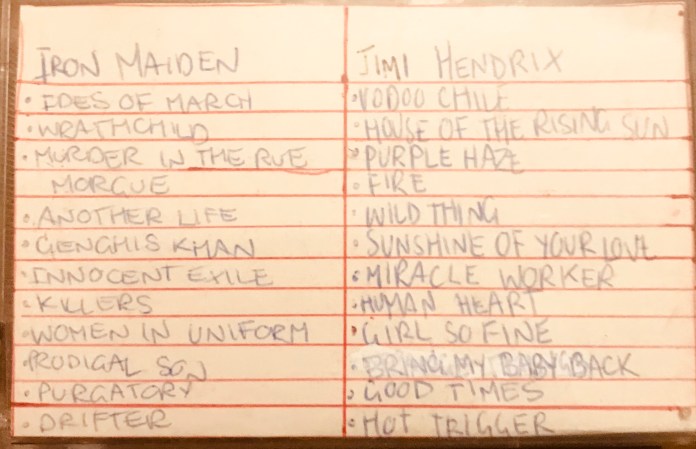
 I’m a bit torn on this album. I always thought it should be one album, like “Siamese Dream” which I have on CD. The main songs I listened to are the ones I had to learn for the band I was in, like “Bullet With Butterfly Wings” and “1979” and “Zero”.
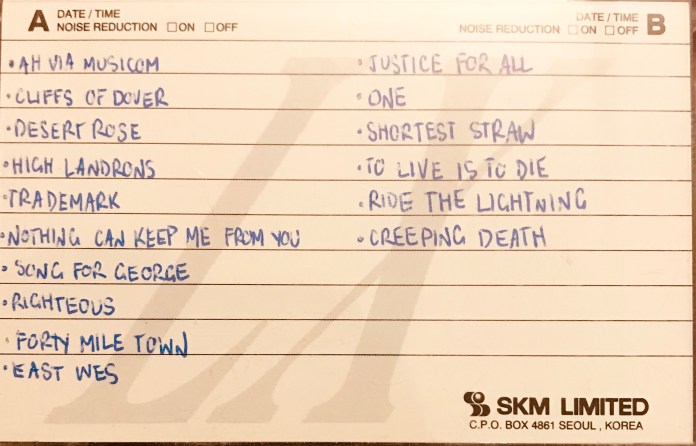
 It’s a weird mix for sure.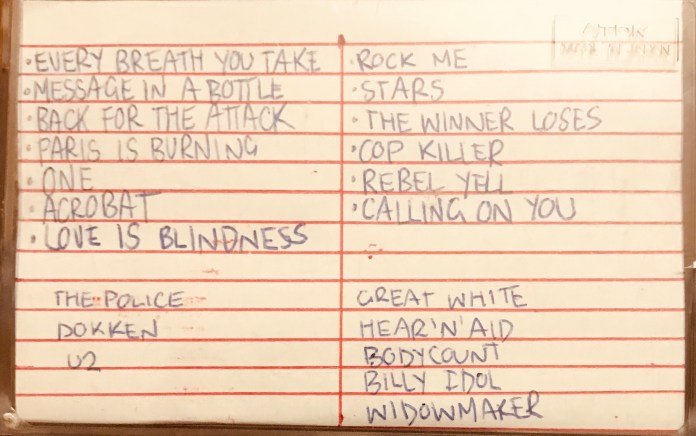
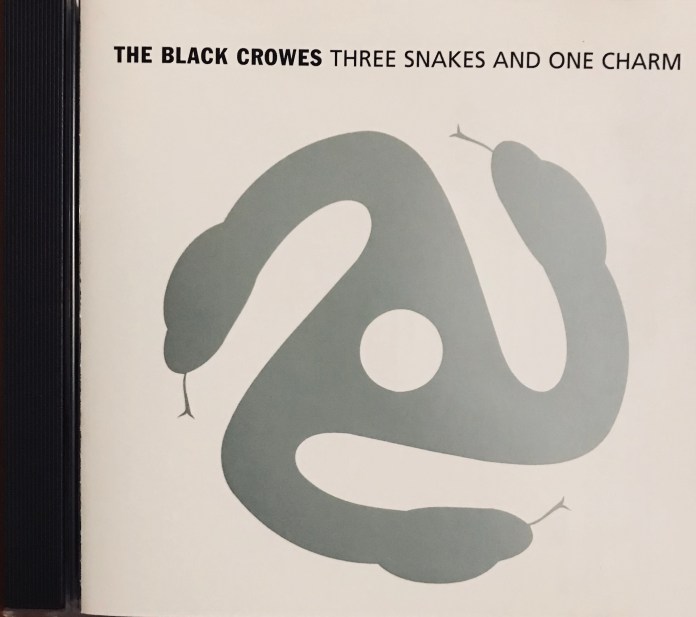 Prior to “Three Snakes And One Charm”, my only other Black Crowes purchase that I had in my possession was the “Remedy” single. And I still don’t know what happened to the debut album LP I had.


 The album came out towards the end of 1994, but it was in 1995 that it started to get people’s attention and for me, it was around May/June 1996 that I committed financially.
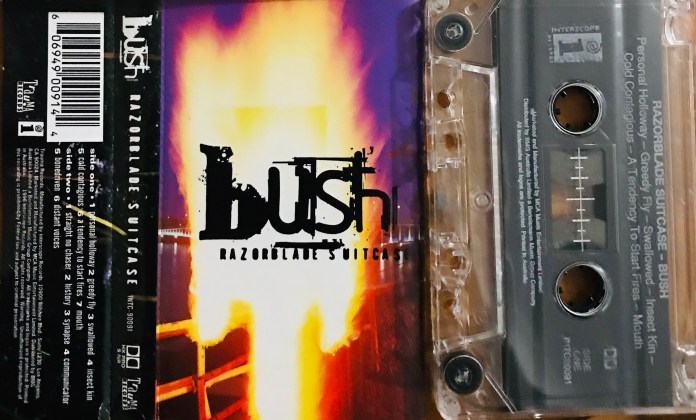 The cassette was in a 3 for $10 bin, so it was a no brainer. I didn’t get it when it came out in 1996, but circa 1998.
 destroyerofharmony