Classic Songs to Be Discovered, Derivative Works, Influenced, Music, My Stories

1986 – Part 1.1: Iron Maiden – Somewhere In Time

The first thing that grabs you is the Bladerunner style cover. Bruce Dickinson mentions the same in his book, “What Does This Button Do?”
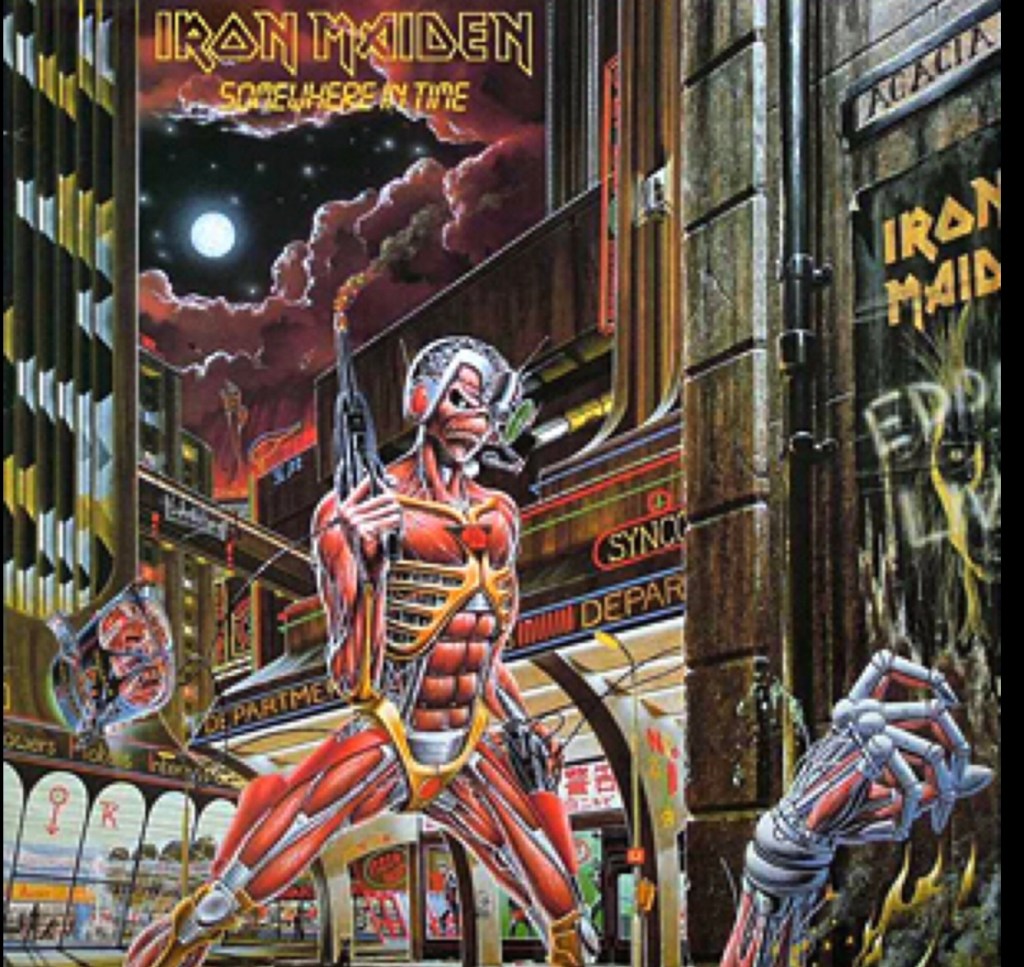
Apart from buying the album, the fan is also buying a great piece of art by Derek Riggs, who took 3 months to come up with the painting.

During this 80s era, the UK government decided to tax the entertainment industry over 80% of what they earn so this meant that the band and other UK artists had to go into exile and were caught somewhere, far away from home for nine months of the year. So the album ended up being written and recorded in different places and in different studios.

When the sessions started, Bruce Dickinson wanted to do something different, which made everyone laugh. He wanted Maiden to lead instead of delivering just another Iron Maiden album.

But, the fans got “just another Maiden album”. And we loved it.

Steve Harris contributed “Caught Somewhere In Time”, “Heaven Can Wait”, “The Loneliness Of The Long Distance Runner” and “Alexander The Great”. Adrian Smith contributed “Wasted Years”, “Sea Of Madness” and “Stranger In A Strange Land” while Dave Murray brought in “Déjà Vu”.

A chord is strummed, a synth chord rings out and a harmony lead is heard. This repeats for a few times and then a drum groove comes in. Subdued it percolates, changes key and at the fifty two second mark, it explodes.

“Caught Somewhere In Time” had really started. And that exploding intro comes back in the solo section at the 4.50 mark. As Harris once said, it’s about a nightmare trip through time due to a malfunction in the time machine.

The iconic open E pedal point riff starts off “Wasted Years”, Maiden’s contribution to the tales of touring and being on the road for a long time. It’s no surprise that this song was written straight after their biggest and longest tour for the “Powerslave” album which resulted in the “Live After Death” album.

The intro lead riff was rejected by Smith but Harris heard it and told him to work on it.

And the whole solo section is head banging, fists in the air, desk breaking material. Check out the way they build up the intro E pedal point riff into the solo section.

The solo section of “Sea Of Madness” is one of my favourite pieces of music on this album.

“Heaven Can Wait” is the story of a person who is struggling to transition to Heaven. The song just moves along, but when the whole “Take my hand, I’ll lead you to the promised land” section starts off, its pay attention time. Then those “woh oh oh” chants kick in and its desk breaking time. And how good is the clean tone guitar riff under the “woh-oh-oh”.

The guitar intro to “The Loneliness Of The Long Distance Runner” is inspiring, There is a film with the same title and Harris once said in an interview something like, “you always have to run in life, move forward, and you do it alone.”

The way Bruce Dickinson carries the vocal melody for the Chorus is excellent, and then the harmony leads kick in while Nicko McBrain is doing double time on the drums.

Then at the 3.30 mark, a blues rock like lead kicks in with pentatonic bends before it morphs into a metal like solo. And the song ends the way it started, with a tonne of memorable harmony leads.

The open E bass shuffle of “Stranger In A Strange Land” gets me interested, but it’s the Adrian Smith riff that seals the deal.

And how good is the lead break.

While the title shares the same name as the Robert Heinlein book, Adrian Smith based it on a story he read about an old sailor John Torrington, a member of the mysterious 1845 Sir John Franklin expedition that attempted to find the Northwest Passage from America to Asia. More than a century later in 1984, he’s perfectly preserved body was found in the ice of the North Pole.

Check out “Déjà Vu” from the 30 second mark, when that harmony lead kicks in. It’s like “The Loneliness Of The Long Distance Runner” part 2 and it morphs into a riff that reminds me of “Die With Your Boots On”.

How good is the pre chorus vocal melody when Dickinson starts to sing, “cause you know this happened before”?

And that harmony lead from the 2.50 mark. Brilliant.

There is blowing wind, a slow military march tempo and a clean guitar solo. That is how the album closer, “Alexander The Great” starts, and it percolates musically, until it explodes into the verses.

The lyrics are somewhat like a children’s encyclopaedia article however there is enough detail there line by line.

And that groove and feel change at the 4.50 mark is excellent, with more leads and more harmonies.

Not bad for just another album.

But.

For all its excellence, the tracks on “Somewhere In Time” (apart from “Wasted Years” and “Heaven Can Wait”) are really underplayed when it comes to the set lists.

P.S. This issue of Guitar Legends is one of my favorites with a heap of information. But that will be for another day.

Standard
Classic Songs to Be Discovered, Derivative Works, Influenced, Music, My Stories, Unsung Heroes

Australian Method Series – BB Steal

BB Steal was Australia’s entry for world domination in the hard rock movement. But did the world need a new Def Leppard.

Their association with the band wasn’t just inspiration. They opened up for Def Leppard during the “Adrenalize” Tour and Def Leppard guitarist Phil Collen produced the title song on their “Heartbeat Away” EP and co-produced their first full-length album “On The Edge”, which also features a version of the song “Heartbeat Away”. Collen also played some guitar and sang backing vocals on the album, but is not credited.

BB Steal (otherwise known as Beg Borrow Steal) was spawned from the NWOBHM sounding “Boss” band. In typical Australian hard rock fashion, they lived in development EP hell for at least 4 years before the album came out. 4 years is a long time in the music and recording industry.

And the album definitely racked up the bills as recording took place in Los Angeles and Montreal with various engineers and studio players.

Formed in 1987, they released the 4 song EP “Heartbeat Away” in 1988. The title track of this EP set the tone for the sound and feel the band would pursue. The Def Leppard “Hysteria” album sound.

So, “On The Edge” was released in 1991. It’s one of those should have and would have and could have stories. It should have done better commercially, and it would have if Grunge didn’t come, and it could have done great numbers if it came out a few years earlier.

If you love Def Leppard then you will love BB Steal. Critics praised em and also drilled em, calling em a poor version of Def Leppard. But the band was a lot more than the Def Leppard comparisons.

“On The Edge (Lizzy Town)” has this “Led Zeppelin III” acoustic vibe before it moves into a Def Leppard like groove and vocal.

“Big On Love” is probably the best song not written by Def Leppard that sounds like it belonged on “Hysteria”. At one stage I thought it was “Animal”.

Then “Hysteria” starts. Wait, it’s called “Ride On”. They are similar but derivative enough to stand on its own.

“Suffer In Silence” is another track which is very Def Leppard like.

“Live It Up” has a guitar intro that could have come from a Van Halen album, before it goes into an AC/DC like groove. The vocals of Craig Csongrady on this album are just too much like Joe Elliot, in the same way that Marc Storace from Krokus was too much like Bon Scott.

“Shot Full Of Love” feels like a cut from Babylon AD. “Precious Love” has that “Stand Up” vibe.

“Don’t You Love Me and Leave Me” is an AC/DC song musically, with a bit of The Cult added in vocally and musically.

“Heartbeat Away” is from the Phil Collen produced EP, released in 1988 and “Troubled Child” closes the album, with a Journey like feel musically and a Joe Elliot like vocal.

In the 2019, re-issue, it comes with three songs from the original 1988 EP in “I Believe” (very Journey like), “Hold On” (has a guitar hero solo moment) and “Heartbeat Away” (the Phil Collen produced and the song which set the stone for the album to come a few years after).

And when the album did nothing commercially, the band disappeared along with thousands of other hard rock bands.

But in 2012, they returned with a new album called “Resurrection”. But that’s for another day and another “Australian Method Series” post.

Standard
Classic Songs to Be Discovered, Influenced, Music, My Stories, Unsung Heroes

The Record Vault – Addendum: Coheed and Cambria – No World For Tomorrow

When I did the previous record vault post for “No World For Tomorrow” I did mention that I didn’t have the CD anymore. So I went searching at the usual local sellers but found one on eBay.

How good is the artwork by Ken Kelly, who also created the artwork for “Love Gun” and “Destroyer” by Kiss.

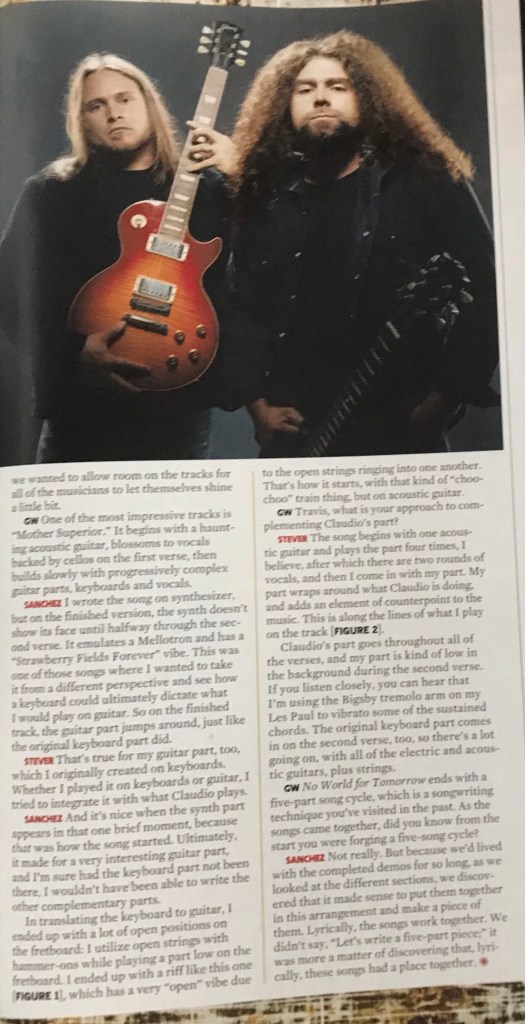
Here is the Holiday 2007, Guitar World issue and article that got me to commit and check out the music of Coheed and Cambria.

Coming into the “No World For Tomorrow” recording cycle, the band was down to two with drummer Josh Eppard and bassist Michael Todd exiting due to the familiar story of drugs and dysfunctionality within rock and roll bands. Claudio Sanchez and Travis Steer remained. And for the first time, they really collaborated together.

With an uncertain future, the manager of Sanchez put him into contact with two songwriters in Sam Hollander and Dave Katz, and together they came up with a pair of songs for Hollywood. The songs “Running Free” and “The Road And The Damned” were written for the soundtracks of “Transformers” and “Ghost Rider”. But they didn’t get picked. Instead they provided the spark for the album.

“The Running Free” is described as “uplifting with its U2-esque chorus” and it even became the albums leadoff single. Sanchez further mentions that “even though this is a dark album and all hell is about to break loose, there is still hope. At the other side of the tunnel there is a light. And I feel “Running Free” expresses that.”

So Sanchez and Steer decided to keep the band alive. Rick Rubin had just joined Sony/Columbia and he became the album’s A&R supervisor, like how John Kalodner was listed as the same on so many albums in the 80’s and early 90’s.

The band had their previous albums produced by Chris Bittner and Michael Birnbaum, however that relationship turned sour, so Rubin hooked em up with Nick Raskulinecz. Since Raskulinecz worked with Foo Fighters, he brought in Taylor Hawkins to drum. Meanwhile bassist Michael Todd came back into the fold, clean and sober, however he would depart again a few years later after he was arrested for break and enter. The song “Domino The Destitute” from “The Afterman” releases is about Michael Todd.

After the album was done, Chris Pennie from “Dillinger Escape Plan” joined as the permanent drummer. He kept this role for the next album, “Year Of The Black Rainbow” and then was replaced by Eppard, who returned for “The Afterman” releases and he’s been there since.

The guitar riff in “Mother Superior” is now known as the guitar riff, but it was written on a synth/piano first. The whole song was synth heavy until Raskulinecz advised them to make the rhythm guitar progression the main focus. This is what Sanchez said about it, “I wrote the song on synthesizer, but on the finished version, the synth doesn’t show its face until halfway through the second verse. It emulates a Mellotron and has a “Strawberry Fields Forever” vibe. This was one of those songs where I wanted to take it from a different perspective and see how a keyboard could ultimately dictate what I would play on the guitar. So on the finished track, the guitar jumps around, just like the original keyboard part did.

Crank it loud.

Standard
A to Z of Making It, Classic Songs to Be Discovered, Derivative Works, Influenced, Music, My Stories, Unsung Heroes

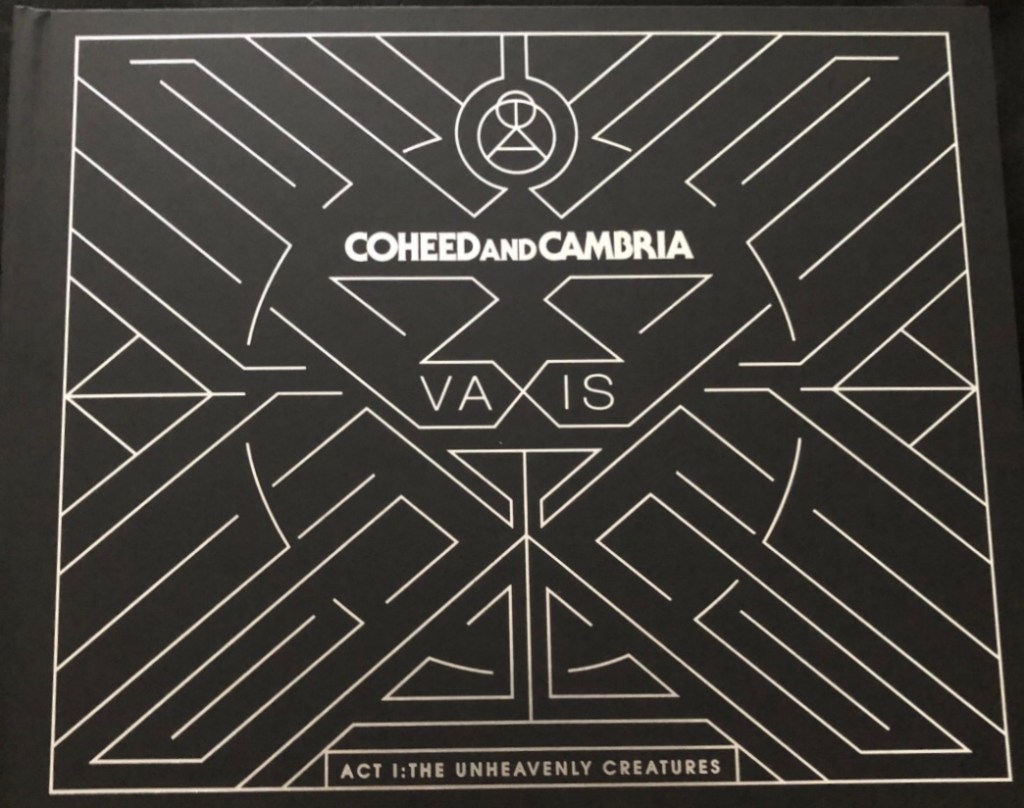
The Record Vault: Coheed And Cambria – Vaxis – Act I: The Unheavenly Creatures

Coheed and Cambria were back in the Amory Wars universe when they announced the 5 part Vaxis series.

This is Act 1.

Otherwise known as “Vaxis – Act I: The Unheavenly Creatures”, the ninth album, released on October 5, 2018.

As soon as it was announced, I was interested and Pre-Ordered the limited edition deluxe box set which includes an 80+ page hardcover, full color book with custom illustrations and complete ACT I story.

The Book also houses the CD of “The Unheavenly Creatures” as well as the exclusive BONUS CD, “The Crown Heights Demos”.

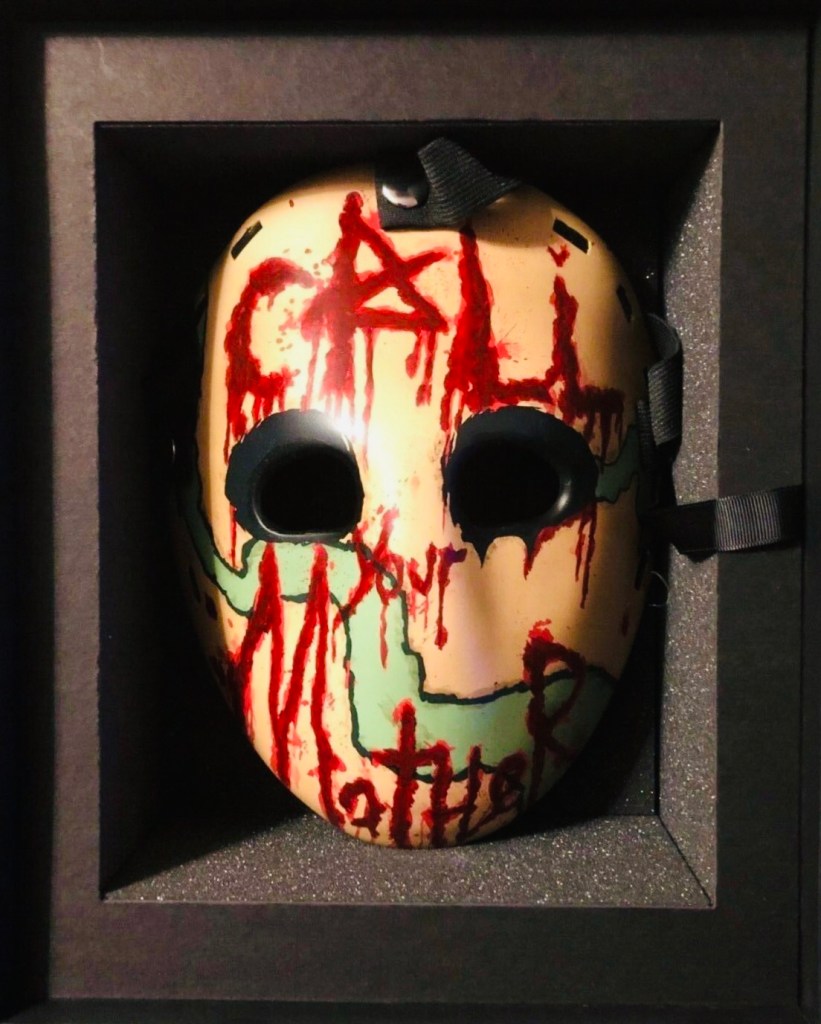
The box set also includes a replica Creature mask, a fold out poster of the cover art, the usual VIP/Black Card which allows card holders early access to tickets and early entry to Coheed and Cambria headline shows.

And the pre order also came with access to a digital site to download the album and the demos on release day.

So, the story.

Set sometime after the events of “No World for Tomorrow”, (their 2007 album, as the three subsequent albums were all prequels), the planets that formally made up Heaven’s Fence are scarred and cracked after an event known as “The Great Crash.”

A group of elites known as the Five Houses of the Star Supremacy have converted these worlds into prison planets, with one planet being called The Dark Sentencer.

The album tells the tale of two new characters, Sister Spider and Creature as they struggle with being imprisoned on The Dark Sentencer and fight to secure the safety of their unborn son, Vaxis.

At 78 minutes, it’s a monster of an album.

The album opens as usual, with a short music and spoken intro called “Prologue”. The voice over talks about “the five houses”, “the planet prisons”, and “a love story”. And the voice ends the narrative with, “It begins with them, but ends with me, their son, Vaxis.”

Then the “Domino The Destitute” inspired riff kicks off “The Dark Sentencer”. You get the big chants like a prison riot is taking place, the big rock riffs and the progressive feel of the arrangement. Like all Coheed albums, song number 2 is the epic.

The title track “Unheavenly Creatures” has a riff that sounds like it was written on the TonePad app. When the guitars come crashing in, it’s major key pop rock.

I like how Coheed always makes riffs in a major key sound heavy, like in “Toys”. If anything it could have come from the fingertips of Mark Tremonti.

The spirit of “Mother Superior” is evident on “Black Sunday”.

“Queen Of The Dark” starts off with a sad piano riff and then a digital delay strummed riff comes in before the window shattering drum groove sets the mood and tone.

“True Ugly” feels like a power pop punk song, full of melody and aggression.

“Love Protocol” has an arena rock Chorus that needs to be heard.

“The Pavilion (A Long Way Back)” has a simple palm muted arpeggio guitar riff and a drum groove that demands attention. It’s one of the best songs on the album and it was the first song written for the album.

“Night-Time Walkers” feels like a “Halloween” or “Escape From New York” soundtrack in the intro. Or a scene from “Stranger Things”. Then the crunching guitars kick in and the drumming becomes more dominant before it moves into a massive Chorus.

“The Gutter” could have come from “A Night at the Opera”. And how good are the violins in this song.

“All On Fire” feels like “No World For Tomorrow”.

“It Walks Amongst Us” has this Middle Eastern exotic soundscape to start off, before it moves into a metal like riff that is played with an 80s keyboard synth sound.

“Old Flames”, is the second last track, and it’s a massive song. You can see it in the same way that the second last episode of each season of “Game Of Thrones” was the biggie.

This feels like classic rock as a piano starts it, before the Cheap Trick like riff kicks in and a massive Arena rock Chorus.

The whole “Naa / Na na na na na-ah” feels like a Cheap Trick song. Even My Chemical Romance have sections like this. As the guitars and drums end, the piano riff starts and it’s the “Prologue” riff.

“Lucky Stars” is an acoustic number that closes the record. It’s like the aftermath. Make sure you stick around for the Clapton like lead break.

And the guys toured hard on this album and now we wait for “Act 2”, in between Claudio’s side project The Prize Fighter Inferno, named after a character in the Amory Wars story.

Standard
Classic Songs to Be Discovered, Influenced, Music, My Stories, Unsung Heroes

1996 – Part 1.4: Bush, Deep Purple and Bruce Dickinson

Without even realizing, it’s a special U.K edition.

Bush – Razorblade Suitcase

I got this album a few years after it came out on cassette tape, via a 3 for $10 bin, so it was a no brainer.

Gavin Rossdale got a lot of crap from journalists and critics.

Like he was too handsome to be considered grunge but then he’s labelled a Nirvana clone. And when the debut album sold in the multi-millions, the band was labelled as slick rock.

He got worse treatment in his homeland. As the U.K ignored them initially, Bush landed a U.S deal and became successful in the North American market first before their album was released in their home country.

He mentioned that Pixies are an influence, and the press called him a Kurt Cobain poseur as Cobain also said that the Pixies are a massive influence. So he said “fuck it”.

“Swallowed” is the lead single. My favorite on the album.

“Greedy Fly” is basically an artist writing a song, without a thought of it being a hit. And somehow it gets released as a single and it’s seen as a hit.

“Cold Contagious” has a cool drum groove, with the guitars decorating the song in a nice way, as Rossdale is singing, “you will get yours” with the volume and intensity increasing. And at six minutes long, it’s the anti-single, but it still got released as a single.

And the band toured for 14 months to promote the album. In the process they moved 6 million copies of the album in the U.S alone.

But with every peak, there is a valley waiting below.

A fight with the label delayed “The Science Of Things” and when the album came out, their sound was suddenly seen as “old” by the press, in the same way that hard rock became old circa 1991/92.

Deep Purple – Purpendicular

It’s not on Spotify but YouTube has it. It’s ridiculous why some albums are missing from digital services.

“Purpendicular” is the fifteenth studio album. It is their first album with guitarist Steve Morse. His injection was seen a breath of fresh air.

“Vavoom: Ted the Mechanic”

The blues boogie is excellent and the Mixolydian lead break from Steve Morse is guitar hero worthy.

What a way to introduce yourself to the Purple fans.

“Loosen My Strings”

Arpeggios kick off the song, but its Roger Glover’s bass line that takes this song to a new level and then Morse starts to play a distorted chord riff which complements the bass riff.

The riff before the lead break is excellent, but make sure you check out the lead break and the outro lead break, which sounds like a Boston outro, ala “Don’t Look Back”.

“Soon Forgotten”

It’s a strange song, with a riff that sounds a little bit exotic and a bizarre staccato like vocal melody on top of it. The organ work on this track is stunning and you are reminded why Jon Lord is regarded as one of the greatest players of all time.

“Sometimes I Feel Like Screaming”

The intro guitar from Morse is haunting and sad. He then plays this melodic lead in between the verses which is memorable.

The guitar solo is amazing.

It’s one of their best and should be known with their classic songs.

Did I mention that the guitar solo is amazing?

It is.

Do yourself a favour, check it out and start playing air guitar to it.

And did I mention there is an outro guitar solo as well?

There is. So check that one out as well. In other words, Steve Morse rules on this track.

“Cascades: I’m Not Your Lover”

The churchy organs of Jon Lord kick it off, while Steve Morse plays a bendy melodic lead, before it takes a left turn and a U-turn and becomes a hard rock song with a “Highway Star” like vibe.

The guitar/organ harmony solo from 2.15 to 3.15 is one of the great moments on this album as Lord/Morse go to town playing arpeggios, in a similar way that Lord and Blackmore did for “Burn”, just a lot faster.

“The Aviator”

Morse brings out the country and folk influences to create a major key “good vibes” medieval arrangement. Make sure you check out “Highland Wedding” from Steve Morse’s “High Tension Wires” from 1989 as Morse has been dabbling with these kind of melodies previously.

“A Castle Full of Rascals”

The beginning sounds like a cross between ELP and Led Zeppelin in the blues rock vein.

And the song changes at 1.58 mark with a bass groove, lush keys and a progressive like vocal melody. Morse at first is playing single note lines before crashing in with power chords and distorted single notes, paving the way for Jon Lord and his Hammond Organ solo.

“A Touch Away”

It’s got that feel good 70’s progressive vibe.

“Hey Cisco”

It sounds like “Hit The Road Jack” on steroids. Hell, it could have come from a Van Halen album. Make sure you stick around for the guitar and organ harmonies from about 4.08 and then Morse breaks loose with his fast alternate picked Mixolydian lines.

“Somebody Stole My Guitar”

What a riff to introduce the song. It grooves, its heavy and bluesy. I haven’t mentioned the swing and soul feel of Ian Paice yet, but man, this dude can play.

At the 2 minute mark, Morse starts this palm muted arpeggio riff, while Lord plays these Organ chords before Morse launches into the solo, while Lord plays the palm muted arpeggio riff on the Organ.

Brilliant.

“The Purpendicular Waltz”

It’s a blues shuffle built around a cool groove and a great closer to the album.

For all the debate about Blackmore and Morse, forget it.

Listen without prejudice.

Bruce Dickinson – Skunkworks

I didn’t like this album when I first heard it. And it stayed on the shelf for a long time before I pulled it out and re-listened. I still didn’t like it and back on the shelf it went. But over the last 8 years, the album has taken a life on its own.

I didn’t get it back then, but goddamn this album sounds progressive. The cover design from Storm Thorgerson (RIP) should have been an indication of its progressive intentions, but it escaped me.

It was meant to be a band album but the label wouldn’t release it under anything except Bruce Dickinson. Jack Endino a Seattle producer who worked on Nirvana’s “Bleach” is producing. The sound is like an amalgamation of 80’s Rush with alternative rock and metal.

And I’ve never heard of Alex Dickson again after this album but he does a stellar job on the guitar and as a co-writer on all the songs. But as Rod Smallwood said, “Bruce Dickinson is a heavy metal singer and that will never change”. His attempt to shake off the image of his Maiden past was futile.

“Back From The Edge” has double time drumming over a jangly chord progression, but it’s the bridge and solo section which gets me interested.

“Inertia” could have come from any Maiden album, past or future.

How good is the riff to kick off “Faith”?

At times I feel like I am listening to a Dream Theater cut from the “Falling Into Infinity” album with this song.

Make sure you check out the solo section.

“Dreamstate” in the verses sounds like a Nirvana cut. Yes, that’s right folks, Bruce is channeling Cobain.

How good is “I Will Not Accept The Truth”. Listen to the repeating arpeggios in the verses. Sinister and melodic in the same breadth.

The whole mood and groove in the interlude/solo section of “Strange Death In Paradise” while Dickinson sings the title is a must listen for any Dickinson fan.

In the end, unless you were interested in what Dickinson was up to, there was nothing really here to get you to commit. Then again, the 90’s was an interesting time for 80’s artists and the fans of those artists.

Standard
Classic Songs to Be Discovered, Derivative Works, Influenced, Music, My Stories

1996 – Part 1.3: Journey – Trial By Fire

Steve Perry was back with Jonathan Cain, Neal Schon, Ross Valory and Steve Smith and Journey was rocking again after a 10 year gap, thanks to no small part to John Kalodner. Kevin Shirley is producing and this album is a return to form.

“Message Of Love” has a Chorus inspired by “Separate Ways”. As far as opening tracks go, it’s excellent, a great way to re-introduce the band in the 90’s and while other bands were removing guitar solos, no one told Neal Schon about it as he goes to town on this one and re-introduces the world to guitar solos.

“One More” has a groove that could have come from a Faith No More album. And what made Journey famous originally is how they could change styles within an album, as “When You Love A Woman” shows a their R&B Ballad roots.

“Forever In Blue” has this “Best Of Both Worlds” style riff to kick it off before a familiar Journey like Chorus kicks in.

“Castles Burning” has the guitar front and centre. A sleazy bluesy rock song with an arena rock like Chorus. It’s by far the heaviest track on the album.

“Still She Cries” has some wonderful guitar playing on it for a ballad and Perry as usual delivers a stellar vocal.

The second half of the album didn’t rock as hard as the first half, but each song has some cool Schon moments.

“When I Think Of You” is a ballad, and not a favourite, but Schon is playing some memorable melodic licks.

“Can’t Tame the Lion” is a great rock song with excellent guitar passages that remind me of Vito Bratta.

“Trial By Fire” feels like a jam over a Smith/Valory groove with Schon playing jazz like leads and chords.

A back/hip injury to Perry derailed the subsequent tour and by 1998, Perry was out of the group and Journey went into different versions before settling in with Arnel Pineda.

Then there was a fight over the Journey brand, as Ross Valory and Steve Smith tried to take control of the band name. While that was happening, Neal Schon and Jonathan Cain also fell out as Cain found religion and didn’t want to play the Journey songs anymore as it went against his faith, which infuriated Schon.

But hey, money talks and they made up and Journey is rocking again.

Standard
Classic Songs to Be Discovered, Derivative Works, Influenced, Music, My Stories, Unsung Heroes

Australian Method Series: Jet – Shaka Rock

“When we were 15 or 16 we were playing covers – not so much grunge, which was very much what was happening at the time.

We were more into The Band and an Australian band called You Am I, and a band called Sloan from Canada, which were a huge influence.”
Nic CesterInterview in the Songwriting Magazine

The debut album “Get Born” released in 2003 went nuts everywhere. In Australia, it’s six times platinum. The songs reminded everyone of other songs that came before and of an era that was seen as innocent and golden.

Every great riff or drum beat was put into the Jet blender.

“Are You Gonna Be My Girl” became even bigger when it got used by Apple for its iPod ads. When people started to talk about its originality and influences, it became even bigger.

The follow up, “Shine On” released in 2006, is a favourite of mine, even though it didn’t do great numbers commercially like the debut. In Australia, it’s certified platinum, but the press outside Australia was scathing, having them labelled as one hit wonders already. Wolfmother copped the same treatment.

And once the tour finished, the band members went their separate ways. No one spoke to each other for 9 months. They eventually organised to meet at Nic Cester’s place in Italy. They yelled and screamed at each other and made up. Without any label interest, they produced and financed their next album.

“Shaka Rock” came out in 2009. Australian fans certified this album Platinum. To a lot of people, it’s still virtually unknown.

“Shaka” is basically a hand gesture in which the thumb and little finger are extended outwards from a closed fist, used to express approval, solidarity, etc.

“K.I.A” has the bass dominating with a Rage Against The Machine like groove. And vocally, Nic Cester wails and barks his way through the verses while singing his way through the Chorus.

“Beat On Repeat” sounds like a song from The Clash. It’s got that pop punk vibe.

“She’s A Genius” brings a riff which is reminiscent to “My Sharona” from The Knack. “Ain’t My Bitch” from Metallica also had a riff groove like “My Sharona”.

The origins of the riff goes back all the way to 1966 and The Spencer Davis Group with their song, “Gimme Some Lovin”.

“Black Hearts (On Fire)” brings a Molly Hatchett Southern Blues Rock boogie.

The opening bars of “Seventeen” remind me of “Fantasy” from Aldo Nova and “Cold As Ice” from Foreigner.

The Beatles like intro to “La Di Da” is familiar.

“Goodbye Hollywood” has this U2 like vocal as Cester says goodbye to the addictions that came with his fame.

“It just didn’t fit me like it should”

“Walk” has this “Come Together” like swagger.

“Times Like This” is “Long Train Running” from The Doobie Brothers and I like it.

“Let Me Out” has this “Jessie’s Girl”, “My Best Friends Girlfriend” and a bit of “Born To Run” chucked in. Take those little influences and create something new.

“Start the Show” sounds like “Supergrass” making love to “T.Rex” with a little bit of “Cold Chisel” thrown in.

And the final song, “She Holds a Grudge”, is very Rolling Stones ballad like.

The whole album is so easy to listen to and at 41 minutes, it just rolls and rocks.

After “Shaka Rock” and the tour, the band went on hiatus or in their own words, “discontinued as a group”.

Until 2017.

When they reformed for some one off shows and opening gigs for Bruce Springsteen.

And they then played sold out shows around Australia in 2018 and released the album “Get Born Live”.

Check out the Shaka 🤙.

Standard
Classic Songs to Be Discovered, Derivative Works, Influenced, Music, My Stories

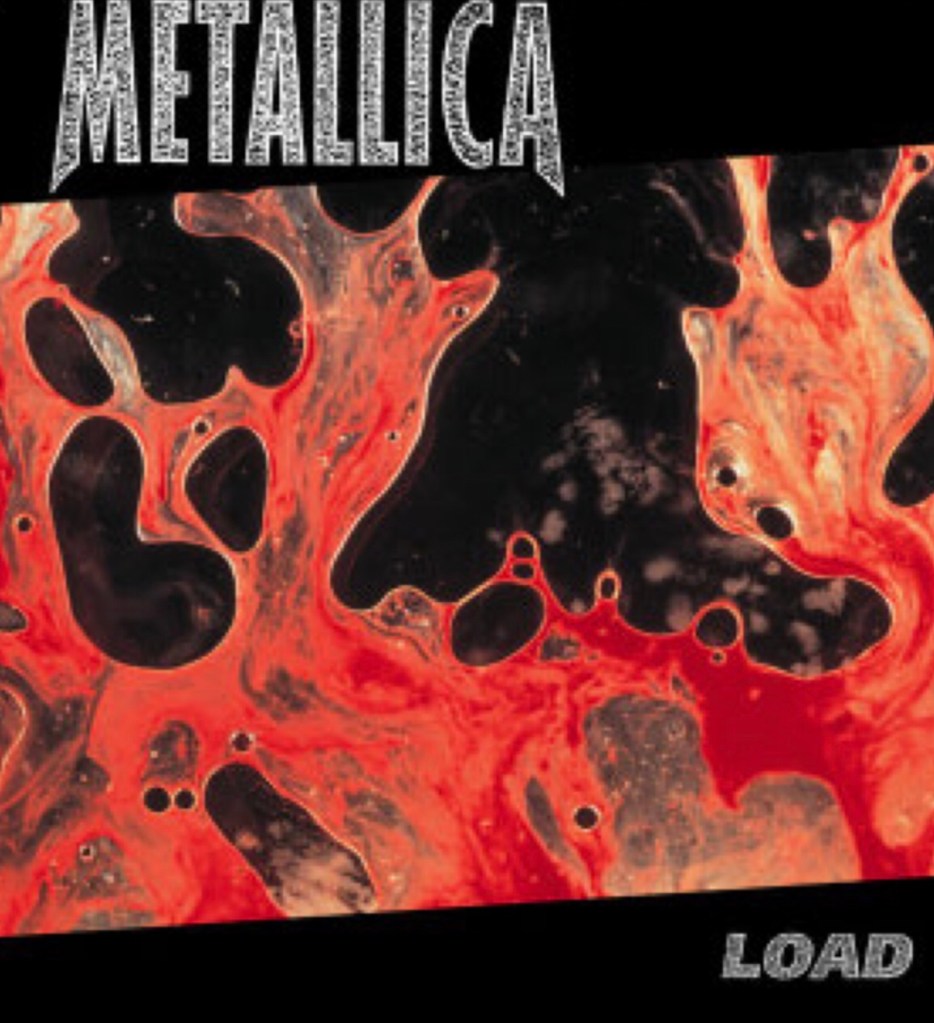
1996 – Part 1.2: Metallica – Load

Five years is a long wait between albums, especially in the era controlled by record labels. Your career and audience could disappear within that time. The scene itself could change dramatically.

The self-titled multi-platinum “Black” album came out in 1991. After a two and a bit years global trek, the band released the “Live Shit: Binge & Purge” box set in November 1993.

And then they disappeared from the public eye.

We didn’t know it at the time, but in 1994, the band got into an argument with Elektra, which underwent massive personnel changes that year. And they felt that they were not getting the love and respect they deserved.

So in 1995, Metallica sued to get out of their contract but before it even went to court they sorted out their differences.

For the band to stay with the label, Elektra had to give the band a larger royalty on its music and they had to hand over the master tapes of all the records. The band basically didn’t want the label to control the masters and issue constant “Greatest Hits” or “Best Off” albums that rip off fans or to give the music to corporations for advertising. It was the best business move they did.

By June 1995, work on the album started. In September, they played a few live shows and premiered “2 x 4” and “Devils Dance”.

In January 1996, basic recording for the album was finished. When the album was sent for mixing, some of the tracks had different titles. “Ain’t My Bitch” was just “Bitch”. “Cure” was “Believe”. “The House Jack Built” was just “Jack”. “Mouldy” became “Hero Of The Day”.

And I remember reading a Guitar World issue in July, 1996 and the interviewer just heard a song called “F.O.B.D” and it was described as a “hypnotic, pop tinged” song. We all know this song as “Until It Sleeps”. And another song called “Dusty” which was described as a “ZZ Top on steroids groove”. This became “Poor Twisted Me”.

At this point in time, the self-titled album known as the “Black” album had done 9 million in U.S sales, plus many more millions worldwide.

Metallica didn’t really care about anything as they just moved the needle again to suit themselves and experimented in heavy blues rock territory this time around. And at 78 minutes and 59 seconds long, it was the longest Metallica album.

“Aint My Bitch” has got that “My Sharona” vibe from the outset but goddamn it, the riff is addictive. It’s got all the classic Metallica elements. A foot stomping groove, some fast alternate picking, a hooky chorus and a lot of blues rock, which reminds me of “Holier Than Thou” merged with a little bit of Motorhead.

And wait, what’s that, a slide guitar for the solo. Goddamn right it is.

“Out of my way” alright.

“2 x 4” has this Aerosmith swagger with a lot of Texan dirt. And what about the psychedelic vocal section when they sing, “friction, fusion”.

“I can’t hear ya talking to me”.

Make sure you stick around for the solo section. The song feels like it goes half time there and it then slowly rebuilds up musically, while the guitar solo also increases in intensity.

“The House That Jack Built” has an ominous sounding intro, as James starts singing, “open doors to walk inside”.

How groovy is that verse riff?

“Until It Sleeps” is what Metallica is all about, merging melody with aggression. If you don’t believe me, check out the menacing clean tone sections.

Then there is a vibrato like guitar that keeps ringing as the bass riff starts for “King Nothing”. The outro reminds me of the “Enter Sandman” outro like when the truck hits the kids bed in the video clip.

“Hero Of The Day” is the shortest song on the album, which has a lot of major key elements and a bit of a Southern Rock vibe, before it chugs along into blues rock and metal territory.

“Bleeding Me” percolates until it explodes. This kind of musical drama reminds me of the 70’s acts and how they would build a musical story.

And how good is that outro and Hammet’s solo.

“Cure” asks the question “if you believe”. I do believe in this blues metal boogie rock of Metallica as Hetfield talks and sings and rants his way through the song. Towards the end, Hetfield is converted as he screams, “I do believe”. It’s an underrated album cut.

“Poor Twisted Me” brings out that classic ZZ Top style of boogie. And it’s also got some Danzig/Misfits in the mix and a bit of Led Zeppelin’s “The Wanton Song”.

How good is the vocal melody on “Wasting My Hate”?

The acoustic intro doesn’t give any indication of the song that would explode afterwards.

After “Nothing Else Matters” and “The Unforgiven” it was just a matter of time before we got a simple strummed song. That honour goes to “Mama Said”.

And how good are those country licks in the Chorus?

“Thorn Within” has this AC/DC like descending riff which is already a tick in my book.

“Ronnie” is another classic ZZ Top song that ZZ Top didn’t write with its rumble and tumble boogie riff and Billy Gibbons style vocal.

Finally, we have the closer, “The Outlaw Torn”. This song quickly became a favourite for me. The syncopated drum, bass and guitar groove, keeps building until it explodes into the riff that would become the Chorus. It then settles down again, with just bass and drums while James Hetfield delivers one of his best vocal performances as the song moves between the verses and choruses.

And we don’t get to hear the full outro, as it had to be cut down due to no more space on the CD to include it. But if you purchased one of the singles from the album, the full version is put there as a B-side.

“Load” is a different Metallica but still a very strong Metallica.

Play it loud mutha. \::/

Standard
A to Z of Making It, Classic Songs to Be Discovered, Derivative Works, Influenced, Music, My Stories

1996 – Part 1.1: Def Leppard – Slang

There was no way Def Leppard could continue in the same vein of “Pyromania”, “Hysteria” and “Adrenalize” without a reset. It became a heavy burden to carry on the style of those albums. They had to change or die.

I was surprised when the opening musical notes of “Truth” started off, and the distorted “why don’t you tell me” vocal line. It was more in the vein of Brit Alternative Rock/Pop than Blues Heavy Rock.

Check out the exotic sounding lead break. And the demo version of the song sounds more natural and it’s my go to version as the mix is in the heavy rock category that I like.

I like the exotic middle eastern sounds on “Turn To Dust” before a groovy Rick Savage bass riff kicks in and the Chorus is classic Def Lep, with the layered vocals.

“Slang” always felt like an INXS song to me as it’s got that fun pop vibe.

How good is the repeating lick intro to “All I Want Is Everything”?

Then when the drums and bass come in, it’s got a perfect groove and Joe Elliot’s haunting vocal melody takes it to another level.

This track could have come from a Tom Petty album.

“Work It Out” is Vivian Campbell’s first songwriting contribution and it’s a high point on the album. The song reminds me of the sounds of British bands like Gun who had a brief moment in the spotlight between 1989 and 1995.

The chugging guitar sound was made by running Campbell’s guitar through a drum machine gate.

In the June, 1996, Guitar issue, Campbell said that when he was in Dio, he wrote some of the music, but writing a song for Dio was basically writing a guitar riff and 32 bars of a guitar solo. That was his world, as Dio would then arrange the pieces as he saw fit.

Campbell mentioned that Def Leppard is not about that. It’s about getting the song right for the record. Campbell further said that;

“In the 80’s there was more than just doing what was appropriate for the song. There was the plus, you know, that I had to do a solo for a record but also had to advance my career as a guitarist in the eyes of all guitarists.”

Make sure you stick around for the interlude section. It starts off funky, there’s a repeating palm muted guitar lick with ambient noise and then a bone crunching riff.

That’s right people, no guitar solo, but still plenty of guitar melodic licks and riffs played throughout.

That small fingerpicked intro for “Breathe A Sigh” is excellent. This is Def Leppard going more rhythm and blues with their unmistakable layered harmony vocals in the Chorus.

In a June 1996, Guitar issue, interviewer Rich Maloof mentioned how the hip hop groove is reminiscent of TLC’s “Diggin’ On You”.

How good is the arpeggio picked guitar riff and the vocal melody from the start in “Deliver Me”?

And that Chorus is heavy rock with the melodic layered vocals that I expect from Def Lep.

“Gift Of Flesh” has a slamming wah solo by Phil Collen done in one take.

“Blood Runs Cold” is another classic Def Lep track. The actual version and the “Rough Mix” version are both excellent.

How cool is the New Wave style of guitar on “Pearl Of Euphoria”?

And yes there had to be a song title with a word that ends in “ia”.

The June 1996 Guitar piece from Rich Maloof ends with these words;

As guitarists in a band that found success in a doomed era of rock, Collen and Campbell have adopted the Darwinian notion that survival is dependent on change. The new era is just as doomed, of course, but it speaks well for this pair that they knew to change and had the reserve of talent needed to grow.

As Collen concludes, “We’ve picked up a lot of experience on the way and we found a way to get it out of our system with an album we think is right. To us, that is the biggest thing. We weren’t even slightly worried, and we think anyone who likes us will like it. And hopefully we’ll get some new fans as well.”

Crank “Slang” and enjoy an excellent Def Leppard record.

Standard
Classic Songs to Be Discovered, Influenced, Music, My Stories, Unsung Heroes

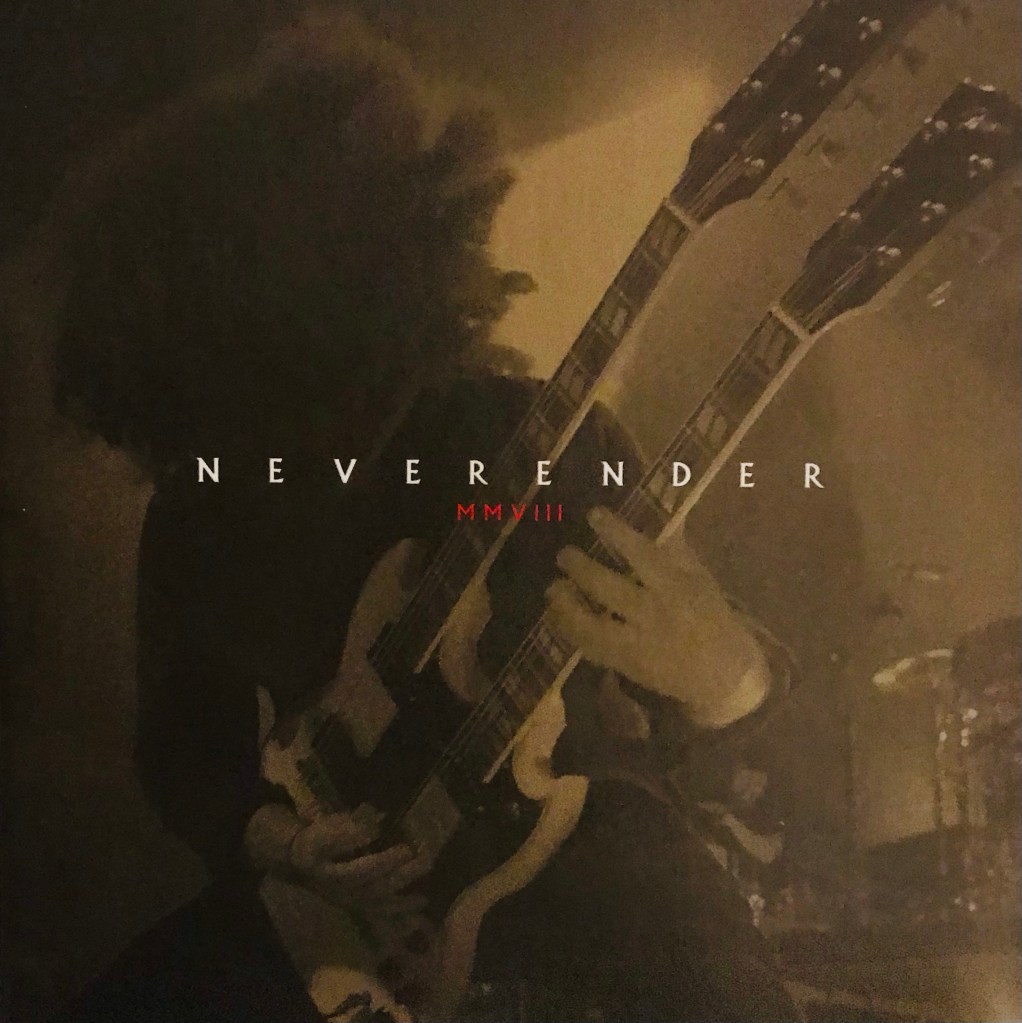
The Record Vault: Coheed and Cambria – Neverender

In 2008, Coheed and Cambria did a run of live shows called “Neverender”.

“Neverender” was basically a four-night concert series. It took place in New York, Los Angeles, Chicago and London, and consisted of one of the band’s four studio albums (at that time) being played in full each night.

On the first night, they played “The Second Stage Turbine Blade”. On the second night, they played “In Keeping Secrets of Silent Earth: 3”. On the third night, they played “Good Apollo, I’m Burning Star IV, Volume One: From Fear Through the Eyes of Madness” and on the fourth night they played “Good Apollo, I’m Burning Star IV, Volume Two: No World For Tomorrow”.

Each night also had a different encore made up of some songs from the other albums and different medleys that involved an excellent cover of “The Trooper” from Iron Maiden.

In 2009, they released “Neverender: Children of the Fence Edition” a live CD/DVD box set. It contains five DVDs and four CDs featuring live footage of the concert from each night. In addition, a fifth disc features a documentary of the concert series. As far as I’m aware only 15,000 copies of these exist worldwide.

The version that I have is just two DVD’s.

This live release sits between “No World For Tomorrow” released in 2007 and “Year Of The Black Rainbow” released in 2010.

The live version of “Mother Superior” on this is excellent. They captured magic in a bottle here.

They way it starts off with the piano backing track and then Claudio comes in with the riff and it’s just him taking centre stage. Then as he sings the Chorus, the haunting backing vocals come in and then the band.

And the “Neverender” concept is still alive, with the band doing a run of shows to celebrate the anniversary of the albums in question.

For example, in 2011, they did a tour called “Neverender SSTB (2011)” to celebrate the 10th anniversary of their debut album, “The Second Stage Turbine Blade”. And the concept has kept going every two years in 2013, 2015, 2017 and this year, they are doing a “S.S. Neverender Cruise” show.

Standard