Copyright, Derivative Works, Influenced, Music, My Stories, Stupidity

Little Wing and Catch A Rainbow

Progress Is Derivative.

I always say it. Especially when it comes to music. It’s always a new take on an old sound with some small changes to the progression.

I knew when I heard “Catch A Rainbow” from Rainbow that I had heard the song before. And I was thinking of Skid Row when I heard it, because their take on a Jimi Hendrix song was fresh in my mind at the time.

The origins of “Little Wing” go back even further to a 1966 recording of “(My Girl) She’s a Fox”, an R&B song which features Hendrix playing a Curtis Mayfield-influenced guitar accompaniment.

It’s all derivative and cyclical. Hendrix toured with Mayfield and learnt from him and then used some of the techniques that Mayfield used, like the rhythmic fills on the chords to orchestrate songs like “Little Wing” and “The Wind Cries Mary”.

To call Blackmore a copyist is wrong.

To call Dio a copyist is wrong.

To call Hendrix a copyist is also wrong.

And to see em all as super original and free from influences is also wrong.

To see Mayfield as super original is also wrong.

Everyone learns from someone or from some song. It’s why we start off playing covers. We are all influenced.

However people would like you to believe that they are original and free from influences when they bring up suits to the courts.

Did Tom Petty deserve a lyrical credit to a Sam Smith song?

Did Iron Maiden need to settle with a person who didn’t create anything and just managed an artist?

Standard
Classic Songs to Be Discovered, Derivative Works, Influenced, Music, My Stories, Unsung Heroes

June 2020 – Part 1

Beautiful
Bodies For The Bones
Die Trying featuring Shaun Morgan
Sweet Forgiveness
Art of Dying

These songs are from their “Demos and Rarities” lockdown release. I’ve been in and out of love with this band.

“Beautiful” is in the similar vein to their “Vices And Virtues” album in sound and theme. It’s the style I like.

“Bodies For The Bones” is super down tuned for heaviness. I don’t like this style. While the music sits super low which I’m not a fan of, the vocal melodies sit in the upper registry and drive the song.

“Die Trying” is one of my favourite cuts. This one features Shaun Morgan from Seether. Remember them. Seether came onto my radar almost 15 plus year ago when they did a song with Amy from Evanescence for “The Punisher” movie. A ballad called “Broken”.

“If it takes forever I would die trying”

The ethos of a lifer trying to make something from their life, to meet their definition of success and happiness.

And that’s the important element here, it’s your definition, that defines you. Don’t try to fit in to other people’s definitions.

“Sweet Forgiveness” has a haunting acoustic riff.

“Come take me out of here, I’m at the end of my rope, there’s nowhere to go”

There is always somewhere to go. Pick up the phone, talk to someone, catch up for a coffee and keep talking. There is always someone who wants to listen.

Darker Thoughts
Ghosts
Ending Days
Paradise Lost

This one-way street you’re on
You’ll never be fulfilled
And this one way street you’re on
Is gonna get you killed

That vocal melody. It’s haunting.

With inner peace gone, you pray
All those darker thoughts are coming back to stay
With inner peace gone you’ve paid
All those darker thoughts are coming back to stay

And then the violins kick in, over a grinding dirgey riff, while the “Godless are sworn to kill, Annihilation” is barked out.

Let’s chuck in an emotive pentatonic minor lead to finish it off.

On The Run Again
Chrome Division

The way this song starts off with the acoustic delta like blues riff, which morphs into a head banging distortion riff. It’s been played before, it’s been heard before, but I still like it.

Dual (featuring Matt Guillory)
Ultra City
Andy James

Instrumental music at its best.

In the 80’s, it got to a stage where the instrumental songs would be just a power chord and a million notes in the bar. Then another power chord and then another million notes. There was hardly any riffs and it became pretty bland. Because once you’ve heard one artist doing it from Shrapnel, you would have heard em all.

But these days, the instrumental players, write a song first, with awesome riffage and then decorate it with great melodic lead breaks.

Andy James is up there for me, with players like John Petrucci, Joe Satriani, Steve Vai, George Lynch, John Sykes, Yngwie Malmsteen and Marty Friedman.

Leave It Alone
Signals Gone
Blacktop Mojo

This band deserves more attention. One of the best hard rock bands out there at the moment.

Far Enough Away
Trapt

They are doing Daughtry better than what Daughtry is doing right now. There is something special about an acoustic guitar, drums, bass and a good vocal melody, with some synth strings thrown in.

Death Diviner
Soilwork

The riff.

A cross between “Schism” from Tool and Soilwork’s signature groove.

Bjorn Strid takes the clean melodic highway on vocals and a classic Soilwork song is born.

That Chorus.

The riff again.

Press play and enjoy.

When All Is Said And Done
Aldo Nova

I didn’t expect this kind of cut from Aldo Nova.

And I like how artists can still surprise me.

This is bluesy, groovy and heavy. If you like the work that Glenn Hughes did with Black Country Communion, then you will like this.

Revelation
Riders Of The Light
Highway To Paradise
Lorelei
From A Whisper To A Scream
Final Hour
Gathering Of Kings

This band’s new take on an old sound is just to my liking. This is album number 2.

“Revelation” sets my mind time machine to 1984/85 and that beautiful melodic rock coming from an excellent band called Y&T.

And if you like tunes like that, then you’ll like this project, a gathering of Nordic musos who want to create.

All Of My Life
The Road
Highway
Between Good And Bad
When She Cries
Mike Tramp

I’ve always enjoyed Mike Tramp’s voice. With the last few solo releases, his lyrics are exceptional and they resonate on this album, “Second Time Around”.

He sold his heart and soul for rock and roll in “All Of My Life”.

He looked ahead on “The Road” that broke him, made him, turned his tears to smiles, brought him home again and the road he never wants to end.

He saw life come and go so fast on a “Highway” as he went for a ride and never looked back, finding love, finding heartache, finding highs and crashing lows.

Loving You Is A Dirty Job
Easy Come Easy Go
Intensity
Lost In The Dark
Back
Victims Of Desire
Built To Please
Passion

Passion covers most of the 80’s/early 90’s sounds and releases from bands.

Kiss. Its covered.

Keel. It’s covered.

Ratt. Its covered.

Steelheart. Its covered.

Skid Row. Its covered.

Hurricane. Its covered.

Winger. It’s covered.

2020
Vandenberg

The whole album is stellar.

It gives me this feeling of when I listened to Bad Company, Rainbow (Dio fronted), Led Zeppelin, Scorpions, Deep Purple (Coverdale/Hughes version), Whitesnake and Black Sabbath (Dio fronted).

Each day is a different favourite.

“Ride Like The Wind” reminds of “Gates Of Babylon” from Rainbow. That’s my favourite today.

Yesterday, it was the Bad Company sounding “Hell and High Water”.

The day before it was the “Bad Boys” sounding “Light Up The Sky”.

Tomorrow it could be “Shout”, which reminds me of “Slow And Easy” on steroids, with a driving beat. Especially that section after the solo, when it’s just drums, and Romero is singing, “Get Up And Shout”. Even “I Love It Loud” comes to mind.

There is the “Fool For Your Loving” inspired “Shitstorm” with a David Coverdale like vocal that has been my go to track.

Or the Richie Blackmore inspired “Shadows Of The Night”.

“Let It Rain” reminds of Bonfire.

And my favourite track “Skyfall” closes the album.

And apart from the excellent riffage and song construction, the lead breaks are superb, song within song moments.

And the band is excellent.

Part 2 coming up.

Standard
A to Z of Making It, Classic Songs to Be Discovered, Derivative Works, Influenced, Music, My Stories, Unsung Heroes

2000 – Part 3

Covering 1977, 1985 and 2000 releases at the same time, I’ve understood what the term lifer means. There is no safety net, no plan B. It’s music and music only.

In the 1977 reviews there was Michael Schenker and UFO. And here he is again in the 2000’s. In between he’s had it all, lost it all, started to regain it and then got ripped off by ex-partners and managers and family members.

But he’s still here.

UFO – Covenant

Michael Schenker returned, Schenker left, Schenker returned, Schenker left and Schenker returned again. This is UFO without the Chorus hooks from the past, but then again, I never saw UFO as a band who sat around to write big choruses. They just wrote songs for an album. On occasions, fans would make some of those songs big.

This album has a stellar band, in Phil Mogg on vocals, Pete Way on bass, Aynsley Dunbar on drums and Michael Schenker on guitar.

“Love Is Forever” kicks it off, written by Schenker and Phil Mogg. And immediately I am hooked, because the guitar playing of Schenker is in good form.

The second track, “Unraveled” is written by Pete Way and Mogg, but it’s how Schenker plays that riff, which captures me.

All of the other cuts are written by Schenker and Mogg. “Miss the Lights” has a finger plucked octave melodic riff and that section after the solo, it’s only for 20 seconds but its Schenker at his best, playing melodic palm muted arpeggios.

“Midnight Train” has a stomping E minor riff from Schenker and Mogg puts on his Bob Seger hat to deliver a vocal line which stands as one of my favourites.

“Fool’s Gold” shows Schenker’s classical and blues approach in a ballad sense. His chord voicings are classical in nature, but his solo is blues based.

“The Smell of Money” has more of Schenker’s unique playing style. “Cowboy Joe” is such a wrong title for an intro riff that sounds as heavy as “Unholy”. But the song moves between major and minor.

Michael Schenker was also busy as a solo artist. “Michael Schenker – Adventures Of The Imagination” is an instrumental album by Schenker and “Michael Schenker – The Odd Trio” is Michael Schenker playing all the instruments. He created pseudonyms for the bass and drums, known as Harry Cobham and Kathy Brown respectively.

I remember hearing em and moving on.

Poison – Crack A Smile And More
Poison – Power To The People

Poison is an interesting case.

On the backs of MTV and their blend of punk, pop, country and hard rock, they had platinum success for the first three albums.

Then CC left or was fired.

Richie Kotzen came in and the serious “Native Tongue” came out in a climate dominated by grunge artists. But this album wasn’t a glam rock album like the ones before. It was a blues rock album, a shining light in a cacophony of noise on the charts. It was different and the label wanted sales, like before, and the MKII version didn’t last long because Kotzen couldn’t keep his hands off a band members partner. Then again, true love is true love and they are still together.

Then I read that Blues Saraceno was hired for the guitar slot. And I was interested to hear what kind of Poison we will get with Saraceno, because he was doing guitar instructional articles in the various Guitar Mags and this guy knew his stuff, and his instructional articles covered so many different styles. But time went on and on and that album with Saraceno just kept getting delayed. We got a couple tracks on a Greatest Hits album, then CC came back in and they dropped two albums.

“Crack a Smile” began in 1994.

In between there was a motor vehicle accident involving Bret Michaels and a long recovery. Then Capitol Records had lost interest in a new album and wanted to cash in on a “Greatest Hits” album, which was released in 1996.

But the fans wanted it and bootleggers were selling it for a lot, so Capital Records, being astute to see dollars as a label does, released it with additional live tracks and “Face The Hangman” a demo from “Open Up And Say Ahh”.

“Be the One” at track 5 got me interested. It’s one of those bluesy power ballads that Poison do so well. “Sexual Thing” at track 7 is classic Poison, with some killer pedal point riffing from Saraceno. “Lay Your Body Down” is a carbon copy of “Something To Believe In”.

Track 10, “That’s the Way I Like It” sums up my feelings towards the song and Bret Michaels is in full form here, telling the world, that he likes it when a girl goes down on him. “Set It Free” is a bonus track and it’s better than the other tracks, while “Face The Hangman” the outtake from “Open And Say Ahh” is a classic rock track, a bluesy romp.

But I could hear why the label went cold to a new album.

But.

“Power to the People” sees the return of MK1, with five new studio cuts and 12 live tracks from their successful “Greatest Hits” reunion tour.

The title track might have sounds of the Nu Metal movement and some fast spoken verses but its typical Poison, led by a killer riff and a cool balls to the wall vocal line. Plus “the People” in this case is the Poison fan base.

“Can’t Bring Me Down” sounds like “Sweet Home Alabama” with a new sound. And after two songs, CC demonstrates why he works so well with Poison. His riffing is different, accessible and his leads with those little interlude leads between Choruses and Verses are melodic or bluesy in a simple way that it works.

“The Last Song” is probably one of their best songs and no one knows it. The intro lead break from CC is enough to get me interested. Meanwhile “Strange” has this octave melodic riff that CC plays which catches me.

“I Hate Every Bone In Your Body But Mine (with C.C. DeVille on lead vocals) closes off the new studio tracks with probably one of the best “longest titles” that didn’t come from a Meatloaf album. And CC has this punk style voice that reminds me of Hanoi Rocks and their singer Michael Monroe.

And into the time machine for a stop in 1985.

Standard
Classic Songs to Be Discovered, Derivative Works, Influenced, Music, Unsung Heroes

The Shed

Progress Is Derivative.

Case in point.

“The Shed” from Rainbow and “Are You Gonna Go My Way” from Lenny Kravitz.

From 1.10, check “The Shed” out, especially the riff and drum pattern behind it. And then play “Are You Gonna Go My Way” from Lenny Kravitz.

So can we conclude that due to these similarities, Blackmore is super original and Kravitz isn’t.

Not a chance.

Kravitz is doing what every artist before has done. Take from your influences, be inspired and do a new take on an old sound.

Because if you want to talk influences or being influenced, when Blackmore starts “The Shed”, for the first 11 seconds, he paraphrased the “I Want You (She’s So Heavy)” vocal melody from The Beatles, who took the vocal melody from the A and D blues scales.

And on and on and on it goes, the cycle of influence.

But lawyers are convincing juries and judges that the work of the artist they represent is so super original that anyone else who uses it as influence is copying.

And juries believe it.

“All my life it seems, just a crazy dream”.

The words of Ronnie James Dio in “Light In The Black”. It’s a crazy dream alright when culture is pillaged by corporations (labels, publishing, fund managers who have purchased copyrights, tech services and lawyers) and the heirs of dead artists.

Money first, culture second as the real creators go back to the shed to write some more.

Standard
Derivative Works, Influenced, Music, My Stories

The Record Vault – Black Eyed Peas

Released in 2009, I needed to understand what the fuss was all about from the previous albums.

So I dug in with an open mind.

If you take away all the studio “Barbie Doll” effects then “Rock That Body” has a pop rock bass line and a melodic rock vocal line which translates well to a distorted guitar.

“Meet My Halfway” has this Cyndi Lauper soul style chorus which I dig.

“I Gotta Feeling” is a massive song and I’m surprised a metal or rock band haven’t covered it.

“Showdown” will translate well to a rock song.

“Now Generation” has an intro riff that could have come from a Bryan Adams or John Mellencamp album. It’s a cross between pop rock and pop punk.

And the lyrics are brilliant. Rock bands used to write fun lyrics like this and then it got all personal and depressing once grunge came.

I want money, I want it, want it, want it, Fast internet, Stay connected in a jet

Google is my professor, Wikipedia the checker

“One Tribe” has the message to forget about all the evil that people feed ya, because we are one tribe, one people, living on one planet.

And we need this message again and again.

“Rockin To The Beat” has a good beat, a funky bass groove and a synth melody which is catchy.

And while I’m not a fan of super auto tuned vocals, I do understand why they used it, as the voice is used more like an instrument on some songs.

Standard
Classic Songs to Be Discovered, Derivative Works, Influenced, Music, My Stories, Unsung Heroes

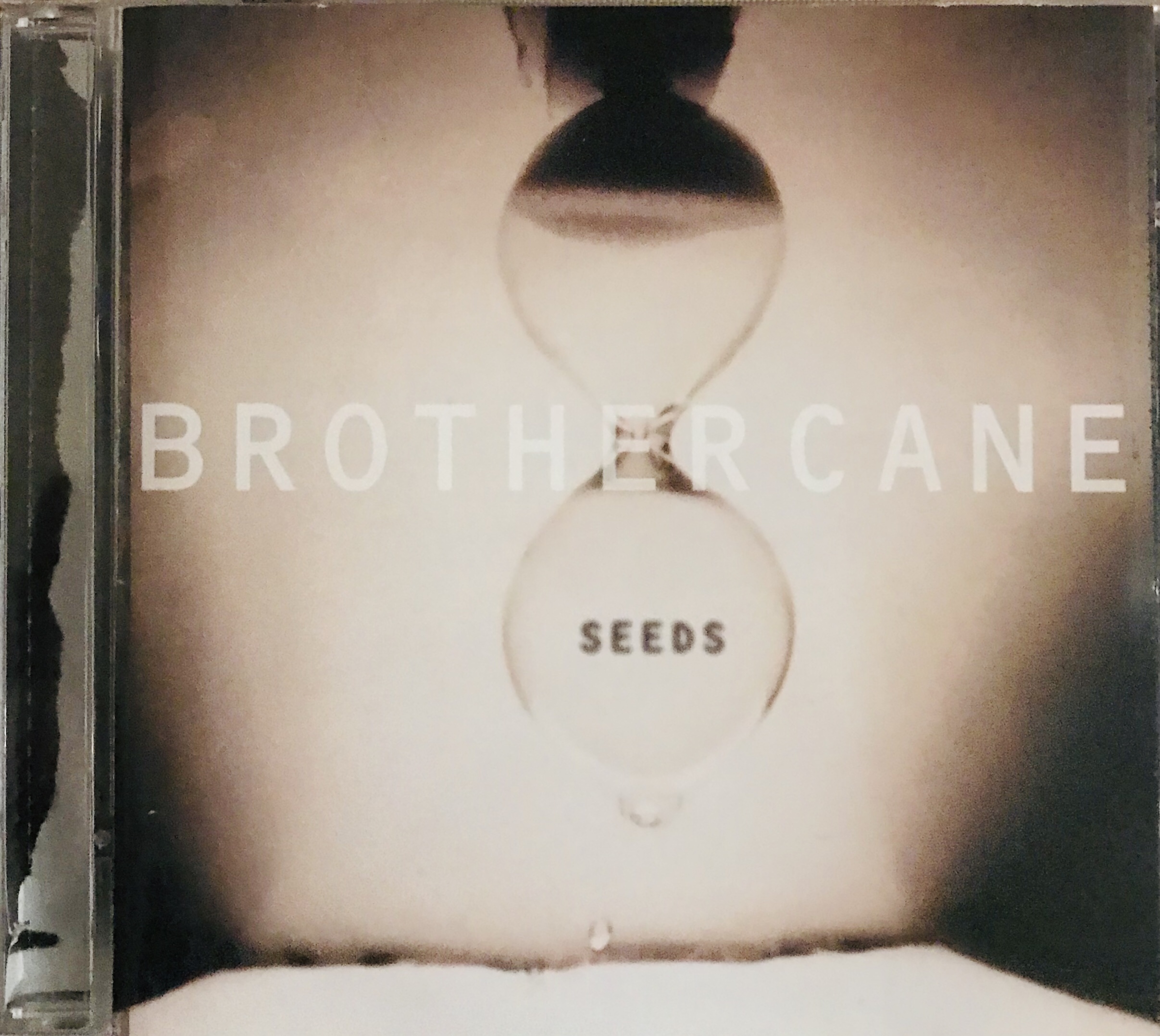
The Record Vault – Brother Cane

They got no press in Australia.

I read about the debut album in Metal Edge and it got me interested in the band. But at the time I didn’t purchase anything. Then “Seeds” came out in 1995 and a few years later, I purchased.

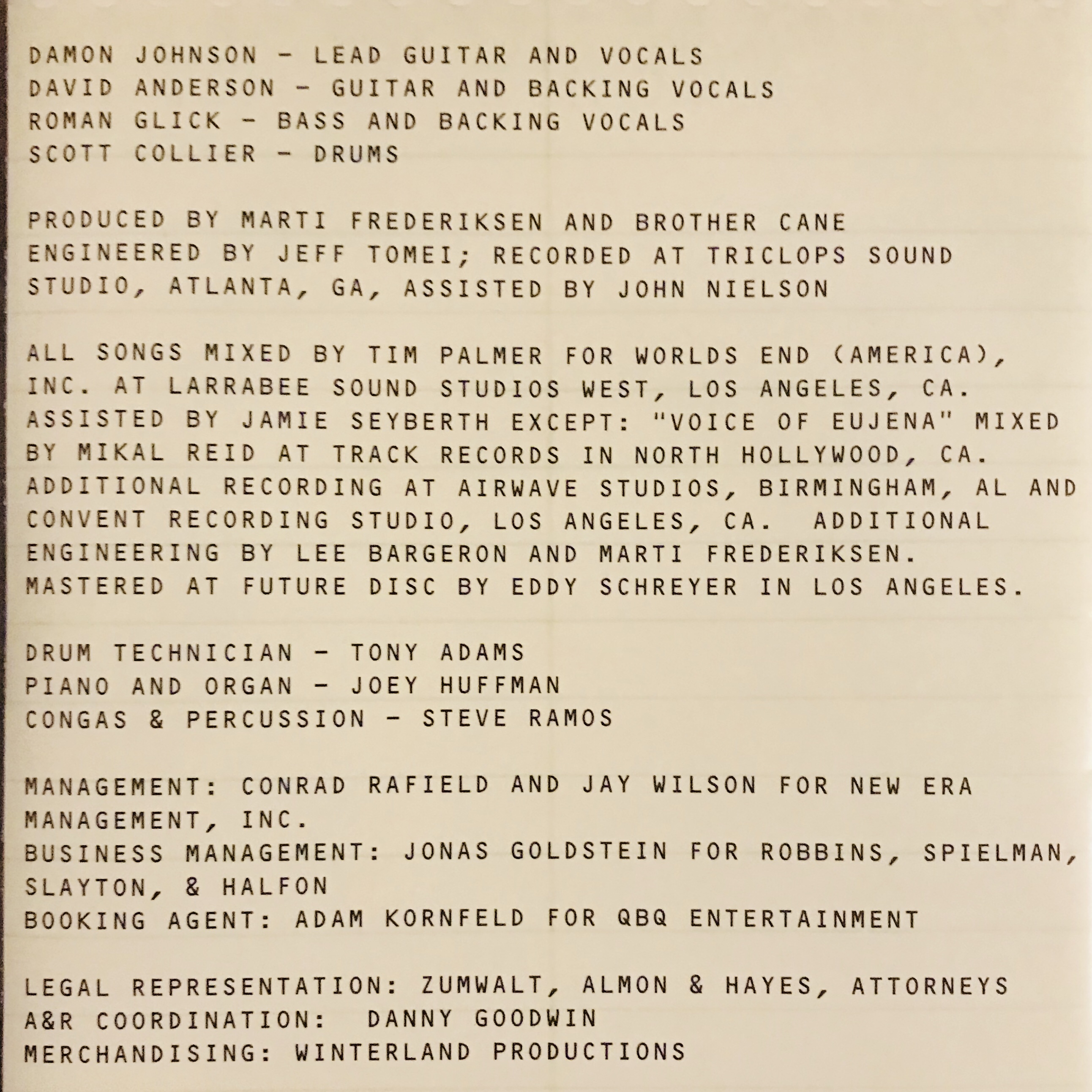
For those who don’t know, Damon Johnson is on lead vocals and guitar. After Brother Cane he did some time with Alice Cooper and the Thin Lizzy version which morphed into Black Star Riders. Plus he had a side project with Scott Rockenfield from Queensryche, which I can’t remember the name of.

And on “Seeds”, nine of the songs are written by Johnson and Marti Frederiksen, who also produced it. And for those who don’t know, Frederiksen would go on in a few years to co-write with Steven Tyler and Joe Perry on the “Nine Lives” and “Just Push Play” albums, along with working with Def Leppard, Bon Jovi, Motley Crue and a range of pop artists who had chart success.

Talent always finds talent.

“And Fools Shine On” stood out straight away to me because of the song title, which reminded me of “All The Fools Sailed Away” from Dio.

So I pressed play on that song first and became a fan.

The music is a cross between everything I like, rooted in hard rock but sounding alternative with a vocal line delivered in the style of Cornell and Staley in the verses and a Dio like vocal in the Chorus.

“Breadmaker” has a head banging riff in the verses. “Rise On Water” has a verse riff and melody that hooks me in. “20/20 Faith” has that big “When The Levee Breaks” riff, which even if I hear it a million times, I’ll still like it.

“Bad Seeds” is another great track and that lyrical line of “Bad seeds in my head”. “Stain” is one of those blues rock tunes that could have come from a Bad Company or UFO album.

“Intempted” sounds familiar but I can’t think of which song and I like that familiarity. And “High Speed Freezin” closes the album with its blues fusion vibe.

And I’m in a Brother Cane mood, so off to Spotify I go, to hear the rest of their catalogue.

Standard
Classic Songs to Be Discovered, Derivative Works, Influenced, Music, My Stories, Unsung Heroes

1977 – Part 2

Here we are in 1977, for another set of albums that I had heard well into the 90’s. But, I did hear the single cuts that got played on radio or on music video programs.

UFO – Lights Out

Produced by Ron Nevison.

“Too Hot To Handle” is probably why Bad Company started to wane a little bit commercially, as UFO was doing Bad Company better than Bad Company was. Plus UFO had Michael Schenker on guitars, who at the time was the talk of the town, and revered as a “Guitar God”.

If you need any evidence, check out “Try Me”, which has one of Schenker’s best solos ever committed to tape. You need to stick with it, as it comes in the last 90 seconds of the song.

“Lights Out” inspired another classic track which I like in “More Than A Man” from Stryper. Both are F#m grooves and they both have a similar feel. Credit Pete Way for that F#m bass groove which inspired a generation.

“Gettin’ Ready” is pure Bad Company and a very underrated track. “Alone Again” has this “Paint It Black” vibe merged with The Beatles merged with ELO, and it’s cool how UFO covered it.

“Electric Phase” came from well of Joe Walsh and Mountain. That intro riff and the slide guitar in the verses from Schenker are brilliant.

“Love To Love” is one of Steve Harris’s favourite tracks. Europe also covered it for an acoustic album. Michael Schenker even used the guitar riff as the main riff for “Desert Song” which I used to called “Dessert Song” once upon a time.

And “Lights Out” is one of my favourite albums from the UFO era.

Kiss – Love Gun

Produced by Eddie Kramer.

How good is the cover from Ken Kelly?

Kelly’s artwork also graced a few other albums I am in possession of, like, the “Destroyer” album from Kiss, “Rising” from Rainbow, every Manowar album between 1997 and 2007 (which comes to 5 albums in 20 years) and in 2014, it came full circle for Kelly as he did the “Space Invader” artwork for Ace Frehley.

And how good is the riff to kick off “I Stole Your Love”?

And it as a derivative version “Burn” from Deep Purple. I guess you can’t keep a good riff down.

“I remember the day that we met, I needed someone, you needed someone too”.

How good is that lyric about life and our need to connect?

“Christine Sixteen” shows how far society has changed. In 1977, it was okay to sing lyrics like these and in 2020 it’s an arrestable offence. Hell, what would Elvis Presley be classed as today, with his shenanigans with Priscila.

“Shock Me” reminds me of “All Right Now” from Free. “Tomorrow And Tonight” has this “BACK In the USSR” feel as it stomps its way through a twelve bar blues rock full of backing singers and honky tonk piano.

“Love Gun” kicks off side 2 and what a song. And if you’ve read “Face The Music” from Paul Stanley, he goes into detail how music is a sum of our influences, as he mentions a few of em for “Love Gun”.

The small solo at the end of “Hooligan” from 2:39 with Peter Criss singing “Ain’t nobody going to pull me down”. It’s perfect.

The main riff in “Almost Human” is a favourite and if you YouTube “Plaster Casters”, apart from the Kiss song, there is a documentary about a certain “plasterer” called Cynthia.

And for a Kiss fan, 1977 held another release in “Alive II”. From reading some of the interviews, it probably had more involvement and effort than the studio album that came before it. There are songs from a Japan show, a LA show and a NJ show, plus sound check songs and studio songs with various overdubs, involving other musicians plus added crowd noise and what.

In the words of “Austin Powers”, groovy baby. And the first “Alive” release I got into was “Alive III” and then “Alive IV” and they are my favourites.

Cheap Trick – Cheap Trick
Cheap Trick – In Color

They got a deal in 1976 with Epic Records and by the start of 1977, they dropped their self-titled debut and towards the end of the year, the follow up, “In Color”. At the time, both albums were classed as dud’s, but many, many, many years later (as Commandant Lassard from Police Academy would say), “In Color” is in the list of the 500 Greatest Albums Of All Time from Rolling Stone.

So Jack Douglas produced the debut and Tom Werman produced the second. The productions differ on both albums. The debut is raw hard rock, while the second is more polished courtesy of Tom Werman’s layered production. And while the second album didn’t really do much in the U.S, in the place of the rising sun, it made the band superstars. They took their British influences, Americanised em and off they went.

The debut is a cross between punk rock, a bit of new wave which was still in its infancy around the world and rock and roll with blues, sixties pop and hard rock influences. In the 80’s, “Hanoi Rocks” reminded me of early Cheap Trick.

From the debut album, “ELO Kiddies” has a cool Chorus riff. “Taxman, Mr Thief” has an excellent guitar riff, a top vocal performance by Robin Zander and lyrical themes of working hard only for the taxman to get ya. Plus a pretty obvious lyrical influence from The Beatles song called “Taxman”.

“You worked hard and slaved and slaved for years, break your back sweat a lot, well, it’s just not fair”

“Oh, Candy” is a preview of the melodicism to come in the future. “He’s A Whore” is influential. The Ramones borrowed a riff from it, and the blueprint of Foo Fighters can be found in these early Cheap Trick albums. “The Ballad Of TV Violence” shows its nod to “Come Together” from The Beatles which is a nod to another song from Chuck Berry.

On the second album, “Hello There” is over as soon as it began, with an awesome melodic ending which should have gone longer. “Big Eyes” has this interlude riff which becomes the backing riff for the solo section, which I dig. “Downed” has this chorus that inspired some of the songs on “Generation Swine” from Motley Crue.

“I Want You To Want Me” has that “Radar Love” style drum pattern, and an undeniable melodic line, which merges the best of The Beatles into a hard rock ditty.

“You’re All Talk” came from the Mississippi Delta and the Texas Ranges, with its combination of blues and ZZ Top blues boogie. And if you listen closely to the verse riff, you will hear some ideas and concepts that would have inspired a young EVH to end up writing the classic “Hot For Teacher” verse riff.

Bad Company – Burning Sky

Album number 4, which dropped in 1977.

The title track, “Burnin’ Sky” has this pounding beat and that “Wishing Well” vibe from Free in the Chorus. In addition, it’s got a funky bass riff in the Verses, a Mick Ralphs flanged/phased solo and Paul Rodgers wailing away. This track sums up Bad Company to me, with each band members have a place in the song.

“Leaving You” and “Like Water” have good moments, while “Everything I Need” has so many similarities to “Since You’ve Been Gone”, “Louie Louie” and “I Need A Lover”.

See you back in 2000, for part three.

Standard
Copyright, Derivative Works, Music, My Stories, Stupidity, Treating Fans Like Shit

Hallowed Copyright

Remember that whole “Hallowed Be Thy Name” and “The Nomad” suit filed by retired band manager Barry McKay against Iron Maiden and Steve Harris.

Remember how McKay stated it is all about intellectual property rights and how these IP rights need to be protected from blatant copying while the other side stated that music is all about inspiration and influences and that McKay never actually wrote anything and is a serial litigant.

Well, these IP rights that McKay was championing for protection, all revolve around a fee to be paid. If you haven’t read the stories, you can read em at Loudwire or Blabbermouth.

Remember when any rights to intellectual property ceased when the creator died (provided they still had a right at the time of death). Well, the corporations who held the copyrights to a lot of these works pushed really hard to get laws changed in the 70’s to last the life of the artist plus another 70 years, so what we have now is people who really contribute nothing to culture, locking up culture for a generation and getting paid in the process.

But there was a side in the Government who actually cared about culture, the public domain and were against Government granted monopolies, so they put in a clause that allowed the actual creators to get their rights back after 35 years. But, the labels and the publishing companies who control the rights don’t want to let go of the works as it diminishes their power.

Remember John Waite, from The Babys, Bad English and his work as a solo artist. Well, he wanted his songs back, Universal Music Group said “No”, your works are created under a “works for hire agreement”, John Waite said, “no chance in hell are the songs created under a works for hire agreement” and off to court they went.

So how did it all come to this?

You need to remember that any aspiring artist, had/have/has no bargaining power when for negotiating and signing contracts. If they wanted to get their music out there (pre internet), they more or less had to give away their copyright in their works as part of the contract to get their music out there and monetised.

Then, when an artistic work turns out to be a “hit,” the majority of the royalties goes to the organisation who holds the rights to the works rather than to the artist who created them.

But this “ownership of copyright” by the organisation was meant to be limited. And if the artists wished, they could reclaim their rights. Some artists used the threat of “termination rights” as a tool to negotiate higher royalty rates and advance payments.

But as artists grew popular and they realised they could make some money, they created loan out companies, which is basically a business entity used by the entertainment and sports industries in the US, in which the creator is the ’employee’ whose services are loaned out by the corporate body. The corporation is used as a means to reduce their personal liability, protect their assets and exploit taxation advantages.

And the courts have determined that any rights granted to the labels from the loan out company cannot be terminated, only the rights granted by the actual creator themselves.

For example, John Waite created a loan out company called Heavy Waite Inc. So if he signed a contract to give his copyrights to a label via the loan out company, these rights cannot be terminated. Only the rights that John Waite himself gave up.

It’s pretty fucking stupid if you ask me, but nothing surprises me when lawyers get involved and try to get these termination suits booted on technicalities.

And check out this article for some insight on copyrights from the one and only Desmond Child. Here is the snippet in case you don’t click on the link;

Have you retained your copyrights?

Well, tragically, I fell into some lean times in the late ’90s. I had moved to Miami – we’d fled LA after the [1992] earthquake and we were picking up the pieces.

At that time I got an offer for my catalogue, and I sold my song writing and publishing share to Polygram [now Universal Music Group] – and it was a mistake. I retained my song writing performance rights, and that’s how I know how big a mistake it was, and how much I sold myself short. They made their money back x 20.

I was pressured by people around me to sell. Especially my father, who had grown up in the depression. When I told him the amount, he said, ‘Grab the money, you’ll write other songs, grab the money.’

Also, my lawyers told me, ‘Don’t worry, you get your songs back after 35 years,’ but that’s not true. You don’t get them back for the whole world, you get them back for the US only. And you don’t get your songs back for the versions that made them hits, you only get them back for the new versions – versions made after you sold.

When I found out those two things, it was like two buckets of ice water being poured over me.

The people doing the deal for me were so keen to get their percentages that they didn’t explain these things to me. Had I known, I wouldn’t have signed the deal and I would have been in a much better financial position.

And that my friends is how far Copyright has evolved, where people who create nothing of value get paid and everyone is trying their best to lead the artists astray so they can get paid.

It has nothing to do with intellectual property rights or an incentive to create.

Standard
Classic Songs to Be Discovered, Derivative Works, Influenced, Music, My Stories

The Unforgiven II

I’ve been cranking this tune.

My playlist even starts off with “The Unforgiven” trilogy.

My cousin purchased the “ReLoad” album on release day. I didn’t even know it was out. He calls me to come over, as he’s got a song he’s been working on that he wants me to hear.

So I go over and he plays a song. And I’m thinking why is the song starting exactly the same as “The Unforgiven” with that blaring car horn effect.

And I go to my cousin, “why are you playing me “The Unforgiven”, I’ve already heard it.”

But, I didn’t finish the sentence as the distortion chords with the octave guitar melody over the same chord progression as the first song, kick in.

James Hetfield sounds like he’s taken a dose of country as his voice in the verses is exactly like that. Even the way he arpeggiates, and does those double stop bends, it’s country.

Artists growth is an important tool. Hetfield grew up on hard rock and southern rock at first.

In a “SoWhat” interview, James mentions that he even wrote a letter to the Aerosmith fan club address he had in the 70s, telling the band how much their music meant to him and asking them a question, but he never got a response back.

And James brings his influences into the Metallica mix and the band keeps growing.

The Chorus has that unique Hetfield voice, melodic, aggressive and abrasive and it’s that Chorus that remains with me.

What I’ve felt, what I’ve known, turn the pages, turn the stone, behind the door, should I open it for you

The lost soul, a new “The Unforgiven” is found by another. But the door is shut, unable to let this other in.

But now I see the sun, now I see the sun
Yes now I see it

Only when “The Unforgiven” has lost the one thing that was known as love is the door to the heart finally open and the sun let in. But it’s too late.

Play it loud. \::/

Standard
Classic Songs to Be Discovered, Derivative Works, Influenced, Music, My Stories, Unsung Heroes

1985 – Part 2

With a DeLorean and a Flux Capacitor, the year is set for 1985.

Here we go.

Bon Jovi – 7800 Fahrenheit

JBJ hates this album as none of the songs get played live anymore. But to the fans who were there before “Slippery When Wet”, they either like it, understand it or ignore it.

For me, the band needed to get this album written as it pushed the melodic rock/metal sound from the debut to the limit, so a new clean slate was needed.

Check out the melodic guitar work of Richie Sambora on tracks like “The Price Of Love”, “Only Lonely”, “The Hardest Part Is The Night” and “Always Run To You”. And when it comes to balls to the wall riffing, “Tokyo Road”, “In And Out Of Love” and “King Of The Mountain” showcase that AC/DC vibe. The only track I don’t like is “Silent Night”.

Stryper – Soldiers Under Command

I heard “The Rock That Makes Me Roll” on a “Headbangers Heaven” compilation and I became a fan because of the riffs.

“Soldiers Under Command” (the track) is a metal tour de force. That intro riff, influenced by Judas Priest is excellent. “Makes Me Wanna Sing” is another song influenced by Judas Priest and their song “Running Wild”. Then again, so is Maiden with “The Wicker Man” intro riff.

“First Love” is a cool ballad. Probably one of their best ones, but it doesn’t get the dues it deserves because bigger cheesy ballads came after which got some MTV love.

“Waiting For A Love That’s Real” reminds me of “Faithfully” from Journey and “Purple Rain” from Prince, but in a rocking way. And the lead break in this song is guitar hero worthy.

“Surrender” is one of my favourite tracks. It’s got this progressive metal/power metal vibe in the vocals.

The riffs are excellent.

Y&T – Down For The Count

I played this album a few days ago for my boys. They are 15 and 14. And they started pressing “like” and saving songs to their playlists. Songs like “Summertime Girls”, “Anytime At All”, “Hands Of Time” and “In The Name Of Rock”.

I guess there is something about this album that makes 14/15 year old teens like it.

From a guitar point of view “Hands Of Time” stood out straight away and I still like it.

And the band that we knew as Y&T was on their way to breaking up. Leonard Haze would depart after this album and Joey Alves would depart after their 87 “Contagious” album. The fan base would also move on and there wasn’t enough new fans replacing the ones moving on.

Night Ranger – Seven Wishes

“Midnight Madness” is my favourite Night Ranger album, but “Seven Wishes” really tried to compete with it.

After this album, Night Ranger never captured that attitude and energy they had on the first three albums. And you know the saying, your attitude determines your altitude.

The guitar solos on “Seven Wishes” are wow. “Faces” has an awesome synth inspired chorus. “Four In The Morning” has an addictive vocal melody and the guitar leads, man, if they don’t get you playing air guitar, please check yourself for a pulse.

“If “I Need A Woman” was recorded by Robert Palmer, it would have been number 1.

“Sentimental Street” and the solo from Brad Gillis. Triple A, all the way.

“This Boy Needs To Rock” gets that rocking vibe happening again and another guitar solo that makes me play air guitar.

“Night Machine” has some cool guitar riffage and another Triple A lead break.

And I don’t know why these Night Ranger albums are not on Spotify. It’s the dumbest move ever to withhold em, unless you are in dispute with the label about what you should be paid.

Rush – Power Windows

Even if you don’t like the music, you would like the stories in the lyrics.

“Big Money” goes around the world, spreading greed and consuming all. “Big Money” weaves a mighty web and draws the flies. In “Grand Designs” there is so much poison in power.

The “Manhattan Project” tells us about a weapon that would settle the score and how the big bang shook the world at the Rising Sun.

“Better the pride that resides in a citizen of the world, than the pride that divides when a colourful rag is unfurled” is classic Neil Peart from the song “Territories”.

In “Middletown Dreams”, dreams transport the ones who need to get out of town.

Accept – Metal Heart

Critics panned it, but hey, who listens to critics. The record label told them it’s a dud because it didn’t reach or outsell their previous efforts. But it’s my favourite Accept record.

“Metal Heart” has this open string riff, which defines the song. Lyrically, it’s 1999 and the human race needs to face some mysterious truth, like “judgement day” style, man versus machine.

Even when Metal bands tried to be serious or sound serious they still ended up sounding comedic.

With the Beethoven licks in the solo, you either like it or hate it.

“Midnight Mover” is basically Scorpions. The arpeggio lick/riff in the intro gets me interested. The single note riffs with pinch harmonics in the verse keeps the interest going. And even though the Chorus sounds very AOR, it’s still heavy metal.

Finally the lead break.

Wolf Hoffman doesn’t get the guitar hero crowns he deserves.

“Up To The Limit” is basically AC/DC. The bass from Peter Baltes just rolls along in the verses, while Hoffman and Fischer play staccato like power chords.

“Wrong Is Right” is basically Judas Priest. That verse riff could have come from the “Screaming For Vengeance” album.

“Screaming For A Love Bite” is a terrible title for a song, but I suppose that’s what makes it memorable. I’ve always enjoyed it when metal bands take major key riffs and put them into their mix. In keeping with themes of other bands, this one could have fitted nicely on a Journey album, even a Night Ranger album.

And like that Side 1 ends, with no filler whatsoever.

Side 2 kicks off with the very AC/DC sounding “Too High To Get It Right”. And how can you not like it, especially that gang like vocal in the Chorus.

“Dogs On Leads” is so underrated and also in the vein of AC/DC. The bass just rumbles while Hoffman plays jangly chords before it kicks into overdrive. Again, the gang like vocals are so loud, they remain with me long after the song is finished.

“Teach Us To Survive” sounds like it came from a Pink Panther movie. Jazz fusion metal.

Artist’s used to do this on albums before, like write a song that was a bit out there, but still rooted in metal. Then when albums became a two to three year cycle, it changed. Suddenly artists either played it safe and stayed true to what came before or they went completely different for the whole next album, not just for a track or two.

“Living For Tonite” has this pulsing bass, guitar and drum groove.

How can you not like it?

“Bound To Fail” is basically a power metal tune in the intro, but when the verses roll around, it’s got that blues rock swagger in the Chorus that Guns N Roses would bring to the masses on “Welcome To The Jungle”.

Again, how can you not like it?

And that’s a wrap for 1985, Part 2.

See you in 1977.

Standard