Classic Songs to Be Discovered, Derivative Works, Influenced, Music, My Stories, Unsung Heroes

2001 – Part 1.4: Megadeth – The World Needs A New Hero

The Evergrey – “In Search Of Truth” post, the Muse – “Origin Of Symmetry” by post and the Machine Head – “Supercharger” post were meant to be part of one 2001 – Part 1 post, however after I finished writing those posts they had a lot of words in there to be part of one, so they ended up as separate posts.

This post is 1.4 and the upcoming Ozzy post will be 1.5.
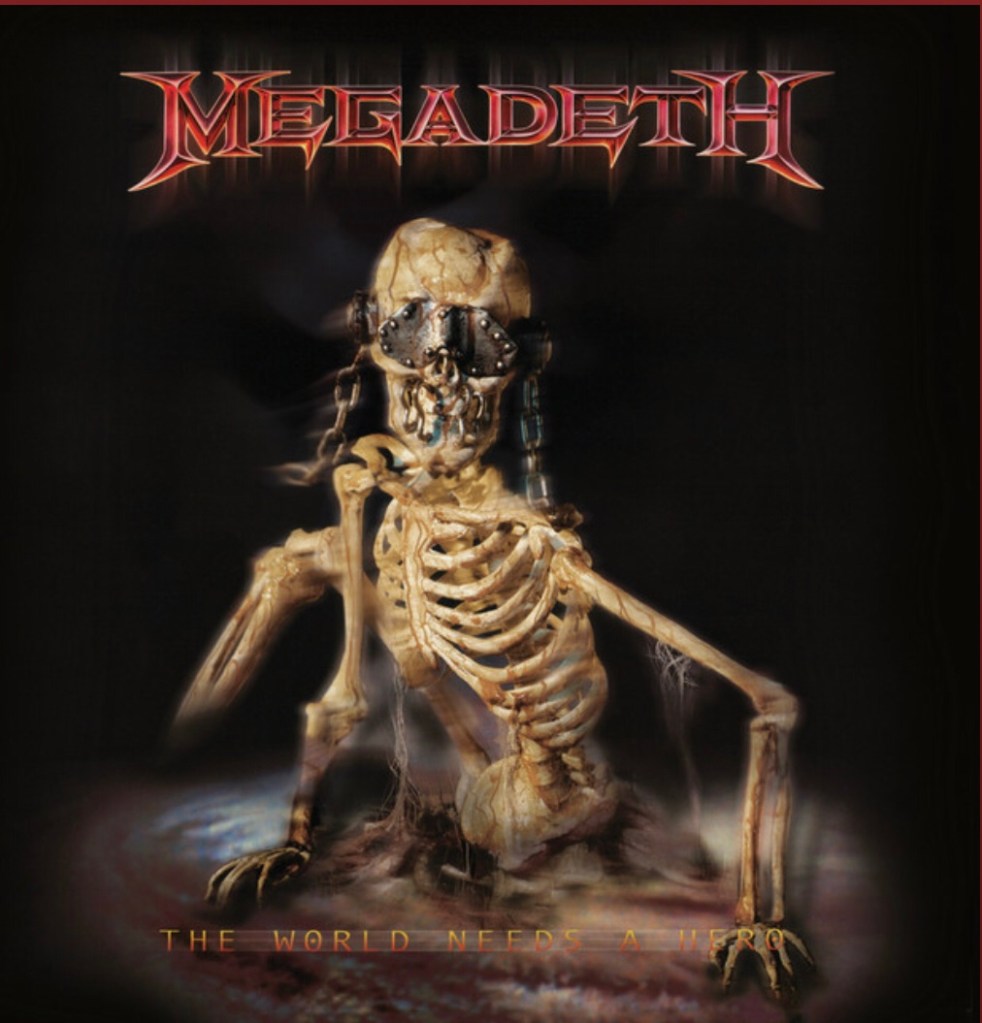
Megadeth – The World Needs A New Hero

I was excited for this album as I am a fan of Al Pitrelli. I like his work with Widowmaker, his session and song writing work with Alice Copper (plus touring), Y&T, Savatage, Danger Danger, TSO and many more. Plus in the few interviews he had in the guitar magazines, he shares a wealth of information about soloing and modes and what not.

“The World Needs a Hero” is the ninth studio album and a return to the metal and sometimes thrash of Megadeth between the “Countdown To Extinction” to “Cryptic Writings” era.

And to understand this album, you need to understand what a commercial disappointment “Risk” was in 1999 and how it eventually led to the departure of Marty Friedman and Nick Menza.

And it’s their first album on Sanctuary after they parted ways from Capitol Records with cover art by Hugh Syme.

Drummer Jimmy DeGrasso also features on this and the usual two Dave’s, but in this case, this would be the last album Ellefson would feature on until 2010. It was DeGrasso who actually recommended Pitrelli to Mustaine.

“Disconnect”

The intro riff reminds of “Trust”.

I like the interlude when it’s just bass and chords ringing out and then the lead break from Pitrelli starts. And I played air guitar to every note.

Lyrically the song deals with living a double life between the person we portray to people which is very different to the person’s inner thoughts or even Google search history.

“The World Needs a Hero”

If it’s a musical hero, a techie hero, a sporting hero, an author, a politician, whatever. We all need someone to look up to, to aspire to be like. Sometimes it’s a parent, a brother or a sister or another family member. It’s not my favourite song but I do like the title.

“Moto Psycho”

This song is about people who commute to work every day and spend a lot of time on the road.

In between 1997 and to the end of 2000, I drove 80 minutes to get to work and 80 minutes to get home. Then I changed jobs and commuted via a train, which took me 90 minutes to get to work and 90 minutes to get home.

Do the math.

160 to 180 minutes a day on travelling. That’s 800 to 900 minutes a week travelling. 41600 to 46800 hours in the year wasted on the road building someone else’s dream instead of my own.

“1000 Times Goodbye”

The intro riff is enough to hook me in. And then the drums come in, building the section until the verses explode.

And for some reason it keeps reminding me of “Tornado Of Souls”.

From about 3.57, the solo section begins. And after Mustaine says “you suck”, Pitrelli takes over for another guitar hero moment.

Check it out.

“Burning Bridges”

Check out the harmonized guitar riff in the Chorus.

“Promises”

The acoustic riff reminds me of “Dream On”. The violins make it haunting.

The song is about relationships that can’t be together in this life because of religion or social norms.

“Recipe for Hate… Warhorse”

It’s fast Intro gives way to a bass riff and spoken verse. And it’s a weird song with flamenco inspired passages. More like MegaZappa than Megadeth.

“Losing My Senses”

No one likes it when people speak the truth and that’s how this song starts off.

Check out the main riff. It puts all those alternate metal acts to shame.

Or the “When The Levee Breaks” inspired solo section which gets Pitrelli soloing with a Middle Eastern vibe.

“Dread and the Fugitive Mind”

My favorite song on the album. Especially the “what’s mine is mine and what’s yours is mine” section.

And don’t forget the whole interlude build up into the Pitrelli solo section.

“Silent Scorn”

An instrumental which gets played over the sound system at concerts.

“Return to Hangar”

The sequel to “Hangar 18” as the captive aliens from the first song escape and kill their captors. When I saw the band live, they played both songs back to back.

Make sure you check out the harmony lead break.

“When”

The main riff and structure of “When”, is reminiscent of “Am I Evil?” by Diamond Head, which Mustaine said was intentional.

After this album, the band was ended as Mustaine had to deal with a career ending arm injury. Then once he resurrected Megadeth, he had to deal with lawsuits from former members. But that story is for another day.

Standard
Classic Songs to Be Discovered, Derivative Works, Influenced, Music, My Stories, Unsung Heroes

2001 – Part 1.3: Machine Head – Supercharger

The Evergrey “In Search Of Truth” post and “Origin Of Symmetry” by Muse post were meant to be part of this large post, however after I finished writing all of the posts they had a lot of words in there to be part of one post, so they ended up as separate posts.

The Machine Head post will be 1.3, the upcoming Megadeth post will be 1.4 and the Ozzy post will be 1.5.

Machine Head – Supercharger

Supercharger is their fourth album.

It came out just weeks after the 9/11 terrorist attacks and it got lost in the aftermath. Roadrunner also gave them zero promotion and to this date, its considered a commercial failure by the label. They even went on tour for the album without any label support which was a slap in the face to the band as Robb Flynn has admitted that “The Burning Red” and “Supercharger” were albums that Roadrunner pressured them to do, so they could break into the mainstream.

But when the mainstream didn’t come, Flynn said that the band was going to return to “what we they did best”.

It is also the band’s last release to feature lead guitarist Ahrue Luster and as a by-product it set in stone the next 15 years.

For me, this was the first album I purchased from Machine Head.

And in relation to the album being a commercial failure, in a 2015 interview with LouderSound, this is what Robb Flynn had to say about it.

“Supercharger sold 250,000 copies. If that’s a disaster, I’ll take it.

We played nine shows in the UK, all sold out, and the US tour was mostly sold out, which was a first.

Every night when we play “Bulldozer”, that whole theory that everybody hates “Supercharger” gets completely stomped into the ground. We play “Bulldozer” and it’s one of the top five reactions of the night, every time”

After a minute of “The Declaration”, the iconic riff of “Bulldozer” kicks in. Listen to the drumming from Dave McClain in the intro. In the live arena, this song is powerful, mosh pit powerful.

“Full steam we go against the odds, headfirst we go against the grain”.

But the lack of solos is going with the grain, as between 1999 and 2005, there was a “no guitar solo” movement. This song was missing a ripping lead.

“Crashing Around You” is a great hard rock song. It was the only single from the album and it had a film clip with a burning San Francisco skyline and stuff crashing down around them.

It was pulled from MTV and rock radio because the term “crashing” was found to be offensive.

But the lyrics are excellent, the music grooves and having this song pulled from every promotional outlet definitely hurt the band. But the fans loved it.

When they pulled this song out for the concert, the place went nuts.

“Kick You When You’re Down” sounds like a track from the “Catharsis” album with its catchcry about believing in yourself and following your heart.

“Only the Names” deserves more attention. This Robb Flynn penned track is classic Machine Head merging all the doom from the early era. Tracks from the current era even sound like this song. That distorted riff would sink submarines it’s that heavy. Early Tool comes to mind here.

“All in Your Head” is one of my favourite Machine Head tracks. That intro, especially live, is head banging material and in its essence it’s basically a hard rock song.

“American High” kicks off with a Tarzan like vocal chant, which is actually the riff of the song. It sounds like the guys are having fun and Flynn brings out some of his spoken word raps in the verses but this song got slammed by the reviewers, for the Tarzan chant.

“Nausea” feels like a Deftones style track especially in the verses.

“Blank Generation” reminds me of early Tool. It’s Aggressive with a capital A.

“Trephination” has a cool bass riff to kick it off.

“Deafening Silence” keeps building until it explodes towards the end.

“Supercharger” has a great intro riff, but that dissonance Korn style riff in the first part of the verse didn’t enhance the song in anyway.

The Japanese version has a cover of “Hole in the Sky” from Black Sabbath as its bonus track. A lot of fans saw this as a weird choice considering the nu-metal style of the album.

But from a rhythm guitar point of view, there is a lot here to unpack.

And after being exposed to Machine Head by various band members this album was my first financial commitment to the band, so it holds a special place in my history.

Standard
Classic Songs to Be Discovered, Derivative Works, Influenced, Music, My Stories, Unsung Heroes

2001 – Part 1.2: Muse – Origin Of Symmetry

The Evergrey “In Search Of Truth” post from last week was meant to be part of this post, however after I finished writing it, it was close to 2000 words, so it ended up as a separate post.

And as I was writing the rest of the posts for Muse (which will now be 1.2), Machine Head (which will be 1.3), Megadeth (which will be 1.4) and Ozzy, (which will be 1.5), I started to realise that maybe it’s best for these posts to be separate as well.

So here we go with the rest of 2001 – Part 1 in various stages

Muse – Origin Of Symmetry

Matt Bellamy is on vocals and guitars and midi sound effects and piano and organs and everything else, Chris Wolstenholme is on bass and Dominic Howard is on drums.

At the time, this was officially album number 2, hot on the heels of “Showbiz” from a few years before. It’s a progression, putting the building blocks in place for “Absolution” which came out in 2004 which to me is the piece d’resistance in their catalogue.

“New Born”

It starts off with an arpeggio guitar/piano that is sort of classical/lullaby like.

The bitterness inside
Is growing like the new born

The titles of the songs are hidden in verses or not even mentioned at all in the songs. They are linking something beautiful (the new born) with something bitter.

Check out the double time drumming, octave bass lines from the 2 minute mark over a pseudo classical chord progression and falsetto vocals.

And at the 3:30 mark, Bellamy pulls out one of his normal tremolo picked leads that outlines the notes of the major and minor chords in the progression.

“Bliss”

It’s got that TonePad effect to start off which continues throughout the song, under a layer of distorted bass lines and crashing drums.

“Space Dementia”

The piano riffs are clearly influenced by Sergei Rachmaninoff and his “Piano Concerto No. 2 In C Minor Op.18.” And I hadn’t listened to Rachmaninoff at all, until I read an interview with Bellamy who mentioned him as a major influence on this album and that actual concerto.

“Hyper Music”

It has this Hendrix like riff to start off the song or “Snakecharmer” from Rage Against The Machine comes to mind, before it moves into the Muse pseudo classical like chord progressions before moving back into blues hard rock and back again.

“Plug In Baby”

It’s got a great arena rock chorus and a memorable single note guitar riff done in the Muse pseudo classical way.

“Citizen Erased”

The intro riff hooks me in immediately to pick up my guitar and jam it. It’s metal like and with a lot of groove.

Break me in
Teach us to cheat
And to lie, cover up
What shouldn’t be shared?

The concept that we are all born without any viewpoints and we are made to be who we are by culture, the family, society and institutions.

The whole quietened down section is haunting.

You also need to listen to the outro.

“Micro Cuts”

A simple arpeggiated guitar riff, with a locked in bass and drum groove starts off the song, before Bellamy’s falsetto vocals take over. Make sure to stick around for the blues like breakdown riff to close out the song.

I’ve seen what you’re doing to me
Destroying puppet strings
To our souls

“Feeling Good”

It’s a great hard rock cover of a Nina Simone song released in 1965. It’s sleazy, groovy and it follows the pseudo classical chord progressions that Muse are so well known for.

Check it out.

Standard
Derivative Works, Influenced, Music

St Anger

I was doing the endless Twitter scroll and I came across a post from a Twitter user called @BookOfMetallicA;

April 8th, 2003: Metallica finished recording the album “St. Anger”.

“There’s two years of condensed emotion in this. We’ve gone through a lot of personal changes, struggles, epiphanies, its deep. It’s so deep lyrically and musically”. James Hetfield.

So I thought, why not. Let’s go back there again.

I saw the band on the “St. Anger” tour when it hit Australia. In a live setting, “Frantic” and “St Anger” were not out of place when matched against the other songs from the band catalogue, but Lar’s didn’t play the fast double kick sections.

I remember picking the album up and it had the DVD of them jamming the album live in their rehearsal studio. I didn’t even play the album, I went straight to the DVD. I purchased the majority of the singles released because of the B-sides. James Hetfield singing off key is jarring, a throwback to the old days of speed metal when it was more about the aggression than being in tune.

The snare sound or the general drum sound didn’t bother me, as some of the music I was listening too had weird percussion drum sounds already like Slipknot, Spineshank and Mudvayne.

“Realistically though if you really think about it – it was the fact that there was NO real songs. That was because the guy who writes the songs – couldn’t write the songs because of where he was personally.

So, what St. Anger became was what the band could do at that point and it is exactly that. It was riffs strung together…

The way I look at it was like raw power or a garage band. It was just riffs… It was garage band and that was supposed to sound like that and what I learned out of it is that people in metal just don’t want it to change. So, it’s best that Rick Rubin continue the metal thing and not Bob.

Bob Rock on the making of “St Anger”

Hetfield still did a “master of puppets” like job manipulating and piecing together all of the lyrical streams of consciousness’s from the other guys into lyrics.

The title “Some Kind Of Monster” is more attached to the no holds barred documentary/film than the actual song. But the first two minutes of just instrumental music grooves its way into your brain and it would not be out of place on a “Corrosion of Conformity” album.

In “Dirty Window”, Hetfield is judge, jury and executioner while he finds ways to rhyme defecator and rejecter.

“Invisible Kid” has a lot of potential.

“My World” is “Frantic” part 2. And I feel like it’s a dig at their performance coach, with the lyric. “it’s my world and you can’t have it”. At one stage, the performance coach thought he was part of the band.

“Shoot Me Again” could have come from Alice In Chains.

How good does “Sweet Amber” start off?

That bluesy feeling.

“The Unnamed Feeling” has this “Outlaw Torn” feel with some slide guitar as Hetfield sings about something coming alive while he dies a little more. “Purify” is the only song that had nothing there to jam to.

“All Within My Hands” should have been titled “Control Everything, Kills Everything”. And it’s strange because Hetfield is singing on key but the music is downtuned chaos.

Overall, there is enough riffage on the album that makes it fun for me to pick up the guitar to jam to and for that, it still stands the test of time as Metallica always had the balls to do what they wanted to do.

Standard
Classic Songs to Be Discovered, Derivative Works, Influenced, Music, My Stories, Unsung Heroes

Australian Method Series – The Radio Sun

From Melbourne, Australia.

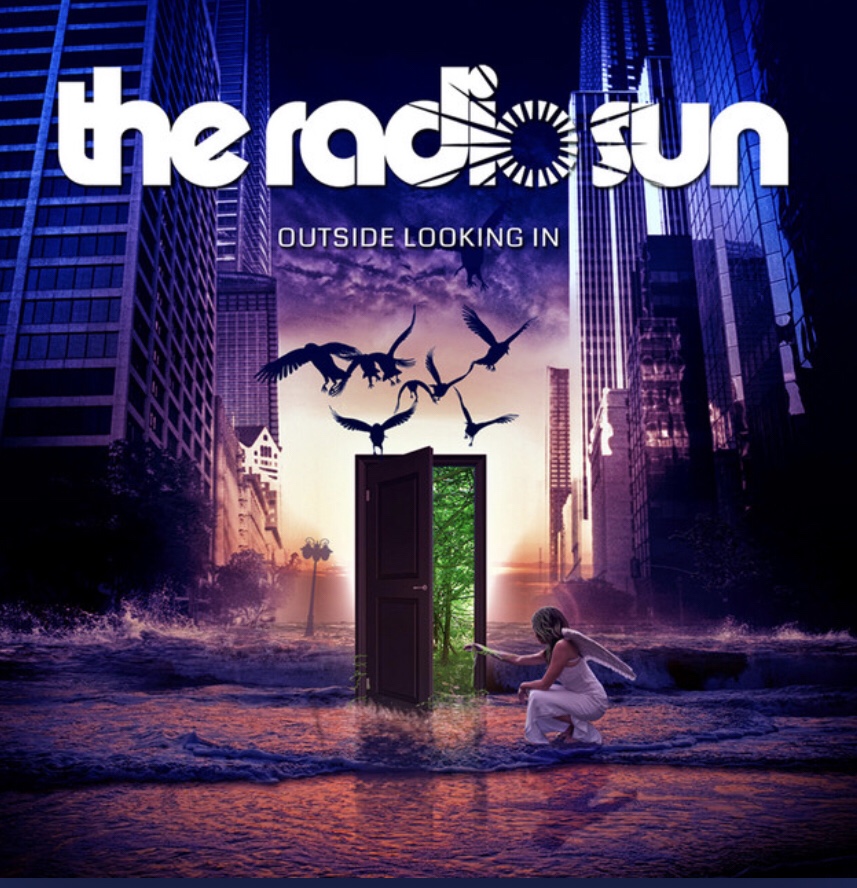
This album (their third in three years) came out in 2016. And since this release, they have released “Beautiful Strange” in 2018 and a few single song releases in 2019.

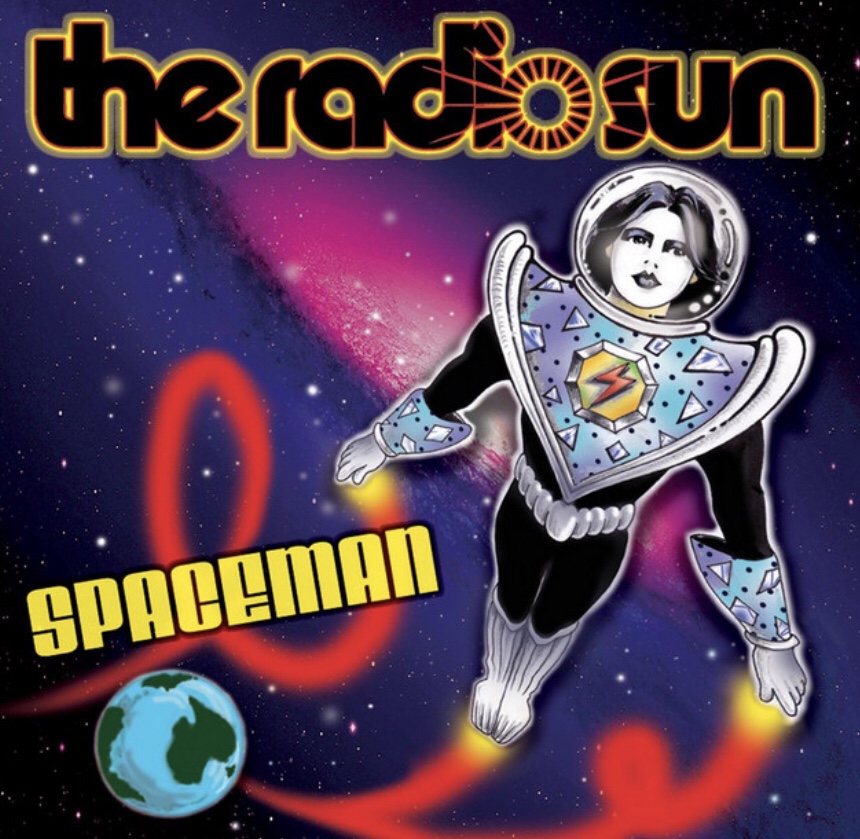
There is also a cool single called “Spaceman” released in 2015. Check out the cover.

Paul Laine is on production duties and does co-lead vocals on the song “Wink And Smile”. There’s a cool story as to how Laine got involved with the band. Go to the YouTube account of The Radio Sun and you will see a documentary called “Paul Laine And The Radio Sun”.

Laine also appeared on stage with the band on a small run of Australian shows.

Guitarist Brett Garsed from John Farnham/Nelson also appears on “Falling For You”.

The band is made up off Jason Old on lead vocals, Stevie Janevski on guitars, Robbie Erdmanis on bass and Ben Wignall on drums.

Their style is pure melodic rock. It doesn’t stray whatsoever in the same way that AC/DC doesn’t stray from their style.

“Can’t Get You Out Of My Head”

The guitar playing from Janevski gets me interested. The vocal melodies are layered and the Chorus sounds massive. Make sure you check out the singalong lead break.

Musically the song reminds me of “Walk With A Stranger” from Skid Row, which was a song they played on the scene before they got signed and Trixter covered.

“Standing On The Edge Of Love”

It’s got that melodic rock riff that seems to appear in every melodic rock song. But. I don’t care. I like it as much as I like a 12 bar blues shuffle.

“You’ll Never Know”

The Chorus hooks me.

“Fall To Pieces”

It’s got a fast pedal point head banging riff to kick it off like a song from the “Surfing With The Alien” album by Satriani.

The outro is excellent.

“Wink And Smile”

A melodic lead kicks off the song. Paul Laine features on this.

“Falling For You”

Brett Garsed appears on this. Make sure you check out the solo section. It’s Garsed at his shredding best.

The band also covered “After The Rain” from Nelson. It’s on YouTube.

And for a melodic rock band they are not on Frontiers or from Sweden. But from Australia.

Check em out.

Standard
A to Z of Making It, Classic Songs to Be Discovered, Derivative Works, Influenced, Music, My Stories, Unsung Heroes

The Record Vault: Coheed And Cambria – Year Of The Black Rainbow

Coheed and Cambria had released four albums that covered the story of Coheed and Cambria and their son Claudio against the villain Wilhelm Ryan. On “Year Of The Black Rainbow” you get to hear and read how Wilhelm Ryan became the villain.

This is from the book blurb that came with the deluxe edition, which I tried to get but it sold out so quick.

Welcome to the worlds of Heaven’s Fence, where a lattice of mysterious energy known as “the Keywork” binds and sustains life on a triangular network of planets–from the bleak and hellish Howling Earth to the spare beauty of Bendelesh.

Beneath the Keywork’s glow, under the governance of the twelve grey-skinned Mages and the watchful gaze of the winged Prise, humanity goes about it’s daily life unaffected by the goings-on of the higher powers at work in the universe.

Until the day when the ambitious Wilhelm Ryan, newest member to the brotherhood of Mages, acts on his growing discontent at being branded another ordinary Mage, ruling over one lowly Sector.

Shrewd and silver-tongued, Ryan launches the Mage Wars: a devastating campaign to win control of the entire Fence and take on the legendary mantle of Supreme Tri-Mage, a position likened to God himself.

Dr Leonard Hohenberger, the Fence’s top scientist is summoned by the Prise to stop Ryan. His creations, Coheed and Cambria, are thus born and lead the battle to save Heaven’s Fence.

Released in 2010.

This is the first and only album to feature Chris Pennie on drums and the last to feature Michael Todd on bass, after he was arrested on charges of armed robbery. Claudio Sanchez as usual is on lead vocals, rhythm guitar, keyboards and synthesisers, while Travis Stever does lead guitar and lap steel guitars.

Other songs to come out of this period is a cover of the ZZ Top song, “Beer Drinkers & Hell Raisers”, for the tribute album “A Tribute from Friends” and a new song “Deranged”, which was released on the soundtrack for the video game “Batman: Arkham City” on October 18, 2011.

“One”

It’s a one minute, soft piano piece, with ambient and creepy noises as you hear the creaking noise of the piano keys when they are pressed down.

“The Broken”

The verses are technical and the Chorus rocks. The breakdown in the middle is as powerful as the band had gotten and the blah blah vocal chant after the Chorus is unsettling but it works.

“Guns of Summer”

This song divided the fans. Drummer Chris Pennie really shines on this. The whole Intro is like a drum solo with vocal melodies and electronica.

It showcases how technical the band can be. The verses are progressive (I saw a comment once that called the verses mind-bending) and the chorus soars.

“Here We Are Juggernaut”

Dark and heavy and progressive metal like.

Listen to the fuzzed out bass in the verses and the addictive vocal melody in the Chorus.

Also the “bodies breaking” vocal melody in the verses always gets me to pay attention.

“Far”

A dreamy electronica influenced ballad. It reminds me of My Chemical Romance and Smashing Pumpkins.

Check out the repeating guitar lick in the Chorus. Simple and effective.

And also check out the fuzzed out lead break from Travis Steer. Neil Young would be proud.

“This Shattered Symphony”

Typical Coheed song which moves between pop rock like riffs and melodies and then switches to those art rock and Metal kind of riffs with frantic vocal melodies.

“World of Lines”

If you like rock music you should be able to get into this song. I was hooked from the intro. And the chorus is one of their best.

“Made Out of Nothing (All That I Am)”

Would not be out of place on “No Word For Tomorrow”. It’s a beautiful mix of pop and hard rock.

“Pearl of the Stars”

Chris Pennie brings some unusual percussion to this song and the guitar work is haunting, yet beautiful. Claudio moves between low pitched vocals to his normal pitch at the right times.

“In the Flame of Error”

Drummer Chris Pennie shines on this track as well. It’s heavy and dark. Check out the riff in the verse.

“When Skeletons Live”

This song is, plain and simple, awesome. From the keyboard led intro, to the brilliant chorus, this is one of my favourite Coheed songs of all time.

“The Black Rainbow”

A cacophony of noise rock, progressive rock and alternative metal. Make sure you check out the outro when Claudio is singing “It’s over” and there’s a fuzzed out decaying lead by Travis Steer with emotive drumming.

For the hardcore fans, the Deluxe edition bonus tracks are “Chamberlain”, “The Lost Shepherd” and the iTunes edition bonus track is “Hush”.

You’ll need to go to YouTube to check them out. The Chorus of “The Lost Shepherd” is worth your time to invest.

The DVD is pretty cool as it shows how the new tools and effects brought in my the producers allowed the guys to be more creative and to express themselves.

Standard
Classic Songs to Be Discovered, Derivative Works, Influenced, Music, My Stories

The Number Of The Beast

You know it’s going to be a good day when you see “The Number Of The Beast” trending on Twitter. Without even seeing why it’s trending, I went straight to Spotify and pressed play on the album.

I wished I logged the hours I spent staring at the cover and I wish I kept the drawing journal of the many attempts to draw it. I eventually got there after a few years.

The 70’s fast blues rock of “Invaders” kicks off the album. It didn’t blow me away, but the next song did.

I heard the live version of “Children of The Damned” first. I lived with it for a long time. It felt a bit quicker and I liked it.

But the studio version is my definitive version now. The vocal melody from Bruce Dickinson is haunting and chilling. Only he can make “Children of The Damned”, repeated four times, sound musical.

Then from 3 minutes, the harmony guitar comes in. Drop whatever you’re doing and start to play air guitar. And Dickinson again takes centre stage, as he takes a simple “who oh” vocal and he makes it sound so musical. You want to know from which song Metallica took the ending for “Fade To Black” from, then here it is.

“Prisoner” continues the fast blues rock from “Invaders”. The Pre Chorus riffs from Adrian Smith/Dave Murray and the vocal melody are wicked. Make sure you check out the bass playing from Steve Harris and the major key chorus is the embryo for “Wasted Years”. And how good is the whole solo section. Listen to Clive Burr on the drums here.

“22 Acacia Avenue” is one of my favourite tracks. So many different moods and feels.

How good is the “Friday On My Mind” inspired intro?

“15 quid is all she asks for” Dickinson tells us.

And then the song changes from the minute and thirty second mark. It gets more aggressive, more metal like. Then at the three minutes and fifty second mark it changes again. It gets slower while the solos happen. And it builds up again to a new mood, a new groove and some more leads. My favourite part of the song. Especially the last 40 seconds. The band is in their element here, jamming it out to a finale.

Then we get the spoken word intro to “The Number Of The Beast” and that immortal intro riff. At two minutes and thirty seconds, a classic 70’s like riff comes in before it goes into a lead break.

“Run To The Hills” is way overplayed. It’s in that category for me to not listen to again. But if it comes on, I don’t turn it off or skip it. From 2.34, the riff comes in and Bruce starts doing his yeah and ahhs. I guess it’s time to sing along, out of key.

“Gangland” is speed metal. Maybe even thrash metal. A bit of “Overkill” from Motorhead merged with some Thin Lizzy sped up.

And how good is that middle solo section?

“Hallowed By Thy Name” closes the album. For me, one of the best Maiden songs ever. The “Live After Death” is the definitive version, as it is a bit quicker.

“When the priest comes to read me my last rites”.

And with that, I close my eyes and let the music and melodies take me away.

Crank it and the reason why its trending, is because its 39 years old.

Standard
Classic Songs to Be Discovered, Derivative Works, Influenced, Music, My Stories, Unsung Heroes

The Record Vault: Coheed and Cambria – No World For Tomorrow

Released in 2007.

I know the album as “No World For Tomorrow” (from here on in, it will be referred as “NWFT”) but its official title is “Good Apollo, I’m Burning Star IV, Volume Two: No World for Tomorrow”. Another serious challenge to the length of Meatloaf’s song titles.

“NWFT” is the album that brought the story of Coheed and Cambria and their son Claudio to an end. Well that is what we as fans suspect, as no official story book or comic has been released, but in May 2020, Claude Sanchez announced that a story release for “NWFT” is in the works.

From a legacy perspective, after the “NWFT” album, we got a prequel story of how Wilhelm became the Emperor, an origin story of Sirius discovering “The Keywork”, an album not tied to the story at all and a new story post “NWFT”.

Changes in personnel happened for this album as well, with the previous drummer Josh Eppard departing and replaced by Taylor Hawkins from Foo Fighters for the album recording.

“The Reaping”

An ominous acoustic guitar arpeggio riff with an emotive vocal kicks off the album.

Purge these days
Will we accept the things we must?
The world will now learn of change to come, or no world

From reading about the story, Claudio has accepted that he is The Crowing, and as The Writer said on the previous album, all things must burn. Sort of like the Mad King in “Game Of Thrones”, “Burn em all”.

Accept the change, or there will be no world.

After 80 seconds the song ends.

“No World For Tomorrow”

And the iconic riff of NWFT starts. It’s a leaner and heavier “Welcome Home”.

“Bye, bye world, or will our hope still hold on?”

It’s dark as it deals with the end of the main character’s world.

“The Hound (of Blood and Rank)”

It starts off with a “Baba O’Reily” meets “Pinball Wizard” synth.

“Feathers”

I know CoCa fans will hate it when I say this, but the start of this song reminds me of “Fallen Angel” from Poison.

It’s one of their most underrated and forgotten tracks.

“The Running Free”

It’s those major key pop punk songs that Coheed and Cambria do so well.

“Mother Superior”

The single note acoustic guitar riff with ringing notes kicks off this ballad like song. It was actually a piano riff to begin with.

How good is the emotional vocal melody especially in the Chorus?

“Gravemakers and Gunslingers”

This one is hard rock all the way with the guitars smacking you awake.

“Justice in Murder”

The harmony guitars to kick off the song. Stick around for the interlude/solo section from 3 minutes in.

Then begins the highlight of the album, “The End Complete”, divided into five sections with a total running time of around 24 minutes.

“The Fall of House Atlantic”

The first is a short orchestral song built on a Spanish Flamenco guitar riff and syncopated drums/vocals chants, coming across as an orchestral hit.

“Radio Bye Bye”

The second is a short pop rock song, more Queen like.

“The End Complete”

The third has it all, heavy riffs, a great hook, some mellow moments, and the whoas from “In Keeping Secrets Of Silent Earth” come back in.

“The Road and the Damned”

The fourth is a short one. More Coldplay and The Verve like with the violin synths.

And that Guitar melody in the Chorus. Classic Rock Pentatonic perfection.

“On The Brink”

The fifth ends the album. It begins soft, with backwards music playing and a Dave Gilmour like lead.

And then it gets heavy.

The vocals are chanting “Hail” and all of this is followed by an ear piercing scream. This one is more Pink Floyd like, like a forgotten track from “The Wall”

Check it out.

P.S. In a tragedy of epic proportions, I cannot locate my CD of NWFT. Too many House moves and too many misplaced boxes. I’m hoping the book release they have planned will be packaged nicely with the album included.

I also haven’t mentioned the debut album “The Second Stage Turbine Blade” so far, because I don’t have it and have been waiting for a definitive edition to come out so I can purchase.

Onto “The Year Of The Black Rainbow” next.

Standard
Classic Songs to Be Discovered, Derivative Works, Influenced, Music, My Stories

On Through The Night

“On Through The Night” has just turned 41 and it’s time for a few spins over a few drinks.

“Rock Brigade” and “Hello America” bring the standard blues hard rock vibes to the album. “Hello America” also has this Beach Boys style vibe, especially after the solo section.

It’s tracks like “Sorrow Is A Woman” (with its wonderful “Stairway To Heaven” inspired lead break and how good is that harmony solo section after it which leads to the outro), “It Could Be You” (shows their love of Mott The Hoople, Sweet and hard rock Queen) and “Satellite” (listen to that tasty palm muted arpeggio riff from Steve Clark in the verses after the first Chorus and how good is that “staring up at the sky” section) which shows the adventurous and melodic spirit of the band.

How good is the clean tone intro to “When The Walls Came Tumbling Down”?

And then it morphs into those galloping style riffs which was a big part of the NWOBHM and something Iron Maiden would use a lot, “The Trooper” comes to mind immediately.

Then the headbanging riff to kick off “Wasted” starts. For those who wanted to question the metal credentials of Def Leppard, I always pointed them to this song.

“Rocks Off” and “It Could Be You” are interchangeable, with very similar riffs being the main riffs. Then again the whole blues hard rock movement was based on the same riffs being re-used by each individual artist.

“It Don’t Matter” could have come from the fingertips of Michael Schenker as “Rock Bottom” comes to mind. And how good is that Chorus, just a simple, “It don’t matter” line repeated in a simple AC/DC style backing vocal.

How good are those harmony leads in the “Answer To The Master” Chorus? And the song has a little drum solo before it moves into a section that reminds me of U.F.O. Finally, the lead break starts, with an open string lick before it morphs into the pentatonic lines.

“Overture” is 7 plus minutes long and it doesn’t feel laboured and boring. At the 2 minute mark it starts to go into a Thin Lizzy style of song, full of energy and harmonies. And my favourite part is the stop start harmony section from the 4.20 mark and at 4.40, Joe Elliot starts singing a haunting melody, before a wah solo kicks in. And from here to the end, it’s that good, that the only thing I could do is press repeat.

For all the multi-platinum and Diamond certifications that came afterwards, there is something simple and organic about the debut.

Check it out.

Standard
Classic Songs to Be Discovered, Derivative Works, Influenced, Music, My Stories, Unsung Heroes

Australian Method Series – Karnivool

“Sound Awake” was released in 2009 and it peaked at Number 2 on the Australian Charts.

Karnivool is an Australian progressive band formed in Perth, Western Australia in 1997, with an interesting set list of Nirvana and Carcass songs.

The group currently consists of Ian Kenny on vocals, Drew Goddard and Mark Hosking on guitar, Jon Stockman on bass, and Steve Judd on drums.

The last album they did was “Asymmetry” released in 2013. Vocalist, Ian Kenny is also the lead singer in the highly successful pop rock act, “Birds Of Tokyo” which started off as a side project for him and I’m pretty sure it is now his main project as the Gold and Platinum and Multi-Platinum certifications mount up for em.

So, after touring in the US on the “Themata” album, Karnivool returned to Australia in 2008 and entered the studio to write their follow-up. While writing the album, they still toured around Australia, testing out some of the new songs in the live arena.

While “Themata” was written mostly by guitarist Drew Goodard, “Sound Awake” was much more of a collaborative effort from everyone.

“Simple Boy” and Goliath” show an influence from The Mars Volta and pack a one two punch to kick off the album.

“New Day” at 8 minutes long, is a must listen, with its melodic vocals and progressive structures and how it just keeps building. If you want to hear how Birds Of Tokyo sound then this is the bastard child of their sound. It even has a Live feel.

“Set Fire To The Hive” is a nod to Soundgarden’s “Badmotorfinger” days, a bit of modern “System Of A Down” and their Alternative Rock style from the first album.

“Umbra” has a catchy hook to start the song. The ending is excellent, stick around for it.

“All I Know” has an odd riff and a Tool like rhythm.

“The Caudal Lure” is the most progressive track, moving between time signatures and feels.

“Illumine” is a metal cut.

And the last two tracks are the piece d resistance with guitarists Drew Goddard and Mark Hosking shining.

“Deadman” just keeps building up and the song ends around 10 minutes, with some ambient noise and then a re-recorded version of “Change (Part 1)”, starts. But when this song was on “Themata” it built and when we expected it to blast off, it ended. Now we finally hear what comes after the build-up.

“Change (Part 2)” has all the best things of Sabbath, Tool, Radiohead and hard rock.

Musically, Tool, Porcupine Tree and early Muse come to mind. There’s some Deftones and Radiohead there. There’s an Alternative Rock vibe from the debut that’s still there. It’s catchy, has heaps of melody because Ian Kenny is one of Australia’s best singers. The rhythm section of Judd and Stockman is excellent, creative and full of ideas to change it up. And Goddard and Hosking make a wonderful twin guitar outfit.

Check em out.

Standard