
Ross the Boss is gone.
Most people will stop the story at Manowar. Big sound, bigger mythology. Steel, leather, and volume turned into identity.
But that’s only half the truth.
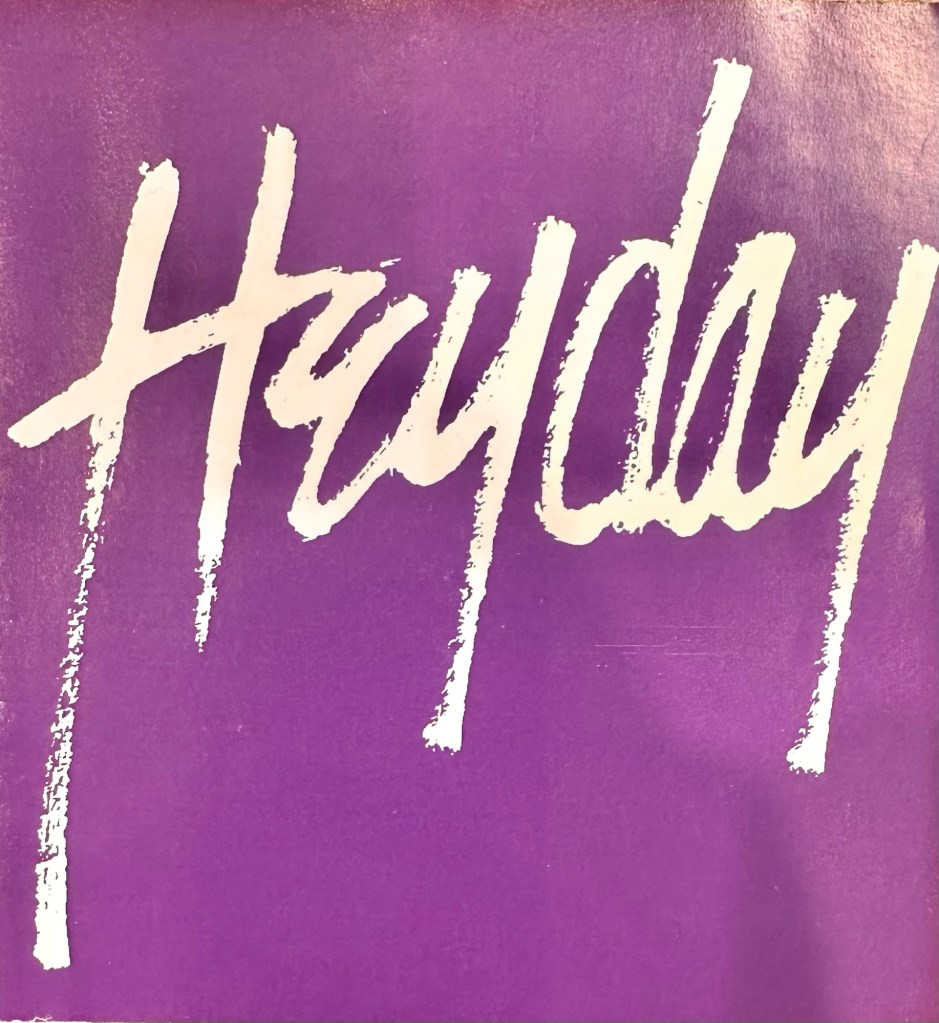
Because in 1994, when rock was busy cannibalising itself into subgenres and scenes, Ross dropped “Heyday”. One album. No follow-up. No safety net. And now… not even on streaming.
Which makes it dangerous.
Because you can’t casually consume it. You have to commit to it.
Ross wrote a manifesto in the liner notes:
“When I started playing guitar, it didn’t matter what type of Rock ‘N’ Roll you played, it was all just called ROCK! It hadn’t yet become so segregated into so many labeled categories.
Now, after twelve allums, I find myself, once again, going against the grain of the “mainstream”, playing the music that I choose to – and just having a great time with it.
So whether the mainstream becomes the underground; or the underground becomes the mainstream, Heyday is going to ROCK!”
That’s not nostalgia. That’s defiance.
By ’94, rock had fractured into tribes, grunge, metal, alternative, punk revival and let’s not mention how many labels hard rock and metal went into, each one building fences to keep the others out.
And Ross? He walks straight through all of them.
Blues rock. NWOBHM. New York punk. Glam attitude.
No permission. No alignment.
If the world narrows, you widen.
This wasn’t a solo indulgence. This was a unit: Ross the Boss on guitar, Charlie Cayte on vocals, Richie Fazio on drums and Erik Boyd on bass.
Charlie Cayte is the ghost in this machine. One of those singers who should’ve been everywhere… but got caught in the wrong year.
Because by 1994, the industry had already decided what rock shouldn’t sound like.
Mine Tonight
It starts with a riff that doesn’t ask, doesn’t build, doesn’t tease, it arrives.
Immediate. Violent. Alive.
“Now I’m aware of mine, are you aware of yours?”
That line hits because most people aren’t.
They hesitate. They soften. They hide behind ambiguity.
This song doesn’t.
Know what you want. Say it. Most people never do, and that’s why they never get it.
Mother Mary
This should have been massive. Arena chorus. Built for thousands.
Instead, it got buried.
“Mother Mary did you make the people, or did we make you?”
That’s not rebellion, it’s interrogation.
We build belief systems, then kneel to them. Religion, careers, identities. We forget we created them in the first place.
“I’ve been prayin’ for so long, to someone I don’t know…”
That’s existential drift.
If you don’t choose your beliefs consciously, you’ll spend your life serving them unconsciously.
A Matter of Time
Blues creeps in. Not as a genre, as a truth.
“To wait for the right moment was my first mistake.”
There is no right moment.
There’s only the moment you either take, or lose.
“I was born too early, and you were born too late.”
Timing isn’t romantic. It’s ruthless.
Hesitation doesn’t protect you, it erases you.
Brown Eyed Girl
A Van Morrison classic, dragged through a louder, dirtier filter.
Less nostalgia. More movement.
It’s not trying to improve the original, it’s reclaiming it. Making it live in this band’s world.
And that’s the point of covers when they work: not tribute, transformation.
Private Hell
This is where the album turns inward.
“I built the inferno…”
That’s the line.
Because people love blaming the fire, but not building it.
“Now a key’s been handed down my way…”
Recognition is the key. Not escape.
The moment you admit you built the problem is the moment you gain the power to dismantle it.
Movin’ On
This one swings.
You can hear echoes of Van Halen swagger and AC/DC punch. It’s reckless, fast, borderline unhinged.
“When push comes to shove, I’m gone.”
That’s freedom, but also avoidance.
There’s a fine line between movement and escape.
Reinvention is powerful, but if you never stay, you never build anything that lasts.
The Letter
The emotional core channeling Hendrix and “Little Wing”.
No metaphor. No disguise.
“What’s done is done and it can’t be changed.”
That’s it.
No modern spin. No redemption arc baked in.
Then the dagger:
“If I could call back father time… things would be the same.”
That’s self-awareness at its most brutal.
It’s not about wishing for a redo. It’s about understanding you weren’t ready to choose differently.
Don’t chase second chances. Build the mindset that wouldn’t need one.
Pack of Lies
Anger, but focused.
“You’re the first to sign the card, but the last to write the check.”
That line lands in any era.
Performative virtue. Empty signalling. Talking big, doing nothing.
Integrity is measured in action, not alignment.
Search and Destroy
A cover of Iggy Pop, but stripped of subtlety and pushed into hard rock aggression.
It’s less art-punk, more street fight.
And it works, because the band commits fully. No irony. No distance.
Back Where I Belong
Back to that EVH stomping groove. Back to weight.
“No way to know what feels right until you give it a try.”
Simple. True. Rarely followed.
People want certainty before action. Life doesn’t work that way.
Experience is the only real teacher, and it charges upfront.
It’s not just a “lost album.”
It’s a contradiction: Too late for the scene it belonged to. Too early for the nostalgia cycle that would’ve saved it. Too honest to reshape itself for trends
So it disappeared.
But that’s also why it still works.
Because it’s not tied to anything external.
It’s tied to a mindset: Play what you believe. Say what you mean. Accept the consequences.
No compromise. I called it:
“A perfect slab of hard rock.”
And it is.
But underneath that? It’s a manual.
On desire. On belief. On regret. On consequence. On owning your life, even when you get it wrong.
Most albums chase relevance. Heyday rejected it. And that’s exactly why it still matters. If you find the CD at a used store, buy it.
Rest in peace, Ross the Boss.
 destroyerofharmony