I’m not sure if any of the stories of Australian companies getting hacked have made it to the U.S.
Optus is the second largest telco in Australia. I have my mobile plans and internet plans with them. They got hacked about six weeks ago and I’ve been told my details got swiped.
Then I was told the information that got swiped is not enough for any person to steal my identity so I don’t need to do anything.
Then VINOMOFO got hacked, an online site i buy wine from. It was a test database that had all the information of their customers. And I’ve heard nothing from them since.
Then the big one.
Medibank.
Yep, the private medical insurer got hacked and all of their customer data, past and present members was taken along with medical histories. At the moment I’m a current member.
I would like to say “sucked in” to Medibank. About six weeks before the hack they wouldn’t allow me to get a report on how much dollars my 17 year old son had left on his physiotherapy.
Their response was “due to privacy and because he is over the age of 16, he needs to access this information himself”. And they kept re-iterating that they take “privacy seriously”.
But, I’m the one paying the insurance premiums, plus the gap payments and he’s under my policy but they told me I have no rights to ask questions about him.
Where is the privacy now?
The privacy they take so seriously.
The hackers then asked Medibank to pay $1USD for each member record which totaled about $9.2 million.
Medibank refused.
The data started to get released.
Then the text messages started.
Hi Dad, I lost my phone and I’m using this phone. Call me on this number?
And then the phone calls started from mobile numbers which are not masked so when I answered them I was greeted by silence and then they would hang up.
I’m pretty sure the text messages and phone calls are from previous hacks as the Medibank hack is too recent.
Police enforcement doesn’t care because the hackers are not in Australia and while the politicians say they are doing something about it, they actually do nothing except talk about it and try to get voting points.
Once upon a time I felt like hackers kept governments, companies and politicians honest, by leaking information which showed these institutions abusing their power. But leaking information from innocent citizens for profit is not cool.
They got their name from a Johnny Warman song called “Screaming Jets”. Peter Gabriel also appears on the song, delivering a haunting vocal. It was a hit in Australia and singer Dave Gleeson was singing it when the rest of the band said, “that’s it. That’s the band name”.
I saw The Screaming Jets live on Friday, July 29. They celebrated the 30 Year Anniversary of their debut album, “All For One” and played it in its entirety. You can read my review of that album here. I got tickets for the concert last year, when it was actually the 30th Year Anniversary, however due to the Delta wave and our third lockdown, the show was postponed.
All I can say is that bassist Paul Woosen is a beast on the groove. His bass rumbled and rocked at the gig, laying down the foundations for the rest of the band to roll.
But let’s go back in time here to 1992.
Following the “All For One” album release, the band relocated to the United Kingdom, which they called home for two and a bit years.
They remained unchanged from the debut album, with Dave Gleeson on vocals, Grant Walmsley and Richard Lara on guitars, Paul Woosen on bass and Brad Heaney on drums. But this would change once the album that carried these songs came out in October 1992. However that is for another post.
“Living in England” was released as an EP, in June 1992. The band was hot and still selling good numbers from their “All For One” album in Australia. So the label thought, why not make some extra cash by offering up an EP before the album “Train Of Thought” is released.
And I was all in.
I love this EP.
It’s got three original songs which would appear on the album, and cover versions of Johnny Cash’s “Folsom Prison Blues” and AC/DC’s “Ain’t No Fun (Waiting Round to Be a Millionaire)” which haven’t appeared anywhere else expect on this EP release.
Actually a live version of “Folsom Prison Blues” appeared on another EP in 2017.
Tunnel
Written by vocalist Dave Gleeson and guitarist Richard Lara.
The riff from Lara is excellent. And the horns in the Pre-Chorus and Chorus enhance the song. Think “Tangled In The Web” from Lynch Mob.
Musically it’s a cross between The Angels, Bad Company and AC/DC.
Meet Anybody
Written by guitarist Grant Walmsley.
It has a vibe from The Angels, but man, the verses sit in the LA Sunset Strip style of writing. Then when the Chorus kicks in, it’s got that Albert Productions sound.
And you know which bands I am talking about when I mention Albert Productions.
There is this bridge section which reminds of how Vita Bratta plays. Press play and just enjoy.
Living in England
Also written by Grant Walmsley, its two minutes of relentless punk speed metal power. It’s heavy and it has a Lemmy/Motorhead vibe all over it. I guess that’s what “Living In England” means to them. You just become influenced by Lemmy. And Brad Heaney on drums is a powerhouse here.
Folsom Prison Blues
Written by the great Johnny Cash. It was my first time hearing this song and yes, it made me a fan of Johnny Cash. The Jets version can be labelled “speed country” if there is such a thing.
Ain’t No Fun (Waiting Round to Be a Millionaire)
Young, Young, Scott. Own any AC/DC album pre “Back In Black” and those were the names that you would see as songwriters.
They could have covered the bigger songs, but they selected an obscure album track and made it there’s, performing it live as well.
They play the whole concept album in its entirety (with some improvisation) and cast extras join the band to do the voiceovers of the characters.
They are very precise in their playing, but they also leave room for jamming and improvisation, which is something a lot of acts don’t do. Go watch a Metallica or Iron Maiden concert and you don’t get a lot of improvisation during the songs. The songs are more or less played the same way they are recorded. But if you watch Dream Theater, you will get a lot of jamming.
Some of Petrucci’s best solo moments are from live recordings. Like the solo on “Hollow Years” from the “Live In Budokan” release. He takes the normal solo with a bit of improvisation and then they extend it, to go into a hard rock “guitar hero” solo for about two minutes as part of the song. If you like guitar playing at its finest, then you will need to check this moment out.
On this album, his improvised solo on “Through Her Eyes” is exceptional.
James LaBrie cops a lot of hate for his vocals.
One thing about live performances and when I say live, I mean live, (not a live album sold as a live album with the instruments and vocals recut in a studio) is that it is really difficult to be consistent vocally.
A vocalist will always be pitchy live due to the volumes and how the noise of the other instruments and the crowd bleed into the ear pieces, making it hard to hear if they are hitting the right pitch all the time.
There are a few “what the” moments here.
One that comes it mind is when Mike Portnoy screams out “who wants to cum” at the climax of some love making samples which segues into the solo section of “Home”.
“The Dance Of Eternity” is seen as the definitive Dream Theater instrumental. It has all the trademarks of what makes Dream Theater unique and that whole “swinging 20’s show tunes” section from 2.30 minutes shows growth and diversity. Hearing it back today, it amazes me how effortlessly they just fused different eras and genres.
A highlight for me is the ballad “The Spirit Carries On”. The solo on the recording was a “Guitar Hero” moment and Petrucci delivers a masterclass here.
“Finally Free” is more or less a forgotten track when it comes to Dream Theater lore, but musically it is one of their best. Most of it is in 4/4 timing and very easy to digest. Plus it has an ending where Portnoy unleashes some unique and technical fills in the studio recording. Hearing him do that live and also improvising a little bit, without missing the beat is what live music is all about. And at 9.30, they go into a familiar section that wasn’t part of the studio recording, but is part of the live show at this point in time. Again, this is what live music is all about.
After the “Metropolis Part 2: Scenes From A Memory” album is played, they begin the other songs.
And is starts with “Metropolis – Part 1: The Miracle And The Sleeper”. The audience knows it and they cheer it. The guitars from Petrucci sound so much more heavier than the studio recording of a decade before. Rudess was not even part of the band then, but the keyboard parts sound like they are his. The Led Zeppelin, “Kashmir” first verse is still my favourite part of the song.
They go into “The Mirror” and I am a fan of how Petrucci employs the 7 string here, more Tool like in its rhythms. “Just Let Me Breathe” is my least favourite from the “Falling Into Infinity” album so I don’t really care for it here. “Acid Rain” from The Liquid Tension Experiment appears. This is from the side project that Portnoy put together after the “Falling Into Infinity” album, which involved, Petrucci, Rudess and Tony Levin on bass. From this side project, Rudess ended up joining Dream Theater.
While Petrucci and Portnoy did “LTE”, bassist John Myung did Platypus with ex Dream Theater keyboardist Derek Sherinian and guitarist Ty Tabor of King’s X (who also sang lead vocals) and drummer Rod Morgenstein of Dixie Dregs/Winger fame.
Singer James Labrie also did Mullmuzzler. The record company would not allow LaBrie to use his own name, so he created the name of MullMuzzler and defined it as: “to gag or silence an individual’s thought before it can be expressed in any manner”. Joining Labrie in this project was future Dream Theater drummer Mike Mangini, guitarist Mike Keneally who did time with Frank Zappa, Dweezil Zappa and Steve Vai. Bryan Beller was on bass and his background includes Dweezil Zappa. Matt Guillory played the keys and wrote a lot of the songs with Labrie.
“Caught In A New Millennium”, “Another Day” and a 6 minute Jordan Rudess keyboard solo (which the show didn’t really need) closes out disc 2. “Another Day” is such a good song and it should have been a massive hit. They probably should have shopped the song around to other artists to redo. For the live version, they even bring out a saxophone player.
Disc 3 is like the encore of the show.
It begins with “Erotomania”, “Voices” and “The Silent Man”. This trilogy of songs is known as the “A Mind Beside Itself” a three-part song cycle first released on their 1994 album “Awake”. When the separate songs are combined, the Trilogy clocks in at 22 minutes.
“Erotomania” is an instrumental. There is a section in the song which was originally written for “Pull Me Under” but removed before recording took place. So it got added to this instrumental. It’s a guitar hero moment with a lot of string skipping and fast alternate picking. Petrucci has no issue doing this live. Another masterclass.
The lead break in “Voices” is so bluesy in origin and of course Petrucci spices it up with some fast alternate picked runs between soulful bends.
“The Silent Man” starts off a bit different and I like it. If you want to hear Dream Theater Unplugged then press play on this. The solo section is extended and the whole band is in. It moves between ragtime and country leads.
I’ve said it before and I’ll say it again. This is why I go to the live show.
“Learning To Live” which clocks in at 14 minutes is next. It’s my favourite track from the “Images And Words” album. The song originally is about 11 minutes long, so they improvise for an additional 3 minutes. There is a reggae like section in the solo section that is added. And the outro is extended. You should actually press play on this outro. Myung lays down the groove on the bass and the rest of the band builds on that, decorating it to a crescendo.
Their encore so far, is at 36 minutes.
They close the show with “A Change Of Seasons”, which at that point in time was their longest song at 24 minutes. Bringing the total encore to 60 minutes. A lot of metal and rock bands just do a 90 minute show (80 minutes and a 10 minute encore), or a 120 minute show (100 minutes and a 20 minute encore). Dream Theater delivered a 180 minute show.
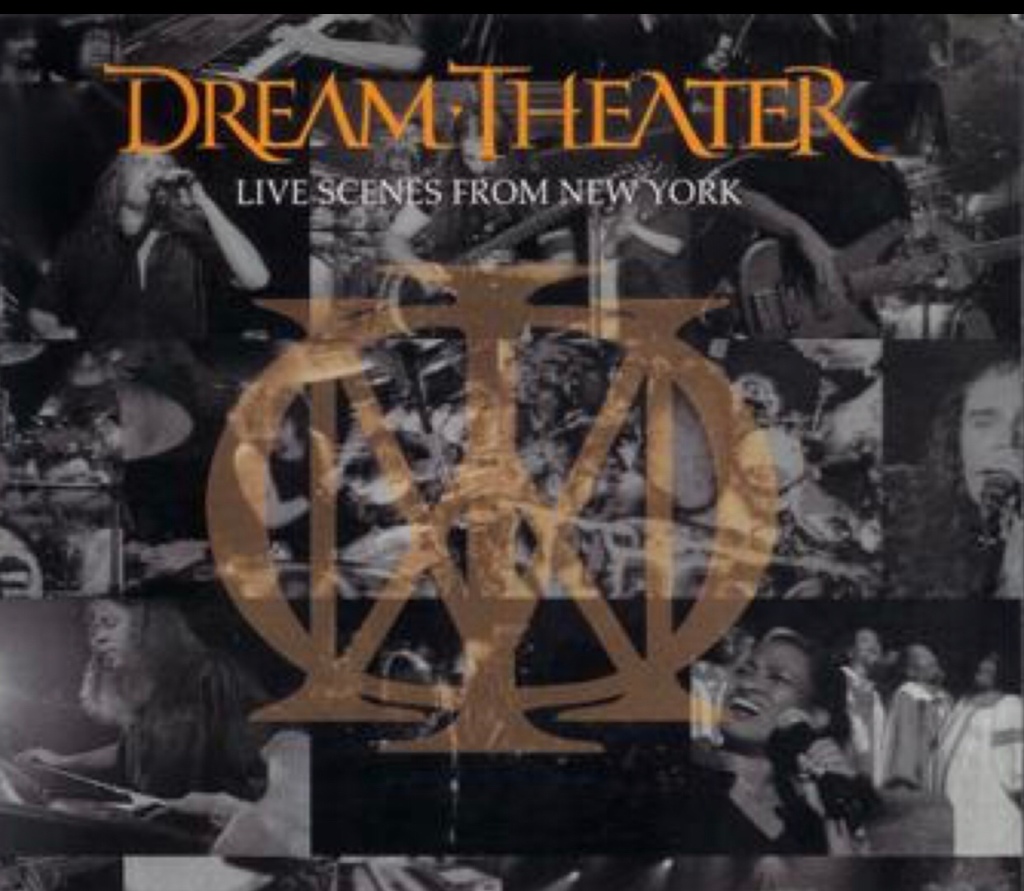
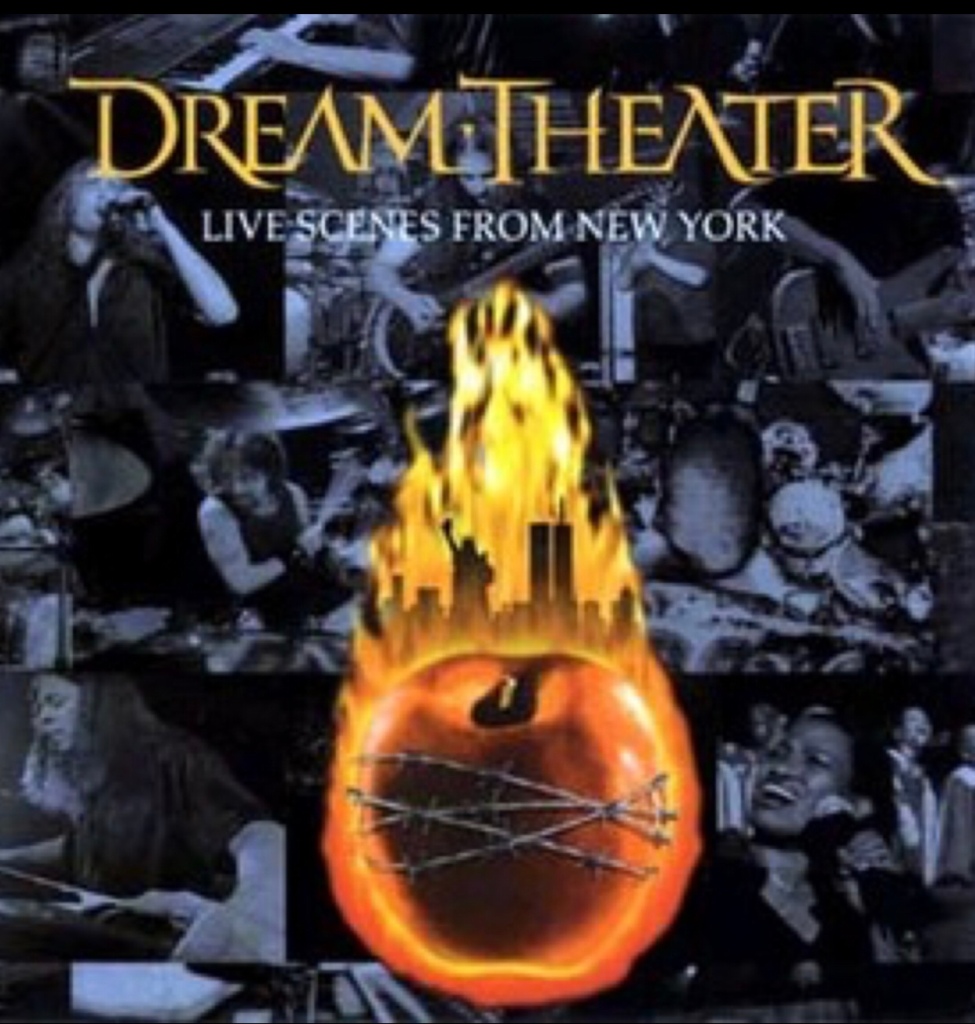
In a case of Nostradamus clairvoyance, the original album cover had the Dream Theater logo over a burning New York skyline with the World Trade Towers on fire. It was all printed and packaged for its release date of September 11, 2001.


 destroyerofharmony