Classic Songs to Be Discovered, Influenced, Music, My Stories, Unsung Heroes

World On Fire

Welcome back to the world of hard rock, Mr Chris Daughtry.

It’s so good to hear you rocking out again, with heavy distorted guitars and one of your best vocal melodies over the last 7 years.

In case you are not aware, Daughtry just dropped “World On Fire” and I’ve racked up some time streaming it.

It’s a perfect example of how we fall in and out with the artists we support. I was all in between 2006 and 2012. Then “Baptized” came out in 2013 and I wasn’t really a fan of it and “Cage To Rattle” in 2018 also proved disappointing to me.

But I stuck around, because the artists we support need to mature and they need to grow and try different sounds.

Then certain events happen.

Unfortunate events.

And it makes them angry.

If you watched George Floyd scream “I can’t breathe” while a Police Officer kept the pressure on his neck and didn’t get angry, then you are part of the problem.

Can you hear the crowd like a thousand sirens?
In the night like thunder striking
The sickness is rising
The angels are crying
That’s the sound of a world on fire

Every single person has a right to live to old age. The fact that brutality still exists in societies which are meant to be “civilised” and “understanding” is frightening, especially when the brutality comes from the people who swore to protect society. Instead of protecting, they are inflaming the situation and causing a revolution.

I saw photos and videos of the protests in Belarus. The Belarus Police are protecting a corrupt dictatorship hiding behind fake/rigged elections and the Police answer the protests for change with tear gas, stun grenades, water canons and batons.

And the same response happened when people protested against police brutality in democratic societies.

That’s the sound of a world on fire.

Put it on and listen.

Standard
Derivative Works, Influenced, Music, My Stories, Unsung Heroes

The Record Vault – Cacophony

“Go Off” is the second album from the Marty Friedman and Jason Becker project known as Cacophony, released in 1989.

The first one, “Speed Metal Symphony” was released in 1987.

It’s basically like Racer X but a bit more on the technical side of thrash, like Watchtower. And like Racer X, the guitarists in the band would go on to explore other outlets. Marty Friedman with Megadeth and Jason Becker with David Lee Roth, which was cut short by a terminal disease which took away all movement.

“X-Ray Eyes” feels like it came from a Testament album. The lead section has Becker and Friedman trading sections for over a minute and raw thrash like vocals.

“E.S.P” starts off with a finger picked intro and lead that resembles Baroque. You feel like you are in a castle watching the jester perform, before it rips into a thrash metal riff which reminds of Annihilator. Listen to the outro (the last minute), and the riffs and the harmony leads.

“Stranger” attempts to be groovy with Van Halen like riffs while “Go Off” is an instrumental, with a lot of fast guitar solos. Not my favourite cuts.

“Black Cat” has this Oriental feel in the first minute, before it moves to a Thin Lizzy style harmony merged with Gary Moore’s “Over The Hills And Far Away”. At 7 minutes long, it’s the first two minutes I like.

“Sword Of The Warrior” is another thrash-a-thon, with symphonic harmony sweeps. But when the steroid infused “Peace Sells” inspired bass riff kicks in, the song gets even faster. This track could have come from “Kill Em All” or the “Peace Sells” album.

“Floating World” is a lot slower, more rock like with Thin Lizzy harmonies. And when it’s at that level I am a fan.

“Images” is a slower tempo song, which sounds like it came from the soundtrack of an Italian Spaghetti Western. This one is an instrumental and at 3 minutes long, it’s perfect.

So if you like guitar playing with flawless technique and songs with a lot of riffs and leads and raw vocals then you should give it a listen. Or if you want to hear a great instrumental track, then just go straight to “Images”. You will not be disappointed.

Standard
Classic Songs to Be Discovered, Derivative Works, Influenced, Music, My Stories, Unsung Heroes

2000 – Part 5

AC/DC – Stiff Upper Lip

Five years after “Ballbreaker” they return with the very underrated “Stiff Upper Lip”.

The title track starts off like blues band jamming at the local pub and then the romp and stomp kick in.

How good is “House Of Jazz”?

That riff groove is so sleazy and foot stomping.

And “Safe In New York City” has this E to G, E to A and E to B flat style chord progression that reminds me of the “Tommy Gunn” riff, but the song vibe is like “Let There Be Rock”.

“Satellite Blues” is an underrated gem in the AC/DC canon.

And its towards the back of the album that it gets bluesy and dirty with “Damned” and “Come And Get It” being excellent additions. Listen to those sharp 7 and flat 9 chords in the Pre Chorus.

“All Screwed Up” is 5 minutes of blues rock while “Give It Up” is a rewrite of “Highway To Hell” but it stands on its own.

Not as big as other albums in sales but it got em on the road again, which is the place that AC/DC rule.

Axel Rudi Pell – The Masquerade Ball

He was labelled a Malmsteen clone, but if anything, he’s more in the mould of German guitarists like Michael Schenker and Uli Jon Roth, along with Matthias Jabs and Rudolf Schenker with a nod to the British rockers of the 70’s which involves, Paul Kossoff from Free, Jimmy Page from Led Zep, Richie Blackmore from Deep Purple and Rainbow and Mick Ralphs plus Jimi Hendrix who is from the US but went to the UK to make it.

Johnny Gioeli is on vocals as well.

And the album is not on Spotify Australia, but it’s on YouTube which pays less.

“Earls Of Black” and that intro lead break. Check it out.

“Voodoo Nights” sounds like “Big City Nights” from Scorpions. Plus Gioeli delivers a vocal performance.

“The Black Masquerade” at 10 minutes doesn’t get boring (especially the violins in the Chorus) while “Tear Down The Walls” reminds me of his other songs like “Warrior” and a melodic lead break after the Chorus.

Scorpions – Moment Of Glory

And this album is also not on Spotify Australia. It’s Scorpions with the Berliner Philharmoniker. It was meant to be Michael Kamen scoring it, but then left to pursue the Metallica project.

“Hurricane 2000” kicks it off, which is basically “Rock You Like A Hurricane” about a bitch being hungry and how Klaus is going to feed her inches and feed her well.

“Crossfire” really kicks in to overdrive when the “Crossfire” section starts. If your not ready to take up swords and go to war than you’re too uptight.

“Deadly Sting Suite” is also an instrumental merging the Scorpions songs, “He’s A Woman, She’s A Man” with “Dynamite”. And it’s done brilliantly.

And the concert ends with “Still Loving You”, “Big City Nights” and “Lady Starlight”. “Big City Nights” is pretty impressive.

The Berlin Philharmoniker really does a great job with it, and how good are the backing vocalists and the symphonic/choir vocalists.

Black Label Society – Stronger Than Death

The title alone makes me laugh and it reminds me of Motorhead’s “Killed By Death”.

Zakk Wylde wrote all the songs, played all the guitars, did all the vocals and also played the bass and piano. Plus he produced it as well. And mixed and mastered it.

“All For You” has basically a riff which the NuMetal movement “used to death”, but Zakk makes it sound “shiny metal fresh”.

“Phoney Smiles And Fake Hellos” is a favourite.

And he went back to the world of “Miracle Man” for the lyrical inspiration on “Counterfeit God” and when the verse riff kicks in, its down tuned and “heavier than death”.

“Just Killing Time” is those Zakk tunes on the piano and delivering a CCR like vocal.

“Stronger Than Death” is a slow dirge, full of grooves, but interchangeable with a few of the other tracks on this album and “Love Reign Down” closes the album, another groove riff laden cut

Mr Big – Get Over It

I heard this album many years after it came out. I was even surprised the band was still recording after “Bump Ahead” which was released in 1993. And I had to see who was still in the band, because I knew Paul Gilbert left to do Racer X again.

So Eric Martin still wails away and on this one, he is very bluesy, sort of like the Badlands second album. On guitars this time around is Richie Kotzen, with Billy Sheehan and Pat Torpey rounding out the rhythm section.

Songwriter Marti Frederiksen is called in and while the bluesy tunes are nice to listen to, they start to become repetitive. Interchangeable in fact.

I suppose I was over it by then.

Dio – Magica

Ronnie James Dio had enough goodwill in my book to warrant eternal fandom. But I didn’t really get into his 90’s output after “Dehumanizer”.

But many years later in the 2000’s (and after Heaven And Hell released “The Devil You Know” album) I started to listen and “Magica” was first because I was always a sucker for a concept album.

The band is a good one for the release with Simon Wright on drums, Jimmy Bain on bass and Craig Goldy on guitars.

“Lord Of The Last Day” is classic Dio, merging his Sabbath time with the dirgy “Egypt (The Chains Are On)” groove.

“Fever Dreams” instantly became a favourite because its riff reminds me of “Dream Evil” and “Long Live Rock N Roll”.

“Challs” is one of the characters in the story and the song is a blues rock groove blended with melodic rock and it’s one of my favourite songs on the album. Maybe because it also sounds like the songs from “Holy Diver” and “The Last In Line” album, like “Rainbow In The Dark” mixed with “Dream Evil”.

“As Long As It’s Not About Love” has this Hendrix “Little Wing” style intro and a haunting vocal line from Dio before it gets into the dirge like groove similar to “Sign Of The Southern Cross” from his Sabbath days.

“Losing My Insanity” is pirate metal and I like it.

“Otherworld” has this Middle Eastern riff, distorted and fuzzed. The riff makes me want to pick up the guitar to learn it. And Dio is telling his stories.

If you like Dio in the 80’s, then you will like this album. There is enough there to keep you interested.

Off to 1985, for Part 5.

Standard
Classic Songs to Be Discovered, Derivative Works, Influenced, Music, My Stories, Unsung Heroes

The Record Vault – Creed

Mark Tremonti is a big reason why Creed became a favourite.

To anyone who listened to me after “Weathered”, I called him the modern day Jimmy Page, as he can move between fast metal riffs, to blues rock riffs, to heavy groove rock riffs to folk rock and even classical. Plus he did it by using various open string tunings. There was a lot of variation on the albums.

Similar to how Page moved between so many different styles, so when you got a Led Zeppelin album, you had a lot of variation between each song. And Page did it by using various open string tunings.

My Own Prison

The debut released in 1997.

It took me a while to get used to Scott Stapp’s “Vedder Voice”, but from the outset the music made me want to pick up the guitar and play it.

Album opener “Torn” moves between the light in the verses and dark in the Chorus. Plus it’s got two breakdowns. And at 6 minutes long, I was in.

The intro in “Ode” has got some serious Metal overtones. Plus it’s got a head banging chromatic riff in the interlude.

“My Own Prison” deals with being responsible for creating your own prison.

“In America” almost sounds folky and Chilli Peppers like with all the open tunings that Tremonti employs. The Chorus sounds like it came from the British Rock explosion.

“Unforgiven” has a groove metal riff which could have come from Pantera.

“What’s This Life For” is a favourite. The way it starts off with the clean tone strumming, it could have come from the 70’s folk rock movement. But it’s the 2 minute outro that really hooks me.

And the album closes with “One”, a pure Creed classic.

Two of their best songs to close out.

Human Clay
The follow up, released in 1999.

I don’t think anyone had any idea as to how big this album would get, like 11 x Platinum in the US and 4 x Platinum in Australia.

And “Are You Ready?” kicks it all off. The heaviness of the groove riff had me ready to listen to more and “What If” continues the groove metal set with the opener.

How good does “Beautiful” start off?

“Say I” musically is a metal song. It could come from a thrash album. The clean tones just keep percolating until it explodes into a Tool like riff for the Chorus.

“Faceless Man” is one of those fan favourite cuts, as it moves between hard rock and groove metal, between light and shade and dark. And Tremonti even pulls out an open string lick.

“With Arms Wide Open” and “Higher” are up next and these songs sold the album to the masses, but its “Wash Away Those Years” which I like more. Its cuts like this, “Faceless Man”, “Say I” and “What If” which really made this album for me.

“Inside Us All” closes the album and it’s another cut which moves between a clean tone verse and distorted chorus which I like. Plus there is another cool and fast melodic lick which Tremonti chucks in at the outro of the song, a precursor to the things to come in the shred department.

Weathered

Released in 2001, and it blows me away from the outset with “Bullets”.

That riff from Tremonti, with the fast alternate picking, palm muting and open strings is addictive. They opened with this song when I saw em live in Sydney.

Bassist Brian Marshall was out and Tremonti did the bass parts for the album.

Then “Freedom Fighter” has this Texan blues groove but done in a Pantera style for the verses.

“Who’s Got My Back” is typical of the style of the Creed songs I like, with atmospheric finger picked riffs in clean tone percolating in the verses, which leads to open string tuned chords and eventually crunching and distorted chords.

How heavy is that verse riff in “Signs”?

Then you are treated to the excellent finger picked lines of “One Last Breath”.

“My Sacrifice” pushed this album to multi-platinum status in Australia and the U.S and the streaming counts for this song are huge, way higher than “Higher” and “With Arms Wide Open”. And while I liked the song when I heard it on the album, it wasn’t until I saw Creed live that I really enjoyed the song and the way they played it. It was the closer, it was delivered with power and a lot of pyro and they made sure they left you wanting more.

“Stand Here With Me” came next and its similarity to “My Sacrifice” made me ignore it, but the riff stands on its own. And there is a lead break in this song, which got me paying attention.

“Weathered” is my favourite track, especially that whole interlude/bridge section from the 3.27 mark and that riff. It reminds me of heavy metal from the 80’s.

“Hide” is “My Sacrifice” part 3 and although it is derivative, it doesn’t get boring. “Don’t Stop Dancing” has a nice little melodic lead from Tremonti, who really picks his small lead break spots to perfection.

Full Circle

It came out in 2009.

Alter Bridge had traction by now, releasing “One Day Remains” in 2004 and the excellent “Blackbird” in 2007 and I was like, why would Tremonti get back with Stapp. But it’s a fitting way to go out, the four dudes who were in the initial band to come full circle.

The anti-Creed press made sure they kept repeating how the sales of the album didn’t match the sales of the previous albums and that the album is a dud.

But it’s not a dud and the tour did well at the box office.

“Overcome” kicks it off in typical Creed fashion, but this time around the band is angrier and a bit more weathered from life. “A Thousand Faces” and “Rain” are my favourites. “On My Sleeve” is also worthy.

“Away In Silence”, “Full Circle” and “Time” round up the album for me.

Standard
Influenced, Music, My Stories

Quantifying Music

You can’t quantify music.

In the 80s, when MTV brought the artists into our lounge rooms, the charts and the sales were used to quantify what was successful.

But it doesn’t make sense a lot of the time.

A lot of artists from the 70s who didn’t have high charting albums proved to be very influential to a whole new generation of music fans in the 80s.

Just because a track reaches #1 it doesn’t mean it’s better than a track which doesn’t get to Number 1.

Quiet Riot went to Number 1, but on Spotify, “Cum On Feel The Noize” has 136 million streams and “Bang Your Head” has 40 million.

Meanwhile, Ozzy didn’t go to Number 1 with the “Blizzard Of Ozz” album but “Crazy Train” has almost 280 million views.

Obviously what is good is in the eye of the beholder. It’s up to us to define and not for someone else to define for us.

Today there are ten year olds who can shred like Eddie Van Halen.

Does it mean they are better than EVH?

And they can’t write at this point in time.

Then again according to DLR and Sammy Hagar, EVH had to get reined in when it came to putting riffs together for songs. VH3 is the result of an unchained EVH. But without him, culture and guitar playing would be very different.

Someone like Pete Way passed away recently, and 99% of the music consumers wouldn’t even know or care who he is. But to others he is monumental.

These kind of people are progenitors. They don’t often get the acclaim they deserve. Or they might get a victory lap or an award way down the line.

But without them, history would be different.

Like Pete Green. He didn’t have the sales on his resume, but he was the influence to a lot of artists who had the sales on their resume.

Standard
Music, My Stories, Stupidity, Unsung Heroes

Record Label Review Payola

Remember the time when you read a review and it praised the album, maybe they mentioned a song and your thinking, “what the”.

Once upon a time, reviewers had an opinion and some critical analysis took place. And it was their subjective opinion. And as fans we would take a chance on an album based on a review and if we agreed with the reviewer, we would put that reviewer as a trusted source.

And the record labels didn’t really care about these opinions from reviewers as they were already cooking the books and charts with the record stores and radio stations. But they got busted doing it and suddenly, the labels needed a new outlet for their payola.

So the labels started to pay people to deliver favorable reviews. And these reviewers suddenly had a nice label income coming in.

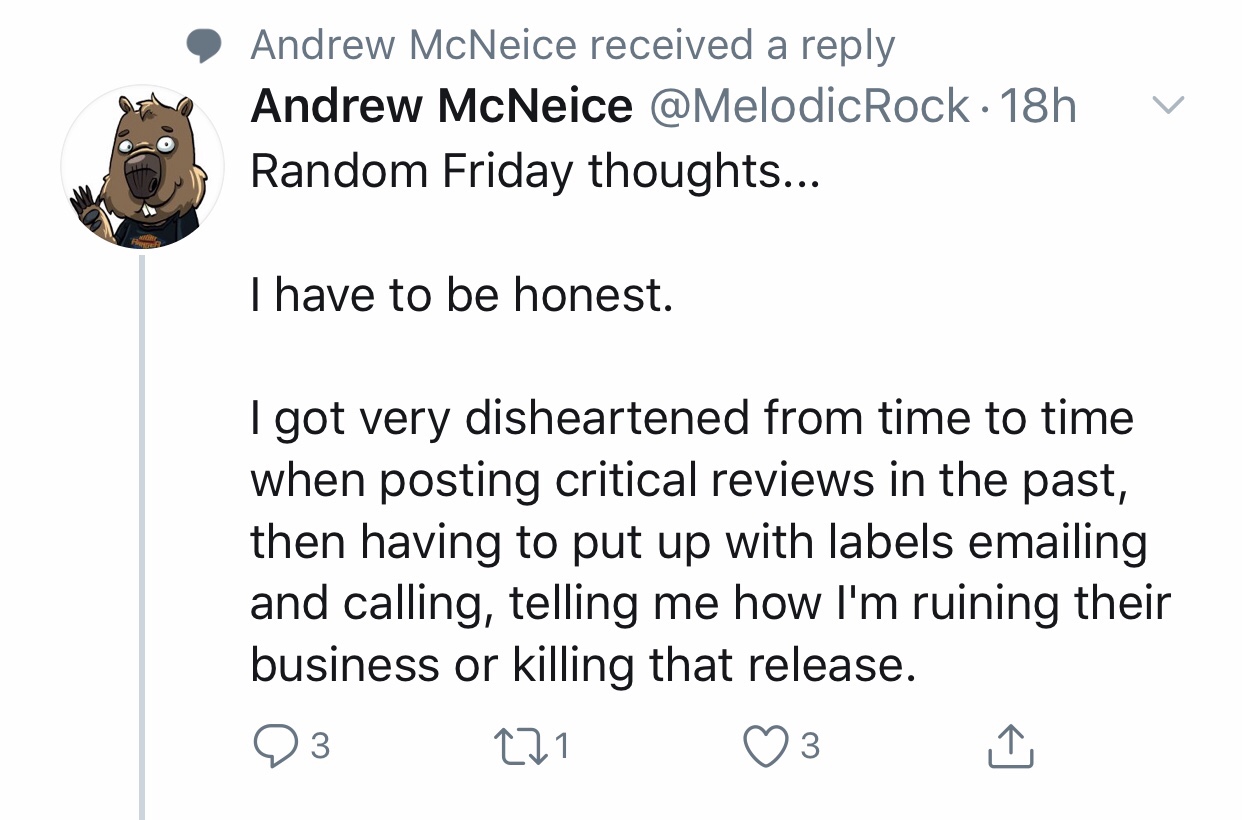
And if a reviewer posted a review that was critical of an album, well the label reps would call them and tell them how their review is killing their business and that particular release and how they all gotta work together.

In other words, post positive reviews or your record label money will disappear.

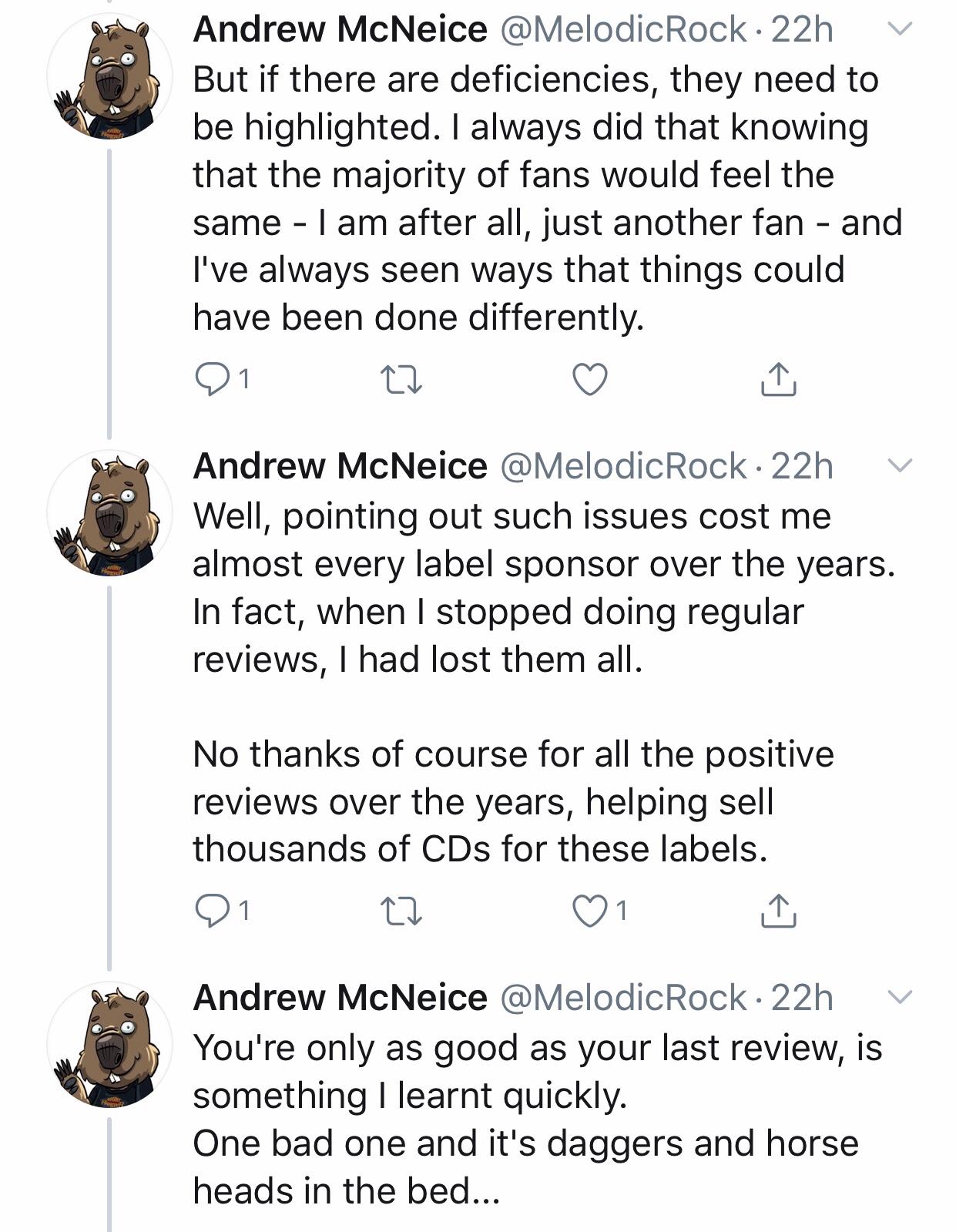
And if you kept to your guns and pointed out deficiencies on albums then eventually the labels would drop you as an approved reviewer and move on to someone else who was more than happy to be positive.

But most reviewers are music fans to begin with so they will always have an opinion for and against the new music. And it’s a shame if they don’t state it for the sake of money.

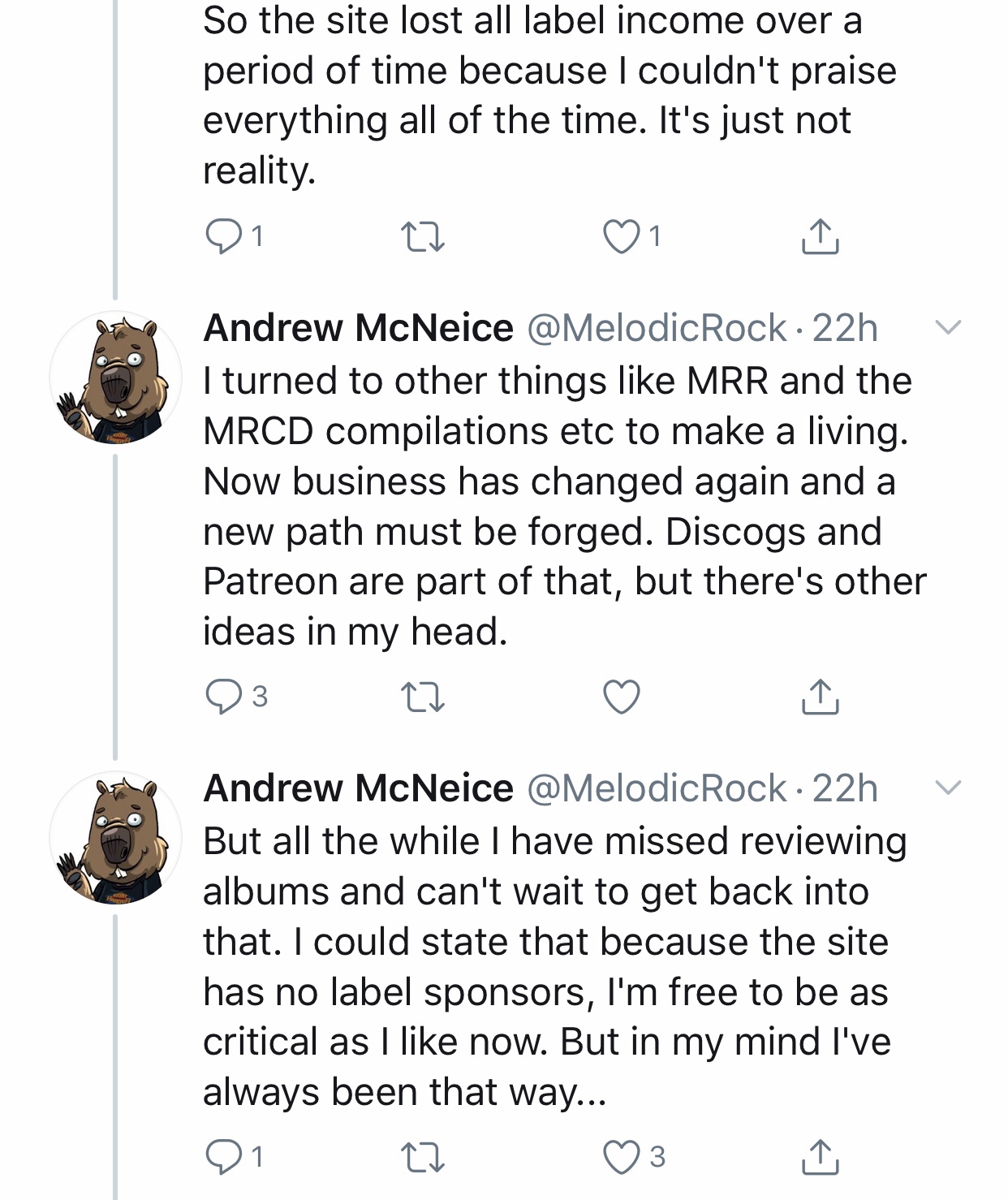
Here are the Twitter posts which inspired this post from a Andrew McNeice who runs the MelodicRock website.

Standard
Classic Songs to Be Discovered, Derivative Works, Influenced, Music, My Stories, Unsung Heroes

The Pirate Vault #11

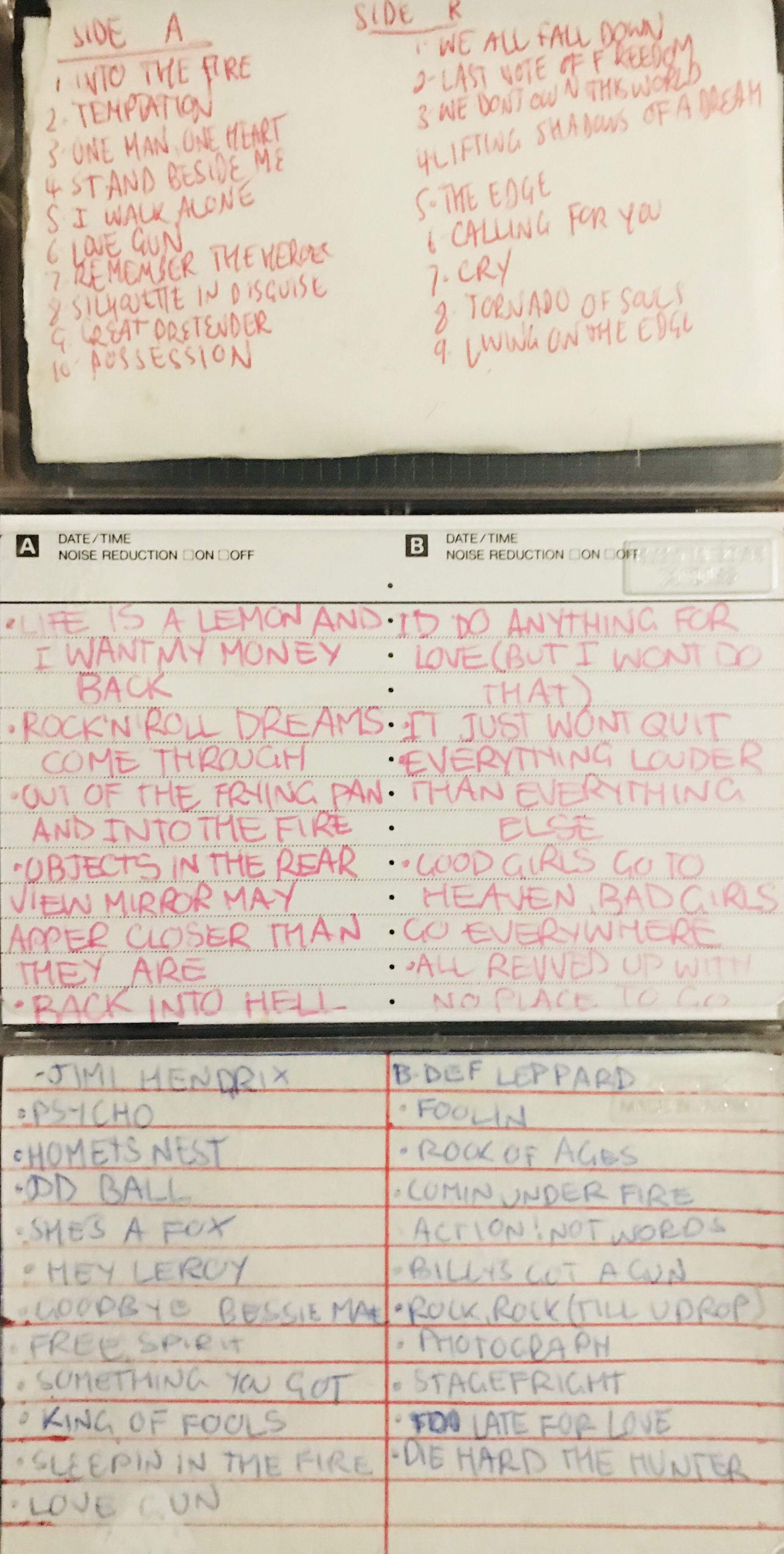
The Mix Tape

I did this mix tape as an album of songs I like from different artists, as I wanted to get the feel of those songs into my song writing.

Kiss – I’ve Had Enough (Into The Fire)

It’s a perfect album opener with a fast palm muted and aggressive riff. It’s a Paul Stanley and Desmond Child composition, appearing on the “Animalize” album released in 1984.

Y&T – Temptation

For track 2, it was always the most accessible tune, so here is a pop rock tune, with big harmonies.

Y&T worked hard on A&M Records and built a career. Then the big labels came calling and Geffen Records got the signature for a lot of money. And Y&T also got a label rep, who told them what songs should be worked on and what songs shouldn’t.

This one is written by Al Pitrelli and Bruno Ravel during the early Danger Danger days, with Phil Kennemore adding some lyrics and it appeared on their 1987 album “Contagious”, which Geffen earmarked to sell a lot to cover the costs of the Whitesnake 87 album.

Kansas – One Man, One Heart

The Kansas tracks on this mix tape are from the Steve Morse era of Kansas between 1986 and 1988. Steve Morse was involved in the “Power” album released in 1986 and “In The Spirit Of Things” released in 1988.

These two tracks are from the “In The Spirit Of Things” album and even though I’m a Steve Morse fan, he wasn’t involved in writing em.

This one is written by Mark Spiro and Dan Huff (the same Dan Huff from Giant) and what you get is a melodic rock song, worthy of a place on the imaginary album.

Kansas – Stand Beside Me

This one is written by Mark Jordan and Bruce Gaitsch and it’s like the ballad track.

Hericane Alice – I Walk Alone

This band was good and this track is a stompy 12/8 bluesy romp, perfect to close off Side 1 of the imaginary album.

Kiss – Love Gun

You open up Side 2 with another aggressive album opener. Can’t go wrong with a Kiss cut.

Sammy Hagar – Remember The Heroes

This is a very underrated song from the mighty Sammy Hagar. It appeared on the “Three Lock Box” album, released in 1982 and Jonathan Cain (who was having an unbelievable run of high profile songs with Journey and other artists) is a co-writer with Sammy Hagar.

Kansas – Silhouettes In Disguise

It’s from the “Power” album released in 86. This track is written by Steve Morse and Steve Walsh. And it’s the fast past riff that hooks me.

Kansas – Three Pretenders

This cut is also from the “Power” album. This track is written by Billy Greer, Steve Morse and Steve Walsh. The way the guitar and synth chords work in the intro hooks me in and the vocal line from Steve Walsh is perfect.

Bad English – Possession

And it closes with a melodic rock AOR song.

Side B

And here is another take of an imaginary album.

Blue Murder – We All Fall Down

Another fast and aggressive opener to kick off the album about Louie who lost his daughter behind the tracks, as the sweet brown sugar took her.

John Sykes pulled out his Phil Lynott experiences vocally and lyrically.

David Coverdale – The Last Note Of Freedom

Hans Zimmer wrote the music and Billy Idol wrote the lyrics. I’ve read that David Coverdale has been credited as well, but I am pretty sure he wasn’t credited on the original Days Of Thunder soundtrack.

It’s a melodic rock gem, bordering between, pop and rock.

George Lynch – We Don’t Own This World

The Nelson twins sing on this track, and man, they deliver.

It’s actually written by Pilson and Lynch, so it’s definitely got their Dokken vibe, but the Nelson twins are the difference. It’s a melodic rock hit with an intro riff that reminds me of “Women From Tokyo” from Deep Purple.

Dream Theater – Lifting Shadows Of A Dream

Its Dream Theater bringing their U2 and Marillion influences to their form of progressive hard rock, and it works so good to close Side 1.

Vince Neil – The Edge

The side 2 opener is fast, a bit progressive in its structure as it moves between Spanish/Flamenco guitar riffs to metal Uli Jon Roth style of riffs. Steve Stevens played some of this best riffs with Vince Neil.

Stryper – Calling For You

After an aggressive opener, you always need a little melody. And Stryper is at their melodic best on this song.

Tesla – Cry

From the excellent “Bust A Nut” album released in 1994.

And for those who said that grunge killed hard rock artists, well it didn’t kill Tesla.

In a volatile market, made hostile by the record labels who dumped hard rock bands and then had their puppets in the press lambast the style, Tesla, stood tall and worked hard touring on this album and even got a certification in the process.

And then the labels tried to kill em off.

Megadeth – Tornado Of Souls

This is a fast rocker and the solo from Friedman is a “wow” moment.

Aerosmith – Living On The Edge

The simple riff in D, that just keeps repeating is addictive and the vocal melody from Tyler captures you.

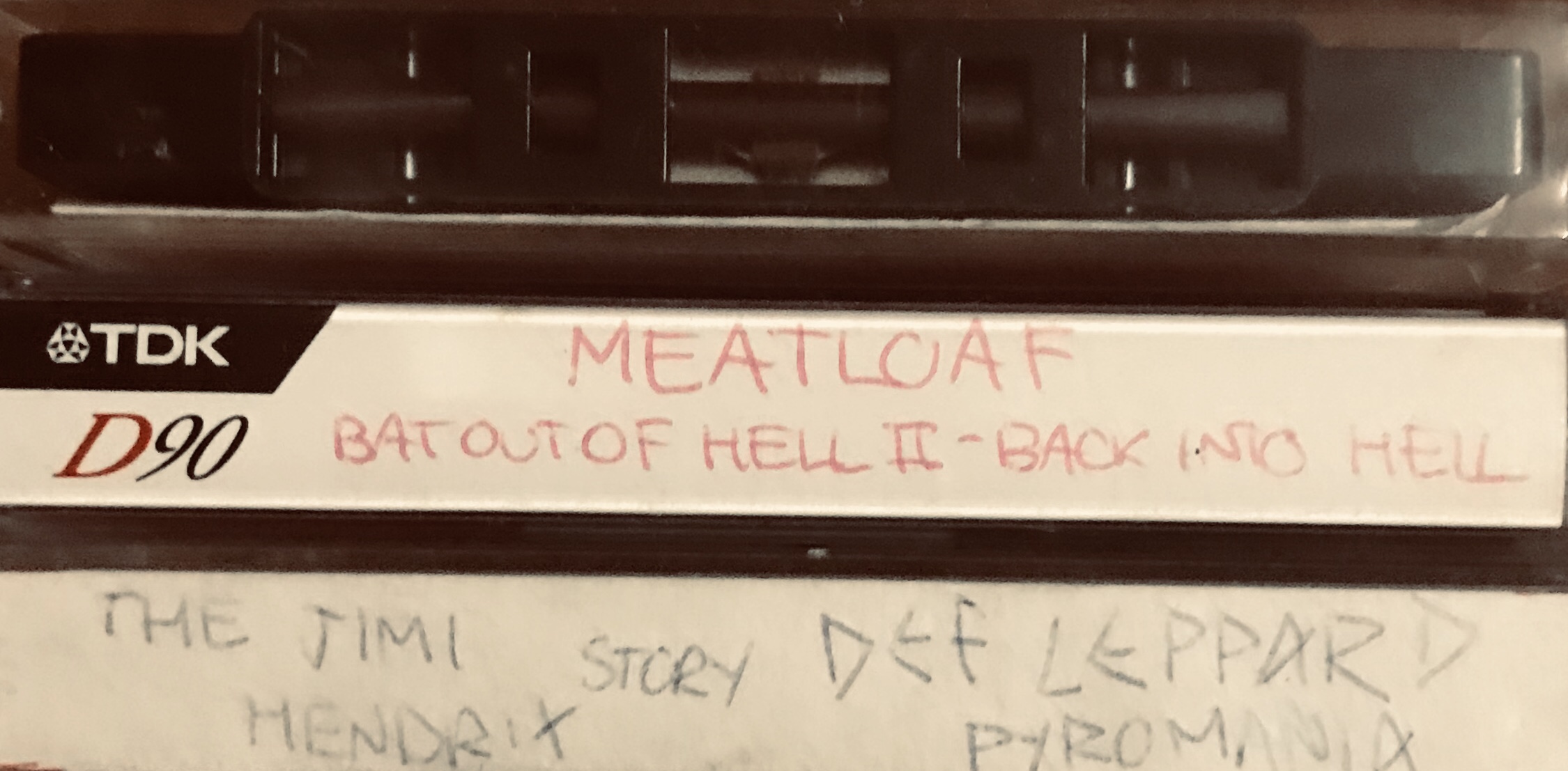
Meatloaf – Bat Out Of Hell II – Back Into Hell

The longest song titles in the world brought the mighty Loaf back into our lives.

And even though he released 4 or 5 albums after “Bat Out Of Hell”, all of those albums ceased to exist and it was like his career was “Bat Out Of Hell” 1 and 2.

The Jimi Hendrix Story / Def Leppard – Pyromania

A friend of mine had a Jimi Hendrix compilation and I recorded it over a few different tapes. I can’t even remember what was on this side before I taped Hendrix over it.

And of course, “Pyromania” on side 2, a perfect Walkman companion. This Def Lep album is the perfect bridge between the 70’s British Rock and Glam artists merged with the NWOBHM and the LA Sunset Strip.

I also added “King Of Fools” from Twisted Sister, “Sleepin In The Fire” from WASP and “Love Gun” from Kiss to the end of it. I think you get the drift that I really liked “Love Gun”.

I even wrote a song called “Love Gin” and “Cold Gun”. I know, merging two Kiss song titles is pretty desperate.

Standard
Classic Songs to Be Discovered, Derivative Works, Influenced, Music, My Stories, Unsung Heroes

The Record Vault – Phil Collins

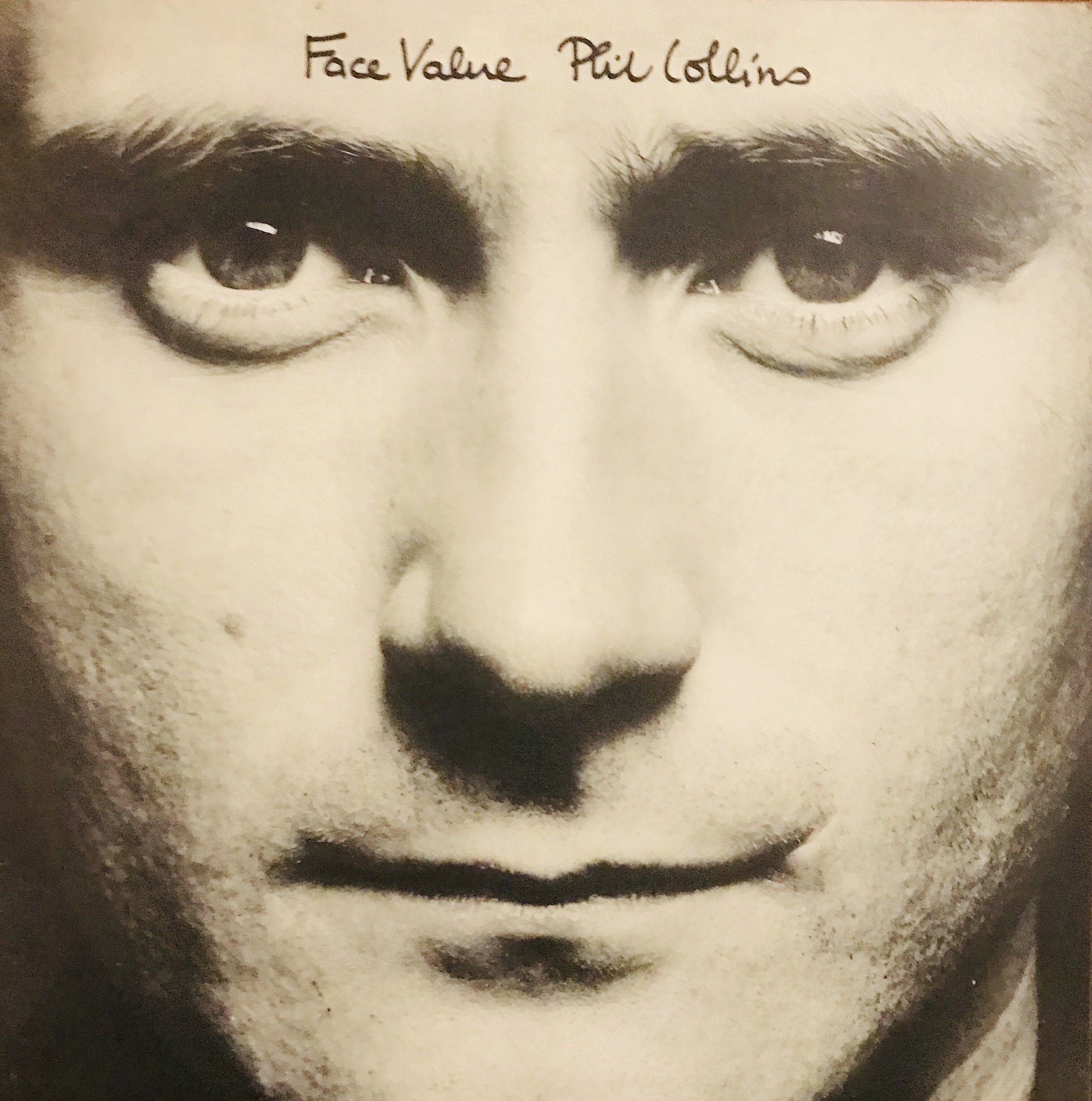
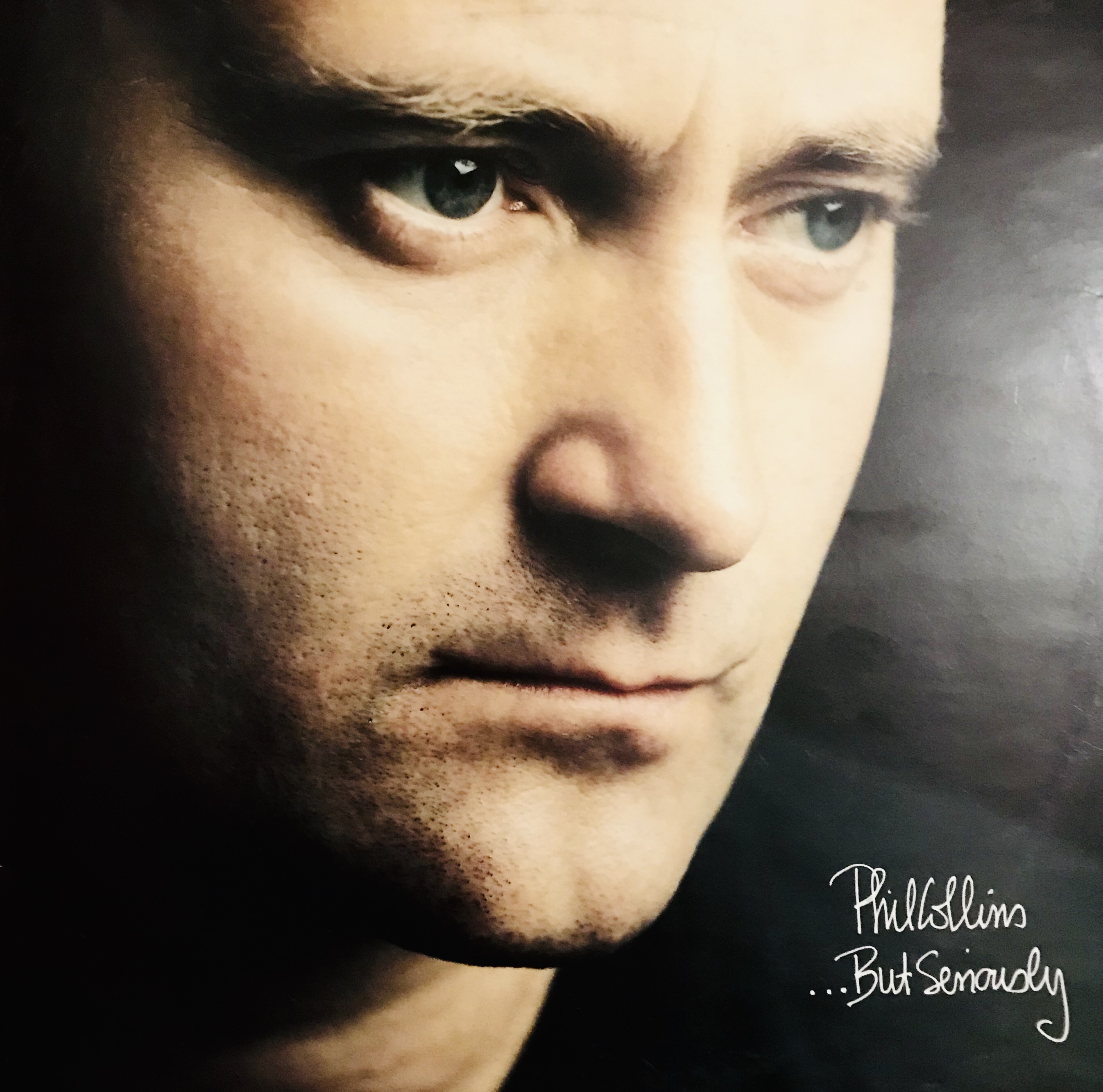
Three portraits. Phil really liked keeping the album cover simple.

Face Value

Released in 1981.

One song.

“In The Air Tonight”.

The way it percolates until it explodes with the drums. Brilliant.

Then there is “The Roof Is Leaking” a sombre piano ballad which moves into “Droned” which is a piano instrumental and it sounds like it could have come from an Alan Parsons album.

“I Missed Again” has a horn lead break which works as a lead guitar line and the album has a psychedelic version of “Tomorrow Never Knows” from The Beatles with horns and phasers.

No Jacket Required

Released in 1985

It’s like Soul Rock and I like Collins when his also bluesy with a touch of rock.

The “hit songs” on this album are not my favourites. The brass instruments are just too much for me on those. But with any Collins release, there is always something to sink your ears into.

“Long Long Way To Go” is a favourite. It’s the mood and the repeating guitar/synth lick.

Then there is “I Don’t Wanna Know” which is a melodic rock masterpiece, with a great outro guitar solo.

“Don’t Lose My Number” reminds me of Marillion for some reason. It has a feel that Marillion would explore later on when they changed vocalists.

“Doesn’t Anybody Stay Together Anymore” has this driving beat to kick it off before it subdues in the verses, but the drums still roll on.

But Seriously

Released in 1989.

It was number 1 everywhere and Phil Collins couldn’t do no wrong. As a solo artist, he was having hits. With Genesis, he was having hits. Writing songs for movies, he was having hits.

Two songs define this album.

The blues/gospel influenced “I Wish It Would Rain Down” with the mighty Eric Clapton on lead guitar. That outro with Clapton trading pentatonic lead breaks with Collins vocals, is just brilliant.

And the other track is “Another Day in Paradise” which deals with homelessness which Queensryche also touched on with their “Empire” album and their song “Della Brown”.

“That’s Just The Way It Is” is a great title. The subdued nature of the song is what interested me and Collins delivers an R&B style vocal. Many years later I found out it’s an anti-war ballad about The Troubles in Northern and it became a favourite.

And that folks is my Phil Collins experience.

Standard
Classic Songs to Be Discovered, Derivative Works, Influenced, Music, My Stories, Unsung Heroes

1977 – Part 4

Scorpions – Taken By Force

My first Scorpions experience was Tokyo Tapes courtesy of a friend.

And I grew up as an Uli Jon Roth fan.

Fast forward many years later, I’m reading interviews of artist, who mention Uli Jon Roth as an influence. Guitarists like George Lynch, Marty Friedman, Dave Mustaine, Alex Skolnick and Kirk Hammet just to name a few. I heard his style of writing in Adrian Vandenberg and Randy Rhoads. And although Yngwie Malmsteen was classed as a Richie Blackmore clone, he also had Uli Jon Roth influences.

And for Uli Jon Roth, he was a Hendrix devotee. So he merged those Hendrix influences with Euro Classical music and the result’s is a fusion of blues, rock and classical.

So let’s relive a very underrated and more or less forgotten Scorpions album from the glorious Uli Jon Roth era who as a lead guitarist had free reign to paint whatever leads he wanted.

“We’ll Burn The Sky” starts off with those clean tone arpeggios and a haunting vocal from Klaus Meine. And it moves into this staccato riff, which is the embryo of melodic rock.

That, ahhhhh breakdown from about the 2 minute mark, leads back into those clean tone arpeggios. This one is written by Schenker and lyrics are provided by Roth’s partner, Monika Dannemann, in tribute to Jimi Hendrix, who she was with at the time of his death.

“I’ve Got to Be Free” is a Roth cut with a wicked guitar riff and a Boston “Peace Of Mind” solo section.

“The Riot of Your Time” is a Schenker and Meine cut. For those questioning Meine’s abilities to write social conscious lyrics, then they should check this out. And those people pushing the theories of “Winds OF Change” being written by a CIA operative, should also check out this song.

“The Sails of Charon” is Roth’s shining moment. It’s been covered a lot. The title is enough to get me interested. Then there is the riff. A fusion of Classical and Spanish scales.

And that lead break over the intro riff.

It gave birth to the Shrapnel Label and shred guitar because it wasn’t just fast pentatonic licks like most of the guitarist’s did in the bands. This was a lead break like the lead breaks from the instrumental fusion artists like Al DiMeola, John MacLaughlin and Alan Holdsworth.

How good is “Your Light” which is another Roth cut, a mixture of funk, blues and rock?

“He’s a Woman – She’s a Man” is a Schenker, Meine and Herman Rarebell. I first heard this song when George Lynch covered it for a Scorpions tribute album. That intro riff and everything that comes after, is like a riot.

Thin Lizzy – Bad Reputation

It was a backs to the wall album. If you want to read the story behind, click on this link for Loudersound.com.

It wasn’t until the 90’s that I got a chance to really dig in to their 70’s output.

“Soldier Of Fortune” has nice harmony guitars in the Chorus, while “Bad Reputation” has a nasty guitar riff in the verses with funky bass lines.

“Opium Trail” is one of my favourite cuts. I heard John Norum’s cut first with Glen Hughes on vocals and became a fan instantly.

“Southbound” and that opening harmony riff. Listen to it.

And I still don’t like “Dancing In The Moonlight”, but I do like “Killer Without A Cause”.

And that harmony intro to “That Woman’s Gonna Break Your Heart” gets me playing air guitar and drums.

“Dear Lord” is the closer. Check out the lyrics from Lynott who was already experimenting with his potions and pills.

I’m in deep and I need your help / there’s no one to turn to and I can’t help myself / Dear Lord hear this call / oh Lord, save my fall.

No one heard the call as it all came crashing down by the mid 80s.

Judas Priest – Sin After Sin

This album is one of those underrated albums. A bridge between the start of the band and the peak commercial success of the band.

To record this album on a major label, it meant the band had to forfeit their rights to their first two albums to their original label, who kept the masters with them.

It’s also the album in which Judas Priest toured the US as support to REO Speedwagon and Foreigner. Seeing those three bands together on a bill is all wrong.

I love “Sinner”. So many great movements, like the intro/verse riff, the start of the solo section in the middle, then another outro solo and it just keeps on rolling and rolling and rocking.

“Diamonds And Rust” is a melodic rock gem, a cover of a Joan Baez folk song, but the way Judas Priest do it, it’s basically the sound which The Night Flight Orchestra built a career on writing songs like it.

“Starbreaker” chugs along on it’s F#m note.

“Last Rose Of Summer” sounds like it came from a Bad Company album, and very similar to “Shooting Star” while “Call For The Priest” has a harmony lead break which makes me want to hear it again. “Here Come The Tears” is one of those ballad like songs but in the 70’s it didn’t feel forced or pretentious. And the last two minutes is full of melodic lead breaks with a repeating baritone vocal line and then a high banshee vocal line.

“Dissident Aggressor” starts off like “Roadhouse Blues” merged with “Children Of The Grave” before Halford’s banshee operatic wail kicks in.

How good does “Race With The Devil” start off and then from the 28 second mark it moves into this blues like riff?

And most of the songs are forgotten, very rarely finding their way into the set lists. But it’s a worthy album.

Aerosmith – Draw The Line

The cover is one of the best. The cartoon caricatures on a white background just worked.

And it’s got my favourite Aerosmith track in “Kings And Queens” which producer Jack Douglas described the lyric writing process with Steven Tyler like “pulling teeth” because of the state he was in.

And since Joe Perry is not credited as a writer, he doesn’t even play on the track, with all guitars handled by Brad Whitford, including the lead guitars. Glen Hughes also did a killer cover if it.

And Steve Tyler has given many different interpretations as to what “Kings And Queens” is really about. In the liner notes to “Pandora’s Box”, he wrote that the song is about the holy wars and how many people died because of their beliefs and non-beliefs.

In his book, he said it’s about “a stoned-out rock star in his tattered satin rags lying on the ancient stone floor of a castle – slightly mad, but still capable of conjuring up a revolutionary album that would astound the ears of the ones who heard it and make the critics cringe.”

And relations further deteriorated when the Joe Perry penned “Bright Light Fright” was ignored by the band, but Perry still persisted with getting it done and since Tyler refused to sing it, Perry sang the lead vocal on it.

Journey – Next

To show how important “Next” is to the Journey history, all of the songs on the album vanished from the band’s live set list after 1979 and “Spaceman” and “Here We Are” have never been performed live. And “Spaceman” was also the single.

This “early” Journey was experimental and progressive, largely unknown to the masses, who would became fans from 1979/80.

Gregg Rolie is doing vocals (along with his normal piano playing) and the reviews of the time spoke about the vocals being poor. There is no Fleischman or Perry heroics.

But the band is a powerhouse band, with Aynsley Dunbar on drums, Neal Schon (sporting a monster hair style) on guitar and Ross Valory on bass.

Songs to check out are “Spaceman”, the progressive “Hustler” and the instrumental “Nickel and Dime”.

The Alan Parsons Project – I-Robot

I like the Alan Parsons Project because it feels like a mix tape of different artists as different vocalists do the lead vocals on the lyrical tracks and then there are the symphonic movie like pieces for the instrumentals.

Plus the themes of the albums all revolved around science fiction themes, which suited me fine.

“Don’t Let It Show” is more known to me because Pat Benatar covered it for “In the Heat of the Night”. Lead vocals on this album are done by Dave Townsend.

“Some Other Time” and “Breakdown” are my favourite tracks. Vocals on “Some Other Time” are done by Peter Straker and Jaki Whitren, while vocals on “Breakdown” are done by Allan Clarke.

And these names might mean nothing to people, but they all had careers in musicals, and as solo artists or with bands and with collaborations with other artists in different genres. And Alan Parsons rounded em all up to do rock songs.

The instrumental closer “Genesis Ch. 1 V. 32” (with its Choir) appeared in the episode “Toys” from “Homecoming” and I know that because I just finished watching season 1 two nights ago and I am currently half way through season 2. Plus Wikipedia confirmed it as well.

Finally, Alice Cooper’s “Lace And Whiskey” gets a listen, with his private eye persona concept story. “Lace And Whiskey”, “You and Me”, “King Of The Silver Screen” and “(No More) Love At Your Convenience” are the songs to check out.

But it was the beginning of the end of his marvellous 70’s output, and the start of the rehabilitation which would hit platinum heights 11 years later.

See ya back in the 2000’s for Part 5.

Standard
A to Z of Making It, Music, My Stories

Rock Rap

Rock was/is built on sex.

Like “Slide It In”, “Slow And Easy” from Whitesnake style of sex. Or the “Liquor And Poker” tour from Whitesnake on the back of the “Slip Of The Tongue” album.

Or “She Goes Down” for some “Sticky Sweet” from Motley Crue.

Or pulling the trigger of someone’s “Love Gun” while getting a “Plaster Caster” done from Kiss.

Or how she’s got the “Big Guns” from Skid Row.

But Rap is also built on sex and it has taken over rock when it comes to the mainstream.

Rap artists used any means necessary to spread the word and they embraced the internet.

They had their tracks on SoundCloud for people to listen to and they gave away mix tapes for free to download. This Vice story covers what a mixtape is/means in the world of rap.

In case you don’t read the article, MixTapes are “street albums,” that don’t use the label distribution process for albums. In comparison, albums are designed to move units and issue singles. They are designed to chart. And depending on the artist/label, an approval is needed from the label, before the artist can start recording it.

MixTapes are not designed to do that. They operate outside this sphere.

Mixtapes bring in new fans and provide something for the core fan base to talk about on social media.

MixTapes give the artist a reason to tour.

MixTapes can be jams with other arists.

Basically in the rap world, MixTapes move a rapper’s career forward and it’s done without selling a single copy. Although Bootleg copies of these MixTapes do make their way to iTunes and Spotify from opportunistic people. But the rappers don’t care.

“Embrace the future and don’t complain about it”, is a phrase I hear a lot. The general view from journalists is that rock and metal artists didn’t embrace this future and that’s why the genre is in the rear view mirror but it makes bank on touring.

And there’s been a lot of discussions recently on social media about the comments of Daniel Ek for artists to create more content.

But rock and metal fans are loyal and if they have the means, they will find a way to support the artists they like.

There’s a cool post at Seth’s Blog about deliberate lo-fi.

He talks about communication and how it’s gone downhill.

Like face to face contact went to landline phone calls to cell phone calls to text messaging and to Zoom calls.

And how music went from a live setting to vinyl to cassettes to CD’s to mp3 to streams.

This transition is because people want more and more, so things get condensed to fit this new norm.

But there’s always a shift. Because something that was better in the past will always be better in the future.

Maybe it’s a pretty good reason as to why vinyl has a Cult following. It won’t overtake streaming revenues but it will exist because it’s better.

Standard