Classic Songs to Be Discovered, Derivative Works, Influenced, Music, My Stories, Unsung Heroes

The Record Vault: The Black Crowes – Amorica

The band is unchanged. Chris Robinson is on vocals and harmonica, Rich Robinson and Marc Ford are on guitar, Johnny Colt is on bass guitar, Steve Gorman is on drums and Eddie Harsch is on keyboards.

Released in 1994, “Amorica” took a while to come to fruition. It wasn’t a hazy 8 day recording session like “The Southern Harmony And Musical Companion”.
You see, in 1993, the band worked on an album called “Tall”. But the recordings got scrapped because Chris and Rich Robinson didn’t see eye to eye during the sessions. Rich felt that Chris alienated him from the rest of the band. Chris reckons that Rich was upset because he was leading the sessions and was rejecting his riffs and ideas.
Well, Rich ended up winning the argument and the “Amorica” album is the result of moving forward with the ideas of Rich and not Chris.
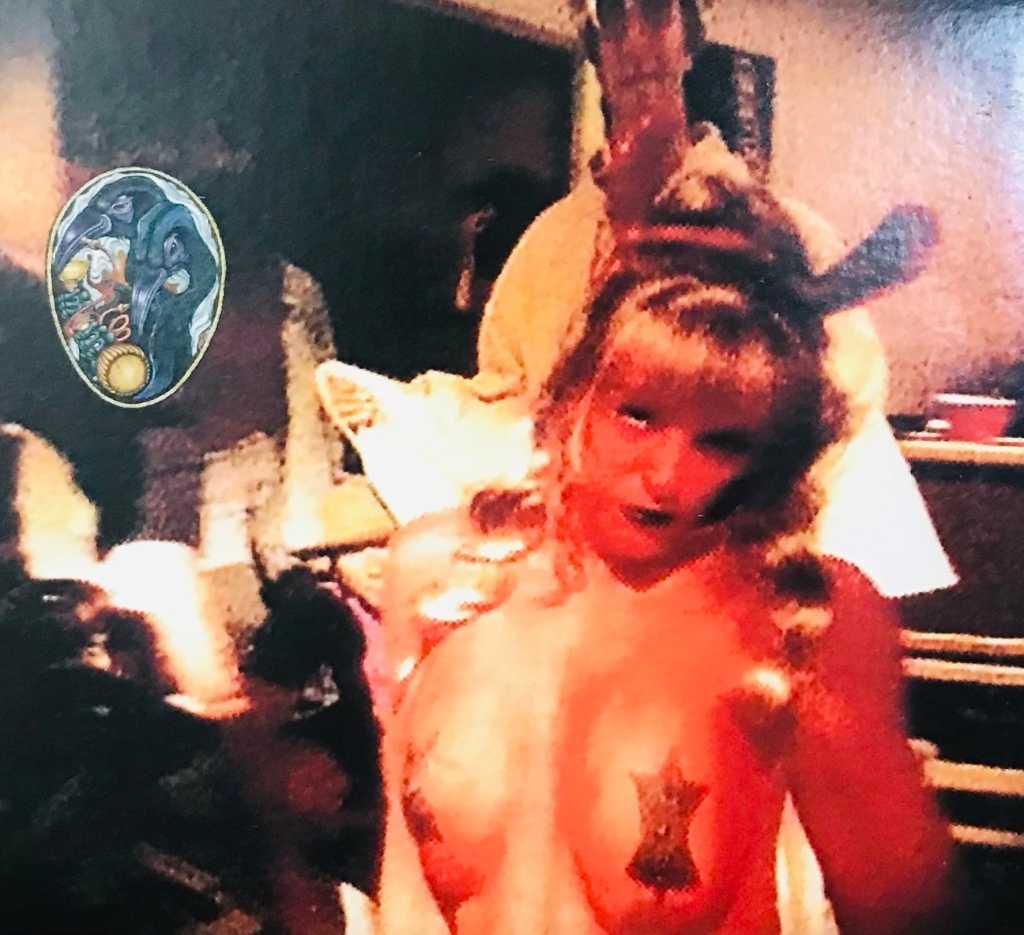
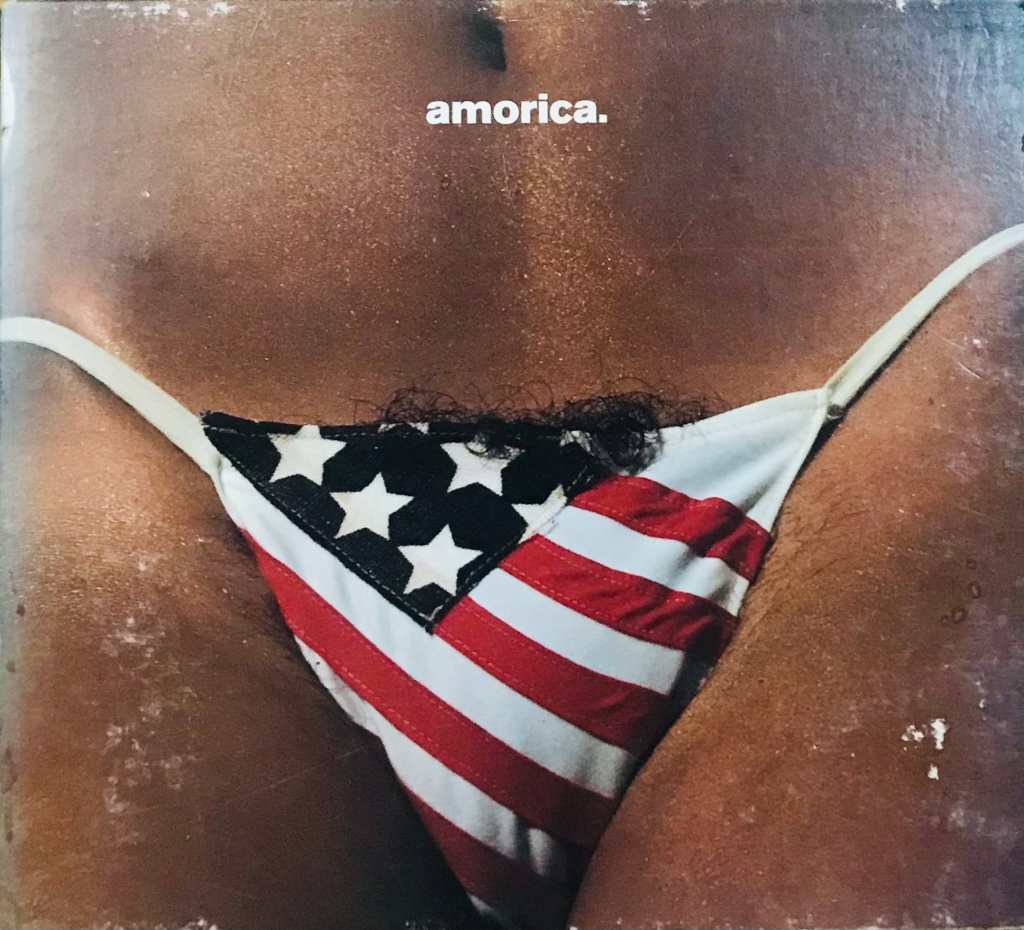
And man, the cover caused a stir in even in the more progressive 90’s.

Who would have thought that a picture which was deemed offensive in 1976 when it appeared on a cover of Hustler was still seen as offensive almost 20 years later?

Well in Australia, we didn’t really see anything wrong with it so we got the cover as intended, while the U.S got two covers.
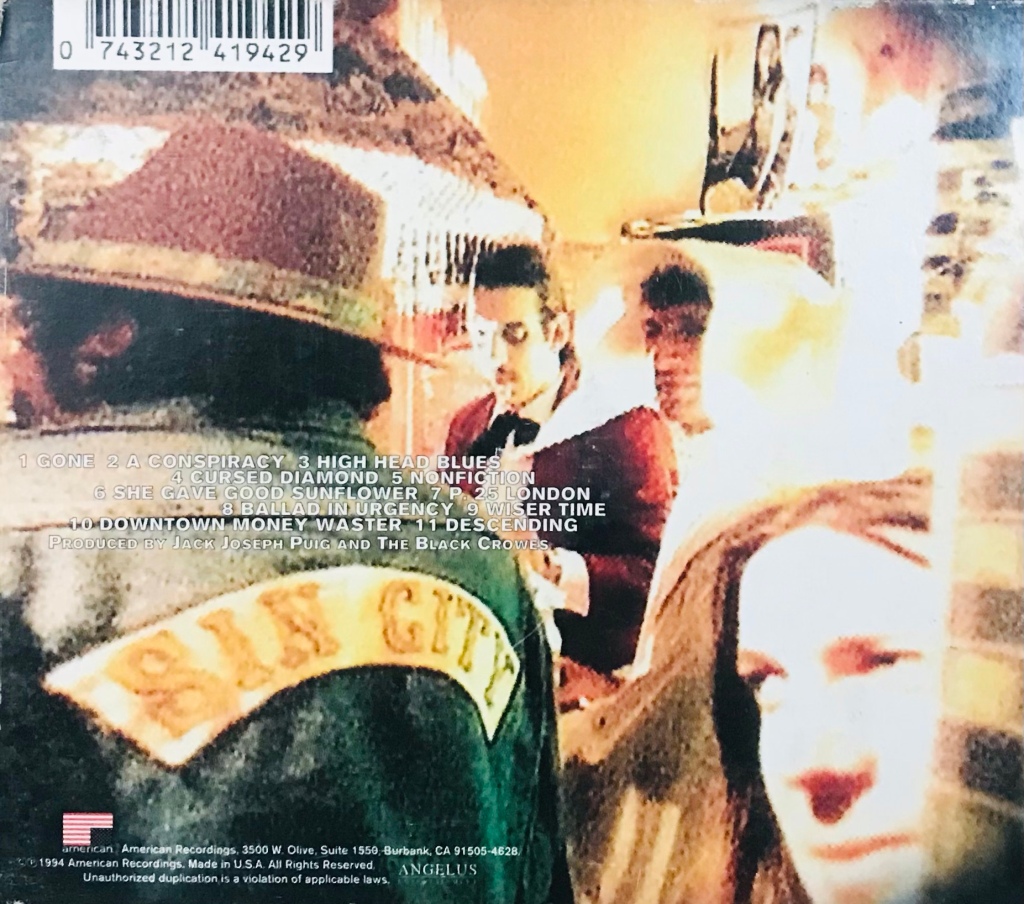
Gone

It sounds like they had a few drinks, wrote some riffs and then jammed em. It’s complicated blues, as there is so much going on but it didn’t set my world on fire.
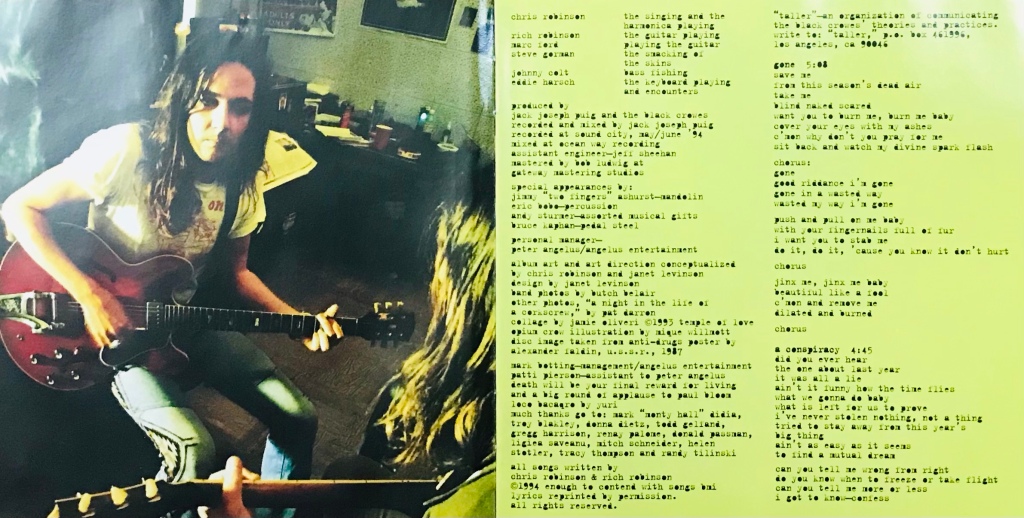
A Conspiracy

They tried to recreate the groove and infectious melody of “Remedy” with this. While they didn’t get close, they still got a very rocking song out of it.

High Head Blues

A sleazy soul blues rock riff starts it off. It’s almost funky and I like it. One of the best songs on the album.

Cursed Diamond

A piano like slow rhythm and blues tune, very Rolling Stones like and the solo section gets all aggressive and swampy.
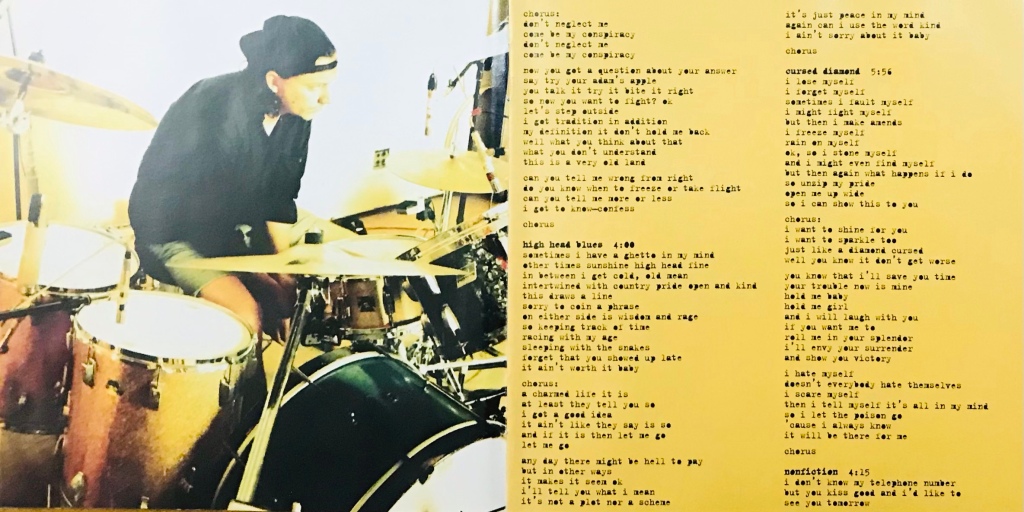
Nonfiction

An acoustic track with a vocal that sounds like 70’s Rod Stewart. But it’s a skip for me.

She Gave Good Sunflower

Chris is asking a babe to do him and the track could be interchanged with any song from the previous albums.

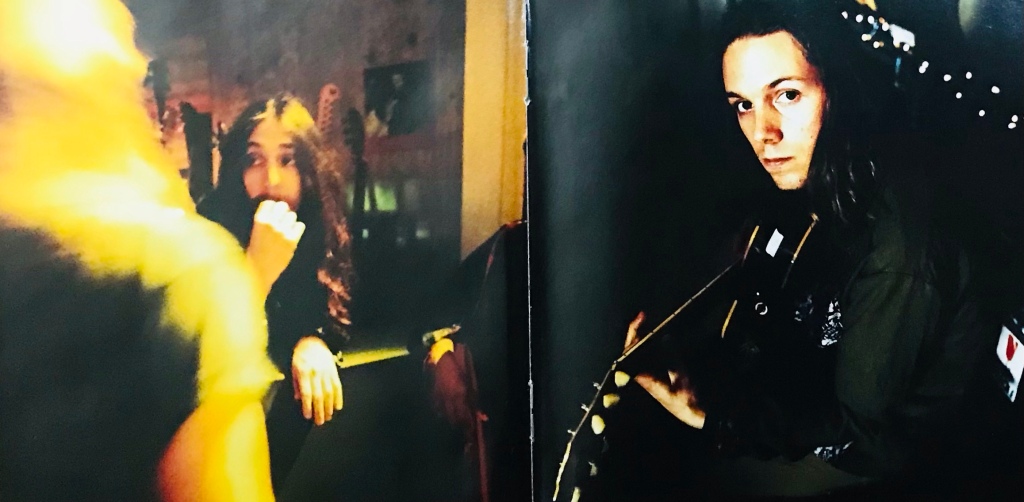
Press play to hear some nice wah wah soloing from Marc Ford over a thundering Johnny Colt bass riff. And stick around to hear the outro soloing as well.
P. 25 London

A throwaway track.

Ballad in Urgency

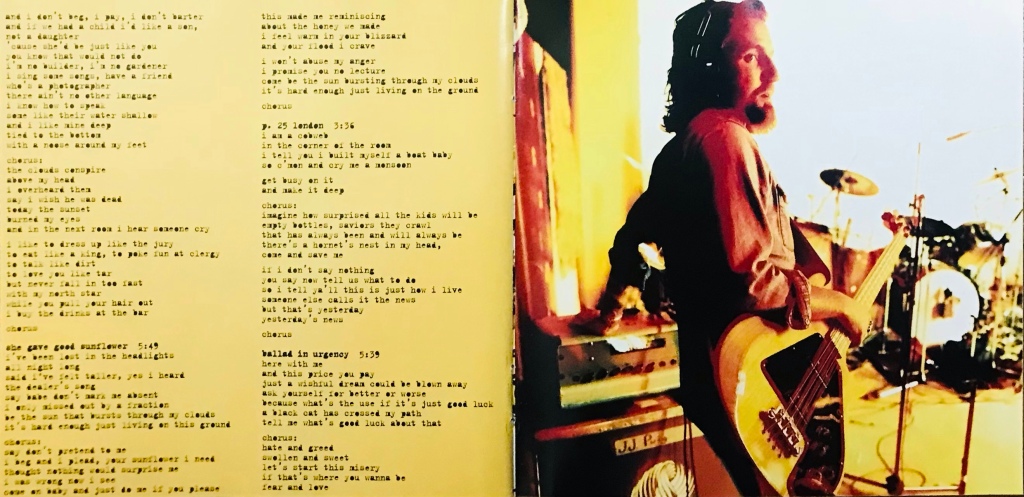
Another ballad, with some unique blues/jazz like chords, nicely phrased guitar fills and Johnny Colt’s bass thundering in the background.

The song then fades into a piano section along with Mr Colt’s bass.
Wiser Time

Steve Gorman brings it here, showcasing that even though the Robinson brothers write the songs, the performances of the band members are just as important. This one is also a favourite.

Rich Robinson plays some tasty slide and he also duets on lead vocals.

And each section has so much variation. The verses are based on a three chord “Sweet Home Alabama” like chord progression. The Chorus is classic blues rock.

But.

It’s the later sections which takes the track and makes it a signature song.

It’s not for the crossover fans who just liked “Remedy” and nothing else.

This is for the hard core fans. It starts off with a swampy Delta bluesy acoustic slide solo, which is followed by an electric piano solo, very Doors like.

This then gives way to an electric guitar solo, very B.B. King like with a bit more grit and it all crashes in to a Lynyrd Skynyrd soaring lead, full of harmonized guitars.

After five minutes and thirty seconds, the only thing you can do is press repeat.

Downtown Money Waster

Old time blues with a ragtime piano and acoustic slide guitar.
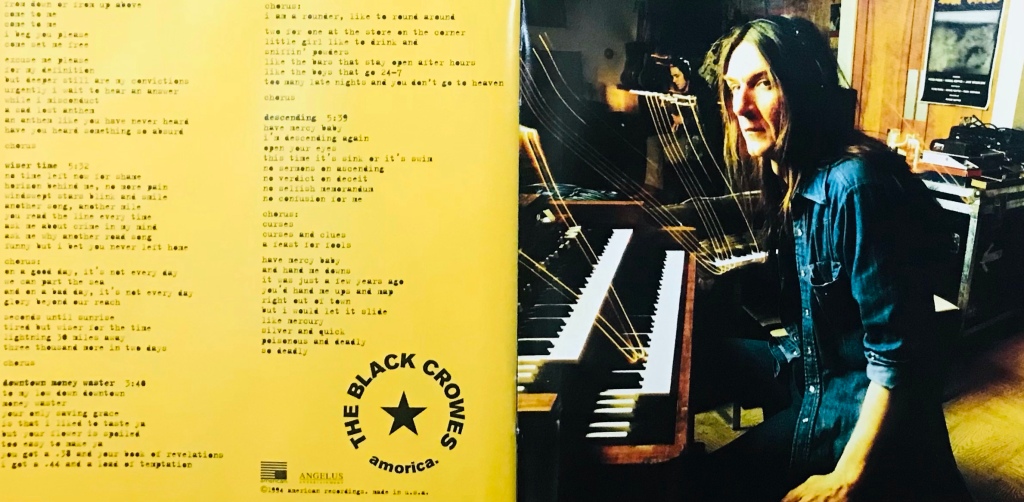
Descending

Another favourite and another five plus minute ballad-esque song, which starts off with a piano riff. And when the band kicks in, it gets the head moving and the foot tapping. If it doesn’t, feel for a pulse.

Chris Robinson is on fire vocally and Mr Colt’s bass is thumping throughout, synced up to the bass drum of Gorman’s.

The track closes with a ramped up piano solo over another thundering bass riff from Mr Colt.
The album did good business in Australia again, charting at 11 which they also replicated in the U.S and a Gold Certification.

But it took the record buying public by surprise because it didn’t really have that “accessible” song that people could latch on to. The debut album had “Hard To Handle” and the follow up had “Remedy”. But this one had some deep cuts and some fan favourites.

Crank it.
Standard
A to Z of Making It, Classic Songs to Be Discovered, Derivative Works, Influenced, Music, My Stories, Unsung Heroes

1976 – Part 4.3: T-Rex – Futuristic Dragon

I didn’t know who T-Rex or Marc Bolan was until Nikki Sixx kept mentioning him as an influence between 1987 and 1990. And I had heard “Get It On” and “Children Of The Revolution” on radio before but the radio announcer never announced who the artist was and with so much hard rock coming my way, T-Rex just kept slipping from my mind.

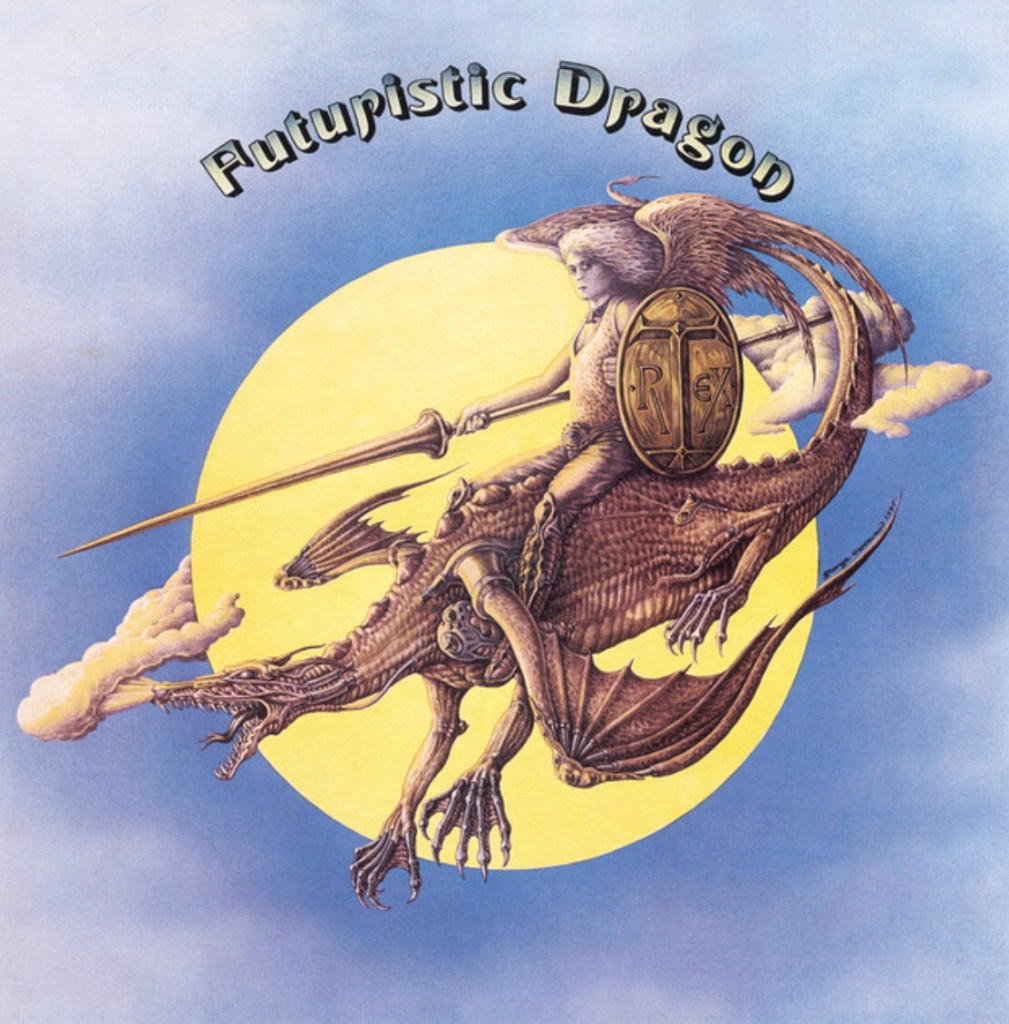
“Futuristic Dragon” is studio album number 11 released in January 1976 everywhere else in the world except the U.S. The U.S release didn’t happen until 1987.

It’s listed as a T-Rex album, however when Mickey Finn left the band the previous year, Bolan said that “T-Rex no longer exists”. But the labels are always wise and they wouldn’t release it unless it was T-Rex.

The band is Marc Bolan on Vocals, Guitars and Moog, his partner Gloria Jones on Backing Vocals and Clavinet, Steve Currie on Bass,
Davy Lutton on Drums, Dino Dines on Keyboards and Jimmie Haskell on Strings.

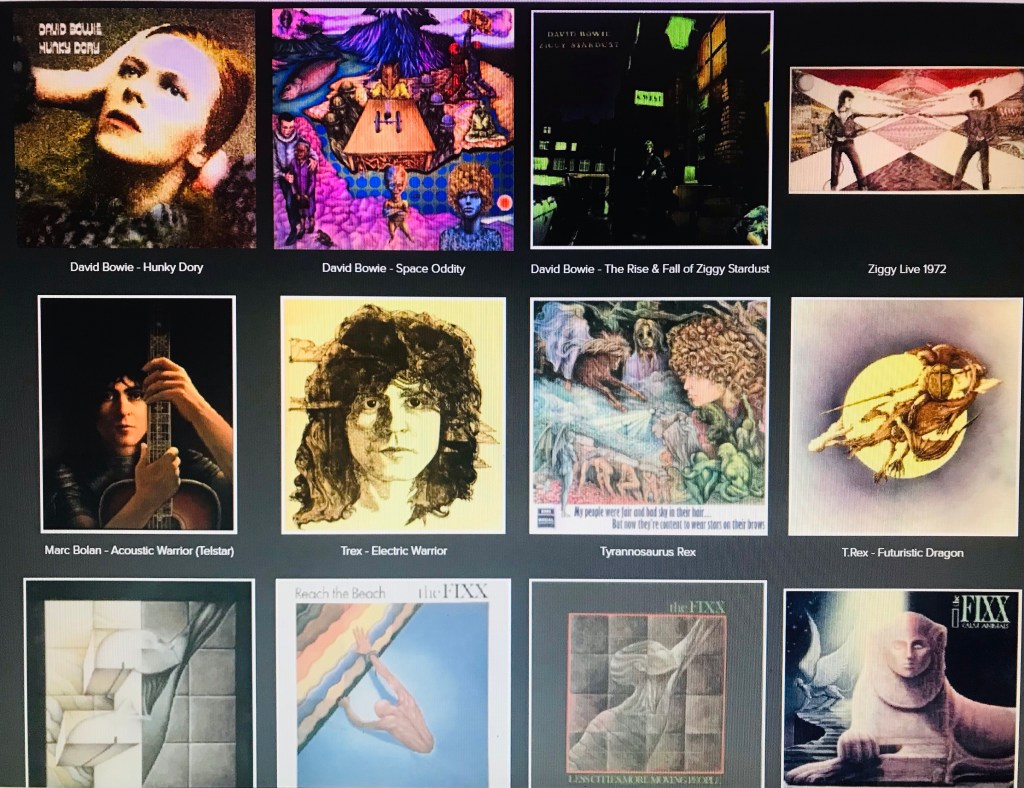
George Underwood did the cover artwork who also covers for other T-Rex albums, along with Bowie, Mott The Hoople and alot of book covers.

Here is a snapshot of some from his website.

All tracks are written by Marc Bolan.

Futuristic Dragon

It’s almost two minutes of a bass groove like the one in “Crazy Train”, guitars on cocaine and a voice over from Marc Bolan. But part from the bass groove, I was like “what the…”

Jupiter Liar

The “Get It On” style riff is back as Bolan is vamping on a F5 power chord.

But this time there are gospel/soul like backing vocalists. And Marc Bolan has a talent for creating a catchy song without a proper Chorus.

Chrome Sitar

The groove on this song is addictive. It’s almost metal like in the riff, however the horns give it a blues/soul rock vibe.

All Alone

It’s a Blues Rock Soul cut, very Rolling Stones like in the blues rock department.

If the verse vocal melody and progression sounds familiar, it should as Nikki Sixx took for when Frankie died. “On With The Show” I say.

New York City

It was a single, a blues rockabilly tune with catchy gospel like backing vocals.

And there is a vocal melody here (the “I did, don’t you know” lyric) which reminds me of another song from another artist, which I can’t remember right now. I like it when that happens, but also hate it when I can’t remember the other artist.

My Little Baby

Another catchy tune, mixing blues rock with soul and a bit of ELO like strings. The vocal melody was definitely used by other artists in the 80’s and beyond.

Calling All Destroyers

The verse vocal melody inspired Phil Lynott for the verse vocal melody on “Cold Sweat”.

Theme for a Dragon

It’s soundtrack like with the strings carrying the melody.

Sensation Boulevard

This could have been on any 80’s pop album it’s that catchy. Press play to hear to bass groove that rumbles throughout the song.

Ride My Wheels

This one has too much soul and less rock. The first slip up on the album, but I still appreciate it for the experimentation of soul based rhythms.

Dreamy Lady

Another experimenting song, however the sugary 60’s pop works here. It’s even disco-esque. Was disco even a thing in 76.

Dawn Storm

It’s a perfect blend of soul and rock.

Casual Agent

A small misstep with too much soul and not enough rock and blues.

Overall, the album is enjoyable to listen to. Marc Bolan is very underrated as an artist and on this album, you will hear a lot of melodies and riffs that other artists have used afterwards.

The blend of rock and blues was always there in T-Rex’s music, and the strings also appeared, however with the addition of soul and a bit of disco, the album was definitely ahead of its time.

Futuristic. Yes.

But it was no match against “A Night At The Opera” from Queen. While T-Rex toured on this album, the overall turnout at the gigs was poor and the album didn’t do that great on the charts either. The glory days of just a few years ago seemed like decades ago.

Standard
A to Z of Making It, Classic Songs to Be Discovered, Derivative Works, Influenced, Music, My Stories, Unsung Heroes

Australian Method Series: Jimmy Barnes – Bodyswerve

I always saw Barnesy as indestructible, taking the world head on, with no fucks given.

But there was fear. He was like all of us. Unsure of choices and decisions.

He had the uncertainty and fear of going it alone after Cold Chisel broke up. He had fear incase he couldn’t come up with songs for his first solo album as Don Walker was the main writer in Cold Chisel.

But he persevered and he wrote and wrote and delivered.

Once the songs were written he had to assemble a band.

He got people he felt “safe with”.

Drummer Ray Arnott recorded with Barnes on Cold Chisel’s final album, Twentieth Century.

Bruce Howe was the bass player in Fraternity a band that Barnes had sung in for a short time in 1975 after Bon Scott left to join AC/DC.

Bruce Howe was a hard taskmaster and he should be credited for pushing Bon Scott and Barnesy vocally, as they did develop their high octane vocal style with Howe.

Mal Eastick had played with Stars which was a Country Rock band in Australia who did the rounds in the late 70s.

Seeking a second guitarist to make the band more “hard rock”, Barnes chose ex-Dingoes guitarist Chris Stockley, who played, “old-style rock, like Little Richard and Gene Vincent”. The Dingoes are also a country rock band.

And then they went on the road, playing small pubs. Something unheard of these days for a band to road test songs.

The more shows they played the better the songs became and when they went into the studio to record, the energy of the band and their tightness transferred onto the tape.

And the rest is history.

The album dropped in 1984 and went straight to Number 1 in Australia. Jimmy Barnes was reborn as a solo artist.

Listen to the riff and groove of “Vision”.

Or check out the Soul Rock style of “Daylight” which reminds me of songs like “Mustang Sally” but with a hard rock guitar riff that wouldn’t be out of place on an AC/DC album.

“Promise Me You’ll Call” is a slower tempo song, ballad like with a soul rock vocal melody. And that Chorus with the Gospel like backing vocals. Press play to hear it.

“No Second Prize” has that “Stand By Me” progression, all rocked up, 80s style. And it became an Aussie pub rock classic.

“Boys Cry Out For War” has a riff which reminds me of “Let’s Stick Together” from Bryan Ferry and a little bit of “Get It On” from T Rex. And I like it.

“Paradise” is a rewrite of the song “Rising Sun” song from his Cold Chisel days. A 12 bar rockabilly blues romp.

“A Change Is Gonna Come” is a cover, a blues like ballad written by American singer-songwriter Sam Cooke. It came out in 1964 as a B-side and then became part of the Civil Rights Movement.

“Thick Skinned” is a southern country rock cut.

“Piece Of My Heart” is another cover. It feels misplaced here.

“Fire” has this “Strutter” vibe in the verses and a Melodic Rock chorus.

And “World On Fire” is another rocker to close the album with a bass groove which thunders along while the guitars decorate.

Crank it loud.

Standard
A to Z of Making It, Classic Songs to Be Discovered, Derivative Works, Influenced, Music, My Stories, Unsung Heroes

The Record Vault: Deep Purple – Come Taste The Band

It took Deep Purple seven years to make it to the top and two years to break up. The air is thin at the mountain top.

Deep Purple had lost their lead singer Ian Gillan and bassist Roger Glover in 1973 and replaced them with David Coverdale and Glen Hughes. This MK3 version recorded two albums and then guitarist Richie Blackmore left at the start of 1975. This was weird as Deep Purple was seen as “his” band. And from looking at it, it’s like the owner of the house vacating their premises for the guests to take over running the house.

But Deep Purple would soldier on, replacing Blackmore with a young guitar hero from the U.S. known as Tommy Bolin. Rounding out the band is the rest of MK3, David Coverdale, Glenn Hughes, Jon Lord and Ian Paice.

And MK4 was created.

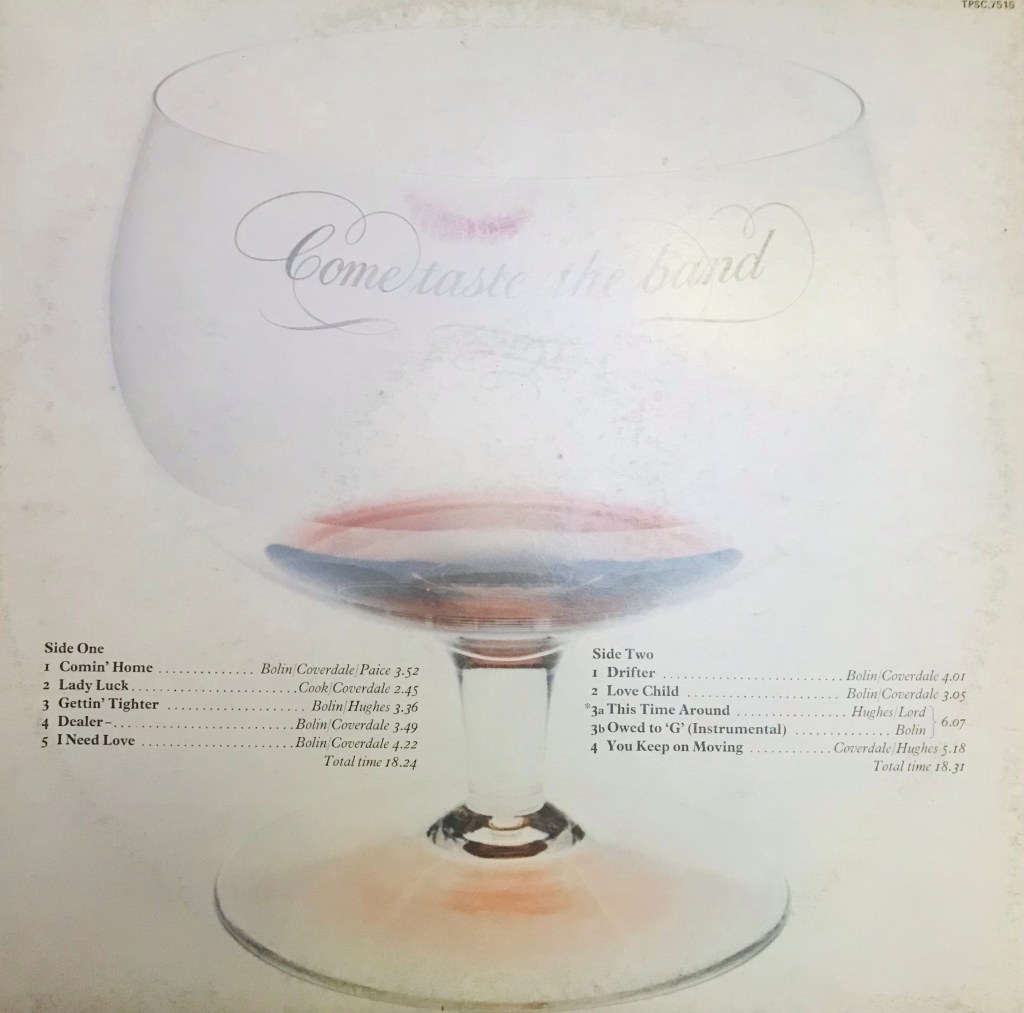
“Come Taste The Band” came out in 1975. It’s the usual production team of the band and Martin Birch.

The name Tommy Bolin came into my life because of Motley Crue. The Crue covered the song “Teaser” for a Compilation album and they also released it on a Raw Tracks CD made for the Japanese market, which I got my hands on. The song is so good and sleazy it sounded like a Crue original and I was curious to hear more from Bolin.

So as I was going back into the career of David Coverdale because of Whitesnake’s attention grabbing 87 LP, I was doing the same for Tommy Bolin.

So I got my hands on the “Teaser” and “Private Eyes” album first and imagine my surprise when I came across an album that had both Coverdale and Bolin on it.

Comin’ Home

Written by Tommy Bolin, David Coverdale and Ian Paice with vocals provided by Coverdale.

This song rocks out of the gate paying homage to the fast rock sounds of Deep Purple MK1, MK2 and MK3. But it was more Grand Funk, like “We’re An American Band”.

Lady Luck

Written by Jeffrey Cook who co-wrote songs with Bolin for the “Teaser” record with lyrical contributions from Coverdale.

Vocals are provided by Coverdale. In didn’t really do much for me.

Gettin’ Tighter

Written by Bolin and Hughes with vocals provided by Hughes.

This song is funky out of the gate, and sleazy once the whole band comes in.

Dealer

Written by Bolin and Coverdale with vocals provided by Coverdale and Bolin.

It’s very Hendrix “Purple Haze” like in the riff departments with a Beatles like Folk Rock interlude which Bolin sung.

I Need Love

Written by Bolin and Coverdale with vocals provided by Coverdale.

I like the groove on this, and the way the verse riffs are played out with the heavy synth from Lord.

Drifter

Side 2 begins with this song written by Bolin and Coverdale with vocals provided by Coverdale.

It’s got a great Intro which reminds of “You Really Got Me” or “American Woman” and check out the groove that comes in once the drums and bass kick in.

Coverdale’s bluesy voice is a highlight.

At 2.36 there is just a bass and keys section over a drum groove. It reminds me of things that Rush would do.

Then Bolin comes in, with volume swells and a solo begins. The drums and bass become busy as they build it up, and the vocals come back in. Its brilliant, it gives me goose bumps all the time, so press play just to hear that.

Love Child

“Heartbreaker” anyone. Press play and listen to the intro.

Written by Bolin and Coverdale with vocals provided by Coverdale.

The verse groove and riff are my favourites even though the whole “love child driving me wild” lyric didn’t set the world on fire.

At 1.50, they go into a progressive rock style groove and Lord solos over it.

This Time Around / Owed to ‘G’

Written by Hughes, Lord and Bolin with vocals provided by Hughes.

It’s very progressive sounding, like ELO and it moves into a great instrumental jam over a 12/8 groove with excellent lead guitar from Mr Bolin himself.

You Keep On Moving

Written by Coverdale and Hughes with vocals provided by Coverdale and Hughes.

This is the standout track. Its haunting and melancholic and it was written during the “Burn” sessions but not used.

Norway, Sweden, Denmark, Holland, Czechoslovakia and West Germany all got behind this version of the band. The Japanese still loved em and New Zealand loved em even more.

But.

The classical progressions and jams had been replaced with groove, soul and funk. It could be seen as an early Whitesnake album, as a few tracks have “Love” in the title, which is similar to every Whitesnake album.

Also in 1975, Tommy Bolin had two records competing against each other, which probably wasn’t the best scenario for Deep Purple however I have seen “Teaser” album pictures with a sticker on em that said “Guitarist Of Deep Purple”. Since most of the songs were written by Coverdale and Bolin, the project could have been billed as Coverdale/Bolin.

After the tour for this album finished in March, 1976, Deep Purple MK4 was no more. Glen Hughes was already having issues and was in and out of rehab. David Coverdale would form Whitesnake and get Jon Lord and Ian Paice into the project. And Tommy Bolin by December 1976, was dead from drug intoxication as morphine, cocaine, lidocaine and alcohol were all found in his system.

But the music lives on.

Standard