A to Z of Making It, Derivative Works, Influenced, Music, My Stories

Attention

Everything happens at once.

You get a message on WhatsApp, on Messenger, a normal SMS, a blog post notification, a voice mail, an email, a Slack mention, a phone call, while you are listening to music with the earpiece in one ear and you are carrying out a conversation with a work colleague or a family member or a friend.

This is a crisis, and its real.

We have to choose on what to focus on, as our attention is a scarce resource. We need to find ways to use it wisely because every single human being gets the same amount of attention to spend each day, but some use it better than others and have an ability to focus on getting stuff done.

While others just waste their time on their smartphones or gaming or watching streaming TV. Imagine if all that time wasted on your smartphone scrolling the social media feed was money.

Would you waste your money like that?  

On absolutely nothing.

I suppose the question to be asked is, how do we want to live each day?

Do we want to live to just get through the day, and tomorrow will be another day to get through?  

And then what happens?

We’ve gone through all the days and lived the same as all the previous days. Is this a life fulfilled?

But what would happen if we saw each day as an opportunity to do something different, just for 10 minutes, instead of a task in a process.

How would that feel 12 months from now?

Standard
A to Z of Making It, Classic Songs to Be Discovered, Derivative Works, Influenced, Music, My Stories

The Record Vault – Bon Jovi From 2000 to 2009

After a very limited release schedule of new music in the 90s, Bon Jovi became a different beast at the start of the 2000’s releasing more frequently. Almost yearly.

Was it the Napster effect?

100% it was.

When fans of music could get their music fix for free or by cherry picking from the iTunes Store, it meant the old business model of living off the royalties of your past successes and releasing music every two to five years was challenged and a new way was needed. Suddenly not a lot of people wanted the album, just the “hits”.

And because of the internet, people moved on to different artists and sounds quicker than ever before. So in order to stay relevant and in the public conversation, artists had to release more frequently. Which Bon Jovi did.

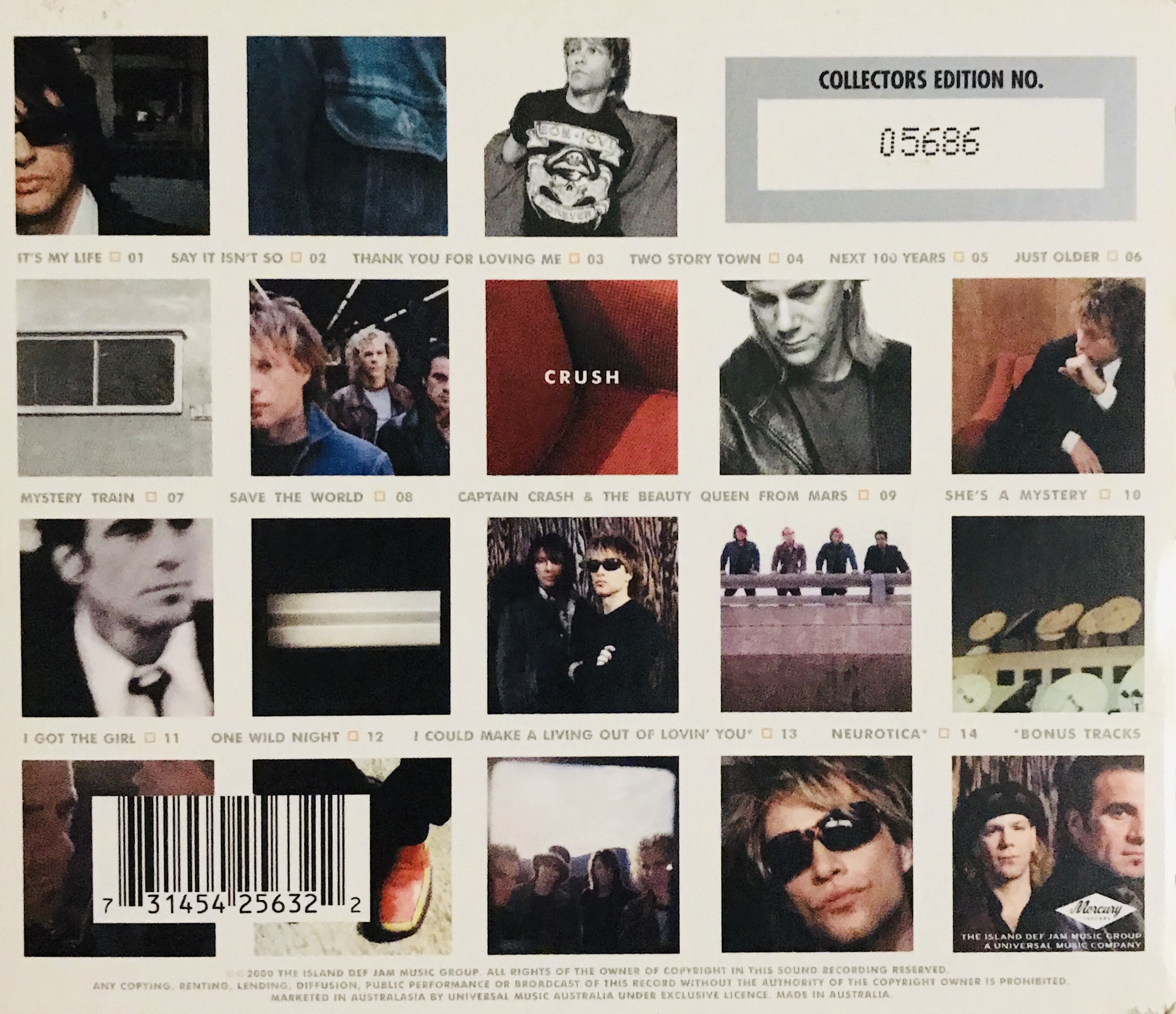
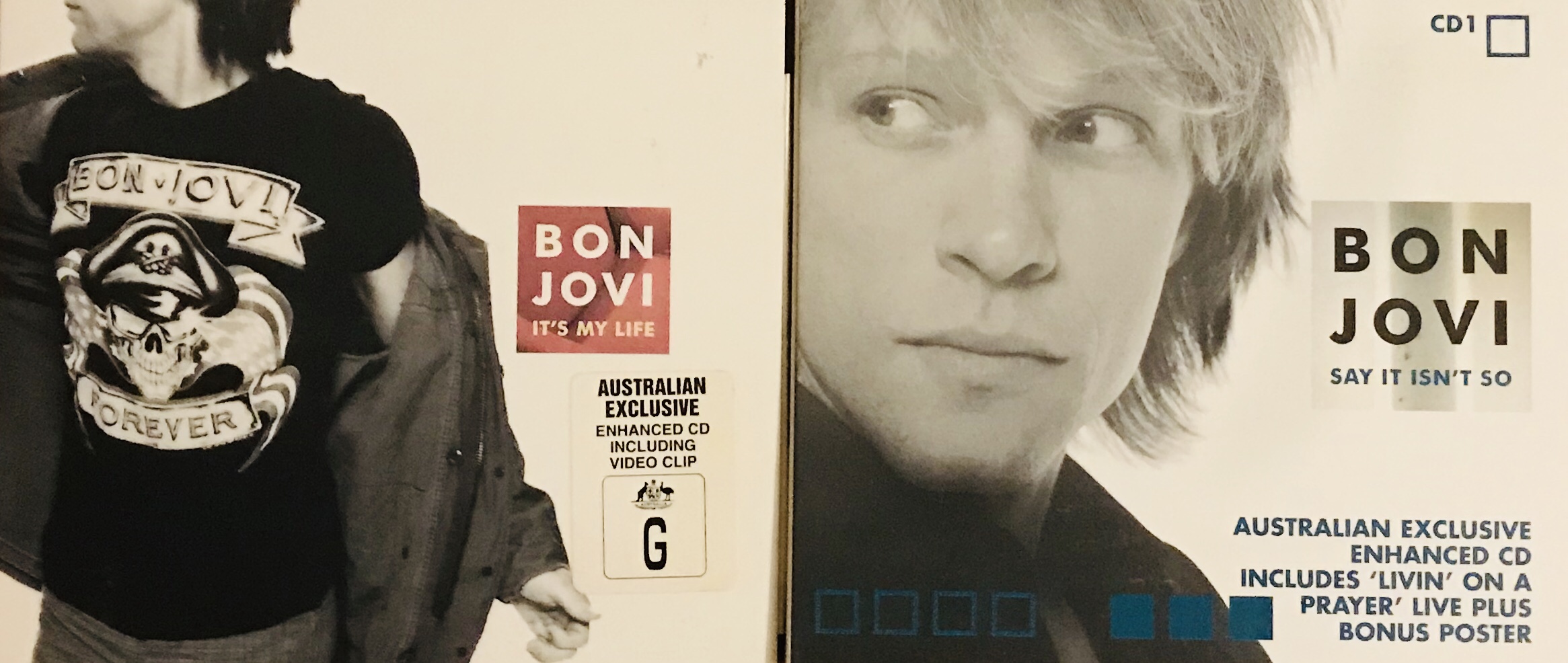
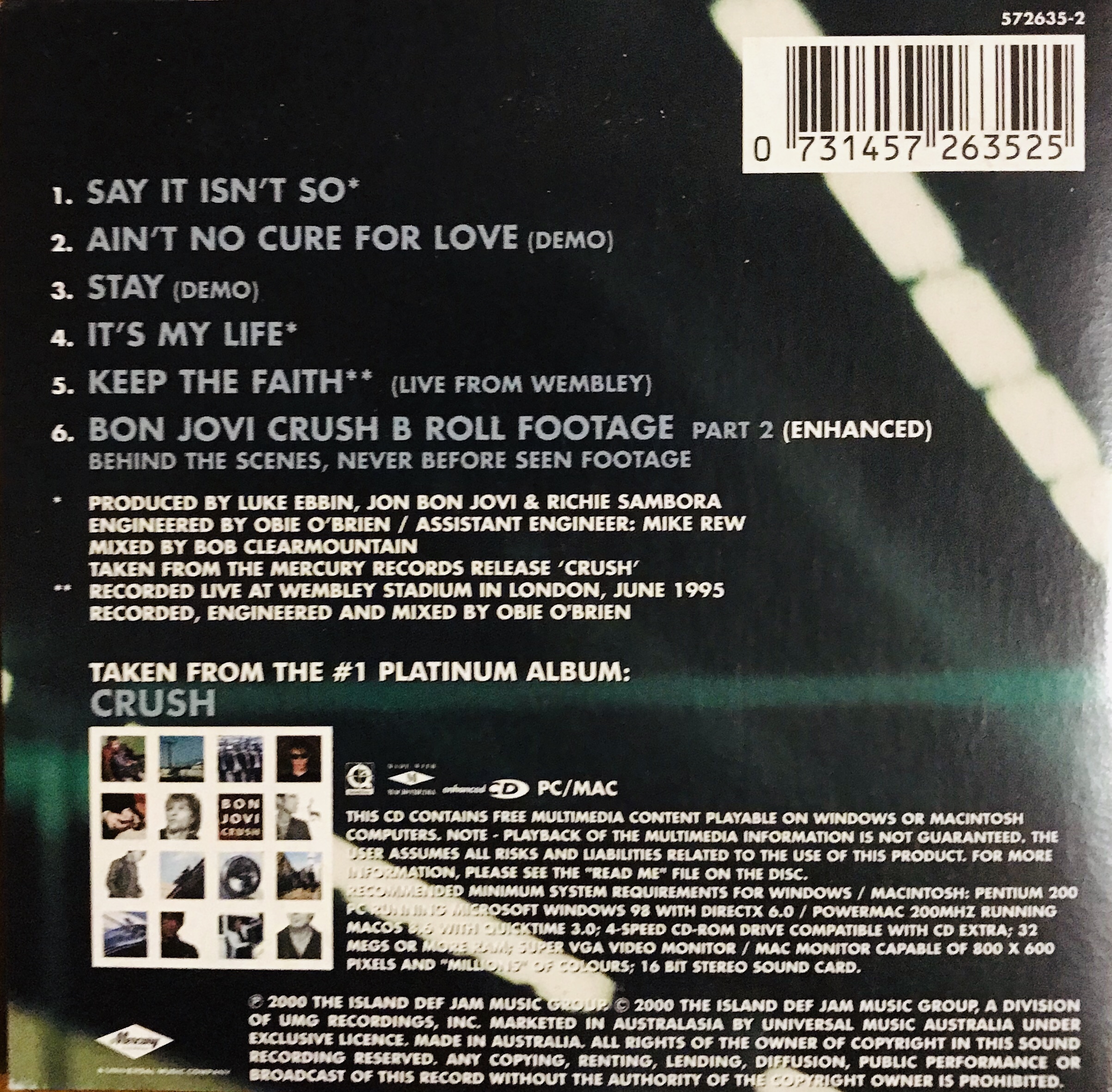
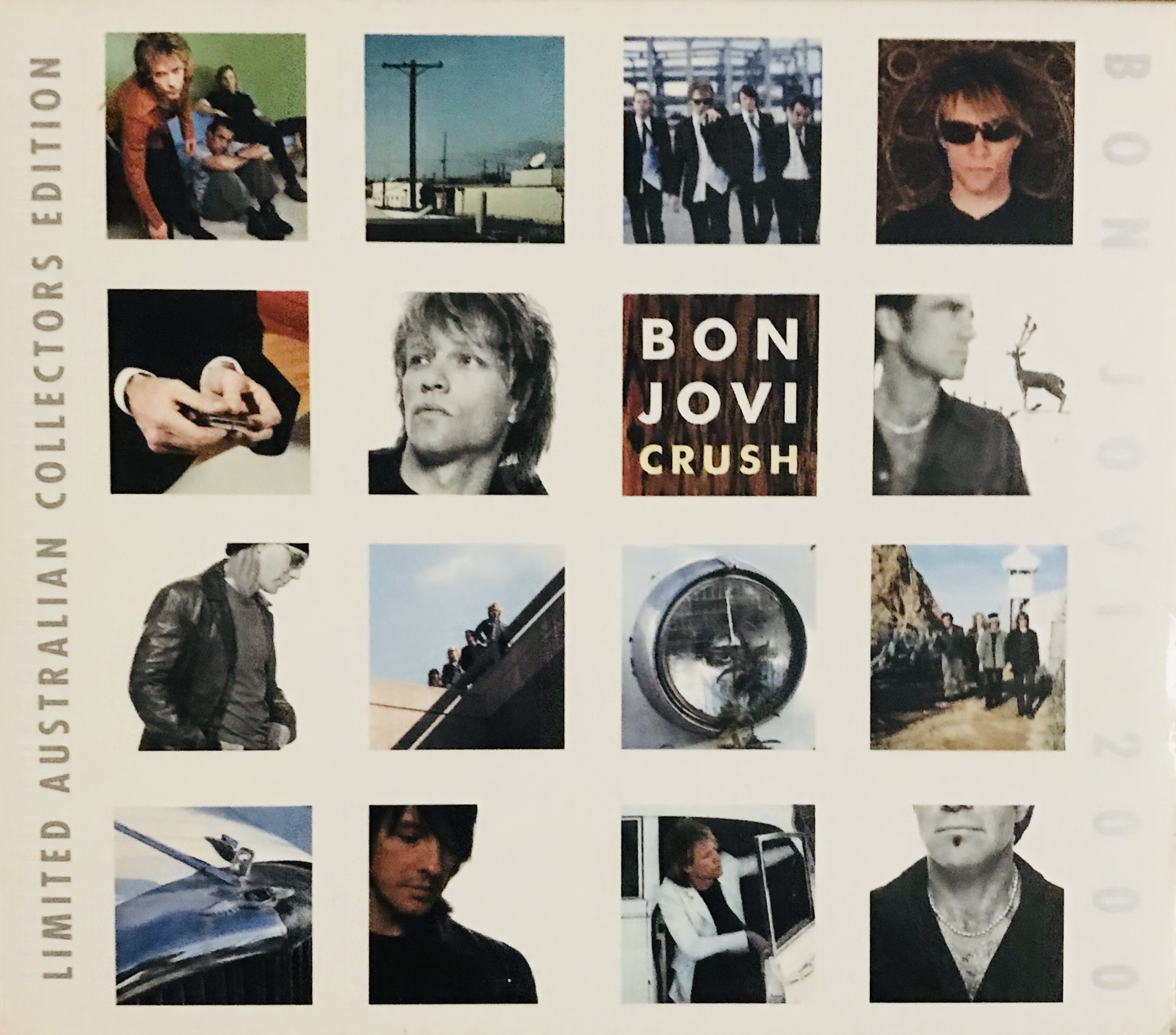
There was no escaping “Crush” released in 2000. “It’s My Life” was everywhere and Bon Jovi had another Super Bowl title win with this song. It’s no surprise that the hitmeister of the day, Max Martin co-wrote the song, in the same way Desmond Child co-wrote a lot of the Jovi hits back in the 80s and early 90s. I even got “Collectors Edition 05686”, whatever that means.

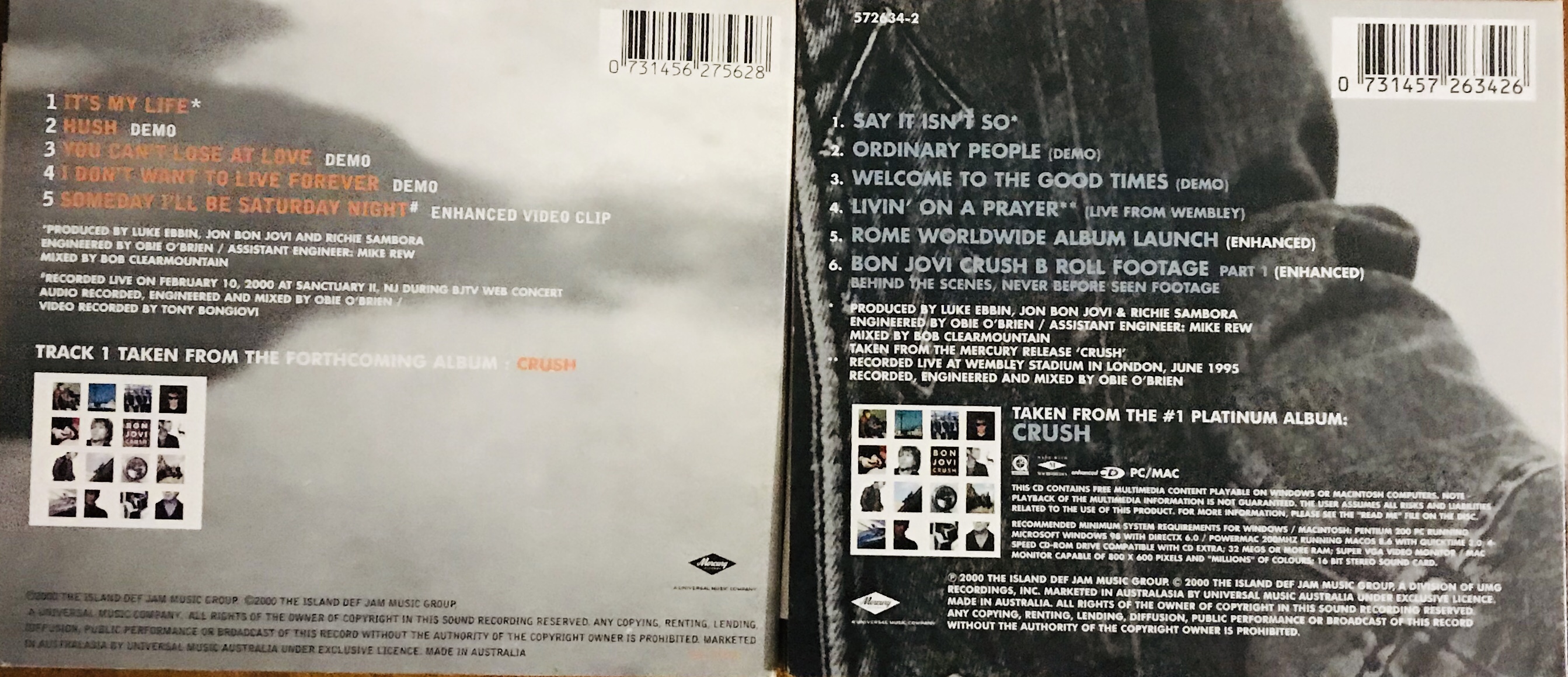
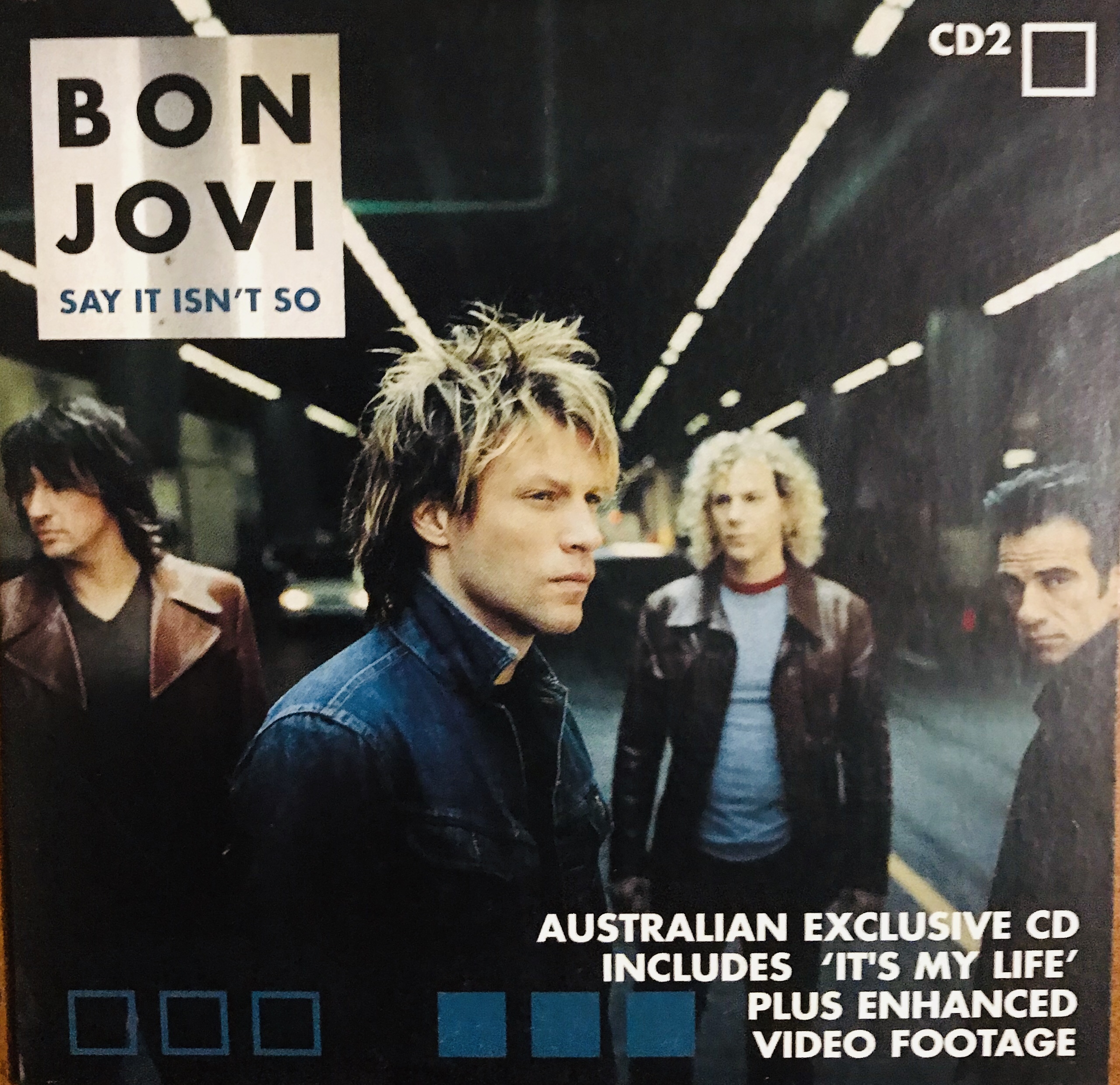
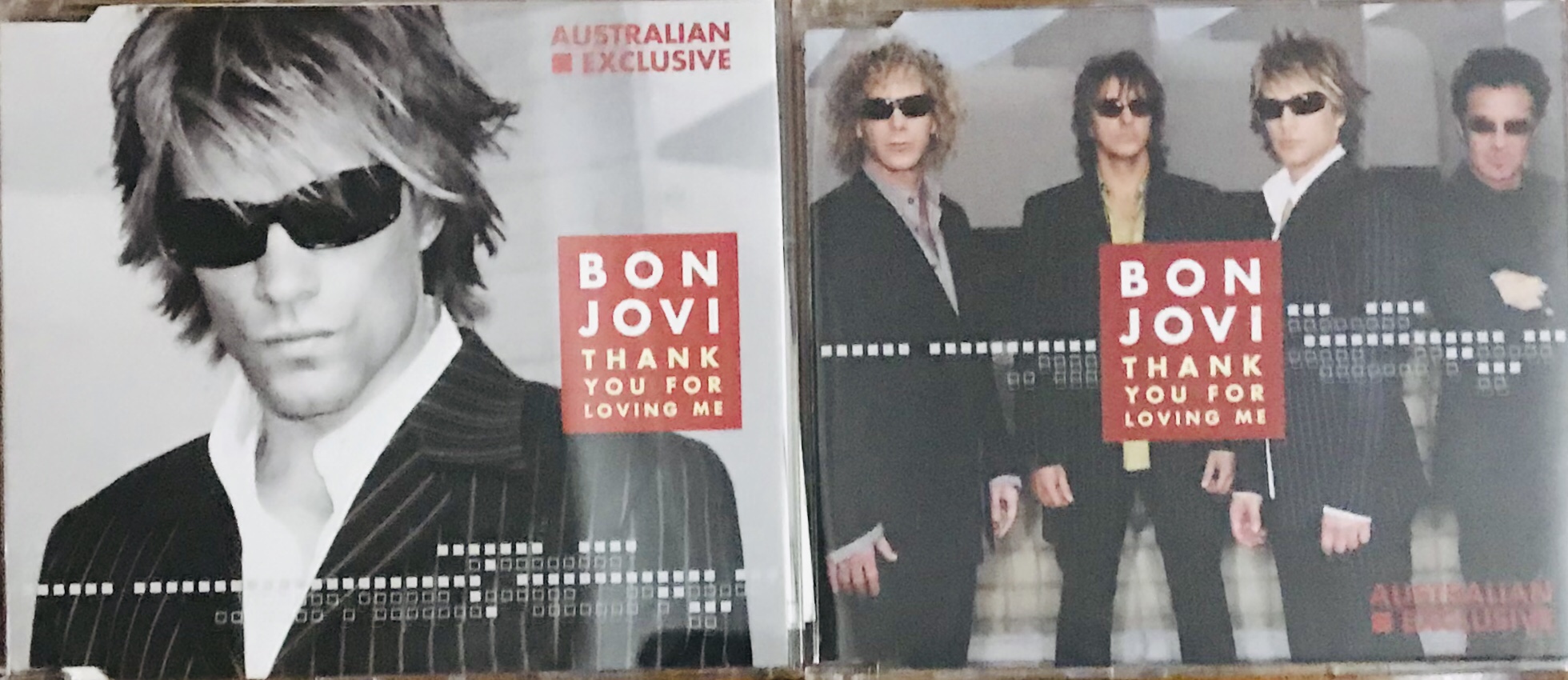
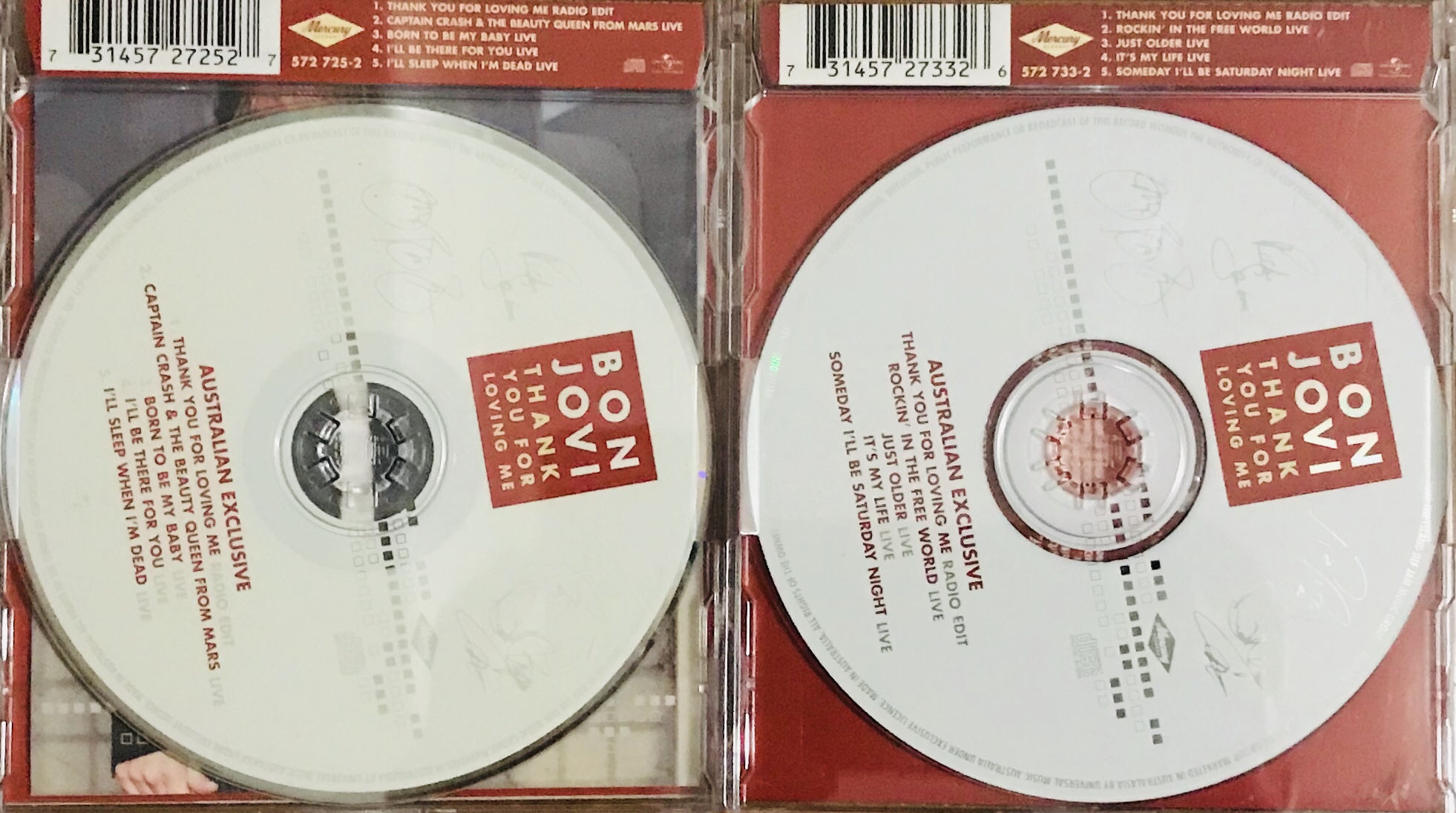
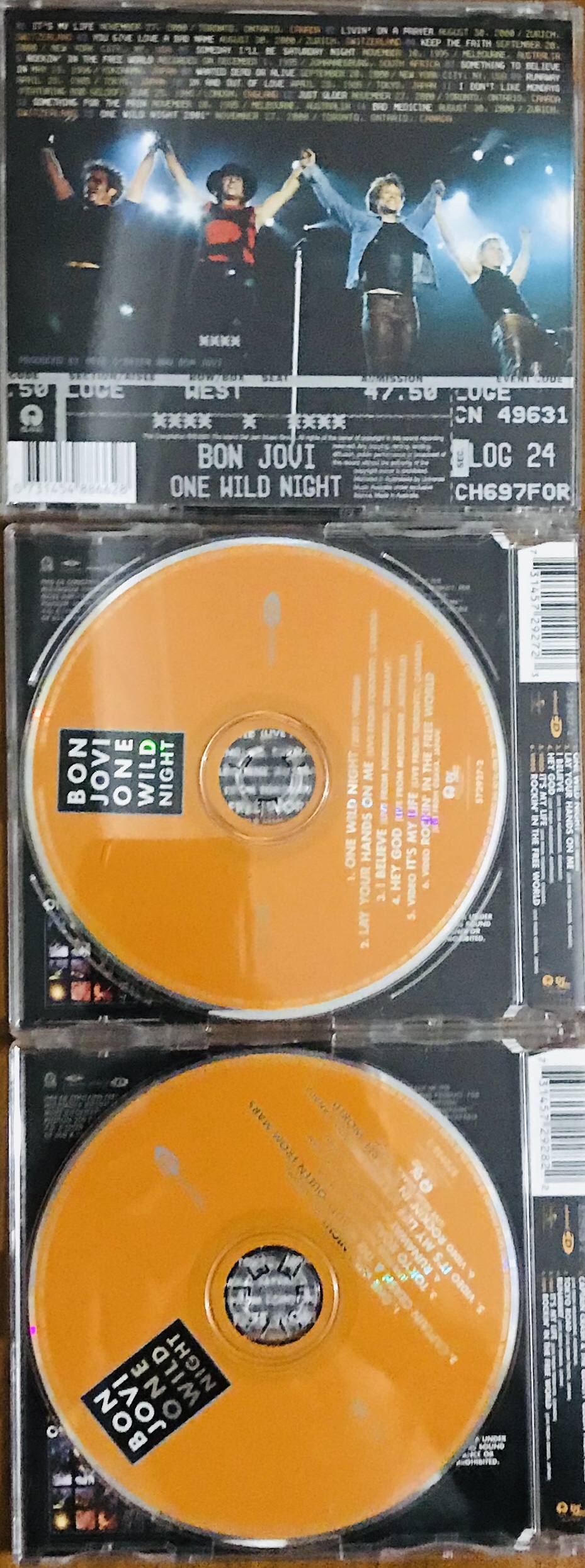
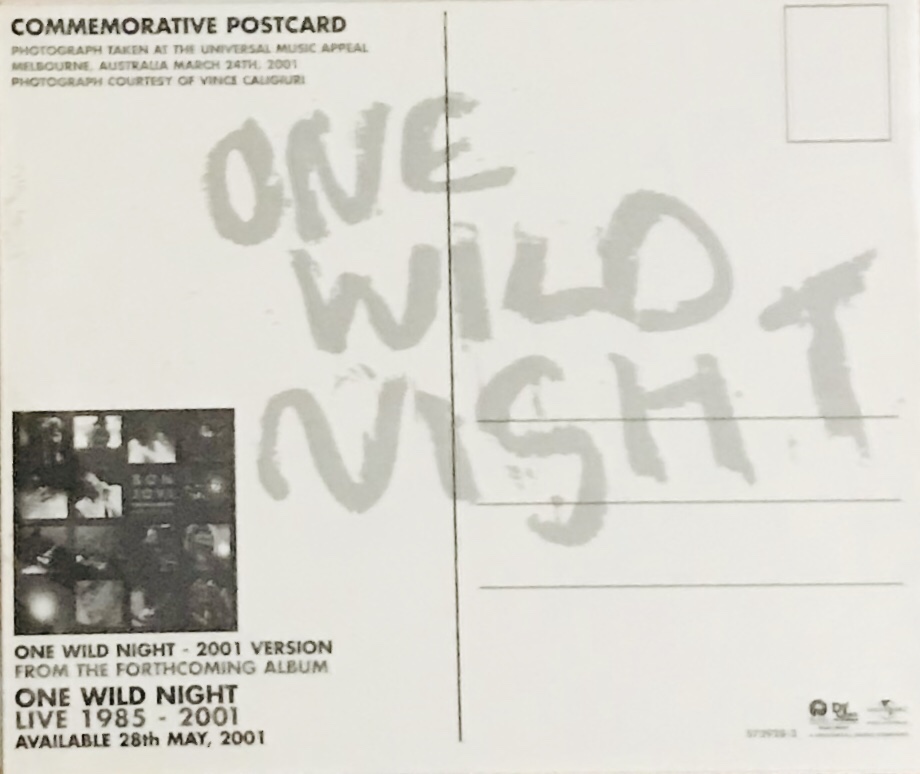
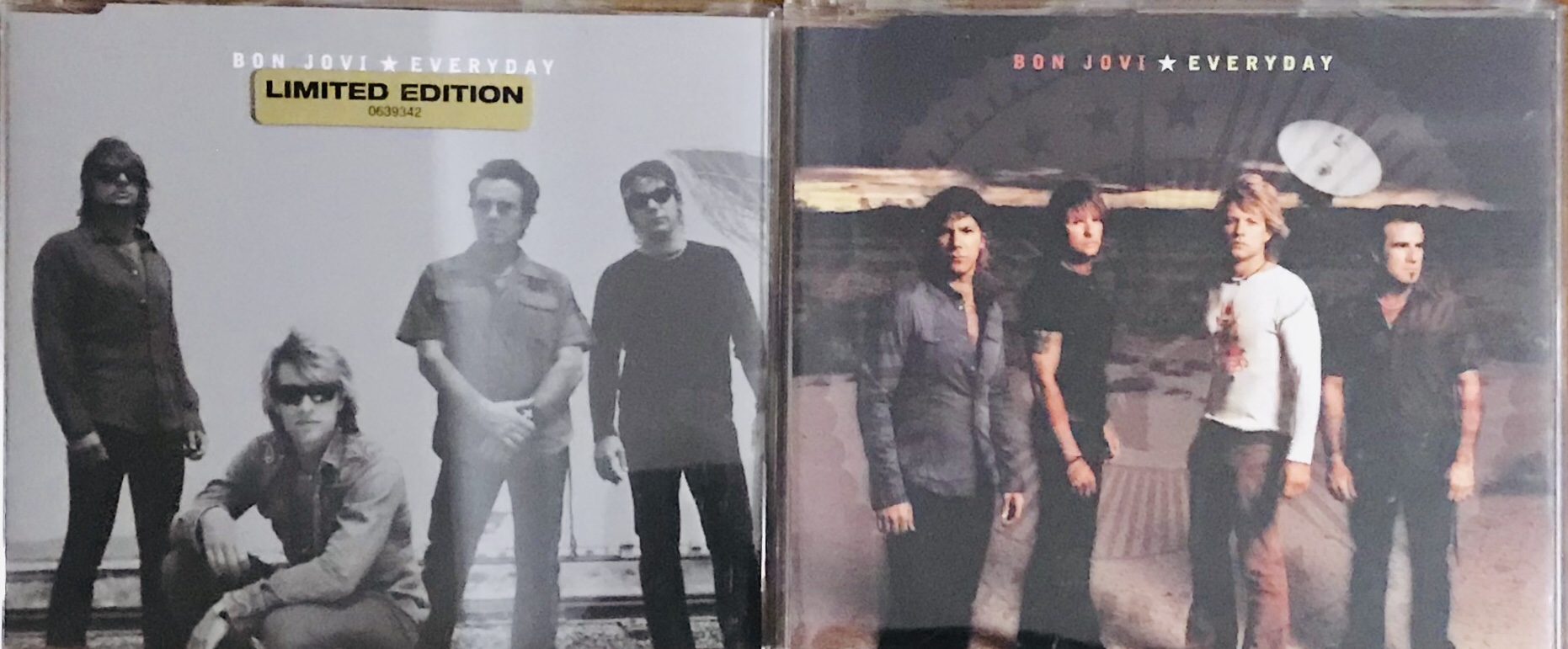
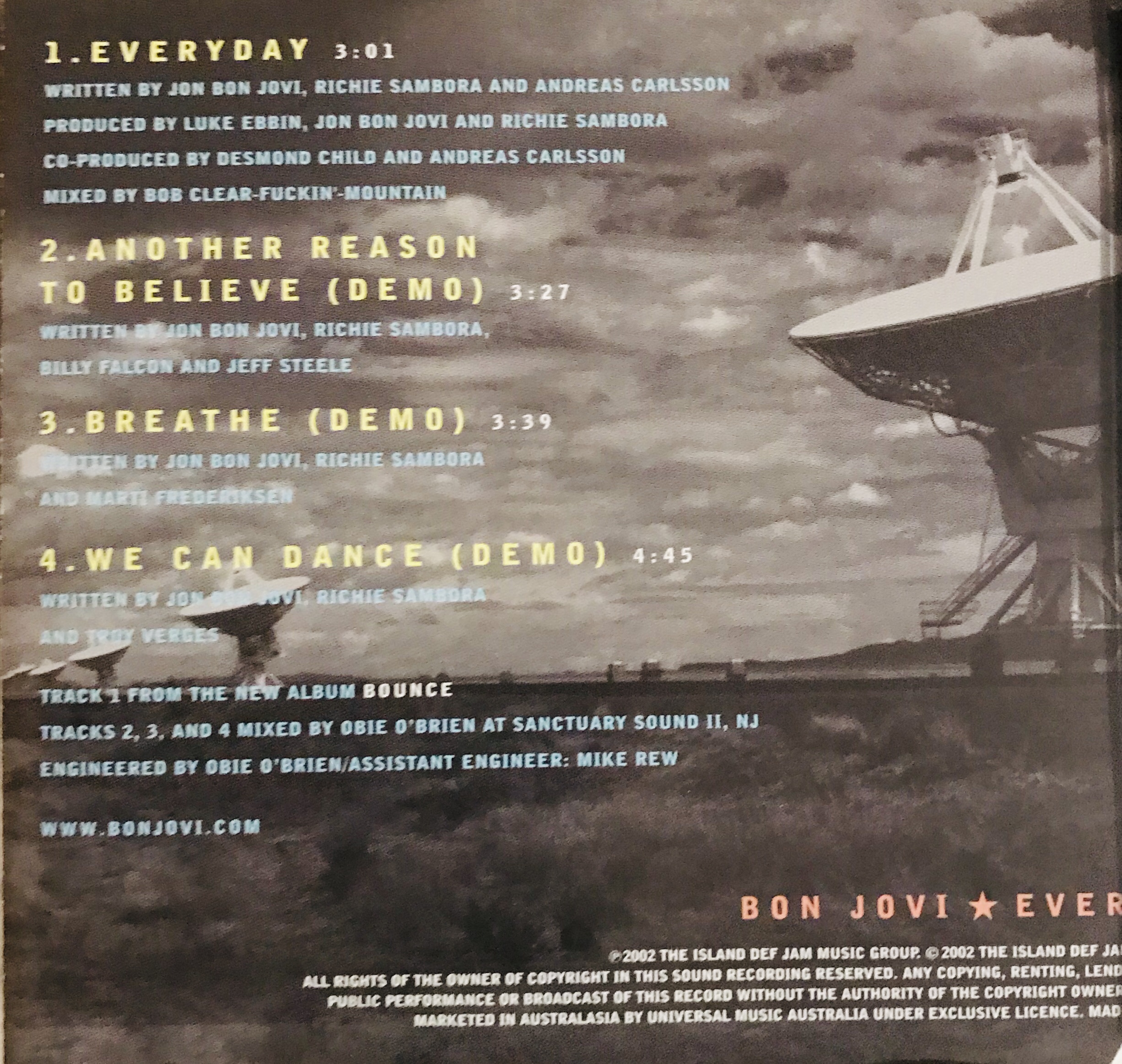
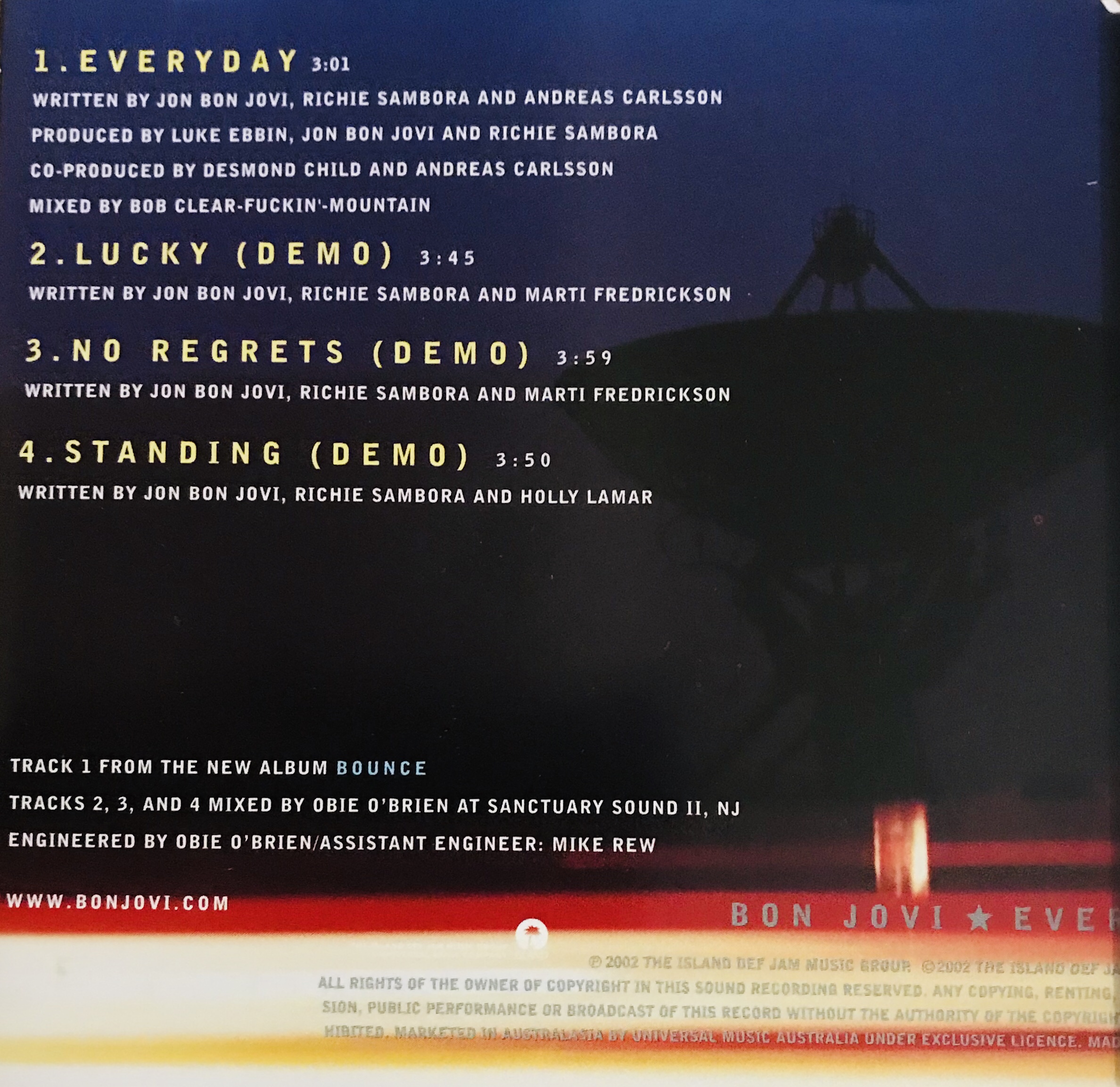
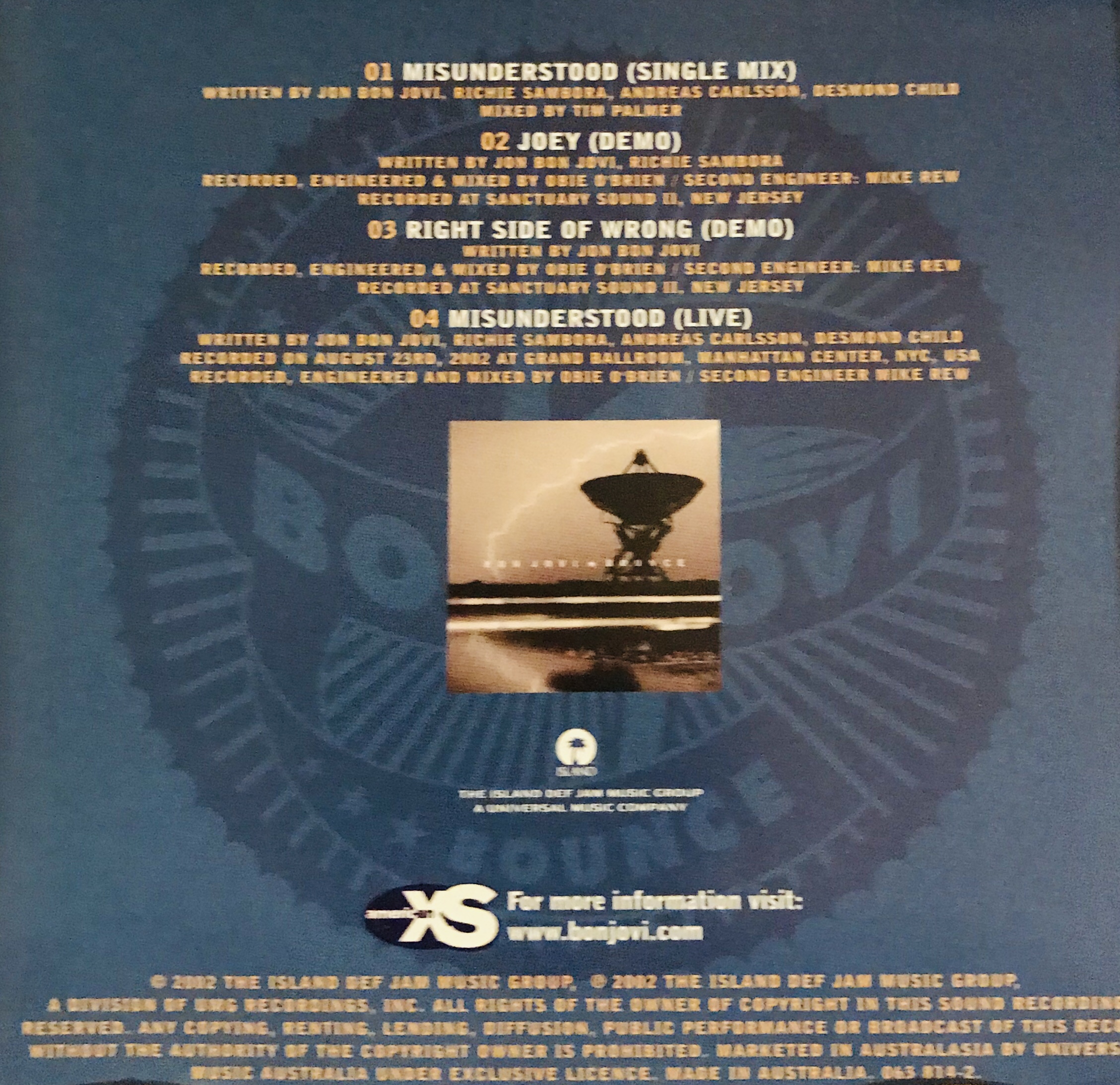
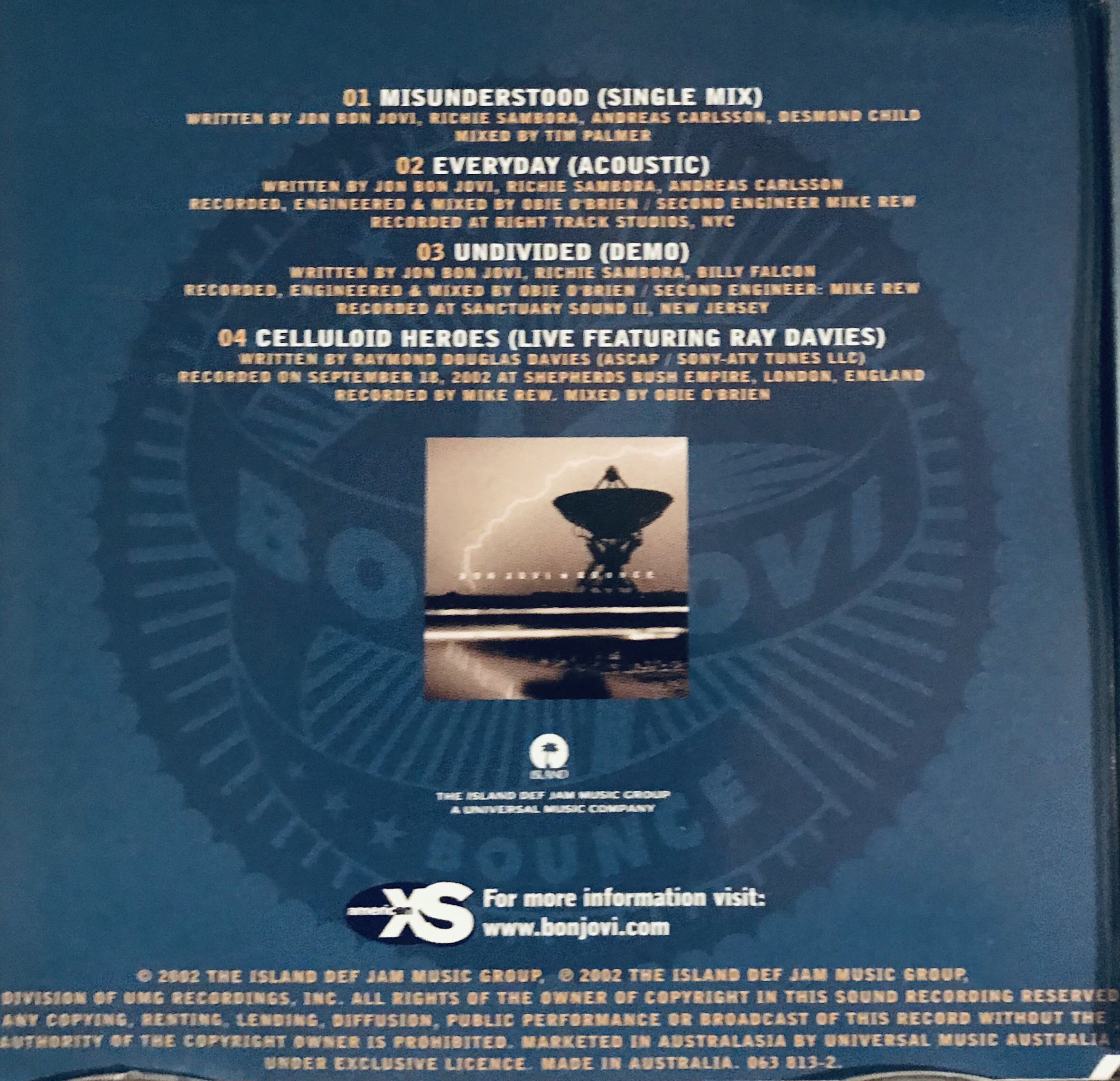
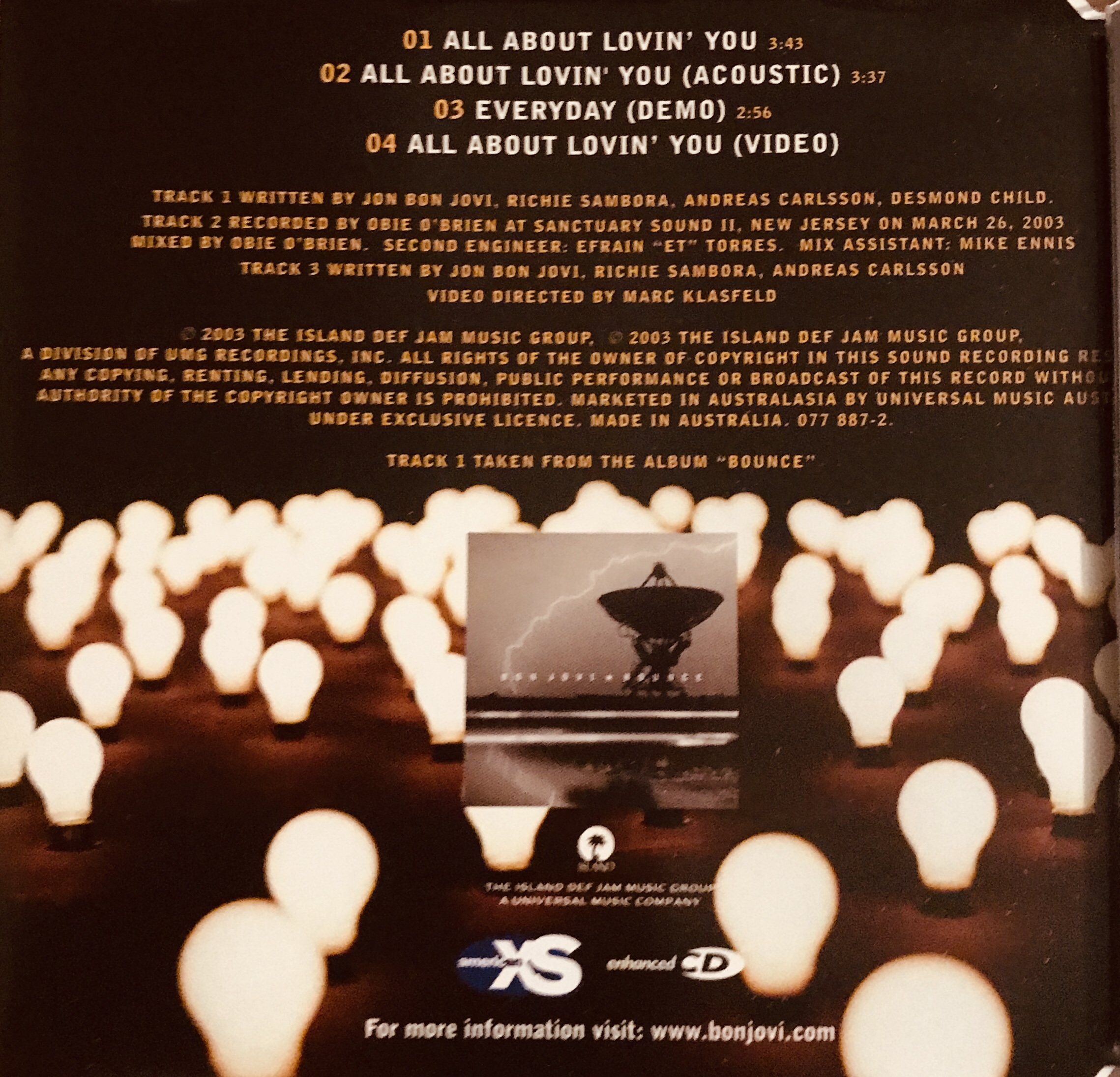
And I got all the singles from this album because they had so many unreleased tracks on them. Check em out.

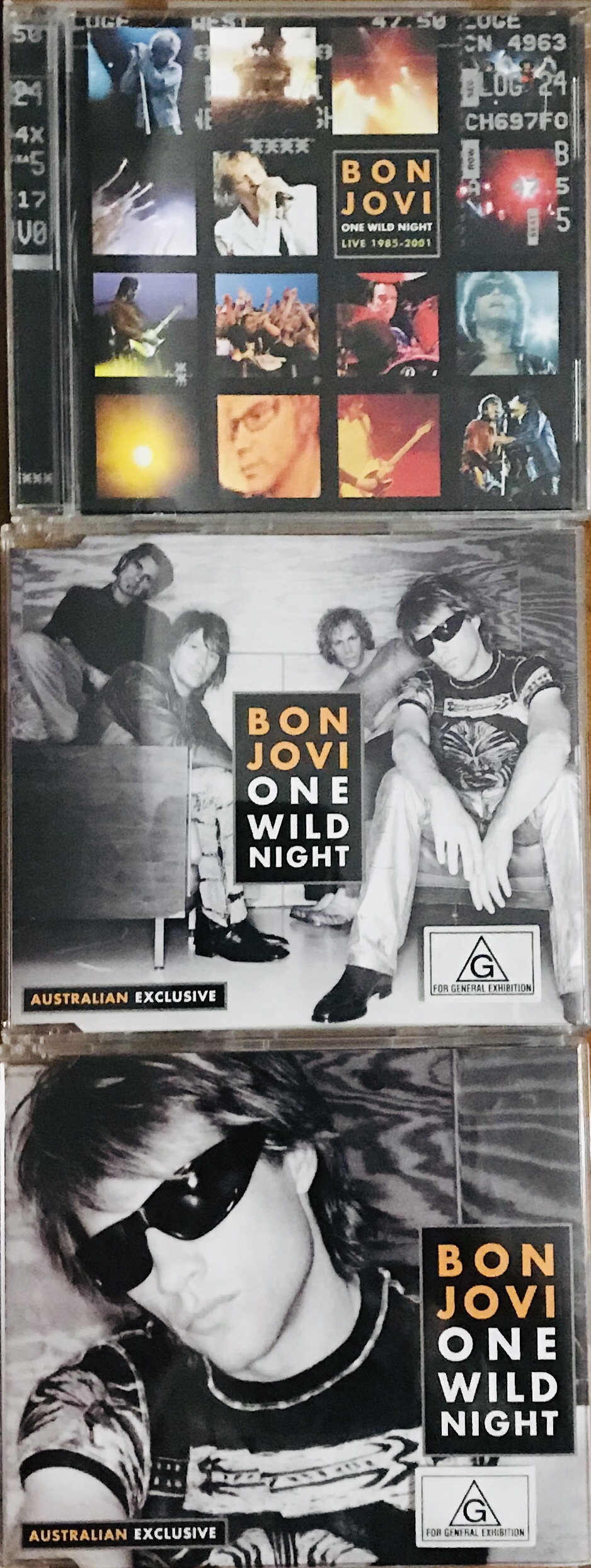
“One Wild Night Live 1985–2001” came out in 2001 and I purchased it, to hear Jovi, still firing on all cylinders.

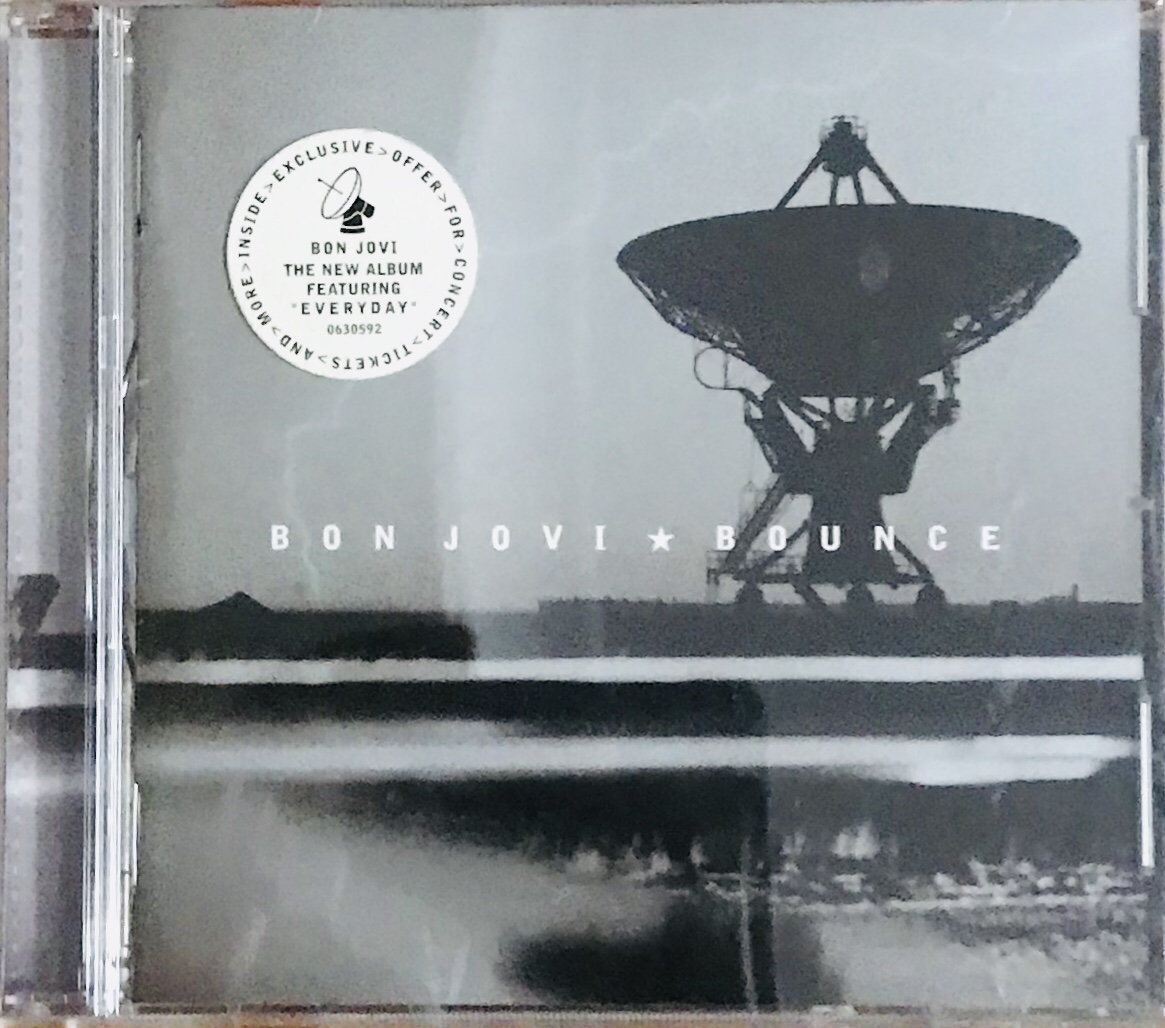
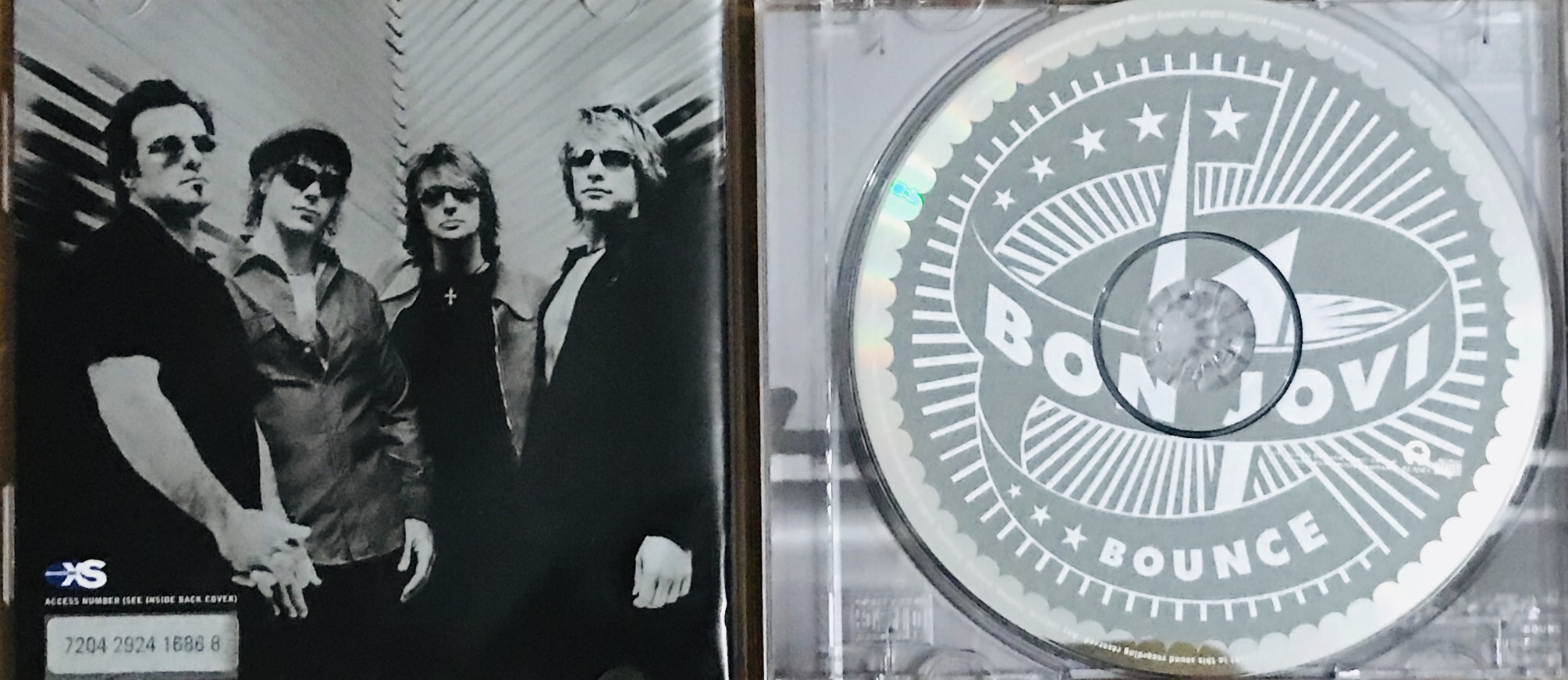
“Bounce” released in 2002 is one of my favorite Jovi albums. There is a lot of Dropped D riffing, it’s heavy and it’s angry. It’s written post September 11 and everyone who saw those images of the planes hitting the towers could forget em.

And I purchased the singles because they had a lot of B sides to them. Something that Jovi was doing really well.

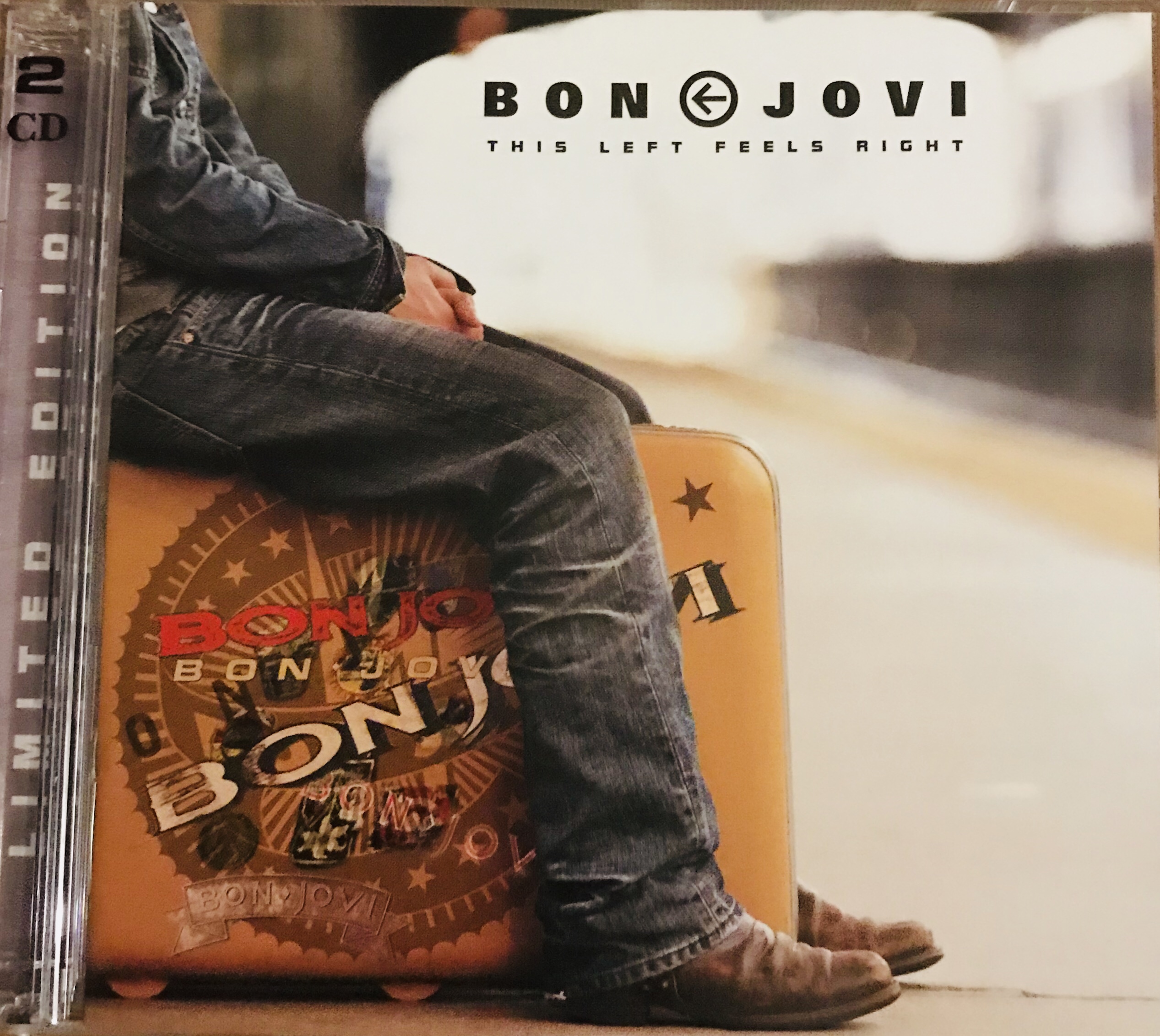
“This Left Feels Right” came out in 2003. Sambora went to town here, re-interpreting all the classics in an acoustic folky way.

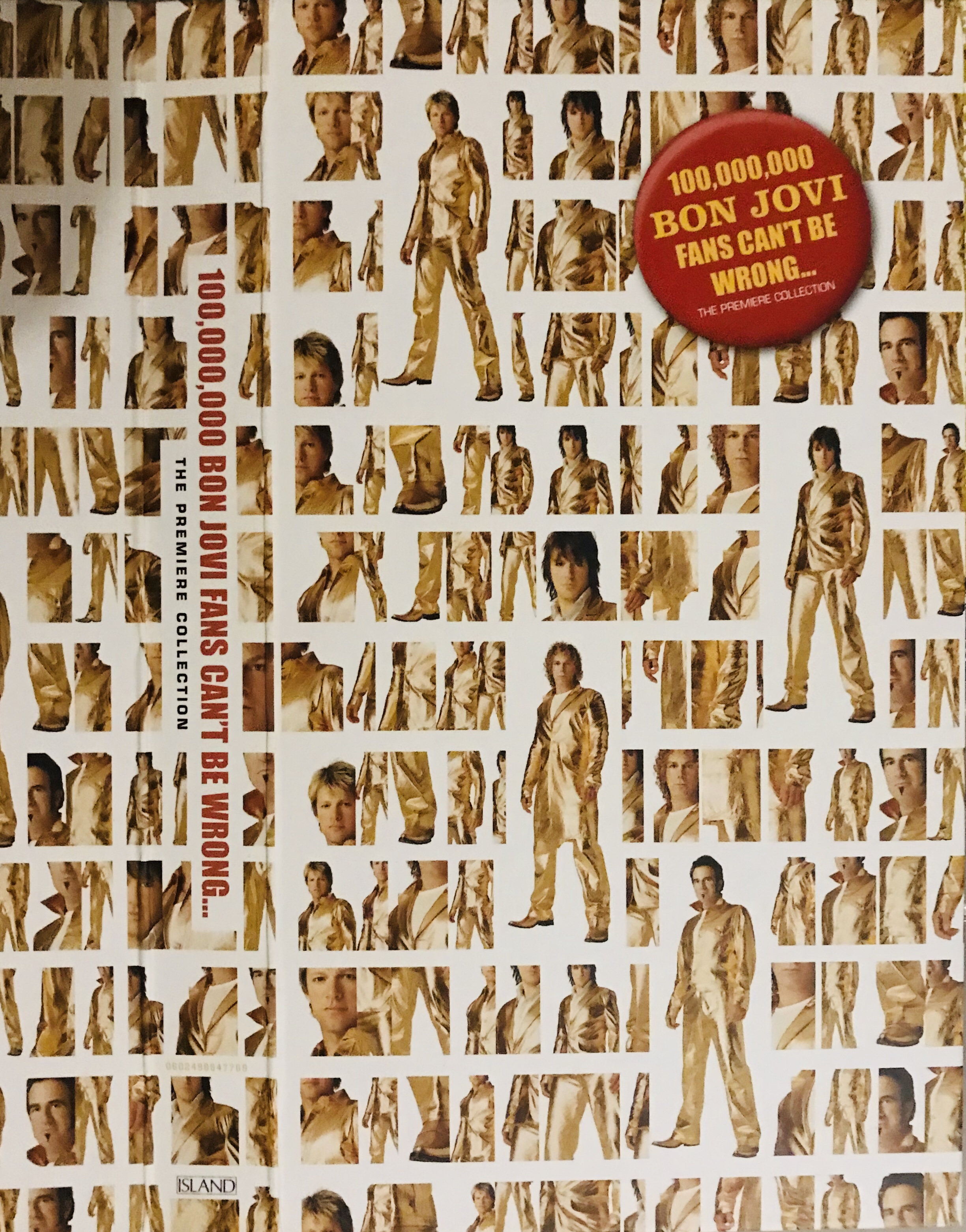
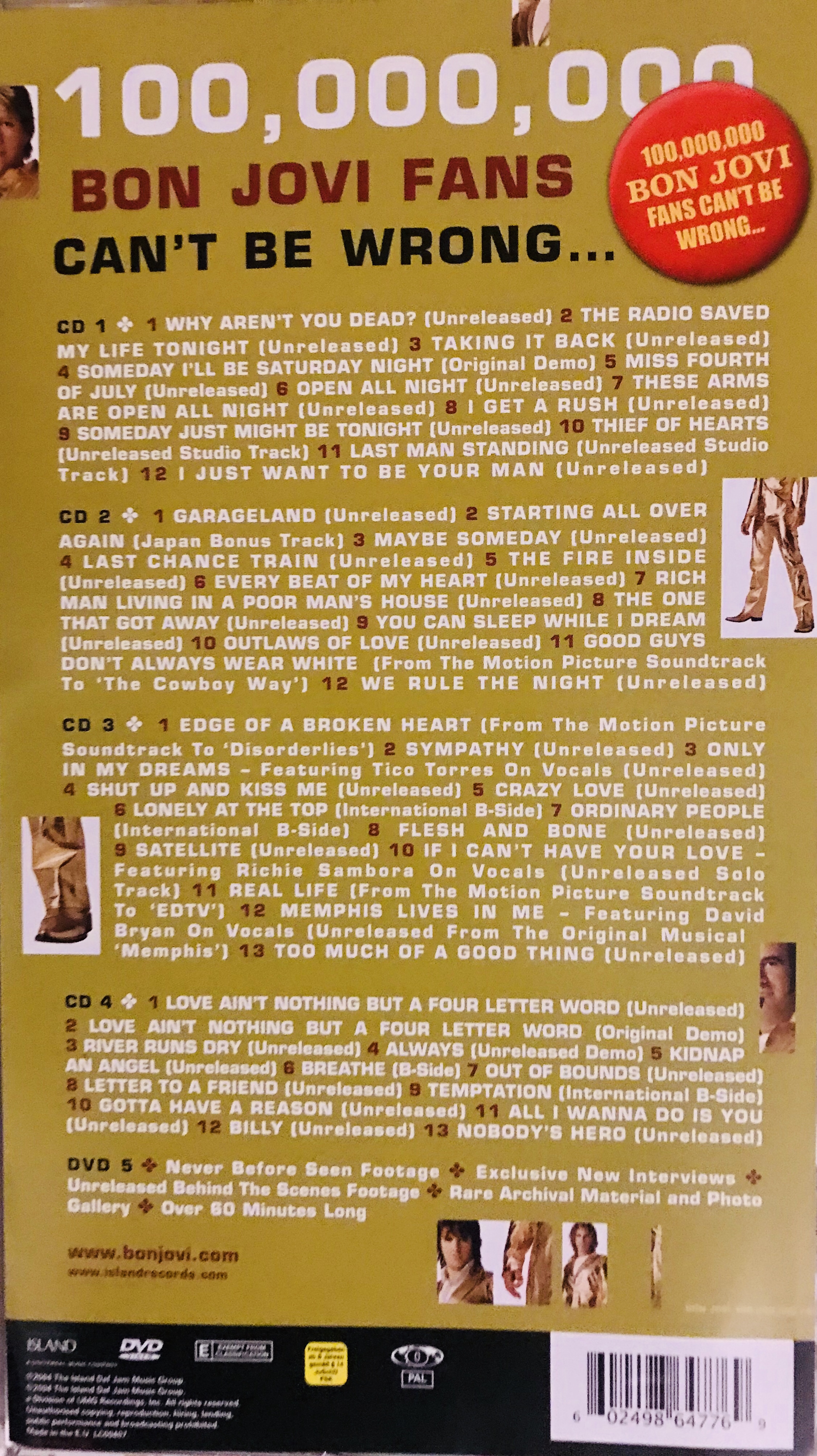
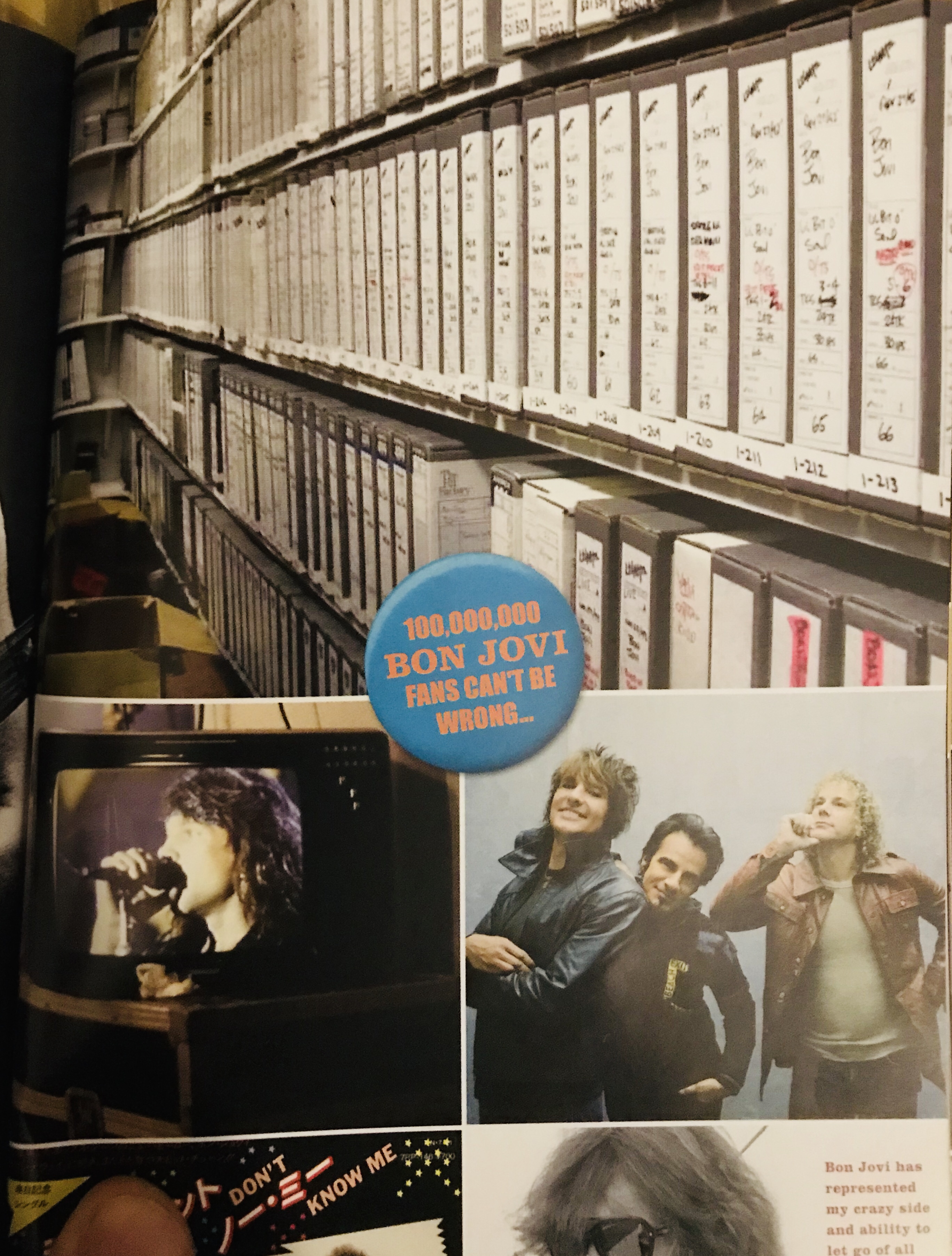
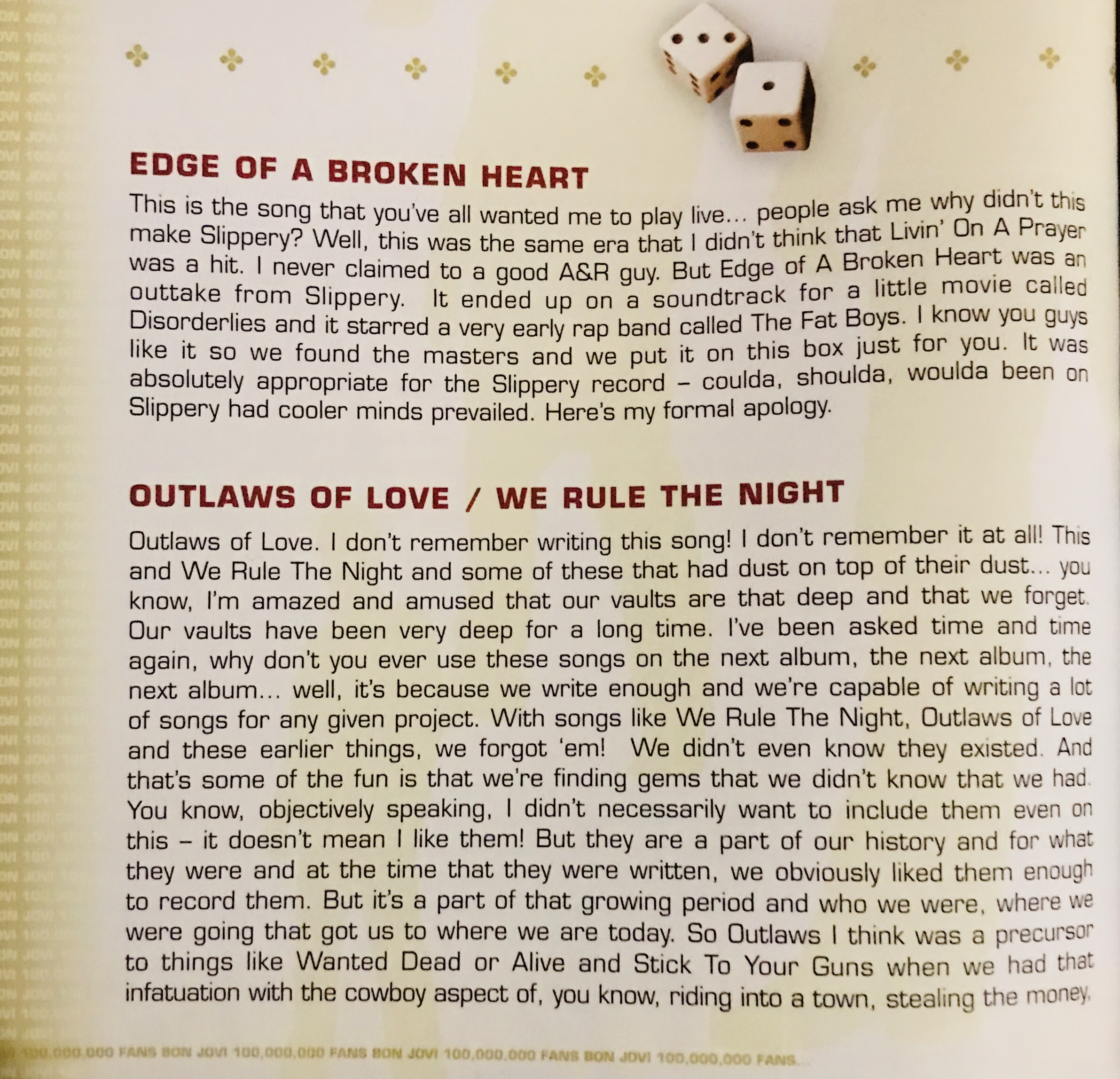
“100,000,000 Bon Jovi Fans Can’t Be Wrong” is one hell of a box set, released in 2004. This is the jewel in the Jovi crown. There is so much history on this.

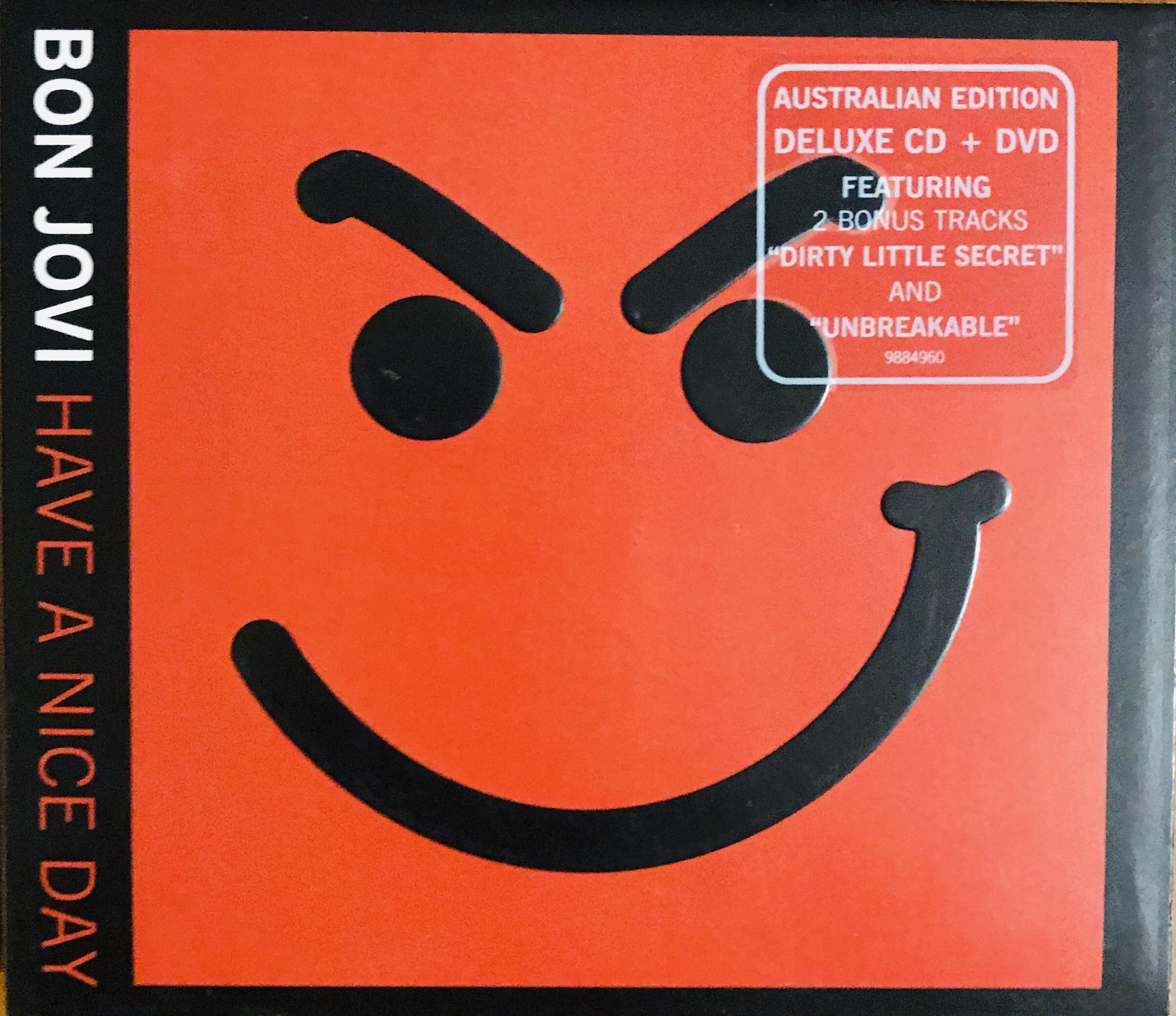
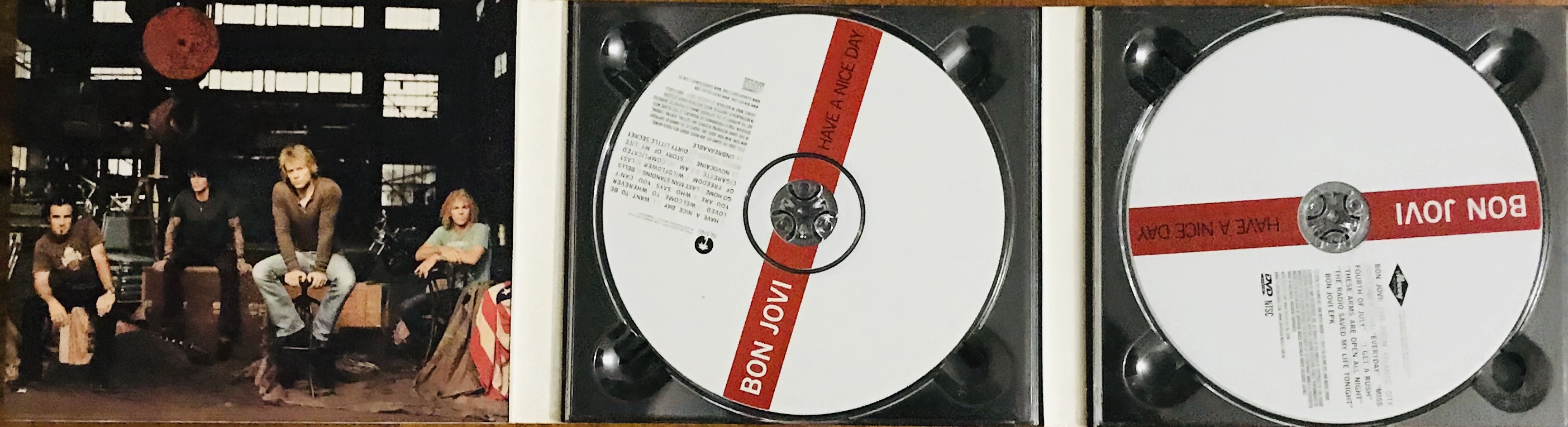
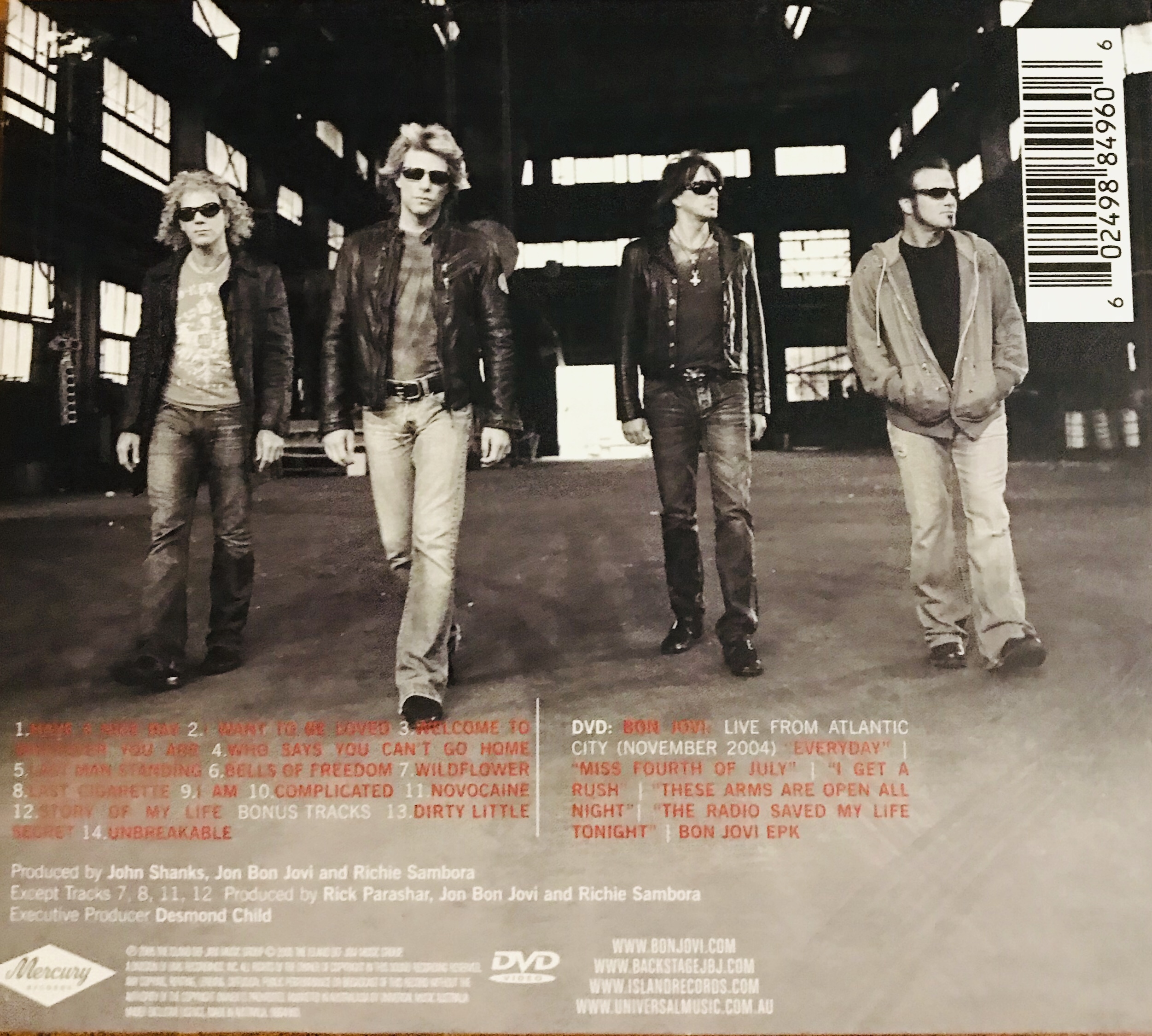
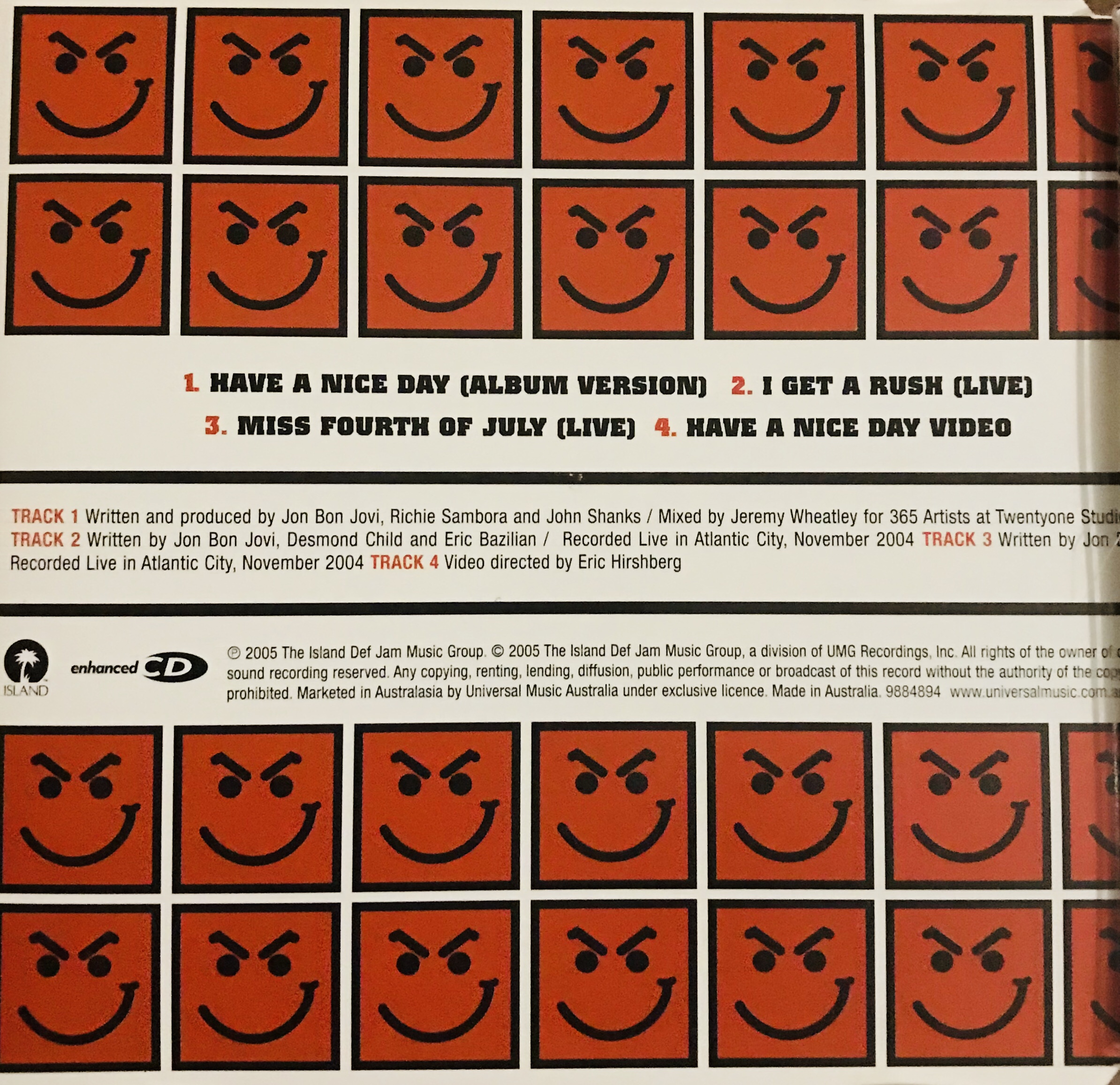
“Have a Nice Day” came out in 2005 and it had some cool tunes on it as well. I’ve got the Aus Edition with bonus tracks and a DVD I haven’t played.

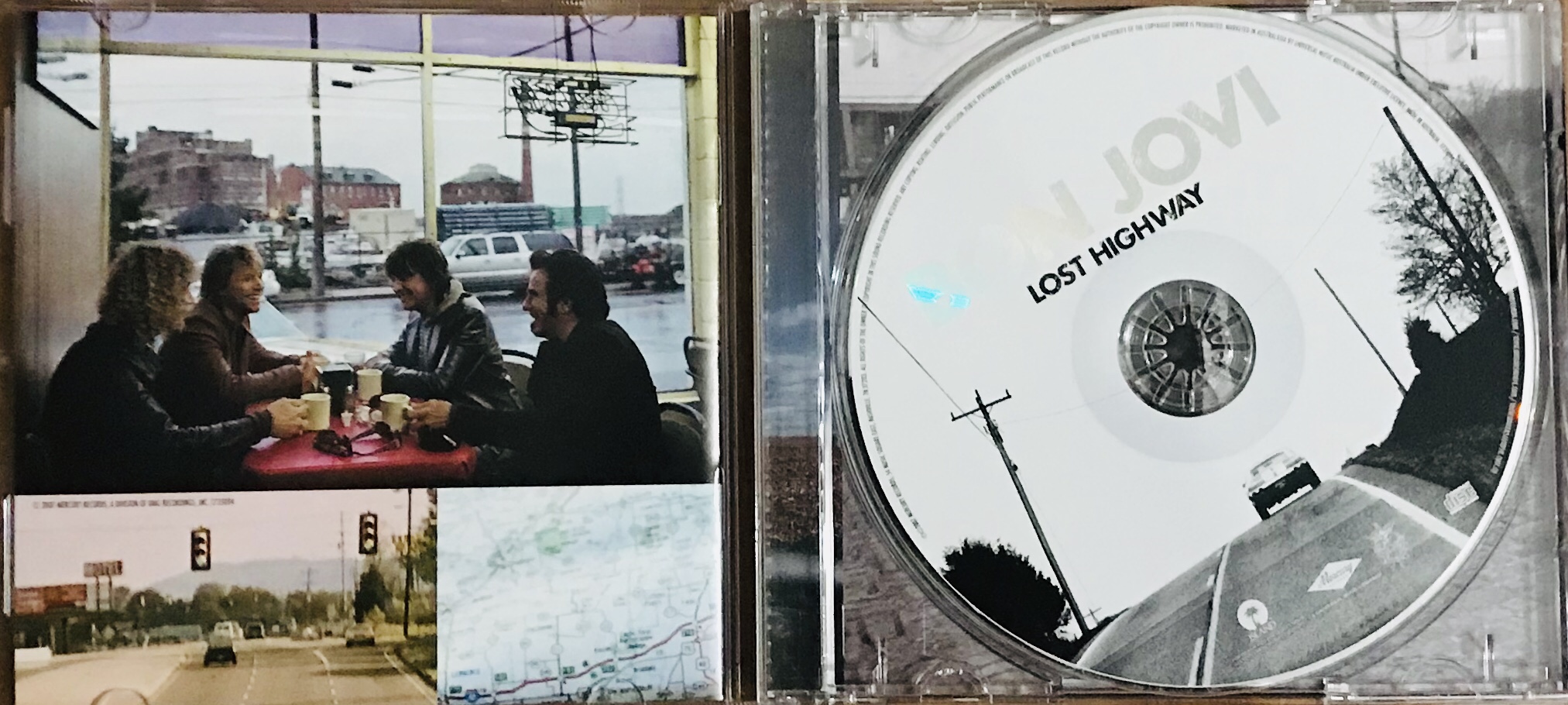
“Lost Highway” released in 2007 was interesting, because I liked it. I liked the ballsy change to country rock.

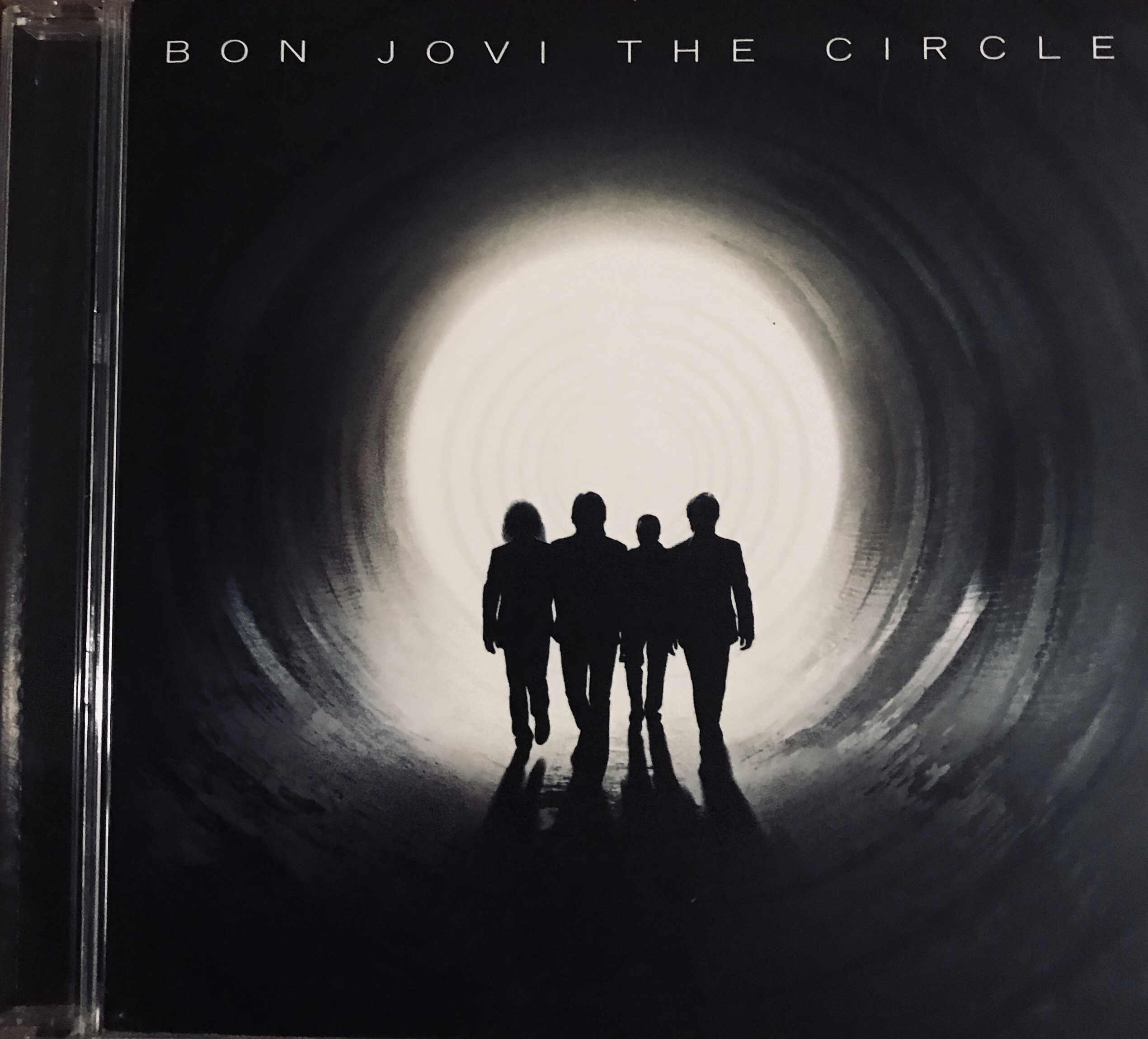
“The Circle” was released in 2009 and after the GFC so it had songs on it about the working man doing it tough. It was interesting how people took offense to Jovi even attempting to write an album like this while he was so far removed from the working man.

Regardless, it still had some cool tunes on it and I was still on board.

Coming up is my Jovi collection from 2010 to 2020.

Standard
A to Z of Making It, Music, My Stories

Imperfect

When artists create, they create because they need to create.

In most cases, it’s a pretty basic set up to get that idea recorded, like an acoustic guitar and a vocal or a keyboard and a vocal or a crappy distorted guitar sound and a vocal. But as soon the artist goes into the studio, the quest for perfection begins.

Perfect is the enemy of good, because no one and nothing is perfect. It just can’t be. If everything was perfect there would be no viruses, no illnesses and everything would work and never fail.

And music is littered with artists talking about how it took them weeks or months to get that “perfect” sound, which they never replicated again, and when money became even tighter and recording budgets even smaller, never even tried to get that “perfect” sound.

I’ve read stories of drummers describing their studio time with other artists as the most painful experience of their life, because of some made up standard of perfection. Drummers in some bands didn’t even make the recordings because the producers felt they weren’t up to it. Again, some made up standard of perfection.

Music works because it’s imperfect.

The first Black Sabbath album was recorded in 48 hours. It’s a snapshot in time of a well-rehearsed band on the cusp of something new.

If you have seen artists perform live, you will know what I mean about imperfections. Each concert is never the same regardless if the set list is the same. A drummer will miss a beat, a singer will be pitchy, a guitarist will miss a lick here and there and the bassist will play a note that they shouldn’t. It still doesn’t take away from the show, the act of being there and experience the energy.

Standard
A to Z of Making It, Influenced, Music, My Stories, Unsung Heroes

Change Was Needed

By 1988, the slick and polished sounds which heavy metal became known for was starting to fade. We saw the NWOBHM morph into the Sunset Strip rock and roll show and when the hairs became bigger than the sounds courtesy of MTV, the label reps came up with so many other wonderful names like Glam Metal, Hair Metal, Pop Metal, Hard Rock, Heavy Rock and whatever other word they could find to put before rock and metal. Basically, a rethink was on the cards for a lot of the artists.

But not for all.

Bon Jovi delivered one hell of a slick rock and metal album in 1986 and followed it up with another slick album in 1988. Whitesnake had the same dilemma, so they wrote another guitar heavy album to follow up from the self-titled 1987 album. Kiss continued on from “Crazy Nights” to “Hot In The Shade”.

Then Motley Crue dropped “Dr Feelgood” on September 1, 1989. All of those interviews about the drug overdoses, the death and subsequent return from death for Nikki Sixx, the drugs, the crashed cars, the lawsuits, the drugs again, the imposter, Vince escaping jail, the women, the drugs again times two and three and four, the partying, the clashes with the law, the break ups and the eventual “sobriety”.  “Dr Feelgood” had to be number 1. If the music didn’t do it, the stories would have.

But “Dr Feelgood” wasn’t just an album, it was a statement and it was a sound. And underpinning it all was the blues. That’s right, the baddest boys of rock and roll had gone back to the Missy Sippy Delta (I know how Mississippi is spelt) well for inspiration.

I remember walking down to the local shopping centre to buy the album which cost $19.99 in Australian dollars.

From the start of the Dr Davis call in “Terror N Tinseltown” which segues into the thundering rolling E note that kicks off “Dr Feelgood”, you knew this album was an assault on the eardrums. But it’s the chromatic blues riffs which come after which showcases the underrated Mick Mars. There is the chromatic passage and then two note chords, a D5 to an A/C# chord. Then it goes back to the chromatic passage and then that “Purple Haze” chord, the E7#9.

Sonically, its heavy and pleasing on the ear drums. It has a lot of groove. And lyrics that deal with a drug boss called “Dr Feelgood”. You can create a comic book character based on the lyrics of the song. Descriptive all the way down to the type of car with primed flames.

But it was the nod to the blues which got me very interested, especially when bands like Aerosmith, Badlands, Lynch Mob, Dangerous Toys and Tora Tora all released decent albums based around heavy blues rock. You could say they were all building on what Guns N Roses brought back to the masses with “Appetite For Destruction”.

And the changes weren’t confided to blues rock.

Some bands went heavier based on the new found success of bands like Pantera. Other bands went back to classic rock acts from the 70’s and others went more progressive. One thing that was clear, change was happening, except if you were AC/DC and Iron Maiden. And maybe there is something to be said there as well, as both of those acts still make great coin from touring.

Standard
A to Z of Making It, Music, My Stories, Unsung Heroes

Mastery

I did a little write up a few months back on Survivor’s debut album for one of my yearly review posts. And I mentioned that the production team for a debut album was impressive.

The producer is Ron Nevison.

The engineer is Bruce Fairbairn.

The assistant engineer is Mike Clink and one of the mixers assisting Fairbairn is Bob Rock.

And overseeing the whole thing is John Kalodner, who was always trying to get inspired people of similar mindsets to work together.

Basically every single one of them would go on to be involved with a lot of multi-platinum albums in the 80’s and early 90’s.

A book came out in the 2000’s called “The Talent Code” by Daniel Coyle and in that book, Coyle quoted a lot from the research work of Anders Ericsson, who came up with the “deliberate practice” model which leads to mastery.

Ericsson also wrote a book called “Peak” with Robert Pool as a co-writer many years later, focusing more on the research. Both of those books mention that in the past, mastery was achieved by people spending time with masters. All of those brilliant Italian painters and sculptors (like Michelangelo, etc.) spent time with previous masters, first as paint brush cleaners, then as canvas makers and paint mixers and then as students. The apprenticeships took years/decades. And by being around masters and learning from masters, they themselves achieved a certain mastery. Which they then passed on to others.

And this form of learning is the first thing I thought off when I saw the people involved with the first Survivor record.

Ron Nevison by 1979 is the master.

He did his apprenticeships with other masters, which goes back to being a sound engineer on “Quadrophenia” from The Who in the 60’s, “Physical Graffiti” from Led Zeppelin, plus he engineered the first three Bad Company albums. Then he started producing, doing “Night Life” with Thin Lizzy, “Lights Out”, “Obsession” and “Strangers In The Night” with UFO and albums with Jefferson Starship and The Baby’s.

Bruce Fairbairn on the other hand is the apprentice. By 1979, Fairbairn had the “Prism” albums under his belt, however their success was largely in the Canadian market.

Mike Clink was also apprentice, however at this stage he had done more time with Nevison than Fairbairn, as Clink was involved in the UFO, The Baby’s and Jefferson Starship albums as assistant engineer with Nevison. And Bob Rock was a protégé of Fairbairn’s so wherever Fairbairn went at this point in time, Rock went with him. Rock would learn from Nevison and then from Fairbairn.

And this form of mastery teaching happened in other recording studios with other producers.

Tom Allom spent time as a sound engineer, learning from Rodger Bain while Bain produced albums from Genesis, Black Sabbath and Budgie. We all know that Tom Allom went on to produce a lot of classic albums afterwards. Roy Thomas Baker also spent time learning from others and then he passed on his knowledge to a new breed like Geoff Workman.

To put into context the reach these producers would have, in the 80’s Ron Nevison produced the “Bad Animals” album from Heart, both Damn Yankees albums, Ozzy’s “The Ultimate Sin”, the other Survivor albums, “Out Of This World” with Europe, the first four MSG albums and “Crazy Nights” from Kiss.

Bruce Fairbairn did a lot of albums in the 80’s, but his biggest being “Slippery When Wet” and “New Jersey” by Bon Jovi, “Pump” and “Permanent Vacation” from Aerosmith, along with all of the Loverboy stuff.

Bob Rock did “Dr Feelgood”, The Cult, Blue Murder, “Keep The Faith” with Bon Jovi as producer and he was also involved as engineer on “Slippery When Wet” and “New Jersey” and his biggest one as producer, the “Metallica” black album, while Mike Clink did “Appetite For Destruction” as his first album and co-produced “Rust In Peace” by Megadeth.

The artists get all the glory and the adulation and the concert revenue, if they can still tour, but it was the magic behind the scenes that made the 80’s one of those decades of landmark album releases.

All of these producers did their time learning from others and once they achieved their mastery, they passed on their knowledge to others and the cycle kept repeating, until it stopped happening from the mid-80s onwards as recording gear got cheaper and more and more independent studios started and eventually, home studios.

Standard
A to Z of Making It, Influenced, Music, My Stories, Unsung Heroes

Rewind : Fast Forward

In the Guitar November 1996 issue I mentioned in a previous post, there is another section called “Rewind/Fast Forward”, that catches up with “guitar veterans” who have new projects in the works, or the section can be used as a one stop shop to check out and see what these guitarists from the past are up to.

So the three “veterans” the magazine caught up with are; Brad Gillis, Jeff Watson and Adrian Vandenberg.

How the mid 90s became so unkind to these kind of players is beyond me?

So Brad Gillis toured with Ozzy during 1982 and was on Ozzy’s “Speak Of The Devil” live album of Sabbath cuts. Night Ranger broke big a year later and suddenly he’s on MTV and trading 64 bar licks with Jeff Watson. This only lasted a short time, as by 1988, Night Ranger was dead.

I purchased his solo album, heard it once and never heard it again, and then Gillis reformed Night Ranger with a new line up only to see it get booed off stage. At this point in time, he had reconnected with Jack Blades with the aim to reform the original Night Ranger.

The interviewer, Greg Pederson asked him the question; can a band who relied on guitar heroics flourish in the 90’s?

Gillis answered with, “guitar solos are history, so who knows how we’ll fit in. But were going to kick butt and try to get a record deal.”

Isn’t it funny how a new breed of young guitarist in the 2000s brought guitar solos back to the masses while the 80’s dudes felt they needed to say something like “guitar solos are history”. Sounds like Gillis is choosing, commercial song writing over being true to himself and it doesn’t work, because Gillis is a guitar player that solos.

Jeff Watson showed the world how easy it was to execute eight finger tapping and it was a technique he learned by pure accident, because all Watson did was to try and figure out a way to play one of Alan Fitzgerald’s keyboard licks on the guitar. So Night Ranger break up in 1988 and Watson gets busy, laying down guitar on Chris Issak ‘s albums, a solo album and the Mothers Army project with Joe Lynn Turner singing.

His solo album showcased his impressive techniques but as he said to the interviewer, “my acoustic playing has gotten critical acclaim but it doesn’t pay the bills”, so back to Night Ranger he want as well, and when the interviewer asked him the same question about the “non-solo conscious society”, Watson answered with, “That’s what Night Ranger is about – guitars.”

Now that’s how you answer that question. And Jeff Watson went back to Night Ranger only to leave and go back and then leave for good. His replacement Joel Hoekstra would also leave to join Whitesnake, which leads me to Adrian Vandenberg.

Adrian Vandenberg back in 1985 was voted as a “Metal God In Waiting” in the same magazine. At that time, the magazine praised him for stretching the neoclassical style, which led to him disbanding Vandenberg, because every other artist started doing it. And in 1986, a certain David Coverdale asked Vandenberg to became his new guitarist, replacing John Sykes in Whitesnake. His moment of achieving Metal God status was at hand.

But it wasn’t to be, because Vandenberg’s guitar playing didn’t grace the “Slip Of The Tongue” album, due to a bizarre hand injury. But in 1996, Vandenberg was finally on a Whitesnake record.

The Whitesnake album, “So Many Tears” mirrored the Blues rock direction of previous Whitesnake albums, as well as his Manic Eden band, which released a superb self-titled album in 1994.

“The sound is rootsier. I even play acoustic slide on an open tuned song called “Woman Trouble Blues”. There are very few guitar overdubs on the new Whitesnake album and on a couple of times we didn’t even put a rhythm guitar underneath the solos.

And while Vandenberg was committed to Whitesnake, there was talk of a collaboration with John Waite in the future. But Vandenberg finished up with Whitesnake and went into hiatus, for almost 15 years until Vandenberg’s Moonkings brought him back into the public eye.

There was one more special interview with Vinnie Vincent and that one deserves a separate post.

Standard
A to Z of Making It, Music, My Stories, Piracy, Unsung Heroes

Nothing Is Guaranteed and Nothing Is Certain

There is a post over at Seth Godin’s blog called “Borrowed Time”.

It goes like this;

All of us are on borrowed time. There are no refunds and there are no guarantees.

At some point, the only time you’ll have to worry about is the time you’ve wasted.

Life is short and a career in music is even shorter and a career at the top of the charts is even shorter than a career in music. There is no safety net and no guaranteed wage or income.

For every person who works what is known as a 9 to 5 job, they could have a job today and not tomorrow. For every person who is a casual, they could be called in to work today and not again for weeks. For every person who embarks on a trip some will return and others will not return. For every artist who writes a song, they could get paid for it or they could not.

Nothing is guaranteed. Nothing is certain.

Jon Bon Jovi was happy living a life in the 90’s from the royalties and advance payments he received from his 80’s output, along with “Keep The Faith” and “These Days”. Then Napster came and blew up the monopoly the record labels had on the distribution. Suddenly the band Bon Jovi from 2000 and onwards became a different beast, releasing music almost yearly and touring constantly.

If you are a musician, you could slog it out for years and get no commercial reward. But you would get the joy of creating and playing. These days, you could spend years building an online presence and it does not equate to dollars in the bank account when your music comes out. No one knows why, things become successful and no one knows why, things don’t become successful.

Vito Bratta was asked to write hits for the follow up to “Pride” and he didn’t know what the record label rep meant. As far as Bratta was concerned, he wrote songs and if any of them became hits, great, if they didn’t, still great.

So don’t develop a mindset which tries to create something that you think people would like. Create something that is true to you. And if the first attempt fails, try again and again.

If you look at music history, the 25 million selling “Black” album was created the same way that every other Metallica album was created up to that point, James and Lars would take all the demo ideas everyone had, go away to one of their houses and piece together the songs. The album then goes nuclear worldwide and the band is writing songs with all the members in the room and Kirk is doing rhythms on the album.

The “Load” and “Reload” albums have beautiful moments and a more swingy kind of groove based on Hetfields love of Corrosion of Conformity. Hetfield and the other guys in Metallica created albums true to themselves. And even though the band was accused of further selling out, they never catered to anyone except themselves, which is so evident on “St Anger” and then their new take on an old sound with “Death Magnetic” and “Hardwired To Self-Destruct”.

So don’t waste time thinking about what people would like and what people would expect, be productive and do what you want. Take the risks and see what happens. You might fail, you might succeed and you will learn. And remember nothing is guaranteed.

Standard
A to Z of Making It, Copyright, Music, My Stories

Sheet Music

Its February 1997, and the November 1996 issue of Guitar hits the newsstands in Australia. We were always 3 months behind.

On the cover is Rush  with the headline, “Returns To Rock With Their Heaviest and Best Album in 15 Years”. And that album is “Test For Echo”, a headline I totally agreed with.

And how things change from the previous decade. Back in 1986, guitar heroes like Malmsteen, Van Halen, Schenker took up the first few pages of ads. In 1996, it was the dudes from Bush advertising “Ernie Ball” strings and Kim Thayil from Soundgarden advertising Guild guitars.

Each issue of the magazine has a section at the beginning by the Editor In Chief. It’s written like how we would write a blog post today. On this occasion, the headline was “The Song Never Remains The Same”. The Editor In Chief HP Newquist wrote about “how songs get published in the magazine”, because the main reason why I and many others purchased the magazine was for the song transcriptions.

There are publishing companies that OWN the print rights to music. The publishing companies usually pay the artist a large upfront fee to license the songs for printing, which will cover a three to 5 year term (or longer in some cases) or they will pay a royalty (that lovely word) whenever the song is published.

To get a song transcribed for a magazine like Guitar, the magazine needs to first get the approval of the publisher.

Then the magazine will send the music to a transcriber.

When the song appears in the magazine, the magazine pays the publisher who in turn pays the artist and the transcriber is paid as well for their work. The magazine also pays to use the song in each of the countries the magazine is distributed, which means getting the rights from several international publishers for each song.

And all of this for a one time only use, hence the reason why the magazine at that point in time didn’t put any transcriptions up on their website, because that allowed unlimited use.

Sounds like a pretty simple business arrangement when everything is controlled by the labels and the publishers.

But there are also artists who are not interested in having their music appear in magazines and artists who want to give their final approval of the transcription as being true and correct. In this instance, the magazine sends off the transcribed work to the artist who goes over it to make sure the transcription represents what the artist played.

So the post goes on to say that when they feature an artist and don’t run a transcribed song, it is because the magazine doesn’t have permission to print a song from that artist or another magazine has first rights to songs from that artist or permission has been given to multiple magazines, who print the song all at the same time (which has happened as I was a Guitar World buyer and a Guitar buyer). In this magazine they had Rush on the cover and “Test For Echo” was also printed. So in typical fashion, Rush are the good guys once again.

Even after the magazine has secured the rights to print a transcribed song, it can be denied a reprint because a new songbook is coming out and the publishers don’t want to cannibalise the sales of that songbook.

And the web back in 1996, had a lot of text notepad transcriptions put up from users who either transcribed the song themselves or had access to a transcription and copied it to a text document and distributed. I found a lot of songs that way.

So of course the print publishers came out with lawyers and started to crack down on user posted online transcriptions, claiming that it infringers on their copyright and takes away from an artist’s royalties, which is the same spiel used for bootlegs. EMI had a very public battle with OLGA (On Line Guitar Archive) because it had user uploaded transcriptions which infringed on their rights and took money away from the artists. You know the usual PR spiel.

Suddenly the business relationship is a bit more complicated, because the publishers didn’t know how to operate in the world wide web.

These days, it is different and communities like Ultimate Guitar do have user uploaded transcriptions.

And the reason why the Editor In Chief felt the need to explain all of this, is because by 1996, the magazine was getting a lot of angry feedback for re-publishing songs they had already published. A problem that the internet had created for them.

And the big problem the internet created for the magazine was the user uploaded transcriptions to songs. Why buy a magazine to learn how to play a song when a 15 year old kid has learnt it and shared it with the world.

Standard
A to Z of Making It, Classic Songs to Be Discovered, Influenced, Music, My Stories, Unsung Heroes

Overkill

It’s 1975.

Punk music is taking over in England and rock music made famous by Sabbath, Purple and Steppenwolf was fading. And Motorhead was there to bridge the gap.

In 1979, “Overkill” and “Bomber” come out, charted well and suddenly the band was making some coin, which they put into the stage production. And bands like Motorhead started to appear all over England, as the disenfranchised youth from the projects and housing developments took up arms in denim and leather and started supporting this bludgeoning new sound.

Lemmy is the definition of a person loaded with GRIT. After so many false starts, Motorhead finally started rolling with “Overkill”.  Labelled as Heavy Metal, Lemmy rejected that label from the outset and said they are just a rock and roll band. Lars Ulrich even credits “Overkill” as his first introduction to double bass drumming and when Metallica ruled the business pre-Napster, people listened to Mr Ulrich.

Only way to feel the noise is when its good and loud

Fast Eddie Clark is no slouch on the guitar, bring his speed blues rock into the mix, which allows him to wail, while the Lemster and Philthy lay down the foundations. And its loud and its fast and there is no commercial expectation.

On your feet you feel the beat, it goes straight to your spine
Shake your head you must be dead if it don’t make you fly

Line credits to vodka, amphetamines, bikers and roadies and groupies. Shake you head and keep flying.

Know your body’s made to move, feel it in your guts
Rock ‘N’ Roll ain’t worth the name, If it don’t make you strut

All of the 70’s acts started off playing rock and roll/blues covers and somehow they ended up as metallers. But don’t tell Lemmy that. He will still kick your arse even from the afterlife.

And how good is that outro for the last 30 seconds.

Standard
A to Z of Making It, Copyright, Derivative Works, Influenced, Music, My Stories, Stupidity

Progress Is Derivative – What The!! – It’s Not Okay To Show Your Influences

Led Zeppelin became the biggest rock act in the world. They wrote songs based on their influences and some songs even sounded like the songs they were influenced by. From traveling the world, they were also exposed to exotic sounds and as technology got better, to new sounds.

Suddenly, thousands of wannabe guitarists and singers and drummers and bass players started to copy the licks and melodies and beats of the mighty Zep, forming an influential bond with the music, much in the same way, the members of Zep allowed other artists and songs to influence their music and melodies.

And Zeppelin wasn’t just an act with a geographical location. Their music was everywhere and there was no way that any teenager in the 70’s could escape the sounds of the Zep. Fast forward into the mid 80’s and suddenly a lot of bands on record deals had a lot of musical passages in their songs which paid homage to Zeppelin and in some cases too much homage. But Zeppelin never sued. These derivative versions of songs based on Zep cuts actually increased the value of the Zep cuts.

I’ve been listening to some songs recently, and the resemblance to other songs is a beautiful thing to hear. I know that these kinds of similarities are bringing forth a lot of court cases in pop music where a jury is asked to decide what is plagiarism and what isn’t.

In the Cult’s song “Peace Dog”, the middle part section has a similarity which comes from the “Stairway to Heaven” section before the solo section kicks in.

And on the topic of Led Zep, no one can forget Kingdom Come. “Get It On” basically lifted the whole “Kashmir” chord progression, and “What Love Can Be” is similar to “Since I’ve Been Loving You” and “The Rain Song”. Regardless, Kingdom Come made me want to listen to Led Zeppelin.

Whitesnake broke through in the 80’s on the backs of MTV and a sound that rivalled the Sunset Strip, but when they started off on the blues rock journey, David Coverdale was channelling Led Zeppelin in “Trouble”. Coverdale even looked like Plant and sounded a lot like him on this cut and along with Sykes they brought the Led Zep sound, filling the void for a lot of fans of that music.

And this was okay, to show your influences and pay homage to styles.

But Copyright kept changing and evolving, because the corporations kept pushing for perpetual laws, as they knew that if they lost the copyrights to valuable recordings and songs, they would be losing money.

And by pushing for laws that lasted 70 years after the death of the creator, it also meant that the heirs of the creator would also benefit as a by-product. And the heirs are now taking from the hand that gave them the right, because if copyright terms stayed the same (28 year term (14 years with the option to renew for another 14) or if the artist died before the 28 years, on death), the majority of these court cases would not even exist, because the songs would be in the public domain.

But it was still okay to show your influences and pay homage, because the record labels and publishers still paid the heirs and the artists for their rights, as the labels made 300% more profit due to CD sales. But when the record labels stopped paying, as mp3 ripping and then digital downloads and then streaming took over, suddenly, there was a problem for the artists or the heirs/organisations who owned the copyrights. The payments ceased or became dramatically less.

So with a combination of Copyright law changes and a change to the distribution model, a new situation was created with lawsuit after lawsuit, because every artist or heirs of the artist feels that their work is so original and free from influence, that they must be compensated.

And suddenly it wasn’t okay to show your influences or pay homage. But all progress made in music was to build on what came before.

Standard