Classic Songs to Be Discovered, Derivative Works, Influenced, Music, My Stories, Unsung Heroes

1977 – Part 7

Blue Oyster Cult – Spectres

Their commercial breakthrough was the album before, “Agents of Fortune”, so it’s no surprise that BoC stuck with the same formula, like Jovi did with “New Jersey” after “Slippery When Wet” or Metallica with “Master Of Puppets” and “Justice For All” after “Ride The Lightning”.

I think for most, Blue Oyster Cult are known for three songs, which their Spotify account confirms. “Don’t Fear The Reaper” at 272 million streams, “Burnin For You” at 77 million streams and “Godzilla” at 37 million streams. And of course, Metallica brought “Astronomy” into the public conversation.

And “Spectres” opens up with “Godzilla”, a monster riff that shuffles and rumbles along like the monster it’s named after.

“Golden Age of Leather” has a crap intro but it’s a pretty good song overall with tempo changes that seem like they don’t even happen. And along with album closer “Nosferatu”, these two songs are like the progressive tracks.

“Death Valley Nights” stands out and is a favourite and “Fireworks” sounds like a re-write of “Don’t Fear The Reaper” and I’m all in, with some nice harmonies.

“R. U. Ready to Rock?” is “American Woman” and “Mississippi Queen” all rolled into one to kick off side 2. “Going Through the Motions” is co-written by Eric Bloom and ex Mott the Hoople member Ian Hunter. It’s got hand claps and it’s like Sweet.

“I Love the Night” has an hypnotic clean tone arpeggio riff. It’s my favourite from the album, a love song to a female vampire when vampires actually scared us and “Nosferatu” continues the vampire theme, with its Mellotron riffs and it reminds me of trippy 70’s art rock.

Riot – Rock City

The first Riot album, with the band unleashing a metal sound that would be seen as the “traditional” sound many years later.

Think of Sweet’s heavier songs, along with Led Zeppelin’s heavier songs and with a little ZZ Top and UFO chucked in for good measure. Judas Priest had this traditional sound on “Killing Machine”.

It’s a shame their covers never matched the awesome covers from other bands of the era, like Maiden, Priest, ZZ Top and so on.

It’s a two punch knockout with “Desperation” and “Warrior”.

As soon as the intro riff starts for “Desperation” I’m thinking of Metallica and their early riffs around “Kill Em All”. But once the verses kick in, its standard hard rock.

Then the riff starts for “Warrior” and I’m not sure who influenced who, Judas Priest or Riot.

And the chorus is so catchy. A future power metal movement is built on this.

When “Rock City” kicks off, the riff is another blues romp.

And there isn’t a bad song on the album.

When people talk about great debut albums, Riot is very rarely in the conversation, but they should be.

Traditional Metal.

That’s Riot on the debut.

Quartz – Quartz

The album is not on Spotify, but YouTube has it.

Quartz are a British heavy metal band.

They came onto my radar when I was doing some research on the past of Geoff Nicholls. For those who don’t know, Nicholls was involved with Black Sabbath and is unofficially credited as the person who came up with the bass groove on “Heaven And Hell”.

They got a deal with Jet Records in the mid 70’s as Bandy Legs and supported Sabbath and AC/DC. In 1977, they changed their name to Quartz and released their self-titled debut album.

This album is produced by Tony Iommi. It wasn’t mentioned on the record because of contractual obligations but it was the worst kept secret. Iommi even mentions them in his “Iron Man” bio. A young Chris Tsangarides is the Engineer. Ozzy even sang on the song “Circles” but Iommi removed Ozzy’s contributions from the final mix and then the song was cut from the album. Brian May even offered to do a Queen type re-mix of the song which didn’t pan out to good.

The band is Mick Taylor on vocals, Geoff Nicholls on guitar and keyboards, Dek Arnold on bass, Mike Hopkins on guitar and Mal Cope on drums.

Writers for various magazines have credited this album as one of the earliest NWOBHM releases even though the phrase NWOBHM came in 1979, via journalist Geoff Barton and Sounds magazine.

“Mainline Riders” kicks it off and it sounds like this track is the inspiration for the songs “Heaven and Hell” and “Holy Diver”.

If you need proof that even our heroes are influenced, then look no further than this song. Tony Iommi was clearly influenced by this.

After reading how Jet Records operated, I would be surprised if Nicholls got any song writing credits or payments for his contributions.

Because Jet Records were in a bad state financially and Quartz suddenly found themselves without a deal.

By 1979, Geoff Nicholls left to join Black Sabbath. He contributed keyboards and song writing to that band from 1980s “Heaven and Hell” to 2004.

“Sugar Rain” is different, more ELO orientated. This one and the next track “Street Fighting Lady” are progressive rock and metal masterpieces. The flute even makes the appearance like Jethro Tull. And I’ve read that Iommi is the flute master.

And the riff to kick off “Street Fighting Lady” is brilliant, bringing back memories of “Woman From Tokyo”. “Hustler” has this hard rock Bee Gees vibe in the verse, which I dig, with layered emotive harmony guitar lines and an angry metal like Chorus.

Four songs in and the guitar work from Hopkins and Nicholls is stellar.

“Devil’s Brew” has an “American Woman” influenced riff, but once the synths come in, it’s a different beast, more like hard rock and a bit progressive. Then the verse kicks in and it feels like a Sweet song with a hard driving Chorus that feels like it came Meatloaf’s “Bat Out Of Hell” album.

“Smokie” is a medieval classical acoustic song. “Around and Around” kicks off with a palm muted riff and some nice harmony guitars.

“Pleasure Seekers” and “Little Old Lady” close off the album and I wonder if this album was the missing link to my ears between “Never Say Die” and “Heaven And Hell” from Black Sabbath.

Uriah Heep

Two albums came out in the same year, “Firefly” and “Innocent Victim” with new vocalist, John Lawton.

The excellent “The Hanging Tree” kicks off the “Firefly” album. “Do You Know” is a loud rocker with a riff that is so fun to play. “Rollin On” is an excellent cut that reminds me of Bad Company and “Sympathy” clearly influenced Europe and their “Wings Of Tomorrow” album. Think of the song “Stormwind”.

“Innocent Victim” did good business in Germany, Australia (especially the single “Free Me”) and New Zealand, however in the U.S market, it disappointed. Actually both albums did terrible in the North American market.

The feel good bass groove of “Keep On Ridin’” kicks off the “Innocent Victim” album. It’s more like a Bad Company song than a Uriah Heep song, but I’ve always been a fan of artists incorporating sounds and feels of what is popular. “Flyin’ High” kicks off with a harmony guitar intro that would rival any Thin Lizzy intro.

I’m all in when “Free ‘N’ Easy” kicks off, it’s basically a speed metal song. I could imagine a young Mustaine or Hetfield listening to those verse riffs, thinking, imagine if I took that and played it even faster. While the next track “Illusion” is hypnotic and more subdued.

Then “Free Me” starts and it’s got that C-Am-F-G style chord progression. I don’t think I’ve ever heard a song with that progression that wasn’t catchy. And of course, it charted really well in Australia and New Zealand.

Then “The Dance” starts and that lead to kick it off is brilliant, while the guitar plays a jazzy staccato style riff in the verse.

And then “Choices” starts and what is it with this band and their god damn excellent intros that keep hooking me in. Lee Kerslake owns this song on the drums and Mick Box solos tastefully, while Ken Hensley lays down a wall of synths.

Eric Clapton – Slowhand

How good is this album?

Triple Platinum in the U.S and nothing in the Australian market, but Clapton was always in the Guitar Mags I used to buy, so it was only a matter of time before he became an influence.

“Cocaine” kicks it off before it moves to one of Clapton’s most emotive leads in “Wonderful Tonight”. This is Clapton’s second song to Pattie Boyd. The first one is the famous “Layla” when she was married to George Harrison, and when she divorced Harrison, she became Clapton’s muse.

“Lay Down Sally” is one of those blues songs that has a snare shuffle as it rolls along, something that Dire Straits did a fair bit off. “Next Time You See Her” is like a Bad Company song, merging folk and rock.

Then “The Core” starts and that funky bluesy riff has me picking up the guitar.

Colosseum II – Wardance

I’ve already done a post for this album in my Record Vault posts.

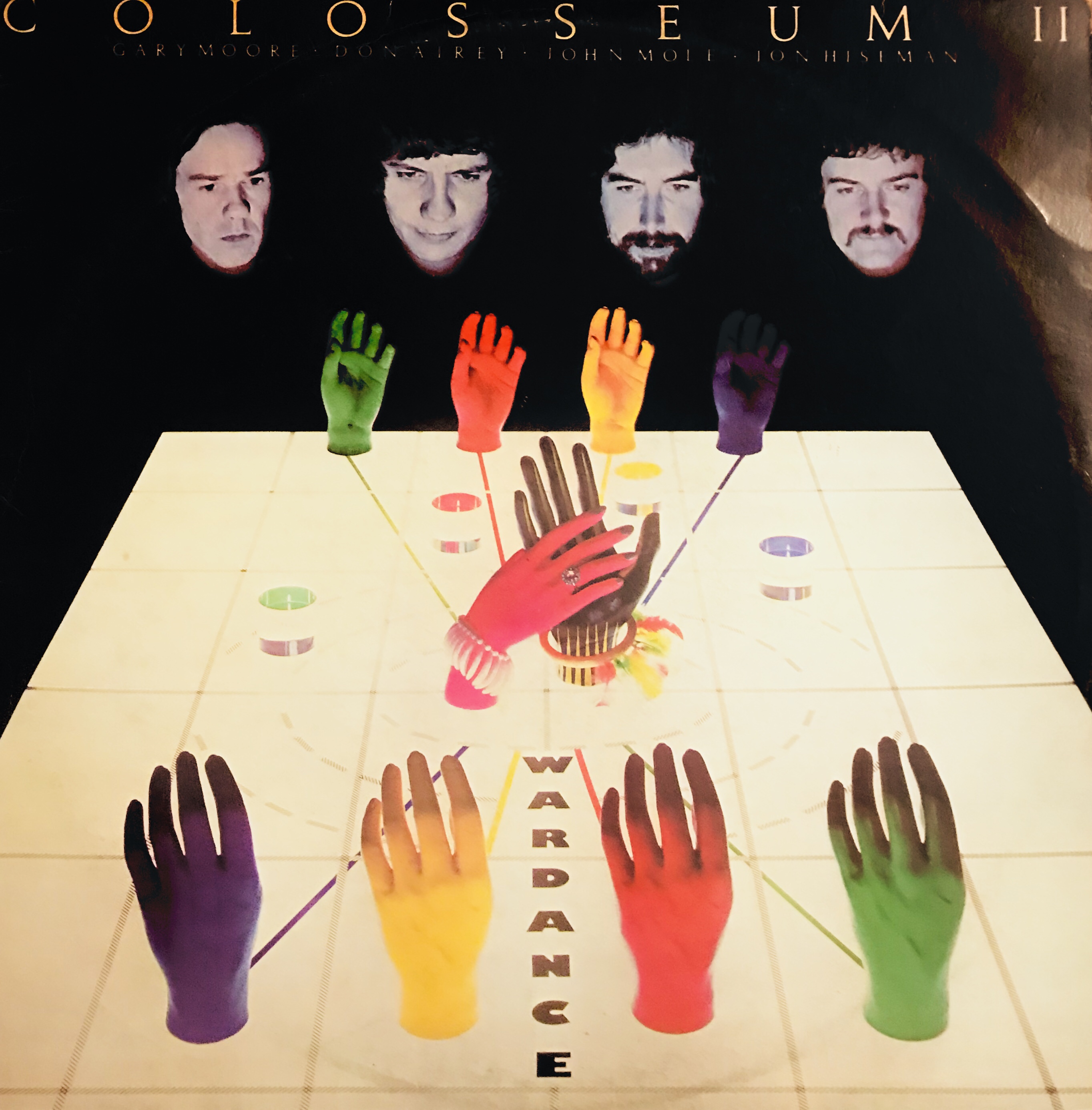
In case you are not aware, Gary Moore is on guitars and vocals, Don Airey is on all things piano related, John Mole is on drums and John Hiseman on drums. It’s basically all instrumental except for one forgettable vocal track.

My favourites are “Wardance” which is one of those gladiatorial tunes, ready to inspire you to gear up and go to war.

“Inquisition” is like an Al DiMeola track and I love it. Gary Moore really shreds on this on both electric and acoustic. And at 6 minutes long, I wasn’t bored.

And the closer.

“Last Exit”. The guitar solo from Gary Moore is one of my favourites of his.

Colosseum II – Electric Savage

Album number 2, which came out earlier in the year. Not sure how acceptable the album cover would be today, a semi nude dark skinned lady with fluro lights shining on her body, especially on her breasts and the words “Electric Savage”.

Check out “The Scorch” which has a pulsing bass from John Mole and Don Airey shredding away for the first 2 minutes and then its Moore’s time. The drumming from John Hiseman is busy, more jazz improv but it all works. At the end of the 6 minutes I’m still blown away that this is Gary Moore.

“Lament” has this doom feel with bells, a slow bass and a drum beat so simple. But when Gary Moore starts playing it sounds like an Irish folk ballad. Its moving and heartfelt.

“Am I” is my favourite. The way it starts, with that bass groove and those quite drums, with Moore and Airey playing these little two note melodic arpeggios over it. It’s perfect, its haunting and its memorable. Then Moore lets lose. Bringing in some Mixolydian Blues into the mix.

The closer “Intergalactic Strut” is one of those hard rock jazz fusion gems. Just listen to it and you will know what I mean. And remember, its Gary Moore playing like this, a mixture of art rock, progressive rock and whatever else he had in his arsenal.

Well that’s a wrap for Part 7. We move back to 2000 for Part 8.
Standard
Classic Songs to Be Discovered, Derivative Works, Influenced, Music, My Stories, Unsung Heroes

The Record Vault – Concrete Blonde

“Joey” went to Number 1 in Australia and suddenly Concrete Blonde was talked about as an overnight sensation by the press.

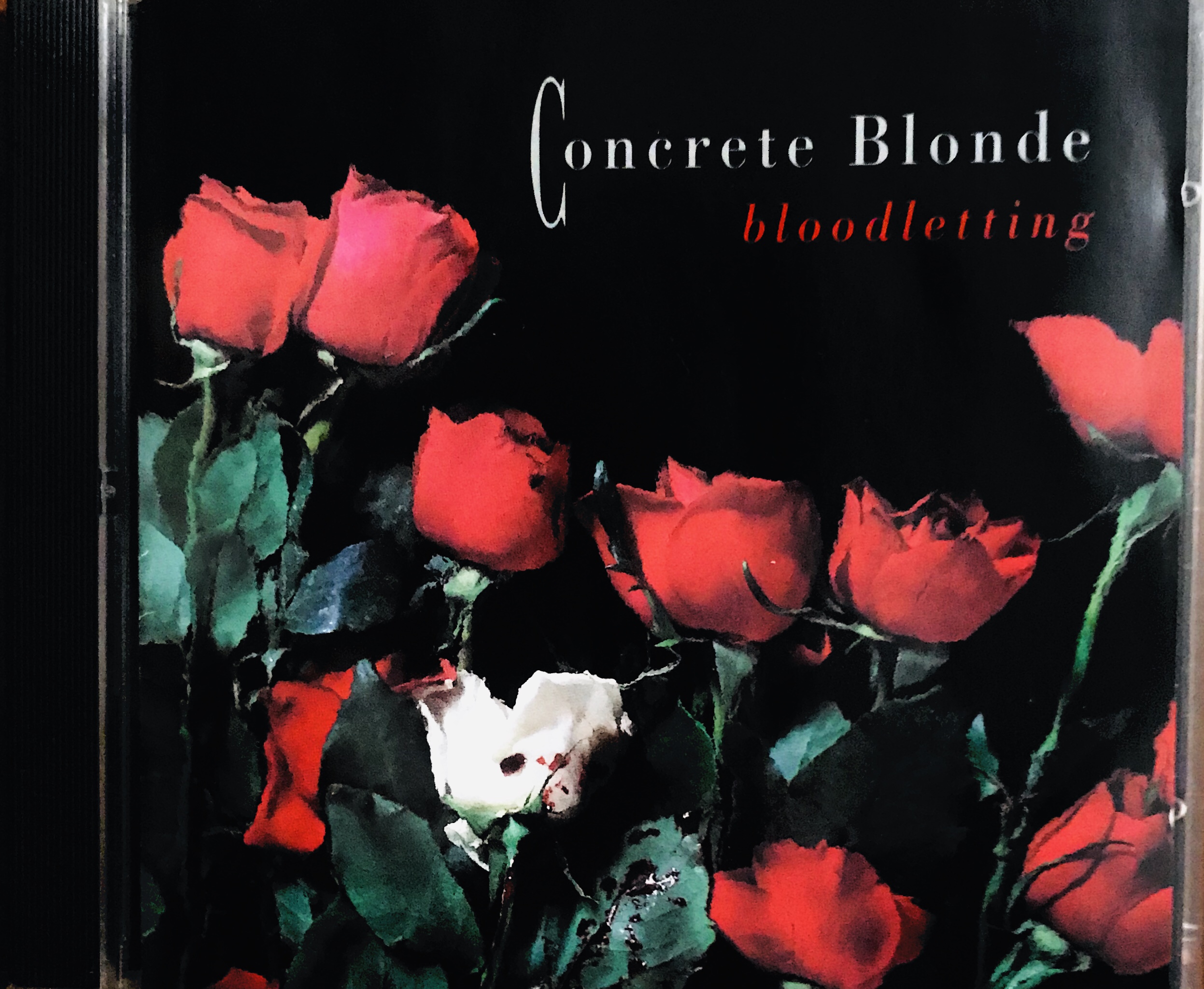
But “Bloodletting” is the third studio album, released in 1990. In Australia it charted pretty good and was certified gold. And Johnette Napolitano got the chance to show the world what a brilliant songwriter she is.

Produced by hard rock and NWOBHM producer Chris Tsangarides. Interesting choice.

“Bloodletting (the Vampire song)” opens the album. At 6 minutes long, you get the feeling that Concrete Blonde didn’t have any ambitions to write big hits, just songs to make up an album. Anne Rice and her Vampire Chronicles of Lestat did big business in the books box office, so it’s no surprise to see songs about em.

And “Bloodletting” has that chromatic “you are been followed” feel in the riff. “Caroline” is almost six minutes as well, as it jams out the ending with a new wave rock style vocal.

But “Joey” is the star here. It’s so memorable and it has that “Stand By Me” C-Am-F-G progression (in a different key) which brings to the listeners, a sense of familiarity.

And we like the familiar. It’s the reason why AC/DC has had a career for almost 50 years.

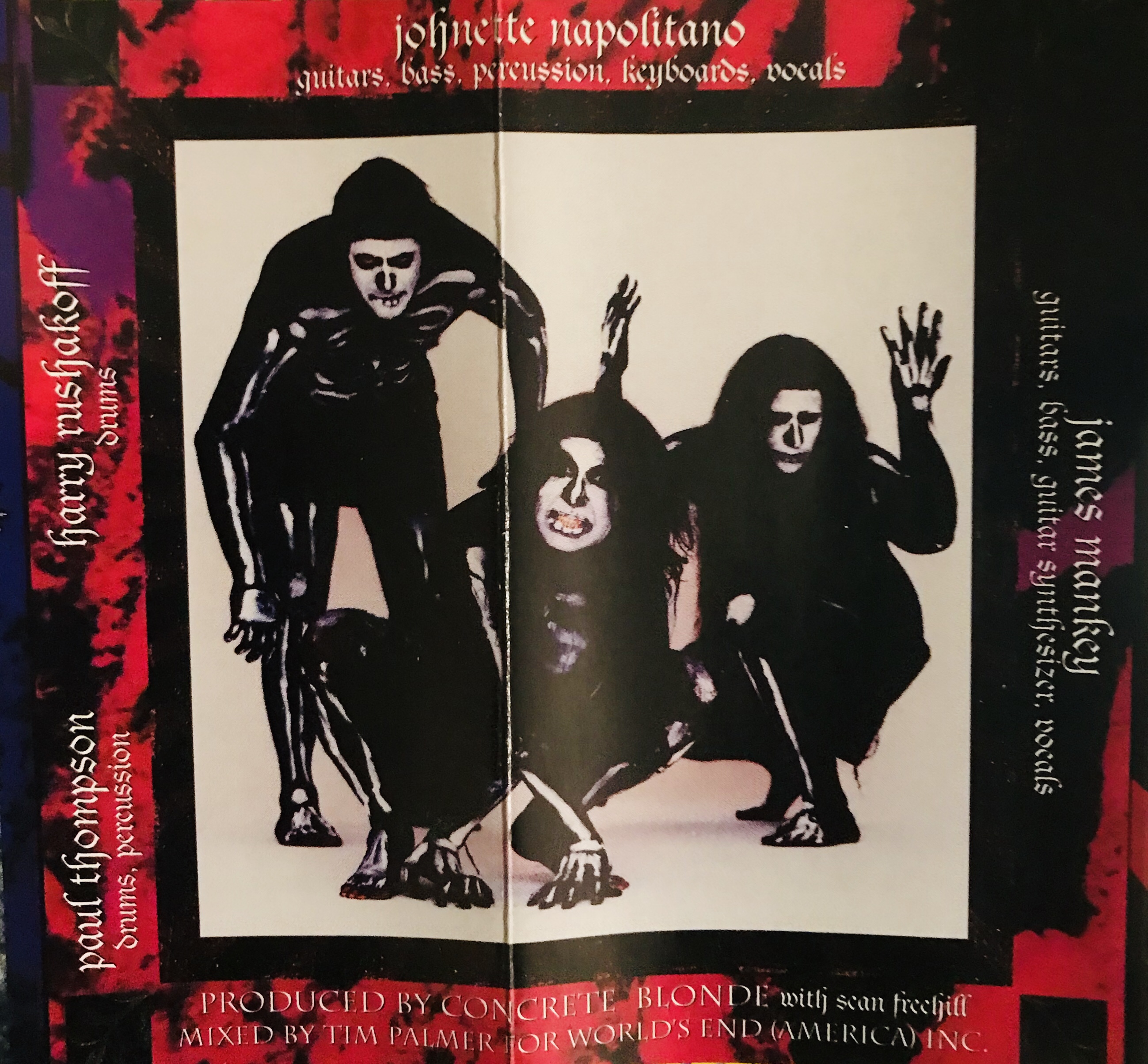
Napolitano on vocals and bass guitar cemented her status as a producer and songwriter, while James Mankey on guitars showed a different style of guitar decorating and Paul Thompson holds down the drums.

“Bloodletting” started a five year period, that includes “Walking in London” released in 1992 and “Mexican Moon” released in 1993 and its these albums that gave the band a chance for a few victory laps later on.

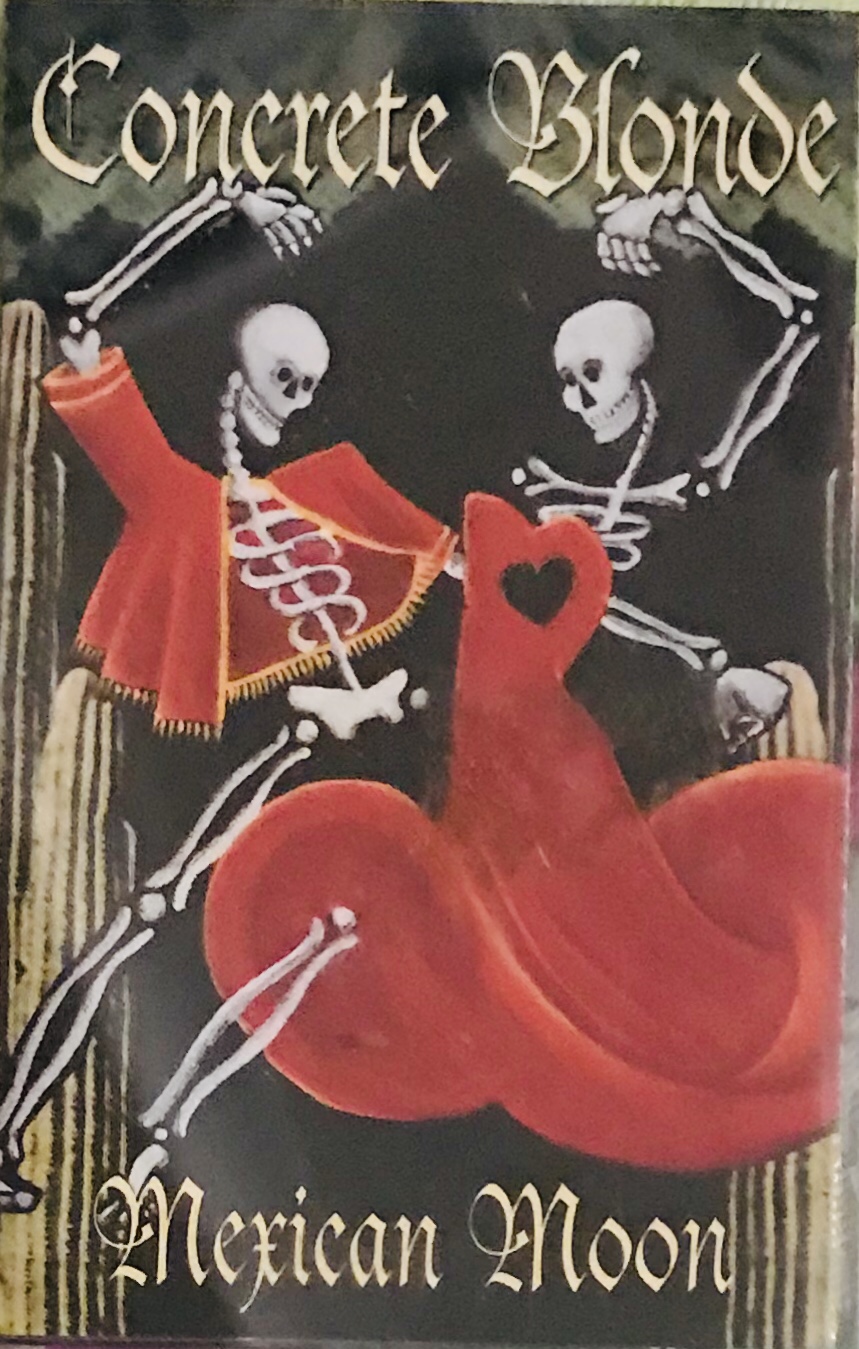
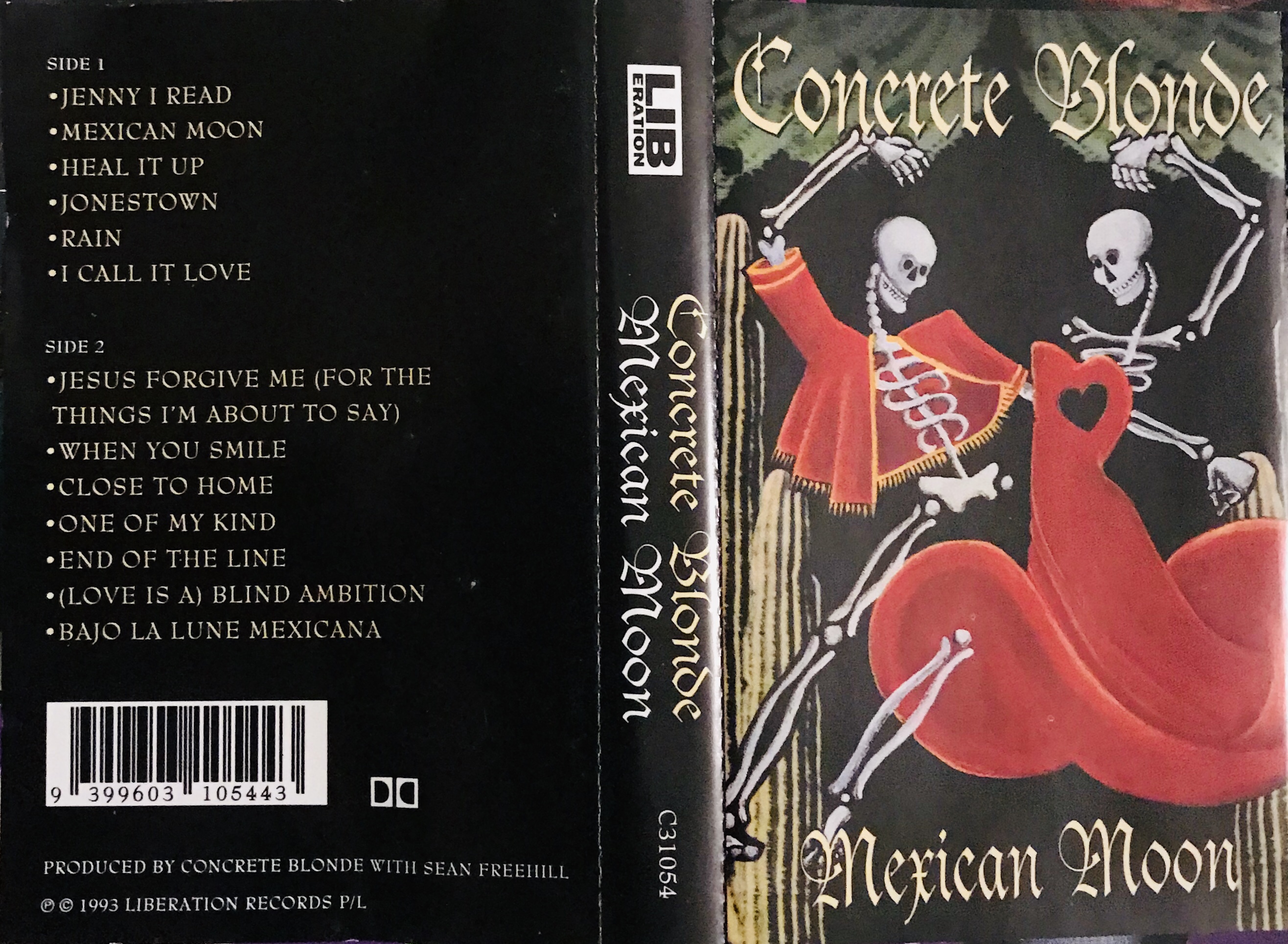
I didn’t get “Walking In London” and then I heard the intro to “Heal It Up” on radio and I purchased “Mexican Moon”.

The groove is fantastic, the vocal line of Napolitano is infectious and the music so memorable. And how simple is the guitar lead, but so effective.

And the album is more hard rock than the previous ones.

It irks me how it’s not on Spotify as it’s my favourite album.

I pressed play on the cassette and I was greeted by the haunting arpeggios of “Jenny I Read” and this drum and bass groove which allows Napolitano to deliver an awesome vocal melody while guitarist James Mankey decorates it so nicely with volume swell riffs and melodic motifs and backward guitar effects.

“Mexican Moon” has Napolitano singing about a failed romance and fleeing into Mexico. The strummed acoustic guitar, the guitar melodic decorations, the bass and drum groove and the vocal melody all come together into a catchy song.

The intro/verse riff for “Rain” is hypnotic. The the vocal melody from Napolitano is excellent and the lead break is simple but so effective.

Then you have the hard driving and funky “Jesus Forgive Me (For The Things I’m About To Say)” which is similar to what In This Moment sounds like on the last few albums.

And “Mexican Moon” still did good business in Australia, but not as good as the previous two. Feeling the pressures to repeat past successes from the label, Napolitano broke the band up.

I never heard from them again, although Wikipedia tells me that the band got back together, did a few more albums, broke up again and got back together again.

Standard
Classic Songs to Be Discovered, Derivative Works, Influenced, Music, My Stories, Unsung Heroes

The Record Vault – Gilby Clarke

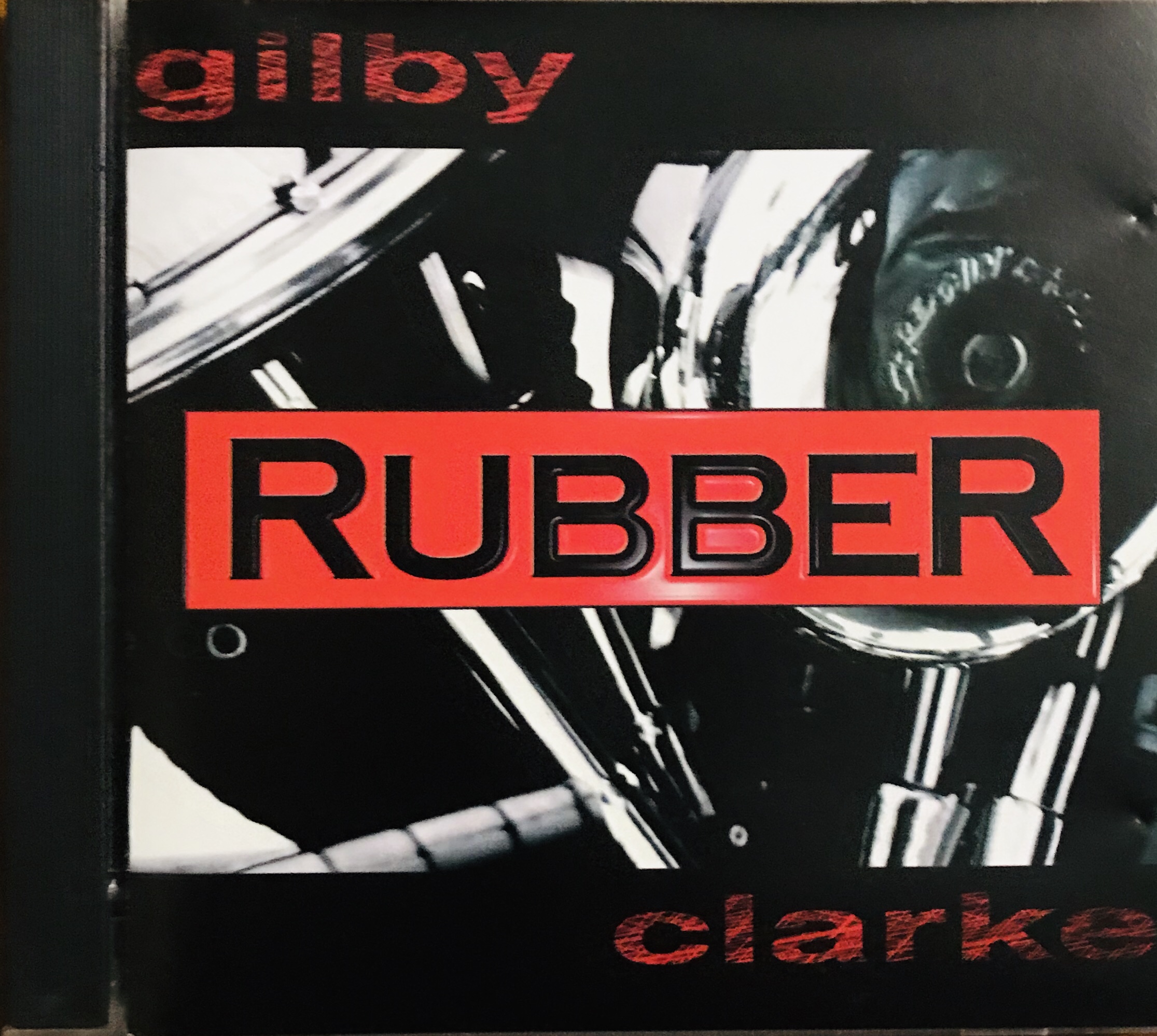
Rubber was released in 1998.

I don’t know what I was expecting with this. I just assumed that since he was in Guns N Roses, he could write songs as well. And I didn’t get this album expecting to hear Guns N Roses like tunes, as I knew that Clarke was in a Black Crowes style band before Gunners.

And when I saw that this album clocked in at 36 minutes, especially in the CD age I was like “okay, what’s this”. Nice and fast, wham bam.

I couldn’t remember any of the songs at all.

When I saw “Kilroy Was Here” as a title I remembered Styx, but nothing from the Gilby Clarke version. It always comes back to the argument that one sale equals a fan. It doesn’t. I purchased this album, heard it a few times and never listened to it again until 22 years later.

So I pressed play to reacquaint myself with the album.

The sound reminds me of old time rock and roll mixed with all the sounds that became popular in the 90’s. Like a little bit of Seattle, and a little bit of Manchester. Second track “The Haunting” is a great example of this. It has this great solo section with a lot of fuzzed out guitar over an acoustic guitar riff that reminds me of Bad Company.

“Kilroy Was Here” kicks off the album. It has a dissonant verse but a melodic chorus.

“I’m selling you, what you sold me”

In other words, give me crap and crap will be returned. More so when I was younger. As I got older, it became easy to just delete the persons number and move on. I’m not interested in a spade for a spade anymore. It never solved anything in the first place, because it didn’t matter how many facts or truth i would have on my side, the argument could never be won.

“The Hell’s Angels” sounds sleazy and is classic Gunners, and the most heaviest track on the album. “Saturday Disaster” continues the heavy and sleazy grooves.

And how good is the riff to kick off “Technicolour Stars”?

Vocally, Clarke is okay. More pop punkish in his style and delivery.

Overall, it’s a nice listen but once it goes back onto the shelve, that would be it for the album, plus it’s not on Spotify Australia, so I can’t even add the songs I like to a playlist to have em circulating.

Standard
Classic Songs to Be Discovered, Derivative Works, Influenced, Music, My Stories

Rise To It

31 years old.

Man time goes by.

“Hot In The Shade” now has a full time job, a drinking problem and is paying taxes to keep the economy going. Plus it’s got a woody problem.

Read on.

I purchased it from a store called Brashs. It specialised in sound systems and then it started to bring in musical product.

It had a decent metal and rock section but I felt that everything was way overpriced and hardly any discounts.

Then again, the price was pre-determined by the labels but who knew that kind of stuff back then. But it was the only store that had “Hot In The Shade”. So I purchased it for $20.

$20 back in 1989 is worth about $42 today with inflation added on. Which is about the price of Vinyl these days on average.

Anyway, I’ve been on a Bob Halligan Jr kick lately and he co-wrote two tracks here. “Rise To It” and “Read My Body”.

And this era of Kiss has its critics but it’s Bruce Kulick’s finest moments. His guitar work on “Crazy Nights” and “Hot In The Shade” is very underrated.

And Kulick really rose to it here and delivered a great solo.

“Rise To It” opens up with some slide guitar and a Mississippi Delta blues feel. But once the distorted guitars kick in, it’s melodic rock all the way.

But.

Listen to the riff in the Chorus.

It’s ZZ Top like. Think “Sharp Dressed Man”.

Lyrically, it’s typical Kiss, talking about hard ons or wood. Like when Paul sings “When you’re lying next to me, baby, I can guarantee, I’m gonna rise to it” he’s not talking about waking up in the morning.

And that got me thinking about ZZ Top and there song, “Woke Up With Wood”.

The lyrics, “when I woke up this morning, I was feeling mighty good, my baby understood had to do what she should, laying near a pile of wood”.

“God damn good times” is what I say. I’ve been in those morning wood situations a lot of times.

Suddenly I’m listening to “Sport’n A Woody” from Dangerous Toys. “Sport’n a woody, when you’re titties fly” and how they wish the lady was sedated so they penetrate her.

Then Ace Frehley comes to mind and how his baby is on her knees and she’s begging please for a ride on his rocket.

Ahhh, rock and roll music.

It never took it self seriously and it allowed us all to have a laugh and a good time.

I’m gonna raise my glass to Rock And Roll.

Oh wait, that’s another Kiss song. For a different time.

Standard
A to Z of Making It, Copyright, Influenced, Music, My Stories, Stupidity, Treating Fans Like Shit

Theater Of Copyright

It looks like the “Stairway To Heaven” case going to die?

For those that don’t know, Michael Skidmore (from here on in, known as “The Trustee”), is the trustee for the Randy Craig Wolfe Trust, which has the rights to the songs written by Randy Wolfe and his time in the rock band Spirit. The song in question here is “Taurus” and the similar feel and structure that both songs have.

My view on this is easy, a dead artist cannot hold a copyright and the law which changed copyright terms to last the life of the artist plus 70 years after death is a stupid one.

Because this is the rubbish you get. But Jimmy Page didn’t win because of the silliness of dead people holding copyrights.

Jimmy Page won because the sheet music is different. But “The Trustee” believes that the court should have been able to hear the sound recordings. But that rule allowing sound recordings came into place in the mid 70’s and the songs in dispute here are under old laws.

Anyway, the case got booted.

But for how long will “artists of the now” be taken to court over copying claims from the trustees or heirs of dead artists. Institutions cannot charge fees to the dead, so how can the dead claim a copyright and be paid for it and whoever passed a rule to allow copyright to be transferred to others has committed a wrong to the public domain.

Did you see that Universal Music Group announced a $1.2B Hotel, Performance Venue and Casino in Mississippi? It’s also going to do a similar venture in Atlanta and Orlando.

You see, this is what happens when artists give away all of their rights to the labels. It gave the labels power. They used that power to lock up culture for the life of the artist plus 70 years after the death.

But David Crosby still tells everyone streaming is the enemy. Gene Simmons as well. The enemy to an artist is ignorance and a fixed mindset. There is a lot of money in recorded music. As long as you hold the copyright to the recorded music.

Otherwise why would companies spend a lot of money buying the copyrights to popular songs. The return on these songs because of streaming payments is always going up, while stocks on Wall Street go down.

And look no further than Frontiers Records from Italy. They are releasing a lot of product compared to other labels because their President knows that music scales and will keep paying forever.

And the Labels, they are pieces of work. It’s a power play. You know how artists are trying to reclaim their copyrights back from the labels after 35 years, which is legislated in Copyright Law, but the labels are fighting hard to keep the rights. So while those court cases are ongoing, the labels are now counter suing the artists for selling their own albums on their websites or for using the album art on their websites.

So the artist make the labels rich and somehow the artists are the problem.

And Copyright keeps getting very ugly because artists sue each other.

You see an idea is an idea. I could have an idea for a song here in Australia, and there is a very high probability that other people would have a similar idea, somewhere else in the world. And when one song becomes a hit, then expect a writ, because even though ideas are not copyrightable, there is also someone who believes they are.

But.

And there is always a but when it comes to Copyright.

If there isn’t a court case for similar ideas, then there are cases over licensing, samples and whatever else lawyers can fit into the grey world which is Copyright.

Not sure if you have seen the stories about Tracy Chapman suing Nicki Minaj over a sample from Chapman’s song “Baby Can I Hold You” which appears on an unreleased track from Minaj called “Sorry”.

The song “Sorry” was pulled from the album’s release because the label couldn’t get clearance to use the sample. Minaj even begged Chapman over Twitter to approve it, but Chapman is anti-samples.

And even though the song was pulled, it still didn’t stop the song from getting played on radio stations and once the song was aired, the fans quickly ripped it from the broadcast and sent it out onto the worldwide web.

Hence the court case. Chapman wants payments and Minaj says there are none.

And the arguments have all gone off track and no one really knows what the hell they are arguing and counter arguing over. Anyway, Minaj won the case.

And labels just keep doing wrong on behalf of the artists. Here you have a label called Trax Records who specialise in dance and house recordings being accused of fraudently filing sound recordings to the U.S Copyright Office of other artists and claiming the recordings as their own.

Sony Music is also doing everything it can to keep as much money from old artists in the Sony bank account. Sony paid $12.7 million to settle a case and is allowed to deny any wrongdoing. It’s amazing what $12 million buys. The fact that these old songs are still under copyright, long after the artist has passed away is an issue for me.

I guess Copyright just lives on and on and on and the courts are kept busy with cases and the labels keep ripping creators off, while they invest in start-ups, make billions and then build casinos.

All in the name of Copyright.

Standard
Classic Songs to Be Discovered, Derivative Works, Influenced, Music, My Stories, Unsung Heroes

The Record Vault – Colosseum II

I saw this at a record fair in the 90’s and as soon as I saw the name Gary Moore attached to it, well it was a straight up grab.

Released in 1977, when Punk was starting to rule the airwaves around the world.

Gary Moore is on guitars and vocals, Don Airey is on all things Moog and Organ related, John Mole is on drums and John Hiseman on drums. It’s important that this project is not confused with Colosseum which was more of a jazz band whereas Colosseum II is more progressive rock. Same drummer in both bands.

And hearing this album, I was blown away at how many different career paths Gary Moore has had/tried. A true virtuoso.

Hard Rock. Tick. Blues Rock. Tick. Blues. Tick. Jazz. Tick. Progressive Rock. Tick. Acoustic Spanish Flamenco. Tick. Heavy Metal. Tick. Folk Rock. Tick.

It’s the third album of Colosseum II and it’s all instrumental apart from the terrible “Castles” which is a vocal track.

“Wardance” has a 2 minute introduction which sounds like it came from an ELP or Yes album. I was putting my armour on, swording up and ready to go to war. I swear I heard something similar on “Ben Hur”.

Don Airey can really play that Moog/Organ whereas in the hard rock setting he was just adding flavours to the songs. Here, he is a lead instrument.

“Major Keys” is a funk jazz jam, very similar to the stuff that Yes put out on their first three albums.

“Put It This Way” has a lot of interplay between Moore and Airey and a lot of chromatic like riffs, with fast blues grooves.

“Fighting Talk” is like a 12 bar blues shuffle, sped up. And Airey really shines on this with his Moog leads while Moore counters with his growling Gibson.

“Inquisition” is like an Al DiMeola track and I love it. Gary Moore really shreds on this on both the electric and acoustic.

And at 6 minutes long, I wasn’t bored.

At its centerpiece is a mood that evokes the metal, dungeons, dragons, doom and exotic scales that Malmsteen would bring forth on the first four “Rising Force” albums.

The spacey trilogy of “Star Maiden/Mysterioso/Quasar” has this guitar piece in “Mysterioso” that I call the Rush section but it happened before Rush did it.

And the band knew that this was their last album, so they got out with a bang on “Last Exit”. It starts off slowly as it percolates. Credit to bassist Jon Mole for laying down a solid foundation and Airey this time around is more in support.

And then Moore starts soloing.

It is so emotive and heartfelt, the hairs rise up on the back of my neck.

And he’s gone as well.

Taken from us and we will never hear another new note from him.

For fans of Moore’s hard rock career, this song is essential listening.

Essential. Okay.

In other words, Gary Moore really shines here.

Standard
Classic Songs to Be Discovered, Derivative Works, Influenced, Music, Unsung Heroes

1985 – Part 7

All of these album I came across much later than 1985. Some even well into the 2000’s and courtesy of torrents.

Armored Saint – Delirious Nomad

I never got into em at the time nor did anyone I hanged with, talk about em. But the 2000’s gave me access to their music and man, there is a lot of good stuff on their albums.

Like “Nervous Man” on this album. The riff would have subconsciously inspired Hetfield for “Cyanide”. “For The Sake Of Heaviness” sounds like a Dokken cut without the melodic vocals. “Aftermath” sounds like a cut that Crimson Glory would write in a year’s time. Then again Evergrey’s first album had cuts like this.

Saxon – Innocence Is No Excuse

Saxon are one of my favourite acts. A lot of fans hated the albums on the EMI label, but it’s those albums that made me a fan. The switch from Carrere was going to happen eventually as the band wasn’t getting their royalty cut.

“Rockin’ Again” feels like a Def Leppard cut. I was hooked as soon as the clean tone arpeggios started. “Call Of The Wild” starts off with a classic fast riff like the old albums, but once the verses kick in, its melodic metal baby.

“Devil Rides Out” has a verse vocal melody that is reminiscent of “Breaking The Chains” from Dokken. “Everybody Up” has a riff that reminds me of the one riff to rule them all.

“Broken Heroes” has been a favourite for a while. “Give It Everything You Got” has that LA Sunset Strip vibe that a band from Pasadena brought to prominence.

And if you want to read a review that puts it nicely, head over to HMO.

Kix – Midnite Dynamite

I love the “Sin City” feel to kick off “Midnite Dynamite”. And the pre-chorus is totally different, more in the vein of Def Leppard with open string arpeggios and a melodic rock hook. Then the Chorus moves into a Judas Priest like riff. And that my friends, is why Kix became a band I like.

Main songwriter Donnie Purnell had a unique way of blending a lot of different influences into a cohesive hard rock track. On this album, he teamed up with Bob Halligan Jr for 7 tracks. The title track being one of em. And if you don’t know who Bob Halligan Jr is, then you’ve never listened to Kiss, Helix, Judas Priest, Bonfire or Icon.

Then there is “Bang Bang (Balls Of Fire) which has Kip Winger contributing a song writing credit with Purnell and Halligan Jr. It’s melodic rock.

“Walkin’ Away” is a synth heavy ballad with a great arena rock chorus. It could appear on a Duran Duran album and not be out of place. “Scarlet Fever” is the embryo to “Blow My Fuse”.

And 3 years later, Kix would really hit the top with the excellent “Blow My Fuse”. But that’s for a different year in review.

Icon – Night Of The Crime

Eddie Kramer produced it. Ron Nevison mixed it. Mike Clink assisted the mix.

Capitol Records spared no expense in making sure this album had everything it could have to make it. Bob Halligan Jr song writing contributions are all over it. Six of the songs are either written or co-written by him.

It’s melodic rock. Like all of the current Frontiers artists. Kerrang readers voted this album number 3 in an AOR list. Only “Journey –Escape” and “Michael Bolton – Everybody’s Crazy” were in front.

Unfortunately Capitol had no idea how to market the band.

Well they had no idea either, as the album brings to mind Judas Priest, Def Leppard, Dokken, Night Ranger, Europe, Coney Hatch and Y & T.

The first two Halligan Jr cuts “Naked Eyes” and “Missing” establish that his album is going to be an AOR behemoth.

A favourite is “Danger Calling” at track three, a cut written by Halligan Jr and Icon guitarist Dan Wexler. This song could have appeared on a Judas Priest album and not be out of place. And the AOR rock continues with the Wexler and Stephen Clifford cut, “(Take Another) Shot At My Heart”.

“Out For Blood” is written by Wexler and co-guitarist John Aquilino. It has a two minute and ten seconds “acoustic guitar/electric guitar solo” moment like those Shrapnel Records. Then the song begins.

But the best song is “Raise The Hammer”. It’s written by Halligan Jr. The intro/verse riff is one of the best Judas Priest riffs that Tipton and Downing didn’t write. Then that Chorus. You’ll be singing it. Bonfire took this melodic metal style and sound and ran with it a few years later.

The keyboard led “Frozen Tears” (another Halligan Jr cut) reminds me of Toto.

“The Whites of Their Eyes” has this Lynch meets Scorpions style riff, which a band like Leatherwolf would take and run with a few years later. “Hungry for Love” is your typical “Fallen Angel” lyrical theme with a catchy chorus and metal verse riff.

“Rock My Radio” closes the album. It’s got some decent guitar work, a driving beat and a derivative but catchy, harmony chorus you will like.

Phenomena – Phenomena

This project was awesome. Formed by record producer Tom Galley and his brother, Mel Galley fresh from a stint with Whitesnake.

It’s another melodic AOR rock classic and it’s a who’s who of artist on the tracks.

The first track, “Kiss Of Fire” is written by Richard Bailey (the keyboardist from Magnum) and Tom Galley. It has Glenn Hughes on vocals, Cozy Powell on drums, Neil Murray on bass, Richard Bailey on keyboards and John Thomas (from Budgie) on guitar. And it’s a great melodic rock song to start the way.

“Still The Night” is from the Thrall/Hughes project (written by Pat Thrall and Paul Delph) from a few years before and again, it has Glenn Hughes on vocals, Ted McKenna (MSG) on drums and John Thomas/Mel Galley on guitars with Robin Smith (songwriter and studio muso on various sessions) on the keys. This song is a favourite.

“Dance With The Devil” is written by Richard Bailey, Mel Galley and Tom Galley. Glenn Hughes wails away on vocals, while the band is rounded out by Cozy Powell on drums, Neil Murray on bass, Richard Bailey on keyboards and John Thomas/Mel Galley on guitar. There is a mean fiddle melodic riff which sounds like Kansas.

“Phoenix Rising” is written by Bailey and the Galley brothers. The band this time around is Hughes on vocals, Powell on drums, Murray on bass, Mel Galley on guitar and Bailey on keyboards.

I love the way this starts off with a clean tone guitar playing arpeggios and keys adding effects. It sounds like a soundtrack to a Christopher Nolan movie.

“Who’s Watching You” is written by Tom Galley and Mel Galley. It has McKenna on drums, Galley on guitar, Don Airey on keyboards, Glenn Hughes on bass and vocals. As soon as the riff kicks in, I’m all in.

“Hell On Wings” is written by the Galley brothers with Bailey. The band is Murray on bass, Powell on drums, Galley on guitar, Bailey on keys and Hughes on vocals. It’s got this harmony lead in the start that screams Thin Lizzy.

“Twilight Zone” is written by Bailey and Tom Galley. The band is Murray on bass, Powell on drums, Thomas and Galley on guitars, Bailey on keys and the mighty Hughes on vocals. The intro lead hooks me, the verses lose me, the Chorus loses me, but the music keeps me interested.

Helix – Long Way To Heaven

Helix are severely under-represented on Spotify. This album is not on it. But YouTube has it.

It’s on Capitol Records, the same Capitol that had Icon and Bob Halligan Jr working together and the same Capitol that had a reputation as a label which didn’t really know how to promote their metal and rock acts.

“The Kids Are All Shakin” could have appeared on an Autograph album. It’s a perfect major key radio rock anthem.

Mr Bob Halligan Jr makes an appearance again in the song writing department, with “Deep Cuts The Knife” a co-write with Paul Hackman and “Ride The Rocket” a co-write with Brian Vollmer. I should have called this post the Bob Halligan Jr post.

As soon as the arpeggios kick off “Deep Cuts The Knife” I was hooked. Then the vocal melody started and I was all in. This song is a perfect piece of melodic rock.

The intro to “House Of Fire” is brilliant. Then the fire bell starts ringing, the riffs kick in and it’s time to rock and roll. Hackman and Vollmer wrote a classic here. “Christine” is typical of 1985. So many songs had the similar major key riff. “Turn On The Radio” comes to mind immediately and I’m all in because of the similarity and familiarity.

How good does “Without You (Jasmine’s Song)” start off?

It’s a perfect AOR track and that Chorus remains me with long after the song is finished.

Well that’s a wrap for another 85 post, so off to 1977 for part 7.

Standard
Classic Songs to Be Discovered, Derivative Works, Influenced, Music, My Stories

Less Talked About EVH Songs – Part 3

The “Best Of, Volume 1” was released in 1996.

It had three new tracks in “Humans Being”, “Can’t Get This Stuff No More” and “Me Wise Magic”.

Well “Humans Being” wasn’t a new track but if you didn’t have the Twister movie soundtrack from the same year, then you didn’t have the song.

“Humans Being” has an interesting conception but there’s no denying that from divisiveness between band members, a decent song can come out of it. Just ask the Dokken guys.

The intro riff grabs me immediately and when it is played distorted you get a sense of the anger.

That solo.

How much bend can EVH get from those strings?

And there’s a crappy 3 minute version doing the rounds which should be deleted because you can’t edit a VH song, even the unrestrained VH3 songs.

A demo called “Backdoor Shuffle” from the “Balance” sessions provided the foundation for “Can’t Get This Stuff No More”. And it’s got a lot of EVH’s unique guitar decorating, over basic chord progressions plus I like the 12/8 timing which gives the song its shuffle feel.

You can hear in the three tracks on this compilation, the embryo of VH3. Each song is over the 5 minute mark. I guess there was no negotiating from EVH on editing here.

“Me Wise Magic” became a US hit for the band. The intro riff has the ringing open E and open B notes over changing power chords. It’s catchy, like Alex Lifeson catchy and enough to get me interested.

“Do you believe?”

Yes I do believe.

Van Halen “III” is the black sheep of the VH family.

But there’s no denying the riffs on the album.

Check out “One I Want”. It’s classic EVH from the Hagar era.

The intro riffage for “From Afar”. Its hooky and addictive. The sexy groove from “Dirty Water Dog” in the intro. And in the verses it’s like “Finish What Ya Started”.

“Once” sounds like a song from a Stan Bush soundtrack. Remember him. “The Touch” from Transformers comes to mind. “Fire In The Hole” is EVH paying homage to his AC/DC influences.

But my favourite is “Year to the Day”.

As soon as the finger picked intro starts I’m hooked. It’s a mixture of classical, jazz and blues. A perfect fusion made to sound so pleasant by the mastery of EVH.

And that Chorus hook!

There’s no way you can listen to it and not be moved.

That solo is one of my favorites because it’s really just EVH and AVH jamming as Michael Anthony was restricted to playing bass on three tracks. And when the outro solo kicks in, I’m not complaining at all.

VH3 is the type of album an artist writes as they get older. It’s almost experimental fusion within a hard rock context.

The “Best of Both Worlds” compilation was released in 2004 and it had three new tracks with Sammy Hagar on vocals.

“It’s About Time”, “Up for Breakfast” and “Learning to See”.

The intro riff to “Its About Time” had me all in. “Up For Breakfast” starts off with that same synth tone that “Why Can’t This Be Love” used. And although Sammys lyrics don’t connect with me, the riffs did.

“Learning To See” has a Chorus riff which makes me pick up the guitar and play it. Plus that heavy ending.

And there was a break. Then DLR returned. The end result was “A Different Kind of Truth”, an album made up of reworked old riffs, some new riffs and melodies with new lyrics chucked in. It’s an album I didn’t really appreciate at the time.

“Tattoo” has that sexy groove that EVH is known for. And DLR has Elvis on his elbow, who talks when his elbow moves.

“She’s the Woman” is WVH turn to shine. That bass is rumbling and grooving.

“Chinatown” is a modern day “Get Up”.

That solo on “Blood And Fire”.

It’s burning and melodic and knowing that EVH is gone, it’s sad to know that I’ll never hear that kind of creative fury again.

“As Is” and that tapped solo which reminds me of “Flying High Again”.

And the “Gates Of Babylon” screams out at me when “Honeysweetiedoll” begins, but EVH is unique in his phrasing and improvisation to make it unique and DLR is just unique.

Standard
Classic Songs to Be Discovered, Derivative Works, Influenced, Music, My Stories, Unsung Heroes

2000 – Part 7

Dokken – Live From The Sun

So George Lynch was out again after the disastrous “Shadowlife” album and whatever stuff Lynch was smoking at the time, fertilized with the terrible hip hop album from Lynch Mob called “Smoke This” in 99, while Dokken regrouped with Reb Beach from Winger on guitar and released the excellent hard rock album, “Erase The Slate”.

“Live From The Sun” is a perfect capture of the Reb Beach era of Dokken and the excellent return to form album “Erase The Slate” from Dokken.

So no surprises here as the concert kicks off with “Erase The Slate”, a fast rocker with a brilliant lead break from Mr Beach himself.

Is it just me hearing “Race The Snake” instead of “Erase The Slate”?

Fake crowd noise then chimes in, as Reb Beach moves effortlessly into “Kiss Of Death” and it’s a one-two knock out combo.

That’s all followed with “The Hunter” and “Into The Fire” before “Madhatter” is played from the “Erase The Slate” album and so far it’s a pretty stellar set list.

But it gets better.

“Too High To Fly” is up next from the underrated “Dysfunctional” album, followed by some Lynch era classics in “Breaking The Chains”, “Alone Again”, “It’s Not Love”, “Tooth And Nail” and “In My Dreams”.

Don Dokken still cared about how he sung live during this period, and he’s pushing himself. On some songs, he’s struggling like “Breaking The Chains” but hey, his jeans needed to be tighter to pull off the highs he did back in 83.

And if he struggled, the backing vocals of Brown and Pilson gave him enough cover. And Reb Beach remained faithful to the Lynch classic solos with some improvisation here and there.

And I wanted to hear the Mark II line-up of Don Dokken on vocals, Reb Beach on guitar, Jeff Pilson on bass and Mick Brown on drums make new music again, but it didn’t happen.

Matchbox Twenty – Mad Season

This band really filled a hard rock void for me with the album “Yourself Or Someone Like You” released in 1996. Then Rob Thomas did “Smooth” with Santana and it was a smash everywhere. And so was Rob Thomas.

Then in 2000, four years after the debut was released, they dropped “Mad Season” and I was like, what happened to the hard rock on it. There’s still distorted guitars and a rock feel, but its more experimental. Which I also like as well.

And it went straight to number 1 in Australia.

Of course it’s got enough songs on it to satiate the fans of the debut with “If You’re Gone”, but “Rest Stop” is a lot better and more or less forgotten.

And “Bent” is grossly underrated.

As well as “Leave”, which is one of those pop style ballads that percolates and you feel like its gonna explode but it doesn’t, but the guitars keep getting layered and Rob Thomas keeps it going with a heartfelt vocal. And that passion continues with the closer, “You Won’t Be Mine”.

But there wasn’t enough on this album to keep me interested and I fell off the Matchbox Twenty train.

Alice Cooper – Brutal Planet

I really liked “The Last Temptation”. But that album came out in 1994 and I was like, when is Alice Cooper going to release his next album.

Well that happened six years later with “Brutal Planet”.

Its Alice being brutally heavy.

I’m a fan when artists incorporate the sounds of what is current into their style and this album suited the menacing voice of Alice Cooper to a tee.

Songs like “Brutal Planet”, “Sanctuary”, “Pick Up The Bones” and “It’s The Little Things” keep the album interesting.

And the band for the recording is excellent. Eric Singer is pounding away on the drums, while Phil X (future Bon Jovi guitarist) and Ryan Roxie (who started working with Alice Cooper in 1996 and is still there assisting) are on guitars. Bob Marlette rounds out the band as rhythm guitarist, keyboardist, bass player and producer.

Listen to the industrial groove metal infused riff of “Brutal Planet” and then go to the punk grunge infused “Sanctuary” with its speed rock style riff. You’ll either be banging your head in glee and the “Poison” loving fans will be spitting in their cups in disgust. “Eat Some More” musically, could have come from a Black Sabbath album in the 70’s with its doom riff.

My favourite is “Pick Up The Bones” and the way it moves between the clean tone arpeggios to the arena rock Chorus all within the sounds and grooves of Industrial Metal, but it’s a hard rock song at its core.

VAST – Music For The People

VAST stands for Visual Audio Sensory Theatre.

The drummer from a band I was in shared the CD with me. The influence of world music instruments and chants from different people and religions reminded me of Led Zeppelin (Kashmir) and The Tea Party, so I was immediately interested.

And “Touched” was the song that really got me. It starts off with a strummed acoustic guitar and a Pink Floyd’ish like vocal. Then these Afghan like voices kick in and I’m all in, as the drums kick in and out and in again adding power and stillness to the song.

“Flames” is an acoustic guitar, a violin and some synth strings with a sombre vocal melody. “Temptation” sounds like it could have come from The Tea Party album.

“Three Doors” has that exotic middle eastern sound and “The Niles Edge” has Gregorian Chants with a percolating tribal hand drum and an melancholic acoustic riff.

“You” is the album closer and it has this TonePad lick that keeps repeating almost metronomically, with choir voices and a guitar riff. Its slow, its atmospheric and it’s a great closer.

I do recall another album afterwards and then nothing, but by looking at Spotify, there seems to have been quite a few albums. I guess it’s time to dig in and see what’s been happening. In between listening to Van Halen of course.

Well, I guess it’s time to go back to 1985 for its part 7.

Standard
Classic Songs to Be Discovered, Derivative Works, Influenced, Music, My Stories

Less Talked About EVH Songs – Part 2

“5150” achieved what “1984” couldn’t.

The Billboard Number 1 spot.

Actually all of the Sammy Hagar albums achieved what the David Lee Roth albums couldn’t.

Then again DLR needed to contend with Michael Jackson and “Thriller” and Adele with “21”. Two genre skipping albums that became cultural must haves.

And songs like “Why Can’t This Be Love”, “Best of Both Worlds”, “Dreams” and “Summer Nights” take up most of the press and listens but it’s tracks like “Good Enough” and “Get Up” which get me really interested.

And they are the least played live while “Inside” has never been performed live.

Check out the head banging riff on “Good Enough” after Sammy screams “Hello Baby” and then go to the speed rock of “Get Up”.

Coming into “OU812”, I wasn’t sold on “When It’s Love” and “Finish What Ya Started” but tracks like “Mine All Mine”, “Source Of Infection” and “A.F.U. (Naturally Wired)” definitely got me.

Especially “A.F.U. (Naturally Wired)”.

A.F.U kicks off with a groove funk beat while EVH does some guitar arpeggios. And then it really kicks in, with EVH playing a chromatic bluesy riff which then has some passing notes chucked in so EVH can transition to those verses.

And how good are those verses?

It’s like two different songs in a song as the Chorus riff and Verse riff are not meant to be together. But EVH makes em work.

Then there’s that metal riff in the section before the solo which makes me pick up the guitar to learn it.

And the solo, no overdubs or backing guitars, just drums, bass and EVH wailing away.

Then came “For Unlawful Carnal Knowledge” and a return to more distortion and an acoustic drum kit for AVH after his previous two albums electronic drum kit experiment.

“Right Now” was a song that EVH felt strongly about to finish on his own as the band members didn’t like it. “Top of the World” is a song that EVH dislikes but finished off because the band members liked it. And these two songs have appeared the most in their concert setlists with Hagar.

“Runaround” and “Poundcake” had radio and TV play as singles.

But it’s tracks like “Judgement Day” that got me head banging.

Just listen to that verse riff?

And that bluesy like solo!!

“The Dream Is Over” is another song with some good EVH riffage (and Sammy Hagar sings a catchy pop chorus) along with the funky “Spanked”.

And there was a break for a few years before “Balance” came out, which Sammy Hagar said was a difficult record to do but to me it has some bone crushing EVH riffs.

“The Seventh Seal” and “Don’t Tell Me (What Love Can Do)” crunch away, while “Amsterdam” and “Big Fat Money” bring the fun and “Can’t Stop Lovin’ You” brings the pop with “Feelin” and “Not Enough” rounding out the ballads.

But it’s “Aftershock” that got me really interested from the first listen. It has so much guitar in it, every section is inspiring to play but my favourite part of the song is the Bridge part.

Just listen to it.

And the Bad Company/Zeppelin III/Beatles influenced “Take Me Back” also got me interested.

For an album that both Hagar and EVH found difficult to do, the songs don’t show it.

The Cherone album, the songs on the Best off albums and the DLR return album are coming up next.

Standard