A to Z of Making It, Copyright, Music, My Stories, Piracy, Stupidity, Treating Fans Like Shit

The Labels Say Infringement Is The Issue. Maybe Not.

The labels still focus on infringement and see that as a big issue. Stream ripping sites are getting a lot of attention right now, especially in Australia.

But the shitty way the labels treat the artists who created valuable art “which is worth something” is not an issue to the labels.

Years ago, the labels went to court against artists like Eminem, David Coverdale and Don Henley concerning digital royalties. The labels always paid low royalties on sales of music CDs and vinyl. However, “licensing” music (once upon a time licensing was for movies or commercials only), offered a higher payout to the artist.

The question the artists wanted to know was how is iTunes treated?

The labels said iTunes is a “sale” like a CD sale and the artist is paid the lower royalty rate.

The artists countered that iTunes is a “license,” like for a commercial, as the labels need to license their music to the tech service for the tech service to sell it. This in turn means the artists are meant to be paid the higher royalty rate of up to to 50%.

In the U.S the labels won at the district court level, while the artists won at the appeals court level.

Now this “sales vs license” scenario was relevant up to about 2011 as newer contracts the labels drew up afterwards avoided this problem. Basically, everything is a sale to the labels even the streams from streaming service all so the labels could rip off artists a little bit more.

Not sure if anyone noticed, but Def Leppard was also caught up in this dispute for years with their label, hence the reason why their music wasn’t on any streaming or digital service for a long time. Def Leppard even refuses to let their label license their music until they sorted out the payment issue.

And the big issue here is that the record labels really owe a lot of money to artists but they still put out lies that infringement is the biggest challenge they face while they go to court against the artists. But they still put out the propaganda that when they ask for longer copyright terms, it’s for the artists, when they ask for stream ripping sites to be taken down, it’s also for the artists. Basically everything the labels do is for the artists, except payments.

Furthermore, all the labels know that their power in the market is based on the content they hold. In this case, it’s the songs they hold on behalf of artists.

So the Copyright Act in the U.S gives creators the right to terminate a copyright grant they have given to a corporation after a 35-year period.

And of course there are a lot of artists who created works which ended up becoming very valuable, who want to reclaim their copyrights.

Basically artists who released music up to 1984 have put in claims to get their works back.

Then it will be 1985 releases and before you know it, the 1990s artists will want to their rights back. And if you grew up in this period, you know that there are a lot of great songs that make a lot of money, which the labels don’t want to lose control of and the artists who want to get those songs back under their control.

But the labels will not let it happen without a fight in the courts.

Universal Music Group (UMG) are going to court to dismiss the termination notices served against it. Sony is also trying the same tactic.

And they are using their own interpretation of the law which could bog down the proceedings for years while lawyers argue words in the Act and how they can be interpreted.

And the big thing the labels are sticking with is the “works for hire” principle which worked a treat for the movie studios.

Basically if an employee creates something as a work for hire, it means the employer is the owner of the work and the work can not be terminated. So the labels are basically saying that the artists are employees, which we all know is bullshit, because I am sure the artists didn’t get monies added to a pension fund or holiday pay and what not.

Also when the artist wrote that hit song, it wasn’t because they were an employee of the label, it was because they had an idea, either at band practice, or at soundcheck, or in their hotel room or bedroom.

But hey, I guess power corrupts and always wins. It’s time all of the artists started terminating their rights with the corporations.

Standard
Copyright, Derivative Works, Music, My Stories, Stupidity, Treating Fans Like Shit

In Copyright We Invest

Music makes money because people form their own unique connection to a melody, a riff, a beat or a lyric. It’s personal and each connection is different. As a by product of this connection, we spend money on music. And when the ‘we’ in the equation is over 200 million people worldwide, you sort of understand the volume of dollars in play.

And the organizations who hold the rights to popular songs benefit a lot from those songs. Next time you hear “Eye Of The Tiger” from Survivor, there is a pension fund around the world which benefits.

You see the Michigan Pension Funds have invested in a music publishing company called Concord Music which is advertised as “owning” a lot of copyrighted works (like close to 400,000 songs). And when those songs it “owns” are played, Concord gets paid the royalties and the state pension fund benefits. 

But, isn’t Copyright meant to benefit the creator and give them an incentive to create more art. As the article states;

The state initially invested $25 million in Concord Music, and as the investment team got more comfortable, put a total of $1.1 billion into the company. The market value of their investment today is $1.8 billion, representing $700 million in profit.  

If the pension fund made $700 million in profit, how much profit would Concord Music make as the holders/keepers of the Copyright and then how much would go to the creators. Hell the creators can’t even get their rights back under their own control, even though the law states they can after 30 years.

And while all of these dollars from music are going to organizations who contribute nothing to music, CD Baby (another organization) is teaming up with Audible Magic (another organization) to scan the audio artists put up, against its library of 30 million tracks. If the uploaded song matches another track or it has “potentially” copyright-infringing content based on a computer algorithm, then CD Baby can decline to upload the file.

I wonder if CD Baby and Audible Magic are aware that music fans like songs that sound similar to other songs. I can’t even start describing how many songs have an Em, C, G, D chord progression, with melodies which sound similar, so I’m not sure why CD Baby is wasting money they earn from artists to pay an IT company which is looking to be purchased by these kinds of organizations.

And you know that Copyright is out of control when the law suppresses online music teachers, who in most cases teach people for free.

Queue up Warner Music Group, who seem hellbent to takedown everything online and then like all of the other labels, when they are served with termination notices from the artists, they go to court to fight these notices.

But, I am sure the labels would still be pushing the same lines of needing stronger copyright.

Standard
Copyright, Music, My Stories, Stupidity, Treating Fans Like Shit

Ahhh Copyright

Ahh, copyright, you never cease to amaze me and you never seem to be out of the news.

Did you know that in the year or 1999, the profit margins for the labels on music sales was between 4% and 7%, and in 2018, the music profit margins are between 15% and 20%. 

Read Sony’s financials and decide for yourself.

2018 financials.

1999 financials.

1999 is always talked about as that magical year in which record sales hit a peak, and the profit margins in music were less than what they are now.

Since that time, the labels have done nothing in the development of legal online platforms, like the streaming services which include Spotify, Deezer, Apple and YouTube, but they benefit greatly from these services in licensing fees and royalty payments. And their profit margins are better because their music manufacturing costs are lower. It doesn’t cost much to produce a WAV file compared to a vinyl record or a CD, especially, when other techies are developing tools for people to consume music. And the labels have this power because they hold the copyrights for valuable songs, which they refuse to give back to artists, even when the law states, they need to.

But the streaming services are their biggest payer, so the power is shifting from the catalogs to the distribution, as the labels are fearful of pulling their catalogs from their biggest payer.

In all this, stream ripping seems to be the biggest issue to the labels and money needs to be spent to kill this technology. For those who don’t know, stream ripping means creating an mp3 file illegally from playing a song on a legal streaming site. People who pay for streaming accounts, stream rip and people who pay for no content also stream rip.

According to the labels, stream ripping is the fault of everyone else except them. From the labels point of view, the streaming companies should be responsible for monitoring if content is being streamed and ripped at the same time, the ISP’s are to blame for allowing access to websites which provide the software to stream rip and the blame list just goes on and on.

Remember 20 years ago, Napster showed the world, what people would like to do with music and still to this day, no one has figured out a way to make money by giving the people the opportunity, to download music in a format they desire without any digital rights on the track.

Stream ripping is an opportunity to create a new revenue stream. These are users who would like to stream (have access to music) and also be able to take it with them as an mp3, just in case they choose to close their streaming account, which means that all of their content will be lost.

The label heads are probably thinking, why would people need to do this, but hey they do. Fans of music have their own unique way of connecting with music.

A statement always put out there by the labels is that fans of music who stream rip, don’t realise they are also ripping off artists. It’s pretty rich, coming from the labels who have ripped off artists since day dot, and even now, when artists ask for their copyrights back after 30 years, the labels are saying NO and off to court they go.

But hey, everyone else is to blame except the labels. They even want the Governments they bank roll to pass legislation so they can have access to the WHOIS data of websites, so they can track down online pirates.

Should a corporation have access to this kind of address book?

Well if you pay enough money as a lobbyist, anything is possible.

And I know I bash a lot of the labels and their lobby groups, however the techies and ISP’s are not free from blame here either.

ISP’s if they want, can block access to sites on their own accord or in secret agreements with Government institutions or via court orders. However, they also talk the same rhetoric that they have no control for the content their users access.

So should the ISP’s be known as the Online Censorship Police?

ISP’s in Australia and New Zealand, took it upon themselves to block access to sites which had footage of the Christchurch Massacre, which people didn’t really need to see in the first place, however by doing so, the ISP’s have declared that they can police the Internet if they want to, and they have now backed themselves into a corner. You could see the labels and movie studios saying, “well why can’t they block sites which provide access to music and movies, which are not legal sites.”

Anyway if that all fails, the lobby groups of the recording and movie industries want the governments to create laws giving more power to the copyright industries to filter the internet and block websites which they deem to be illegal.

These powers formed part of the Stop Online Piracy Act (SOPA) and PROTECT IP Act (PIPA) acts which got canned after online protests. Obviously, money talks and the music/movie industries are bank rolling a lot of politicians to push their cause.

In Australia, blocking access to sites approved by a court order has led to more than 250,000 innocent sites being taken offline for a certain period of time.

The best solution to any copyright issues is to develop a legal alternative. If people want to share their content, why stop them, let them do it, in an environment you can monetize. If people want to stream rip, let them do it, in an environment you can monetize. From when I can remember, every single person had their own unique way of experiencing music.

Standard
A to Z of Making It, Classic Songs to Be Discovered, Copyright, Derivative Works, Influenced, Music, My Stories, Unsung Heroes

The Record Vault – Annihilator

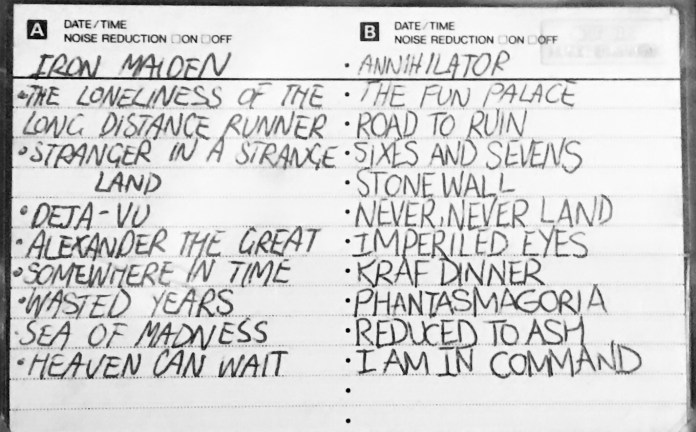
It all started with my cousin, Mega (his nickname was short for Megadeth). He was one of those dudes that just stayed up and taped and taped and taped everything to do with metal and rock music doing the rounds on our local TV stations. One such clip he taped and played me was a song called “Alison Hell”. After he saw that I was interested in it, he told me he had the LP and if I want to copy it off him.

Lucky for me, I had a blank TDK tape handy, so it was a no brainer to get him to copy it.

Since it was a blank tape, I needed to fill up the B side and Mega had a lot of music which I didn’t have. As part of this day together, we also ended up watching the “Shocker” movie and of course, Mega also had the “Shocker” soundtrack on vinyl.

And yes, I was confused with the spelling. The album is called “Alice In Hell” so when I was writing down the track list, my cousin was reading it out to me from the album cover, so when he said “Alison Hell” for song 2, I heard “Alice In Hell” and was about to write that down.

The acoustic guitars of “Crystal-Ann” fills my headspace and the guitar playing technique is excellent and precise. I asked my cousin who the guitarist is and he reads out Jeff Waters from the liner notes. At that stage I’d never heard of him.

By the way, I wasn’t allowed to hold his album covers in case I wrecked em. Actually no one was allowed to touch Mega’s albums except Mega.

Then the evil sounding intro to “Alison Hell” kicks in and when the drums come, you know it’s desk breaking time. And it goes through so many changes and moods before the first verse even starts. To me, this is progressive music. It doesn’t have to be constant time changes, and 50 million notes per bar, which on some occasions is okay, but not all the time. Changes in mood will do the job, and it can all be done in a 4/4 time signature. 

When “Welcome To Your Death” comes in, you get the feeling that Jeff Waters is way ahead of his time in song writing . Not only does he merge the speed and aggression and technical progressive song writing of Megadeth with Slayer, Anthrax, Exodus and Metallica, he also brings in elements of Randy Rhoads and Michael Schenker influences into the mix.

The lyrics and the vocal melodies are not as strong as the artists who had more sales and while people still like to go mental at break neck riffs, their needs to be a message in the words which they can relate to and connect with. 

“Wicked Mystic” is another speed a thon with head banging open string riffs and fast palm muted lines. And that solo, feels like “Over The Mountain” got merged with “Master of Puppets”.

The rest of the album is not as strong as it became too repetitive in the riffs department, with the only light being some cool lead breaks here and there in the songs.

In Australia, we got our music late compared to the rest of the world because of gated releases. I basically heard “Alice In Hell” and the second album, “Never Neverland” in the same year of 1990. However on this day when I was at Mega’s house, I only had one tape with me and it had music on it. On Side 1, was my own Walkman edition of “Somewhere In Time” from Iron Maiden with Side 2 first, and then Side 1. On the second side, I had a mix of Maiden from “The Number of The Beast”, “Piece of Mind” and “Powerslave”. And that was the side which was sacrificed to record “Never, Neverland”.

The difference in production is the first thing you hear. While “Alison Hell” sounded like it was recorded in a garage, “Never, Neverland” had better sonics and a different vocalist. The debut album had Randy Rampage and the second had an unknown called Coburn Pharr, who sounded better. And the reason why Randy Rampage quit the band was to keep his senior role at the shipping docks in North Vancouver.

You see, even back in the 80s/90s artists had to work two jobs to make a living in music, hoping that they will become the 1% of artists which breaks through. A label deal never guaranteed riches. All it did was give an artist an opportunity to participate in the recording business, provided the A&R rep was satisfied with the end output. But it also meant, an artist would have to give up their most valuable asset to the labels to exploit forever.

Another upgrade with this album was the influence of grooves, which Pantera would build a career on and all song writing being done by Jeff Waters, which involved lyrics a person could connect with. 

“The Fun Palace” has a lead break of about 2 minutes which is guitar hero status. And those riffs.

“Road To Ruin” has an interlude, lead section, which blows me away. On the road to ruin with alcoholic speed alright and the song ends with tyres screeching before a smash.

“Sixes And Sevens” has this interlude progressive bit, which hooks me in and when the lead break comes in, Jeff Waters delivers on all levels.

“Stonewall” is another great song, with killer riffs and great lyrics.

“Never, Neverland” has a pretty cool 90 second intro before the verses kick in. And sonically it’s a different song, moving between clean and distorted tones.

The other three albums I have on CD are not available on Spotify Australia which is wrong, but hey, they are all on different labels, like SPV and Music For Nations, so since those companies own the rights, they can do whatever they want with the music.

In saying that, I got “Refresh The Demon” to see what the  band was up to since “Never, Neverland” and I don’t remember a song from it, but it must have been okay, because I purchased “Remains” and was vomiting all over the place when I heard electronic programmed drums and an industrial sound. However in 2002, I gave them another shot with “Waking The Fury” (because the album title reminded me of Yngwie Malmsteen) and I can’t really remember a track from that album either and I haven’t really gone back to the band, except for the first two albums.

And who remembers the CD holder teeth breaking? I only pushed down once and bang they all went.

Standard
A to Z of Making It, Copyright, Music, My Stories, Piracy, Stupidity, Treating Fans Like Shit

In The Court Of The Copyright King

The original intent of Copyright was to give the creator of the work a 14 year monopoly to monetise their work, without it being copied. In turn this would give the creator an incentive to create more works, especially if a work proved to be valuable. Once the term expired (the creator did have the option to renew for another 14 years), the work would fall into the public domain and people would be free to build on it and use it. It’s how Rock and Roll came to be, by reusing blues music in the public domain.

But not all works are valuable. Right now, there are over 30 million songs on streaming services that have no commercial value nor have they being heard. There are millions of books written which hold no commercial value whatsoever and films/tv shows made which no one cares about.

Myspace lost over 50 million songs when it accidently wiped or threw away (depending on who you believe) their servers which held the songs and they had no back up. No one even cared at this cultural loss except archivists.

The issues we have happening today in Copyright are all due to the movie studios, record labels and book publishers. Up until 1998, they had gotten so many laws passed in the name of protecting creators, but in reality, it was to protect their business models. They knew that if they didn’t hold the works of others, they would be challenged to survive.

During this time, they also sold the story that an idea is like real property (aka, intellectual property) and that if someone else comes up with a similar idea, they have stolen your property. So they kept pushing this line and they kept on saying that copyright needs stricter enforcement and longer terms.

And people believed it. But back then when these organisations held the power and creators were still alive, it was all good. But suddenly, creators started dying and their copyrights got passed on to their heirs and suddenly the labels are getting sued.

And now, these organisations are ignoring the law and have no interest in retuning the copyrights back to the creators, because in the recording business, the labels know that the more valuable copyrights they hold, the more power they have at the bargaining table.

A member from The New York Dolls’, Southside Johnny and Paul Collins are taking Sony Music to court, while John Waite and Joe Ely are taking UMG to court, all because the labels are not doing what the law says they should do.

After 35 years, creators have the right to take back their copyrights, as long as they serve the labels with a Notice Of Termination. In these cases, the creators have done everything right, but the labels are still saying NO.

Sony has alleged that the music created by “The New York Dolls” was under a “work for hire” agreement, which the band has challenged.

One thing is certain here, the labels don’t want a precedent set, in case they lose, so they will settle out of court, in the same way they settled out of court for Don Henley, Tom Scholz, David Coverdale, Eminem and many others before that.

And then they will repeat the “works made for hire” cycle again, when another artist who has created valuable art wants to reclaim their copyrights. And off to court they will go, just to settle out of court. Ridiculous, isn’t it.

Creators should have the same rage at cases like these as they do about Spotify’s appeal to the Copyright Royalty Board’s rates increase.

Here is a Billboard article, outlining the rage of songwriters against Spotify, but nothing against the labels for not returning the rights of songs to the creators.

In the letter, the following is mentioned;

“Our fight is for all songwriters: those struggling to build their career, those in the middle class and those few who have reached your Secret Genius level.”

 Umm, sorry, but you guys don’t fight for all songwriters. And you don’t fight for me. A letter written by a marketing person from the Publishers or Labels is proof of that.

The majority of songwriters who are struggling to build their career haven’t made any coin, although they wished they did. So this class of songwriters wouldn’t benefit in any way from the royalty rate increase. And their works will not suddenly become huge, just because the royalty pool was increased.

The middle class if they own their copyrights would see some dollars come their way however the majority of monies would still go to the organisations who hold the copyrights and the artists they hold who represent the 1% of the recording business and have value in their works. And the songwriters will still get pennies because of their shitty deals with the labels and publishers.

And what about the takedown mess happening in the name of Copyright. YouTube cops the blame, however the blame also lives with the organisations sending down takedown requests without doing their investigations to see if the takedown is legit.

Lionsgate took issue with YouTuber AngryJoeShow giving “Hellboy” a bad review, so they took down his video by making a copyright claim (claiming that they own the video). This also means that Lionsgate will receive all the revenue earned by the video. It sounds like Copyright as Censorship for me.

Previously, a YouTuber called “The FatRat” went to war against a Colombian music company after the company claimed a tune which TheFatRat created as theirs. The FatRat issues were solved when YouTube decided to investigate and saw it as a bunch of B.S and removed the claim.

There are issues from YouTube’s side of things as well, as they just take the copyright claims from others as being true, and then when the YouTuber appeals, the organisation which sent the copyright claim has the power to decide whether to grant the appeal of the claim it originally made. To me, this is all B.S. and putting power in the hands of organizations without any due process.

A company representing Disney, made a claim on a Darth Vader video put up by a YouTube channel called “StarWarsTheory”. The channel created a fan film about Darth Vader with all the necessary approvals from Lucasfilm to do it and monetise it. Eventually the claim was lifted by Lucasfilm themselves, who told Disney, this isn’t cool. Even Warner Music Group via their publishing arm Warner/Chappell, put in a claim over the music in the fan film, which they said has notes similar to “The Imperial March”.

And the problem is not just YouTube’s problem. Instagram took down a video by will.i.am because someone sent a copyright claim on it.

“We’ve removed the video you posted at 9:55 am on January 26, 2019 because it included the following content: VIBRATIONS pt. 1 pt.2 by The Black Eye Peas,” reads the alleged Instagram email.”

But hang on a second, will.i.am formed The Black Eye Peas and wrote the song.

Who knows if it was a phishing scam or the corporate copyright holder sending takedown notices via bots. Just goes to show the ridiculousness of the world we live in.

And we still have the stupid legal fight between Twisted Sister/Universal Music and Australian politician Clive Palmer which is going to the courts in June.

We all know that Palmer’s “Australia Aint Gonna Cop It” is a rip off from “We’re Not Gonna Take It”. And we all know that Palmer enquired about using the music of Twisted Sister but when he heard the price, decided to do his own derivative version of the song.

And of course, Clive being the business man that refuses to pay for anything, including the wages of his workers, is saying that his melody is based on “O Come, All Ye Faithful”, a song which is out of copyright.

Jack White is also a Eurovision winner, without even writing a song for Eurovision. What he did do is write a song called “Seven Nation Army” and since the winning song “Toy” had sections which sounded similar to “Seven Nation Army”, Jack White has been added as a co-writer because his label took the writers of “Toy” to court.

Again, these kind of cases puts the idea out there that the notes order of “Seven Nation Army” are so original that only Jack White wrote a progression like that, free from influence.

AND FINALLY for all those people who still believe that the entertainment industry is getting killed by piracy, here is what you should read, The Sky Is Rising, which details how much new content is coming out.

Standard
Copyright, Derivative Works, Music, My Stories, Piracy, Stupidity

Copyright, It’s Been A While

It’s been a while since I’ve done a post on the insanity which Copyright has become.

Over at YouTube, the copyright holders like Warner Music Group (WMG) are sending takedown notices for a super popular video called “The Fans Deserve Better” which has been allowed to operate since July 2014. In this takedown, WMG even blocked it, so nobody could watch it.

All the video shows is an 11 second clip of Iron Maiden’s “The Number Of The Beast” to demonstrate what a great vocalist is and then 11 seconds of an Asking Alexandria song to demonstrate how bad a vocalist can be.

In my own backyard of Australia, the music labels and movie studios pumped up the political parties with lots of cash to get legislation passed and site blocking is a real thing in the land of Oz.

This time around, the music labels Sony, Universal, and Warner, with assistance from Music Rights Australia and the Australasian Performing Right Association, are asking Australia’s Federal Court to approve their demand for the ISP’s to block stream-ripping sites.

So the ISP’s need to be the Copyright Police for the labels, because they haven’t been able to figure out the stream ripping market, and why people stream rip and what relationship to music these stream rippers have.

Do they attend concerts? Do they buy any recorded music? Do they just want to have content? What do they do with the content?

I know people who have terabytes of books, movies and music on hard drives which they’ve never listened too, watched nor read and they will never have the time to devote to all of that culture. But they want to say they have it. And it makes them feel good. There are articles stating the same about people who hoard digitally.

Is site blocking really needed as the labels and studios profit and loss statements are looking pretty healthy.

Did you know that recorded revenue earned by the labels keeps going up and up and up?

Four years straight.

And of course streaming revenue was the star of the show, which offset the decline in physical and download revenues.

Along the way to these increases in revenue, something magical happened.

The record labels for a long time complained about Latin And South America being a haven of piracy activity. In previous blog posts I’ve mentioned how metal and rock bands continually tour these areas to massive crowds and the bands haven’t sold any recorded product in these areas. Basically the people were starved of legal offerings and resorted to bootleg recordings and then piracy.

Finally Spotify is allowed to open their servers for the people of these countries to stream and these areas along with Australia (which the labels class as another haven for piracy and needs more court blocks) have been the fastest growing markets.

The labels didn’t create this new income stream, the techies did, but hey, the techies are the bad guys here. And isn’t it funny when people are given the choice to stream at a super low price, the majority would pay for that. So instead of focusing on 90% of the music fans who do the right thing, the labels and their lobby groups believe the 10% who obtain music illegally is worth spending money on and to increase the price the other 90% pay for legal options.

Mmmm.

Speaking of the techies as the bad guys, you might have noticed headlines like “Spotify Sues Songwriters To Pay Less Royalties”. It’s all B.S. but with the way the internet spreads news and with people looking for someone to blame at their own failings in connecting with their fan base, these headlines spread like crazy.

What is happening is that Spotify and Amazon have taken issue with the U.S. Copyright Royalty Board (which should never ever exist), raising the royalty rate amount that Spotify needs to pay to the Copyright Holders. So instead of paying 10% of their revenue, they need to pay 15% of their revenue.

Spotify is not suing songwriters at all. What they and other streaming services are proposing is a different payment model.

And then you have Apple, which went from an innovative leader to meh, coming out in support of these increases, because hey, since streaming is a small portion of their bottom line, it can only help them out if their competitors close shop. 

And the solution to make users pay more, will get some people paying more, and the rest will return to torrents and stream ripping.

But, what everyone seems to forget is that the money in music is due to the relationship a customer has with the music and the artist. They determine the price they are willing to pay.

Here are a few articles on the Spotify vs The Royalty Board to form your own viewpoints on.

Rolling Stone article which summarises the facts without any bias.

Music Business Worldwide article that has Sony and Warner Music reps urging composes to fight Spotify’s royalty rate challenge.

A Vulture article which explains the facts even better than the Rolling Stone article.

Here is the rock and metal worlds response via Loudwire.

And let’s not forget the reapers hand hovering over “Blurred Lines”, the song written by Robin Thicke and Pharrel Williams, which had no infringing riffs or licks, but a funk feel similar to Marvin Gaye’s “Got To Give It Up”.

In this case, a homage to funk led to $5 million being paid to the heirs of Marvin Gaye plus 50% of all future earnings. And the worrisome part is, these kind of cases put the idea out there that Marvin Gaye was so original and free from influence and that his songs did not pay homage to any artist or style.

From a rock perspective it’s the same as Led Zep suing Greta Van Fleet over a song of theirs for having a rock feel similar to a Led Zep song.

Ed Sheeran is also going to court to defend “Thinking Out Loud,” from the heirs of Ed Townsend who co-wrote, Marvin Gaye’s “Let’s Get It On.”

A few years before that, Ed Sheeran’s song “Photograph” had a few extra writers added to it (out of court) as well. In this case, the writers of a song called “Amazing” believed their song is so original and free from influence that other artists couldn’t resist copying it (that’s sarcasm by the way). The fact that Sheeran’s song went huge and their amazing song didn’t, meant a writ needed to be served. 

In relation to “Thinking Out Loud”, it looks like another out of court settlement is on the cards and an extra songwriter who is dead, will be added to the credits of an Ed Sheeran song. Yep, Copyright was meant to expire when a person died, but not in this lifetime. They still get songwriting credits.

And these out of court settlements keep coming.

The most ridiculous one out of them all was where a person called Alisa Apps, took Universal Music Group and artist John Newman to court, because Newman’s song had the lyrics “I need to know now” in it, which is the same lyric line as her song.

Are you serious on this one?

Lucky the Justice system actually came to the party on this one and said you can’t copyright generic words or short phrases.

And finally, here is copyright as a shakedown tool, as collection agencies sue bars, nightclubs, restaurants and any place playing music over licensing fees.

In this case, the place in question is meant to owe BMI (a collection agency for 900K plus artists) $6,850. BMI alleges the organisation played music without a proper public license in place. I’m just curious for which songwriter is BMI collecting these monies for. Because when a collection agency sends employees to visit establishments and log the music they hear being played, it sure sounds like a shakedown than a warning or to educate business owners.

P.S. COPYRIGHT AS AN ENFORCEMENT TOOL

One last special Copyright case is how the RIAA, and the labels are suing an ISP for the fast speeds it offers because those high speeds foster piracy and it wouldn’t kick off the people responsible because it might damage their brand. I kid you not. I’m waiting for the day, when the makers of knives are sued because the sharpness of their knives foster greater damage to human organs when someone plunges it through skin in a fit of rage.

P.S.S. – COPYRIGHT AS AN ENFORCEMENT TOOL

People who create a tool that connects to the TV and internet and allows people to watch content they didn’t pay for are jailed for a total of 17 years. I’m waiting for the day when gun makers (a tool created by people) get jailed for 17 plus years, when their tools are used to take the life of people who didn’t want to die.

P.S.S.S – COPYRIGHT AS A MONOPOLY

And one of the outcomes of the Music Modernization Act was that a new music collective would be created for streaming royalties and suddenly we have groups fighting over who should be in it and lots of money going into different people’s hands to approve.

I thinks that’s all I have patience for. Till next time.

Standard
A to Z of Making It, Copyright, Music, My Stories, Stupidity

Change Happens

Change happens. It isn’t easy but the earliest you understand it and accept it, the quicker you’ll be able to move on and make a living in the post-change world. 

There is still too much focus from artists on things they cant control, instead of focusing on things they can control, like creating art, connecting with people, using data from streaming listens to organise tours and merchandise deals in those areas that have super fans.

Super fans according to Spotify are people who have streamed the music of the artist for 45 days in a row. Spotify then targets these fans with updates and pre-sales and turns this data over to the artist for free.

If you have noticed, when you go to your favourite artists account and you see the number of listeners on their account, well, a percentage of those listeners fall into the super fan bucket.

But it takes work to do all these extra things, and there are people feeding your ear with how unfair it is that Spotify is taking the Copyright Royalty Board to court because the Board increased the royalty base fee that these services need to pay.

In my view, the board should not have this power at all, because it is not the fault of the streaming service for the low payouts to the artists.

The record label and the artist did sign an agreement once upon a time which explains in great detail how these payments will be divided, once the monies the label spent on the artists have been recouped.

In the process, the songwriters also signed deals with labels and publishers once upon a time, and in most cases, they also pocketed millions in advance payments in lieu of future earnings, and now suddenly, the fault lays with the streaming services.

Has anyone seen Spotify’s financials to check how much of an expense Royalties are to their business?

They are not avoiding paying.

Music like any other form of economic business needs to operate in the economic world. That means the price and value of art will fluctuate based on market demand. If it has a government institution setting a royalty fee, then the whole business model is in trouble, because the government is over inflating the real value of the art, by setting prices which are out of touch with market demand.

But the oldsters in charge of the RIAA and the labels and their politician friends are all colluding, so the Government props up and shields a business that refuses to operate in the real economic world.

Let me tell you a story about Leo Feist and Harry Von Tilzer. If you don’t know who they are, it’s okay, and if you do, great. Remember how once upon a time there was a booming sheet music business. Well these two guys were influential in this business.

And they gainfully employed musicians to demonstrate playing the sheet music songs to people, as a way to sell amateur musicians on the idea to purchase the sheets of music. Music stores then started to employ these kind of musicians as well, and suddenly you had a new industry of musicians earning a weekly wage, playing other peoples songs to people.

But like all great things, change is around the corner. They had a feeling that these new technologies called the phonograph and radio would change the game and they also knew that songs would go from local cities to state wide to country wide faster than ever before and to more people than ever before.

In due time, the musicians employed by the sheet music corporations didn’t have a job and the music business model these two men built and profited from began to fall apart.

But benefits also came about from the new technologies as more artists and bands suddenly becoming popular.

Change happens.

And the way you used to make money is not the same anymore. It’s the same for every business. Apple makes its money very differently in 2019 to how it did in 1985.

You might not have the global dominance of artists from the MTV era, but more and more smaller artists are building a career, with a small cult audience which sustains them.

As artists, be open minded, embrace change and look for creative ways to monetize instead of being angry. And in the end, enjoy the highs and lows the process brings with it.

Standard
A to Z of Making It, Copyright, Music, My Stories, Stupidity

More File Sharing Equals More Music…

One of the main points of organisations or people who support stronger copyright laws and enforcement is the lies that stronger copyright laws act as an incentive for people to be creative or to make art. About 10 years ago, these lies appeared everywhere. What the public didn’t know, was that these organisations had a seat in the Government Policy room, to negotiate a range of bills in secret.

SOPA (Stop Online Piracy Act) and PIPA (Protect IP Act) got introduced in 2011 in the US Senate for discussion. In January, 2012, people held protests in the streets and online about these bills which would put too much control of the internet into the hands of corporations and governments. Eventually, these bills didn’t pass. TPP was written in secret with the corporations, and it got passed without discussion, only for Trump to squash it and come out with another act, even better for the Corporations.

One thing throughout it all that hasn’t dropped off, is the creative output of people. There is so much more content being produced and created right now than ever before. And the consumers have choice, and a lot of it.

Multiple studies have shown that even though there was a massive increase in infringement once upon a time, at the same time there was also a large increase in creative output as well.

And of course, people will associate output versus money made. Like the way Gene Simmons did when he said “Rock is dead”. Some people create art purely for money. Others create art because they want to create or have a need to create. Money will come, merely as a by-product of creating art.

When the record labels acted as gatekeepers, they could put money behind artists and develop them. It used to happen and some labels did it better than others. But that boom in the 80’s, is not because the labels developed artists, it’s because those artists developed themselves outside the sphere of the record labels.

No one can say that a record label developed Twisted Sister, Motley Crue or even Quiet Riot. Even Metallica did their first album independently and had a cult live following before Elektra came in to sign them for “Ride The Lightning”.

For artists that had break out success in 1986, like Bon Jovi and Europe, I would say, yes, they got developed by the label and got the green light for a make or break third album.

Economist Joel Waldfogelm, did some research a while back.

He wanted to see if the rise in sharing had any drop off on the new music being produced. And the research said, no, as new music was being created continuously. However, the record labels claimed otherwise, a claim not based on evidence.

in my opinion, the study also debunked what Gene Simmons said, about “rock being dead”. Gene’s comments circled around how file sharing and streaming meant that no new acts are being developed and able to grow and release quality albums. In fact, the study finds no support for that claim.

The study looked at the best of lists on popular websites for each decade from the 80’s and found on average, about half of the best-of albums since Napster are from artists whose recording debut occurred since Napster.

The study even went further to check how many albums in the 80’s are from artists from the 70’s and how many are from artists who had their debut in the 80’s. And guess, what, the numbers match the post Napster numbers.

How can that be if no artist is being developed?

Basically, there is no evidence that new artists are no longer being developed or are not creating high quality, successful music. Then again, the great artists didn’t need an A&R rep to develop them. They had their own drive and their own motivations.

But the labels have great PR writers and they sure know how to spin a story, along with the publishers and the movie studios. But their theories are not backed by independent research evidence.

The big difference between pre and post Napster is that most of the new musicians are coming from independent DIY artists, rather than the majors. And the labels don’t like this. And they are taking money away from the legacy artists when it comes to recorded music but the legacy artists still make coin on the live circuit.

Standard
Copyright, Music, My Stories, Stupidity

Moral Panics

Back in 2011, I started writing all these blog posts from articles I read that I had a laugh with, or disagreed with, or had a reaction to. And I felt they were unfinished to publish or I just didn’t have the balls to put my views out there, but I saved them anyway.

My digital saving life is no different to how people just keep physical items, but for me, a physical item will be thrown away to reduce clutter, but anything I create, I store away digitally, like it matters or means something. Once I am gone, who knows what happens to our digital lives stored in clouds and email accounts.

In 2011, there was an article I read, called “Track Piracy Is Killing The Music Business…. In 1976” over at a site called Techdirt. At that point in time, Spotify was still in the stages of gaining approval from the record labels to operate in America (it actually kicked off in July 2011).

And while the labels bogged down the negotiations to get a stake in the company, YouTube silently became the number one streaming service and it still is to this day. And it’s all because YouTube offers the users exactly what Napster offered its users back in 1999. A chance to share their love of culture, with others.

So while the labels negotiated a billion dollar deal that no artist would ever see the terms too (even though the labels had this bargaining power because of the copyrights they held from the artists), it really was funny to read the moral panic put out there by the labels and their lobby group RIAA.

Of course, every generation sees that moral panic it a bit different.

In the early 1900’s, the player piano was killing live music and the music industry along with it. Then from the late 60’s, the tape recorder and home taping was killing music and the recording industry along with it.

Then in the late 90’s and early 2000’s, the MP3 player and mp3 was deemed to be killing the recording industry. At one stage, the mp3 player was deemed illegal. To make, sell and buy guns and knives was legal, but to make, sell and buy an mp3 player was illegal. Imagine how much money the lobby group of the labels would have donated (bribed) to the politicians to get that law passed.

Then in the early 2010’s, it became about streaming and how its payments to artists is killing the industry.  With every moral panic, the industry has survived, because in the end people gravitate to something that connects and they share their love of it. While all of this was happening, unknown to many, concert tickets increased at a rate triple the inflation rate.

Netflix said recently that they are not competing with other streaming providers but with Fortnite for peoples attention. At least they get it. It’s easy to be ignored and when that happens, what’s next. We are saturated with choice and it’s a good thing. For those who remember growing up, with three channels on TV, the current world is exponentially better for choice.

So what does all this mean for the artist?

Remember when Cheap Trick’s album from 2009, “The Latest”,  came out on 8-track as a unique marketing promotion, with the offer to download the digital tracks at a price lower than the standard iTunes price. Well it was a cool gimmick because it got the band back into the conversation. I also remember reading, how the guys we’re worried about being ignored than being ripped off, when the interviewer asked them about giving their digital tracks away for such a low price.

In other words, obscurity is a bigger fear than piracy. Just ask those artists who are part of the group of 30 million songs who have never been heard on Spotify.

Standard
A to Z of Making It, Copyright, Music, My Stories, Stupidity

The Artists Live Forever

The artists have the power. They are the ones who write and record the songs and provide something of value.

So why are the rights holders of the artist’s works (otherwise known as the Copyright Holders, aka, the Labels and Publishers) organizing deals with ISP’s, the Courts, the techies and the Government. These bodies would not have any power if the artists never sold away their power in the first place.

If anyone should be organising deals it should be the ARTISTS/PERFORMERS with the USERS/CONSUMERS first and then with all of the other organizations who make money from their music.

But a lot of artists go about it without a plan.

Or it’s a plan with drama, telling the fan or borderline fan, how hard they worked on the newest album, the cost to them emotionally and financially and all the blood, sweat and tears that went into their newest work. It’s like they want to guilt the consumer into paying for their product.

Or some do it effortlessly, without drama. Both systems work, as it depends on the consumer, how they react or the surplus of funds they have left to spend on entertainment.

And it’s a choice, artists need to make.

And because of money, you start to get artist’s giving their fans what they believe the fans want, so that they don’t lose them. But they seem to forget that the fans came into their lives when they wrote songs when they had no fans. Those songs written meant something personal. Songs written with money as the motive or with the aim of critical mass public acceptance don’t end up getting there. “We’re Not Gonna Take It” was written when Dee Snider was still struggling to make it.

Hit songs/albums are not made by label marketing or an artist telling the world it is their best work. They are made by cultures of people that connect with the song and then share their love of that music with others.

I remember “Pornograffiti” from Extreme got no press in Australia and it sold. The follow up “III Sides To Every Story” had a scorched earth marketing policy and while I dig the album, it did nothing in the land of Oz.

Geffen promoted Sonic Youth, Nirvana, Guns N Roses, Roxy Blue and Galactic Cowboys heavily in 1991/92. It was a simple scorched earth marketing policy. Spend money and see what sticks.

But who cares who ran Geffen or worked in AOR. Will people remember Whitesnake or John Kalodner or Dave Geffen?

We know that Metallica released the Black album. Would people care on what label it was on?

We sing along together at a Bon Jovi concert. Do we care or know that it was Polygram who released “Slippery When Wet”?

So while record label people come and go, artists remain, as their music lives forever. But the label heads want to be ones that live forever and all because artists give away their rights and power to them.

And artists need to be creating. These stupid perpetual Copyright laws made artists lazy especially artists who made some dough, during the era when the record labels controlled the distribution.

If you don’t believe me, how many albums of new music did Jimmy Page do after Led Zeppelin disbanded?

From memory, two albums with The Firm, one solo album, a Coverdale Page album and one Page Plant album as the other album was Led Zep songs reworked in acoustics. A total of 5 albums in almost forty years.

The artists are in charge. They need to know that. They can post their tunes to streaming services and make coin, provided they care about making connections with fans.

And it’s exciting.

Standard